


 YouTube
 Apple Podcasts
 Spotify
 Overcast
 Castro
 PocketCasts
 Amazon Music
 Deezer
 TuneIn
 Podcast Addict
 RadioPublic
 iHeartRadio
 RSS Feed
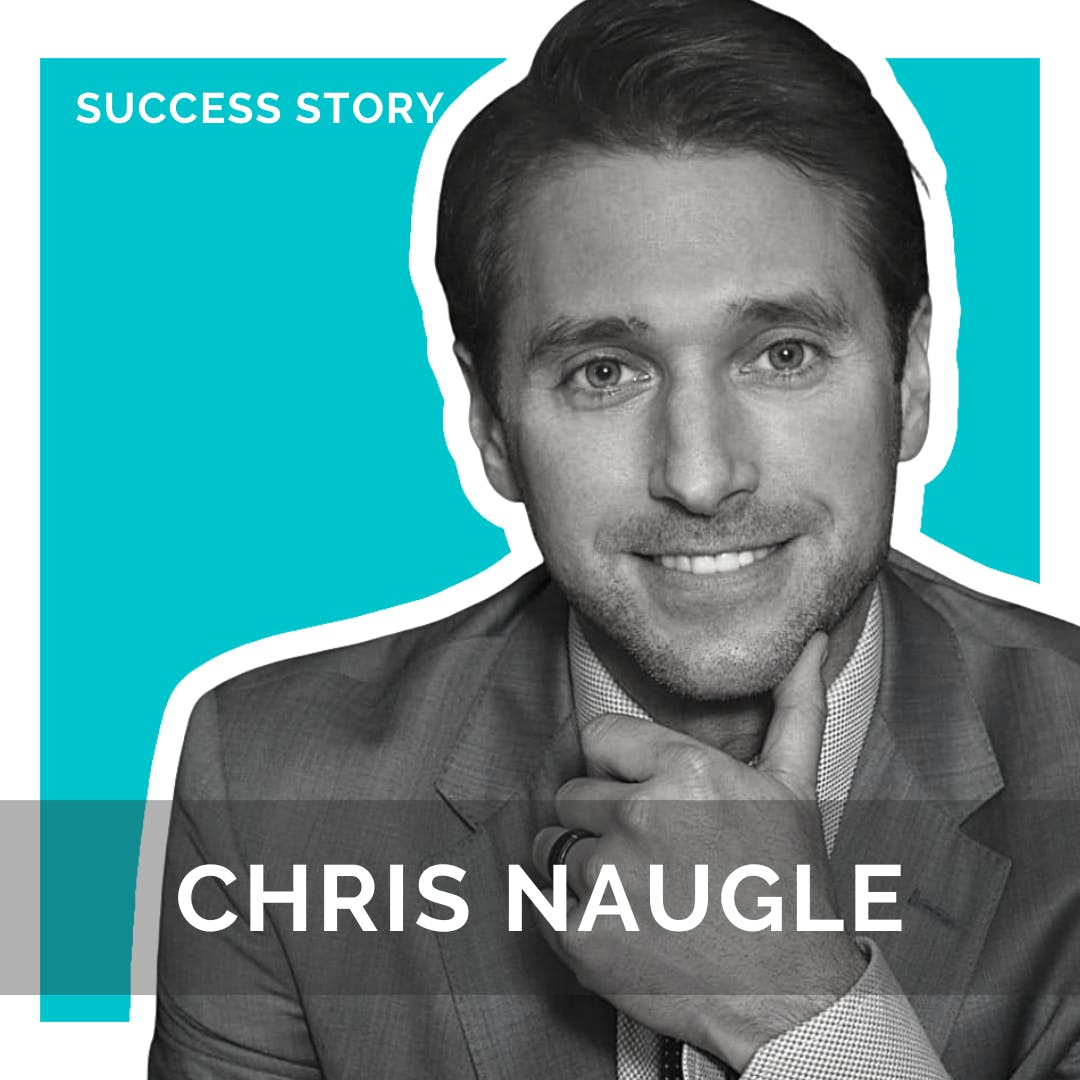
 Chris Naugle - Co-Founder & CEO of The Money School | How To Be Your Own Bank
➡️ Like The Podcast? Leave A Rating: https://ratethispodcast.com/successstory
➡️ About The Guest
From pro-snowboarder to money mogul, Chris Naugle has dedicated his life to being America’s #1 Money Mentor. His success includes managing over 30 million dollars in assets in the financial services and advisory industry and tens of millions in real estate business, with over 200 transactions and an HGTV pilot show since 2014.
In 20 years, Chris has built and owned 16 companies, with his businesses being featured in Forbes, ABC, and House Hunters. He is currently the co-founder and CEO of FlipOut Academy™, founder of The Money School™, and Money Mentor for The Money Multiplier.
As an innovator and visionary in wealth-building and real estate, he empowers entrepreneurs, business owners, and real estate investors with the knowledge of how money works. Innovating what it takes to break the chains of financial slavery, Chris is driven to deliver the financial expertise that fuels lasting freedom. To date, he has spoken to and taught over ten thousand Americans.
➡️ Show Links
https://www.instagram.com/thechrisnaugle/
https://twitter.com/thechrisnaugle/
https://www.linkedin.com/in/thechrisnaugle/
➡️ Podcast Sponsors
HUBSPOT - https://hubspot.com/
MANSCAPED - https://manscaped.com/ (Promo Code: 20success)
➡️ Talking Points
00:00 - Intro
03:38 - Chris Naugle's origin story
34:16 - How did Chris navigate through the recession after 9/11?
50:21 - How to be your own bank
1:02:00 - What happens when you get paid on your death benefit early?
1:03:30 - Are there any underwriting issues that may be faced while taking loans?
1:12:30 - What is Whole Life Insurance?
1:10:09 - How can you screw this up?
1:13:40 - How do recessions and inflation affect the market?
1:25:57 - What are the factors that can affect an average person's financial wellbeing?
1:36:41 - How can people connect to Chris Naugle?
1:39:06 - What keeps Chris up at night?
1:39:14 - The biggest challenge that Chris Naugle has overcome in his life
1:39:40 - Any book or podcast recommended by Chris Naugle
1:39:50 - What would Chris tell his 20-year-old self?
1:39:55 - What does success mean to Chris Naugle?
Advertising Inquiries: https://redcircle.com/brands
Privacy & Opt-Out: https://redcircle.com/privacy
Welcome to success story, the most useful podcast in the world. I'm your host, Scott D. Clary. The success story podcast is part of the blue wire podcast network as well as the HubSpot podcast network. HubSpot podcast network has other great podcasts like marketing made simple hosted by Dr. J.J. Peterson. Now marketing made simple brings you practical tips to make your marketing easy and more importantly make it work. If you like any of these topics, you definitely want to go check out the show how to write and deliver a captivating speech, how to market yourself into a new job, how design can help and also hurt your revenue, creating a social media ad strategy that actually works. If these topics resonate with you, go check out marketing made simple wherever you get your podcast. Today my guest is Chris Noggle. He is the founder and CEO of the money school. He is a former pro snowboarder, turned money mogul. He is known as America's number one money mentor. His core belief is that success is built not by the resources that you have but how resourceful you can be. His success and national acclaim have come in a large part from what he's learned firsthand from seeking a better way to create wealth and preserve wealth. He has built and owned over 19 companies. His businesses have been featured in Forbes, ABC House Hunters. He had his very own HDTV pilot in 2018. He has built the money school money mentor and the money multiplier. His successes include managing tens of millions of dollars in assets in the financial services and advisory industry and in real estate transactions. As an innovator and visionary in wealth building in real estate, he empowers entrepreneurs, business owners and real estate investors with the knowledge of how money works. He is also a nationally recognized speaker, author and podcast host. He has spoken to and taught over 10,000 Americans delivering the financial knowledge that fuels lasting freedom. So we spoke about his origin story and some of the things that he's learned over his life that have allowed him to operate at the level that he operates at right now. We spoke after his story, what he focuses on, which is helping people understand wealth, money, finance. We spoke about money myths. We spoke about the truth about money. We spoke about private money lending. We spoke about the laws of wealth. We spoke about privatized banking or BYOB. Be your own bank. We spoke about infinite banking. We spoke about recycling and recapturing your money. We spoke about finding ways for your money to gain interest and earn dividends even while you're spending it. And then we spoke about economics. We spoke about what's happened with the Fed printing trillions of dollars. We spoke about what's going to be happening in the years to come. It's not great. He is an, he's not an economist, but he spends a lot of time in the weeds understanding how our country, how the US will navigate the next two years and how inflation will affect the average person and also how the person, the average person, whether or not you're just trying to figure out how to make ends meet or you have an extremely large investment portfolio, how you can navigate the impending recession. So let's jump right into it. This is Chris Nagel. He is a podcaster, author, speaker, founder CEO of the Money School. It's a good story and it's why I don't really often talk about it. So it really starts when I was a kid. You know, I grew up in a lower middle class family. My dad was an alcoholic and really wasn't a big part of my life and my mom raised me in. In my mom raising me, we didn't have money. We didn't have resources. So if I wanted things, well, my mom taught me, which was purely brilliant on her part, but she probably didn't know it was just a way for her to allow me to never think I can accomplish things is when I wanted things, she taught me to draw them. I was always an artistic kid. I loved drawing cartoons and you know, whether it was a skateboard or a BMX or you know, I'll get into a story about a pond in the backyard. My mom would just say, we'll go draw it out, show me what it looks like. So I would literally, I'd go through BMX plus magazines, I'd go through snowboard magazines, skateboard magazines, I'd find pictures of things that I resonated with that I wanted to accomplish and I would draw them. And then I would talk about them to my mom and you know, we talked earlier about like the idea of just focusing on one thing and that one thing will always happen. Well, that's kind of what my mom taught me to do. And at a young age, my mom taught me how to save. I'll never forget, you know, one particular thing, my mom needed a lawnmower. Our lawnmower was on its last leg and we had two acres of land. So a lawnmower was pretty important. We didn't have money to hire somebody. So my mom started saving all of her changes. She made a point to show me how this worked. She'd come home and you know, after going grocery shopping and she'd have change in her pocket and she had this big glass jar in her closet. She would take me in there and show me how she saved. Well, after I watched this for a little while, I wanted to do the same thing, you know, monkey sea monkey do. So my mom got me this and I still have it today. It's right over in the next office, a little black box with a slide top. And what I started doing is my grandparents lived in a mobile home park. So I would go out there and I would go around to the neighbors and ask if they needed weeding or their windows cleaned and I got to remember, I'm like five, six years old at this point, maybe a little older, but it was in that range. So when I would make this money, it was pocket change, you know, buck two bucks, maybe five bucks, you know, if I did a whole landscape thing, which I didn't call it landscaping, it was pulling weeds back then. And I would come home and I'd give the money to my mom and she'd put it in this box. So fast forward, this is how I learned. Then, you know, as a little older, one thing my dad did teach me is how to fish and I loved fishing. But to fish, I had to go up the street and a long walk to this little pond and there was never any fish. So I said, well, why don't we have a pond in the backyard? So I got this idea. Why don't I just dig one? Remember, when you were a kid, you know, I have a 23 month old. When you're a kid, you don't have boundaries like we do as adults. We haven't been tainted. We haven't had enough people in our lives. Tell us we can't do things when we're a child. So for me, like the simple, the simple goal was I want to place where I can fish and catch fish. So in my mind, as crazy as this sounds, just dig a pond, dig a hole. So I literally went in the backyard and I did a whole YouTube video on this and I started digging a hole and I hit rock. And I got an offset and in my mom said, well, you need to go to where a low spot is where water sets. So I remembered far back at the yard, there was a spot where in the winter when all the snow melted and we were in Buffalo, we get lots of snow, there was this place where water sat. So that entire spring and summer, every single day after school, I went out there with a whale barrel and a shovel and I just dug. And I dug and I dug and I dug and now there's no like pretty story to this. I ended up digging a pond and we know when when it rained, we had water and I'd go up the street on my foreword, or catch some sunfish and some catfish and put them in my pond and I would sit out there for hours. I remember just sitting there for hours, trying to catch these fish. Now all of you are laughing listening because you're like, dude, you just caught the fish and you threw them in the pond. They're not going to be spooked them. They're not going to take the bait. I didn't know this. I had a pond. So that man, that manifestation of thinking about this and doing this. The one thing, like first it started with the idea and then it started with thinking about it over and over and then actually taking action going out and like digging a pond is no small task. I went out there recently and the hole that I dug is still there. It's still holds water but clearly not good for fishing. So now fast forward a little further. I'm getting older and I'm in high school. I'm just a punk skateboard kid. My goal was to be a pro snowboarder. Living in Buffalo, New York is not the Mac of first snowboarding and I remember I didn't have money to buy lift tickets and my first snowboard was a used board that really was just terrible but I would take that board up the street and we had this hill. There's a four wheeler track up there. It just had a little hill and I'd build a jump in the winter and I'd just keep hitting it and destroy myself but whatever I was a kid. And then all of a sudden my one friend Jack said well let's go up to the resort. I didn't even know what a resort was. I'd seen pictures of this in magazines of these big mountains and I'm like oh wow. So we went up there and I remember my first run. I hated it. I'm like I can't do this. I almost gave up and this would have been in my life. This probably would have been one of the first times I was willing to give up on something. And I'm sitting in the lodge and Jack comes down and he says let's go up for one more and I'll teach you. And I didn't want you but I went up. I'm soaked. I'm tired. I'm beat up. We go up one more and it's something clicked. And that was the point where you know I really fell in love with it. And I came up with the crazy idea that I'm going to be a pro snowboarder. I'm watching the VHS tapes and you know the snowboard magazine which back then was Transworld. I'm looking at all these photos of my heroes Tedea Hockinson who I've had on my podcast and all these just legends Craig Kelly. And I remember I'm like I want what they have. I want to do what they're doing. So instead of going to the resort I couldn't. There was a country club, the Lockport Country Club which is where I grew up. My mom would pick me up from school. She would drop me off at the country club. Now you got to know like school ends at about 233. By the time I get there it's three. I have to build a jump. So now it's 4 4 30 and it gets dark at 5 30. I have one hour to accomplish the unfathomable of all these tricks I had lined up. And I remember in the early years of doing this I would I remember I'd be going I'd get in my groove and then also in the here the dreaded Hockhunk. My mom is picking me up. I didn't want to leave so I figured out I have to get in better shape. So I would come home and my idea was all right I got to I can't run up this hill enough times and keep my wind. So I just got to get in shape. So I ran up and down my backyard in in Surrell boots to get in shape so that when my mom dropped me off I could get more hits. And then I started pre-planning it and building the jump beforehand so that when I came back the jump was already there. I just had to fix it up and you know pack it down with some snow and and that's how I did it and it's crazy to think about that right because when you think about a pro snowboard you think oh they're traveling around doing all these events like I didn't have that luxury I didn't have the money and that that came later but my early years were spent learning tricks in the summer on a trampoline and the tricks were just tricks I watched in VHS tapes and all that stuff made me a really good snowboarder because I was regimented. So when I was learning tricks I would I would hit it over and over and over and dial that trick in until I moved on to the next the next the next so when I actually started competing and I actually started going out having a little extra money because I worked you know odd jobs at restaurants and now I could go to the resort and for Christmas my number one thing was always a 10 pack so they'd buy me a 10 pack and that's 10 times the resort and I would go and I would just compete and alone be whole when I competed I thought I would suck I actually did really well even my first contest because I'd practice so much and then I then the barrier came from people telling me you can't be a pro snowboard you live in Buffalo and I'm like okay so I needed I needed to see somebody that had done this journey and there was these two guys Blair and Shane and Blair and Shane were pro Burton writers they didn't live in in Buffalo anymore but there was one time I heard rumor that they were doing a photo shoot in this brand new park that they had just built at Kissing Bridge and I made sure that day I was there I was the the fly on the wall if you will and I was watching these icons these two pro snowboarders in the best gear hitting stuff and I just I remember there was like nobody there because it was like afternoon you know they were big photo shoot and I was like one of the only writers in the park surprisingly and I just kept following them and I felt embarrassed because you know I let them go way ahead of me so they didn't think I was following them but I just kept following and doing laps and then eventually Blair like saw that I was doing this you said hey you're pretty good like ride with us and and at that moment something clicked and I said well I can do this because I seen these two guys who grew up where I was that had made it and I just went for it and that that was uh that's how I kind of became a pro snowboarder and I I was a pro snowboarder from the age of about 19 I was amateur before that 19 and I rode all the way pro up to all this 34 and a lot of things spun off of them in my early years when I was 16 I had gotten a job just like all of us I started working on a farm at 14 but at 16 I got a big boy job at a restaurant and I remember the owner of this restaurant was just a nasty man and he would degrade me so badly that I I literally got to the point where I was clinically probably depressed I thought I could do nothing right it affected everything my grades my willingness to want to go to school my whole life was spiraling down because this one guy made me feel like I could do nothing right and the day came when I was 16 and I marched into work and he started writing on me and I don't know that day was just that was it I was done and I told him I said I quit that marked the day when I quit trading hours for dollars thank god that I did this at a young age at 16 I came home thinking my mom was gonna be so mad because you know I was coming home early and and I had a plan the whole way home I had planned out what I was gonna say to her and I said mom I quit you know told her the reasons why thinking she was gonna be super upset and I said but I've got I want to start a clothing line me and my art teacher Mr. Mahalski had been printing shirts for the school I want to start making my shirts I'll sell them out of my backpack I'll travel with them to snowboard contest and sell them to my friends and and that that was my first company I started it in 1992 at 16 years old it was called fat clothing company PHAT now some of some of your listening are in today's world you're like oh wow you became an entrepreneur no no no I was solving a problem with this I didn't care about being an entrepreneur I didn't even know what that was you know all I wanted was enough money to be able to travel without having some guy degrade me and make me feel worthless and the the reason I wanted to do this is remember I told you I was artistic I was my whole childhood was spent drawing pictures of the things I wanted skateboard snowboard dirt bikes whatever it was I was just good at drawing so I draw this artwork with this logo fat and back then fat came from it's cool oh that was fat it's just the thing back in the 90s and some of you are too young to remember that but I started making shirts and I printed with my art teacher and then you know we got past the capacity he had so then I had this other guy mark art in my town start printing shirts and I sold them out of my backpack and then I got my friends to start selling them out of their backpack so a dozen shirts I sold them I made two dozen two dozen shirts sold I made two dozen and twelve hats and and I just kept going like this and as I sold them I bought more well that forced me to have to actually start learning a little bit so this is unique I'm in high school but now all of a sudden I took a liking in in this business and I had heard about this thing called accounting you have to have accounting because my guy that did my taxes like well do you have you know what it were your books so I actually started I took accounting courses in school and and the accounting teachers mr. Crosley notice how I remember these names is back because these people are so influential they spent time with me after school to teach me you know debits and credits and spreadsheets so I started doing these things that I was learning in school but I was applying the knowledge different than all the other students they were just learning it to pass I was learning because I needed it for my business fat clothing one year later had three seamstresses you know that basically me and my mom would buy pattern like little pattern templates at Joanne fabric and we'd come home and we'd make a prototype because my mom could so and then I would then give it to the seamstresses which were just local ladies that wanted side work and they would stitch these these jackets and shirts and pants and then I would test them out on the hill and then I built a snowboard team all this was going great a cell in my clothing on the road and then when I was 17 something happened and it was from being on the road in the snowboard contest I'd stopped at a lot of snowboard shops and I got this fixation that that was what I wanted I wanted to own my own skateboard snowboard shop because these guys had it made right they got up in the morning and they went and they did their dream they they ran their snowboard shop that I was selling my clothes to and then in the afternoon whenever they wanted it seemed they went out and snowboarded with me and I just had to have that I needed that lifestyle business and that goal I found out would take about 70,000 bucks so I went to because you when you find your why when you find your why you're so driven but do you know do you know what what makes you tick you know why do you know why the snowboard shop like it's a nice idea there's probably a thousand other things that you saw while you were going city to city that you could have been inspired by or interested in so how do you find that because it was in line with my why it was in line with the what the what was I want snowboarding was my life skateboarding in the summer but snowboarding was my life it was all I thought about all I cared about so everything was just a means to to that and a skateboard snowboard shop embodied everything that that why was and the funny thing is is you know we were talking about a lot of books but there's another book talks about this and there's a lot of books that do but if you figure your why and your what out like I did now I I did it on accident just because I was so in love with snowboarding but if you figure the why out the how always happens but so many people in their lives in me which the next part when I was 17 the how was what stood in my way and the how was seventy thousand bucks how do I get seventy thousand that everybody says no you know if it tells me I'm crazy my father says son this is a stupid idea you're going to lose all the money you need to come work I'll get you an interview over at Harrison radiator and you can do what I did and and I despise that and it ended up in really taking a negative relationship with my dad I actually sent him the single cats in the cradle because he just had no desire to support my dreams and no faith in the fact that I could do this so the how was was I went from the what you were talking but I think this is where you were going and now all of a sudden I took my focus off the what and now I focused on the how because everybody that I asked you know about money drove me to you can't do this so the how became my obstacle and I it almost became an obstacle that made it so that my dreams died right then and they're 17 years old fat man board shop which was going to be the name of the shops and still as you can look it up fat man board shop still exists today I sold it in 2010 it's 20 some year legacy of mine and I remember I got a bank mnt bank said hey kid you know we like the idea we'll give you an sba back loan but you need collateral 17 I don't even know what collateral is I know that sounds funny but you know I figured it out and I said oh perfect I got a cax 125 I got a 1986 Buick skyhawk and I got a baseball card collection well that's the face not quite so they they pretty much said no we need something of significance and I'm like I don't have anything but my mother remember I told you she was really a big part of my life and I call her my unconditional one but she watched all this happening she watched this fall out with my father she watched all these people tell me no and then I can't and she just sat back but my mother had one thing one asset and that was the house she got in the divorce and the house literally had about $75,000 an equity in it and my mom made the decision to put her house up the only thing she had in the world so that her punk skateboard snowboard kid could chase his dream and she did and I did it in November of 1994 fat man board shops opened as a thousand square foot skateboards snowboard shop in the lock court mall and that was my my first big plunge into being an entrepreneur now remember I'm 17 most 17 year olds are out you know having a good time maybe experimenting doing the fun things with their friends going out now I had this business and I knew my mom's house was on the line and it led to many sleepless nights many nights crying in the back room of the you know the shop not knowing how it's gonna make it but five years went by I paid that loan off and fat man was real it was mine it was this is gonna make everybody laugh my my projections for the bank showed that my pay would have been $30,000 now we were talking about income but this is this is the 90s so I guess 30 wasn't terrible but I thought about that and I'm like that is 30,000 dollars to me at that point would be the equivalent of today probably three million dollars and I'm not even kidding and I'm talking not dollar for dollar but I'm talking mindset it was more money than I ever thought I could earn it was more money than I ever needed I never really made that much in these early years because I bought inventory but that was what I was supposed to make I took a salary every week of 200 bucks and that's what I lived on which was surprised me enough for a simple kid to get by and those stores flourish they kept going on and on I started other clothing lines and everything was going like a dream and you're still snowboarding you're still snowboarding a lot man yeah I was the funny thing is this year you know I tried something different I only went with go ahead no I was gonna say I didn't mean now I didn't I can we can talk about now I was talking about as you're building this store you're still trying to yeah yeah I was I was a pro snowboarder at this point exactly I was on my I'm sorry at the beginning of the store I was on my way to being a pro snowboarder but you know by 18 19 around there I became a pro snowboarder I got my first contract and was making a little bit of money with the the contract and it was like a dream I think back to those days and I think man what what a life I had you know and and it wasn't a life because of money it wasn't a life because I came from a family that had money it was a life that came because I chased my dream and I didn't I ignored all the people that told me I couldn't do things and I just pushed on and and I just wish and I hope I can instill this in my daughter you know she's 23 months old but as a child we we don't have limitations we don't have barriers there aren't things that we in our mind think we can't do you know and I I had these up until reality kicked in so they're telling me I couldn't do things and many people allow that to dictate their future they let other people's fouled realities other people's fouled dreams dictate where they're going to go in life and and unfortunately it's a sad reality too many people take the bait when you really look at it Earl Nightingale talks about it and this is the strangest secret in the world you know if you look at successful people you look at 120 year olds and you ask them all are you going to be successful at the age of 60 every one of them 100 percent will say yes reality is fast forward to 60 take those same 120 year olds but now they're 60 years old statistics will prove that only one of them is wealthy one out of 100 and only five of them would be considered financially successful how can that be and folks I'm talking about the United States of America the greatest country on earth a land of opportunity that's the numbers here that's not Africa that's not you know anywhere else that's here only five out of 100 people are successful in Earl's you know speech talks about it perfectly says the reason for that is only five of them people the reason between success and failure is one thing five of them created something they went out there and they created and they shut everything else out and they created the other 95 percent the difference why they weren't successful why they're not financially successful successful by social security social security statistics is because they gave into other people's failed realities they conformed is what he would call it and I didn't conform my success and I'm only taking you up now told you know my early 20s my success up to that point was for one reason one reason only I was a creator that was it and I would not conform to everybody else I wouldn't they tried tried hard and it was hard for me it was hard not to that did change Scott you know as things went on and I was living this fantasy world of just my dream pro snowboarder magazines video parts you know back then pro snowboarders you know the top guys made 250,000 and you know it's probably 30 so I was I was like in the middle but I was I was doing really well and I had my shops which were successful and I did some odd side jobs and things but take me up to the 2000s so a lot happened and we're going to skip a lot of it but in the 2000s if any of you remember the planes hit the towers in 9-11 and I'll never forget I had just gotten back from California the day earlier so 9-10 I had landed from California I was out there for a surf expo which was a trade show and I remember driving to my brand new stores I had three locations now and I I'm hearing about these planes hit in the tower and what spiraled out of that is the realization that I had never gone through a recession I didn't even know I didn't know what it was I'd only seen good times much like almost every person today special millennials you've only seen good times well that was me that well that spun into the dot com crash which spun into the first recession I ever took part of which also meant my retail stores took a nose dive of 30 percent just just like that it was like was on top of the world and now my sales are down 30 percent I'm struggling to make ends meet I barely could make my car payment which was no big deal I think it was like 200 and some bucks a month and all of a sudden I had to go get a job I literally had a decision like if I'm going to keep living this this fantasy world I got to get a job the one thing that I had to fight and gotten away from all these years now just became very clear and I had to do it I applied to be a pizza delivery guy because I thought I'll work at my shops during the day I'll deliver pizzas at night with my friend Mike thank god little Caesars wasn't hiring at that moment because they said no and I put my resume out and this is where Wall Street comes in now remember I have no work experience outside of a few odds and ends things I'm just an entrepreneur and I had been my whole life so when I put my resume out it was very basic you know I run skateboard snowboard shops and here's my education I got two years of community college not I wasn't a poster child for a resident and I got call after call after call from Wall Street firms and I'm like what in it so I literally watched Wall Street the movie because I didn't even really understand it and I'm like yeah I want that so I went and interviewed and I ended up getting into Wall Street and that's where the next phase started because this was a this is a really difficult thing in my mind so up to this point I wore hoodies I wore beanies I wore baseball hats like I was just a snowboarder right and all of a sudden I'm forced to have to put suits on every day and I remember my grandmother who was a huge part of my life took me to Lurchandalli a tiny little locally owned shop and got me my first suit a gray suit a gray shirt and a black tie it was a zip up tie because I didn't want to tie a tie and I went to the interview but I felt so out of my skin and out of my comfort zone wearing a suit I'd never put one on and now all this and now I got to wear one every day so it was difficult in the beginning of me making a transition from snowboarder to Wall Street guy and you know the story really comes down to a new familiar with a brand called Volkham I'm wearing a Volkham shirt now and it's been a very important brand in my life and in my shops but Volkham thank god made suits like for those really athletes yeah they made suits and nobody would have known this but I had a shop so I got the catalogs right for Volkham and in the back like they had these special order suits so I started ordering Volkham suits because in my mind Volkham's escape word surf snowboard shop if I'm wearing a Volkham suit dude I'm cool enough and when I come from the Wall Street job back to my shop and I'm wearing a Volkham suit I felt like I kind of made that transition work in my mind and whether that makes sense to any of you or not it doesn't really matter but to me this was a very difficult transition so I guess the biggest thing that I will tell you is when I get into Wall Street the one thing I was very you know adapt to is I was in the bullpen and it's where all new reps go they throw us in the middle and you know they say dial and that's pretty much it and I watched intently when I was there all the guys around the outside in those big offices and all these guys were you know 100,000 or more producers like they made big bucks but I remember they got there at nine o'clock at best and then they went out for an hour or two hour lunch and then they were usually gone by 4.30 and I said you know and I started talking to them how long did it take you to go from where I'm at to here you know five years seven years whatever and I said I want to do it faster so to do it faster I just have to do everything they're unwilling to do I started getting into work seven in the morning I did all my prep work on all my paperwork done so when the you know the market opened you know I was dialing and then one they went for lunch I really didn't have money to go to lunch at this point I just I made calls and I actually got people answer the phone and then at 4.30 when they left I made appointments to go meet people at their kitchen tables and I did this for years I was I was the number one rookie okay so out of the first year I was they called it the new org I was the number one guy there I kept winning and I became very competitive because of snowboarding so I always wanted to be number one and I just kept doing this over and over I made 74,000 my first year and it just was a vertical climb after that and I became one of the top financial advisors for this company and I was literally crushing it I dabbled in some real estate because I had watched some TV shows where they were doing some flips my property wars I think was the show so I took my chip stab in 2006 at a flip and made 8,000 bucks hardly worth even talking about but it taught me some lessons did another one the next year and in 2008 right before the Great Recession hit I took a big leap of faith because I was making good money I had a bit of an ego and I had people that were willing to lend money I next to my main fat man shop on Sheridan Drive was a dilapidated paint store and I remember the morning I drove to work there in front of it was a sign that it was for sale and in my mind I'm like well I can take that I can convert it into a strip mall and that'll be the new home of fat man board shops so I found a group of this group of guys one of them a very nasty man that were crazy enough to lend me 340,000 bucks on a hard money loan and they did and this guy you know what happened next you know the guy it was like getting hit by a Mac truck at full steam head the Great Recession hit me that November right before the Christmas season and it's irrelevant when it started when it didn't this is when it hit me because Christmas was my big big I mean we made 60% of our money during the Christmas season at the shops and I had this strip mall two buildings down that I spent all my waking hours I usually got home about two or three in the morning from painting and doing everything then I went right back to Wall Street the next day paint and fingernails and everything but everything shut off my financial advisory job which I was making hundreds of thousands literally flatlined nothing I went into damage control people the only calls I got were people yelling at me my retail stores dropped tremendously our Christmas that year was 30 40% off and all of a sudden I just started thinking how am I going to do this spiral and out of control wondering how I'm not going to default on this hard money loan and gosh I'll never forget the day I had exhausted my 401k loans I took all the money I had in investments out I was down to my last month I had about enough to make it a month and then maybe some income could carry me a couple more and I knew that there was no way I was going to make it so this is that moment folks where the inevitable starts to become real and you start thinking I'm going to lose this I'm going to go bankrupt I'm not going to be able to keep my stores I'm not going to be able to keep the strip mall so I did would I guess any smart guy would do that's the two men but I came home to my brand new girlfriend who had just moved into my house and I said sweetie I need your help sure what what do you need she had a big big girl job at one of the big banks and I said sweetie I need you to help me pay them work I need you to help me pay the utilities and that bedroom down the hall I'm going to rent it out to my friend Pete who worked for me too and the bedroom upstairs I'm going to rent to my my friend Jessica because I figured all this out this is how I'm going to make it and I I was stupid enough to think that I had at least a 50 50 shot of keeping this girl my friends later told me dude you had like a 10% shot of her saying yes but I guess she kind of liked me and you know she you know we're married now she's the mother of Vivian you know we're still together but she did she she took that stand and allowed that and that's how I made it through 2008 the next couple of years were super hard and you know I struggled and I got into real estate pretty deep got up the 36 units by 2014 and then again realized that I didn't know what I didn't know because in Wall Street I'll tell you something and we're going to get to this and then we'll I'll stop talking I feel terrible no dude dude I never don't even share this story dude don't don't worry about it I love the story I just want to take a second and thank the sponsor of today's episode HubSpot now what words come to mind when you think about entrepreneurship for me it's grind hustle strategy hard frickin work because building something from the ground up is anything but easy HubSpot is on a mission to help your business grow better with the CRM platform that's easy to buy use and love with thousands of integrations teams actually use HubSpot works the way you do hard and if you want to figure out how to streamline your deals easy the sales hub makes it easy to close more deals by automating your busy work if you need to automate your social media piece of cake the marketing hub has everything you need to publish post and monitor your social media channels all in one place learn how HubSpot can make it easier for your business to grow better at HubSpot.com and I like how scrap you are and I want to just after you tell this story I want you to look at it in hindsight and just understand like how you like the the thought process you went through in figuring this out because your ability to figure shit out is absolutely incredible that a lot of people would just crumble and I want you to understand how you got that and how you navigated this and what do you think sort of gave you that mental fortitude to allow you to persevere when you went through post 9-11 then major recession asking and and I know it doesn't I don't know if this what this sounds like to people that are listening for even like asking your partner for help and when shit's hitting the fan but that is an incredibly difficult thing to do that's that is a tough thing to do and then to have somebody step up and help you that's also very not incredible but I want to you have it you have a mindset that's very impressive that's all I can say but yeah and I don't know where it comes from I just give so much credits my mom just for my upbringing I mean when you don't have anything and you see other people that have things you just want them and you just go after it and and that's that's this next phase you know I made it through 2008 barely and now all of a sudden what I had realized during this is all my clients my financial clients like they were all riding this roller coaster down right it's terrible period of time or anyone that lived through the great recession it was a really bad bad recession it was it was awful to be honest and I was an advisor and a business owner through this so I got it double whammy but the the thing is I also realized you know by being a student looking at my successful clients there were there were clients that actually thrived during this period of time and surprisingly a couple of them were real estate investors and during this time I watched them start buying more and more real estate and I'd sit down with them because they you know they were clients so and they would just tell me yeah this is the best time ever in my life to buy real estate it's I'm getting these these apartments 40 cents in the dollar and people want to give them away and I'm like oh all right well I had I had gotten out of that hard money loan because I finished the plaza and I rented out just enough to get a bank to take the the mortgage so I had a relationship with a bank so I went to that banker his name was Greg he was a commercial lender I said hey if I start buying some apartment buildings do you guys think that you would lend just absolutely you know we did your deal obviously you you looked good on paper we'll we'll lend you again so I found my realtor Anas and she started finding me apartment buildings and 2008 and nine you know from nine to 14 I did this and it was a very easy time because people were losing everything oversee investors that owned these apartment buildings they just want to dump them and Anas was very good at finding them because she was she was Middle Eastern so she had these these investors that just needed to dump these properties so I bought them and I highly leveraged myself I literally every penny I made in the Wall Street job I moved over to the real estate everything I made in the stores you know after Christmas and back to school went over to the real estate and I would be working in so think about this folks like I'm working my Wall Street job bust my butt there I'm running my stores which now at this point I'm more working on the business not in it because I was forced when I took the Wall Street job I was forced to not work in the business anymore which is also very difficult and I was working on it so I had managers which were my friends that worked in shops that actually ran the stores better than I ever did but if I never took that leap out of the business because of necessity I never would have understood that somebody could do a better job than I did because that was just tunnel visions you know when you're in your business you see what you see and you don't let other people's creativity take over who I did and and I witnessed that so everything's going out at the same time and now every free moment and weekends I'm spending at these apartment buildings renovating and I don't know how to do this stuff I'm learning as I go and renovating and I get a unit done I'd rent it and then I'd go on to the next unit and I just did this for years and I got up to 36 units by 2014 but you see there always comes a point where learning also comes from failing so I hadn't really failed up to this point come close but now in 2014 this is the moment where I really failed you see I just thought that you could just keep going with banks borrowing and they just keep giving you money because it was so easy up to this point and I brought my 37th unit to the bank and they said no flat flat out Greg was like no we can't lend sorry and I said Greg well why your debt to income ratio doesn't support this and I'm what what is that you said well for the amount of income in the amount of debt you have we we can't lend to you anymore oh and by the way we're going to have to freeze that line of credit because I had a line of credit that I used to renovate to now and they froze that well that was the death spiral that was you know the kiss of death for me I was just spiraled right down really fast because now I didn't have money to renovate houses I was over leveraged I was under knowledge and I didn't even understand what happened but the bank shut me down and that resulted in me then getting a little behind so then they called one of the mortgages and then that was it I ended up having to sell all 36 units I entered one of the darkest periods of time in my life nothing mattered I was playing the blame game like I hate to say today everybody seems to like love to blame everything else our sitting president loves to blame everything else for everything that's going on well that was me I blamed everything else I blamed the recession I blamed bad business partners I blamed everything for what was going on in my life and I remember at this present point what I had to do is sell off all these properties but I had bought our me and Larissa were together and I bought our dream house and I ended up having to sell that which then me and Larissa split I'm literally at the deepest form of what I would call depression or just like lowest point where you start thinking just drive my truck off this cliff and yeah I remember it got so bad that I sold in this dream house 171 Radcliffe I sold the house but I didn't just sell the house I remember sitting in the bedroom looking at you know the bed that my mom had bought I'd had for a long time in the dressers and I put them all on Craigslist and I sold those to I sold everything I sold I had a couple outies I sold them all except for one which was a beat up one and I literally went through this cleansing period of just selling material things purely because I had to and I packed a backpack and I went to Thailand of all places first I went to Singapore then I went to Thailand for a month to clear my head to figure out who I was and I went around in a backpack stayed at hostels saw some beautiful things and just tried to figure out what do I want and when I got back me and Larissa got back together I started piecing together the things and this would have been 2014 and this is the very first time I ever went to a mastermind I ponied up five grand that I didn't have to go to this mastermind because I just thought I have to be around successful people that can help me figure out where I'm going and that was the difficult thing because I didn't have the money and that is how I got myself back I started watching studying and intently categorizing and almost like you know I don't want to call it journaling but almost journaling what all these successful people did now later I found out these people that acted successful really weren't it's funny there's a surgeon duck V who's a dear friend of mine now he was broke when he was at that mastermind but he to me was the iconic multimillionaire because he just looked the party was a surgeon and all this and I just I looked and followed everything these successful business owners did and I started seeing some weird things that didn't make sense to me I was in Wall Street remember so I only knew the traditional financial world and I didn't think there was anything else when you're a high level financial advisor making hundreds of thousand dollars you don't think anyone can teach you something new when I got into these wealthy people's like circles I realized that everything they did was the complete opposite of everything I'd been taught to teach and everything I'd been taught to sell my clients complete opposite what they did with money was the complete opposite of what I was doing with money and it came to a head when I was at an event and I remember these two guys get up I mean you notice I like I don't have a good memory folks terrible memory you know this these names how they're just automatic recalling there's only a couple of them but you know these people are so pivotal in my life that I remember that Mike and Greg they get up on stage and they're talking about money and real estate Mike had an ETV show and Greg was quote unquote the bank and both young guys so I'm like wow look at these guys and they start talking about how they did what they did how they were funding real estate and how they were being the bank instead of just doing real estate they're also lending money and I I remember Greg saying I'm talking about a concept and he says the ultimate real estate is being the bank to me now to everybody else in that room that probably went right over their head but to me I'm like oh my god all I need to do is flip enough houses to make enough money to then when I can reach the level where I can just become the bank well I was all wrong because it wasn't about the resources again it was about being resourceful and Greg didn't have all the money he was lending he just figured these things out and I remember sitting in Salt Lake City shortly thereafter with Mike asking him questions like how do you do this and he talks to me about this thing this thing that I knew or a thought I knew and he's talking about like how he lends and he's like I like how do you lend he's like well I lend from my private bank I'm like oh you dirty dog you got yourself a bank and all of a sudden he's like no no no no I just I got this guy that helped me create my own private bank I'm like yeah exactly dude where is it let's go check this bank out he didn't have a bank but he had a bank he did everything that a bank does but he did it with what he called his private bank and what I found out in this conversation at this private bank was not a bank at all it was using a giant mutually owned insurance company to hold and house his capital and then from that insurance company he lent that money out and then I found out what the product was because remember I'm an advisor so I'm what's the product what is this product I gotta know this and he tells me it's whole life insurance and I'm like no way dude nope whole life doesn't work that way you should be buying term investing the difference some fool told you a lie there's no way this works this way Mike and Mike very successful and today is probably worth a couple hundred million leans into me nonchalant at cheesecake factory in Salt Lake City and says to me Chris if it doesn't work this way how have I been doing it and I sat back ego destroyed thinking too he's got a point maybe I don't know I said teach me Mike and he said I can't you got to call this guy Brent who does it for me so I call Brent immediately on the drive back to my friend Jack's house in Salt Lake and I'm like Brent Brent with Mike Beard and blah blah blah and going off and he's like great have you seen the video I'm like what I don't need to watch a video I'm an advisor man I got 14 years in financial advisor you're like I know what this is like come on show me the way she says you gotta watch 90 minute video so I I pause and then that Sunday I took a big cup of coffee down to watch this stupid video that before he'll talk to me and I hit play and that this 90 minute video is the biggest transition point in my life because I saw what the wealthiest families in history have done and have always done and I saw how they did I saw how they used a vehicle that I always thought did one thing they used it in a completely different way and I saw how it worked and it was it was kind of like the equivalent of when you you find God to me it was that equivalence nothing was ever the same first off I lost full faith in Wall Street my job as an advisor took a different turn I just I just stabilized I I just did just a minimum to figure this stuff out as I learned from Brent and I I became one of Brent's you you know he mentored me not mentoring capacity that I became a client and I went to all the places where he spoke I I watched him speak over and over to try to get these little things to figure him out and I started learning it but I didn't just learn and I applied it I took everything he taught and I put the little money I did into this this banking policy and I moved that money and it made that money go to work for me and first I started paying that off and I started building slow slow well by paying credit cards off and then whatever I would give the credit cards I would pay back to my banking system and I just kept doing that and then I started doing it with my first car which was the first car I did that with was an Audi A8 it was a used one so don't think oh wow you had an A8 well I did because as an advisor like you had to have that status thing and that was a pretty high level advisor but you know I start doing this but I'm getting too deep into this this 90 minute video changed everything in 2018 I left Wall Street out of nowhere I just one day just I just couldn't tell the lie anymore I couldn't do what they wanted me to do anymore because I knew it wasn't right for the clients and I knew it wasn't what wealthy individuals did but I knew that stepping out of that would mean I have to find income so that income came in another dream and we talked about this I had gotten this idea from Mike and from Tarak and Christina that I wanted a TV show and me and my wife you know she's pretty girl I'm like let's start flipping well we're flipping houses but let's start doing it and filming it and as a snowboarder I had guys that were videographers so they came in and they filmed it and edited it and we made sizzle reels we sent them off to A&E and HDTV and long story short we eventually got a shot with HD and HDTV our show aired in 2018 the year I left Wall Street because literally what when we got the green light to air I went to my brokerage at which you have a compliance department and I said hey I need another OBA outside business activity and I need I'm gonna do a TV show oh dude they were like nope you're not doing this kid you got to decide are you gonna be a financial advisor or a real estate guy and you got to decide right now no problem Mike guys sit right next you want to buy my practice what do you know we negotiated I sold my practice to him he still cuts me checks every single month for that practice and I was now a full-time real estate investor and I did the hardest darn thing you can do in real estate and that's flipping and that's what I did using this infinite banking concept that I had learned from Brentson Mike to kind of fund a lot of this stuff and that's how we got the show and the show didn't take we aired eight times or I'm sorry six times six times and HD was bought by Discovery and decided we weren't gonna make the cut and go on and it was the biggest hit for me but that was the moment when I realized what I had to do tell between my legs I'm sitting with Brent after you just spoke at our rea because we had a rea here and my wife kicks me under the table and says to me she says you need to help Brent mean you want me to start going around speaking teaching people what I've been doing with this and she said precisely no no I got this idea I'm gonna do this thing money school and I'm gonna teach you know self-directed IRAs and all this stuff and she said no you're gonna do this happy wife happy life always and then learn from that and I did and I today I'm we you know our company is one of the most well-known and the biggest you know companies that do this specialized thing called privatized banking and I teach it around the country and a lot spun off of that we've got a FinTech company we're talking about just that book played played bigger where we basically created the equivalent of what a dating site would be like Harmony for money and yeah brought you right up to the current time sorry it took so long when there's a lot I unpacked there no you you went through it man that ties everything to get I was wondering how we were gonna go through all this stuff but you're good man you brought it all you brought all the time doing it I've just never done it like this got this is the first time I've ever told the story because you kind of gave me the free pass in the beginning yeah don't don't ask you know don't pause just just tell your story and no one's ever let me do that so I'd never had so I just gave you I'm not gonna ever I'm not gonna ever ask the questions that I need to ask because the stories in your head so I appreciate it so I want to let's let's talk about let's talk about now let's talk about present day let's talk about I still need to better understand this this private banking system so what do you what do you teach over like and if I don't want to misinterpret this and and I'm just coming at this for the first time ever so when you work in this system like you you're finding deals you're acting as a bank but you're you're funding the bank yourself or you're you're basically acting as like the broker and you're finding high net worth individuals and you're bringing them to deals it's all my money so think of it this way right we all have been taught to go out and work for money we put a monetary value on our hours and we do that so for those those of you listening some of you are watching I'm holding a hundred dollar bill you know we we make money and and when we make money most of the money goes out and gets spent on our living expenses you know if you're living Toronto all of it goes to your housing just kidding but not not a lot not a lot very true we make this money and you know the smart ones not all of them but the smart ones save or follow their six laws to wealth I'm writing a book on it would be my fourth book called the laws it won't be called the laws of wealth but it's about the laws of wealth and law number one is you must keep or save one tenth of your money now I knew this for a long time pay yourself first a lot of different things but when we save money where do we save it well in Wall Street 401k bank accounts money markets brokerage accounts all the different things that we sold but when I found out is none of the wealthy individuals started with their money there they changed one thing and they changed where their savings went first and the the wealthiest the Rockefellers the Rothschilds the I could go on for days the break rocks the Walt Disney's they all did this okay and right up to the sitting president today Lovemer Haydom he does this as well and they just change where their money goes they don't trust banks and banks are the only ones that make money when you deposit money they're they even give you a sucker test this in Florida you have these go to any bank in Florida and get you know make a deposit and grab a sucker there's not a bank in this country that doesn't give away dumb dumb suckers they're telling you something so I changed where my money was saved and I put my money into these now in the other thing to remember I said it was a whole life instantly people go to negative thoughts because regular whole life is not what I'm talking about this these are specially designed in engineered contracts incredibly specialized there's only a couple giant mutually owned insurance companies that do this but we create this this policy that serves and acts like a bank account so I take the money that I would normally save and I just change where it goes so I take it from my left hand or my right hand I give it to my left hand which is my policy and I put it into this specially designed whole life now the next phase when you make money and you save money what what is the next thing you do well you buy things right people buy cars when you buy a car you either lease it you pay cash for it or you finance it and when you finance it you make monthly checks to somebody else's bank okay whatever your bank is that's where you're paying and then when you finance other things dirt bikes or boats or anything you you make payments we've been conditioned by the system to give up control of all of our money for the things that we want this concept that I learned from Mike and Brent is a banking concept but it's now I've got the money in the policy now there's one thing the policy pays me a guaranteed interest rate plus dividends to by today's numbers is about five to six percent okay which is way better than what a bank pays you and in of that five to six percent three to three point two five percent depending on the company is guaranteed forever okay so I'm earning a pretty good return on my money but the coolest part is is now it doesn't matter what I'm earning on my money I need to make that money go to work as law number two is make your money work for you so now what I'm going to do is I'm going to figure out where can I make that money go to work and I remember back in my story when I first started this I had lots of debt and if you think of a credit card if any of you have a credit card your credit card probably charges you's north of 20% interest in every month you're making a monthly payment of which most of that goes to interest have you ever thought about what you know and then when you're thinking about investing money in Wall Street or in the markets you're like oh man I wish I could make a 20% return ding ding ding you're giving 20% away to the credit card so why don't we start there this is what Brent taught me so I took the money that I saved and instead of investing it I took it and I then paid off credit cards lowest balance to highest balance and I'd pay off a visa and if I was paying visa a hundred bucks I took that hundred bucks I was paying visa and I set up an automatic transfer or bill pay that paid back to my policy now remember it's especially designed an engineer at whole life but I call it my bank so now that 100 I used to give away now I pay it back to my policy here's the kicker okay that doesn't sound too sexy and it's really not but there's one thing that I left out that's critical and this is why the wealthy families do this let's just say I'm let's call it a thousand bucks that I would visa so I had to have a thousand bucks in my policy in order to pay visa for a thousand we all understand that you can't make money out of thin air but when I had a thousand in my policy and I took that thousand out to pay off visa I took a loan against my policy much like I would take a loan from a bank I took a loan against my policy but here's a unique thing if I had a thousand dollars in my policy paying me six percent and I take a thousand dollar loan out of my policy how much money Scott is left in my policy I started with a thousand and I took a thousand out how much is left if it's a loan there's still a thousand in your policy ah smart now a lot of people are listening to this would think zero well you had a thousand you took a thousand zero the insurance company never touched my thousand bucks they made me a loan that was collateralized by my thousand dollars but the loan is a loan that never needs to be paid back now this is the thing that most people and when I heard this I'm like that can't ever happen that sounds too good to be true the loan they gave me was a loan against my death benefit the insurance company promises to pay a guaranteed interest rate on my money that's in there plus they promise to pay a death benefit the day I die so the insurance company will allow me to use the death benefit up to the amount that I can collateralize with my cash value which was a thousand bucks in this case so the thousand dollars they gave me was the insurance company just saying hey here's a thousand dollars of your death benefit today and we'll charge you an interest rate on that loan but you don't ever have to pay it back because when someday when you graduate and and die it's a nice way of saying die when you die we're gonna we're just gonna true up that we're gonna subtract the thousand from your death benefit you have and we're good we're made whole but if you hear what I just said very let's just do some math isn't it though isn't it fascinating it's so simple but nobody teaches this and I'll tell you why nobody ever has heard of this from an advisor standpoint now let's just let's just use use simple math first year let's say I got a thousand in there and I need a thousand to pay out visa I'm making six percent on my thousand with dividend and to borrow that money let's just say the insurance company charges me four what is six minus four two right yeah to two percent spread when you think about a bank when you put money into a traditional bank as a deposit is the bank put your money in that vault like they want you to believe no what do they do with you invested they lend it out that those cubicles around the outside they're lending your money out so if they're paying you one percent on your deposits you leave in the bank are they lending it out more than one percent right there they're making a spread so I'm doing the same thing with this policy I'm making six and I'm borrowing it at four I'm making a two percent spread and then I pay off visa I paid visa a hundred bucks a month which was all interest at twenty percent and now instead of just saying oh visa is gone I'm done no I treat my money the same way I would treat the you know the bank's money and instead of paying visa I just changed the name on the check the hundred dollars I gave visa I just write that check back to my policy paying my policy loan back which means now I'm making I just made money twice did anyone catch that I just showed you how to make money two times instead of one time I made a spread on my policy between the six and the four plus I took back the twenty percent that I was giving away to visa so as long as everybody understands that let's go round two so I did this for years and I paid off all my credit cards from lowest balance to highest so now I'm recapture and all the money I used to give away so I'm starting to feel like I got some real wealth because I was just giving all my money away now I'm keeping it also my policy is now maturing and getting more and more money now remember my money through this whole process never left so there's a thing called compound interest that I'm benefiting from every year I'm compounding on a higher amount a higher amount so every year without me working any harder any longer doing anything different in my life my spread between what I'm making and what I'm paying goes up automatically because I'm compounding on a higher amount so that spread just naturally mathematics my spread gets bigger and bigger so instead of making a two percent spread five years later maybe I'm making a seven percent spread another five years maybe I'm making a ten percent spread folks it's just mathless and I'm not telling you anything crazy complicated but eventually all the debts are paid off but we all buy cars right now most people finance their cars like I used to well now I finance my cars but I finance them with my bank I take a loan from my bank the policy and I buy the car cash but I then ask the dealer whoever I buy the car from how much would this car be if I were to finance it through your finance company 600 a month great I then write a check for 600 a month back to my policy today it's it's evolved a lot from there I lend money out at 12 percent through our FinTech company called private money club so I take loans from my policy I lend it out to you know good investors that are buying real estate and I charge them 12 so now do the same math remember my policies are mature now I'm making a heck of a nice spread let's say it's five to ten percent and I'm lending it out at 12 when when most people Scott lend money out they make whatever the interest is they're charging right 12 percent I'm making 12 plus my spread I'm making money twice and I'm doing nothing different than everybody else I've been doing this now for a long time this is what I teach and I teach it and the reason no one knows about it because it's still like one of the biggest secrets of the wealthy is if I was an advisor and I was to design one of these policies for my clients I would have to give up 90 percent of my commission how many advisors want to take a pay cut of 90 percent and give you the answer zero none that's an easy I would come to I wouldn't have the insurance companies like in the early years I worked for a company called New York life and then I worked for their investment division called Eagle strategies but they never taught us this but yet they knew all about it but they didn't teach us because they don't want in order for the policy to work the way I explained it where I put a you know I put a thousand bucks in and I have almost all of that money to use immediately in the next 30 days requires the advisor or the person building the plan who was us today to take a 90 percent reduction in commission so we're a normal whole life at let's just use 10 grand right for simple math if somebody put 10 grand into a regular off the shelf whole life with their advisor or agent that advisor will make a minimum of 5500 dollars that's a good day in the office isn't it so you put 10 grand into a regular whole life that advisor just made a pay of 5500 now flip the script I designed the policy through our company to do what I just explained my commission is $387 see the difference would an advisor rather make 5500 or 387 doll right but in order for this to work the way that Brent and Mike and all these guys use it it has to built that way otherwise it's always somebody's got to give for somebody else to get and the give has to come from us to design the policies the right way this is why nobody knows about this and most people just think it's too good to be true and and when you it's incredible now the only thing that I want to understand is if you're if you're if you're getting paid out on your death benefit early which is really the the loan that you're taking out is there a cap on that when you when you create these policy like if you put a you put a million dollars in and you're like I want to take a million dollars out and I want to leverage that's my loan the million dollars now I'm making interest and I'm making dividends on that million dollars it's resting my account is that I have to really stay invested right now that we're doing he's putting four million in and then each year he's going to he's going to have the ability to put 300,000 in because we build the plans anyway the client wants he just he had a big real estate project that he just sold in Colorado so he had four million bucks sitting in a bank account he's moving that money over into the policy we call that a dump in so that money's going to earn six percent and then each year he he's going to put additional money into the policy and I said how much do you want to have the ability to put in we went around and around he said well I think 300 and his concern was in real estate his income changes it fluctuates so if he commits the 300 he was concerned that what if I don't have 301 year his minimum is 120 so as many in his max his floor is ceiling is 60 percent 300 is his max you can never put a penny more than 300 in because of IRS rules and he can never put in for the first 10 years less than 120 and he was fine with that so no matter how the client wants to build we there's no one policy design that we do that is the same it's just for the clients needs and then the the actual so and then when you'd want to take out take out money when you want to loan against that are there underwriting issues that could screw you that would stop you from getting the loan what's the things that people so when you need money you literally if we were doing like a zoom I could show you the login to the account you answer four questions is this a part of a divorce decree is this money going outside the United States and then you know it's basically just looking for money laundering answer those four then the next screen comes up and says where do you want the money sent you want a checker do you want to attach a bank account so I have two bank accounts attached attached my operating account and my segregated account I click which one I want to click a button a lot of times it's the next day but up to 36 hours later the money's in your bank account just like that no questions no no one cares and can I ask like why does whole life do this um what's the benefit of the number one whole life is the vehicle that is used by the banks so if you really folks and a lot of you are still like saying no way this works this way okay well here I'll prove that it does banks and traditional banks are the number one purchaser of whole like in the world google it okay google BOLI stands for bank owned life insurance and it'll blow your mind the top five banks in the United States as of 2020 had 70 it might get us off a little bit 76 billion dollars in whole life insurance if you look at all the banks in the in the country as of 2020 I think it was a 191 billion I mean you guys can look it up it's on the just go to the FDIC website it'll pop right up hundreds of pages will come up of how much banks do so banks are the ones using this they use their tier one capital to buy whole life why because it's guaranteed and because they can use the money banks understand compound interest better than anybody so of course they put our deposit money their tier one capital into these policies and then they take the money out of the policies and they do all the things we do so this is no secret so they're doing the same things maybe bigger scale they might be buying buildings or making loans with that money or funding pension plans or deferred compensation plans but the thing is a bank can't buy a whole life insurance policy a bank needs a body to ensure because of banks and entity so if you ever walk into a bank and this is in Canada because Canada this works in Canada just so you know there's there's guys in Toronto we work with ascendant financial and there's another guy that that do this big in in Canada but all banks if you ever walk into one you will notice there's an awful lot of vice presidents and nobody really thinks about it but like why does a bank need so many darn vice presidents I'll give you the exact reason why a bank needs a body to ensure for all this money they're putting into these whole lives so the only insurable body that they can do is somebody that they have an insurable interest in an executive okay an executive qualifies as an insurable interest foreign entity so the entity the bank basically promotes them to a vice president making them an executive of the bank meaning now to the insurance company if they lose that vice president if that vice president were to get hit by a bus walking across the street the bank has a suffer they're going to suffer a loss so they can ensure that body so now they just promote everybody to a vice president so they can buy policies on these vice presidents and for that the vice president gets a fully paid up life insurance policy usually 50 to 100 grand but the banks probably buying a three million dollar policy on their life but they they basically buy the policy on the vice president they give the vice president a paid up insurance policy plus usually a deferred compensation which is funded by the policy and then when that employee dies the banks made 100% whole the bank got to use all of the money the entire time and earn interest and dividends on that money uninterrupted every year that employee was there and up to the day that they died now you see why I had such a hard time wanting to keep pushing stocks and bonds and annuities and bullshit products in Wall Street when I just saw the light of what the wealthy families do and there's a lot more to what the wealthy families do this is the only thing this is just this is the foundation this is where their money starts from there they they do a lot of private lending they they invest in private companies they start companies they do all the things that you know we've been talking about the whole time but their money doesn't sit where everybody else's money is because the wealthy families and the banks want to be in control of their money every one of us including everybody listening right now you've been trained your whole life you don't even know this to give up control of your money you put your money in the bank and the bank then makes your money go to work for you instead of you making a work for you you put money in retirement plans 401k where who's in control not you until 59 and a half you can't use that money an opportunity comes across your desk and you just go to your 401k and take all the money out not without penalties and in taxes no you've been taught to give up control folks wake up this is what I realized and I just couldn't do it anymore thank god like I had that that exit and I got out of it and this is what I teach and you watch some of my youtube videos which I put content up on youtube every day but you know I'm also I can't call myself an economist but I am literally a nerd I study economics probably more than anyone whatever want to I understand cycles and patterns and what happens in the markets and I could pretty much predict to you and tell you exactly what's coming in the next year or two years because of you know history and what I know of economics and you wouldn't like it if I told you so just probably skip that I just want to take a second and thank the sponsor of today's episode man'scape now man'scape to spend two years designing the most comfortable boxer briefs out there sleek soft comfortable and flexible the brand new boxers 2.0 for man'scape are the most comfortable boxers I've ever worn they have the global leaders in below the waist grooming they have the lawnmower 4.0 now they have the boxers 2.0 if you want to check these out for 20% off plus free shipping use our code 20 success at man'scape.com here's a little bit more about the boxers they are a game changer the micro modal fabric is buttery soft and breathable it keeps everything cool walk run strut these moisture wicking boxers breathe without breaking a sweat attackless waistbands hug your body without digging in and it lays flat against your skin to reduce chafing front fly opens giving easy access and makes bathroom breaks quick and efficient you can even choose from arrangement of designs and colors and sizes ranging from small to 3 XL now get 20% off plus free shipping with our code 20 success at man's cape.com that's 20% off plus free shipping with our code 20 success at man'scape.com no I think it's interesting to so I would you if we want to go into that it's up to you we can go into because I think it's all dude it's up to you so I would just case let's so that so we just went through a lot I think this is I think people have to wrap their I'm just I have to wrap my head around this a little bit I probably have to where do people go to learn more about this I find this incredibly fascinating and also like you teach us over what are the what are the negatives what the downsides what are the red flags where are the places people get screwed first and foremost you have to be saving money for this to work so that that excludes some people if you're living paycheck to paycheck like this isn't going to help I can't I can't make money grow entries for you so you have to be saving money secondarily when you put the money into the policies you're not going to have access to 100% of it in the first year maybe even two years depending on how it's funded so there's a period of time of a few years where every dollar you put in you can't use every dollar it's usually about 90% so if you put a thousand and you can use 900 if you can't live with that this isn't going to work for you and secondarily you have to be able to fund this for at least a 10 year period at some level right like maybe you want to do 500 a month or a thousand a month that's your max you have to be able to do at least $400 a month if you want to put a thousand in so there's a minimum savings level that you have to be able to put into these in order for this operation to work those are the biggest negatives and in you know life insurance companies aren't nonprofits they there's a cost for the insurance but all the numbers boil those out we you'll never pay us a fee for designing the plans we get paid by the insurance company already told you $387 per $10,000 of deposits somebody puts in so that's how we're compensated and even though that's small amount we do this right now we have about 4800 clients so you guys can do the math it's it's a good day in the office but you know in the beginning it sucked because as you were building it was it was like being broke it was like starting over again because you're just doing these tiny little nickels and pennies but we had to see the big picture the scale so those are the negatives is you know you have to save you're not going to be able to use 100% of your money there are costs for the insurance portion of the contract so there's no free lunch out there folks I'm not sitting here saying that this doesn't have a cost to it it certainly does but when you look at the numbers the cost is only an issue in the absence of value if the value isn't enough for you don't do it you don't this isn't for everybody so those are the negatives to it okay very good because I guess you know if I'm just thinking about the if I'm trying to figure out do I put my money in this you're looking at you're still looking at the 6% and you're still looking at the dividends and you're just trying to balance it out against the cost and it's a pretty easy calculation as to whether or not ever we're going to be a time that the cost is going to be outweighed by the value you get in terms of what your your returns are never can't happen unless you're like 70 years old and not in good health then this just isn't going to work for you then you got to do what the bank does and borrow a life and in the other thing too is like how do you learn more because this is a lot and you know it's too much actually but if people want to learn they do the same thing I did you go to my website video thing will pop up for that same 90 minute video I watched in 2014 and you watch the video and but we've we've got other videos now that are shorter if you just can't do 90 minutes but we broke it down to a 10 part video series but the 90 minute video is what you want is swear to god it'll change your life but you got to first go to the website and you got to watch the video if you're not willing to do that well then I don't have 90 minutes to help you that's simple how it is very good okay let's do a little bit let's just do a little bit because you're so entrenched and and and you're always studying and researching finance and economics just talk to me about because I know that's going to be interesting for people that are already listening to this episode they're talking to me about let's talk about recession let's talk about inflation I'm going to leave it to you where do you think for going exactly what going and I just can't tell you when because there's not a person on earth that can time the markets but I'll tell you where we're going we are in the brink and in the mist of seeing what I would call the perfect storm okay one of the the biggest financial storms we're going to see in our lifetimes I think it will be the equivalent or worse than the great depression but that's just my speculation based on the things I see but let's just you know a lot of you are like oh yeah no you know that's not what's going to happen okay so let me let me quantify that in big words that we're using the the space here's why you all know we're in an inflationary period and that's because they printed five trillion dollars during the pandemic we said printing press started back in well before 2008 but we'll start it 2008 and they never stopped so they printed to the tune of nine trillion dollars now the US government doesn't print money okay the US government it has you know a relationship with a separate entity called the federal reserve I call it the devil but you can call it whatever you want after you read the creature from jackal island but they have the federal reserve which prints money and when the fed prints money it they can print as much as they want it's an unlimited amount they they don't just hand it out they exchange it okay they will trade dollars that they print out of thin air for debt the US government and many other countries give the Fed debt in the form in these in this country it's called treasury bonds so the Fed holds on their balance sheet all these treasury bonds right now it's about give or take eight point nine trillion dollars in US debt that the federal reserve has on their balance sheet and then we'll just use the five trillion they just printed five point one trillion that money gets distributed into the economy much of it finds its way into the capital markets which is Wall Street okay it's ballooning stock prices ballooning assets because there's lots of money going in there you guys all wonder why the stock market's been so good since the pandemic I just give you the answer five trillion dollars or five trillion reasons why not only that the US government then stimulate the economy which was brought down because they shut it down Canada for longer than the US they shut it down so they then handed out checks stimulus checks EDIL loans the best businesses at 3% PPP loans okay completely forgive it forgive and if you had employees and they stimulate the economy to the point where literally they overstimulated it they overstimulated it because they they got a gridlock where supply and demand didn't match up people had more demand than they did supply hence all the ports all the the backlogs people wanted goods and services where they wanted real estate because for years like real estate pretty much halted then all of a sudden it just opened up and everybody wanted it but not only that the thing that most people won't see because everybody understands that that drives inflation inflation is nothing more than a hidden tax when the government or when the Fed prints money in exchanges to the US government that is an inflationary thing because you're making money out of thin air so the only thing that printing money does is it devalues your dollars if you look at 1913 straight through to and I can only go to 2019 I hate to see where it's at today but 1913 to 2019 in 1913 a hundred dollars was had a purchasing power of a hundred dollars in 2019 that same hundred dollars has a purchasing power of three dollars and 87 cents it's far less today so every time they print money it's inflationary inflation is a hidden tax and all it does is devalues your dollar making you see it as things get more expensive things are really getting more expensive your dollars buying less all it is folks inflation is not the fact that in things get more expensive that's that's how they explain it because it's easy for you to articulate the price of the the fuel the price of help orange juice or milk or anything you buy it's all expensive it's not expensive it's just your dollars are buying less because they printed more of them it's so easy to understand so now that we've got this crazy inflationary problem 8.5 percent which is a big problem okay and it's rising and rising because they printed too much money the Fed has to slow this down so if you pay attention you watch the news you've seen this it's I'm not the the person bringing this to you but they are doing three things the Federal Reserve first off is announced they're going to raise interest rates seven times 2022 they've already done it once quarter percent quarter percent raise and interest rates spun mortgage rates out of control we went from last year being able to get a 30 year mortgage for around 3 percent how much is it right now look it up folks google it 30 year fixed mortgage over 6 percent and that's just a 25 basis point increase in rates they're going to do six more to slow this thing down the next one will be 50 basis points what's that going to do it's going to make everything even more expensive your car payments going to get to be more if you buy a house it's going to be a lot more if your credit cards are going to be more your lines of credit are going to be more everything is going to get more they want it to be that way because they want to slow the growth down to curb this inflation seven times you tell me what will this look like at the end of 2022 if they raise rates seven times and let's just say they do it between 25 basis points and half a percent you're going to see rates over seven percent we haven't seen that in a long time folks that's going to slow this machine way down it's going to hit Wall Street straight in the middle groin section like a swift kick to a man's genitals okay it's going to hurt it's going to slow real estate down big because people that could afford the median home price of 387 thousand dollars now can't they can afford 250 thousand folks you're not doing the math right so that's the first one but that's not the big one that's not going to send us into a deep recession but the next one will the Fed is also announced that they're going to do something that they've done in history roughly about seven times and they're going to unwind the balance sheet so remember I told you the Fed on their balance sheet has 8.9 trillion dollars worth of debt US treasuries and mortgage-backed securities and they're going to start selling those into the open market the good folks look at it Paul said 95 billion dollars a month starting in May is what the Fed's going to do they're going to start selling 95 billion dollars worth of those bonds to the tune of roughly estimating about three trillion dollars of the five trillion they printed now Scott you ever you ever watch the movie space balls awesome awesome yeah do you remember the part where helmet and the bad guys pull their big ship up to that planet whatever it was called it was earth but they pull it up to earth and then it converts into a maid and remember like the the earth opens and they put the vacuum cleaner on earth and they start sucking the air out if the Fed sells ninety five billion dollars a month or three trillion dollars into the open markets the vacuum cleaner scenario I just gave you is exactly what the Fed's doing they printed five trillion and now they're going to take three trillion back out seven times in history give or take is how many times the Fed's done this every single time they've attempted to do this you hear it is the soft landing or whatever every time they've attempted to do this in history has resulted in a deep recession recession except for one time third thing okay and this is this is the we'll call it the Iron Cross or the Telltale two weeks ago I believe today on the news you would have saw something called the inverted yield curve which means those treasury bonds there's different durations there's five year thirty year two year ten year the five in the thirty which if you buy a five year bond that means in five years from today the US government pays you back all your money guaranteed okay if you buy a thirty year bond that means the US government pays you back in thirty years all your money guaranteed and in the meeting in the middle of that they pay interest on that money each year so wouldn't it make a logical sense that if you only did a bond an IOU with the US government for five years they'd pay a higher interest rate or they would pay you a lower interest rate on that five year duration then they would pay you on a thirty year because thirty year going way into the future they're going to pay a more interest right well right now the five pays more than the thirty called an inverted yield curve the reason that is is that the big money in the industry the insurance companies the hedge funds the Wall Street people they're buying thirty year bonds a lot of them driving the yield down because they know something's coming then the real one happened the two in the ten same idea right two year ten year they inverted so you now can make more interest on a two year treasury bond than you can on a ten year treasury bond that makes no bloody sense exactly every time this has happened in history I think there's twenty two times it's happened and I don't know the math but I can go from like 1971 or 1974 on it's happened seven times out of seven times every time except for one is resulted in a deep recession so now you just take history and you look at one other telltale sign sorry I'm giving you one bonus one and this is something that Ray Dalio talks about you all should watch a video on YouTube called the economic machine okay it's Ray Dalio's just go into Google type in the economic machine it will explain this there are cycles in markets and there are cycles in the debt markets which are the biggest part of the economy right now there's a short-term debt cycle which is why you've seen recessions in your life it's usually five to seven years every five to seven years we have a rise in a fall you know like like the great recession like that calm but every 50 to 75 years there is another cycle which most of us have never seen in our lifetime actually all of us watching this probably have never seen a long-term debt cycle you would have had had to have lived through the Great Depression a long-term debt cycle is 50 to 75 years if you do the math 1933 or 34 wherever you want to count right straight through to today where are we far enough we are at the end of a long-term debt cycle we are already on the way back down you just haven't seen it yet because the government you know had a printing press that they could keep manipulating this through modern monetary theory folks I hate to be the bearer of bad news but you take all this data you look at history and you plot it out we are on a collision course for one of the biggest most tragic financial like episodes where we're probably going to see in our lifetimes so now that I've scared to crap out of all of you I got some good news if you know that this is coming we just don't know when all you need to do is prepare and if you prepare for this thing it won't be a tragic event it won't be a bad event it will be single-handedly the biggest largest opportunity of your lifetime you just got to get ready for it and that's what I teach Scott like yes I teach the infinite banking concept yes I teach private lending and all those good things that the wealthy do but one thing I will tell you that I am doing is sounding the morning bells just like just like Ray Dolly of the founder of Bridgewater Capital largest hedge fund in the world just like Warren Buffett silently but openly just like so many of these other guys out there that are telling you what's coming the economists the hairy dense the the gym records the gosh all of them are saying the same darn thing but everybody's ignoring it because you're chasing short-term gains law number four of wealth when you seek unrealistic returns your money will flee you every time just a matter of time so don't play this don't play with this thing I'm telling you this this storm has come in this beast will tear you apart will tear your family's finances apart if you play the game don't be in Wall Street right now and if you are be very tactical and I hope you know like and understand what you're doing and that's what everybody should do they should law number three protect your wealth you should only invest in things you know like and understand and make sure today you really understand them and make sure you're playing the short game versus the long game because the long game is going to be a dangerous one if you don't have the time horizon or the the risk tolerance to handle a 30 40 or 50% decline in your investment portfolio there I told it I said it get ready what about no dude it's it's awesome what about people that are are not as highly leveraged but the average person is just working the job and trying to make ends meet what is that so let's like look at the different things that could impact someone's life so you have their job you have their investment in maybe traditional vehicles you have investment in real estate you have investment in now crypto and defy all those different people how does it affect me a lot of different people it'll affect each one different the average person working a nine to five you know taking a paycheck you know making things work you know the biggest risk they have if they don't have much money in the markets and too many assets to worry about very little impact I mean the biggest risk would be they could lose their job because the company they work for might not make it through the next economic recession or they might lay people off so you might be part of a layoff or lose your job very little impact usually I don't mean to classify it but usually like the the lower income earners or you know the lower class so to say are little affected outside of that in terms of economic recession the middle class as always is the one that's going to be hit the hardest the middle class that has money in 401k's has got some money in investments outside maybe owns a small crypto portfolio maybe has one or two rentals they're going to be devastated because it's going to hit all those assets your real estate will be fine I think real estate is the greatest investment on earth but you have to understand if you're doing real estate and you're doing it for the speculative upside that you've been seeing for the last decade of your the price of your house going up and up and up that will stop I just told you why that's going to come back down no big deal if you're renting it and you're just going to rent it straight through this but if you have a liquidity or an exit strategy inside the next five years it's game over for you you're not going to make it and you're not going to sell your house for anywhere close to what you paid for it if you bought it in the last couple of years you just won't I'm sorry so plan on a long-term rental strategy and you'll be just fine matter fact like I told you remember back in the great recession those clients of mine that were making money hand over fist they weren't real estate they were long term buy and hold guys they weren't the flippers the flippers went out of business the the flippers that made a lot of money are the ones that started flipping into the recession as it went down they did really well they all became multi multi millionaires like Mike and Greg did and then you know crypto is an interesting thing and I'm not a crypto expert but I surround myself around crypto experts for sure I like crypto I think crypto is going to be around for and specifically let me quantify that Bitcoin and Ethereum let's let's be very specific maybe XRP and Cardano and a few others but Bitcoin and Ethereum they're not going anywhere but they're they're very tied to the market so if the stock market crashes crypto will also crash with it just look at the charts folks I'm a chartist right I study this I mean I want to read it like when the stock market goes down I will tell you crypto goes down and if I looked right now I can show you oh Margaret's down crypto you know I'm my Bitcoin accounts down but I'm playing Bitcoin short-term right now and I'm doing well I'm trading off different levels like it just dropped down to 38 I bought a nice little chunk and I'm looking to accidentally I almost got rid of it yesterday but I missed the 43 my my targets 44 I'll get out probably 42 to 44 and then I'll wait for it to go back down and I'll buy it again and some people like all that's so stupid really because I've been doing quite well because I bought it when it went down to 28 I sold it when it got it's a 44 last time then it came back down to third it's a fun little easy game it takes maybe a minute today for me to do that but there's a lot of people playing the long game in Bitcoin they're buying it to hold for the long haul I will tell you you will probably make a lot of money doing that if and only if you don't allow investor sentiment your inner voice fear get in the way because I'm gonna promise you if you bought Bitcoin at 50 60 40 it's going way lower and when it goes way lower just shut your eyes actually delete the app just delete the app so that you can't do anything this is the best advice I could give you delete the app if you got coin based delete it and keep your position and just hold it because in five 10 years Bitcoin will probably be worth a lot if they can maintain the finite amount now I know China's trying to beat that and beat the code but who knows hopefully it's just like the book creating creating Bitcoin I don't know I read a book about it but hopefully it can't be beaten there's always a finite amount I think crypto is definitely the wave of the future blockchain specifically so my bet is on Ethereum more than any other one because of it what the problem it solves and I think the biggest risk you're going to see in the next year or two years is already happening is the U.S. government and the Federal Reserve and Central Banks going to a digital currency the U.S. dollars dead they're crushing it right now they're killing it eventually the U.S. dollar will give way to a digital currency it's already being enacted in China in other parts of the country that digital currency just so you know will not be Bitcoin I laugh at people and they think oh yeah Bitcoin will be the next no way they will they will never ever adopt a decentralized currency it will be a centralized currency that they control wholeheartedly and you won't want it but they're going to convince you to trade in your Bitcoin just like they convinced people back in the 70s and back in the the 30s to trade in their gold for U.S. dollars how was how'd that work out that's so good so don't do it if how did they made it illegal maybe they only made it so that you couldn't hold gold that you couldn't exchange gold you couldn't use gold as a means of exchange like they pretty much made it illegal and around about way I mean there's more to that story but that's the simplest explanation but gold still is around and gold still the store value gold still is a good investment long term and it's in you know do or die times if we ever needed it it can be one of the few things that you could use as a means of exchange clip corners of it by bolion I'm not a big I'm not big into the collectible coins but I think there's some merits of those I think like just start buying a little bit I mean every week I'm sorry every month I buy I have a subscription to a place called 7k and I buy bolion I'm not a huge gold plug I mean I'm just I move my money that's what I do my money's always out working for me constantly moving in and out that's how I beat inflation that's how I make the majority of the money I make but gold is just a nice little side store of wealth and no more than 10% of my wealth will ever be in gold silver precious metals that never I just don't think anyone needs more than that but I think it's a good thing and then crypto like it's an alternative investment I hate that it's so tied to the markets which is not what it was supposed to be but that's just what it's become and I think crypto's definitely got some legs if you're playing in the DeFi space it's interesting I've been learning a lot about it I think that might have some legs but you're gonna get burned probably a couple times before you figure out what's right and what's wrong there well if you go into the smaller projects you gotta really look at the utility the use of it and what problem it solves and then and put your you know just and again law number three of wealth protect your wealth and to protect your wealth and follow the laws of wealth all you do is you should only invest and I I wholeheartedly mean this these are laws folks it's like gravity go to the top of your building and jump you'll learn what gravity is you can't change it well you can't change the laws of wealth either the third law of wealth just says protect your wealth and in protecting your wealth you should only invest in things you know like and understand you think Warren Buffett invests in things he doesn't know like and understand that dude studies everything he invests in he knows it front back and sideways he doesn't invest in many things but when he invests in something it's because he knows likes and understands it so let me ask all of you that are watching this and in Scott you as well why would you invest in something you don't know something you don't really like and something you don't understand is because your mover driver said oh this one's going to the moon well that happened back in the great depression to uh Kennedy senior the shoe shine boy was giving him stock tips he took that as a sign it's time for me to exit he got out of the markets short of the markets and made all of his wealth right there like read the story the shoe sign shoe sign boy um just invest in things you know like and understand if you're gonna invest with other people invest with people that have knowledge through wisdom in time that is it and through wisdom in time they will have failed so make sure you ask people about their failures i i transparently told you all my failures i've learned because i've failed enough times to figure out what didn't work and i will fail many more times uh recently i just had another failure right i defied the fourth law of wealth i did an investment seeking unrealistic returns because it sounded awesome and i did it and i'm gonna end up losing probably most all my money in that lesson learned i i went against a law and you always learned you always lose and you know the laws again just go through them super quick for your audience okay then i know we're going long but number one keep or save one tenth of the money you make gross if you're not doing that that's that's the first step law number two make your money go to work for you i told you lots of ways to move your money make your money work for you don't leave it sit lazy number three protect your wealth we just hit that one number four don't seek unrealistic returns if you do your money will flee you and don't invest with fraudsters and gurus they promise you unrealistic returns because they will steal your money number five most important one out of every single law every single day you wake up and every single day you do things do it with intention to solve someone else's problem there's not a company in the world that doesn't solve somebody's problem scout your companies solve somebody's problem that's why they're successful my company solve big problems private money club my my e-harmony of money okay peer-to-peer lending solves a really big problem for the average person doesn't have access to what hedge funds in Wall Street does create companies or create things that solve people's problems and number six in final in life work your entire life to create a legacy that's bigger than you that legacy doesn't have to be the amount of money leave to your children too many people think legacy is that leave behind knowledge teach your children how money operates teach your children these simple laws and principles i'm writing the book for my daughter so that she understands the laws and the ten rules to prosperity so that she doesn't ever defy them like her father did and like her father had to ride these roller coasters my daughter should never have to do that because i'm leaving a legacy by teaching her through my failures and through wisdom leave a legacy folks every day think about that focus on it just manifest all of those different things anything you want in life and anything you ask of life life will give you i'm believing proof of that but that doesn't mean it doesn't come with pain suffering and hard effing work there's nothing in life that's easy and if it is easy it's too good to be true and go back to law number four because your money is going to flee you pretty quick so get it out and then call today and just move on amazing man okay let's do i want to do a couple rapid fire to close this out before i go into those any last closing thoughts or where should people connect with you all the social all the websites i urge all of you to watch the 90 minute video okay go to chrisnaugal.com it's any ugl it's right on the bottom there chrisnaugal.com a 90 minute video will pop up just watch the video and if you want book a call with us we don't try to sell you anything we'll just answer your questions you can also get all all three and soon to be four of my books for free on the website just pay the shipping to your house or get the ebook for free social media i'm everywhere youtube is at the chrisnaugal all my channels tiktok youtube instagram facebook every single channel out there except for parlor and uh the what's the the new one whatever it is um they're all at truth social which i'm so 468,000 on the waiting list um anyway it's at the chrisnaugal i put free content out everywhere there's you you're gonna look and you're gonna have a very hard time finding out something you can buy from me i give it all away for free because i understand that you have to solve people's problems in doing that it's giving so that's how you find me watch the video do all that good stuff um and in the i'll leave with one quote that's changed my life and then we'll go into rapid fire and it's a quote by will rogers and will rogers said this you said the biggest problem in america is not what people don't know the biggest problem in america is what people think they know that just ain't so that hit me hard when i heard that because i was that person that thought i knew what i didn't know but the problem is what most people think is not what you don't know it's what you think you know amazing okay um i appreciate i appreciate everything you've taught over um i'm gonna have to listen to this one back again and probably take some notes myself and i'll do a live interview this is a very good you can you you you teach over a lot so you're coming to Miami we'll do a live one in studio whenever you're down here it'll be we'll figure out other stuff to go and do i'm sure i'll I'll pick another topic that you talk about on youtube we'll go into something else um we can talk about we can talk about you we talk about fintech we can talk about really what you're actually building out so we can do something on that and and why that's necessary okay cool um all right what keeps you up at night right now what keeps me up at night is the fear that i'm not doing enough for others that i'm not giving enough what's the biggest challenge you've overcome in your personal professional life letting my ego go you know we build an ego when we have levels of success and shedding the ego was the hardest thing the biggest challenge i had to overcome when i was an advisor uh it's an ego-driven industry and getting rid of it was like ripping my my soul out but i had to shut it your favorite source to learn and grow a book podcast something you'd recommend recommend a few but if you could tell your 20 year old self on thing what would it be then last question what a success mean to you success is your impact on others when you success should not be determined by the amount of money you have in the bank it should be determined by the amount of lives you change and the success stories from others because of what you did help them and folks don't think that that means you got to donate money or give money i mean just make people laugh make people smile give them one word of encouragement you never know who was hanging on by a pinky they might look like they've got the perfect life the cars the houses they might be hanging on by a pinky and all they need is you to tell them it's all going to be good yeah it's all going to be good you're doing great that might allow them to then grab on with two fingers and uh it's such an important thing that's the measure of success