


 YouTube
 Apple Podcasts
 Spotify
 Overcast
 Castro
 PocketCasts
 Amazon Music
 Deezer
 TuneIn
 Podcast Addict
 RadioPublic
 iHeartRadio
 RSS Feed
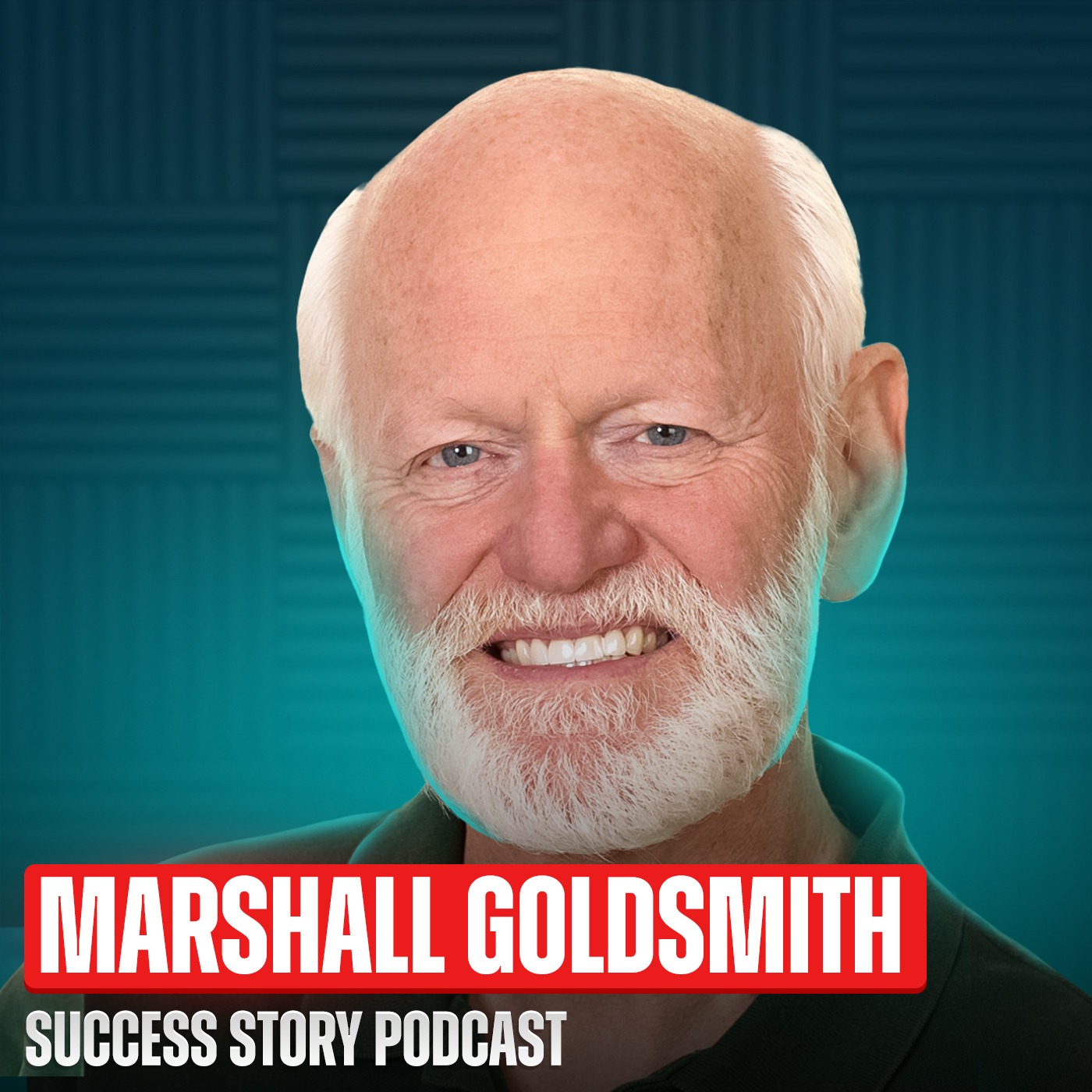
 Marshall Goldsmith - Executive Coach & Author | What Got You Here Won't Get You There
➡️ Like The Podcast? Leave A Rating: https://ratethispodcast.com/successstory
➡️ Join 321,000 people who read my free weekly newsletter: https://newsletter.scottdclary.com
➡️ About The Guest
Marshall Goldsmith is a globally renowned executive leadership coach and author, celebrated for his expertise in driving positive, lasting behavioral change among leaders. Over his four-decade career, he has worked with over 150 top executives from major global corporations, offering insights that foster personal and organizational success. His practical approach has earned him numerous accolades, including being the only two-time winner of the Thinkers50 Award for the #1 Leadership Thinker in the World. He is also recognized as the #1 Executive Coach globally and one of the top five most respected executive coaches by Forbes. His coaching process boasts a 99% success rate when leaders fully trust and follow his methodology.
Goldsmith is also a prolific author with best-selling books like "What Got You Here Won't Get You There" and "Triggers", both named among Amazon's Top 100 Leadership & Success Books Ever Written. His influence extends through initiatives such as the "100 Coaches" project, aimed at mentoring future leaders. Goldsmith's work has been recognized by almost every professional organization in his field, and he has received a Lifetime Achievement Award from the Institute of Management Studies. Through his speeches, workshops, and publications, Goldsmith has inspired countless leaders to reach their full potential, solidifying his reputation as a transformative figure in executive coaching.
➡️ Show Links
https://www.instagram.com/coachgoldsmith/
https://www.linkedin.com/in/marshallgoldsmith/
➡️ Podcast Sponsors
Hubspot - https://hubspot.com/
The Product Boss Podcast - https://www.theproductboss.com/podcast
NetSuite — https://netsuite.com/scottclary/
Indeed - https://indeed.com/clary
Demostack - https://www.demostack.com
Miro - https://miro.com/successpod
Policygenius - https://www.policygenius.com
➡️ Talking Points
00:00 - Intro
01:57 - Traits of Great Leaders
03:50 - Marshall's Journey
06:35 - Academia vs. Real-World Entrepreneurship
09:23 - High-Performers vs. New Entrepreneurs
11:42 - Can Leadership Be Taught?
14:36 - The Secret to Marshall's Coaching Success
18:26 - Finding the Right Coach
24:07 - Marshall's Coaching Goals
27:26 - Lessons from Top Achievers
29:19 - Marshall’s Lifelong Passion
34:14 - Purpose Beyond Work
35:52 - Power of Daily Reflections
41:40 - Sponsor: The Product Boss Podcast
42:22 - Struggles with Self-Accountability
46:40 - Democratizing Knowledge
50:24 - Tech for New Opportunities
58:00 - “What Got You Here Won’t Get You There”
59:10 - Asking Good Questions in AI
1:02:17 - Relationships of High-Performers
1:07:33 - Marshall’s AI Vision
1:11:05 - Marshall’s Parting Wisdom
Advertising Inquiries: https://redcircle.com/brands
Privacy & Opt-Out: https://redcircle.com/privacy
The difference between a leader and a chiever is, and a chiever, it could be all about me. Leader, it's not all about me, it's all about them. Being an entrepreneur, this is the tough shift. You need discipline to do the day to day to day work required to get better. If you're the founder and it's your idea and it's your baby, it is hard to let go. A lot of entrepreneurs don't have equal background. I will be happy when. When I get the money status, BMW, condominium, but we go public, I will be happy when. There is no wit. Life is short, it goes fast. You need to enjoy the process of life itself. Life is incredibly easy to talk. Life just incredibly difficult to live. Achievement and happiness are independent, variable. Never believe achievements can make you out. Welcome to Success Story. I'm your host, Scott Clary. The Success Story podcast is part of the HubSpot podcast network. Now, HubSpot is the resource that you need to tap into if you are an entrepreneur. It's no secret that starting a business is hard. Even if you have an amazing idea, bringing it to life can feel overwhelming. With HubSpot's new entrepreneurship kit, you can go from idea to IPO with the help of a company that knows a thing or two about growing better. This all-inclusive kit gives you step-by-step guidance and frameworks to help you crush every stage of starting a business with tools tailored to help all steps of the entrepreneurial journey is packed with templates for project management, emails, skill development templates, there's also a solopreneur guide, it's got freelancing, pricing worksheets, and lots more that you can use to get up and running immediately. And best of all, it's free. With expert guidance and frameworks from HubSpot, starting a business doesn't have to be hard, so don't wait to start yours. Go to HubSpot.com slash ENT to download the guide right now. Marshall, thank you for coming on. I appreciate you being here. I'm excited for this. I've heard you on other podcasts discuss that you don't love to really define leadership, because everybody has maybe their own definition, and it doesn't really help or benefit anyone to define and one myopic view at leadership is. Let's flip that a little bit. What are the actions or what are the qualities of somebody who's a good leader? Well, I will kind of violate my own code and give you a definition, and came from my old teacher, Dr. Paul Hersey. He said, just use an operational definition, so when I use leadership, this is what I mean. Working with and through others to achieve objectives, and the keyword and the definition is others. The difference between a leader and a chiever is, and a chiever, it could be all about me. The leader, it's not all about me, it's all about them. And you know, you've worked far more entrepreneurs than I have. As you know, being an entrepreneur, this is the toughship. From you to them, from being an achiever, which is all about me. I'm a brilliant guy. I'm hard working. I've got my job done. I love the product, the scaling, where all comes about them. So, you know, looking at the group of people you've worked with, I always say that is a number one challenge. In terms of what I do for developing leaders, three characteristics stand out. One, to get better, leaders need to have courage. It takes courage to do the stuff I teach. I mean, it's easy to understand a theory. It's hard to do and practice. It takes humility. You know, I've learned, I really is an investigative coach. I can't help perfect people. So, it's so much perfect how much I would do about it. You need some humility and you need discipline to do the day to day to day work, required to get better and you don't get better because you read a book or go over a course. You gotta work. So, I'd say it's about it. That's it. That's it. Easy. No, no, no, no complicated formula at all, right? I'm so curious because you came from academia. And then coming from academia, you realize there's theory and then there's real life. So, maybe even just walk me through very briefly a little bit about your background because you pivoted from academia to working hands-on with people building real companies and big companies. But then also maybe where academia doesn't quite get what happens when you're actually building the thing and they miss the mark a little bit because you've seen both worlds. You lived in both worlds. Yes. Well, let me give you my background. I bought a small town called Valley Station, Kentucky. My dad had a two pump gas station. So, I'm quite familiar with guaranteed base salary of zero and being an entrepreneur. So, my dad had a little two pump gas station back at Valley Station. Low income, low education environment, high school came in next to last in Kentucky and academic achievements. So, think about that. That's where I'm from. We were defeated by Appalachia, not good for academic achievement, not real good. So, then I went to school. I got an undergraduate degree at Rose Holman Institute of Technology, a little engineering school. I was almost evicted three times, got five Ds, barely graduated. But last year went back and gave the commencement speech. And first thing I said is, hey, let's hear it for the bottom of the class. Hey, you never know. You never know. Then I got an MBA at Indiana and a PhD at UCLA and I was a college professor and dean of dementia. Then, what happened is for the next, I met a very famous man named Dr. Paul Hersey. And he got double booked. He said, can you do what I do? I was a college president. I don't know. I'll try. So, I'll pay a thousand bucks for a day. I was making fifteen thousand bucks a year. I said, sign me up, coach. So, I do a program for this guy. I now was hugely successful. They were very angry when I showed them study. Yeah, I was a big hit. I said, you want to do it again. I'm making fifteen thousand bucks a year. You're paying me a thousand bucks a day. Yes, sir. I'll do this as much as you want. Let's not go into leadership development and then coaching same thing. I met a guy who's big CEO and he said, young kids kid were young, smart, dedicated, hardworking, jerk. Even worth a fortune. Maybe turn kids' behavior around. Said, I like forges. Maybe I get help him. He said, I doubt it. I said, I'll try. He said, I don't think you can do it. I do. So, I'll work with this kid for a year. If he gets better, pen him, you don't get better. It's free. You know, he said, sold. That's how I got into coaching. There was nothing called coaching. I just made it up. I love it. Did you find that, did you find, but, but just to that point though, when you were teaching students, were you teaching, you were teaching the same material that you were teaching to and coaching entrepreneurs on? Do you ever find that there's a disconnect between what academia thinks versus total disconnect, right? There's a tubeless. You have very few people in the academic world have any idea about business at all anymore. So, there's often just a chronic disconnect because they're not reinforced for that. They reinforce for basically doing research and what they do is good. It's just not practical, real world kind of stuff. So, when people do go back to school, I always tell never, never can choose getting a degree in wisdom. You acquire wisdom to acquire wisdom. You get degrees to get degrees. They're not the same thing. If you get them confused, just get in trouble. So, the real world is quite a different place than academia, especially for entrepreneurs. Look, they're not used to it. I relate to entrepreneurs for two reasons. What did you say? I work with people in the real world every day. My clients are very real world. They're around the same age. Five people is CEO of the United States. That's the real world. That's the real world. And also, you know, my guaranteed base salary has been for 47 years. Zero. Absolutely zero. I can't understand what it's like to wake up in the morning. You know, and you know, in 47 years, I miss four weeks of work. Mom died dead. I had a rupture to Phoenix and got COVID. That was it. Other than that, guess what? How about adding? How about adding? How about my foot hurts? Not so much. Have a cold. You just show up. So, I like entrepreneurs. They have the highest amount of respect for entrepreneurs. You know, why? I know what it feels like. Do you think that? Yeah. I mean, you are. You are one. You gave up that $15,000. $15,000. You're salad. By the way, we're laughing at $15,000. But I mean, when you were, when you're a professor, I'm sure that it was not nothing. So, oh, no, I was eating. Yeah, it was still. It was still. It was $80,000 a day or so. Right. Yeah. So, you still have people that want to make the jump to entrepreneurship and they're making $100K or $150K. Sometimes they're making even more than that. They're making $200, $250, whatever. It doesn't matter. And then they want, everyone wants to be an entrepreneur. I don't know if entrepreneurship was sexy when you were becoming an entrepreneur because you said like coaching wasn't a thing. I mean, I think it seems like everyone on their mother is a coach, but that's besides the point. By the way, one employed people used to all say they were realtors. Now they all say they're life coaches. But I think people don't understand how difficult it actually is to build something from scratch. And I think that's actually, this is nothing to do with, well, maybe there's a little bit to do with leadership, but just on the total aside, I feel like entrepreneurship is maybe overhyped a little bit. And I think that I think that, you know, more real conversations about entrepreneurship have to happen. So people understand like what they're getting into because now you work with, because you work with large, like, you know, Fortune 500. I'm sure you work with very early stage as well. So you see it all. I spent, and I'm actually curious, you know, from somebody who was like a leadership coach, what is the difference when you speak to somebody who was a Fortune 500 CEO or a C suite or executive versus somebody who is just starting out and started their first side hustle? What are the attributes that are the same like leadership attributes entrepreneurship attributes? What are the ones that are different? Well, I think usually when I'm coaching a corporate CEO, they're pretty good at delegating. They're pretty good at scaling. They're running billions of dollars worth of stuff, right? So they may get problems typically, but that's not their problem. When I coach in an entrepreneur, an entrepreneur is quite different, especially a founder. If you're the founder, and it's your idea, and it's your baby, it is hard to let go. It's hard not to be right. It's hard to let others do it, and it's hard to live with, I don't know, 80% is good, but it's getting bigger than everything I want. So for an entrepreneur, I find that as a big, big judge. Also, a lot of entrepreneurs don't have people background. So most of the corporate CEOs, more than more like MBA types, you know, they usually have some business where people oriented educational background or some things. Entrepreneurs are often engineers, scientists, people like that, and it's zero background in terms of leading people. So, you know, working with entrepreneurs at fun is really, you know, it's interesting and challenging to get them to focus on the people dimension. The people I coach need to focus on at the higher levels, yet a little bit different. Very interesting. Then do you feel like you feel like this like leadership skill set? Do you feel like it can be taught to anybody? Because you feel like it can't, because the reason why I ask is because I've heard many times, and this is also something that I believe as well, to a degree, the person to build a business to 10 million dollars may not be the person to build a business to 50 million or 100 million, who may not be the person to build the business to IPO. Now, is that a leadership problem or is that like almost like a technical aptitude experience problem? Because maybe leadership can be taught. It's a little bit, but one number one leaders can get better. I'm often asked is ridiculous question or reportedly made all this stuff. All leaders are born. 100% of every leader I met has been born. So they're all born. The thing is leaders can get better. Yes. Let me question. Can you make this transition? Yes. Is it easy? No. Will everyone do it? No. So obviously it can be done. That does mean it's easy to do. It can be very difficult to do. It's a different challenge. It's a different world. I've got to a lot of companies. It's just going to be ready to get ready for IPO. You know, and these are typically engineers that started the company and right guys created work their butts off. And they've just made it happen over time. It's not an easy transition, though. It's just it is a different job. I like the way you phrase the whole thing. It's not the same job. But this job, now it's this version of this job. It's like you're doing a whole different job. I'm assuming part of your job as a leadership coach executive coach is probably more like psychologists than anything else. I feel like people just get in their own head. Maybe you speak to all some of the some of the more common issues people have, but I'm assuming I'm assuming you're probably reinforcing things that people already know you're holding them accountable. I mean, you're getting them over their imposter syndrome. I don't know. You tell me what's what's your framework with that? I feel like that's a version of it. My whole area of expertise is behavioral change. I'm not an expert on technology. I'm an honorary PhD in engineering, but I'm not a real engineer here. Yeah. I'm a pretend to be engineer. So yeah, my undergraduate degree is in mathematical economics. I got a PhD in organizational behavior. My whole area is behavioral change. So I am not an expert on corporate strategy or anything like that. My area is I help great people to positive change in their behavior. So that's what I do. And that means that you have to change some some some minds that have it that are that are massively blocking them, right? Yeah. Look, and by the way, they're all perfect. They wouldn't need me. What did? So you have you have a feedback and follow up system. And that's that's it. You go to system. And I'm also always curious because I see it can you mentioned back back when you were still a dean. If people were out of a job, they'd say they're realtors. Now they say their coaches. So you have a system. Everyone has a system. Your system is built to you. Obviously an incredible career. And you have 1.5 million on LinkedIn. You have massive following. You've written books on it. You have you have accolades. You have credentials. You have experience. You know, you've you've proven out that you know, you're shit. What makes your system so successful? Also, double park question, which is bad, but whatever, you'll get you have your handle it. What makes your system so successful? But also, how can somebody who's looking to sort of upskill themselves understand out of all the different systems out there that accomplish different things who to look for in a coach and a person like, how do you how do you gauge who's full of it versus who's not? Well, first, let me answer the first question. I may or may not remember after that the second question. I'll get back to it. It's my nori. So the first question is how does my system work? My system is aimed at helping successful leaders achieve positive change in behavior. That's it. So never worry if that's not what you want. They'll use my system. That's what the system is for. The system that I'm very proud of. It's called stakeholder centered coaching. And otherwise, you don't need to be a PhD to do this. He just died a couple of about a year ago. Chris Coffey was the best coach we had. He got better results than me. In terms of a coach, he was amazing getting results. He had zero background in psychology, zero background in business. He was a failed actor who barely graduated from college. You know what he got though? He got results. How did it result because of the system? The system is pretty simple. In my job, I interview everyone around my clients. I developed a confidential profile. Here's what you're doing. Well, here's what you're not doing. Well, they don't know who said what they pick important behavior to improve. Then we have a ongoing follow up system. They talk to people with a learn. They actually apologize for their mistakes. They ask for input about how they can do better. They call it feed forward. I call it gene forward process. Yes, for ideas you listen, you shut up, you take notes, you say, thank you, and you do it over and over again. They follow up with the clients. I've followed with them over and over and over for 47 years. I didn't get paid if my clients didn't get better. Better is not judged by me or them, but judged by wherever around them. I mean, how do you know if some police what they're saying and asking questions you want to bet on it? Let's say I believe it, but I wouldn't bet on it. Guess what? They don't believe it. There's the money they believe it. I bet on this every time pretty much always got paid. Why? It's the system works. So in my basic coaching, it's a very transferable process. So that part of it is quite transferred. On the other hand, it doesn't fit what it doesn't fit. Let me tell you when it doesn't work. When I don't work with people that don't care. So I'm frequently asked, how do I motivate people that don't want to change in the answer is I don't motivate people that don't want to change. If they don't want to change, I don't care. I say, fine, don't change. If they say, prove to me, this is worth it. You know what I say? Probably not worth it. They're a terrible idea. Don't do it. I think it's stupid. You're right. It's stupid. Don't do it. It's okay. So I never try to motivate anyone. Number one, number two, this doesn't solve integrity problems. It doesn't solve strategy problems. Basically, it's helping people achieve positive change in their behavior who want to change. That's what it's good for. So what you're highlighting is actually dovetailing to the next question. There's an answer hidden in that answer. And it's somewhere around making sure that people are understanding your true motives for getting involved with them as opposed to like forcing something down your throat. So that's the hallmark of a reputable coach, I think. Yeah, here's my strategy on this one. Ready? Here's how you find if you got a good coach for you. First, don't tell the coach what your problem is. Don't see that's counterintuitive. Don't tell the coach, here's what I need. There's too many coaches. If you say, here's how I need your most of them, we say, oh, yes, I can do that. Well, eh, maybe not. Maybe they can't do it. They're probably going to say that again. Don't tell them what you need. Say, look, tell me, what are you the very best at? They say, well, here's number one. Now, if they get down to one, two, three, four, and five, be highly suspect. You notice, I don't claim to be a coach of 74 different things. And one thing, what do you get at this? Well, I don't need that. Fine. Get another coach. Well, don't tell the coach what you need. You ask the coach, what do you do best? And then if they get down to the third or fourth topic and they haven't, you know what you need, eh, eh, eliminate. Okay. Then let's assume what they say is roughly what you're good at, what you need. Then ask them, okay, who have your coach? Who have your coach? And is there somebody in writing and references? Real people? You know, there's some coaches that are told well, you can't tell people the names of your clients how you may have heard this before. Yeah, it's nonsense. Look at my book, The End Life. Let's see, uh, as of the world bank, woo, CEO of the year. Oh, another CEO of the year. Another CEO. Gee, they mentioned their names and they say they have a coach and it is sweet. Well, fine. Yeah, I mean, I don't know. What is this nonsense? I can't tell you my clients are, you know what they don't want to tell your clients are? They don't have any. Yeah. Yeah. Yeah. Yeah, that's, that's, I know, I love it because listen, we both work with a variety of entrepreneurs in different capacities and I've never, I've never enjoyed, um, I've never enjoyed the paid consulting side of it. I find it very hard. So I've actually stayed away from it. I enjoy doing the pro bono or the mentorship stuff more just because I consulting is a tough gig. And I guess the consulting coaching is the world kind of blend. Um, but then I come from like a background building businesses. I don't come from a, a coaching background. Um, but I see a lot of coaches and as somebody who, uh, you know, for example, I work with future printer and they every, you know, every six months will give me like a new entrepreneur to work with for a couple, for a couple of months. And so when you start to work with these early stage entrepreneurs, you see almost like this, this predatory, uh, behavior because these people that are trying to build a latch on to anyone and anything that sort of validates what they're trying to do. And funny enough, I didn't even realize this behavior as somebody who's not even like a formal coach, but I actually say no to more entrepreneurs, if future printer puts in front of me because I know that I can't help them. Then yes, because I'm not like, there's no financial incentive, right? There's no financial. It's it would be a waste of both of our time. I like, I have a background attack. I know a little bit about consumer goods. If somebody puts an agency in front of you, I never built an agency. I have some general ideas, but I mean, there's probably somebody's going to better serve you, right? So I had probably disqualify more than accept some of the people that they put in front of me, but that's it's an interesting point because I think that a lot of people get preyed on and especially early stage entrepreneur, but they don't have the support system to vet and they and they definitely don't have the money to waste, which is the biggest issue. The coach needs the money. Yeah. Yeah. The median income for a coach United States is under $50,000 a year. They should be realtors and make no money. They make no money. So it's, coaching is a wonderful profession, a terrible business. It's a hard business. It's a very hard, so the Abelese coaching schools say people go to it right. You don't think they tell them, they're going to grow up and be me when they grow up. No, no, you're not. But but just probable not every single person that goes through this school is going to be Marcia Bullsman. Very unlikely. Look, another point you've got that you're making about your audience on your, I work with a lot of people who work for big companies like Accenture, all these companies and they're lucky. They're going to be entrepreneurs and they get their butts handed to them. Yeah. You know, like they know they've never experienced life without daddy and mommy behind them writing checks. And you got there in the real world, right? You don't have that Accenture name behind you or that IBM name, all of a sudden it's the whole different ballgame out there. Yeah, you have a staff of people writing checks. You don't have a big corporate McKinsey. You don't have a big name. I'm going to coach you now for right now. You read, you ran a country for McKinsey. Well, okay, that's nice. You're not working with McKinsey now. I think that I think entrepreneurs sometimes first time entrepreneurs get their ego checked very quickly when they try and take a product to market. But that's, listen, that's why I think the most successful entrepreneur is somebody who's lived in an industry for, you know, 30 years and realizes the pain point, not just somebody who thinks that they can solve a problem that doesn't even exist yet. If you look at, you know, you speak a lot about achievement and why you should look beyond achievement. I thought that was a very interesting perspective. So, you know, you're looking at achievement, ambition, fulfillment, finding a meaningful life as a leader, as an entrepreneur, as even an employee. So, we're talking about almost like KPIs for success. So, yes, you, you as a coach, you unlock these, you know, you remove these limiting beliefs, you use a behavior modification. But ultimately, when you work with people, where do you want them to end up? Because it's more than just, it's more than just getting, you know, a better survey score from your team. There's more to it than that. Exactly right. As I've grown older, I just try to help people have a great life. To the great I can't. Most of my clubs, I work with many people who are billionaires. They're already rich. I just want to help them have a good life. So, what do you need to have a great life overall? Forget about just the money part of it. One, you need to have some higher purpose. Why? And I'm I doing this. You need an answer to the question. Why? Some kind of higher purpose. Number two, you have to be, you have to achieve those people on this call. They're achievers. And then number three, you need to love the process of what you're doing. All right. Now, if you do that in the game of life, you won. Now, why am I talking to you right now? You know what I could be doing? I'm making a terrible sacrifice talking to you. I could be at this moment playing crappy golf with old men at the country club and eating chicken salad sandwiches while discussing golf letter surgery. You know what? I am sorry that I'm rooting your afternoon. I am sorry that I'm rooting your afternoon. Oh, no, I've been again. I'm just in the old man and then golf letter to you out here. I mean, look, you gotta enjoy what you do. And here's the problem with achievement. The great Western myth is, I will be happy with when I get the money status BMW condominium. We go public. I will be happy with it. There is no win. There is no win. When's an old person waiting to die? There is no win. So I think it's very important to achieve, but achievement and happiness are independent variables. Most people never get this achievement and happiness are independent variable. Achievement is good. Achieve to achieve happiness is good. Be happy to be happy. Don't think you're going to achieve your way to happiness. It's not going to happen. By the way, if achievement would make you happy, how happy would everyone of my coaching clients be? Exceptionally, they would all be jumping up and down with joy every day. And they're not. So when you deal with people that are billionaires, people that are CEOs of again, the biggest companies in the world, what's a lesson for the rest of us that we should learn from that cohort of people when they've achieved all this shit that we wish we could achieve? Well, the first thing is never believe achievement is going to make you happy. You know, it won't. Now, why do we believe this? The great Western art form is there is a person. The person is sad. They spend money. They buy a product and become happy. It's called a commercial. I don't know if you've ever seen one of those before, but you know, it's the few. That's hampered into our brain. It's early in times. Why wouldn't we believe that? That's all we hear in our entire society. The reality is just not true. The person was sad. They bought a product. They were happy for a day or two. They're not happy anymore. Well, again, learning point for especially the young entrepreneurs listening, look, life is short. I'm 75. I know that probably better than you do. Life is short. It goes fast. It goes fast. You need to enjoy the process of life itself. And it's so easy to get in grossed and being an entrepreneur and your business that it just takes on a life and you forget your life. And also, don't forget the people you love. It's so easy to do that. Yeah, you forget the people you love. If you get to enjoy life, you get lost in this stuff. And I'm not saying this stuff isn't important. It isn't important. It's good to have achievement. It's just to realize achievement is good for what it is. But it's not good for what it's not. And by the way, never fall into the it's all going to be okay win trip. There is no win. There is no win. You know, I'm curious because you are 75 and you're still working and you're still building and we'll talk about what you're building now. It's like you don't stop. It's like it's not even like you're just doing the same stuff as you did like five years ago. It's like you're still building new stuff. So it's like you're a living embodiment of this. But but I guess I would ask, you know, you obviously love what you do. How did you set up your life so that you would want to do this to the age of 75 and then some? What was what was the thing that was like, yes, this is it. I'm very lucky. By the way, anyone successful that says that it wasn't largely about luck is just full of it. You know, they're arrogant, right? I am very lucky. I met a very famous man. I like to say Dr. Baller, so you got double book. Give me an opportunity, right? And I've been around really great people in my field and also my clients like I've learned so much from these I'm theory I'm supposed to teach them in practice. I learned way more from them. They learn from me, right? They should I should pay them money. Well, no, I'm lucky. And you know what I've learned being around mega successful people is that you need to find meaning in life. But let me tell you what, I've done nine programs in my house with retiring CEOs. Now these things range from tragic to hilarious. I mean, they have no clue. They quit being a CEO and some of their whole lives fall apart. Their whole lives have been they have this dream life for everyone kisses their ass every five seconds laughing at their dogs telling their wonderful. And then they think the world is that way. Then they retire and it's a complete and total nightmare. They just collapse. Well, you know, what I've learned in these sessions is your life goes on. And you know, you might have money and status and all that stuff. Well, you got to wake up in the next morning like when guy, you know, he said, well, my wife became angry. She said I was in the kitchen, alphabetizing the cans. When I ask her baked beans, should that be B.A. for baked or perhaps B.E. from said get out. My dude was a CEO Walmart using my clients, right? So he said I had his joke, I told him around the CEO Walmart, the funny joke, a very laughing bowl. And the clean joke didn't offend anyone. He said, I retired. I mean, just tell me joke. Nobody lives. Said they must be grumpy. Sounded another group. You know, I joke again. No one laughs. Finally, said my wife came to his wife says, Mike, Mike, you idiot. Did you actually think that stupid joke was funny? See, he was CEO Walmart. That joke, everyone, of course. I had dinner with him one night in the CEO of Gerald Mills, Steve Sanger, I have a dinner with him, right? Mike tells the joke. He's 30% of Gerald Mills revenue. He tells the joke. He thinks Steve said he'll laugh. Whoa, he could have told the joke twice. He left hard to the second time. It's because you have all these people that are just yes people around you all the time and then you lose your purpose. You start believing it's real. You're not stupid. I mean, he's not stupid. He's a good guy, but you tell a joke. Everyone laughs. What do you do? Why that joke must be funny. No, no, it's not funny. I've seen this. I've seen this with people that sell their companies. I don't work with the CEOs like you do, but I deal with a lot of like exited founders and the lack of purpose is just phenomenal with an exited founder. It's the same, probably the exact same. It probably even more so because from like the first hire they were there. You know, a first hire they were there and they had these people that were just basically catering to them every single day and then they sell the company and they get the check and then they don't even have somebody to grab and coffee in the morning. It's like nothing. Well, the other thing is look, how does this happen? You sell the company. I have to tell these people. When you cash the check, it's not your company anymore. Yeah. You don't want to sell the company. Do not cash the check. When you cash the check, it's their company. You get acquired. They give you the same bullshit. All this really isn't an acquisition. It's more like a merger and we really get to learn more from you than you learn from us. Blah blah blah blah blah and as soon as they you cash the check, they do whatever they want to do. You know what? It's like you're a company anymore. Grow up. It's their company and you know, how many times you heard that well, they've really screwed it up and they don't understand that they this and they that well, you know it. Don't sell it. Don't they. And then, you know, they get a board seat but then they get ousted from the board and then they're gone and yeah, I've seen it a lot. I've seen it a lot a lot. But it's about what's your purpose? What's your purpose in life? And I actually think that's a really like great leadership and great entrepreneurship is having a purpose outside of the work you do. And I don't think I think that when you play at that level, it's hard. I think it's very hard. It is very hard. And I was so wrapped up. If you don't have one, go find one. Because if you have one, you don't find one. You drive, you drive everyone around you, including yourself crazy. Yeah. How have you, how have you not let your work fully encompass your identity? Well, I love my work. And now for me, my life is pretty, I mean, why am I working? I love what I do. So what I do is fun. Now if it's not fun, guess what? You don't do it. I'll do it. And when I'm coaching people, will I enjoy this? You want to do this? Are you going to be a good client? All right. Have any slightest problem? Go away, go away, go away. I don't have to do this. So I'm instantly having to stay up fun. And I work as much as I want to have fun. Let's see. Now if I'm not having a good time, whoa, there's only one human in the world I can blame for that. Whose fault is that? I am an idiot. Yeah. So I have a good time. Why? Why wouldn't I have a good time? Let's see. Okay. Money, money, do whatever I want to do. Have a nice home, nice family, you know, healthy. What the hell? I love it. All right. I want to go back to a couple more ideas that you that you have that you sort of ruminated on over the years. So you have a couple different philosophies. You've written several books. There's so this is what's so fun about chatting with you. Like you you've taught so many different things over that we could probably talk all day, but we will not. We'll try and keep this relevant to the audience. You what were you going to say? Nothing. I'm good. Oh yeah. So you speak you speak about a couple different philosophies. You're supposed to talk about the the meanings of success and your mind. You also as part of like your I guess your philosophy on life, you have daily reflections, which are important for what exactly? What are these daily reflections? How do they serve somebody who is like a high performing individual? I'm going to give every number one. There's a process called the daily question process. All right. Now I've been doing this for 25 years. I'm now going to teach everyone listening something that takes three minutes a day cost absolutely zero. It's going to help you get better at almost anything. Oh, many this year old. I'm bringing this day cost nothing. Now let me get ridiculous to good to be true. Half the people that start doing this quit in two weeks. That don't quit because it does not work. It good because it does work. This is hard to do. What I'm going to teach you now. I've had so a call me on the phone almost every day for 25 years to make sure I do this stuff. Why? My name is Marshall. I'm too cowardly and undisciplined to do any of this stuff by myself. This stuff is hard. Don't kid yourself. It's hard for me. It's hard for you. It's hard for anybody. Here's how it works. Get out of the bridge. You don't want to call them right down the list of questions. Represent was most important in your life. Friends, family, coworkers, etc. Every question that's right. Yes, no or number. Yes, as a one knows as there are a number. Fill it out every day. At the end of the week, you see you get a report card. I will warn your listers in advance. A report card at the end of the week. It's thought as pretty as a corporate values plaque. You see stuck up on the wall. Seven noon is 25 years. You do this every day in which you learn life. Life is incredibly easy to talk. Life just incredibly difficult to live. It's not so pretty every day to do this. You look at that little report card every day. Every day we act like it jerks, say stupid things. Don't eat the healthy food we're supposed to eat. Forget the workout. You know, blah blah blah blah. Day after day after day. It's hard. It's very, very hard. Like from one of my questions every day. How many times just, how many times yesterday you tried to prove you were right when it wasn't worth it? I don't see too many zeros on my smart card and a guard federal professor not to be right all the time. How many angrier destructive comments do you make about people yesterday? I don't see so many zeros there. Well, we I don't want other people stabbing me in the back. How come I'm stabbing them in the back? Well, it's tough. It's hard to do. Very one of them are you currently updating on your physical exam. When guy was coaching said no 90 days in a row. He finally got the exam with the doctor told him you get cancer. Yeah, he's fine. The doctor said you waited seven months. You'd be dead. He knew he should have a physical exam. He just didn't do it. I'm going to give you your audience six questions every day. You don't do anything today but these six questions every day. You're going to have a better life. Number one, every day did I do my best to sex lower goals? Now the questions all begin with did I do my best to don't even say you did it. Did you even try to do that's harder. You see if I say did I do my best to can't blame somebody? Did I do my best to set clear goals? Number two, did I do my best to make progress toward achieving the goals they actually set which is much harder than it sounds. Number three, every day did I do my best to be happy? Did I do my best for every day? In my book, one of my books I talk about three people I'm coaching. They're all medical doctors. They're all famous people present in the world. But head of the Rockefeller Foundation, head of the Mayo Clinic. You know, I don't think they're stupid. Every day did I do my best to be happy? I just score average eight. All three of the same answer. Never done them. You tried to be happy. They're all medical doctors. I said, well, did you go on? You're going to die? Did they cover that med school there? Death. They brought that topic up. You see, they used dumb questions. I forgot to ask. My boy. Yeah, he should be happy. Good idea. I'm coaching one guy. We're four million dollars. It wouldn't be happier. He got a lot better. I call him an African coach. He made about three or three years. Like, how's it going? That's so great. What happened? I forgot to be happy. Well, you know, I was looking for a kid to be happy. I had number four. Every day did I do my best to find meaning. A way they're waiting for the world to give you meaning every day trying to create meaning. Number five, did I do my best to build positive relationships? You know, I'm rather waiting for everybody else to be your friend or you're there for. And then finally, number six, did I do my best to be fully engaged? Rather waiting for somebody else to engage. Like the point engagement stuff. I think it's a lot of nonsense. Why you get it engaged? But what's that about? You know, your adult, you do your best to engage yourself. So every day six questions, fill it out every day. You'll get better. Most people quit in two weeks. By the way, fame was article about the assuming email, Marshall Marshall goes with.com. I'll send your article about it. But it's I just want to take a second and thank the Havspot podcast network for supporting success story. The Havspot podcast network has incredible podcasts, like the product boss hosted by Jacqueline Snyder and Mina Kunlo Sithep. If you want to take your physical product sales and strategy to the next level to create your dream life, you need to listen to the product boss. They sit down for an hour. They do a workshop style podcast. They're going to talk about everything that you need to know to up level yourself, social media, marketing. If you're a consumer package goods, if you have any sort of physical widget, you need to tune into the product boss wherever you get your podcasts. You know, it's not it's not it's not it's hard work, but it's not complicated work. Two words we can choose. Simple and easy. Now everything I teach is simple. And I teach brilliant people. Go ask my close how easy it is. Why do you think people have such a hard time with their own accountability when they talk a lot. They say they want to be healthier. They say they want to make more money. They say they want to start a business. They want to get a promotion. But when you look at and the reason why I ask is because sometimes I have a hard time understanding that gap because me as an individual, I'm not by any means perfect, but I am somebody that usually takes a massive amount of action towards the things that I want. Probably more so than most people, which is probably why I've achieved some of the things that I've achieved in my life. I mean, just statistically, I think that most people I would be considered somewhat of an outlier, very similar to you. So if you're an outlier, what is the personality habit or trait that allowed you to be like this one? For example, I look at even my parents successful, but not high risk, not going to the gym six times a week. Parts that like maybe they have not all the time, right? It's very important to me. So what is the what is the thing that allowed me to do this, allowed you to do this religiously where some people they fail after two weeks? Well, I can't do it religiously by myself. That's why I have someone call me every day. You have someone call you every day? For 25 years, almost. Yeah, every day. Yeah, what? I think you may have missed that. I'm cowardly and undisciplined. But yeah, I said you needed three things early. Courage, humility, I just want you to see. Now that was the courage. No, not so much for me. Now humility, good. See, I'm humbled enough to admit I can't do it. Discipline, bad. So I'm saved by the fact that I need help. Look, get help. Yeah. You know, you can't do it on your own fine. Get somewhere to kick your ass every day. Get help. Get help. Well, then build a system like you need a system to scale the business. You need a system to scale your life. Exactly. That's what I do for a living and get over your ego. Yeah. Quit being ashamed to need help. We're ashamed to need help. People are ashamed to need help. Get over that. I'm not that ashamed. I need help. You think I'm better than my clients. I'm not better than my clients. My clients are great people. I don't pretend to be better than them. Health, they need help. You don't think I need help. I need tummy help. This system that you deploy like for high performing people in particular, why does it work so well? Well, well, for anybody, the high performing people are smart enough to do it. You almost answered your own question. Yeah. Performing people higher performing at lower performing people lower performing. Yeah. Is there something that do you think that the case to say somebody does this six question system and they're having trouble, they're having trouble even doing the system that holds them accountable. What's get help, get personal accountability? Yeah, they help. It's the way to get you either do or don't want to do it. It's okay. It's okay to need. We are. Look, there's a great book called the checklist manifesto. If the about the medical checklist, you're going to have a surgery. The nurse asked the doctor for serious questions before the surgery. The odds on uneven inflection, omit and the death rates cut by two-thirds and the huge majority of hospitals in the United States do not let the nurse ask the doctor the questions. Why? Ego. The doctor is ashamed to admit they need help. Ego. According to the doctor, wanting more people have died from the egos of surgeons just in the United States. Then died in the Vietnam War and the Afghan War and the Iraqi War put together. What? They're ashamed. They're ashamed to say I need help. They're ashamed to say I forget to wash my hands. They're humans. You forget the words you're having sometimes. It happens. One of the projects that you're working on right now is sort of focus on the concept of knowledge philanthropy or the democratization of knowledge, which is now happening everywhere. It's happening on it's happening on YouTube, it's happening on podcasts happening right now, but just talking to me about the democratization of knowledge, why you chose, again, keep building stuff which I find is phenomenally still building new shit, but why you chose to take on this new sort of knowledge philanthropy project? Give me some background on this. I've been trying to do this for 20 years. So the idea is not a new idea. I've been doing what? And you know what? I won't say after 20 years of effort, I was a complete and object failure and almost everything I tried. This stuff is hard to do. You're so damn hard on yourself for no reason. I'm hard to do. I mean, I don't know if there was something called interactive video, it costs two or three thousand dollars. These big clunky boxes that I'd carry around. I don't know failure. Recently though, the new technology has really enabled this stuff to work. So I am very lucky. Now, all you got to do is go to Marshall Goldsmith, my name, dot AI. It's all free. Now, with the I'm proud of, there's no trick to this. See, most people give away something. There's a trick. Oh, yeah, this is free. But what you pay extra, you get to a special club, you know, blah, blah, blah, blah, blah, there you don't trick. It's actually free. That's what it's called knowledge philanthropy, not knowledge trick. So this is all free. So, so what did you do? You trained an AI on what every single video you've ever recorded? Oh, yeah, everything I ever did. But it's better than that. See, that's where it was two months ago. The last two months has come through the roof. My goal was to teach this thing every, everything I knew. Therefore, anybody they wanted to ask me a question and ask me a question and it'll answer it by 80% as good as I could. That was my goal. It's stupid. Oh, it's so much better than that now. It is mind blowing. Let me just give you a couple of examples. So, my daughter says, my daughter wants to trick the AI. She says, oh, how is your coaching related to utilitarian philosophy? I don't even know what utilitarian philosophy is. Being brilliant answer. I'm coaching the guy who says, co CEO. What's the like to be a co CEO? That's not that common of a job. This thing is amazing. I use it all, I use it right for an album, a lot of you before it described the working together process. He's an engineer. I think it's a perfect. Here's what it does. You say, look, how is, I'm a Buddhist myself so I can understand the answers better. How is Buddhist philosophy related to your coaching? It studies Buddhist philosophy. It studies my coaching and it gives you this, and it studies the way I would answer the question. It gives you this ungodly brilliant answer at about five seconds. Now, this thing started out as text. It is soon going to be audio. Then it's going to video where you're going to see this guy with the green t-shirt and bald guy talking, and then ultimately it's going to be available in multiple languages. This is mind blowing. Yeah, not that I'm shallow or anything, but let's be honest, you're in the high tech business. I'm 75 on the cool low meter spectrum. How cool is this? Let's face it. This is off the beer charts. It is. It's very cool. But I think this is going to be like, this is like, this is what people are going to start doing, though. They're going to start codifying their knowledge. I think this is like, when I saw that you were doing this, I was like, this is so awesome because it shows how you lean in to a new technology. You're not running away from it and you're not, oh, I'm not going to have a job in six months because people can go on chat GPT. It's like you're leaning into it and you augment what you're already doing. It's like a leverage thing. I use it with every one of my clients before this call. The previous call I used it. Yeah. Previous call I was going to use this, right? And so I use this all. I look, I don't care. I can tell you, this is not a coaching bot. It's a knowledge and information bot. I can't compete with this thing. I mean, it knows everything I know a lot more. It has a photographic memory. No offense to me. I do not have a photographic memory. It does. It's better than me. It's not a little bit of reason. Way to help better than me. It's okay. I'm not in a contest with it, right? It wins, right? Well, look, no offense to the other coaches out there. But I get ranked everyone coach for years and it's way smarter than me. So, if you think you're smarter than ifs thing, you are hallucinating. Where does the human component come in? That's where I'm curious. So, so that's so what you just said is scary for somebody who is a knowledge worker who's okay. Listen, if people discover how to use martial goldmith.ai or any of the other LLMs or AI tools, if you can just regurgitate information or even regurgitate it better or with more relevant examples or frameworks or whatnot. I'm like, okay, well, shit, I'm out of a job. So, what is the human component that's still that you still bring to the AI result of the inquiry or the question? Now, let me tell you what it doesn't, it doesn't do. Why, it's not as goofy as me. So, one thing about it, it doesn't really have that much personality. It's hard to teach these things humor, right? It was a little more on the serious side. My clients say, you know what, I really don't like about it, that you have, it never gives me any shit like you do. So, it's actually nicer than me. It doesn't insult my clients, give them hard time, right? It's much more much nicer than me. It's not very funny. It doesn't give them any crap. So, let me tell you what it does. It's an information sharing device. Look, nobody gets better because I learned them information anyway. Look, I did a little thing recently with medical docs. I'm studying compliance of taking the medicine. The average medical doctor does no better than the average intelligent person in taking the medicine that they actually prescribe. The problem is not knowledge, it's execution. The problem is what I teach is not knowledge. My clients, what do I teach? My best client ever worked with Alan Malali. He used CO4 when I went to COBO and went over to Ford's best CO in the world. Alan, that's for an hour. They got Alan said to this all the rest of the coaching thing. I said, it's about it. He said, yeah, I'd built their points. I can do this stuff. Well, you know, that's it. Alan, what's the key to the coaching success? You know, he said, you got one job. Work with smart, dedicated people. You're going to be like a hero. Work with losers, you look like an idiot, right? So thank you, sir, changed my life. Well, back to this stuff, the problem is execution. It's not theory. You cannot fight this thing on knowledge and information. I can tell you, don't even try. I can't, I cannot defeat this thing on knowledge. It is good. On the other hand, knowledge does not mean you're going to get any better. Knowledge doesn't mean you're going to get better. Why do people hire me? I don't say anything that conflicts. By the way, they can read the book. They can read the book. I write books. Read the book. Watch the video. Listen to the podcast. I give it all away. Why do they hire me? They hire me because they're not going to stop by themselves. If they could, they wouldn't hire me. You know, if they're agitated by themselves, it's hard to do by yourself. The other reason they hire me is a little bit different. There's no saying, it's lonely at the top. It used to be lonely at the top. It's lonely or at the top today. I think I know what to talk to. Social media, internet, whatever they say, bloom. I think you cruise five and five seconds. Yeah. Yeah. I can't talk to you. So, you know, it's just nice for him to have somebody talk to. Also, somebody tells them a damn truth. I mean, they're surrounded by this all day. Yeah. It's nice to have somebody just tell you the truth. Try to help you and not trying to get promoted. You know, it's interesting to, with AI and all the bots and the tools out there and all the databases of knowledge. You're one of the first people that I've seen to codify all their knowledge into a bot. I think companies are probably doing it already for a slightly different purpose. They're like taking all their stuff, putting it into these these models. But it doesn't, it doesn't replace lived experience. That's the one thing you can never replace. So, yeah. I mean, it is not human. Now, let me tell you, this is part to do. I put hundreds of hours in this. Yeah. I was listening to some podcasts where we jumped on. I guess you got investment for this. Or there was a whole, there was a whole play to that. We're variables. We're variables. Who's going to make this work? One, you got to have a ton of content. Yeah. Content. If you put a ton of content, this is not going to work. Two, you got to be willing to give it away. Three, as you make, she got a lot of followers. So, let's say, I've got a ton of content and I'm willing to give away. They have no followers. No one cares. They're giving it away. No one does. No one cares. I give it all my stuff away for free. And who cares? No one cares. And then for those, someone's got to write a check. Yeah. I'm working with a group of people called fractal analytics. It's been a probably large sum of money on this thing. Yeah. Why? They're Indian, India, Hindu philosophy, parent god teacher. Teacher is a huge deal. Guru just means teacher in India. I'm a guru. They're doing this a favor to me and give back. It's all free. There's not some secret here. It's all free. And for them, it's a, you know, also learning opportunity, of course, because already we've had 42,000 people, 42,000 questions already. Really? She's good. How old is it? It's relatively new, no? Yeah. Well, I really even haven't done the rollout yet. Yeah, because I was looking on your social. I didn't see, like, I didn't see you pushing it super, super hard on social yet. Okay. So it's like, it's, it's, it's needed. If you have people already doing 42,000 different asks, it's popular. It's very popular. Very good. Well, you know, one of your books, what got you here won't get you there. Very influential book. How does this tie into AI? Because it seems to be like a very similar theme as to what you're doing right now. Yeah. And it's that book, I've sold three million books. That book sold as much as the others all put together. I mean, that book is a mega book. And what I like about the title is a great title. What got you here is a good title. That's the whole thing though. Look, the world changes. That look at me. It's not like I'm not trying to learn new stuff. Hell, I'm 75. I'm not trying to learn new things, do new things, try to learn all the time. Why? Well, what got me where I was was fine. But I will live there anymore. We're in a new world. That's the way life is to be life is like this continuous learning adventure. And you might as well face it. The pace of changes not going to slow down. Pays of change only goes beat up this life. This life. So I think it's really good. Just make peace with that. You know, life is just just ongoing learning thing. And that's the way it is. It's okay. You know, you mentioned that this is just this is a knowledge database. It's easy to inquiry and to search for stuff that the human component is going to one part of it's going to be execution. But another piece of the human component that is always important that I've heard you emphasize is the ability to ask good questions, which has always been important. But I think, like, speak to why it's so important now. Well, and number one, it's very important. But number two, here's why it's hard for a computer bot to do this. And I have to agree on math undergrad. So here's why it's hard. Let's say you come to the computer bot and say, give me a career. Oh, that's ridiculous. And I ask you a good question. Well, how old are you? That's pretty relevant question. Okay. You give me an answer. Well, now you see the number of responses has to be huge to cover that answer. What industry you interested in? What's your educational background? Think every time you add a new iteration, you're adding a multiplier to the number of answers that need to be available and answer your question. It becomes it becomes mathematically very difficult in a very short period of time. So it is very hard to program a computer to ask questions that provide intelligent responses. Because after a while, it just clicks out. You know, you're getting a boom that number grows to infinity faster than you have to make it. It's very, very hard. The other thing is the computer is not human. So I was coaching somebody today. Well, I'm trying to talk to the guy. When one thing I teach clients, I've never say nobody or however, when I talk to you, I find you $20 every time you do it. So we had a good conversation. All of a sudden he starts getting, well, no, no, no, no, no, you get defensive and all of a sudden I'm up. I'm supposed to talk, you're supposed to say, thank you, not no, no, no, you're doing your head like this. And so let me tell you something. You know what I'm saying? Oh, no, you're confused about blah, blah, blah. Excuse me. I'm not confused. I've done this 50 years. You don't hear what I'm saying. Now, I want you to be quiet and listen to what I'm saying. I'm saying, thank you when I get done. Well, computer vibes are going to do that. Computer vibes like you don't, computer vibes are going to be quiet now. And computer vibes are going to say, you don't want to hear this. Now, you've been everybody doesn't want to do that. So I like this guy also said, I said, how can we talk bad about God like you are? That's nice. Oh, what do you need to get better at? Well, let me give you yet. Somebody says, what do you need to improve? You can't think of something. I got one for you. Pick humility. Let's kill this work on your melody. That's all that's usually a good one. Yeah. If you think you have nothing to improve, pick humility. Yeah, you're probably thinking that would you need to work on? Let's try your melody. Probably it. Yeah. Yeah. No, that's true. Computer vibes are going to do that. But I'm assuming like, you know, this is, this is wisdom that you see so relevant now, the ability to ask good questions. But I think I have the reason why you're successful at the work that you do is because you've been asking, even, you've had the ability to ask good questions for the past 50 years, which is I think what really you're just now you're just seeing it's not just a nice to have. It's a need to have as a as a skill. Well, also for leaders, Peter Drucker, my mentor said the leader of the past room, I'm tell leader, future, most of us. Well, we all need to ask questions. Are you single or married? I forgot to ask you this question. I'm not married, but I'm not single. So what married soon? We've been together five years. Five years. Oh, good. Yeah. Let me ask you some questions. Are you ready? Let's go. What do you believe that customer satisfaction is important? Yes or no? Customer satisfaction. Yes, of course. Or something. Yeah. And should we ask our customer for information and learn from our good customer? Should we do this? It's a thousand percent. Thousand percent. I remember in these words a thousand percent. I feel like I'm setting myself up for something, but that's okay. Now you have a partner. Is that correct? Yes. Yeah. Have you spent a lot of time asking your partner, what can I do to be a better partner in our relationship? Probably not as much as I should. What happened to that thousand percent? Absolutely. I noticed a dip in that level of enthusiasm. Now I have a question. Who is more important? Those customers don't even know your name or that partner. You get a marry. It's definitely definitely the partner. Definitely. When we get done, you're going to go talk to your partner and say partner, I got a question. What can I do to be a better partner here? You know what your partner's good thing? What happened to you? Yeah. She's got a she is going to wonder what kind of podcast I was on. I've just turned from a business podcast to a relationship podcast. But you're not wrong. Actually, you know what? I think that listen, I think that that's a huge blind spot that most people have because especially high performing people who are building stuff, you get so focused on, by the way, this is why relationships are destroyed all the time because you get focused on, okay, how do I drive revenue? How do I scale? How do I grow? How do I reduce churn? How do I reduce acquisition costs? How do I increase lifetime value of the customer? I'm going to have customer interviews and I'm going to have surveys. I'm going to have, you know, all these groups sitting down at what are they called like focus groups, whatever. And you don't do that for 30 years. I hasn't been 30 years. You only have a 30 years with the person that you're married to. But a lot of a lot of good practice, best practices in business, I think they're probably just universal. It's a little exercise or everyone listening right now, everyone listening. Are you ready? I want you to get yourself home. You're going to send a text to your husband, wife, friend, or partner and ask one question, what can I do to be a better partner in our relationship? You send that text right now. Don't tell them, don't explain what it's about. Stand the text. I've done this with thousands of people. What are the, what are the, so the people when, when, when, when, when, say, I say, I texted, heard that right now. Is it so? Let me give you some of my favorites. Well, I was going to say, is it so strange that people feel like, like, is she going to text me back like, Scott, are you okay? Are you having like a, a stroke? Like, how many call 911? Let me give you some of my favorites. A common one is, this is your wife who is this intended work. But not another one who's stolen my husband's cell phone. Oh my goodness. Are you sick? Are you drug? Yeah. Who are you sleeping with? Yeah. Oh my goodness. I get hilarious responses, right? How bad is that, right? On a serious note, twice. Two people told me later to save the marriage. That's, that's enough for me to save marriages here. And you know why? On a serious note, you're right. We preach all this stuff and don't even practice it with people we love. Yeah. Yeah. Yeah. Because I think that, I think that it's easy to tell if a business is broken because you're, you see it in your bank account. I think unless you have a self-awareness or you're looking for it, it's not as easy to tell if a relationship is broken because there's no number. It's also hard to look for it. Yeah. It's hard. Look, everything I teach is hard. Not, not, it's simple. The concept is simple, but it's not easy. It's hard. And by the way, if you want to know the concept of anything I teach better than the concept, just go to Marshallgolsmitt.ai. I can tell you. You want to learn it. It knows more than me. It'll teach anything I know in a lot more of government. Is there anything that, you know, just some insights, some wisdom that you've had over your career, anything you're working on now that we didn't go into? Went to a lot. I, I have a quick, please choose the Marshallgolsmitt.ai and simply email. I give you remember email address, at Marshallgolsmitt.com, use the AI as much as you want to and simply email address it. Let me know, you know, I like this. Give me ideas. Because for me, this is hopefully a lifetime project. I mean, hopefully I'm going to work on this rest of my life because there's a, what's the definition of legacy? It's being there when you're not there. Look, I'm a realist. I'm 75 and I'm not going to be here forever. And this is my way of, this is my knowledge flat for you, giving back, being there when I'm not there. And I love it and hopefully helps others. And I, there's no downside. Again, back to what I teach straight forward. Astrid is, listen, use what works for you. If it doesn't work for you, let's say give you eight suggestions. We'll see you like one of them. Okay. You're one ahead. You're one ahead. You don't have to do the other seven. You're grown up. Ignore the other seven. Just use the one. You win. And it's free anyway. What do you got to lose? I love it. So people want to connect with you, MarshallSmitt, Marshallgolsmitt.ai. My, my email is Marshallgolsmitt.com. Marshall, Marshallgolsmitt.com. And anybody can go to Marshallgolsmitt.ai anytime, your, your biggest social is LinkedIn. So if people want to connect, if you can go on LinkedIn, they can catch you there. I don't want to raise expectations. LinkedIn only allows so many connections. Okay. Okay. So they can follow what you're doing. Yeah. I know it's way over that. But I, but you can always find, I hate the term follower, but I've got one and a half million followers. So you can easily do that. But yeah, I can't say I can be a connection because they limit the number of connections. Where do you, where do you like to outside of, outside of the actual AI tool? Where do you like to, is it YouTube? Is it Twitter? Like, where is the thing that people can get new information from you? YouTube. I've got 400 videos online. Okay. You're a coaching.com coaching.com. Is that your domain? No, no, but coaching.com, I gave them a bunch of training programs. Oh, okay. 30 videos you can watch me teaching coaches for free. Okay. Amazing. I'll put, I'll find all this stuff. I want to put it on the show notes. Yeah, I'm giving it all away anyway. So yeah, I know you are. I know I'm, that's why I'm trying to get it all out of you. I'm trying to get everything so I can just give people like a little, like, what is it? Like an amalgamation of all the different things that you've done so they can just go learn. Amazing. Yeah, you put a lot of content. You put a lot of good content. I went down the rabbit hole this morning. You have a lot of good stuff. I love it. Of course. No, seriously, I don't know what happened. Oh, it's fine. It's whatever. If people are still watching at this point, then they're bought into the concept. They're bought into this. They're good. They're here. They don't care about the light changing color. This is, this is, this is real life podcasting technology works like maybe 25% of the time who cares, right? So I'll give it to you. Some last words of wisdom. Maybe something that you would tell your younger self or tell the audience something that you just want to leave them with. I will. Here's my final advice. The best coaching writer we're going to give in this or perhaps any other lifetime. Are we ready? Here it comes. Breathe, breathing, breathe. Take a deep breath. Imagine you're 95 years old and you're just getting ready to die. It's all over. Here comes that last breath. Right before you take the last breath, you're going to be beautiful gift. The ability to go back in time and talk to the person who's listening to me right now. The ability of that person to be a better leader, more important, have a better life. What advice with the wife is 95-year-old you knows what mattered in life and what did not matter. What was really important, always not important. What advice should a wise old person have for you that's listening to me right now? Whatever you're thinking now, do that. In terms of performance, praise lies the only one who will ever matter. That old person says you did the right thing. You did the right thing. That old person says you screwed up. You screwed up. You have to impress anybody else. Some friends of mine interviewed all folks who are dying. Got this. This question. What advice would you have? On a personal side, three themes. Theme number one, we've just got a little bit three or be happy now. Not next month, not next month, not next week, not after I get the IPO, not after I get the money. Life is short. Be happy now. Don't get so busy chasing what you don't have. You never appreciate what you do. Number two, friends and family, never get so busy climbing the ladder of success and you brought this up. You forget the people you love. That's a big mistake. When you're 95 years old, they're the only ones waving goodbye. And number three, if you got a dream, go for it because you don't go for it when you're 30. You may not win your 80. And entrepreneur is a pretty good at that one. Business vice doesn't much different. Number one, life is short. Have fun. If you don't enjoy what you're doing, you're doing the wrong thing. Number two, do whatever you can do to help people. The main reason why people is not going to do with money or status for getting ahead. Maybe to help people is much deeper. That old user is going to be proud of if you're because you did and disappointed if you don't. You don't believe this is true. Any CEO is retired asking, what are you proud of? I've interviewed a bunch of them. Nobody told me how big their office was. Final advice, go for it. Life is short. We usually regret the risk we fail to take out the risk we take and fail. And finally, as I grow old, what's my message, my mission life, my mission life is real simple. What I want to maybe just help you have a little better life. If somebody listen to this, this little better life based on some I've done or if you have made up or whatever, a little better life, you know what, I'm declaring let's say we did this podcast. One person had a little better life. You know what, it's a good podcast. It's a good podcast. So thank you so much for inviting me.