


 YouTube
 Apple Podcasts
 Spotify
 Overcast
 Castro
 PocketCasts
 Amazon Music
 Deezer
 TuneIn
 Podcast Addict
 RadioPublic
 iHeartRadio
 RSS Feed
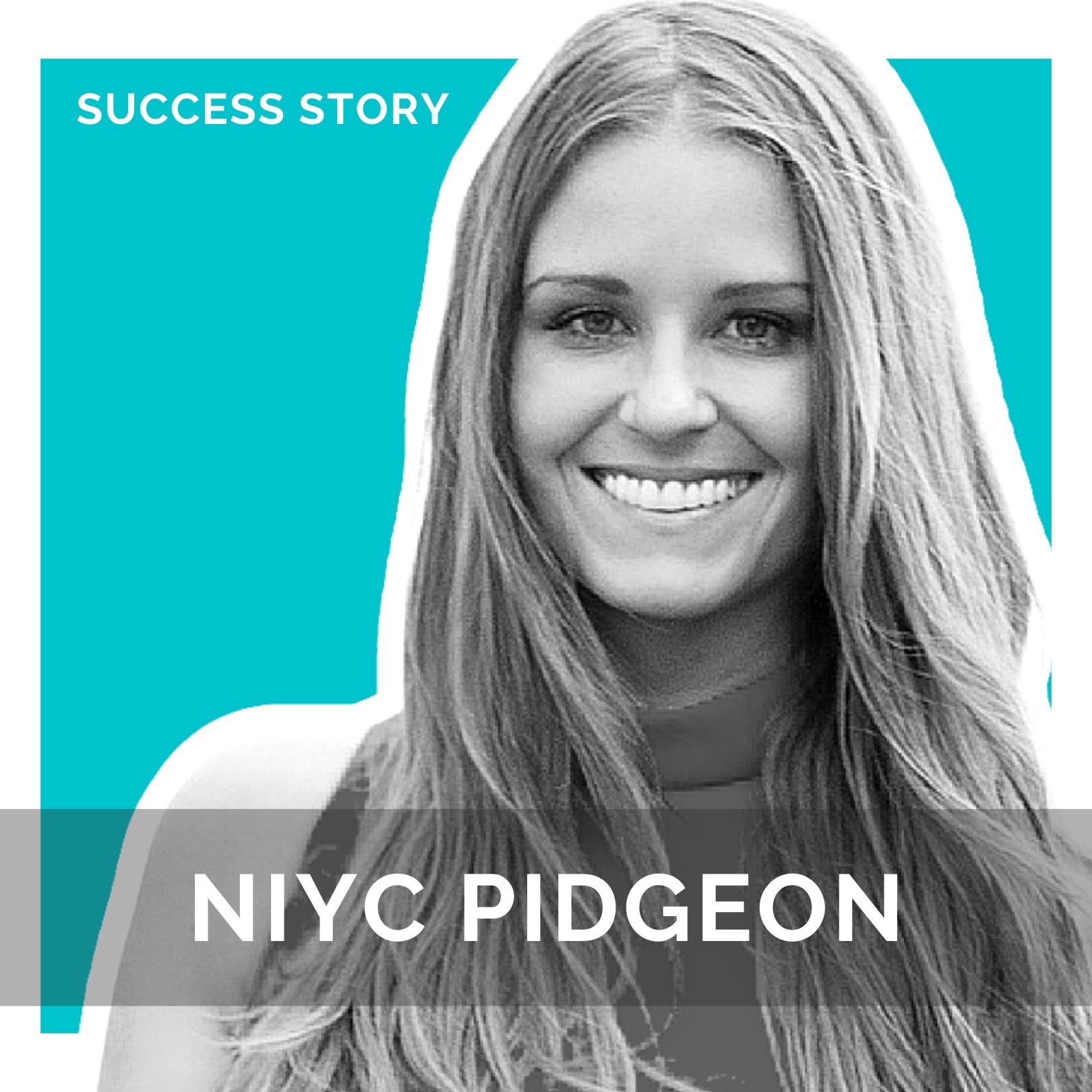
 Niyc Pidgeon - Founder of Unstoppable Success | Empowering Women-led Businesses
➡️ Like The Podcast? Leave A Rating: https://ratethispodcast.com/successstory
➡️ About The Guest
Niyc Pidgeon is a motivational speaker, positive psychologist, and business coach who is the founder of Unstoppable Success, a globally acclaimed online training company. She helps women-led businesses grow through six-figures, seven-figures, and multi-seven figures using her frameworks and methodologies. Niyc has won awards such as Young Entrepreneur of the Year 2015, Psychology Book Of The Year 2017, and Most Outstanding Positive Psychologist 2018. She has been appointed as a Supporting Partner at United Nations Women UK as an Ambassador for their Onebracelet campaign to end violence against women.
Niyc has helped more than 10,000 women-led businesses create success and has sold millions of dollars worth of programs and products from the stage, online, and on the phone. She has been featured in numerous mainstream media and named a "Legendary Entrepreneur" in Forbes. Her award-winning and best-selling book, "Now Is Your Chance," is a 30-Day Guide To Living Your Happiest Life Using Positive Psychology, published with the world's largest mind-body and spirit publisher Hay House. Niyc is now working on her second title, "Force of Nature."
➡️ Show Links
https://www.instagram.com/niycpidge/
https://twitter.com/niycpidge/
https://www.linkedin.com/in/niycpidgeon/
➡️ Podcast Sponsors
Babbel - https://babbel.com/ (Code: Success Story)
Netsuite - https://netsuite.com/scottclary
Hostinger - https://hostinger.com/success
Hubspot - http://hubspot.com/successpod/
➡️ Talking Points
00:00 - Intro
03:34 - From Trauma to Triumph: The Inspiring Origin Story of Niyc Pidgeon
08:08 - The Power of Parental Support: How Niyc's Confidence Impacted Their Work
09:35 - Unleashing Your Inner Optimist: Understanding Positive Psychology
13:26 - Tools for Overcoming Trauma: Niyc Pidgeon's Personal Strategies
22:43 - Teaching Entrepreneurs to Thrive: Niyc's Motivation for Creating a Positive Psychology Company
26:50 - Writing a Life-Changing Book: Niyc Pidgeon's Journey to Spreading Positivity
35:05 - Starting from Scratch: Niyc Pidgeon's Advice for Building Something Great
37:32 - Post Traumatic Performance: Overcoming Adversity and Achieving Greatness
40:48 - Lessons Learned from a Positive Psychology Expert
42:50 - Connecting with Niyc Pidgeon: How to Get in Touch and Learn More
43:18 - What Keeps Niyc Pidgeon Up at Night: Personal Reflections on Life and Work
43:47 - Overcoming Challenges: Niyc Pidgeon's Story of Perseverance and Resilience
44:27 - Most Influential Person in Niyc’s Life
45:28 - Niyc Pidgeon’s Must-Read Book and Podcast Recommendations
45:55 - Advice for My 20-Year-Old Self: Niyc Pidgeon's Words of Wisdom
46:18 - Defining Success: Niyc Pidgeon's Unique Perspective on Achieving Your Goals
Advertising Inquiries: https://redcircle.com/brands
Privacy & Opt-Out: https://redcircle.com/privacy
Explain to me what positive psychology is because I know nothing about what this is at all. So it is the performance focused psychology. Positive psychology, the pure definition is it's the science of happiness. It's the science of success. And today my guest is Nick Pigeon. She's a motivational speaker, positive psychologist and business coach who is the founder of Unstoppable Success. She helps women led businesses growth for award-winning and best-selling book Now is Your Chance. Is a 30-day guide to living your happiest life using positive psychology. When I was 11 or 12 years old, I got bullied really badly. I got a surname which is Pigeon. I used to get bullied all the time. I was also a given school. So I was one Tuesday morning. I remember I just didn't want to go to school. It felt like the bullies could get me. And at that early age, I actually took all of the medicine and my mom's medicine. So I just take my own life. Why are you choosing to write a book about the topic that you're writing about? How do you bring these topics up in day to day and not go back to a time in your life when you were in a darker spot? So I have... Welcome to Success Story. I'm your host, Scott Clary. The Success Story podcast is part of the HubSpot podcast network. Now, if you enjoy Success Story, you're going to love some of the other podcasts in the podcast network. One of them or one of my favorite is the Hustle Daily Show. It's hosted by four dynamic hosts, Zachary Crockett, Jacob Cohen, Rob Litturst, and Julia Bennett Ryla. Now, they speak about a ton of different engaging off-beat business topics, tech topics. One of the most recent ones I tuned into was their episode about Amazon pausing HQ2. And I can assure you, it's all informative, but it's a blast to listen to. They cover a ton of different topics. They covered the rising cost of dating, AI news, America's obsession with Air Fryer's Trust Me. You do not want to miss it on this show. It's a perfect way to keep up on the latest news while enjoying light-hearted comedic takes, entertaining spins on things. So please subscribe to the Hustle Daily, wherever you get your podcasts. My guest is Nick Pigeon. She's a motivational speaker, positive psychologist and business coach who is the founder of Unstoppable Success, a globally acclaimed online training company. She helps women-led businesses grow through six figure, seven figure, and multi-seven figures using her frameworks and methodologies. She's won awards such as the young entrepreneur of the year award in 2015, the psychology book of the year in 2017, and the most outstanding positive psychologist in 2018. She's been appointed as a supporting partner at the United Nations Women's UK as an ambassador for the one bracelet campaign to end violence against women. She's also helped more than 10,000 women-led businesses create success and has sold millions of dollars worth of programs and products from the stage online and on the phone. She's been featured in numerous mainstream media outlets and named a legendary entrepreneur in Forbes. Her award-winning and best-selling book, Now is Your Chance, is a 30-day guide to living her happiest life using positive psychology, published with the world's largest mind-body and spear-published her hay house. She is now working on her second title, Force of Nature. There's been a couple of very key defining moments that spring to mind. So, first of all, the one that spring to, I've got it with the earliest one. So, when I was 11 or 12-year-old, I got bullied really badly. I've got a surname which is pigeon. So, it's pretty ridiculous. I used to get bullied all of the time. I was also a geek in school. So, I had a bit of a rough time when I started high school. And I was one Tuesday morning. I remember I just didn't want to go to school. It was the day where we were doing school. And I was fine if I was in like a classroom environment. But as soon as I got into that more fluid kind of, anyone can go anywhere and do anything. I felt like the bullies could get me. So, I didn't want to go to school so bad, and my parents wouldn't listen to me. They were like, what happened, Nicola? Come on, just get yourself there. And at that early age, I actually took all of the medicine in my medicine cabinet and tried to take my own life. So, that was, I didn't actually realize how much of a defining moment that was until more recently. And what happened during that time when parents took me a hospital, spent two days there, and then pulled me out of the school that I was in. And they actually homeschooled me for six months because I couldn't get into another school because we're out of the attachment area. And dad decided to remorgge the house. Like literally worked all of his life with so hard to build this life. And he was like, I'm going to take a bet on this young kids. And I believe in her, and I'm going to remorgge the house so I can afford to send her to a private school. Looking back for my parents to decide to do something like that for a kid at that early age, like really taught me that they really believed in me and they really saw something that I could like make a good thing of my life. And I feel such a deep gratitude for that experience and also for my dad's decision because looking back at was like a domino effect that started to roll and started to put other things into play in my life. The second experience which comes to mind was a lot later, so that was more like kind of 1890 number because I used to get bullied and pee and never used to like for so I grew up hating that ball hating hockey plus it's freezing in Newcastle. I didn't get out and do a lot of stuff. I think I had like a really like negative like association with that. So when I was a duet at Goldie University to study mechanical and automotive engineering at left high school, I didn't matter for my dad again. Matter of influence on me is like, Nick, you can be this woman in a man's world and you can go and study automotive engineering and you love cars. You'll do really well at it. Go and do this thing and you'll in 30,000 the air and you'll be rich. So I was like, okay cool dad, let's do that. So I got two scholarships to Goldie University and ended up taking a gap year actually to go to Australia. So instead of just going straight into university, I took this gap year, went to Australia for like six months with my partner at the time who was a professional cricket player. He was seeing a sports psychologist who fed to him and he came back after the sessions like Nick, this is amazing. Like I had this really amazing session with the guy I was laying down on the couch and he said to me, when you're out on the cricket field and you've got the bat in your hand, what I want you to do is not look at the field as, but I want you to look for the gaps in between the field as instead. Now that just like literally hit me like a ton of bricks and I was like, oh my goodness, like how much time do we spend focusing on obstacles and focusing on what goes wrong instead of focusing on opportunities and solutions and what goes right. So I came back from Australia, canceled my degrees in engineering, went through this process of called clearing in England, which is basically like the handful of places left over as everyone chooses what they want to do and went on to study psychology with sports and then study positive psychology at masters as well. So it's like these big pivot all moments that like swung me on to a new trajectory. That's an impressive and incredible story. I guess a couple things to pull out of that. First of all, what did it, what did it teach you when your parents had this incredible amount of confidence in who you were, like how did that impact the work that you do right now. I guess it taught me like the power of belief and what I do right now in coaching and mentoring, like I get to do that for students, I get to really instill in them that confidence. And when I look at some of the big investments that I've made into myself, yes, working with mentors has given me strategies and has helped me make millions more dollars, but ultimately actually what the process of work and what a coach does is it helps you trust yourself more. And it really helps you connect with that feeling of personal power and being unstoppable and having certainty and confidence in yourself. So I guess seen as you've asked that question, I decided to make a career out of it. I love it. No, it's smart. And it's the lessons that you carry over and the awareness that you have about the impact that your parents had on you at a young age and how you translate that into helping people that are also lost and whatever it is they're doing. It's a very important thing to note because we're going to circle back around and get to coaching and mentorship later on. Now explain to me what positive psychology is because I know nothing about what this is at all. So the context is sports psychology, they're looking for gaps in the play, they're looking for this, the opportunities right where you don't go to like I'll take a hockey analogy because I'm Canadian. You don't go to what you don't go to where the man is you go to where the puck is going to be. You don't go to the puck is you go to where the puck is going to be. You look for the open opportunity and you skate there. So similar to when he's playing said field hockey cricket or cricket. Sorry, I'm getting my sports mix that when you play cricket, you're going to the gap. So what is positive psychology, how does that translate into opportunity in your life and in business. So it's similar in that it is a performance focused psychology and I think that's where I got my grounding within the sport science and the sport side. But positive psychology, the pure definition is it's the science of happiness. It's the science of success and we look at the research and the evidence space for why humans, so individuals, communities and also businesses thrive. Now, when I started in positive psychology back in 2008, everybody thought I was a weirdo because back then it wasn't like a normal thing. So like you've just shared like you don't know a lot about it right now, but it's in mainstream media now. You can find it in like we've done features in Forbes or in Gwen's Cultural Group and things like that. So it's getting more and more mainstream. When I studied at university, it was like a bunch of people in their 50s who love meditation and then me like 1920. I'm going to take a bet on this thing. It feels right. It feels aligned. So let's go do it. But essentially it provides a toolkit for us to be able to create a shift within a moment within ourselves to give us a new perspective and a new approach to life, which doesn't just focus on like it says in the title, positivity, but actually it looks at the whole of life's experience and what the richness is within every part of it. And explain in a, so let's use a tactical or tangible example of this. If I, if I have a business, what am I, what am I trying to retrain my mind to see when I'm trying to build it from scratch? So a really simple version is like what is the growth, like what's the, the lesson or the blessing within the challenge. So let's say you are used to catastrophizing. And I, oh my goodness, everything has gone wrong with my online launch. And I just suck at being an entrepreneur. I'm never going to make sales again. Everything's so bad. I'm going to quit. Okay. So that would be more like a fixed mindset approach. So the fixed mindset. Yeah, that's what it was like always stress now always like if it's not this, then it's that. If it's not ultimate success, then it's ultimate failure. Whereas the growth mindset approach really focuses on the process. So we're looking instead at, okay, well, even if the outcome wasn't necessarily what we wanted in the way we wanted it at the time we wanted it. What did we learn in the process, how have we grown, what skills we were able to develop, what relationships were able to develop and just even that one shift in thinking can massively change our ability to create results. So it's interesting. It's almost like me focusing on the process rather than just the result is the thing that afford you greatest success. And when you're actually, when somebody comes to you because I want to highlight that you are an exceptionally positive person, at least we're talking right now, you seem exceptionally positive. But the topics and not the topics of things that have happened to you over the course of your life are not light things. So I have notes here and please correct me if I'm wrong here, but you've obviously been bullied. You attempted at one point to take your own life. You lost three friends to suicide and you are a victim of sexual assault or end or rape. Is that correct? These are all correct. So when you adopt a positive psychology mindset, these are horrendous things that you're still functioning, you're still excelling and obviously operating at an exceptional level. So what are the, what are the tools, what is that, what are some of the tool kits, the tool sets that you use to overcome some of these things. And I want to highlight the things that have happened to you and occurred in your life because if you think about what somebody in a business goes through the large not everybody, but the large majority of people have not had these many horrible things happen to them. So if somebody is struggling because they lost an RFP or they didn't raise a round of funding, it almost seems trivial now compared to the stuff that has happened in your life that you're still very capable of overcoming. So if I can apply the tool set to somebody who's struggling in their business and stressed because a silly reason like, you know, maybe they shipped the wrong product or something like that. Obviously, when you look at how you've applied it to your life, it's a very useful and very practical and obviously very much works skill set that you should take on and understand. So what are, what are the tools that you've included in your life and what you teach over? Well, I feel like I could literally sit and talk about this all day. It feels like very fulfilling for me to be able to both share the science, but also share it from a perspective of not just being a person that's used it to go from good to great. To use it from going from really being very, very stuck and scared and uncertain and being able to go on and perform better than ever before. I would say it's not in spite of challenge, but it's because of them. And I think something that's important to recognize is that everybody experiences challenge in adversity in a different way. So the bias that we have in our brains means that some people really do feel things more and some people experience small things really, really big things. And it could feel like it's choking even if it to someone else. It doesn't seem like a big thing. It could feel like maybe that raise was actually something that kept you up and caused you to get stressed out and anxiety and lack of appetite and all the horrible things that come with massive amounts of stress. Yeah, exactly. And I think it's one of the things that positive psychology teachers is that you can build resilience and you can build your statistical resources. So that you can weather the storm and you don't just have to feel like you get beaten up by life all of the time, but you feel like you really do have a higher level of capability. So to get super specific and super granular, I'll tell you about that theory, first of all, and then I'll go into some of the tools. So the theory or one of them I'm talking about is the theory of positive emotion and the ability that positive emotions have to broaden and build. So when we experience the top tail end of emotions like joy, like excitement, enthusiasm, gratitude, love, we open up our thinking. So let's say someone's doing a raise and they're super stressed out what happens is your cognition shuts down. So it's like very, very hard for you to come up with creative solutions or feed to see the bigger picture. So what would benefit is actually practicing a positive psychology intervention and they're super simple, really easy to do reaching for a tool so that you can create a shift and you can feel better first. So that opens up your mind ready for the intake of information, you build relationships more quickly and you reach your goals faster as well. So that is the broadening the building area of positive emotions. It says that when you experience more positivity or positive emotions, you're then able to almost like put those the effect of the positive emotions into a bank. So let's say you experience more humor or more laughter, you're able to put those resources into a bank so your psychological toolkit, when you need it, your bank account, you can actually reach into it and you can make a withdrawal, which is the resiliency that actually gets you through the hard times. So some of the things that I've reached for when I've been really struggling, so let's say I'm having a, I'll give you a few examples, so let's say I'm having a really, really bad day because positive psychologists still have bad days. I used to feel like I had to be like 100% on all of the time and I recognize through my personal challenges that no one can be 100% happy all of the time and it's actually not about that. So what I might do, let's say I'm feeling overwhelmed or I'm feeling like I don't have motivation to do my work, I might pull a tool out, which is like the gravestone exercise, so if the couple of minutes you can do it as a meditation, you can do it as a written exercise, both ways are super powerful and it asks you to consider a time where you're at the end of your life and you're looking back on everything that you have done. You are at your own funeral, you see your own headstone on your grave and you're seeing and witnessing what people are saying about you and what you're being remembered for. So the intervention asks you to consciously create what it is you want to be remembered for your legacy and to really connect with that and write it down and it's such a powerful exercise, we deliver it within some of our coaching sessions and it's the real tear jerker. It's the one where people remember the meaning and the purpose or they connect with it for the first time and when you connect with that meaning and purpose, it really energizes you. So if you feel like you're lacking in motivation, that's a really good tool to go to. So if you're feeling like you are overwhelmed and you don't have a solution and you're feeling like you don't know the way through, you might pull a tool like the hope map for the hope map gives you a six step process to follow when you want to reach your goals and the good thing about positive psychology is even though it sounds like it's a soft science and it's like a meditation or something that is like light or fluffy, it's all grounded in evidence. And research so positive psychologists have literally tried and tested these tools in various different ways to figure out which order things work in and what you must do in order to create the result. So the hope map has got six steps they tested it with four they tested it with five they looked at what it is that makes people reach their goals and it's actually the last two steps in the process. So step number one of the hope map is to decide on what the goal is that you want to focus on step number two is to apply something called divergent thinking theory, which asks you not to come up with the number one solution, the goal, but instead to come up with five or 10 and get creative and play with the pathways that could be possible to help you get that goal. Step number three is to identify any obstacles that might get in your way. So what happens when we set goals is we get into optimism, we get into excitement and that can actually prevent us from reaching our goals because if we get thrown off track and we're not prepared for it, then we can get disheartened or we might give up. So if you can identify the obstacles and then consider what the pathways might be through those obstacles that can actually help you reach your goals faster, but you then need to lock it in with the final two steps. So step number five is to consider what the why is behind the goal in the first place. And step number six is to consider who you need to share with or who you need to ask for support from in order to reach the goal. Beautiful so that now you these steps are incredible and and when you apply these to the person is just trying to get through life, it makes a lot of sense why it would be helpful to incorporate this into your day today. But obviously entrepreneurs have an extra level of stress sometimes where I feel like these steps are incredibly useful because I find that entrepreneurship is very lonely and sometimes depressing venture to go on. Not to say that work is easy for anybody, but I mean entrepreneurs find themselves alone and usually isolated and finding a hard time talking to people about the things that they're going through. And I guess my more of a point, but also a question at the same time when you talk about positive psychology, why did you in particular decide to build a brand in the business around teaching this to entrepreneurs? Was it a niche that you felt needed attending to was it and I also know you work with a lot of coaches as well, like you probably could work with, you know, a venture back software, somebody in SF, but I mean you've chosen a certain avenue for the work that you do. Why is that? Why is this something that in particular a coach would need or a solo printer needs? For me, it's the potential of the impact of the ripple effect. So there's been studies done specifically on positive psychology coaching where we look at the impact of a coach and a client having that relationship and what happens after that. So they found that every person that somebody who's received coaching comes into contact with, they also increase their wellbeing. So it's really exciting for me when a student goes back into the home and they come back and tell me that their husband is now feeling better and their husband is performing better at work. Or their kids are coming and having conversations, teenagers have a conversation, can you imagine it? So they're like super happy about that or there's like a five year old who's practicing gratitude. So the power of that impact really excites me and it doesn't just stop there. The study found that somebody who goes to like a positive psychology experience of positive psychology coaching and then goes out into their day to day life, they will impact every single person that they come into contact with. So if they go and stand in the line at the post office or waiting to go into the dentist, the ripple effect extends far and wide. So I see it like an activation around the globe where the more people I can support to become positive psychology coaches, the more people can receive positive psychology coaching. And we can elevate the wellbeing and performance of the planet because of that. So that feels exciting. I do also work with different industries as well. So I started with. I just want to take a second and thank the sponsor of today's episode, HubSpot. Now, everyone is looking for the best bang for the buck right now. Companies are reevaluating their software expenses and some are even cutting their old CRM platform bills significantly. This is why HubSpot has become the modern CRM of choice for so many growing businesses. HubSpot CRM is literally a one stop shot with all the tools you need to grow your business. It helps you automate tedious tasks, keep track of contact info and deals and make sure your team has access to the same data so you can better serve your customers and reach your goals. Best of all, it's easy to use and free to get started. That's right. Fill your sales pipeline without blowing your budget. Get started for free at HubSpot.com. I know that. I just know that. I just know that you focus a lot and a lot of the things that you teach over. It's tailored to people that are trying to make an impact in their own way through coaching, through mentorship. I didn't know that there was such a ripple effect with that particular type of entrepreneur. One thing that I also find interesting, just before we were talking, you're talking about a new book and we can go into that. You don't shy away from dark topics. I would have assumed that if something had happened in your life and you'd found a tool kit to cope with it, probably I'm incorrectly assuming this. Obviously, I'm very ignorant with this, but I would assume that you don't want to reintroduce that topic into your life. Why do you still try and speak about some of these topics and you reintroduce some into your teachings and your life philosophy? Does it not make it difficult to maintain that positive approach in all aspects of your life when you keep digging into things that have happened in the past? Obviously not because you're doing it successfully. Why do you do this? Why are you choosing to write a book about the topic that you're writing about and walk me through that? Also, how do you bring these topics up in day to day and not go back to a time in your life when you were in a darker spot? Thank you. I have a real clarity on my belief that everything serves our growth. Whether it feels hard at the time, I look back on all of my life's experiences and I'm so grateful for them because they have made me stronger. Not only have they made me stronger, they've given me an ability to be able to help other people find their strength when they can't see it for themselves yet. So I feel such a deep gratitude for all of the experiences and it doesn't stop them from being the hardest things I've ever come across in my life. So for me, the processing has been very important and I think it feels like an honour, first of all, to be able to do the work that I do. It's like making me emotional to have the platform that I have and be able to support people in the way that I do. And it's constantly required for me to operate at my edge. And I know that the edge is where the magic happens and a lot of my personal research and the works that I've done for my thesis and for some of the books I've written and some just the personal writings and reading that I do. To do with a concept called complex adaptive systems and what that theory teaches is that growth exists on the edge of chaos. And it teaches that are like experiences, they're not just the sum of the past. So this conversation isn't just you and I one plus one equals two. It's like a quantum phenomenon and something else that is created that gives rise from the experience is greater than we can ever imagine. So I'm fascinated about why that happens and I'm fascinated with not just post traumatic growth, but post traumatic performance. So it feels like whilst writing a book now on suicide is almost like the opposite to what a positive psychologist might write about. There's an intersection that is being brought forward through the research, which has a massive potential and feels really, really important in terms of the impact that it can create. And I feel like my life's experience whilst it has been very tough to lose my friends and to have those dark thoughts and moments which in the research I recognize not everybody feels suicidal in their life, but a proportion of people do. And I have felt like that and I also have this unique blend of having a business, having a public profile being a positive psychologist, having lost friends. And every friend that I've lost, it's given me a greater urge and a greater will to write on this topic. And when I decided to write the next book one more day about suicide from a positive psychology informed approach, everything just started to start to drop in the place. And we're starting to see like big influencers and thought leaders like the October, who are starting to contribute to this field as well. So it just feels like I can create an impact and also we've got a lot of work to do. So what work do we have to do? What are you uncovering as you write this book? What are the topics that you go into? And I appreciate you being super vulnerable because I also know you could talk a lot about less stressful topics. But I think that this is something that you're so intimately intertwined with that I think it would do a disservice if we didn't go into some of the things that you bring about in the book. So let's go into it if you can and whatever you are wanting to speak about. Yeah, thank you. And I recognize that this is where my energy is and this is where I find the most fulfillment, which sounds like a bizarre thing. But also like I'm not the primary researcher in the field of suicide. I want to make that clear as well. Those people who have dedicated 25 years of their lives to research and suicide in the body of work of suicideology. So I just want to really acknowledge the work that has already been done in this field. What excites me about the work that I get to do is really bringing this intersection forward between positive psychology and suicideology. The series that suggests that suicide is a behavior. And when we recognize it as a behavior, we know that behaviors can be changed. So it actually allows a lot of the work was prevention to be done with the positive psychology tools, whether that's us doing them the work for ourselves. So the book one more day, the title comes from like I've lost people in my life that I would give anything to just have one more day with them again. What's called a gatekeeper, which is you or I, a friend, a parent, someone who's working in a therapy or a social role. A gatekeeper has the opportunity to influence and impact someone who might experience suicidal thoughts or behaviors. So the book's written for the gatekeepers who are actually able to activate the change. It's also written for the person that is struggling right now who just wants to get through one more day. And I think the power of the book is that it shows a, and it gives a sense of hope. So one of the big theories on suicideology is that it's a lack of hope or a feeling of helplessness or that there is no hope available, which is one of the reasons why people decide to quit. So it feels very exciting to be able to share stories. I've done surveys, total research, total geek. I've done surveys from people who have experienced suicidal thoughts and behaviors. And I asked about what it was, like really specifically, what it, what it was in that moment that made you not take your own life. Like what was it that made you keep on going? And one of the unique things that came through which actually I love was the presence of animals. So imagine you're in a really dark faith and your dogs with you and your dog brushes past your arm that pattern interrupt the sensory experience of having a dog or an animal present. And then being able to experience their like unconditional love is a thing that came up time and time again in the research that I did. And I know that I'm just getting started. So I just feel like it was such an opportunity for learning and growth in the field. What have you, what have you learned about? I want to bring it back to a point that I made and I want to understand if my point is valid in any sort of reason or logic or reality. Is there a concern with entrepreneurs with people that build things from scratch? Have you found anything about that? And that particular community is obviously listening to this right now. What are some suggestions that you'd even give over to somebody who's starting something for the first time and has no idea if you're out of stress that it's going to bring on them in their life and their family? Yeah, I think what's interesting with entrepreneurs is that there's almost a like one school of thought where it's like just get on with it. It's like a couple of hard and you don't actually realize sometimes until you get into an entrepreneurial journey, how much of a personal growth journey it really is. So I actually always say that entrepreneurship is the vehicle for you to experience more joy, more personal power and unstoppable success both within your business but also within yourself. I think it's important to recognize and there's all of those like old school quotes that say like you can't outperform like your own personal growth and things like that and it really is true. So I think it's important now more than ever, especially after lockdowns and COVIDs and different changes in the world. For us to be really looking at after ourselves as entrepreneurs and for us to understand that well being is a business activity to so there's a lot of research that's shown that well being increases performance. So for entrepreneurs who perhaps are listening to this or thinking well actually it doesn't really matter about my well being because all I want to do is just focus on the results. It is going to get you bigger and better results but it's also going to help you be healthier and live longer as well. I think it's like positive psychology is both expansive as well as protective and when you think about it like that and you consider where else in your life like maybe you've got kids for example, would you want them to grow up with a stronger sense of self and more tools to navigate everything that the world is growing at us. Or would you want them to be more vulnerable and less resource and I think when you put it outside of yourself and think what would I do for what would I recommend someone else to do than it's easier to do for yourself. And that particular point that you made about post traumatic not just growth but performance speak to me a little bit more about that to say somebody this is when somebody is at their lowest of their low. So you know God willing nothing bad happens and they're still with us at the lowest of the low but coming out of that event what is the post traumatic performance and how do we use that particular point in our life to after a certain period of time not just not just come back to where we're in a good space but come back to where we're in an exceptional space. Yeah and it's a good distinction to make within the science so resilient is our ability to bounce back so it's our ability to kind of take the hard knock and bounce back to the same set point post traumatic growth is the experience of actually becoming something and experience and something more through struggle and adversity and there's a few different things that can actually support that. One of the things that we've studied is actually movement and physical activity so we see if somebody is going through challenging times and they're committed to move in their body there's examples with breast cancer survivors who took on a boxing intervention for example and they were able to experience. Great a sense of personal well-being confidence and then that confidence transfers into other areas of their life so the post traumatic growth is really looking at what is it that we have learned and how is it we have grown through this experience it might be deepening of social connections it's different for everyone and not everybody experiences it all of the time so that would be the body of work that exists in a minute where I'm leaning into it. The post traumatic performance so there's a lot of stories that kind of given nod to for example Oprah Winfrey she has experienced a lot of trauma and challenge in her life and she has a really big and a really full life so I'm curious why those people were able to go on and experience not just post traumatic growth but high performance over the long term. Where they are consistently sustaining a new level of excellence why that is and I think it's a it's going to be a complex adaptive system it's not just going to be one thing but I'm curious about the exploration of that and whether it is virtual or whether it is genetic or whether it is the environment or some of the influencing characteristics I'm also pulling in one of my mentors be read of high performance. And what it actually means to perform consistently better over the long term so I feel like there's a there's a variety of research that it pulls on but ultimately it's going into my direction and it's given people this understanding that we can be do create and have so much more no matter what happened in our life. I love that okay and then I'm going to I'm going to go into some rapid fire but before we pivot there give me give me one more give me one more insight from from your work you'd want to teach over to people a question that I haven't asked yet. Okay so something that feels exciting for me is positive psychology for teams so this I think about I know right we can have another conversation about it. But the thing is with positive psychology it's like an umbrella that really goes over all of life so it encompasses your health it encompasses your finances it encompasses mindset your body of vitality your relationship so it really does filter through anything that you want to apply it to you. So we've had a lot of fun and a lot of success in applying it to our team so we have a couple of people with PhDs in our team we've got lots of people with masters degrees a lot of people is certified coaches and positive psychology coaches. Everyone's up fresh okay which I love so we take one of the theme we take many of the series but the one that strings to mind is the character strength and the question strength finder which are profiles that you can run for yourselves and everyone can do them and it's going to give you a top five. So we take our top five strength and we look at how we can show up for great days at work where we can work more in our genius do more of what we love and like what we don't. So I think when it comes to the way that entrepreneurs are working whether that's you yourself of a solopreneur so want to work to your strengths or like me I've got a team of 31 people and I'm looking at how can we all work together as a unit which is like this rocket shift of unstoppable success. There using what we teach and actually living it and embodying it and integrating it through everything that we do in the company. Amazing okay where should people go check out website social they want to contact you drop all the links all the everything. Oh yeah thank you so unstoppable success.com is the website I also have the unstoppable success podcast and love hanging out on Instagram that's probably my favorite place like I love a voice note and it just feels super connecting for me over there. Awesome we'll link all that stuff to send me all the links you want to put them in the show notes before we reach out. Okay let's do a couple rapid fire so you've had an incredible career incredible life you've had some some negative but lots of highs as well but right now what keeps you up at night. Probably this conversation around genocide all day that's the thing that just feels like there's so much more I can do and it's the thing that excites me it's the thing that has got a lot of potential. The biggest challenge you've overcome in your in your personal life what was it had you overcome it and what you learn from it. You know what I know I've had these huge traumas in my life that I feel like the invitation for us to always continually listen to our truth and get more and more into alignment. That in a simplest form has been one of the hardest things in my life because it requires you to get really honest with yourself and it also requires you to then take action on the truths that you are feeling inside and I think that that is an exercise in bravery and courage every single day. If you had to pick one person obviously there's been many but you have to pick one person has had an incredible impact on your life who was that person and what did they teach you. So my ex boyfriend dad his name was Will he was the first person to show me what positivity was and he when we went on that Australia trip when we were really young he slipped like some little pieces of paper into the passport holder. And it was things like Henry Ford's quote like whether you think it think you can or think you can't either way you're right and if it's to be it's up to me and I was like what is this. I couldn't really I didn't really get it but he had a massive impact on my life because he was a exactly an orphan he had no parents and he grew up and he was a self-made man. He ended up being very very very successful but he showed me that you can be successful and be kind at the same time too. Amazing if you had to pick a book or a podcast or something that's impacted your life you'd recommend someone should go check out what would it be. I love the four agreements I reread that every year I also reread the big leap and I think that's such easy read that takes two hours each of those books and they give us some recall fundamental principles that every time I revisit them I've evolved and grown so I read it in a different way. I love that if you could tell your 20 year old self one thing what would it be. I have some patience I was in such a rush to do everything and it was literally a mess so long I wish I had more patience I wish I just trusted myself more and known I was going to get to where I wanted to go and it didn't have to be so hard. And then last question what is success mean to you. It means being able to wake up every day and be myself no matter what I'm doing no matter whether I'm on a podcast or I'm out for dinner with friends or I'm going to the store that is one of the greatest gifts that I have in my life just to literally be able to be myself. .