


 YouTube
 Apple Podcasts
 Spotify
 Overcast
 Castro
 PocketCasts
 Amazon Music
 Deezer
 TuneIn
 Podcast Addict
 RadioPublic
 iHeartRadio
 RSS Feed
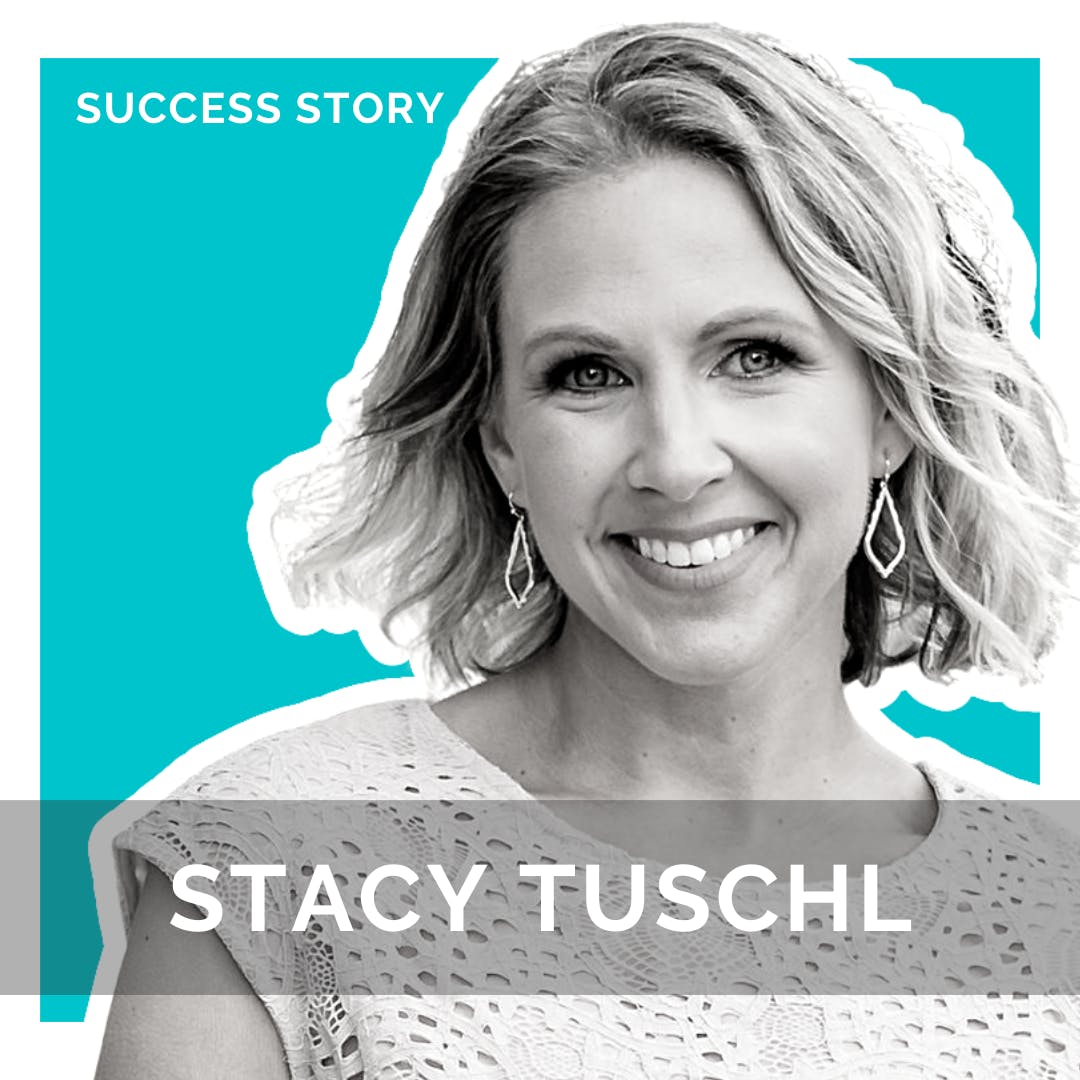
 Stacy Tuschl - CEO & Founder of The Foot Traffic Formula | Building Well-Oiled Operations
➡️ Like The Podcast? Leave A Rating: https://ratethispodcast.com/successstory
➡️ About The Guest
Stacy Tuschl is a highly sought-after business coach and strategist with over a decade of experience as a successful entrepreneur. Stacy is the CEO & Founder of The Foot Traffic Formula, helping entrepreneurs automate and drive more traffic to their businesses. She has built and sold multiple seven-figure businesses and has a passion for helping other entrepreneurs do the same.
In addition to her coaching business, Stacy is also the host of the popular podcast, "The Freedom Formula," where she shares her expertise and practical strategies for building a successful business and creating a life of freedom and balance. With a background in marketing, sales, and business development, Stacy has a wealth of knowledge and experience to share with her clients and listeners.
➡️ Show Links
https://twitter.com/stacytuschl/
https://www.instagram.com/stacytuschl/
https://www.linkedin.com/in/stacytuschl/
➡️ Podcast Sponsors
HUBSPOT - http://hubspot.sjv.io/successstorypod/
➡️ Talking Points
00:00 - Intro
03:03 - Stacy Tuschl’s origin story
04:47 - What did Stacy learn from the businesses she built?
07:00 - How do you find the quickest path to revenue?
09:27 - What is the best way to start a business?
12:58 - Advice on getting your first hundred customers
15:25 - The best way to find your first customers
18:34 - The biggest mistake Stacy made
20:36 - Where to spend the money when you’re starting out
23:43 - How to find your first hire when you’re scaling up
26:03 - When to start thinking about systems and processes, and what should you deploy right away?
28:51 - Are people afraid of selling and marketing their products?
32:06 - The importance of customer retention and customer lifetime value
34:58 - The feedback loop Stacy sets up when launching her product and how to guarantee the success of the following product
39:54 - Where can people connect with Stacy Tuschl?
40:23 - What keeps Stacy Tuschl up at night?
40:58 - The most impactful person in Stacy Tuschl’s life
41:34 - The biggest challenge Stacy Tuschl has ever faced in her life
43:00 - Stacy Tuschl’s book or podcast recommendation
43:22 - What would Stacy Tuschl tell her 20-year-old self?
43:39 - What does success mean to Stacy Tuschl?
Advertising Inquiries: https://redcircle.com/brands
Privacy & Opt-Out: https://redcircle.com/privacy
Welcome to success story, the most useful podcast in the world. I'm your host, Scott Clary. The success story podcast is part of the HubSpot podcast network, which has other amazing podcasts like Entrepreneurs on Fire hosted by John Lee Dumas. Entrepreneurs on Fire, Stokes Inspiration and Share strategies to fire up your entrepreneurial journey and create the life you've always dreamed of. Check out some of the recent episodes, eight tools of improv comedy that you can use in work and life, how to turn your Instagram into a money making machine, how to build a seven-figure side hustle without quitting your full-time day job and overcoming the beast of depression as an entrepreneurial leader. If these topics are interesting for you, you definitely have to check that Entrepreneurs on Fire wherever you download your podcast. Today, my guest is Stacey Toshal. Stacey made a name for herself as an expert in growing small businesses. She started her own at the age of 18 in her parents' backyard and turned that company into a multi-million dollar business. She still runs the Academy of Performing Arts. They have two locations in Wisconsin. She also has started other small businesses under her own name that have all turned into seven-plus figure businesses. She now works with small business owners, first-time entrepreneurs, people that are starting a side hustle. They want to turn that side hustle into a full-time thing to help them understand how to grow, how to scale, how to hire, how to get more customers, how to increase their profits, and ultimately achieve freedom. She has created an incredible brand for herself. She has written multiple best-selling books. She has a podcast called Foot Traffic that was featured as a top 10 podcast in Ink Magazine. She has been featured in Forbes, Fox Business, Huffington Post, as well as she's also been featured in several other podcasts who've interviewed her on how to scale a business from zero. Her podcast actually hits usually top 50 in marketing globally. We spoke about getting a business off the ground. Basically, the things that you have to think about when you're starting from zero. How to find your first customers, how to find product market fit, how to launch your first product, how to create feedback loops that will help you improve your first product, how to grow, how to scale, how to market, how to sell, how to have difficult conversations about hiring, firing, HR, finance, and then ultimately how to increase the retention and the lifetime value of your customers to allow you to attract customers and to increase your revenue more cost effectively. We went through a whole gamut of stuff that somebody who's looking to start a small business, not even a small business. Somebody who's looking to start a business from zero definitely has to listen to us. Let's jump right into it. This is Stacey Tushel. She is an author, she's a podcaster, and she is a small business coach. All right, so my name is Stacey Tushel. I actually started my first business, right at a high school. I started teaching dance classes in my parents' backyard when I literally graduated high school, 17 kids that first summer, and then no marketing wasn't thinking this was a business. Within three years, we had a hundred kids that were coming still to my parents' backyard, and then we're Wisconsin, so you can only stay in the backyard for so long, and then one of our dancers said, hey, our church basement is open, and they said they would donate it for free. They love what you're doing for the community, so we would go back and forth between the church basement and the backyard in the summer, and it's crazy. I mean, we just kept growing and growing and growing. I still, I now run two children's dance and music schools, and we have, I think, 1500 kids coming every week to take some sort of dance class or music class. So that turned into a seven-figure business about nine years ago. I was about to have children, and I realized it's like an evening and weekend business, right? Because when kids are out of school, that's when you get to do it, and I realized, well, I can't really be a mom and work in this business and see my children. So I ended up really diving into systems and delegation, and I removed myself out of the business when I'm eternally and never came back into the business, but I still have it to the day it's going to be 20 years already this summer, and then that sparked everybody saying, can you teach me how you did that? Because I would really like to do it with my business, so tell me more, what can I do? And then about seven years ago, I created foot traffic, where I'm teaching other business owners how to do what I just did, scale the business, but also not just make money, but get that time freedom and that time wealth as well. So your category is a sort of focus on two things. So you work with people that are starting up, small businesses, and something that is very pertinent to this audience. So I want advice on that, but I also want to understand systems and processes, because that's the one thing that I think small business owners in particular fall victim to because they build themselves a job, right? Yeah. So let's go through the stuff that you built and either purposefully or accidentally what did you learn? So both times were accidents, and I think that's part of my success was I never led with I want to make money. It was I love dance so much. How do I continue this while I go to school and then get a real job? And then it was I didn't realize this, but I actually grew up in an entrepreneurial family. So my parents and grandparents, they had a construction business still have it over 50 years old right now. So I lived in breed, small business, and I didn't really even put that together growing up, right? I just got to hear conversations. So what happened was I realized more than liking dance, I love business, I love strategy, I love all the things. So I led with my passion, but then very quickly realized, okay, but I'm going to need the skill sets of how to sell, how to market, how to retain, how to build systems, how to lead, right? All of that stuff. So I think leading with passion, if you lead with just money, at some point you burn out or you, it's not exciting. I've actually had more than just two businesses and all of the ones that I quit, there's two reasons either one, there was partners involved and I highly recommend do not get involved with partners. Or number two, I thought, ooh, I'm going to make a lot of money over here and I jumped on something hot and trendy at that time. And at some point I was like, I don't really like this, like this isn't really fun for me. So those businesses always stopped because I just was no longer interested. So lead with passion, but then the passion can only take you so far, you've got to figure out how to build, how to market, how to hire, how to fire, how to all the things, right? So I think that's a big, big thing people do wrong as they think, well, this looks like it would be profitable or this looks like it would make a lot of money and then they realize, wow, this is a little harder than I thought and then they quit. So when you are building out and you're building based on your passion, how do you find the quickest path to revenue so that can be sustainable? Yeah, okay, I love this question. So lead with passion, but then I think the next question is, what is the fastest way to make money? Because here's the deal, you will run out of funds at some point, right? Like at some point you don't have cash flow, the credit cards maxed out, bank accounts drained, etc. So you have to ask yourself, how do I get here as fast as possible to at least break even and then to profitability? So sometimes I actually do tell people, like once you pick what you want to do, you might have to do something in that same category, which for me, maybe it was teaching one on one. Like I don't really want to teach one on one, but I know I could make money as fast as possible if I consulted privately. So I started consulting privately, even though I knew eventually I wanted to be a one to many type model. So yes, there may be some sacrifices you're going to need to do. I think online, a lot of people will come into the business or come into starting a business and hear about online business and passive income. And then they'll start working with me and the first thing they'll say is, oh, I don't want to do all the stuff you're doing. I just want to, you know, put out an online course and make money every day and I'm behind the scenes. Like, yeah, you and everybody else, like you're not going to start there, right? You're going to have to do some things in the beginning temporarily till we get you understanding your market, understanding what they want from you. And also getting you good at the skill set of teaching, coaching, whatever it is you're doing in this business, there is practice and repetition that's involved. Once you get good at that, right? And you start to create demand, which is what most small businesses are missing in the beginning. You don't have demand. You have lots of supply, but no demand. You've got to create the demand. And as you create demand, all of a sudden I was maxed out with private clients. I couldn't take anybody else on. So I started to raise my prices. And then I kept raising them. And at some point I said, you know what? I don't need more money. I want my time back. So I started to say, no more private clients. I'm only going to coach in a group setting, right? So I got to lower the price, but maximize my time. So whatever you can do, go to that temporary sacrifice, reminding yourself it's only temporary and start making money as fast as possible. Most people's businesses cancel clothes because the cash flow, it's the number one problem why business is shut down. And to back it up, because I'm going to talk about growth and how to grow and everything. But when someone's starting, so I've always spoken about how you can start something while you're still working in a job. Is that good, bad, indifferent? What's the best way to start? Yeah. So when I graduated from high school, I was going to school full time. I was teaching dance at a dance studio. I was teaching the kids every Sunday in my parents backyard. And then I had two bartending jobs because I could only work from 10 p.m. till two in the morning. So yeah, like that talk about a hustle, right? Like sometimes like getting started, ideally people say like, take the leap, quit your job. Okay, well, how much money do you have? Because at some point you will run out of money. So my bartending gig was funding my business until I said, okay, I think I'm making enough money here that I can take the leap, but it was a smarter leap. I knew that I already had a proven, established business and taking that leap eventually quitting the bartending job, right? Was what made me say, okay, now I need to really start paying myself and really start building a real business. So I know a lot of people are going to say like, burn the boat, right? I do think, though, you've got to look at how much money are you sitting on? Do you do you have, I mean, if you're going to use credit cards and people don't want to go into credit card debt. So you've got to be really smart about what you're going to do if this is going to be your full thing. I mean, it can take you a year, two years to really figure out how to make money. I mean, some it goes faster than not everybody. So you've got to be really careful. Don't just assume. And I want to like point out like there's, you were talking about like coaching businesses and service based business, but also like widgets that you can sell like, or it could be a technical person who wants to develop an app. Like these lessons that you're talking over about finding, you spoke about finding product market fit, which is like the technical term when you're really looking for your service and you're delivering it. And you spoke about while you're still working a job, you can start this as a side hustle. These are things that doesn't matter like what the business is. These are universal lessons so that you're successful in that thing. And this is like, so I guess, you know, to provide some more context, when you work with like your area of your zone of genius basically is helping people in this really awkward like awkward teenage phase of a business where it's just starting to grow and they and they have to figure out basically everything from scratch. You're taking somebody that's only worked in one lane for the majority of their life. And now they have to figure out literally everything to do with the business while scaling it while not losing their mind. And that's where you come in, which is. And here's the thing in the beginning, your first priority is cash flow. And then you think, man, when we hit 100,000 or we hit a million or we hit, things are going to be amazing. No, no, no, you just break other parts of your business. You're like, I have never been more miserable like I'm making so much money and I am working my butt off, right? And that's when you have to start to go, okay, well, how do we put in the systems and how do I hire an assistant or hire a right hand where I can take off on the weekends? Like it actually enjoy Saturday and Sunday. But again, in the beginning, you may choose to have that temporary sacrifice of working seven days a week or putting in long days, right? I'm not saying you should, but I'm saying some people choose to do that in the beginning, right? You've got to start to understand though, when is it time to start to say, okay, I can't hustle my way to that number anymore, right? You can only hustle for so long, for so hard before you just start to lose that productivity and really lose like that motivation to keep going. So let's let's somebody starting a business, what are what are the tips or recommendations you'd have for somebody to get their first hundred customers, first thousand customers, first 10,000 and after get the 10,000, we talk about systems and processes. Yeah. So first, find somebody that you can model, right? Find something that's already working. So when you're talking about an app or anything like this, do not just use them though as well. People always say like, well, they're making three million and if I could just get a fraction of what they're doing, I'll be like, that doesn't work like that. We all want a fraction of the person, you know, making this much money. You have to really start to look at what your product is doing and creating, right? How do we get that thing working? How do we get that selling? So the first thing you want to do is look for a model. Don't copy, but start to really understand in a few different competitors what you think is working, what you think is missing, what your reading on reviews, what they're loving, what they're not loving, right? I mean, we get to cheat, we get to go look at reviews on lots of different platforms and we can see some honest reviews of loved it, but we should have this, you know, really liked it or really liked this about it. That's where you start to take that information and create your own version that looks different. Now, the big thing you want to be thinking about is how do you already go in a place where there is demand, but you become a little bit different than what is already there. If you try to become so what we call blue ocean, which is based on a book blue ocean, which is talking about go where it's not saturated, but if you go where it's really not saturated, is there even enough demand? Do you have to educate people on you need this, right? So go where there's already a red ocean and there's a lot of demand, right? But you go in and you be the different offer that nobody has seen before, right? Make your app, make your course, make your service, your products so different than anything that is out there and that information, it might come from you, but a lot of times it comes from the user, it comes from the person that's already using it or needs it. So you really want to do that market research and you don't have to have clients for that. You get to go into other people's Facebook groups, other people's forums and you get to look at all of that information to take that and create whatever it is you're selling. And once you have that information, so I still want to I still want to back up to that question that I asked. So when you start to find your customers, what's the best way of finding those first customers? Yeah, I was getting there. I was getting there. So find your model, right? And then where are those people hanging out, right? So if everybody, if they've got, you know, three to five competitors, okay, where are they already going? What are they doing, right? Maybe they're hanging out in coffee shops, maybe they're hanging out at certain conferences, maybe they're listening to certain podcasts. Where do you go where the demand is already happening, right? So instead of you trying to sit on Instagram and posting every day and hoping people come to you because they found your hashtag, right? Instead, you can say to somebody who maybe has an audience who needs your product and say, hey, Scott, would you ever want to do an Instagram live together? Like could we, I'd love to interview about XYZ? And what happens is you go live together and it's not just on my Instagram, it's on scots and all of a sudden all the people that are following Scott are now following me, right? Or listening to me and can choose to follow me. So what can you do? How can you continuously look at where are they, right? And that kind of leads into another strategy about dream 100. So really picking people that already have built that audience. If you don't have a budget in the beginning, you could say to somebody and somebody who's also trying to grow and is maybe relatively small but is interested in doing this kind of stuff, hey, would you post on Instagram about my business? And then I'll post about you two weeks from now. Free. We both just do it as a swap to help each other out. Hey, would you go to somebody else? Would you send out an email to your list about this? I'll send out any email you want whenever you want about your stuff, right? And you start to just continuously look at these partnerships as ways to build relationships, build your network, but build your audience and your community with other people, right? So there's so many ways to do this. It seems like everybody defaults to trying to spend money. It seems like everybody just wants to, regardless of if you've ever, if you've never run a Facebook campaign before, they're like, put ad dollars on Facebook. Yeah. And that's the quickest way to have a whole bunch of cash flow issues. Well, and here's the thing we think money is going to fix the problem, right? So if you have bad messaging and you're like, oh, we'll just, you know, spend money on video, use on Facebook, and let's get more people to see it. Spending money doesn't help the bad message, right? It just gets more people seeing the message that's not converting. So you have to really start to look at things and I, I overspend. I will tell you like one of my strategies in 2022 is to stay lean and to really be smart about my purchases and what I'm doing. And honestly, that is what everybody should be doing in the startup phase. Because like I said, it's a, it's a like ticking time bomb of how long your business is going to stay in business and it all has to do with at least the biggest factor is money. So if you're just blowing it over here and blowing it over there, right? You want to be really, really careful. There are places that you should spend the money and you'll get what you pay for and there are places you definitely can be lean and still get the result you're looking for. So you've really got to do your due diligence before spending anything. So what was, okay, so what was the biggest mistake that you made in spending? And then what would you recommend people do differently? Oh, that's a good question. I have so many mistakes. I mean, I've been doing this everybody does. Okay. And here's the thing, you know, those mistakes you learn from it. You're like, I'll never do that again, right? So I think sometimes I don't have confidence that I can do it. So when somebody says, oh, we have this done for you offer where we'll just do XYZ and there's this big premium price tag on it. I think, yeah, let's, let's do that. Or like, I remember I was stalking people's websites and I found some of these websites that I loved and I went to the bottom and there was like a shout out and a credit to them. So I went there, I clicked the website and I found the person that can design it and it was really high ticket and I did it. And two years later, I completely threw away that website and started fresh. And I think sometimes I like to run before I'm even walking and that doesn't work, right? So a lot of people do that though. A lot of people do that. You think you need it. You think I'll be perceived this way if I have the best kind of website and it looked just like their website, I'll look just as good. But let's be honest, like I know people that don't have websites is all that are making a million dollars and they just have an Instagram profile, right? So I don't think you need to go all in highest level premium pricing to get what it is you're looking for. I actually think these days, I mean, I've seen it all. Like I've seen people, it's funny too. I'll hear about some news making 10 million or something and then I'll go to look at their Instagram and I'm like they're not even on Instagram. Like what I post every day on social, what are you doing? It's like yeah, they I just don't need to. They come from referrals and they come like what? I want a business where I don't have to post on social every day, right? So I think there's a lot of ways to make money and I don't think you have to have it all, buy it all, do it all. I think you can pick one platform, have one product, like you name it and and you can have success with it. If you go all in. No, I think I think that's great advice. Just it's just funny how people always try and do everything at once and I just I thought, you know, I'm I'm I'm the exact same way as you like when I launch something, you know, I like I'll build a brand in a weekend. I'll have like 10 new social accounts set up. I'll have new website. Now part of that part of that is when you don't have money, you actually learn how to be quite good at all these things yourself, which is useful to some extent, but I mean, yeah, it's always it's not the smartest way and it's definitely not the required way to start something new, but this brings me to my next question, which would be where should you spend the money when you're starting out? Okay, so I think spending the money on help in the sense of just having even just like a virtual assistant to do some of the tedious stuff that is not your highest level producing stuff, right? So and that is that is not something that has to be expensive, right? That can be very part time. That can be somebody overseas, like you name it, but I believe when you're just a solopreneur, it's it's a fact you're doing everything and there are a lot of things very low costs. Like there are some things that you could be paying somebody $10 an hour for and you're doing that job 10 hours a week and it just doesn't make sense for you to be doing that when you could be out there selling marketing, creating content, right? So I really think getting somebody immediately as fast as you can to do some of that tedious stuff that has to get done, right? Or hiring somebody who can help you if you've got a certain weakness and you know, while if we could just do this, if we could just put out a podcast a week or whatever it is, hiring somebody to help you actually create and generate revenue, right? When I look at roles like marketing and sales, those should always produce a return on my investment or I've hired the wrong person, right? So I think when I when I hire people, it's always they have to make money specifically in the business or they have to clear things off my plate so I can make more money. Literally those are the only two people I hire. It's either you do you're going to make money or you're going to help me make even more money by taking like three hours off my plate or ten hours off my plate. I just want to take a second and thank the sponsor of today's episode HubSpot. So I was thinking about the shortest day of the year earlier, while technically we have the same amount of time as every other day, the lack of daylight makes it feel so much shorter, which is kind of the same feeling as working with disconnected tools. Our workday is the same length as always, but before we know it, we spent three hours manually fixing something that is quote unquote automated. Thankfully HubSpots all in one connected CRM platform serves as a single source of truth for managing customer relationships across marketing, sales, service and operations, meaning all of your team's data is truly connected with multiple hubs, over a thousand integrations and an easy to use interface. HubSpot helps you spend less time managing your software and more time connecting with your customer. Plus with a quick and easy onboarding process, your teams can get started quicker than even the shortest day of the year. Learn how HubSpot can help your business grow better at HubSpot.com. So when you start to scale up, who's the first hire that you make? Is it sales or marketing? Yeah, I think it's like a jack of all trades. I think that thought finished that thought, but then how do you find that person too? Okay, so I think it's a jack of all trades because let's be real, you don't have the funds to hire seven people in seven different areas. So you've got to hire somebody who can be like a second version of you. Think about it. You do everything right now. You're the one posting on social media, you're building maybe a website or a funnel or you're doing all of the things and you're thinking, well, I've never find somebody like that. Do you know how many people? I did everything in the beginning. There's lots of people that can learn how to do it all. So you want to hire somebody that is flexible and willing to wear multiple hats and willing to learn new software that they've never learned before, but I honestly believe a lot of this stuff, anybody can learn. So you just want somebody who's like, I'm just excited to work with you and share in your vision and I'm all in. So that's what I would say, like a jack or Jill of all trades and somebody who's not afraid to learn a new skill set and bring something new to you. Is there a spot where you can find these kinds of people? Is there a question you ask in an interview? What is it? Yeah, so a couple places to find people. 90dayVA.com, I think. Oh, that's a new one. I don't know this one. I should know this one. Yeah, so this one I have I will disclaimer. I have never used it. I have so many clients. My team is a lot more built up now and we have a lot of full-time employees, but if I would have heard about this company before, I would have used them, but I have so many clients that rave about them and love them and it's called 90 day VA and they just basic, I think it's like a Facebook group and they have a ton of VA's like sitting in there literally like waiting for job postings and things like that. So that's a great place like I mean, there's a million places, upwork, fiber. I mean, you could go to onlinejobs.ph. Those are all Filipino VA's, right? Like there's a lot of different areas. You can hire and invest in. So and sometimes it's just you know posting on your social media and posting with people that are person that personally know you. Maybe they don't want to be your right hand, but maybe their sister is looking for 10 hours a week or 20 hours a week and is excited by a remote position. You just never know. Okay, so as you're scaling up, talk to me about when you should start thinking about systems and processes and what do you deploy right away? Okay, great question. So as a systems person, I actually believe you can system it high as too early because let's be real, you got to make money. So don't be sitting behind the scenes like building out a pretty spreadsheet. If you should be on the front line selling and learning how to market and all the things, right? But what I do think should be systematized immediately is what is the marketing plan? What what should we be doing on a consistent daily, weekly, monthly basis in marketing? Write that system up and whether it's you implementing it or somebody else, it needs to be consistent. A lot of people, they're just inconsistent. I'll have clients that will say, I haven't posted on social in three weeks. I've just been so busy. Like, do you, you are not making enough money to not be marketing for three weeks on social media? Like that's not the place you're in right now, right? So you need to create a system whether you do it or they do it, right? So marketing is your system and then when you start to sell, you immediately put an onboarding system in place in your business. So an onboarding is for everything. I don't care if you have physical products, digital products, service and app, you name it. You onboard people how to use your product, how to continuously remind them to engage with it, right? Because you don't just want the sale, you want them to actually use it and love it and refer people because they'll become your marketing team as well. But if somebody buys from you and never uses it, they'll never tell anybody about it because they don't have an experience with it, right? So that's where you really want to get good at, like I said, the marketing, the sales process and then onboarding, right? So those are the three processes or systems everybody will want right away in the beginning of your business. Now, when I see people building out systems for things like, for instance, if you don't even have somebody on your team, you should not have a firing system. Like, there is no reason you would need to not fire somebody if you've never even hired somebody, right? But I will literally have clients who are like, okay, well, I just built out our employee handbook and I'm like, you don't have employees. Why do you have an employee handbook? Like, this does not make sense, right? But people here, oh, I need this and I need that, right? It's okay to be in business for three years or five years. It's okay to have employees and not have an employee handbook right the second. Like, you'll get there. You'll be able to build it out when you need to, right? But we know we've got to monetize as fast as possible and profit as fast as possible. And from there, when things start to feel like, okay, I can breathe a little bit more. Now we've got downtime to go create some of the systems that we haven't had time to do before. Do you think it's because people are afraid of selling their product and marketing their product? That's why they waste their time with other stuff. I think, yes, 100%. I think they do busy work to be like, I just didn't have time to go like do a podcast or go on social or set up that ad. It's right up time. Like, what's more important than that? And when I ever I dig deep, it's always, it's always like, I'm not enough or I'm not sure if my product's good enough or there is always something underlying when they are procrastinating and something they know should be getting done. Do you know Seth Godin? You know, Seth Godin? Yes. Okay. So like the concept of just shipping, right? I've all like just shipping. And that's actually ties into your previous, you know, your previous point is like to what you could have done differently when you were starting. It's like, there's, you should always try and just ship because you're never going to get feedback. You're never going to iterate. You're never going to sell a single widget thing item, whatever, if you don't ship. And people have trouble shipping. And I think actually that's probably, you know, I, I'm sure you work with them on a variety of things. But I think that somebody holding a small business owner or first time entrepreneur accountable to shipping is probably the most valuable thing you could ever do because that alone will give them the feedback they need. Yeah, they need accountability in the beginning because your mindset kicks in. The fear kicks in. What are people going to think? Like I came, I went from a dance teacher to writing a book. I didn't want to publicly put on social media that I wrote a book because I thought, who is going to think that I was capable of writing a book? Like I'm a dancer, right? Like the identity was so crazy. And what happened was I remember I was working with this podcast editor and he said, the link is going out in this like this week's episode. You have to put out there that you have a book because it's going to be weird if we put it in there. Super weird. So like he made me post like, I wrote a book. Go buy it. And like you just have to rip the bandit off, right? And here's the thing. It's so funny because I thought like, who am I? Like no one's going to believe this? No, you're the person. They're the kind, we are the kind of people that do this kind of stuff. People are not surprised when all of a sudden you're doing something you've never done before because that's who we are. We're visionary entrepreneurs. We build things we create. So anytime I've ever done anything, now I just put it out there because people are always like, of course, like now I have a children's book and they're like, of course you are the children's book. Like no one is surprised. Like it's just who we are. So you've got to get good at ripping off the band-aid. Like always massive imposter syndrome. It's so funny because now now you've probably got an over to an extent, but still it's so it's so common. So like if you're listening to this and you do have that imposter syndrome, which is actually hurting your business because you're not selling your, you're filling your life with busy work, you'll never know if you could be successful and you're actually doing a disservice to everybody that you could be serving by getting in your own head. I think you have to change it because I find imposter syndrome is incredibly self-serving and selfish. It doesn't feel that way, but it really is because if you have something incredible that you should take to the world, like now I drink the Kool-Aid, like I'm on social all the time, but I mean a lot of people have a hard time and I tell them is I'm like you're actually being very selfish by not putting yourself out there because you have something that can contribute to the world and you're not doing it. Anyway, okay. Another thing that I thought was really interesting, you speak on a lot is not just making the sale, making the first sale, but you speak on increasing retention and customer lifetime value. Why is that? Well, it seems like it's obvious when you say it, but not enough people focus on it. Nobody does. Like everybody wants, it's so sad, we want more clients, new clients, we get them and we grab them and we kind of put them in this bucket and then we're like, okay, but I'm going to focus on the new people that don't exist yet and I just want more of them. And here's the thing, you have these people who trust you, they spent their money on you and you're ignoring them and then you're wondering why you're losing them, right? And it's because you've got, you've got to focus on them. So the two most important positions I really believe in my business are the people, it's like obviously there's like the sales category of getting new sales in, but it's really, we have another position that is focusing on loving up our clients, getting them so excited about what we do and so happy with what we do that they are always telling other people, they are buying from us again, right? They are upselling into other programs, right? Those two types of positions make me so much money because in they're different, like one person's focusing on new and the other person's like, okay, great, I've got the people you just threw me and now I'm going to make sure they are obsessed with this brand. So in the beginning, it's you, like you're making the get the new people and you're trying to keep them, but the problem is you lose focus because you can't focus on more than one thing at a time and you've got to make sure you've got marketing and sales in one bucket and then you've got to have fulfillment time in the other where you can surprise and delight your customers. You wouldn't have to work so hard on marketing if you had other people recurring and buying again and again and again with you. So it really is, I always use the analogy of a bathtub of like the water coming in the new people and where every is focused at like what's coming out of the faucet, but the drain is open and if somebody could start focusing on the drain and closing the drain, all it would be like overflowing so quickly. So focus on the drain as much as you're focusing on the faucet. I was going to say like as you're talking, I love this like, you know, like small biz, like it's almost like a, I was going to say and draw the analogy that it's like a mini MBA, but you know what? It's not like a mini MBA because small business owners, there is no schooling, there's no education that actually serves them at all. Like MBA is actually kind of very useless for somebody who's trying to start their own thing. Actually, I don't even love hiring. I have an MBA, but I don't love hiring MBA students kind of hypocritical because I feel like you've learned how to operate a business for like a deloitte at like at that level and that's not practical for somebody that wants to get something started. So you're doing a good service by doing this because you've just gone through basically every single thing the person has to think about when they're just getting off the ground. But the next thing that we haven't really touched on yet is product. And I know the first iteration of the product that they put out into the world is always going to be messy. It's always going to kind of quasi suck day one. And then through iterations, it's going to get better. So it's going to be a two-part question in your podcast host. You know, it's not going to do this, but I'm going to do it anyway. So first, when you, when you launch a product, what's the feedback loop that you set up so that you can understand how to improve it? But then secondly, after you launch your initial product, how do you make sure the next one has a shorter sort of sort of is more successful quicker. Because if somebody launches their first product, I want them to understand how to make it successful. But I don't want them to be scared about launching a second product. And I want them to understand that the pain that you went through for the two years that it took you to launch your business is not going to be the pain that you experienced when you launched your second third 25th product. Yeah. Okay. So a really good book that I recommend is never lose a customer again by Joey Coleman. This book really transformed the way that I do business. It talks, I mean, think of the title never lose a customer again, right? It's talking about building and creating a product that people are obsessed with and they rave about and they want to stay forever, right? So I actually, as I build a product, I will read that book. So when I go to build another product, I pull it back out and I read it again and I build it from what like really listening to what that book is teaching. Okay. So I think the big thing is is get it out there and hear the feedback. So I actually will incentivize people again to use my products because if you're not using it, you're not going to give me results or share with me results, right? So sometimes I'll incentivize by gifting people like and somebody actually did this to me. I got a tax message after I joined like a fitness program and it was like, hey, we're handing out these water bottles for free. Click here to get yours. So I click it and it was like, great, fill out this little quick survey about your first six weeks with us and I'm going to ship it to you completely for free. I was like, okay, like I'm somebody who can afford to buy a water bottle and I still was like, shoot, sure. Yeah, why not? Never say no to free. Okay, it's cute. Like I'll drink that. So you know, I spent like five minutes filling this out for them and that's exactly how we are. We're going how do we get people to get in here? Sometimes we do contests to get people to get in and start getting motivated right away and getting results so that they can share it with us. We'll do, I'm actually doing I created a program back in January for the first time, this specific program and next week what I did was I basically said, you want to get private coaching from Stacey, like more details below and it was, hey, do you have results from well-oiled operations? Fill it out here and we're going to be picking 10 people for Stacey to interview. I'll be interviewing them for 15 minutes and then they get to stick around for 15 minutes privately and ask me anything they want and get coaching by me. So I'm gifting, I know my people want more of my time. So I'm interviewing and I get to use that publicly as a testimonial, but I also get to learn, I can edit and chop out whatever I want, but I get to learn what they love, what they didn't and then from there they're getting the gift of me sticking around and getting even more coaching out of it. So that's kind of what I did for that specific program, but we are always checking in. We have client success or client support where we'll just reach out and say, hey, how's it going? What's going on? We call these touch points where we just touch base with our clients to say, where are you getting stuck? What do you need? And we listen. When somebody says, I wish it would have had this or, you know, I'm somebody just said, I'm so confused. I'm so lost. I wish there was like a checklist for the entire program and we were like, done. We're going to start working out. Like that's a great idea. Everybody probably would love a checklist. That was really easy for us to create and give to everybody. So we just announced we're rolling out the checklist and people are like, oh my goodness, this is going to be a game changer, right? So we listen and we keep making it better and better. I would say don't bring out the second product until you have fully committed to building the best product you can and you've scaled it where when you go to actually say, okay, I can have time to do the second product. The first product is just on maintenance mode. It's up. It's running. It's scaled. It takes very little bit of your time and energy. I see people adding too many products too soon and they lose sight of what's going on. I actually have a physical product client and she had 150 skews when she came to me. So 150 different products and she just like a few months ago was like, this is crazy. I know and she goes, okay, guys, this is going to sound nuts, but I just got rid of all of them, but three. Like, that's crazy. But what she realized was there was actually one that that was her best seller and there was two that were doing pretty well and she's like, I'm just going to focus on the one and I've got the other two that are still pretty popular and we don't need to sell the rest, right? So we like to over complicate things. We just don't need to do that very smart. Okay. I want to do a couple rapid fire to close it up before we pivot. Most importantly, all the socials website, where do people go? Oh, man. Okay. So podcast is foot traffic. That is probably the best place. I'm doing about three episodes a week right now and then Instagram is my next favorite place and I'm at Stacey Tushal. So the foot traffic podcast and Instagram, I really am like everywhere if you just look for my name, but really Instagram is my jam and then the podcast. Okay. I'll link them in the show notes, dude. Okay. Couple rapid fire. So you've had some great success in your career, but what keeps you up at night now? What keeps me up at night? Oh, oh, my goodness. And let's wrap it fire. And I'm like having to think about this. I would say mostly having hard conversations. Like, I'm at a level where I have to wake up some days and tell somebody they're not performing at the level. They are and I need them to step it up if they want to stay. That's not easy. Like I still think about that sometimes. That's a good one. That's I don't think that's ever for for for normal people. That's not an easy conversation to have. No, it's never easy. If you had to choose one person who's been incredibly impactful has been many, but pick one, who is that person? What did they teach you? I would say my first mentor ever, his name was Sam Beckford. He was in the dance world. And he just showed me that I could have a really successful business in an industry that was not typically successful. And he taught me so much and just things that I did back in my early 20s because of him. Now I am reaping the rewards. So I think just having somebody to look up to that was doing what I wanted to be doing has been really impactful. Like, find a mentor for sure. Biggest challenge. What was it? Had you overcome it? Would you learn from it? Biggest challenge. I would say the pandemic. I mean, I have two businesses. So my brick and mortar, I mean, being shut down for two and a half months and figuring out how can I do this? And it just impacted all of the businesses because I have commercial buildings and I personally guarantee those loans. And I just kept thinking I'm going to lose my house. I'm going to lose my kids. We're going to move in with grandma grandpa. Like, this is going to be bad. And you know, a week before I have two seven figure businesses. And a week later, I'm thinking I'm going to lose everything. So one business blew up in the pandemic, which was still difficult because I'm trying to save one business while the other one is taking off. And I was split focused a lot. And that was really difficult. We didn't have a system for the pandemic. So I got pulled back in. How do you so how did you overcome it? Just I had to go back into hustle mode a little bit. And I worked a lot harder than I have in a really long time. And man, I was up every I was up at 2 a.m. every night. I just couldn't stop thinking about like, what is going to happen? How long is this going to be? But my mindset was just like, we'll figure it out. We'll figure it out. And eventually we did. And we're still down gross revenue in the studios, but our profit margin is higher than it's ever been. And it's just because we had to learn a different way of doing business. And it was a really good wake up call after going through it. I'm grateful for it. Good. Book podcast something you'd recommend people go check out. I said never lose a customer again. I'm actually going to say profit first. I really think that's a pivotal book. The first business book I ever read that my mentor made me read was the E-Mith by Michael Gerber. And that book was just a great way in entrepreneurship. But just like basic things that people forget to do, it's a great book. If you could tell your 20-year-old self one thing what would it be? Enjoy the journey. Like stop hustling, stop brushing. Like you'll never stop brushing. Like ever, ever, ever, ever, ever. So just like slow down, enjoy what you're creating. Yeah, be in the moment. And then last question, what does success mean to you? Success for me is having the ability to do what I want when I want with who I want. And that is just like I don't want to make a lot of money. I want to make a lot of money. And I want to be able to spend it when I want to with the flexibility and that freedom. So that's huge for me. You