


 YouTube
 Apple Podcasts
 Spotify
 Overcast
 Castro
 PocketCasts
 Amazon Music
 Deezer
 TuneIn
 Podcast Addict
 RadioPublic
 iHeartRadio
 RSS Feed
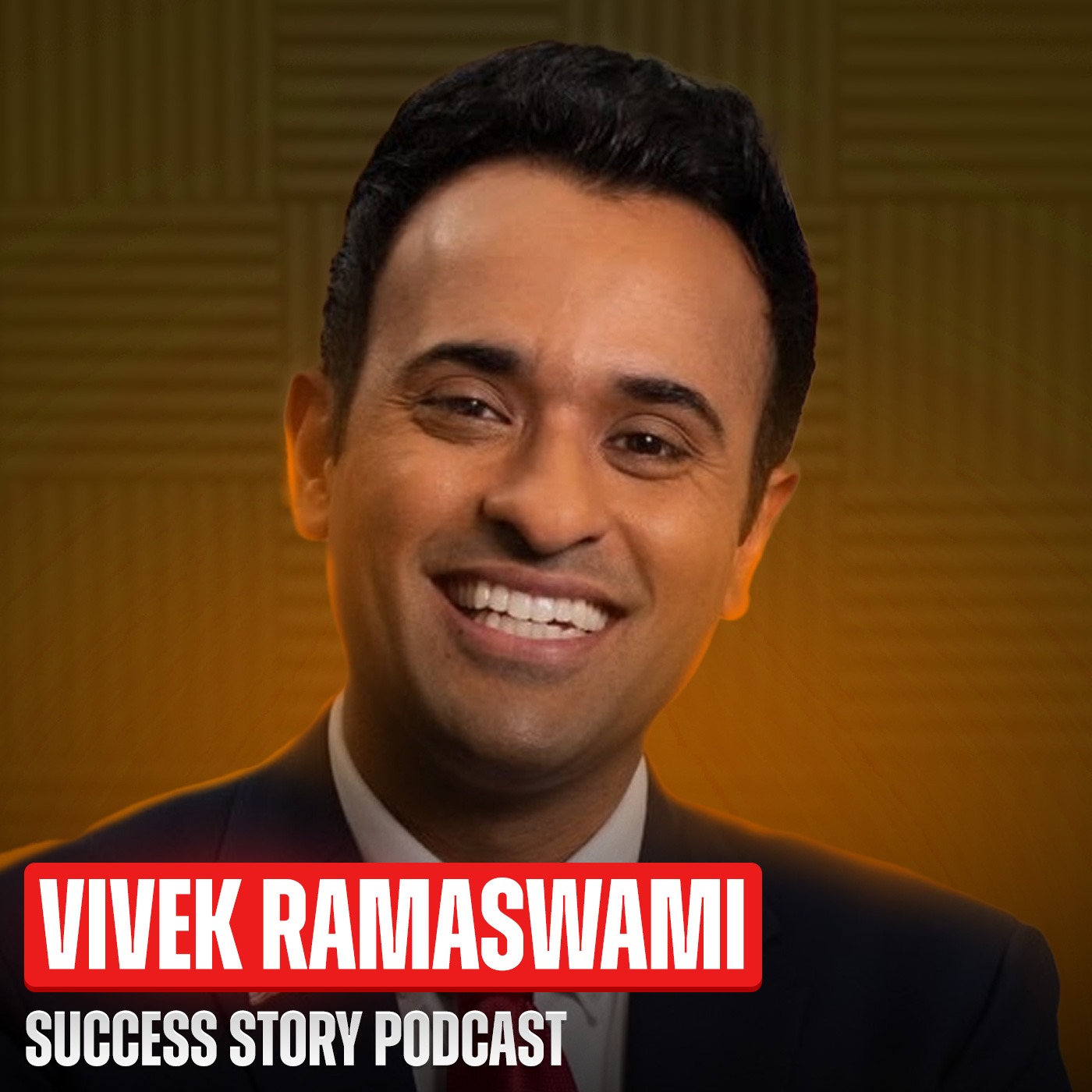
 Lessons - Improving Corporate Conduct | Vivek Ramaswamy - Presidential Candidate, Entrepreneur and Author
➡️ Like The Podcast? Leave A Rating: https://ratethispodcast.com/successstory
In this "Lessons" episode, entrepreneur and author Vivek Ramaswamy tackles the challenge of corporate social signaling. We explore how to hold companies accountable for their actions, especially when empty gestures take precedence over genuine progress.
Shifting CEO Priorities: Companies often prioritize appeasing vocal stakeholder groups over long-term value creation. Ramaswamy proposes strategies to incentivize CEOs to focus on building a stronger foundation for their businesses.
Rethinking Corporate Protections: Legal protections designed for profit-driven activities might be hindering accountability. The episode explores how these protections could be reevaluated to ensure they align with their original purpose.
Beyond Consumerism: A cultural shift has led some consumers to seek meaning through brands. Ramaswamy argues that true fulfillment comes from finding purpose beyond the products we buy.
Shared Identity as a Path Forward: Reviving a sense of shared purpose among Americans is crucial for holding corporations accountable. Focusing on core values can unite us more effectively than superficial social causes.
➡️ Show Links
https://successstorypodcast.com
YouTube: https://youtu.be/Gd7vtDeHp-o
Spotify: https://open.spotify.com/episode/5qNsRSa7GrBKYbEeze5J2O?si=WdIvYw0dTUOFmCdJqr7mDQ
➡️ Watch the Podcast On Youtube
https://www.youtube.com/c/scottdclary
Advertising Inquiries: https://redcircle.com/brands
Privacy & Opt-Out: https://redcircle.com/privacy
How do we actually hold companies accountable to be better when all they're doing is just virtual signaling and have millions of dollars and billions of dollars behind their comms department, behind their marketing department, and they know what to say and they know exactly how to say it. What's the fix for this? Yeah, so I think the fix is twofold, right? I think one is, well, I think it's threefold. I think a lot of companies aren't inherently political at the top, but their CEOs just do whatever makes life easiest for them, okay? So if there's going to be one vocal stakeholder group that they need to appease and there's no cost to appeasing them, they do the cost benefit analysis and say, okay, we'll go well. Well, I think that we, as citizens, as consumers, shouldn't make it so easy for a CEO to make that decision. I think that they haven't been to CEO myself. I can tell you, that's the way somebody thinks about a decision. What's the cost and benefit for the business? Okay, well, if the cost of compliance with the woke demand of the day isn't costless anymore, I think that that's one method of getting back on track. Another method of getting back on track involves actually recognizing some of the legal benefits that corporations enjoy for the pursuit of profit because we say that that's what we need to do in order to incentivize great people to build great things, things like limited liability for shareholders, things like the business judgment rule, which prevents an executive or a director from being sued for a business decision, which goes badly in retrospect. That's the rules of the game when you expect that companies are making products and providing services for the pursuit of profit. But when we use those corporate benefits to not just make products for profit, but to pursue a social agenda much much in the way a political campaign would. Well, political campaigns don't have those benefits. Neither should a company when it's effectively waging the equivalent of a political campaign, but hiding behind the veneer of limited shareholder liability or the business judgment rule, which are favorable treatment corporations that get in court that ordinary people or ordinary activists or ordinary political figures don't. So I think that we need to roll backs the scope of some of those legal protections to make sure that they're only covering the scope of activities they were initially intended to cover. That's something I talk a lot more about in my book or maybe relatively technical, but the effects could be far reaching. But I think the third answer is there is no denying that the fact that some of the demand for what companies are doing comes from newly woke consumers. Consumers who say that I want to find meaning in the products that I buy and to buy them from companies that share my values. And there's no legal fix for that, you know, that's in part the way a free economy works. I think the deeper problem there though is a generational cultural problem where you have an entire generation, people my age and your age, maybe younger than each of us, that are so hungry for a purpose, hungry for a cause, hungry for identity, really, that they are going to latch on to the first thing that someone sells them rather than doing the hard work of finding that purpose, that sense of that sense of a cause, that sense of identity from within. And as we have seen patriotism decline over the last decade as religion, if I'm going to say it has nearly disappeared in our country, we have relocated those religious impulses to the sphere of commercialism, to the sphere of wochism, to the combination of wochism and commercialism to say that I'm going to find the meaning in the product that I buy be it a cup of coffee or be it a brand of shoes rather than recognizing that actually the thing that may fill my moral void isn't going to be the thing that I buy at the store. It might actually have to be something far deeper that teaches me actually to believe in something that's far deeper and possibly far more unifying across Americans and across human beings than the divisive tribal identity politics that might divide us into better consumers, good for market research and for targeting, but might leave us worse off as citizens in the end. And I think that's the hardest work we're going to have to do as an American people is reviving the shared sense of identities and causes that bind us as Americans and as human beings and as people rather than the skin deep social causes and the skin deep identities that many corporations are willing to sell us to meet that superficial demand to make an extra buck much like a Virginia Slim's manufacturer might have targeted insecure teenage girls in the 1990s. Now companies are targeting a morally insecure generation as a way of praying on those insecurities to make a buck and I think that there's nothing illegal about that, but I think that what we need to do in our culture is revive a shared sense of finding causes and meaning and purpose and identity in things that go beyond the things that we take out our pocketbook to buy at the store.