


 YouTube
 Apple Podcasts
 Spotify
 Overcast
 Castro
 PocketCasts
 Amazon Music
 Deezer
 TuneIn
 Podcast Addict
 RadioPublic
 iHeartRadio
 RSS Feed
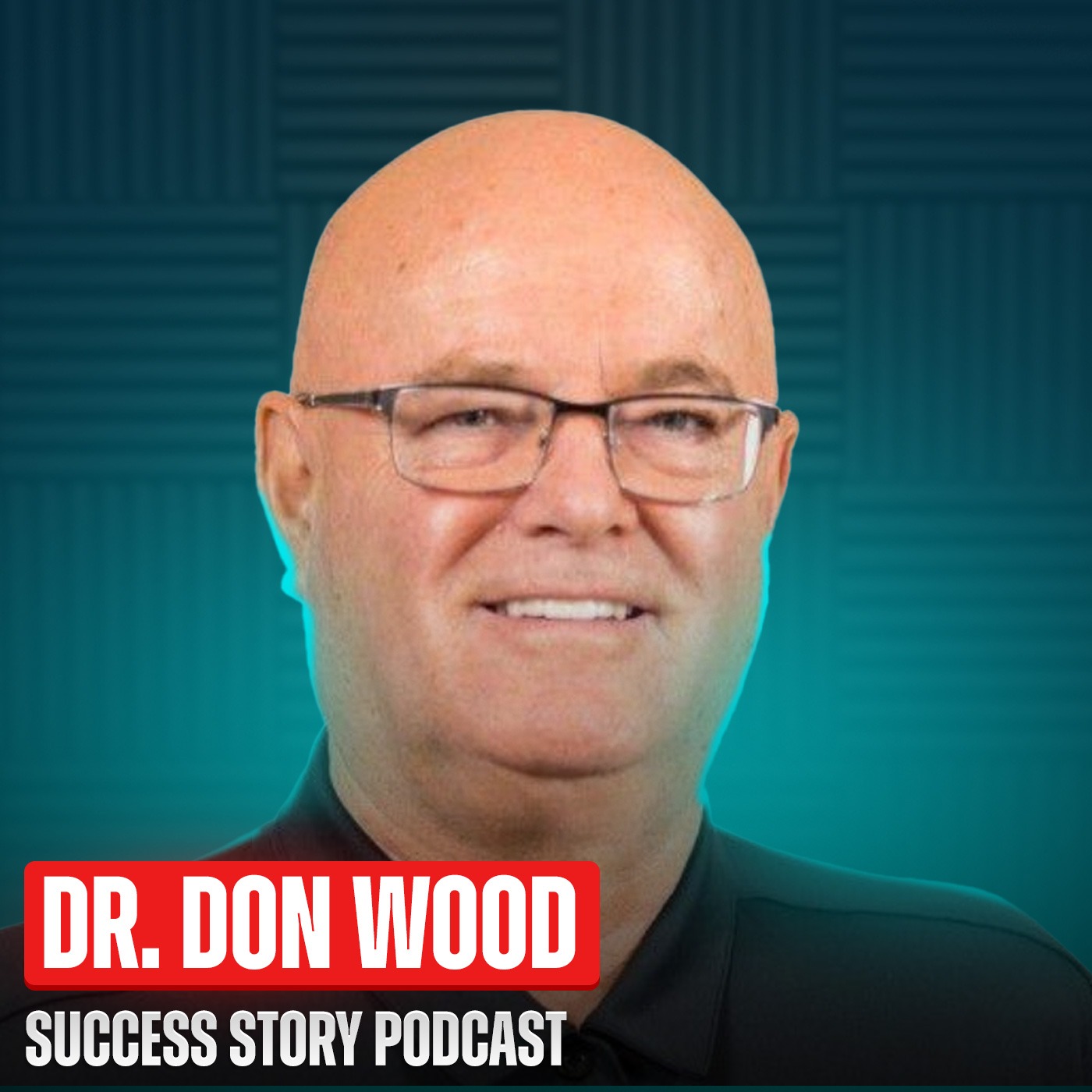
 Dr. Don Wood - CEO at Inspired Performance Institute | Unlocking Your Mind's Potential
➡️ Like The Podcast? Leave A Rating: https://ratethispodcast.com/successstory
➡️ Join 321,000 people who read my free weekly newsletter: https://newsletter.scottdclary.com
➡️ About The Guest
Dr. Don Wood is a visionary in the field of trauma-informed performance enhancement. With a Ph.D. in Clinical Counseling, he has dedicated his career to understanding the impact of trauma on the human mind and performance. As the founder and CEO of the Inspired Performance Institute, Dr. Wood has developed the groundbreaking TIPP method, a patented approach designed to help individuals overcome trauma and reach their full potential.
His innovative work at the Institute focuses on resetting the mind’s response to past events, allowing for increased clarity, focus, and calm. Dr. Wood’s expertise has transformed the lives of thousands, helping them to eliminate stress, anxiety, depression, and addiction, and to conquer personal and professional challenges with newfound confidence and peace.
An acclaimed author and speaker, Dr. Wood’s contributions to neuroscience-backed therapies have garnered recognition from high-performing professionals across various fields, including executives and athletes. His commitment to helping others live a life free from the constraints of past traumas has made him a sought-after expert and a beacon of hope for many seeking to unlock their highest performance levels.
➡️ Show Links
https://www.instagram.com/drdonwood/
https://www.linkedin.com/in/drdonwoodphd/
➡️ Podcast Sponsors
Hubspot - https://hubspot.com/
Entrepreneurs On Fire Podcast - https://www.eofire.com/podcast/
NetSuite — https://netsuite.com/scottclary/
Backblaze - https://backblaze.com/story
DeleteMe - https://joindeleteme.com/success (Code: success)
BELAY - https://belaysolutions.com
1Password - https://1password.com/clary
Indeed - https://indeed.com/clary
Heaven Hill - https://heavenhilldistillery.com/hh-bottled-in-bond.php
Factor - factormeals.com/successpod50 (Code: successpod50)
BetterHelp - https://www.betterhelp.com/successpod
➡️ Talking Points
00:00 - Intro
02:35 - Defining Emotional Concussions
04:35 - How Emotional Concussions Affect Us
07:58 - Dr. Don Wood’s Journey
12:04 - Trauma and Inflammation
14:39 - Subconscious Influences
23:07 - Trauma Treatment Benchmarks
32:53 - Overcoming Trauma to Achieve Success
41:03 - Sponsor: Entrepreneurs On Fire Podcast
41:49 - Enhancing Performance by Removing Trauma
45:40 - Inspired Performance Institute vs. Traditional Therapy
51:54 - Can We Escape Trauma?
58:34 - Limitations of Dr. Wood’s Program
1:04:04 - Dr. Wood’s Perspective on Addiction
1:09:24 - Final Tips for Trauma Survivors
1:16:31 - Connecting with Dr. Wood Online
1:19:59 - Advice for Your Younger Self
Advertising Inquiries: https://redcircle.com/brands
Privacy & Opt-Out: https://redcircle.com/privacy
Why is traditional sort of response to these traumas is so different? Why would you take drugs? What's wrong with you? Right? You're broken and defeated. They all call addiction a disease, but at the same time, even though they call it a disease, they still treat it as if it's some sort of a character flaw. But I don't believe that you should make people stand up in front of a room every day and say, I'm broken and defeated, I'm an addict. You define addiction a different way than many people. How do you define addiction? I believe that addiction is coming from pain and so chances are it's emotional pain created by trauma. So that trauma loop is running in the background. They can't stop it and so they're just feeling this constant pain. So when they take the drug or they take the alcohol or whatever it is, they numb it. So that's what they were trying to do was numb the pain. So what are they teaching the brain? That's my solution to my pain. And so now they try to use the logical part of the brain to say I shouldn't do it, but the survival brain will always override reason and logic every single time. We're all pretty much dehydrated all the time, but we're not diving into the lakes to try to suck up the water supply. It's the mind. Welcome to success story. I'm your host, Scott Clary. The success story podcast is part of the HubSpot podcast network. HubSpot is a huge supporter of the show. I'm a huge fan of HubSpot, not just because they support the show because they support entrepreneurs. And if you are an entrepreneur, you have some problems that a lot of entrepreneurs have productivity. And it's not a secret. It's nothing to be ashamed of. You're not the only one that has this problem. And why do we have this problem? Well, all the tools and the tech that we're using, they're massively over complicated. We have tons of time consuming tasks. Our teams are not getting the information they need to close the deals, connect with customers, whatever it is, as entrepreneurs and our teams, we all have productivity problems. But HubSpot's customer platform truly helps. It was built to save time and make your job easier. So you can get back to building your business. No more hours, waste it on time, consuming tasks, no more chasing down prospect info. If you're trying to close someone, no more one system for this, another system for that. HubSpot can help you find leads, reach prospects, deliver the insights you need to convert them to customers all in one place. Plus HubSpot AI can literally do more work for you so you can focus more on scaling your business because HubSpot knows you have massive growth goals, and they're here to make your productivity problem go away. Visit HubSpot.com to learn how they can help you grow better. Well, Dr. Wood, thank you for coming on the show. I appreciate you coming down here from Orlando. Thank you. I appreciate the opportunity. It's going to be good. I want to start this off. Obviously, this conversation is not going to be a light conversation because we're going to talk about a lot of difficult topics like trauma and we're going to talk about something that we're going to talk about performance as well. But one of the terms that you claim that you've written your book about is emotional concussions. I want to understand what an emotional concussion is because that's going to lead into all the other topics we're going to talk about. It was interesting because I met a lot of people who would say, I haven't had trauma and they don't identify with trauma. I coined the term emotional concussion. Can you tell me something that bumped you in your life? A coach that told you you're not good enough, you know, a teacher that told you you're stupid, maybe even an overly critical parent. Most people wouldn't relate that as a trauma. But even those kinds of emotional concussions will show up later in life because your mind uses those as resources. What do we know, for example, my wife is a great example. She was in elementary school and the teacher brought her up to the front of the class and started firing multiplication questions at her and she froze because it's tense. Yeah. And so she couldn't answer the questions and she remembers the people sort of laughing, the kids laughing. So when she told me that story, this is before I was ever in this, she was sobbing. Now that's an emotional concussion. Was the teacher intentionally trying to hurt her? No, right. But she froze. Why did she freeze? Because she was living in a very traumatic household with a very intimidating father. She couldn't perform. And so now she has the belief that she's not smart. So let's talk about, let's talk about how these events in life they imprint on an individual, right? Because again, we're not saying that this is trauma in the way that many people would describe it, but everybody has these stressful events that imprint on you and this is what you basically built your life's work around. So describe to me how maybe even we can go down to like a biological level, a traumatic event like that. What does that actually do to the brain when somebody laughs at you when you can't answer multiplication questions when you're standing in front of the class? What is that? How does that imprint on you? And then how does it end up manifesting later on in life? Well, a situation like that like an emotional concussion. Yeah. That will become a resource that the mind uses to filter through. What do we know about how smart I am? Well, what did a child who has no life experience? What does it mean to them? So they attach a meaning to it very early in life, especially during the most formative brain development years between zero and seven is when a child is basically forming who they are. So they're really coming up with their identity. So if they've got a lot of criticism going on, which is what my wife was going through, you know, you're stupid, you're blah blah blah blah blah all the time. So she's growing up with this belief. Who told her that? An authority figure. And so now it's just that's me. I'm not very smart. She's brilliant. She's my best researcher now. But trauma has a major effect on the way the brain works. And what I talk about and this is sort of it's getting a little ahead of ourselves because I explain how I developed the program. I know I want to well, that's what I want to lead with this. And then I'll go back. But yeah, yeah, I don't worry. I got you. Okay. We're going back to the story too. Yeah. So what really happens is trauma continues. I call it a loop. It runs on a loop because your mind never sabotages you. And I hear people all the time saying, how I sabotage myself. And I say it's impossible. The brain is a survival brain. It's trying to protect you. So it's going to move you in a direction to keep you safe. So for example, like somebody like that who's thought, I'm stupid. And then an opportunity comes along to go out and get interviewed for this job. What are they going to do? Oh no, I'm not going to take that job. So they keep sabotaging themselves in their mind. But they're not what their mind is saying, you can't go in front of people and talk because what's going to happen to you? You're going to get humiliated, right? You don't know how to do that. And that becomes a reference on how they can respond in a certain situation that looks like that. So it's really it is like a safety mechanism. It's totally so people look at it the wrong way. They think that there's something that they're never going to overcome because that's their brain just protecting them. They're sort of set that way. And they don't understand that it's something that happened to them early on that actually was this traumatic or emotionally can cost them to the point where they can no longer get past that anytime they experience something similar at a later stage in their life. That's more or less how this works. Exactly. So yes, let's back it up and let's go through sort of the the the the origin story of where you came from because I know that you're another Canadian. But very very similar backgrounds. But eventually obviously you went down this path of figuring out why this was something that invited people such a degree based on your own family or an experience. So let's talk about it. So where'd you come from? How did you sort of get to this point in your career? So I'm originally from Canada Toronto moved down to Florida over 30 years ago. And I was not involved in this business at all. I've always been an entrepreneur. And the only reason I got into this business was because my wife had trauma and then my daughter we found out had trauma. And we didn't know about her trauma. So the reason we came to the trauma was because she had Crohn's at 14 was diagnosed with Crohn's and we didn't know what where the Crohn's come from. And so we started researching it and there was like there's no cure for it. They don't know what causes it. You just have to manage it for the rest of your life. And so she ended up having four resections done where they cut out 24 inches of her intestines. And they said there's no cure for this. She'll eventually end up with a class to me back. But we don't know about her trauma yet. And then she she's an actress and she was acted in Canada and then she was out in LA and she ended up getting really sick and then she was rushed to the hospital. She started coughing up blood. And they did a whole bunch of tests. I had an ICU for three and a half weeks and came back with a diagnosis of idiopathic pulmonary hemociderosis. And that's when my wife said to me, I was adopted. Right. So we didn't know my whole family history. So my wife said to me, you need to figure this out and research this and find out if this is hereditary. This must be your fault. This is my fault. Then I'm like, how could it be my fault? But I've been healthy all my life. Right. And so I started to put the research together and talk to a lot of people who have autoimmune disorders. And I started going back to get my PhD. And so I started doing the research as well. And then I made a connection between a lot of these people who had these autoimmune and health issues as having trauma. And so we talked to my daughter and said, is there anything that you haven't told us or anything that we need to know? And then she disclosed that when she was sick, she had some sexual abuse. And she'd never shared that. So now I'm like, click, click, click, right. And now I'm connecting all the dots and saying, they're not treating it right. So because they had my daughter on steroids right for the Crohn, that's a de facto treatment for Crohn's. Yeah, generally it's medication and steroids. So they're really trying to bring the inflammation down because Crohn's is just really inflammation. And so, but then what happens is if your intestinal tract closes up, no food can get through. So then you've got a problem. You just can't eat and you'll lose weight and drop weight really fast. So if they get the inflammation down and get food through. So that was the big issue. She go down to 95 pounds, 90, 95 pounds because she could need. And then what happens is, and this is what I sort of put together from the research, when we have this unresolved trauma, what I mean by unresolved is running in the background. What happens is that creates inflammation inflammation then compromises the immune system and compromises the neurotransmitters. So if your immune system is compromised, she was always getting ear infections, throat infections, always sick, not just with the Crohn's, but all kinds of stuff because her immune system is weakened. And that also affects the neurotransmitters. So she's not feeling good. So she goes in and says, I'm really anxious. They're putting on anxiety medications. And now I'm really depressed. Now they put her on depression medication. So she was only the lagging indicators are solving for. Yeah. And so they're not fixing the problem. And they told us there's no cure for it. How does, how does these, how do these trauma feedback loops create inflammation or create all these other? Because I think that's the gap that people have a hard time understanding. Now I think a lot of people can agree. They understand like the mind has very powerful and it impacts a lot of like the hormones and physical being to a significant degree. But something like trauma, where does it, what's the pathway where it actually creates this inflammation? It's brilliant. The mind is not doing anything that's not in your benefit. Exactly. Right. So everyone would say, well, that's not in my benefit. How can, how can prolonged inflammation be in my benefit? Well, that's the thing. Inflammation isn't the problem. Chronic inflammation is the problem. So inflammation is a temporary response to a threat. So the cells go into a cell danger response. So they become hardened and inflamed. The purpose of that is to protect the system. So nothing can get into that cell. Right. During this attack. So it's protecting it. And so inflammation is a good thing in that particular situation. The problem is nothing can get into the cell, but nothing can get out of the cell. But it's supposed to be temporary until the danger is over. So if you start to punch me in the arm, what's going to happen to my arm? It's all up. Yeah. So they're going to a cell danger response. We're under attack. Yeah. So inflammation is a response to an attack. So it thinks that we need to protect this system right here. And so it'll go into an inflamed state. Now, when you stop hitting me, right, eventually it's going to go down and the immune system will come in and clean up. Perfectly designed system. The problem is trauma keeps running. And so your subconscious, your survival brain operates in the present. It sees everything is now. So trauma is being seen in real time over and over and over, even though it doesn't exist anymore. It's a glitch. It's an error message. So it's not just when you experience something that is similar to the traumatic event. It is a constant that's always going in almost anything that you do. Even if it's not, for example, something that's happening in the now, this traumatic event that's imprinted in your brain is always running all the time. So this is where this inflammation comes from. So it's not like you can be triggered in the future at any point more easily. It's always happening. It's always running. How does that subconscious feed the conscious? Like how does that subconscious feed or effect what's going on right now in the present? Because there's different, I was sort of doing a little bit of research before this. And there's different brain states that you can be in. And I guess that I'd like you to go into this a little bit more. So people get understand the science behind it. So it's very clear. But these events, these are like these HD events that happen in beta state. Right. Okay. So can you explain how these events are imprinted in beta state? Why is beta state so important for memories? And then how does that affect the other states at the brain as you're going through life? Because you're not always in beta state. Right. Like right now, I don't know what state we're in, but it's maybe it is beta. I don't know if it's a stressful event. Hopefully not too long. But it's usually not going to be as something as significant as, for example, being laughed at at the front of the class, right? Or sexual assault. Right. Well, we have basically four brainwave states. We have beta alpha theta delta. And beta is operating about 15 to 30 hertz. So think about cycles, right? The bicycle tire, right? Spinning pretty quick. It's taking in a tremendous amount of information in that moment. So why would it do that? Right. In a traumatic situation, it wants to record everything it's seen in experiencing for future reference, right, to use. So it's taking in a lot of data and hide. That's why I say it's high definition. So because that high definition data has been stored, right? In memory, no animal does this. Only humans do it. We have two memory systems. Animals have one. So we learn through two different systems, explicit memory, which is all the events and experiences in your lifetime have been recorded and stored in that explicit memory. Animals don't store explicit memory. So the memory system they have, we also have this is basically procedural associative memory. So they learn through experiences and they don't know why they know what they know. They just know it. And so it's basically associating. So there that's why if you have a pet like a dog, right? You can feed the dog today. You can feed the dog the same thing tomorrow. He doesn't remember eating that yesterday, but he's associated you with food and love and safety. He doesn't know why he's safe, but he just knows it. So that's the associative memory. That's how we learn how to ride a bike, play a guitar. If you repeat it over and over and over, you're going to code it. And I talk about that's the memory that codes for us, which is really interesting because I say that that's what addiction is. Addiction is coming from that coding memory. It's not a disease. Yeah. Yeah. Not a disease. It's a code. Okay. So that is what actually that state is what is what actually allows us to in theory hold on to these traumatic memories for forever as this preservation mechanism. Yeah. So it's storing it and it goes through the hippocampus and it's stored into long-term memory. Yeah. So now you've got a file and high definition stored in this memory system, but 95% of your mind is operating on a subconscious level that your survival brain and that brain operates in the present all the time. It has no connection to time. Everything is now. Your conscious mind operates about 5% and that's the ability to use reason, logic, figure stuff out. So that part of the brain is our intellectual brain, right? Animals don't have that. We can think of things, imagine things, create things that never existed. That's coming from the 5%. So animals aren't sitting around saying, how can I improve my life today? What could I create? They don't do that. They just operate in the moment. They're 100% subconscious. They just respond to what's happening now. So we have 95% of our mind working like that and then the 5% is the intellectual, reasonable, logical part of our brain. So when we talk about these sort of constant feedback loops, I spoke about one example, which was in cell inflammation, which led to autoimmune disease. What are some other ways that this can actually impact us? So physically, it actually affects the way the DNA is read and transcribed, which is amazing. Yes. I just wrote my fourth book and I'm calling it don't mess with my DNA. It is meant for parents to understand what happens to your child if they don't have this nurturing, loving environment, like I grew up in, so I grew up in. So I've got this nurturing home that I grew up in. And so my DNA was not being affected and it's not the actual DNA that changes is the genes, the genetics. And so the genetics will change and here's what happens. When there's trauma, trauma actually will start to change the genes and the inflammation. So inflammation genes turn up and that's designed to say we're in danger. We need to get inflammation to protect the system. So then what it's going to do is turn down the immune genes, turn down the neuroplasticity, neurotransmitters. So the genes are being affected by what this experience is, but it's not supposed to stay there. It's supposed to come back in the line when the threat's over. Here's the glitch. When trauma keeps running in the background, the genes stay in that state. So now if your immune system genes are not methylated in and expressing properly, you're going to get sick. So there's where people who have a lot of trauma or any kind of trauma are more susceptible to getting sick. You mentioned neuroplasticity as well. So it's harder for those people to learn to learn. Yep. And there's where my wife didn't feel smart. She couldn't learn. She couldn't focus. And she said to me one time, well, school was easy for you. And I said, well, of course it was easy for me. I didn't have any threats in my life. I didn't have to worry what my dad was going to do to me when I got home. You couldn't do that. So you were in constant flight her entire childhood as exhausting. So now you have to go to school and you have to focus. How do you focus when you're that, you know, challenge is a child. So what you what you had growing up, what I had growing up. And I want to eventually get to the point where how do we architect this kind of environment for people who haven't had that. That's where then that will come back to performance and and some of the systems that you've sort of figured out through your career. But really what happens is we go into the world and the world is stressful. And then we go back home. And then we have this like this peaceful place that we can reset. Yep. So the majority of our time is spent in this really great space where we're not being stressed out. We're not being traumatized. Right. So we're learning like we're learning how to sort of come back and remove the stress from our environment. Reset. Reset. Basically. Yep. And then those small micro traumas that you get going into the world like the they're not as detrimental because you have this safe space to come home to. Exactly. The majority of your time is in a good spot. Yep. And you're learning to expand and come back. I got you. Okay. So then this is probably a very useful skill as an adult. Oh wow. Absolutely. And work a stressful life stressful relationship stressful. But you know how to I guess remove yourself from the situation and then come back to the baseline. Yeah. And reset and rebalance. So I had been doing that all my life. And then on top of that I didn't have any real trauma. Yeah. So I'm getting bumped by a friend who said something to teach her a coach. Right. Those are the not big things. Right. A lot of people have a lot more than that. You know sexual abuse, physical abuse, right. All that kind of stuff. So you add that on top of it. You put that kind of abuse even in a good nurturing environment. It's still going to have an effect. So obviously I could see how that could impact performance. I could impact a lot. Like we just said it can impact learning can impact your health, the wellness. It could totally impact performance as well because I'm assuming the people that some of the people you work with right now have gone through all these horrible life circumstances, maybe situational trauma or ongoing trauma. And we're just using trauma because it's an easy it's an easy word to understand what we're dealing with here. But they've probably succeeded in spite of. And I'm assuming that there's a lot of people that have not succeeded in spite of, but I'm assuming that a lot of people that are focused on optimal performance, they've succeeded in spite of what they've gone through. But then you can get that extra whatever. Exactly. Everybody has another gear. So okay, so let's talk about let's talk about the sort of the process that you figured out. So we've understood now we sort of understand like the background and and how these feedback loops work and we can all agree it kind of sucks and it's not it's not helpful for anybody. So what do you do about it? Because I think and I also want to understand like what the industry benchmark is for doing stuff about it now. Is it therapy? Is it drugs? I don't know. I'm not a doctor. So tell me like what if I had trauma and I felt like I for example was killing it and making a lot of money in my business. But every time I stepped on stage, I was nervous. Right. What's the what's the go to fix before you exist? So what you do is you go into your doctor and you'd say I have really bad anxiety. Yeah. Right. And what are they going to do? I'm going to put you on Medicaid drugs, probably immediately. So when people come into me and say I have really bad anxiety, what I say is why? Why would you have anxiety? I know sometimes they do. Sometimes they don't. But when I explain to them anxiety is coming from a fear of something. What is your mind afraid of? And chances are it's coming from an event or an experience earlier in their life, right? Like my wife, she would never go on stage and talk. Why? Because of that event. Because what did she learn from that? That's hurtful. So her mind would say if somebody said to her, Oh, I'd love to have you come up and speak about, you know, blah, blah, whatever it was. Even if she was super knowledgeable about it, she would have said no. I'm not going to do that. She wouldn't do it because she knows she'd stand up on stage. She'd freeze again. So those are the things that continue to loop and run. So what I say is because that was stored in high definition, the mind is actually seeing it in real time. It's actually happening now. Even that's not even though it's not because it's looking at the data in real time. So the funny way to explain I was talking to a gentleman yesterday and he loved this. I said, you're conscious mind, you're 5% right? They can use reason and logic. Hollywood has made trillions of dollars from this. So you go into a movie theater and you're watching this movie and you're conscious mind, right? The logical intellectual says, Oh, that's Leonardo DiCaprio playing in a movie called Titanic. And your subconscious mind says, Jack is going to die. He's drowning. You feel the emotion, right? The purpose of an emotion is a call for an action. What does your mind want you to do? Act. Do something. The purpose of fears to get you into an action to run or escape. Anger is designed to get you to attack. So if you think about something, this is the best way to know if trauma is active for you. If you think about something that happened to you at some point in your life and you feel an emotion like fear or anger, it's active in looping and running. So all we have to do is take that high definition. This is the best way. So anybody listening right now, this is a great way to explain it. Tell me what you ate for dinner last night. So we've just got right now. If I asked you what you ate for dinner, what did you have for dinner? I'd drink food last night. Right. So when I asked you that, you saw pictures right of what you ate, maybe where you were when you ate it. Yeah. That's how you stored the information in memory. Yeah. But it wasn't threatening or disturbing. So it's stored as a fairly low resolution file. I'll probably forget if you ask me next week, I would not know what exactly. But there's not enough information. There was no threat to your survival. But even though you may forget it, it's still there and it's stored. So we've got billions of bits of information stored in this memory system. But if that was in the traumatic event, a very disturbing event, all your senses are heightened. You're in a high beta state. Now it's recorded that with tremendous amounts of detail. So what's going to happen if somebody reminds you about that high definition beta memory and your mind starts looking at that memory like I asked you about dinner. Your mind is going to think it's happening now and activate a nervous system response of fear or anger whatever it is because it's going to try to get you into an action. So when people try and sort of solve for this without maybe going through one of your programs, say they go to therapy or they take drugs or whatever. I'm trying to think of even like a practical example for myself because I think that that stage fright example is perfect example for most people and it's the most common fear in the world. One of the most right. So nothing really maybe there is trauma when I was presenting in front of a class, you know, when back in like grade three, grade four. But when I do it now, it's taken me maybe like 20 or 30 times before I get comfortable. So I'm using volume of exposure to basically rewrite my experience to a degree. Is that correct? That's actually pretty accurate. Yeah. So what you've done is you've diluted the one event. Okay. Right. So what is your mind using as his research? The success you had. It'll also look at that. So it may create a little bit of like, well, we also did have this problem. Yeah. But we've got I always say think of repetition as research. The brain sees that as research. So if you had a experience like my wife, right? And that's the only resource it has to look at speaking on stage. What's it going to use? That experience. So we're not going to do that because we're going to get hurt. Yeah. So what you were able to do is fight through and build up enough research to say to your mind, I know what I'm talking about. We don't need to worry. I'm not going to get laughed at. Right. And that's sort of how you overcame it. No, I was going to say one other thing that I think is very interesting. I can't remember who I was listening to a podcast. I think it was a, it could have been Scott Galloway. Anyway, it was some thought leader. It doesn't matter who it is. But he was saying that one in every 100 times he gets on stage because he goes on stage a lot. Whoever this person was, I can't remember. But one in every 100 times, he'll get a panic attack. So it'll be like 99 times. He's probably spoken a thousand times in his life. Right. So 99 times, he'll be fine. But one in every 100, he'll get a panic attack uncontrollable. Cannot stop it when you're about to step in front of the audience. Then your heart's going, you get dry mouth. And it's just he has, he had no idea why that happens. So that is, I'm assuming your brain for that one in 100 time going to the wrong bit of research. Exactly. You pulled up the wrong file. Yeah. I got you. And then that file activates a nervous system response. And usually enough, a panic attack is starting up to an hour before. Really? Yeah. You just don't feel it to the same thing. You don't feel it. So what I've done, I've got a patent on this, we can shut a panic attack down before it ever starts. We're just going to monitor right the oxygen. Yeah. Right. So it's a device that you wear and it will alert you that your system is starting to do the research, starting to pull files. And then before even before you feel it. Yeah. So when I wrote the patent, I said a panic attack is a combination of psychological and physical. So the mind psychologically is looking at files. Yeah. But it hasn't got enough data yet to say we're in trouble, but it's continuing to look through the files. So what happens is it starts to prepare the body right for a potential threat, but you don't feel it yet. So your heart rate starts to speed up a little bit. And then what happens is physiologically, your system is changing. So oxygen is being used, right? So now your body is sending messages to the brain, saying we need more oxygen, which is confirming that we need this, these files must be accurate. Yeah. And then it starts to burn oxygen from the muscle groups, changing the pH of the blood. Yeah. It's a feedback loop. It's a feedback loop. And it keeps running, but you don't even know what's happening. So this is what I wrote in the patent. And I said, so can you imagine what happens if we can detect the physiological change? And I thought oxygen is the easiest one, right? We can do just like a pulse like similar to you get when you go in the hospital. We just need to show when oxygen starts to drop. That means something's happening. So we just alert you. And if you've gone through the program, we show you how to turn it off the feedback loop. Very interesting. And it never happens. And after I wrote the patent, I found a study other Southern Methodist university that had 2000 hours of data on panic attacks. They had a 13 people experience a panic attack during the study. All 13 people said the panic attack came on instantly, but they had them all monitored. And they said, no, they were all kinds of physical exactly what I said in the patent. So we added the study in the patent. I think that's how we got it. I want to go through some of these methodologies that you figured out. But I also want to talk to one other sort of performance inhibitor. Okay. So we're talking about panic attacks like jumping on stage stage fright. We're talking about like how these past traumas run on feedback loops. And that could manifest in a panic attack situation. And again, that's a very real problem that people have to solve for because it's not just inhibiting. It's almost like blocking. It's not just reducing performance. It's almost eliminating performance completely. But I also don't think that's the majority of people that you deal with. I think that you normally deal with may not even realize that the performance is not optimal. Right. So walk me through that. So help me understand. I have these feedback loops going. I think I'm doing fine. I think I'm making money. What is the thing that's not working for me? You know, like without naming names, what are some case studies that you've worked on that CEO athlete, whatever when I'm a professional athlete, how does trauma stop me from getting to the next level? When I when I don't physically feel it, I feel like I'm on top of my game, right? I feel like I've already I'm getting paid to play sports, whatever it is, like, or I've, you know, climbed the echelons and now I'm CEO or I've built a company. So I think I'm doing okay. But I'm not that last 10% or the last 20% I don't know how much percent how you lock it, unlocking people. But there's something there. And I want to understand how this trauma impacts even these high performers that are by all external factors and external sort of measures doing quite well. So let me give you two examples. I think these are want to be a business one will be an athlete. I love working with athletes because they measure performance. Yes. Easy to find. Business people aren't necessarily measuring. If especially a successful person if they're making really good money, they're using that as their measure, but they don't realize they've got another gear. Yeah. So I had a gentleman come making about two million dollars a year, trading options, derivative stocks. It's pretty successful. Most people would go, what problem could this guy have? And what he said to me is he said, here's the issue that I want help with. He said, when the fourth quarter comes, he says, I literally shut down. I lose all my motivation. And he said, and I have two partners and they're pretty patient with me. He says, but I'm always making excuses about, I'm just going to take a week off. I'm going to take a vacation. I'm going to go play golf. So I'm always coming up with reasons why I don't want to go in. And he says, I'm always, if I do go in, I'm totally stressed out in that this is what I tried as first three quarters. He's no problem. No problem. So that he recognizes like, there's something going on. Yep. Yeah. And he says, and it's constant. But I don't know why. So we go through and we start looking at, you know, his life. And so I said, you know, what was your life like? And he says, well, my father is my mentor. He says, brilliant business person, very, very successful. And he says, but he did go bankrupt four times. I said, okay. And he goes, I remember we used to fly in private jets. He says, and then I'd be walking up in the middle of the night to get in the car and move because we're being evicted. And he said, and that happened four times. So what was his mind trying to do? Protect them from the most volatile period when stock trading is the fourth quarter. And so generally that's when so his mind got to the two million. And it was like, don't risk anymore. Stay away. Don't trade. Right. And then he says the, the first quarter we come up for the next year. And he's all fired up again. Is it because in his mind, there was less, there was less risk associated with first quarter. Yeah. First and first quarter, second quarter, third quarter, fourth quarter, seeing to be the one in his mind that was the riskiest. And once he's gotten this accumulation, sitting on his gold. And somebody says, you're gonna risk the gold? Yeah. No, just store the gold, right? Start again next year. And so after he went through the program, he called me on December 15th and said, today was my last day. I am taking the rest of the year off, made the best amount of money I've ever made because he could stay in without that. Now he's brilliant trader. You know, you have to have the skill doesn't mean just stay in. It's not saying this is people that have the skill, but are still sabotaging themselves. And that's what they would call it. And I said, you weren't sabotaging yourself. You were protecting what you had. And that's the way here. So your mind would try to distract you away from it. Yeah. Don't think about work. You know, chain like think about golf. Think about a vacation in the Bahamas. I would be trying to do everything it could to persuade him to move away from danger. That's not sabotage is preservation. And then what about the athlete? So I got a number of really great athlete stories. But the one, this will be a good one when we talk about physical as well. So his name is Marco Chacetto. Marco is a double amputee marathon runner from Kenya. So he got recruited him in his cousin to the University of Alaska from Kenya. Could you imagine the culture shock from Kenya to Alaska? It's a little bit. It's a big, tiny bit of a culture shop. Yeah. And so, you know, the sad part about it is his cousin did not acclimate and committed suicide. It was also and so Marco was so distraught that he attempted suicide passed out in the snow for two days and ended up when he was able to get back. They had to amputate his legs below the knees. Now, this is a marathon runner. Oh, my goodness. Okay. So this is I thought he was competing in the Paralympic. He's not. He wasn't a runner. Oh, he was able to run a runner. A runner before. Yep. Okay. And so that's how we got the scholarships to the University of those Kenyan runners are amazing. And so now he's lost both his legs. So they built him prosthetics right to start walking again. And then he wanted to run. So they said, we'll build you some blades. So they built him those blades. Yeah. You see those guys run on. So he's training and doing pretty good. And then they call me the people who make the prosthetics and he said, we think Marco has even more potential, but he's plateaued. He's not improving no matter how much training we're giving them. We're doing everything. But he seems to have had a plateau. We think it's in his mind now. So can you take him through your program and see? So what I talked about with Marco is I said, when we have unresolved trauma, it actually affects the mitochondria and the cell. The mitochondria have thousands of mitochondria in your cell. That's the power source. Right? It's the energy. I remember great six biology. Oh, you do. Okay. Yeah. So it's producing a power. Yeah. So when we have this unresolved trauma, it's feeding the loop. Yes. So your mitochondria is affected. Yeah. So I take him through the program. Nine days later, he runs in a marathon. It takes 15 seconds per month. Yeah. That was time. Yep. That's a ridiculous amount. I'm out. I'm out. Yep. He runs in a in the Boston marathon. This is in 2019. Runs in the Boston marathon in April of 2019, breaks the world record. He's now the world record holder for amputees running in marathon. A couple months later, runs in the Chicago marathon, breaks his own world record by another five minutes and gets signed by Nike. And what I said to him, I said, Marco, I didn't make you faster. You were always that fast. You didn't have access to that power that was running the trauma loop was affecting the way you could run. And that's the same thing. That can be psychological. It can be for a CEO and executive. It doesn't matter who it is. You know, they get exhausted. They're tired. Imagine if you give them more energy and more power to focus and they can focus longer and stay in longer. You take somebody like this guy making two million and you give them another, you know, 10%. Yeah. Right? He could go to three million. I just want to take a second and thank the HubSpot podcast never for supporting success story. We're part of the network. If you love podcasts, the HubSpot podcast network has other incredible podcasts like entrepreneurs on fire hosted by John Lee Doomass, entrepreneurs on fire is one of the OG entrepreneur podcasts. It really stokes inspiration, share strategies to fire up your entrepreneurial journey to create the life you've always dreamed of. It has unlimited energy, value and consistency. The podcast is truly for anyone who wants to learn more about entrepreneurship. If you like fast paced, packed with value stories as shows for you, John brings on great guests. He speaks about failures, aha moments, what's working for them currently. If you love podcasts, go listen to entrepreneurs on fire wherever you get your podcasts. Well, I'm just thinking like as you describe all these different use cases, you describe the stresses, the straighters experiencing Q4, you described, you described, you described the the mitochondria, the optimization that this this runner is going, this runner needs to sort of take their performance to the next level. If you go through this program and you're removing all these traumas, then even if you aren't aware of the certain particular thing that you want to optimize, it feels like you're going to optimize it, right? Because you're not like you're not necessarily you're not necessarily pin pointing this this trauma removal for one particular part of your life. So even that trader, for example, he's trying to get over his Q4 stress. Maybe he also has more energy. Yep, absolutely. And maybe he also doesn't get sick as often. Yep. All that stuff being affected that trauma from child. So his dad is his mentor. So he's thinking, this is positive thinking about my dad, right? I learned so much from my dad and he did. But what he also learned is if you take too many risks, you go bankrupt. Was his dad trying to hurt him? Yeah. No, that's just life. So in his mind, he was very bright. He knew how to make money in trading. But as soon as he got to in his mind, whatever, for whatever reason, two million seemed to be his level, right? The two million would then say, we're done, right? Sit on the gold. Right. Yeah. Don't move, right? Until we get to the next quarter. So, okay, so the the the framework that you put into place, this is this is tip. This is what you've created, correct? Yeah. So maybe walk me through like a very simplified explanation of how this helps people, how this is resolving trauma, how this like we're moving those feedback loops. So what does this, what does it stand for? What's the acronym? It is the inspired performance program. Oh, okay. Well, the reason we liked it is because we talk about we want to get you to the tip. Okay, I got to the peak of your performance. Gotcha. Okay. And that's really sort of and for everybody. Let me just extend one more thing to before we move on. Even if you don't know it's changed, it's changed. And I'll give you an example. We have a guy that has rehab centers. And he wanted to go through he wanted to look at the program so we could see if he wants to put it in to the rehab centers. So he says, can I just sort of go through the program to take a look at he says, I don't really have any trauma. You know, he says, I used to be, you know, an addict. He says, but I went through all my trauma. So he's thinking he's fine. And so we take him through. We have one of our people take him through the facilitated program. And two weeks later, I get a Google map from him, right, with a picture of a golf and country club that and just the map of that with a red line going through it. I'm like, what did he send me this for? And so then he calls me about an hour later. And he said, you get the map I sent you. And I said, yeah, what was that for? He says, that's the route I run every day. He says, I take that route and I run that route or on the golf course. And he says, and I was doing it last night with my girlfriend. And she got mad at me. And she says, why are you running so fast? Slow down. And he goes, I'm not running fast. I'm running. She goes, no, you're trying to run me. And he says, we got into an argument. I said, I'm not trying to do anything. He says, I went back and I started to look at my training. I was making personal best and didn't even know it. That's how his mind is adjusted. So even without knowing he was improving, and it wasn't until she said, why are you running faster? Yeah. Right. He just improved. And so talk about talk about tip talk about the actual program, how you deploy it. But also maybe contrast it to traditional therapy. Okay. I think that's interesting because I think a lot of people the way they would solve for a lot of these experiences right now would be traditional therapy because I know that you condense a lot of this into a four hour window. That's your ideal optimal setup. Why is four hour window important? What do you do in that four hour window versus therapy, which is an hour per week. I would assume for a week per month. Yeah. Whatever. Yep. So let's walk through the actual program. So people understand why it's structured the way it is. I know there's a lot of thought behind the four hour window science. Yeah. Let's go into it. So that was really what I did is I looked at it and I said, okay, if somebody comes in and they say to me, I have anxiety. I say, that's the symptom of the problem. Why not look at what caused this anxiety? There's a something that happened. There's a root cause to it. So if we get to the root cause, you won't have anxiety. Anxiety is just a symptom. But they treat the symptom in traditional, like, oh, we're going to treat your anxiety by giving you anti anxiety medications. So they're trying to chemically change the brain. And remember, I talked about the trauma loop. So our minds are constantly to make it simple, doing Google searches all the time, pulling up files. What do we know about this experience? What the medication is doing is blocking the Google search. It's not fixing the problem. So the problem is still there, but you're sort of numbed out. And so, and then traditional talk therapy, which I'm not saying is bad, traditional talk therapy will want to say, what do you, how does it make you feel? What do you think about? Well, I think you keep reinforcing it. And then you're only in there for an hour. So if you're in there for an hour, chances are, you're going to be in a high beta brainwave state because you're coming in to talk about, let's take us to the other rehab, all the memories, all the memories. So they're in high beta, talking to the therapist about a high beta event. And so how much work are you going to get done if you're in the same state that you experienced the event in? Not a lot. Maybe a little bit. That's why traditional therapy takes a long time because you're sort of getting little pieces trying to get that done. What I do, and the reason I use four hours is in the first two hours, it's almost what we're doing here. It's education and science. I tell you how I developed it. The first thing I say to everybody when they come in, there's nothing wrong with you, and there's nothing wrong with your mind. Your mind is doing exactly what it's supposed to do, is protect you. It's dealing with some glitches and error messages. So think of the brain, the physical brain, as the computer. The mind is the software. If I drop the computer, the computer's going to get damaged. If I hit my brain, I'm going to get a concussion. I'm going to get a damage. Software is prone to glitches and error messages. Of course. And you get a virus. Yeah. So what do we do when we have a glitch in software? We reboot the software. We recode the software. We don't try to throw the software out or say we got bad software. All we have to do is reset it. So I always talk about a few. Every time you hit the M key on your computer, your computer shut off. So if you took your computer to your computer therapist, your computer therapist would say, don't touch the M key. Stay away from words with M's in them. What's wrong with you? It's going to activate. They'll say trigger. I never use the word trigger. I say activate. Why not? I thought it sounded negative and violent. So when people come in and say, oh, this triggers me. And I'm saying, that's sound. The first thing I think of is a gun and somebody firing. And so what I say is try to remove the gun analogies from a mental health. Yeah. Not a bad idea. I say it's activating your nervous system. Why would it activate it because it perceives a threat? So it's supposed to do that. That's why I say there's nothing wrong with you. If you have, if a lion shows up here, we're supposed to get activated, right? But if we think about a lion, we're not supposed to be activated. Why would we get activated if we thought about a lion? Because we got attacked by a lion. And the mind starts looking at the resource. What do we know about lions? And then it starts to see the old information in real time. And that's the movie analogy I was talking about. Your mind thinks something's happening. So if your mind thought something was happening, doesn't it make sense? It would activate or has to. So there's nothing wrong with you. But they'll tell you anxiety, depression, panic attacks, or something wrong. You've got a mental health issue. No. Your system is doing exactly what it's designed to do. It's reading old information to the way that the way that you structure the, and then you actually set up like, so I know the way that you help people and the way that you work with people, there's sort of two different formats. You have like a personal four hour session, which is like the highest touch. But then you can also do this in groups or online to a degree as well. So you've developed systems for both, but obviously all based on the same fundamental. It's exactly the same program. So if you come and see me one on one, I take you through the program. You know, people say, what's the difference between that and the digital version, like just watching through the digital lock on your own? I said, it's a book in the movie. Yeah. If you read the book and then watch the movie, you'd go, ah, the book was a lot better because I got a lot more out of the book. But if you just watch the movie, the movie works, it takes you through the same thing. It's just not me telling you personally, but it's me doing the exact same thing, but just on video. Is there, is this something like this, this process? Is this something that would be healthy to do periodically? You can refresh, but once we get the bulk of the work done, unless there's new stuff coming up. Yeah. Chances are you wouldn't really need to do it. Plus we've given you the tools, right, that you could continue to use. Is there an even going forward? Is there a way to like harden yourself so that you don't have some of these things in print on you? Or is that a very difficult thing to do? Well, trauma is going to affect us no matter what. Yeah. So, but here's the advantage. If you have old trauma, think of it, you're carrying around 150 pound back back. Yeah. Right? And then somebody goes, here's another 10 pounds. That just can bring you to your knee. Yeah. But if you get the 150 pound back pack off you and another 10 pounds comes at you, right? You've got a lot more resilience now. You'll be able to probably work through it. So that's the biggest problem. So many people come through and they have all of this childhood trauma and then they get hit as an adult again. And then all of a sudden they're just taken down and people say, oh, I guess that event. So I worked with a person from the Boston Marathon. I worked with a few of them, Boston Marathon bombing. And what she said to me, she goes, I thought I came in here because of the Boston Marathon bombing. She goes, that's obviously the big one. She's, I'm a post-traumatic stress. I'm having terror nightmares. She says, my childhood trauma had no idea. Was that impactful on me? She goes, I got more out of the childhood trauma than I did out of the Boston Marathon bombing trauma, right? It was more impactful for me. So the Boston Marathon is another 50 pounds just packed onto her 150 pounds that she'd been carrying, right? So once we got the 150 pounds off, right? It was easier to deal, not easier. I mean, it's going to be a lot simpler to deal with that 50 pound Boston Marathon. So she came in with a whole bunch of other trauma. And then that one happens, then all of a sudden the system, it's an overwhelm. But even if, even if you don't remember everything that happened to you, the way that you structured this, and like, I'm not, I'm not well-versed in therapy. So I'm sure that traditional therapy tries to get into this as well. But the system that you've structured, it can pull out things that you weren't really conscious of, yeah, even aware of. So to go back to the four hours. So the first two hours, I haven't, I don't ask you a thing about trauma. Yeah, I just educate you and say, here's how your brain works. Here's how the brain waves work, beta alpha theta delta. Here's how the mind is going to process, right? So you get all the science. And that's actually so helpful because what I hear constantly is, it's like, click, click, like, yeah, you're connecting all, now I'm getting it. Of course, this would happen to me. How could it not happen to me? And so if, you know, people come in and they say, I have this and this and this and I go, well, there's a reason why I never had your life experience. If I had had your life experience, I'd be right where you are. I'm not especially unique, right? I just had a special unique childhood, right? That allowed me to do that. Then the next hour, we're going to get into some specific events. So I'm looking for basically three events. So I'll say, can you tell me about three different events that you had, but I'm looking for if that event was made into a movie, I'm looking for the movie trailer. Okay. I want the minute, two minute recap of it, right? So I'm not looking and I don't need you to talk about it. I don't even need you to tell me about it. I can actually get your mind to clear it without knowing one word. And real people say, I don't have to talk about it. So that's how when I do the groups, yeah, I could have 25 people in a room all going through their own personal trauma and nobody's sharing it. The techniques I take them through does the clearing because they're discovering it in their own head and their own head. They're seeing it. What, how does it help them for me to know that? It doesn't know. There's only curiosity on my part because their mind is going to fix it, right? I'm not fixing it. Their own system is fixing it. So if you came in with a broken leg and we reset your leg, how much credit should I get for that healing? I just reset it, but the body did its own thing. It's the same thing with this. I don't take the credit. Your mind is going to do it. The reason it hasn't been able to do it is because you didn't understand why it was doing it. Once I educate you, you can see how this could work. It's so simple. You don't need to live and manage and cope with it. Fix it. So it all makes a lot of sense. There's probably a lot this broken with the traditional way of fixing things. I feel like a lot of people are not going to like you that much. That's okay. Well, we get two two camps. Some people that go, that's nonsense. You can't do it that fast, but we got the evidence, right? Well, it's actually how we connected because somebody's doing the study studies. Yeah, we're going to publish the study. Yeah. So I had, it was a good example. I had one lady, a therapist who saw the kind of work I was doing. She was referring, she referred me the ones that she knew would take her a long time. So she says, I've got a lady that you, I think you're going to be the only one that can help her. Can you, can she come and see you? Can you get her right? She had a 60s lady, had a home invasion, got pistol whipped, having panic attacks can't even get out of her house. And she says, like, if we can get her to you, can you see her right away? So I said, okay. So she comes in and as soon as she walks in the door, actually, was my wife that was, was there that day? And she just breaks down crying. She's sobbing and she's walking with a walker. And so she comes in, I take her through the whole program and it was like life changing for her. And so this was on a Tuesday. She goes back to see the therapist on her therapist on Friday. And her therapist calls me after the session, right? And so she says, I just saw her and I said, I said, she's doing pretty good, right? She goes, oh, yeah. She's doing pretty good. She goes, I knew it would, right? She says, but when she came in to my office, she says, I have good news and bad news. And so the therapist, she goes, well, the good news is you're not walking with a walker. She goes, no, I don't need the walker. She goes, the bad news is you're fired. Call me back. And she says, but I was happy for her. But that should be the way that the, the, the health and wellness and medical system works. Yep. But it's, it's not how the system works. No, but this therapist was thrilled. Yeah. She was a true caring person. And she knew that this was the fastest way to get her there. Are there types of trauma that this process or the system does not solve for fix or help? I really haven't found anything. The only time we have any kind of like that. Oh, I deal with that all the time. Yeah. Okay. Sexual abuse and rape, right? Especially childhood sexual abuse is the number one pandemic in this world. They're not talking enough about it. I see it all the time. And it's frightening how big it is. It happened to my wife. It happened to my daughter. It's prevalent. It's like that prevalent. That's unbelievable. Just look at the sex trafficking now. Yeah. This going on in this world. You know, you really don't think about it. You just hear, oh, you know, these children are being sold into sex slavery. Millions. Which you can't even compute because, again, we both grew up in great homes and environments. And I mean, maybe, maybe nobody who I knew spoke about it. But this was not a thing that was in my world growing up. Like there was no sexual abuse, no, like nothing. Yeah. So just didn't hear about it. Like about me. I didn't hear about it. So then you start to get sort of exposed to what you look at numbers. And it's it's disgusting. It's not. You actually support a charity that finds women that have been lost or kidnapped. There was a charity that even. Yeah. Yeah. So we would do that to help find missing children. But we also work with a number of different charities work with the Green Bray Foundation, you know, to help veterans. But the sexual abuse is staggering numbers. I didn't know that two teachers at our schools were sexually abusing kids, two principals. The guy ran a little league for 35 years. This all came out after I was an adult. Yeah. None of my friends told me they were being sexually abused. But a lot of them were. And nobody talks about it. And now I look, when I look back on it, I'll give you a great example. This is an elementary school. The, I'd, I'd, I don't know if you were, because you're younger. But did they have the strap when you were still? No. They had the strap. So I was a kid. So that was my, my, my dad. Yes. Yeah. Yeah. So in Canada, I don't know where else they do it. But it is red binder. Yeah. Right. And there was a leather strap in it about a 12-inch leather strap. And if you did something wrong, you would have to hold your hand out and then strap it. Yeah. Right. Depending on how many times. So that was common. I never got the strap. I never did wrong. And so the principal comes in to our classroom during the class. And he's furious. He's, he's looked so mad. And there was a young girl called Elizabeth, right? Who was his bookwormy smart kid quiet, right? And if you put a list together of the people that who would get the strap, she would be on the bottom of the list. He walks in, makes her stand out, put her hand out, she's sobbing and crying. He's taking it, and he's whipping. And, and on my mind, I'm like, what could this girl have possibly done to get that? I made no sense to me. Now I know. He was abusing her. And I'm sure this was his intimidation. Or so she didn't do anything to reserve this at all. He's not going to tell because right. This is so you don't know, right? Elizabeth, I'd buy me out there regardless. She did anything to deserve it. I'm sure she didn't, but he is, this is her, this is his tactic. His tactic. So maybe there are other kids now in that classroom, too, these abusing. And then he shows them, this is what's going to happen to you. Now, if you're a kid, you know, you're ends with nine year old, 10 year old kid, then you see the principal come in and strap somebody else, right? And especially her because you're saying, I can't imagine anything as she could have done. Like, there's some people in this room that I could say, yeah, I think, I think you missed this guy, right? Not that I believe this job was a good thing anyway. But those those were the kinds of things that were going on, but nobody would talk about. And so, so my wife dealt with it, right? And before we got married, right? So she said to me, before we get married, right? I want to share something with you because if that changes your mind and you don't want to marry me, I'll understand. And I'm thinking, oh my gosh, this must be big, right? What is it you want to share with me? And she shared with me that this has happened to her as a child. And I said, okay, and she goes, does that change how you feel about me? And I went, no, like you're a child. She goes, okay, she says, now you have to promise me something. You'll never tell anybody what I shared with you. And I'm like, why? Right? Because in my mind, I'm like, you did nothing wrong. Why why you feel the shame yet? Yeah. Why you feeling shame and guilt about it, right? But that's what the perpetrators do. They get them to feel shame and guilt. You know, what would happen if your mother found out that you did what you just did, right? They're never going to, how could they possibly love a child that would do something like that? And they did it to them, right? That's the kind of stuff they do to these children. And that's why they don't talk about it. And so then they hide it and conceal it. And what does it do? It shows up in their health. It's a huge health problem in this country. And it leads to addiction, it leads to all kinds of health problems. I actually want to touch on that. So you mentioned addiction before. And you mentioned that this process can actually help with addiction. So you define addiction a different way than many people. How do you define addiction? They'll call addiction a disease. And I get why they did that because they want to get into the health field. So it becomes a health problem as opposed to a morals problem. But at the same time, even though they call it a disease, they still treat it as if it's some sort of a character flaw, right? Why would you take drugs? What's wrong with you? Right? You're broken and defeated. And so, and I know AA and NA, right, are helpful for a lot of people. So I'm respectful of what their mission is. But I don't believe that you should make people stand up in front of a room every day and say, I'm broken and defeated. I'm a debt. I'm an addict. I said, because I believe that addiction is coming from pain. And so in chances are it's emotional pain created by trauma. So that trauma loop is running in the background. They can't stop it. And so they're just feeling this constant pain. So when they take the drug or they take the alcohol or whatever it is, they numb it. So that's what they were trying to do is numb the pain. But remember I talked about earlier, think of rep repetition as research. They repeat it. So what are they teaching the brain? That's my solution to my pain. That's a code, just like a computer codes. And so now they tried to use the logical part of the brain to say, I shouldn't do it. But the survival brain will always override reason and logic every single time. So now they can't get out of it because the survival brain is saying, you're going to take away my supply of pain relief. And no alternative to it. Not a chance. Right. So it will continue the code. Then they'll try to do the M key. They don't touch the M key. Right. We're going to try to retrain your brain. But if you never fixed the original thing that caused the pain, then you've never resolved the problem. And that's why they stay in an attic. What I do is get to the original source of the pain, which is the trauma, get that out of the way, and then recode it. So then we take them through a series of processes for the next 60 days to start recoding and changing the way the brain looks at that old code. How does that affect the biological response to removing the substance or whatever the addiction is? We get people out of addiction without having any kind of fall back. And so like what about like the withdrawal? So the withdrawal. So withdrawal, what I say, people say, I'm going to go into a draw. And I say, well, tell me what withdrawal is. Well, withdrawal is if I don't take it, I feel immense pain. Right. And so and I said, it's physical. It's physical. Physically. Yeah. Right. I said, where's that coming from? Well, the body's craving the substance. I said, tell me how the body craves the substance. What's the science behind that? Of course, the body never was built to crave heroin. It's a foreign substance. It's foreign. It can't crave something that doesn't regulate. I said, if the body could crave anything, what's the number one resource for the human body? Water. Have you ever met a water hauler? No, of course. Have you ever seen a water rehab center? We're all pretty much dehydrated, all the time. Right. But we're not diving into the lakes to try to suck up the water supply. It's the mind. The mind feels like it's going to die if it doesn't get that resource. So we'll create physical pain to make you go get it. But if you resolve the pain issue, right, the withdrawal shouldn't be there. And so we get a lot of people out of it without withdrawal. That's why that's phenomenal. That's wild. Yeah, absolutely wild. And so, but they're so petrified to go through without having no doubt because they see what withdrawal looks like on and they've experienced it and they've experienced themselves too. But it's the mind that's creating it. So if you can resolve the problem in the mind, so a lot of people think that it's a high they're trying to get. So a lot of people say, oh, it's a dopamine hit that they're going for. And I say, I don't believe it's a dopamine hit that they're going for. Do they get a dopamine hit? Yes. So the way I explained it is, Scott, if I was here and I shook your hand, right, and I started squeezing it so hard, right, that it was hurting really bad to the point that you like down on one knee, like, ow, like this is hurting. And I say, just take a drink of this. And I'll let go. And so you take a drink and I let go. What do you feel better? Yeah, you get the dopamine hit. But is that why you did it? No, you did it to stop the pain. You got the dopamine hit and everybody sees the high they get on and think, oh, they're just trying to get high. No, they're trying to stop the pain. Fascinating. What are some, I would say some just some final lessons or words of wisdom for people that pick people that have gone through trauma that are just trying to understand like how to start solving these items, like obviously going through the work that you do, the performance institute is very important as well. But I would have just some like some initial steps. If somebody's like struggling right now in the moment, and they just want to start to move in the right direction. Well, the big thing is to do things is to move. So for example, physically, like physically, yeah, okay. So a lot of people who are in depression, one of the things that even traditional therapy will do this for them, start doing something, start moving because depression, right, is coming in and set in. But I have an interesting approach to even depression. I say depression is a function of the brain, not a dysfunction. They treat it as a dysfunction. And here's what I mean by a fun. Everything's a 180 for you from the cold life. Totally. Right. And so I say, if your mind has been looping through this trauma, trying to get you into an action, do something about it, right? But you can't do anything about it because it doesn't exist. But your mind keeps calling you into an action that's impossible to do. So it'll use an emotion, right? Like anger, this person hurt you. They attack you. So if your mind keeps looking through that and says, Scott, fight back. Don't let this person hurt you. But it's already over. But your mind doesn't know that because it keeps calling you for the action. So how does your mind protect you? It stops calling for the action and shuts down. Depression's the absence of emotions. And so that because the emotion hasn't worked. So to protect you, it shuts down so you don't feel that pain. That's a function of the brain. Same thing with ADHD. So ADHD, people will say, oh, you know, I have ADHD. Now I'll ask them, did you grow up in a very stressful home as a child? Oh, yeah, I've homeless filled with stress. Whether it was intentional or not, you just have two professionals that are just so focused on their career, they're just not paying attention to their kid and they're fighting all the time. So you and I as adults, if we get into a disagreement, you have two options. You could fight with me or you can walk away. You have fight or flight options. What does a child have? Neither, nothing. They can't fight. They can't run away. So how do they protect themselves? Tune everything out. Shut down. Stop focusing. Interesting. So they don't feel the pain. So that's a coping mechanism that they had learned to protect. Automatically into that. Yeah. Now you stick them into a school and you say, focus on that person at the front of the school, at the front of the class. Well, they've trained their brain for seven years to do the opposite. And so now all of a sudden, they're like, oh, this kid's got a problem. He can't focus. He can't pay attention. He's disruptive. Right? All you have to do is retrain him. Right? Get this thing to give out or all or put it on speed. They're riddled in there. Right? To make him focus. Yeah. Yeah. But that wasn't the way to fix the problem. I get why they want to do it. Right? Because retraining that child's brain and you've got 30 kids in a class, right? And you've got to individually focus on 10 of those kids that have that problem. You can't do it. Not in the traditional system. One of the most interesting stories that you brought up, again, before we recorded it, I was doing some research, was you said there's never been a case of a schizophrenic that was born blind, which I find fascinating. So you start to go through all these examples and you realize that a lot of these, these, call them conditions, but they're just you training yourself a certain way to, to an extreme degree, based on your external stimuli input. Yeah. And it's all coming from memory. It's the way we store the memory. And that's why I shared that with you. And I said, if it's coming from memory, right? Visual memory, right? And schizophrenia, which is the most extreme form, right, of trauma response. There's never been a schizophrenic that was born blind. They never recorded it. So they can't get to the extreme of the trauma response. I just found these little research things as I was going along. And I was like, they just kept falling into my lap, which kept confirming to me that I was on the right track, that if we can get to that visual memory, right? And reset it. We solved the problem. Why is, why is traditional sort of response to these traumas so different from outside of fueling, you know, capitalism and people wanting to make money? Why hasn't this ever been sort of like the de facto line of thinking or treatment? I think it's traditional. They just continue to follow the same. It's like school, right? So they just continue to print the same books and bring them into the school. So it's not that these people aren't smart. I'm smarter than them. It's just I came in to save my daughter. And I was an entrepreneur. So if you want to solve a problem, bring in an entrepreneur to solve a problem, right? So I saw things completely different. Because I'm looking at things going, I don't think that's right. How did they come up with that conclusion, right? Well, they came up with that conclusion because the person before them came up with that conclusion, right? And the person before them, a person before them. So a lot of this stuff is still entrenched in old traditional thinking. And so, and if nobody's really looking to change it, and if you go in and try to change the system, if I had gone in to get my degree and said, no, I think you're doing it all wrong. I would have been kicked out. Do you get a lot of pushback from professionals now with the work you did? No, you'd be so I say 50, 50. Yeah, some people would say, ah, that's impossible. You can't clear panic attacks and hours. Well, okay, talked to all the people we did it for, right? Amazing. Yep. If somebody's listening to this, they want to find out if tip is is right for them. What's the sort of the checklist they have to go through in their own life? Well, first, you know, make sure that you're dealing with the trauma says the best way is are you having emotional experiences when you think about things that have happened? That's the best way to check in, right? And so you may be high functioning and dealing with it okay. And so if it's not bothering you and you can continue to operate, then that's fine. It's not the wrong. If you say I want to get to on a performance level, I want to get to that next level, I can tell you if you don't get that done, it's going to interfere with you getting to that next level. So it's really comes out to a personal choice. How are you dealing with it? And would you like to feel better? Where do people go? So you've written four books now. Correct. Okay. Yep. So what was the most recent book? Don't mess with my DNA. That's right. Okay. Yeah. So what were the, just name them also people and if they want to like go get more of your work, where should they go? What books do they look for or the website, social, all that? Sure. So the very first book I wrote, I called it, you must be out of your mind. Yeah. And I talk about how I developed the program. And I said, we got to get you out of that mind. Right. The second one I wrote was emotional concussions. The third one I wrote is golf oriented. I called it the 15th club. Because if you're, you're a golfer. Yeah. I mean, I played hockey. Sorry. Okay. The fact I had this. So you get off in the so the 15th club where you can only have 14 clubs in a bag. The 15th club is the brain. I got so the cover on it is a golf club. Right. But the shaft or the shaft and at the end of the shaft is the brain. Gotcha. Right. And that talks about how you can, you know, work on your golf games. I work with professional golfers too. And then the fourth one is don't mess with my DNA. And I'm talking about how the DNA is is affected. The gene expression is affected the epigenetics. By the way, can that get passed on to your children? Oh, 100%. Yep. And so that'll pass on. Now will it activate? So it depends if they have trauma. But the the transgenerational effect of trauma continues to be passed on encoded into your DNA. So what I talk about the good news is it's not permanent. Right. Even the way the DNA is being read and transcribed the gene expression when we resolve trauma, the neuroplasticity gene start expressing higher. The immune system starts and the inflammation comes down. So all of it's fixable. If as long as you come up with the right approach and take it out of the loop, that's what we're doing. It's fascinating. No, I just find it very interesting. All this is very interesting. Like I want to go through this program myself. And I'm like, I'm sold on it. But like the fact that I mean, even if in your own life, you don't feel like there's been anything traumatic and there always has been an ever was life, but regardless, like now you think about all the different things that have happened in your parents and your grandparents and great grandparents and so on and so forth. That has been passed down and encoded into your DNA that could manifest at any point. And when you go through this program or saying neuroplasticity increases, how does that recode your actual DNA? So it doesn't necessarily recode it, but it stops the expression. So if you have trauma, right? Like I said, the inflammation is going to go on. So it's the way it's reading it and transcribing it. So the mind is then going to see it differently. It's not going to see a threat. So it's going to change the gene expression. Okay. I understand. Okay. Got you. Yep. Okay. So we have four books. Where can people go to connect with you on social website if they want to actually participate? So the best place is our website, which is the inspired performance institute.com. And this got all our Facebook, Twitter, all that stuff on there. And just and you can call in if you just want to find out more, right? No obligation. You can call in and talk to a tip advisor who will take you through and see whether or not it works. It would work for you. Okay. Right? And so whether you want to do the digital program, a one-on-one with me, you know, whatever way you want to do it. And then just like some final like words of wisdom for the audience for we close out, you know, you've had a great career, obviously multiple, multiple seasons to your career. When you look back, what would be sort of a word of wisdom that you tell your younger self? The best advice I got was when it was from tennis because tennis was my second sport. I know. And the pro who taught me said to me, you really want to be a great tennis player, right? And I said, yeah, he goes, he looks around to make sure no one's listening. He says, I'm going to tell you the secret. And I'm 13. So I think there's a secret. And he said to me, lose a lot. And I said, I don't understand. And he goes, you're playing in the 13, 14-year-old division. Start playing in some 15, 16, 17, 18-year-old divisions. That game is faster and they're stronger, but you're a good athlete. If you see it enough, you're going to adapt to it and you'll be able to handle it. It won't look as fast, right? This is, but until you see it, you can't make that adaption. But in order to do that, you're going to have to lose a lot. So get your ego out of the way. And if you want to improve, what a great lesson for life, a very good lesson for life, right? Don't be afraid to lose. And that's what I talk about in the emotional concussions book. I have 10 examples. It was really written for the business person. If you are experiencing any one of these 10 things, procrastinating, blaming everybody else, always staying out of your lane, getting out of your lane all the time. Those are all coming from emotional concussions. And so that was, and then blaming people when things go wrong, right? And that's coming from maybe being criticized all the time when you lost, right? I've seen parents who will just absolutely try to destroy a child because they struck out or they had a bad, yeah, I've seen it. Wow. Some parents in the stands playing hockey, some of them are a little drunk, smother assholes, yeah, some of them are assholes. I coached my older son's team for five years and we had a kid on there. They would love this kid. He was such a great kid. But his dad just totally controlled him. And you know, I'm the idiot. I'm the coach, right? I don't know what I'm talking about. Listen to every time you strike out, he looks straight up in the audience of his dad and his dad would be furious. trauma. Oh, unbelievable. Yeah. And so finally, it was, we did everything, all the other players, you know, were really kind to him and tried to, you know, how was everybody sort of understood what the father was doing? But we couldn't fix it. So on the last year, this is last year, I'm going to be coaching and I'm like, I want to make this our best year. I cut him. And his dad called me out and he says, I can't believe you would cut my son. I said, I didn't cut your son. I cut you. You're affecting your son. You're affecting our team. You're affecting our parents, right? I cut you. I would love to have your son on the team, but I don't want you. And that was hard for him to hear. He was not happy with me, but it was true. All right. Don't and this is what I talk about in the, in the don't mess with my DNA. Do you understand what you're doing to your children, even with good intentions? I'm sure that father felt like, this is how my father, you know, taught me, right? I had one guy tell me my father used to beat me all the time, and that's what made me hard and tough. And I went, no, right? My father never laid a hand on me, never yelled at me, right? Never did anything to affect me that way. I was brought up in this nurturing home. I got disciplined, right? But it was never an anger difference between discipline and, right, that, right. And so that's what you don't want to do. Actually, just one thought on that, just because I just thought, just popped up. When you're a child, like all the stuff that happens to you, it's just that beta state where you have these HD experiences that it really imprint on you and stay with you, you're just more susceptible to that as a child. Is that, is there a biological reason between like a certain age that this stuff sticks with you or more, maybe slightly more so than when you're an adult? Well, yeah, because you're, you're really learning at that stage. So you put a lot of meaning to things, especially as a child. So you may be wrong in the meaning. So even with the best of intentions, a parent can do something or say something, but a child does have enough life experience to understand what that means. So they'll attach a meaning to it. So as we get older and we have that little more ability, we're not attaching the meanings quite the same understand, but that child in those early years, they think about they don't know what they're experiencing. So then they're trying to figure out, what does this mean about me? All right, I'm not safe. I'm not smart. Whatever it is. Okay. Um, last question, uh, when you look back at your career and everything that you've accomplished, personally, what does success mean for you? Success for me is helping other people. If I can help other people, other people, that will take care of you. Yeah. So if you, um, serve other people and you help other people, whether that's providing a great product, whether that's providing a great service, I mean, it doesn't have to be just what I'm doing in terms of helping people with that. But if you provide services or products or whatever, for somebody, that to me is success. If you change somebody's life.