


 YouTube
 Apple Podcasts
 Spotify
 Overcast
 Castro
 PocketCasts
 Amazon Music
 Deezer
 TuneIn
 Podcast Addict
 RadioPublic
 iHeartRadio
 RSS Feed
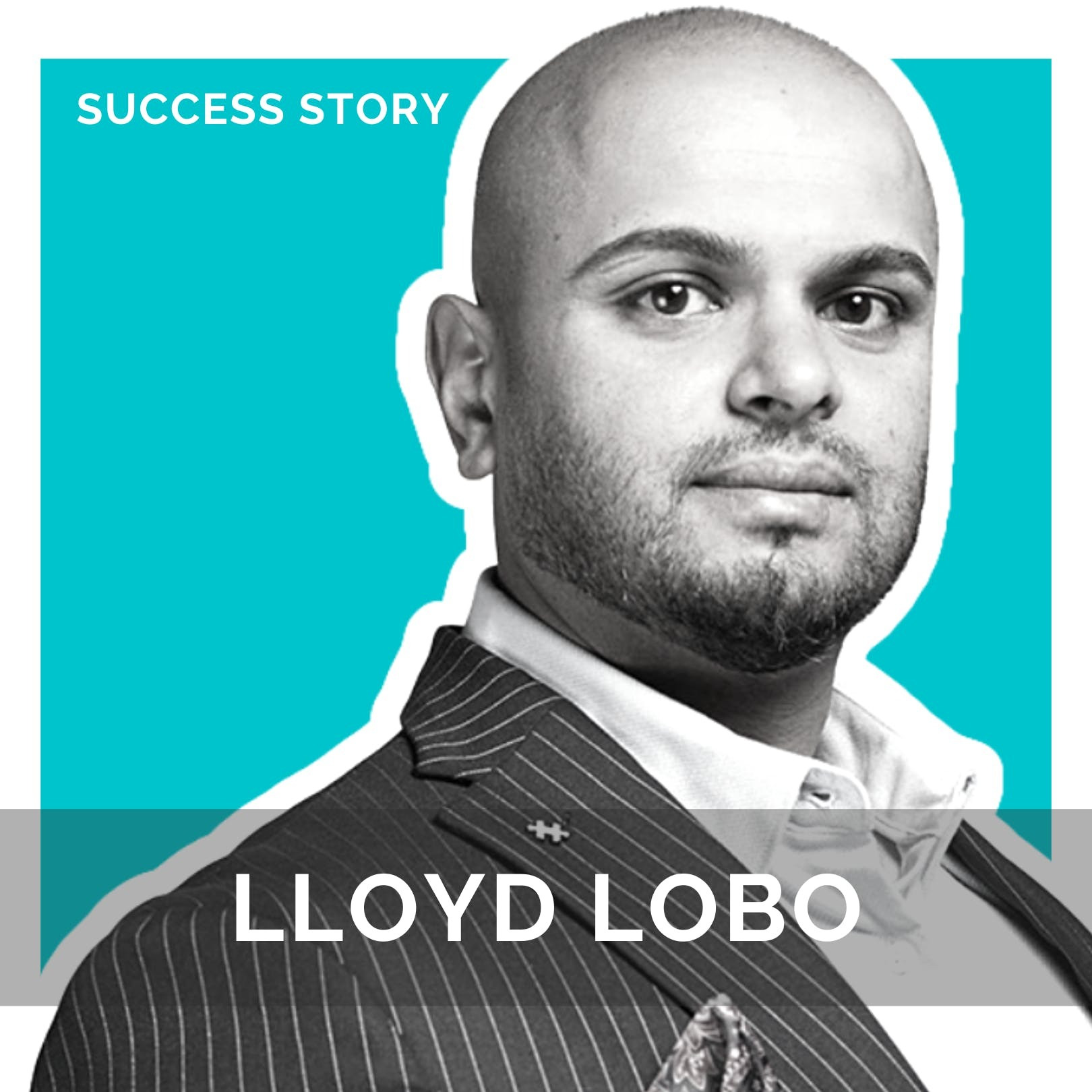
 Lloyed Lobo - Co-Founder & President of Boast.ai | How to Build a Community
➡️ Like The Podcast? Leave A Rating: https://ratethispodcast.com/successstory
➡️ About The Guest
Lloyed Lobo is the co-founder and president of Boast.ai, which automates access to billions in R&D tax credits and innovation incentives so companies can fuel their growth while preserving equity and avoiding red-tape. Armed with $123M USD in funding, Boast.ai is on a mission to help innovative companies become successful.
Lloyed also co-chairs Traction, a community of over 90k+ founders and tech professionals co-founded by Boast.ai, that brings leaders from the fastest growing companies like Shopify, Twilio, Slack, LinkedIn, GitHub, Cloudflare, and many more to share learnings on building, growing, and scaling startups via weekly webinars, regular meetups, and an annual conference.
➡️ Show Links
https://twitter.com/Lloyedlobo/
https://www.linkedin.com/in/Lloyedlobo/
➡️ Podcast Sponsors
HUBSPOT - https://hubspot.sjv.io/successstorypod
➡️ Talking Points
00:00 - Intro
03:28 - Lloyed Lobo’s origin story
13:22 - Should the future of entrepreneurship be like HubSpot?
20:49 - How does an entrepreneur actually build a community?
47:15 - Doubling down all the effort on a single channel first or trying out different channels
58:20 - Lloyed’s thoughts on mental health
1:07:40 - Do all entrepreneurs suffer the same problems and issues?
1:20:00 - Where can people connect with Lloyed Lobo?
1:20:40 - The biggest challenge Lloyed Lobo has ever faced in his life
1:21:56 - The most impactful person in Lloyed Lobo’s life
1:22:47 - Lloyed Lobo’s book or podcast recommendation
1:25:40 - What would Lloyed tell his 20-year-old self?
1:26:35 - What does success mean to Lloyed Lobo?
Advertising Inquiries: https://redcircle.com/brands
Privacy & Opt-Out: https://redcircle.com/privacy
Welcome to Success Story, the most useful podcasts in the world. I'm your host, Scott D. Clary. The Success Story podcast is brought to you by the HubSpot podcast network, the audio destination for business professionals. The HubSpot podcast network has other amazing podcasts, like NoStraight Path hosted by Ashley Menzies by Batunde. And by shedding light on the stories behind the shiny resumes, social media highlights and job titles, NoStraight Path aims to human eye success from the millennial perspective. Featuring guests from all walks of life, NoStraight Path aims to inspire conversations around the nuance perspectives of success. Now, some of these topics at home you're going to love this show. Success is all about maximizing happiness. An interview with Esther Akbaji about finding your voice. Success is communal with Yvonne Doc Aswad. Now, if these topics are interesting to you, make sure to check out NoStraight Path wherever you listen to your podcast. Today, my guest is Lloyd Lobo. He is the founder and chief executive officer currently serving on the board of boast.ai. They are a fintech platform that is secured over $123 million in funding to automate access to billions in R&D tax credits and innovation funding for companies. He bootstrapped boast.ai to $10 million in revenue before raising a dollar of outside capital. This is not his first rodeo. He's had several failures and successes building multiple companies along the way to boast.ai. Outside of boast, he has also built a community called traction, which he's grown to over 100,000 subscribers. He's been featured in various publications, including Forbes, Fox Business, TechCrunch, VentureBeat, and many others. He's also been featured on podcasts, including notable podcasts, Entrepreneurs on Fire, Marketing School, MixerGee, and Leveling Up featuring Eric Sue. He is a career entrepreneur. We spoke about his origin story coming out of a war torn state, coming to Canada, coming to the US, the lessons that he learned about community in his journey, navigating his refugee process that has carried over to how he approaches entrepreneurship. We spoke about community building from a business perspective, how he's done it, why he focuses on it, why he's going to eventually be writing a book on it, why community building is so important as an entrepreneur, how to focus on community, how to build community from the ground up, examples of companies that have built community properly that you should emulate, different types of community you can build, and how you can leverage community, and why the future of successful startup and entrepreneurship is focused on community. We also spoke about mental health and well-being, why several events in his life have forced him and prompted him to take a more serious look at mental health, wellness, and well-being for himself, for his business, for his family, how to optimize and prioritize your own self, health, and well-being, and why it's something that you should be doing so that you can succeed in your personal and professional life and you should be proactive about it. So a couple community building tips, some business building tips, entrepreneurship tips, mental health, and well-being tips, which is important for every entrepreneur. Let's jump right into it. This is Lloyd Lobo, founder and CEO of BOST.AI. Definitely. So I think one thanks so much for having me on the show, great show, great speakers. I'm honored. I'm humbled to be here. My background, I grew up in Kuwait and I was a refugee of the Gulf War. And zooming back out some 30 years ago, I was a nine-year-old kid in Kuwait, and I used to hate school men. I used to study last minute for every exam. And so here I am, I study for a math exam, last minute. I show up. It's a geography exam and I'm like, dude, I'm going to fail. That's it, bro. So imagine, right? You're a fourth grader or fifth grader and you're going to fail it. So some are older. Every single day, I'm stressed. One of my parents going to find out that I failed and didn't make the next grade. One morning, my mom wakes me up and she said, there's been a war in Kuwait and so school is canceled and we don't know what's going to happen. My first emotion was excitement. Yes, my parents are never going to find out that I failed that exam. But then when it started to sink in and I looked at the people around me, was your currency was invalid. There was no security. Everything was shut and the place had been bombed. And so I had to I had to make peace with myself to, you know, to internalize what all was happening and my parents were making peace with themselves to see sort of like, you know, they didn't want their stress projected on us, right? And what I realized then was the value of community, right? And it's so funny. What is community really? Somebody raises their hand and says, there's a problem. Who else has this problem? And you come together and you grow from there. And so there was, there was no phones, mobile, internet, nothing, right? In 1990s, in the 90s. And so people started going down our building and seeing are there other people stressed out and the conversation started and there's no security. There's no food. There's no, there's no supplies. And effectively, the community would self-organize that who's going to stand down the building for security, who's going to get supplies through the sources they had. My dad was an executive chef at a hotel, so he had organized food and everything for the building. So the huge community got established and each building became sort of a sub community. And effectively, the community as a whole came together to evacuate the people from that country, from war zone. And that was a phenomenal experience. I didn't even know that's what it was called community back then as a nine-year-old. But as we were going on these buses, refugee buses from Kuwait, through Baghdad, through Jordan, through Baghdad, to Jordan, to get out of the country, to get out to safety. How's on this rickety bus? I looked around all the adults around me and I'm sure they were super stressed. But everyone was smiling and singing like they were going on a picnic. They were going on a trip. And that day, the second thing I realized this is neither the journey nor the destination, but it's the companions that matter the most. And so that formulated my life, my upbringing was from there. And then along the way, I finally ended up in Canada, finished engineering, then moved to the US, my girlfriend who I dated since teens, also grew up in Kuwait, similar background, got her in a med school. And I worked at a number of startups that failed. I worked on a couple myself that failed. And I realized one thing through those failures is that customers want an outcome. They don't want a piece of software. They want an outcome. And your job as a founder, as an entrepreneur, is to get them that outcome by any means possible. But really, startups and companies are built in phases. Phase one is validation. You get 5, 10, 20 people to try it out. I have a problem. I want to try it out. Phase two is product market fit. Anytime they have that problem, they keep coming back. Phase three is product channel fit. You figure out one repeatable scalable channel to get customers. And phase four is scale, meaning you spend 70-80% of your time pouring fuel on the fire and you spend 20-25% of the time trying new things that go through that same cycle. So what I realized through the failures was that, hey, even though you don't have a product at product market fit, if you build a community, you can do a bunch of things. You can get product validation because of the relationships. You can get customer feedback. You can do sales, marketing, all kinds of things. Basically, you can evangelize. You can in a nutshell create a category because you may not have a product or software or product market fit. It may not be refined. But you can bring people together who share a common goal around that problem that you're solving and create a category. A perfect example is HubSpot. So as an engineer, just out of school engineer, first job was at a startup. I was forced to do everything, not just product, but marketing and talk to customers, figure out what to build. Everything I learned in marketing was because back then in 2006, HubSpot had all that inbound marketing programs. So I learned so much from them. HubSpot really didn't have much of software back then. They were building the community around digital marketers. HubSpot made the world believe that everyone can be a marketer. And they were giving you the education. They built this community of practice. How can we make people better marketers? And if you look at 2005, 2006, people weren't thinking digital marketing. We were a few people thinking about SEO and digital marketing. Everyone was sort of marketers, not the generals, not the people. Yeah. Yeah. So a lot of the marketers back then, they weren't savvy with digital. So I learned all about that. So I realized that this community can help you create a category. And if you keep at it, like we talked about, if you keep building it, you can build a movement around it. Something like Nike has done, right? They've convinced the world that everyone can be an athlete. Gainsight's done that with category creation. They built a category around customer success. They created effectively customer success as a profession. If you look at 10 years ago, customer success, maybe there are a few hundred people. That couldn't have been their tab, but they convinced the world that customer service needs to be proactive and you need to support your customers through their onboarding and entire lifecycle, not only when they have pains. And today, customer success is one of the fastest growing professions. And so that combination of going through the Gulf War and being a part of an experience with community rescued old country and created a movement to looking at HubSpot and Gainsight and Nike and experiencing that firsthand, I came to realize that, you know what, my failures happened because the companies obviously were not a product market fit. But more importantly, customers want an outcome. So if you fall in love with your customer and make them successful beyond your product or service, if you focus on just doing that, you'll build a community. And if you build a community, you won't become a commodity. And if you look at HubSpot, when they IPO, they were a billion market cap. Today, HubSpot's like close to 40 billion market cap, right? If you build a community, you won't become a commodity because people around the world, when they interact with your brand, they're like, this brand was around when I was nothing to help me become successful. So obviously, like 15 years later, today, when we raised the series A at Bose, we use HubSpot. I couldn't afford it before as a bootstrap founder and whatnot, right? But people realize that this brand has been a part of my journey to help me through my growth. And so then they build brand affinity. Another example is Harley Davidson. In the 80s, they almost went bankrupt. They reformulated the whole company around the ethos of community building and created writer clubs and now Harley Davidson's valuation is $78 billion public company, right? And Harley Davidson is a cult because of the community. And so my biggest learnings were customers want an outcome, make them successful beyond your product or service. If you build a community, you will never become a commodity. Everything eventually becomes commodity, man. Look at it. We're in the technology world. Yesterday's innovation becomes today's option and tomorrow's commodity navigation systems, right? It was so expensive. It was almost inaccessible some 15, 20 years ago. Then every car started having it as an option. Today, it's not even an option anymore. You have Apple CarPlay or whatever and you can just stream it on it, right? And so that's why it's really important to build relationships with the people you're serving and build a community. Because if you do that, you won't become a commodity. I love the thought process and it makes a lot of sense to me. And you mentioned a couple different examples and I want to highlight a few different things because with HubSpot, they built a community first and that's what led to their success. With Harley Davidson, they built a community much later on when they were failing. Nike almost, I don't know if they purposefully built a community day one. I'm pretty sure at one point they were a commodity then pivoted to community and I don't know probably if I did a study of the history of Nike, I could pinpoint the period when they started to become more of a community and less of a commodity. But the point is how do you or actually in your opinion, do you think the future of entrepreneurship should be like HubSpot community from the Gecko versus just trying to scale something and then build community after the fact? So I have this fundamental learning and also because I run a big community with traction, people come and ask me all the time, what's the new growth hack? Tell me just one channel I can spend money and to get customers. Like back in the day, hotmail jump started growth by putting in the signature. I love you. Yes, I love you. Get your free email at hotmail. They got 12 million users in 18 months and Airbnb that in this hack where they used to cross post to Craigslist and automatically send emails to people listing on Craigslist. So people are always asking, what's the next growth hack? And I kid you not, man, the last 12 months has been the era of community, right? Airbnb CEO changes title to CEO and head of community. Deolingo went IPO 300 million plus global users based on community, Callaton, Canva, Notion, MailChimp, all community minded. And people always ask me, how do I build community? And I love this quote by Elon Musk. He says, right, don't reason from analogy. Just because it worked for somebody doesn't mean it's going to work for you. Reason from first principles, boil things down to the fundamental truth. And when people ask me about community, I tell them that if you don't have the DNA of giving, meaning you don't innately get happiness from seeing others succeed, don't do community. It takes a long time. It doesn't build overnight. And there are 10,000 other ways to get customers from running ads to cold calling to cold emailing, sponsoring events. There's the bajillion things you could do than build community that will give you instant gratification. But let's say you're not ready to grow yet, right? Let's say you don't have an ideal, when are you not ready to grow? I think that's a very important question. I often say if you don't have an ideal customer, meaning people don't come to your product to get a specific job done. If you're trying to serve like all kinds of customer profiles, then you're serving nobody, at least in the early days, it's about pleasing a small group of people. So if you don't have an ideal customer and the second thing is you have poor retention, meaning people that ideal person doesn't come to your product anytime they want to get that job done. So if you don't have that, you should invest in growth. But what you can do is start building community to get that customer feedback to meet people, to basically say, hey, you know what? I'm super stoked about solving this problem. These are the people impacted by this problem. Let me go and serve them to become successful. And then eventually the product comes out of it. I feel when you do that, you build stronger connections. And I fundamentally believe that the biggest companies of the future long-lasting, enduring, and daring companies will be built on a foundation of community. So long-winded answer, but I wanted to walk through that framework a little bit, the hub spots, the game sites, the Nike's. When you have community, people feel connected to each other. I think it's also important to understand what makes people tick. And this is a framework that I borrowed here and there from and sort of borrowed different pieces from and made it my own. But I feel like to build a great community or a great company culture, it's about building people, right? Your job as a leader is to build, inspire, and motivate a team. Deliver is the lagging indicator. If you treat your people with love and help them grow, they'll treat your business with love and your business will grow. But what makes people tick? And I've come up with this framework called Camper, where connection, autonomy, mastery, purpose, energy, and recognition. Now, the autonomy mastery purpose is framework that Daniel pink had. But I felt like there was something fundamentally missing from that framework, which was connection, energy, and recognition. So I called it the camper framework. And if people implement camper in their companies and their communities, they'll build a team or a community of happy campers around them, a little cheesy. But happy to dive a little bit into that, right? I often feel like, yeah, please go for it, go for it. Yeah, like working in a company should be like writing a palatine. Right? I'm a fan of what they've done. Yes, they're stalks taking a beating right now. But the fundamentals, some of them are great and worth learning from, right? When you hop in a palatine, you feel extreme connection to all the writers next to you and the instructor. There's autonomy because no one's micromanaging you. You're in charge of your destiny. There's mastery because you're constantly increasing the speed or resistance to improve, right? Get better and better. There's a great sense of purpose. What is the purpose? Better health, better well-being. Your energize, music, the instructor in front of you, people around you. And there's constant proactive recognition. Every time you complete a milestone or do X number of rides, they proactively reward you, recognize you, right? So people crave that innately. If it's just autonomy mastery and purpose, that's great. Nobody wants to just go and collect a paycheck. Eventually, they're like, if two, if no two paychecks or if two paychecks are the same, what is the greater purpose I'm serving? But connection is really important, right? And the great resignation from the pandemic and two years of working from home has showed us that people deeply crave connection. They deeply crave energy. They deeply crave recognition. Or you're just like on a hamster wheel. And so I find that having these six trades, connection, autonomy, mastery, purpose, energy, and recognition and embedding those principles proactively in your company creates a flywheel of passionate people who are ready to conquer the world. And that is also very important in the community because most communities, the community doesn't work for you, unlike your employees. They're not collecting a paycheck. So what keeps them ticking? What keeps them cupping back week on week or month on month? What keeps them engaged? It's that camper. But you still, so I want to go into one more point that you sort of danced around, but you didn't get into because you had spoken about, you know, if you don't love helping people, you don't love building people. And by the way, the camper framework, I think, is completely valid and makes a lot of sense. So I just, I wanted to say, like, that is something that I think is incredibly useful internally. I love that you're using it for community as well. But I still want to go back to community another point on that. So you mentioned, if you don't love serving people and helping people don't build community, there's other ways to build your business. But ultimately, your belief is, and we're on the same page here, that the future of business will be built around community. I think that will differentiate businesses and allow them to achieve levels of success that a commodity-based business would not be able to achieve easily. And even more so in the future. But how do you actually, again, the question everybody asks you, how do you actually build community? So say you're, say you're down for this. You, you, you subscribe to it. You do want to help people. You understand that you want to serve a community. You want to make people better than when they first found your product. And that's something that you subscribe to. You just don't know how to do it. So what is, what is that step one for an entrepreneur that starting a company and is like, I want to build my company on a community framework. What do I do next? Definitely. So the first thing to understand is, you know, like, I went through those six steps, right? Those are the ethos you need to keep in mind because that's what people create. But then after that, you've got to differentiate and understand the types of communities. There are two types of communities. One's a community of practice where you're bringing people together who share a common goal of learning about a specific field or a common passion, like writing motorcycles. And then there's a community of product, which is built for users to ask questions about your product, get insights, and stay connected with the company. So it's really important to start with the community of practice because especially if you're not a product market fit, right? You're early on. It's important to start a community of practice. That's what HubSpot did, right? Helping people become better digital marketers or gainside did, elevating the profession of customer success and helping people become better customer success professionals. If you don't have a product or your pre-product market fit, you got to build a community of practice. If you build a community of product when you're pre-product market fit and you're hawking your product all the time, people might see that as contrived, right? They're like, ah, these guys are just wanting to sell me stuff. The step one is understanding what kind of community do you want to build? Do you want to build a community of practice or a community of product? And now within each of them, there are different type of sub-communities like a pool community or a hub community or and so on. One of the best ways to build a community is where there's person to person interaction, not just a one to many. So people within the community can interact whether or not that central figure lives or die, right? So it's very important to have that person to person. But the step one is focus on building a practice community of practice to elevate that field of learning or field of passion. Number one, very important, especially if you don't have a product or your pre-product market fit. Number two is align, you know, you need to understand the purpose, the mission, the vision. You got to write these down and a lot of people say, man, you have bullshit things that people write bullshit. You can't build a long lasting sustainable company, right? So for me, it's funny, years ago, I wrote down my purpose mission, vision, values, personally. And it's funny, the two kind of companies that I built both and traction align with exactly that, right? My purpose in life is to enable innovators to change the world. Why every dollar spent in innovation returns 20 to the universe, vaccines, robots, clean drinking water is a function of innovation. If you're not innovating, you're going to die. My vision is to accelerate that innovation, be the accelerant of that innovation. So then how do I do it, right? Through content, through connections, through community, to capital. So let's unpack that a little bit. To provide these innovators, one of the biggest reasons why innovators fail is they don't have access to resources. Simple content, connections, community capital, right? And so create a community that provides that. And then I created both to provide entrepreneurs to get access to innovation funding and government incentives, right? So those are companies I built from the purpose, my innate purpose. And then the last thing is what are your values? I think it's very, very important. Because if you values tell you how you behave every waking hour, your mission tells you what you do every day. Your vision tells you what you will be as a result of that. Like what will the world look like, right? And then your purpose is why do you exist? What is the forever? But your values are really important. And for me, my values are impact, passion, teamwork, right? Those are an empathy, key things. And so I realized that for me, those things are so important. It's so important to have impact, impact over power and money. People who hunger for power, destroy relationships, people who just focus on money, make short-term decisions, this is like the like the Wall Street. People who focus on impact and change the world. So impact, passion, passion, because you're not seeing oftentimes people with their luck and experience, 10X overcompensate with passion, teamwork, because you can't win alone. You win together, you lose together. Great outcomes are a result of many people collaborating, not just one. And empathy, empathy is really, really important. If you don't have empathy, you can build good products, you can build lasting companies. And so, you know, you need to understand that. Those two things. What are you building? What kind of community? What is the purpose, the mission, the vision, the values? Because the thing is this, those things are important, although they're hard because it sustains, right? You don't build something that starts and stops. If you're just doing it to get something out of it, then you start and stop. It's important to internalize what is your purpose and so on. Then, you've got to figure out who is your ideal customer profile. Can I ask you something? Can I say anything before you? So how did you figure out yours? How did you figure out yours, and you made sure that they sustained across both of your companies? So it's funny. I didn't make sure they sustained across both my companies. It's just my behaviors caused me to go in. No, but that means that you found that means that you found things that were valid or else you wouldn't have. They wouldn't have. So, you know, I often tell people when you're in an interview, don't ask somebody, what do you, what do you create at? What do you not create at? Just observe them, right? Because people will bullshit anyway, but when you observe them. So I often found myself, what do I love doing? Even if I didn't get paid to do it, and for years I didn't get paid to do it, I would keep doing. Before I started traction, I was doing community building at startup weekend. I used to facilitate fly on my own dime. I ran a pre-excelerator called startup next. I was doing all this community support stuff every time that drove me. And the things I hated were things that actually paid the bills, like doing financials and all that stuff. So, like, you know, what? Let me pause you for a second. Like, what am I? Missionary, what am I? So then you realize it, and trust me, this works. What are the things you procrastinate on? You should never do them. If every week you hit snooze on your Google email, I have this thing where I block either counter times or I mark emails under it. And the things that I keep putting snooze on week, there's like some stuff that's been snooze for two years almost every week, right? Dude, I hate you. Exactly what you're talking about. I know exactly what you're talking about. I have emails sitting in my inbox right now. You just said that, and it's like motivated me to just delete them and never talk, because I know that I don't want to do them. Every Friday I snooze, by a week, by a week, right? And so you got to realize the most important thing for a founder or any creator, let's just say it, right, is leverage. So what are the things that, you know, you're passionate about? When passion meets profession, you become Michael Jackson or Michael Jordan, right? When passion meets profession, just think about that for a second. When passion meets profession, it's not work anymore. You're Michael Jackson, man. You love dancing. You love shooting hooks, right? And so you got to find that. And for me, it was helping others. And it just didn't come innately. I think it was my upbringing a lot to do with the Gulf war. My parents grew up in the slums in India, in Mumbai, and my mom had 10 siblings. They didn't have their bathroom. Anytime I'd go there, there would be some stranger staying in their house. Because Mumbai is like the New York City of India. And I asked them, like, why do you have the stranger staying here? Like why you guys don't have room? And I'd often hear that, you know, if you help enough people get through their destination, you'll get to your destination. Those people may not help you, but the karma comes back. And so like a lot of life is what? How you behave is part nature and part nurture. A lot of it is part nurture, right? And so I'd seen that growing up. And so just very naturally, I would do stuff. And people would tell me, like, you know, throughout my career, like, what are you doing? Like volunteering here? And then why are you like wasting it? Like, what are you doing? And then I came to a conclusion after a couple of failed startups that this is my life's mission, man. And this is what I like doing, right? Even now at both, now both raised a $20 million USD series A. We did a $100 million fund to fund innovation and R&D. And all my time is spent running traction. Everything else I procrastinate on. So you eventually come to the conclusion, what do you love doing versus what you're okay with doing and what do you hate doing? And if you can surround yourself with people who fill your gaps, so you can do what you love doing, then you'll you'll have a happy life forever. So that's how I came up with it. That's my advice. So it so it so it so it it tracked it. It worked. Now you now you live it across your company. It's okay. So next point was a ICP or ideal customer profile, right? Yeah, definitely. I've I've learned through my failure. So I'd speak easy. We were building a calling app for sales people. It was funded by best summer in Salesforce. We launched. We got 10,000 people sign up. And as we were profiling the users, this is a calling app for sales people. We launched 10,000 people sign up. What? 2015? You're like losing your mind, geez, we're going to become the next slack. We're going to become the next drop box. And then I look at the customer profiles and I'm like, bro, there's butchers, bakers and candlestick makers using this app. This company's going to fail if we don't change something, right? So Bernie Sanders was using it for election campaigning. Pastors using. Yeah, but pastors were using it for mass service. And taxi people were using it for dispatch. I'm like, how is this a calling app for sales people? People are just gravitating towards this app because it's a free calling app. So for months, I spend telling the team and convincing that we should shut free and make it paid. And everyone's like, no, you're a growth guy. Just get us some growth. But like if we shut the free and we lose all these users, then investors are going to be unhappy. We're not going to raise the next round of funding. After all that fighting, though, we end up shutting free and making it paid because think about it this way. If you in the early days, your job is to do things that don't scale. Now, please 10, 20, 30, 40 people and then expand, then expand. Like, you know, that whole validation product market fit, product channel fit and then scale. Go through that cycle. Because if you don't do that and you get tens of thousands of users, you just make it painful for yourself because these users will start churning and you don't know why, but like, you know, it's good for one profile, but it's not. The people that stuck around were all sales people. And then we figured out like, what are your pain points? And we said, okay, we finally, we finally came to a minimum feature set of, okay, before the call will help them prep for the call, doing the call will guide them on what to say. And the worst thing is sales force data is unclean. So after the call will automatically update their CRM. But by the time we came to the realization and we had some great pilot customers ran our money. We didn't have enough traction to suit that. So I say, please one, focus on making one person extremely happy. Pick that ideal customer profile. So at both, when we started, we focused on startups, helping entrepreneurs. Great mission. A lot of our competitors are like big Ford, Deloitte and so on and partners over there would say, yeah, you guys are going to fail startups like most startups fail. It's not a growing industry. We'd hear this all the time. Go after established businesses like manufacturing and whatnot. Now many, many years in startups are the fastest growing and we've almost dominated that market for the startups phase. But if I had listened and gone horizontal, we wouldn't have been able to build traction because we started with, what is the pain of an entrepreneur? Me and my co-founder failed entrepreneurs too, money but access to resources. So we started hosting pizza nights. Now, if I invited like, imagine this, right? Somebody invites you to a party. Yes. Somebody invites you to a party. You go to the party. You don't know anyone there. You walk in, there's garbage all over. Nobody welcomes you. There's a bunch of strangers. You're going to leave. But somebody invites you to a party. You show up. You're like, oh man, I recognize the entrepreneurs. I recognize all the people here. We're all at the same stage. Somebody shakes your hand, introduces. You guys are in similar spaces. You listen to a talk. It's relevant to you. And then all of a sudden, you feel connected, right? And that's what you can do. ICP, focusing on one kind of ICP and nailing that down brings focus. And that focus brings clarity to your messaging and uplifts everything, especially in the early days. And so we started doing pizza nights for entrepreneurs and every time we do these pizza nights, it was like a master class, a talk followed by a mastermind. People just riffing on how they can implement it. Every time we do these pizza nights, more and more and more people would show up. Eventually, it got to a point where we threw one of these and they were like 200 plus people at the coworking space. And the coworking space is like, you guys can't post events that big here. So we ended up doing our first conference. But there's a lot of truth to it, right? If you boil this down to a framework, what is the framework? In the center is your ICP. Then you got to figure out who do they fund? Meaning what tools and services they pay for? Who do they frequent? Meaning what blogs, magazines, events, they read, make a list of that? Who do they follow? Who are the influencers? So if it's an entrepreneur, they pay for tools like Stripe and MongoDB and all of the stuff. If they are an entrepreneur, they read TechCrunch and VentureBeade and BetaKit maybe. And who do they follow? Successful unicorn founders and VCs. So we started, we had that map of the framework. So we just invite those people there. And so then you start feeling familiar. You see TechCrunch coming to an event. You see the CEO of like Twilio at the event and then you see other founders. And all of her sudden people build connections. And that was so a very key step to building community. People would have worked with people. That would have all gone sideways. That would have all gone sideways if you listened to Deloitte, brought in, tried to do some sort of value event, brought in like a CEO of a manufacturing organization. You put them with some guy that just raised money in SF and like that's not going to build anything. He's not going to see value in the other people. Like that whole event now is never going to grow. It's never going to be valuable. And you just completely lost that feedback loop that you basically got. Exactly. Exactly. You're right. And that's the thing, right? In the early days, what brings people together is communities. What are some of the oldest form of community? You're frabs and you're sororities. They hang out together, right? Like, you know, people do business with people like them. They connect with people like them. It's important to bring people together on that principle. There's so many frictions. I start up is all about reducing your risk and friction. So why add more friction by adding all kinds of ICP? So that is that is the next one is like, serve one audience exceptionally well. And if you look at that, then you then you map that audience in your put. Who do they fund? Who do they frequent? Who do they follow? Make a list. And so we were very deliberate with invite all these big name speakers and invite TechCrunch and MentorBeat and Forbes to come and interview them on stage. So then now, because TechCrunch is there, a bunch of entrepreneurs get to meet TechCrunch as well, right? A lot of stories came out of our events. The other thing is like, make sure you have a deliberate actionable goal. Whatever it is, I need to get to 10,000 users and work backwards with it. Because what happens if you don't have a deliberate goal like that, you'll not know how to get to progress. And I view everything, community, any sort of creation, right? Building a company is creation, building a community is creation, building a YouTube channel creation, right? You're career. You can't become successful if you don't have a goal and work backwards of it. It's not about like eating and how do you eat an elephant one bite at a time, right? So you do a little bit better every day and it compounds itself. And so it's important to have a goal. Whatever either it can be a revenue goal or an engagement goal or a number of, you know, active users go, right? So make sure you have that sustainable something, something aggressive that feels hard, but something that if you, you know, grow at a decent clip week on week, you'll hit it too with some effort, right? Pain is the precondition for growth, man. Like if, you know, you see, ever see these construction workers, they're not as jacked as bodybuilders. Why? Because bodybuilders keep increasing the way they do progressive overload. So whatever enables you to implement progressive overload. So keep it a good, keep it sort of aggressive or challenging enough and then try to grow that. I just want to take a second and thank the sponsor of today's episode HubSpot. Now while you're listening to this podcast, you're probably doing something else too, mastering the art of working out, shaving like no one's watching, we get it. When you're having conversations with their customers, the same is probably true for them. They're I aming their teams, mentally planning date nights. So growing conversations beyond that moment can be challenging. HubSpot helps you go beyond the moment by connecting you and your teams so you can access the exact same data and see the full customer picture. What motivates them? What their expectations are and how you can blow them out of the water with powerful tools that connect marketing sales, ops and service, HubSpot's powerful CRM platform powers you and your teams, transform customer moments into extraordinary customer experiences. Learn how HubSpot can help your business grow better at HubSpot.com. And also make it a leading indicator too. Don't make it a lagging indicator for success. So whatever that metric is, if it's monthly active users or anything, really subscribers, whatever it is, try and make that a leading indicator so you can measure your success as opposed to something like revenue, which if you don't understand the activities or the leading indicators that are going to get you to revenue, then it's going to be confusing as to how you're actually succeeding or failing. So I think that's another important point. That is a very important point. I tell all my team members that you know what? You guys tell me what the ENPS or NPS is like three months later. I can look in the Christian ball and tell you what it will be. Why? Because I look at activities that happen every day and how they come out, right? So for example, if your goal is to build community, but you're not doing any events, then people are not going to keep showing up. So how you're going to hit that 10,000 goal? You don't have a community event and you have one event, right? Or for example, sales are down this month. I don't know what happened. Well, what happened was you guys weren't doing enough activity to generate leads and you weren't at bats with enough customers in the pipeline between your, you know, qualify, quantify, close stages. So you're not going to close. Or employee NPS is down. Yes, it is down because you hired some freaking tyrant leader or you're not transparent. People don't feel connected. They got to feel like, you know, they don't, they don't feel like they're part of the greater mission, right? So one of the most important things as a leader is to, like I said, build Inspire and Motivator team to deliver. But how do you do that? Communication, transparent communication consistently is key. Going up there and stating, this is the purpose. This is how you're part of that purpose. This is what we did this week to get closer to that mission vision. You got to keep saying that when everyone says enough, I've heard enough is when it's just getting started because people forget, right? They have hundreds of things. They have lives, right? Personal lives have interest. So you got to keep communicating and clearly articulating that vision, mission, purpose, values to excite Inspire and Motivator people. So, you know, if you're not doing that, what is going to happen? People are going to feel, you know, what's the best way to freak people out is say nothing. Say nothing. You know, if you keep talking, people get irritated, but at least you're communicating. But you want to really freak people out, say nothing. Let them work in your company for three months, say nothing, no updates, no vision, nothing, say nothing. People get scared. They don't know if they have a job or not. You're giving, it's a silent treatment when, when your girlfriend or wife gives you the silent treatment. Yeah, something's up. Something's wrong. Something's up, right? And the thing is, it doesn't even matter. It doesn't even matter if their performance is good or not. Because you as a leader, you have to be, you have to be, you mentioned self-awareness before. You have to be so self-aware because you could be busy with a thousand other things and you could just love the work they're doing. You're like, oh, I'm going to let them go, hands off. I'm going to let them do their thing. And then you don't understand that their interpretation of how you are managing them is vastly different than your interpretation of how you're managing them. So if you don't say anything, then they're going to be thinking, I'm, am I doing okay? Maybe they hate the work I'm doing. Maybe I'm going to be fired, whatever. You have to get out of your own head and look at your leadership style through the lens of an employee, which is, in all honesty, the only way to, there's no way to be an effective leader without overcommunicating in my opinion. There's never a detriment to overcommunicating because we always assume that people take things a certain way, but I would say like nine times at a 10, they're not taking the way that we think they're taking it. So if you like exactly what you said, if you just say it again and again and again and again, at the very worst, people will be like, oh my god, okay, I got it. Like that's fine. I get it. You think I'm doing a good job or not, but at least they're clear, which is super important. Otherwise, it scares them and then they get job on for some other people. Yeah, and people who are just the death of yeah, yeah, exactly, right? And so those things, everything has a leading indicator and a lagging indicator. If you want to be somewhat successful and and bring sanity to your life, write down what are the lagging indicator? Like what is the path to get to this? Right? Yeah, we need a hundred sales, but like draw the paths. Like if we do X, Y and Z every single day, then we're going to get close to them. Right? So that is important. Having that aggressive goal. The other thing is nailing it and scaling it, right? It's important to be an inch wide and a mile deep. I talked earlier about focus with the customer aspect, but focus with your channel and offering is also really important. When I get asked about community, people say, oh, you know what? Maybe I should go and start an ambassador program. Oh, maybe I should do events, podcasts, content, blog, you know, it'd be job board, Q and A space, they look at really frazzled. It's not about doing a hundred things mediocre. It's about doing thing one thing that delivers value and doing it over and over and over and over again consistently well. Then you get to a point where you have a critical mass, then you can take that content and scale it in different formats. So I'll give you an example when when the conference stopped. We were big believers in higher elements, right? In-person events. I still believe in them because today you and I are sight and sound, right? Yeah. Anytime you incorporate more than two senses in an equation, you can build stronger bonds. If you and me were having drinks at South Myself West and we were breaking bread, eating barbecue, having a beer and doing this over that, and then we would probably hang out for a few hours longer, maybe go down to the bottom or people. They build a genuine bond, right? You build stronger connections. So, you know, I believe in that, but when pandemic shut everything, I'm like, oh my god, I can't replicate this. But you know what? I'm not going to do a two day virtual event. We're going to take those whatever 50, 100 talks we scheduled over two days and we're going to turn it into two webinars a week. Now we can have said, you know, a lot of people do webinars. They do one and they leave it. Rain or shine every week we do two, right? At 11 a.m. Pacific Tuesday Thursday, it gets sliced up, goes into the YouTube. But that enabled my, that consistency enabled our audience to increase, man. And in two years, we went from like, maybe, you know, tens of thousand subscribers into like 110 plus thousand subscribers. It just grew, right? People in, I don't even know where they're coming from in some cases. Maybe they're watching the YouTube. We partner with a lot of speakers, speakers promoted. So there was consistency and it was that one hour live talk. They can ask questions. They can reference the recording. So whatever it is, pick one channel and do it consistently well, whether it's in real life events, whether it's a webinar, whether it's a podcast, you said it at the beginning too. If you keep doing something long enough, you'll find success at it. I think that another point, just I'm curious about your, your opinion on this because you've had success with one channel. Whereas I have a different perspective on this and I try and do omnichannel when I try and do social and I try and do content. So in your opinion, would you double down on one channel first or would you try and go omnichannel, test different channels, see which one resonates and then double down on that or try and maintain. So this is the framework. So your framework for validation is very different than framework for product market fit versus scale, right? That's how I look at it. If I'm validating it, I typically, and I, and I use this for building products, everything, use like a rice core methodology, which is reach impact confidence in ease, right? Reach tells you what is the tab? What is the market size? How many people it's going to reach? Impact is, what is the impact as a result of leveraging that channel? Confidence is how confident are you in ease? Is it going to be like a 10 year effort, one year effort, one month effort? And the same thing you can do in identifying your market on who to sell to, right? It's like, how big is the market? How easy or hard is for me to get to them? And what is the propensity to pay? You framework it. So in the beginning, you look at two or three channels, you try things. And if you're seeing success, you double down what's working, right? And so we, we double down on the webinar, then we started turning them into YouTube because everyone asked for recordings. And I'm like, no, everyone's asking for recordings. Now I could host it on Wistia and a 10 other things, but that won't give me reach. YouTube has reached. So let's just put it on YouTube. And I saw consistently how it went from hundreds to thousands to now tens of thousands, right? And so then now everyone's like, hey, podcast is a channel, you should test it. And so then we said, okay, we'll slice the most popular ones and we'll put it on like Spotify and Google and Apple, right? So there is a place for multi-channel, but it's also important when you don't have product market fit to really put small amounts and a few little things and double down where it's working. Now if you have infinite resources and do whatever the health, but if you're one person, if you're one person, then then get success where it's working. And for us, it was a live webinars. And the live webinars were really important for us to grow our subscribers because you know, here's another realization I had. Communication is everything. We all know, right? Outside of standing in front of an audience on every week, what else can you do to communicate that people read consistently? It's email. Email, I can you not. All my businesses, email has been the biggest driver of growth, biggest deliverer of that mechanism, outbound outreach, sponsorships, ticket sales, the biggest clips are coming from email. So I'm like, what did I learn from past mistakes? What realization I have that email works? Email works more than promoting it on social and anywhere else. Email works. And the other thing I get with email is I get the person. So now I can constantly get in touch with them. So my goal was building the email base. So I'm like, you know what, I'm a double down on that. And so we started doing webinars, two a week, Zoom registration page. Everyone's familiar with Zoom. If I try something else, then who knows if they try to log in, they won't get in. We had a different webinar tool that kept failing. So we're like, okay, everyone's using Zoom. And that helped me capture the email addresses. And then people asked the recording, we're like, okay, what's the next biggest channel? YouTube, right? I saw you have YouTube shorts in your channel. It's something that I've been meaning to experiment with. As the next channel, because now I feel like traction is at scale. So now let's invest 25 percent, right? But everything went through this phase of product market's idea validated. Okay, Zoom. People are registering, getting 500 to 1000 registrants twice a week consistently. Come on. People are impressive for live, by the way. That's incredibly impressive for anybody who's ever tried to run a live event. That's tough. Yeah. So people are interested, right? So okay, your product market fit. Now, maybe first two, three, four, five, 10, 20, there's some buzz. But consistently it's happening over two years. Maybe now that IRL is coming back, some of them are getting to 304. But it's one email, right? So it's product market fit. Now, let's test another channel. People want recordings. Everyone's like, oh, recording recording. Fine. We'll put it on YouTube. So, you know, the SEO and everything makes it better. Then we're like, okay, YouTube's getting to product market fit. We're getting eight to 10,000 views consistently for YouTube video. Okay, now let's test the podcast. That's the framework I do only to mentally focus is like, what is the one goal I'm trying to grow towards? And if you're building community, you want, you don't want audience. So, there's difference between audience and community, right? Audience is a one to many. Community is many to many, right? And so if you want that many to many eventually to cultivate that, then you need people's email addresses. And so that was the reasoning there. Hope that made sense. It does make sense. No, this is a masterclass and community. So I appreciate it. Were there any other steps? Or was that the final step on community? Because then I have, I have other topics that I wanted to even go into. Okay, I'll zip through the others, right? I talked about, I talked about whatever event you do, like focus on one channel, whether it's webinar, whether it's in-person events, incorporate more than two senses as best as you can. That's why I like in-person events. Reward your best champions, people who come, give them free tickets, free passes, send them swag. I got like t-shirts that say, I love it when you talk data to me. We ship it to almost everyone or this hat, right? Everything that can make things sticky, right? Showing up consistently, we talked about, I didn't talk about it in any particular order, but I want to make sure I summarize it really. Is I start with one audience, practice or one one type of community, practice or product? And I would recommend practice because it's around, it's about the people, not about your product, right? And that resonates, a line around great purpose, mission, vision, values, serve one audience exceptionally well, pick an aggressive goal, nail one channel first, you try a few things and see where you can go deep and then go deep there. Get people to that while moment immediately, like have a good onboarding experience when people come in, they should feel like, hey, you're shaking their hand and giving them a drink versus jumping through garbage. I talked about incorporating many senses when you have more than sight and sound, taste, touch, smell, you can build relationships, involve your community. So if you're doing events, we have a lot of people volunteering, like at our conference in August, I think you got something like 40, 50 people volunteering. People want a soap box. So if you're building community and you're doing chapters, have it community led versus you hired somebody, give them a budget and give them autonomy, right? So they can run it. Everyone wants to feel like a rock star. Oh, I'm an ambassador here. And if you treat them like a donkey, then they're going to break. But if you treat them like a rock star, I'm going to give you a bunch of resources, give them a stage time. The worst is you keep flying there and you run the sessions. No, have your community meter there, run those sessions in that community, right? It's really important to do those things, rewarding your champions, sending them swag, etc. Showing them consistently, I talked about anything done consistent. And you said it too, right? If you keep doing it over and over, it's going to find success. And then the last thing is just measure and track, like have some north star metric. If it's the same people coming back, or if it's more people coming, whatever it is, like have some leading indicators and lagging indicators. So that's it. Through your great questioning, you know, I we uncovered that that that label. I appreciate it. Your framework is incredible. And the community, the communities that you have built are incredible. I've never, I've always understood the importance of community. And I know that a lot of businesses try to do it. But I've never actually heard like somebody lay out the playbook for building community, just like you have before. So there's something to be said for that. So thank you for doing that. I appreciate it. I've never had that on the show either. So very valuable. And I actually didn't know we were going to go into that. So that's also also a bonus for me. So now I, like if you don't think I do this show and have like 10 things that I'm going to go figure out how to do tomorrow, you're kidding yourself. Like I learn at the same time as everyone else who listens to this. So it's awesome. So my recommendation for you is you have a great audience. You're on HubSpot's podcast network. You have a great YouTube channel. You know, to take that a step further, I'm reversing into you. I started with community. Now I'm like going into sort of content creation. But see if you can build a community around, start doing meetups in different cities. You'll start building bonds, have ambassadors, then then that explodes, right? Yeah, I love that. That's what I got to do next. And that's scary as hell too. That's very scary to do when you haven't done it before. Like when you haven't like done it purposefully. Because I think that, you know, maybe the first step is to do live events and get people to come up to live events, get some ambassadors to host live events. And then you can start doing in person meetups and schedule some of those. And then all of a sudden now you have, you have presence on social. But presence on social is not as meaningful as community by any means. Community is, community is like, you know, part of the part is where the money's at really. I think that's really the best way to launch a product, launch a service, anything like that. Also change people's lives. You're not going to do that through. You know, bolst was built on the back of this community, right? And that's a very interesting case study. We bootstrapped almost 10 million and then raised money on the back of this key hires executives. Our VCs, we met through this community, man, our VCs came to an event we hosted. We weren't even raising money because we had bootstrapped and they're like, it just happened. Like if you asked me one summer, are you going to raise money? I'm like, no, and then we ended the year with 23 million USD and funding. So, you know, it creates a lot of opportunity, right? So I think building the audience is really important. And you know, a lot of my focus this year is going to be LinkedIn, like building the LinkedIn audience. I've been taking a little bit of digital detox only. I went off for three months and then now I'm posting once a week, but my real focus this year is going to be building LinkedIn. But then again, how do you turn that audience into community where they're interacting with each other? One is, you know, you're the Messiah, right? Like you're Jesus, you're Martin Luther King. But then if you bring them together, then how do they connect with each other and how common purpose? And that's what you have to keep channeling it. That's the goal. That's really the goal. So otherwise if you finish, it's done, right? The audience is done. Nobody gives a shit. You don't post again. Nobody cares, which is that's, you know, you want to have an impact, any meaningful impact. You have to build on the bigger than yourself always. 100%. 100%. Okay. Let's pivot. And then because I know another topic that is very near and dear to your heart is mental health well-being. I know that you that you've had, it's obviously starting from a very young age, even going through the Gulf War. That's not insignificant. But you've had other issues most recently, I guess, with COVID as well. So what's your what's your story regarding and surrounding mental health? How is that? Why is that a topic you even want to speak about? So, you know, it's been a very rough few years. And I consider myself privileged, by the way, right? Because my wife's a doctor. We had a steady income while I did two failed startups before traction. I had another community where one of the partners ran off with the money from the conference and changed the name of it and locked me out of accounts. Super stressful. I had to put an injunction on them. All of this stuff, right? So your journey as an entrepreneur is sort of like this. One day you're super excited. It's hard. It's working. You screwed up. Times are getting great. I'm going bankrupt. That is life, right? Like you get hit by these curveballs and you're like super ecstatic one day. And then maybe two days in, you're like, shit, everything's failing. My customers are leaving me. It's miserable. Now you factor in life challenges. And that makes it worse, right? That makes it worse in the sense, you know, went through two failed startups. We were we were expecting twins. We lost a baby, which was unfortunate right in the middle of that. Then the fundraise happened. And right after the fundraiser said we're going to celebrate and my whole family gets COVID. Which is fine. I made nothing of it. But Jan's second rolls around. I wake up unable to breathe. I literally wake up unable to breathe. Next thing you know, I'm in the hospital. I'm on oxygen. My wife has a 24 seven zoom setup. I feel like I'm dying. I'm coughing blood. It was a miserable, miserable, miserable, miserable experience. And I realized life and business is a marathon. It's not a sprint. If you want a sprint, that's great. But you can't sprint for life, right? You're going to burn out. You're going to die. So how do you prepare for a marathon? Is very, very important. Mental health is a manifestation in many cases around of physical health too, right? And the people you surround yourself, there's a variety of different things. And maybe I'll screen share here and I'll and I'll show you something. Yeah, let's see. This was I often joke with this 2020 bootstrapped 2021 VC. Okay, so if you're listening to this, if you're listening to this, there's one picture of him of like looking like in shape, in good shape. And then like the second one is like not so good shape. That's what I was. Yeah. And so, you know, what had happened was the pandemic hit, pandemic hit. And you start double downing on doubling down on work thinking like, you know, what, who knows where the world's going to go. And then the second thing is the fundraise happens, that sucks the light of use, life out of you. So I de-paratized health. And that destroyed probably my immune system, right? Like my, my family was fine. I got the gene lottery or whatever it is. So it's really important to make health the focus. And so, you know, one of the first things I did was started prioritizing physical health, right? Started working out, take a sport and do it regularly without fail. So I wake up now 536, not for anything else, but it prepares me for the day, no matter what the challenges work out to an hour of cardio. It's phenomenally, like it just, it's just phenomenal for you. The other thing is exercise releases endorphins that calms stress in your brain and in your body. So that was very important change for me. Doing a little better, like lifting heavier and heavier weights, progressive overload, it compounds, eating clean, eating right, I fast, you know. So those were good things. And as a result, my sleep also improved and sleep is very, very important. You know, when you're an entrepreneur, this whole like I have worked 120 hours a week and so on, that hustle porn. Honestly, it's good for a sprint. It's not good. It doesn't brace you to run a marathon and then when all shit hits the fan, you're like, geez, I just want to kill myself. You need, you need to have mechanics where you're surrounding yourself with great people and you're prioritizing physical health. If you do those two things, positivity breeds positivity. If you're surrounding yourself with good people, positive energy, you're working out, you're eating right, you're sleeping well, mentally strengthened, right? Because working out, especially if you lift heavier and heavier weights, pain is a precondition for growth. You get stronger, you get stronger. So I found that those changes went significantly and you know, I should maybe show you a picture of me now. I can't tell over here, but I prioritize health in a massively significant way over the last little while and it's paid bountiful for me, right? I don't know. So that's how you are now. So you went, so that's where, so are you better? Are you better or worse before COVID? Mentally, physically, health wise, illness wise, everything is great. Like Austin, my whole family got allergies when they came here. I didn't get anything, right? Normally, I would. I'm doing great. Meditation is important. I believe in it, like, you know, taking time to sit down and think and I do that. Like, I just sit, listen to, listen, listen to an app like Headspace is really good. Just even if it's 10 minutes, man, the thing is here's the thing what people don't realize. They think they have to do something for hours, but every hour starts with one minute. Just do it for one minute. Just get out. Everyone thinks they got to go and toil in the gym and they're tired. No, just keep moving. Just keep moving. Life is about motion. If you feel really tired, just get out of your house and go for one. Just get out. So true. You'll wake right up. You'll wake right up. Throw this in. Listen to something. Just get out, right? But where people defeat themselves and I was there too. And that's the thing, right? Like, when I had COVID, it just happened. Everything happened. The wrong, like, you know, every bad thing came together once and I felt suicidal, man. Like, I said to myself many times in the hospital that I wish I could just kill myself right now. And it was very stressful. And I realized, like, you know, what's causing this negative energy? Let's, let's remove this. Let's remove this. Put yourself in a situation that effectively puts you in positive light. So what are things that put you in positive light? If you go in the mirror and look at yourself, your frickin belly is hanging out, you feel it. You feel shit about yourself. Oh, you ate something bad. You're getting worse. You can't move. You feel bad about yourself. So how do you take care of that? Just get better. Lift heavier weights every every every day. Every time you do that routine, just do more reps, increase more weights, do a little more cardio. You start looking at yourself in the mirror. You're like, you know what? Like, I'm feeling healthy. I can go up and down the stairs. I couldn't go up and down the stairs six, six, eight months ago, right? Like I was running out of breath. Yeah. Again, you meditate and it puts you in a better headspace, right? Positive energy. You eat, right? Makes you sleep well. You feel better already. The few factors. The other thing is, you know, build a support system of peers. You know, one thing I never did was I don't listen to some of my closest friends outside of work, like my family members, because they think they're doing something good for you by discouraging you to take on risk. But actually what they're doing is they're demotivating you. So surround yourself by with supportive peers. I joined mastermind groups. Now I'm part of on dex mastermind group called on dex scale, which is like a bunch of entrepreneurs my stage. And we talk about everything from personal issues to family issues to business issues to growth to mental health to working out, we meet regularly. And that's really important because the thing is this until I joined that mastermind group, I thought I was the only one. I found the worst shit in the world is happening to me. I joined that mastermind group and like, you know, people have gone through divorces, people have gone through mental health channels, they're fired as CEO. Everyone has somebody else out there already has it worse. But if they're powering through, then you need that support system. Right? That's sorry. Go on. No, I was going to ask you a question. I was also curious. So the support system, yes, I didn't mean to diminish that point. Sorry about that. I was just curious about your perspective on on after working with so many entrepreneurs. Do you feel like a lot of people suffer from the same issues that you did? You feel like hustle porn and stuff like it's still a thing? Yeah, I think people suffer not only from the same issues, but there's another problem in tech. People are not forthcoming with their issues and they suffer and solve us. Right? Everyone is crushing it. If you look at tech crunch and venture being in YC and 500 startups and all that, everyone is crushing it and then one day they feel. Right? Like success doesn't happen overnight. Failure also doesn't happen overnight. Everyone can't be crushing it and one day one day they feel. Right? So it's really, really important. The performance of a company directly tracks to the physical and mental health and well-being of the founders. So it's really, really important to take care of that. And so, you know, if you need to get a therapist or a coach, do that. I highly, highly recommend it because you don't want your, you know, if you're pissed off or you're frustrated at work, you don't want to bring that energy on your wife, your kids, your family, people who love you don't understand it, right? So get a support system of people like join a mastermind and get a therapist or a coach, right? You go on unleash and load there, right? The other thing that I found was phenomenal for me, especially my sleep, was setting intestinal boundaries of personal time. So what I did was I deleted all the apps from my phone then, like LinkedIn and Facebook and all the work apps, right? And I did that after my third kid was born and I ran a two month experiment on it and two or three month experiment on it. I was sleeping better. My kids used to hate it because I always had my phone. Nothing is ever urgent, right? Nothing is ever urgent. So I was at the table with the phone. Now there's no phone. I'm spending more time with family. My kids would, before I say that, we never get to see you. Now they're like, Dad, we love it. You spend so much time with me. And there's another hack to that. Now that we're all in the virtual world, if you can, either take a month or two off, if you can, take a sabbatical, I highly encourage it to focus on yourself, like personal stuff. Like, you know, I started to learn how to DJ. I'm taking some time off. Working out, obviously, going to start parkour and dance lessons with my kids. Just whatever, however you take care of yourself personally is good stewardship to the long-term impact you can create in the world. And this is the CEO of Atlassian told me this. She took a year off on a barbed wire. She took a year off and she went into like animal rehabilitation, went to Antarctica, took care of penguins, lions, etc. Came back and became the chief operating officer at Glassman. Because you learn, you know, you need to expand your scope beyond just work, right? It makes your brain stronger, more powerful. And so she said, like self-care is not selfish. Taking care of yourself is good stewardship towards the only way you can create positive impact in the world. And so removing these apps were a first step for me to batch things, right? Sometimes you're also real-time on email, right? Batch things because I see all the social stuff at once. Then I did something very interesting. I went to Dubai and disconnected for a week. So what that did was, you know, you're still an entrepreneur. You're still like, oh, I got this photo. Geez, like, I've deleted the app, but now I got to log onto my laptop, right? I got to go on my laptop and go on to freaking email the web app and LinkedIn web app and see who message me. So how do you, I am very bad at self-control. And most people are, but I am the worst on the planet at self-control. So what do you do if you're bad at self-control, you change your environment? Like if you, if you, if you have a sugar addiction like me, you're not going to fill your pantry with like cookies and ice cream, right? Yeah, you're going to make sure it's all out of the house, of course. So I felt like I had this for the longest time I was known as a machine who would respond to emails and messages and split seconds, right? So I removed those apps, but then I found myself like, yes, I was fairly disconnected. I slept better, but I found myself kept going on like the web app of LinkedIn and Google. So then I just just kind of went to Dubai. What that did was put me in a time zone 12 hours ahead. So nobody would email me. People would email me when I'm sleeping and when I'm up there sleeping. So everything was batched. You end up becoming way more productive. And seriously, like when you're not real time responding to people on social and email, it, it, it's like washing porn in a way, right? Your brain gets this freaking dopamine hit and, right? And, and, and, and you keep like going back for that dopamine hit. Oh, you respond. It's this model by Nier Eyal invited on your show. He, he has this model called hooked where there's an internal trigger or an external trigger and the best apps they'll, they create a habit where you have this internal trigger to keep going checking. You make an investment. You get a reward and then you keep investing more and more time and then it becomes a habit. And so I, I just ejected myself, removed the apps and went to Dubai for like 10 days. And then I came back with like no desire to go on anything. It was great because I focused on myself. It improved my mental health greatly, right? So that mandatory, like boundaries work time, personal time, mandatory. The other thing I talked about was learn something new. It's very, very important. You can go to master class and learn a half dozen things. But like I'm learning to DJ. I going to start part core lessons with my daughter. Those kinds of things just learn. I've learned even like editing video editing I can do now. Like I've learned to do video editing. The first several videos on our YouTube channel I learned to do myself. Like just learn something new. It expands, expands your brain. Listen, listen to an I hate reading. So my hack for getting knowledge is I interviewed two entrepreneurs a week. I learned to do all that whole production myself or listen to an audiobook and go for a walk and and kill two birds with one stone. And the last thing I found which is extremely fulfilling for me and it's in everything I do through traction otherwise is perform acts of service and appreciation then. The joy of giving is second to none. Go and you know I don't know build a house somewhere for some people or what do you do now? What do you do? See now all my time is spent with traction. We donate the profits of traction. So it goes back into the community. But like I feel like through traction I can raise money because people don't see it as charity. People see it as like there's a difference between charity and social business. And I feel social business is you're giving people value. They're paying you for that value. But then you're taking that and you're putting it back in the community. Now I'm working on a book called The Art of Community and that is expanding my learning and all the profits from that book I'm going to donate. I like to do things to support. Like spend time with people spend time building stuff versus just giving money because I feel like that gives me more satisfaction because money is easy. If you have money, money is easy. If you have five bucks and if you have like you know five ten bucks to spare and you give it that doesn't do anything because you've given and if what if you've gone and spent time with somebody then that is more joyful right? You spend time at a soup kitchen or what we've done things like that. We've gone like and put things together at the library for kids and whatnot. So those things are actually more important. For me my life's mission is if I can get to a point where traction grows to a community where we can allocate resources to help people from under-privileged communities or sectors to become entrepreneurs that would be like a 50-year plan. You know it's funny when I first did this. It's a long time. You aren't giving yourself enough credit man. That's a long time. You could do it. That's a quicker than that. Yeah yeah but like you know one of my earliest things I wrote down was as a tagline was from Bums to Bill Gates. First tagline. So I think hopefully you know those things but like helping others trust me like people may say I hate people I don't have empathy I don't want to help others but just when you try it you go and you help and you see smiles and other people's faces. You're miserable everyone around you is smiling because you brought joy to their life. These are going to bring joy to your life. So those are the hacks. I not hacks but like things I learned to improve my mental state to go from like freaking wanting to kill myself to I think I am in the best physical and mental shape I've ever been not even as a teenager. So you know and you know Nick met against I'd CEO says community is a marathon of a mind and it's very important to put your mind at top shape right and the things you do and the actions you do will will cause you to behave in a positive way or a negative way right and will attract more people around you. Very smart very very smart I like I like that you you put some thought into this because there's sort of two parts that you touched on that I thought were highly well everything you've mentioned is obviously important but the part that obviously it's important for you to actually focus on your own mental health and well-being and self-care because you will like especially in today's society it's very easy to burn out and to be depressed and to suffer like health repercussions from just going all in all the time but I think that a lot of people when they think of mental health and well-being they think of it as oh you know I have to fix something in me just for me but ultimately investing in your own mental health well-being and self-care is the most the least self-centered thing you can do because that's going to have a positive impact on everybody you lead everybody you engage with everything you do in your life all the decisions you make which those are those are very outwardly focused items that you have to be aware of and cognizant of so if you have an R in the right mindset if you aren't sick if physically sick if you are healthy if you make clear decisions if you're happy like that's going to have business impact that's going to have like life impact relationship impact in a positive way so that's another point that's the other side of the other side of the coin right that you have to take a look at when you're focusing on why should I invest in this exactly and you know one of the one of the key things here also is if you're you're family and your loved ones should never be collateral damage to your entrepreneurial ventures and I did that for it happens so often and I am victim to this I did it for years I didn't see my eight-year-old grow up my we were expecting twins one of them passed and my the other twin was born four and a half months premature and I didn't learn through all of that the importance but you know when I was in the hospital COVID the only thing I said to myself was jeez I just sprint sprint sprint but if I died today my only regret was I didn't spend enough time with my kids and family right and so you know when you're on a plane what does the ear hostess or the steward tell you that if you're in a crash situation the oxygen thing pops up you got to put your oxygen mask first if you don't take care of yourself you can't take care of the people around you and you know the company success family success all tracks to the entrepreneur right you can make people miserable around you or you can make people like pump so the best thing is first pump yourself up okay so let's wrap this up and because I want to get some like I do a couple rapid fire at the end anyways for the for the show and but most importantly though drop drop all the places people can connect with you so like your website your socials where they can get the book when the book's coming out all that stuff so yeah definitely if you're looking to connect with me Lloyd Lobo on LinkedIn that's where I'm most active double L O Y E D Lobo on LinkedIn also search me on Spotify Apple or Google podcast and you'll find me there or go to youtube and search for traction cough and you'll find me there and lastly connect with boast dot a i b o a s t dot a i beauty okay so let's do rapid fire so biggest chat you you've already gone over some of these already but this is how I wrap up every show so we got to do it so biggest challenge you've had in your own personal or professional life what was it had you overcome it what you learned from it yeah so the biggest challenge I think I've had in my personal life was was stronger than the professional life was just dealing with COVID and realizing that I missed eight years of my life spending time with family and I've neglected them and and the way to overcome anything I feel is to jump right into it and start doing right by those people right away right taking care of yourself making yourself strong because my wife told me that that if you died your kids and your family are gonna be the most miserable forever your company will move on and so working out putting myself in a better mental frame eating right sleeping well spending deliberate time with my family putting my phone away removing the apps all of that thing all of those things were great in the last six months I spent more time with my family than ever made more trips than ever with them and that is really really important that has elevated my mental state as well good good okay um if you had to choose one person obviously there's been many but pick one person who's had an incredible impact on your life uh who was it what did they teach you if uh you know it's a tie but uh it's it's my mom and my wife and they're both very similar in ways and and they taught me the value of people um and and what is interesting is people often say that you look for your mom and your wife I don't know far to that's true but my my mom always told me if somebody comes and fights with you essentially do you just just take it and move on you don't know what somebody else is going through uh and taught me the value of community through that nurture through her life and experiences and the awesome thing is when I met my wife that those were the reasons why it was attracted to her and those two combined have had the biggest impact in my life a book or podcast you recommend people go check out so you know book um I read a lot of I don't read a lot of books it's very rare that I'll read a book do you like audible they're like blinquist blinquist or whatever it is you know what I invite smart people twice a week and I ask them all my burning questions I do so I can't really fault you for it yeah I auto I audible sometimes but there's one very fundamental book I read very early on it was called How to Win Friends and Influence People and I read that book many many times it's a quick read um and I feel that that book has formulated everything for me because it's about relationship building and it's it's how I build community it's how I did sales how I got investors a lot of that I learned from that from that book but there's a bunch of things always on the go that I read half and half here and there I think hooked by Nierielle is really good um masters of scale by Reid Hoffman and Blitzkilling is really good if you're an entrepreneur um tape sucks by flants frank slutman is really good ill-at-gilds high-growth handbook is pretty good but any number of these books you know the stories um I either interview the entrepreneurs behind them or I will read just as I'm facing a true problem so I'll search for a specific blog post but a really first principle's fundamentals book for me especially as someone who loves building relationships was how to win friends and influence people that's a good recommendation and I also love your recommendation on how to consume knowledge and how to consume um the the main points from these entrepreneurs I actually you know not everybody has a podcast but I always recommend because this is what I do when I want to actually if I want to read a book from an author I actually don't read the book I try and find a podcast from that author around the time that they wrote that book or they released it because in that podcast they're gonna get rid of all the anecdotes all the fluff and they're gonna focus on what was most important in their mind so now you have like this 20 to 30-minute session maybe sometimes an hour of the author just speaking about the things that were most relevant to them so that's really what was the core theme that you should be taking out of that book because that's what the author cared about like the other 70 pages or 150 pages that probably just fluffed at the publisher made the author right but they don't actually care about as much so I've always noticed that and they'll always try and highlight their main themes that actually really really care about that was another so I like yeah that 100% I agree with that and then there's like summaries on Blinkist and and whatnot but like yeah that finding a podcast or finding a YouTube video and then you know even further if you have additional questions invite them on your show yeah that's all you gotta do if you had to tell your 20-year-old self one thing what would it be that life and business is a marathon it's not a sprint the relationships transcend companies that is the most important thing right so two things transcend companies passion and relationships because think about it if you're friends with people no matter where they go you're gonna remain friends the other thing is if you're really passionate about something when you have a shitty boss or shitty job you'll go and do that thing somewhere else right so if I if I had to tell my 20-year-old self it would be life and business is a marathon it's not a sprint right do a little better every day versus trying to like cram everything in one week which I was used to doing growing up the other thing is life and business like sorry relationships transcend companies and focus on your passion do something you really really are passionate about just because you hate something but the world's telling you to do it doesn't mean you have to do it you you can eventually source outsource a lot of those things that you hate like don't do the things you procrastinate on and try to freaking go and do it I would say and this is maybe unconventional right people say no no no you gotta force yourself through that misery and do it no you could probably outsource a lot of things double down on your strengths versus trying to beat yourself on the weaknesses double that and the third thing is start early man create create it doesn't take a lot of world-changing effort to go and create something small today create something the skills you learn in creation and you know this yourself as a creator right you're building audiences you're learning marketing you're learning positioning you're learning messaging you're learning sales create something and that that you want to bring to the world so if I would have done it sooner I would have probably been happier last question what is success mean to you success you know fame success all of these things are fleeting right the only thing that matters is relationships and the people around you so I my biggest proud moment actually yesterday I should have shown you this picture or the actual thing but we had an employee leave and he actually sent me a gift for mentoring him and a bottle and on whole bunch of things right and it it it brought sadness to me I fundamentally believe people leave bad bosses and he likely had a you know not the best boss experience or found a better opportunity but one of my proudest moments in or realizations in life is anyone I've worked with in the past will gladly work with me again relationships truly transcend companies success to me just means that it's not the money in my bank but it's the people around my tombstone when I die