


 YouTube
 Apple Podcasts
 Spotify
 Overcast
 Castro
 PocketCasts
 Amazon Music
 Deezer
 TuneIn
 Podcast Addict
 RadioPublic
 iHeartRadio
 RSS Feed
 Deborah Driggs - Actress, Model & Life Insurance Specialist | From Playboy to President’s Club
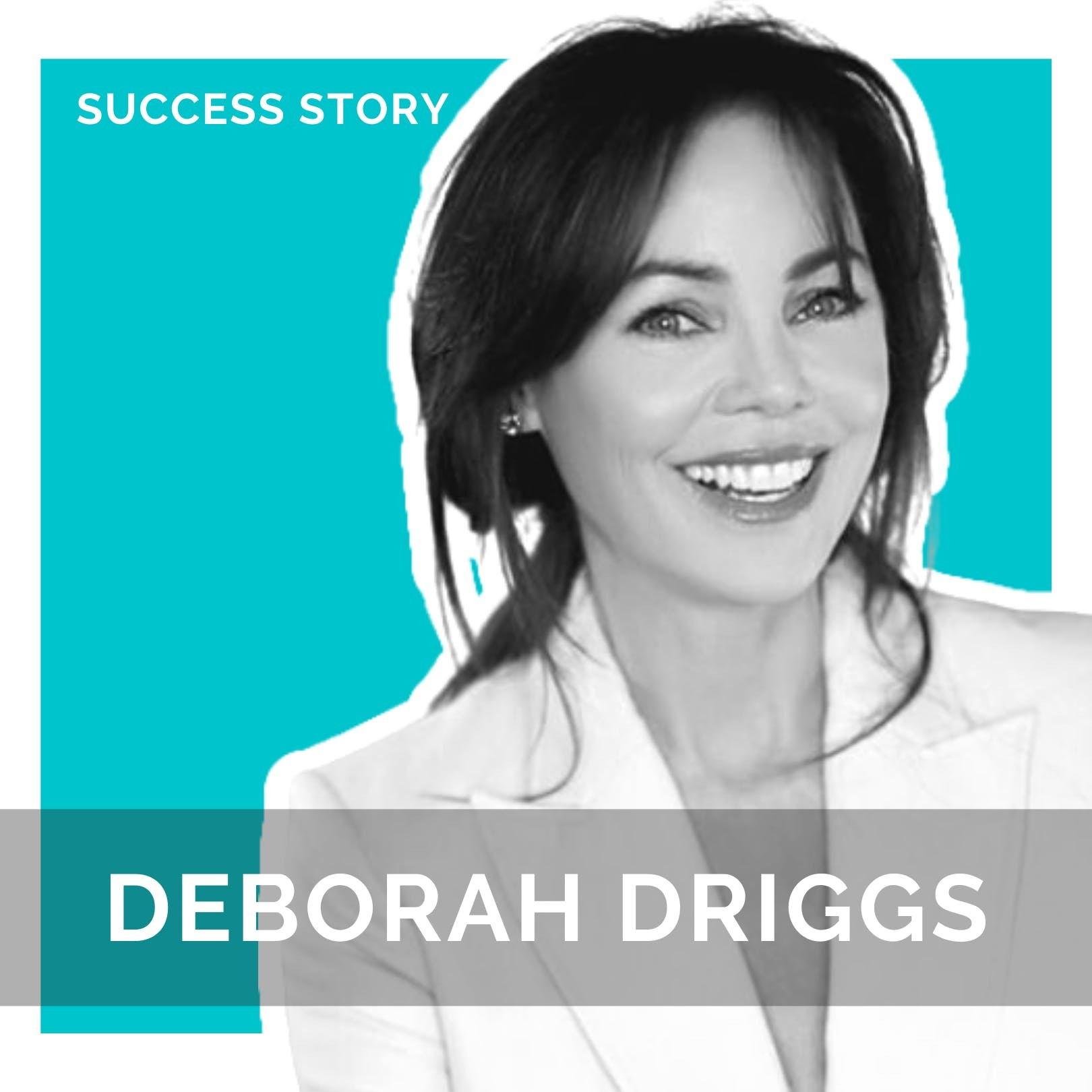
➡️ Like The Podcast? Leave A Rating: https://ratethispodcast.com/successstory
➡️ About The Guest
From her start as a Playboy Centerfold and Covergirl to her life as a Screen Actors’ Guild member and then a top-rated insurance industry professional, Deborah Driggs has had to clear many hurdles in life to make these things happen. And while it may seem like Deborah’s success came easy to her, nothing could be further from the truth. Rather, she’s overcome a number of challenges in her life to get to where she is today but what is true, and a part of her character is her willingness to take risks, maintain a positive attitude, and never take ‘no’ for an answer.
Deborah’s transition into the insurance world started off in the same vein – with a challenge to herself. By the end of her first year, she was a top producer, followed by ongoing years of membership in the Million Dollar Roundtable, Top of the Table, and as a contributing member in Leadership for Advanced Life Underwriting (AALU).
Deborah’s clients have included movie studio moguls, celebrities, Fortune 500 leaders, and high net-worth individuals. Over the past two decades, she has lent her support to a number of nonprofits that make a difference in people’s lives, including Richard Branson’s Virgin Unite, Go Campaign, Operation Underground Railroad (#OURrescue), Cut50, Reform Alliance with Van Jones and in funding a school in Peru.
➡️ Show Links
https://twitter.com/deborahdriggs/
https://www.linkedin.com/in/deborahdriggs/
➡️ Podcast Sponsors
HUBSPOT - https://hubspot.com/
TRUEBILL - https://truebill.com/successstory
HELLOFRESH - https://hellofresh.com/successstory16
➡️ Talking Points
00:00 - Intro
02:40 - Deborah Driggs’ origin story.
08:15 - Why do athletes make great entrepreneurs.
16:40 - How to get into Playboy?
19:16 - How much does Playboy pay?
24:30 - Deborah’s Playboy career.
32:30 - Current Playboy scandals & cancel culture.
38:13 - Does canceling someone actually do anything positive?
44:41 - Deborah Driggs post-Playboy life.
49:52 - How to leverage your network?
54:41 - Why do people overcomplicate selling?
57:54 - Why do so many people fail in the insurance industry?
58:45 - What is Deborah Driggs doing now?
1:06:50 - What is some advice to overcoming negative self-talk?
1:14:00 - Where do people connect with Deborah Driggs?
1:15:20 - What was the biggest challenge of Deborah Driggs's career?
1:15:55 - Who is the mentor of Deborah Driggs?
1:17:39 - A book or a podcast recommended by Deborah Driggs.
1:18:37 - What would Deborah Driggs tell her 20-year-old self?
1:18:58 - What does success mean to Deborah Driggs?
Advertising Inquiries: https://redcircle.com/brands
Privacy & Opt-Out: https://redcircle.com/privacy
Welcome to success story the most useful podcast in the world. I'm your host Scott D. Clary. The success story podcast is part of the blue wire podcast network as well as the HubSpot podcast network. Now the HubSpot podcast network has incredible shows like the hustle daily. It's hosted by Zachary Crockett, Jacob Cohen, Rob Litterst and Juliet Bennett Ryla. Now the hustle daily brings you a healthy dose of a reverent offbeat and informative takes on business tech and news and it happens daily. So if you want to stay up to date on the latest and greatest and some of these topics are interesting to you then you're going to love the hustle daily topics like Amazon's grocery strategy. The rise of the ugly shoe economy is AI the secret to love and America's sleep deficit problem. So if these are topics you want to get into and you love hearing up-to-date content whenever you wake up in the morning go listen to the hustle day. daily wherever you listen to your podcast. Today my guest is Deborah Drake's Deborah is one of the highest earning most notable most recognizable life insurance agents a completely oversaturated industry she rose to the top in all of the United States. She didn't start like that though. She went through a career in professional figure skating. Then she went into professional dancing. She was a playboy centerfold model before she finally pivoted. She reinvented herself. So we spoke about her life, her career. We spoke about early days what she learned from professional sports. We spoke about her going to acting and the dancing and the cheerleading going into a playboy audition messing up the playboy audition but then being called back for a centerfold spot and how that impacted her life the doors at that open. Then we spoke about her divorce at 40 her reinventing herself for going into life insurance, her having to completely learn something brand new at an older age and go into it and do it successfully. Now she teaches life insurance agents. She gives motivation to the professional speeches on her life on reinventing yourself on overcoming self talk and self doubt a negative self talk and also just on sales and how she was so successful on building this book of business so that she has clients that are movie studio mogul celebrities fortune 500 leaders some of the highest network individuals. Those are her clients with her life insurance clients. She has a book coming out a memoir on her life she's incredible individual is a really fun conversation. Jump right into this. This is Deborah Driggs, one of the most notable life insurance agents in the United States. Yes, they're going you know for me I think that the most important thing that I got as a young as a youngster as a young child was I started out in figure skating and I did not have any structure growing up in in my home environment. My parents were very young when they had me my mother was 19 my father was 22 so what saved me was the fact that I found ice skating and I became a competitive figure skater. And all I really I really give a lot of credit to the fact that I had some amazing coaches I had some of the hardest life lessons as a skater. And without that I don't know that my life would have gone in the direction that it really went in because I got all those skills that you really need in a home environment or school environment and in both those environments that element was missing. So you got that sports got that from sports and thank God because you know even today you know there's a there's a discipline that I have that came from when I started skating at a very young age. You know back when I skated you had to get up at 4am and you had to do something called patch you had to do figures for hours before you even did a spin you had to do these figure eights they don't do this anymore by the way. And I remember when they took it out of when they said you know we're not going to use this anymore because you had to pass a certain amount of tests to get to the Olympics and when they took it out I was like finally because I just it drove the skaters nuts that we had to spend so many hours doing figures when we wanted to be skating. And so that was that but that also gave us discipline. And so you know I started my day at 4am. Yeah 4am for sure. Doing figures just skating and figure eights you know and and then after school I went back to the rank and I skated for another you know 4 hours doing the freestyle skating. And so I had some really tough coaches and I had coaches that you know when I fell down or if I was going to fall apart emotionally they were like get up we go again. And so at a young age I'll even remember this is a great story because my very first competition I fell on my first job and I went completely you know how it's like a car accident where it happens and it's like slow motion. That's how this felt I fell I'm on the ice and I get up and everything afterwards was like slow motion next thing I knew I came off the ice hysterically crying. And you know this is the 70s so my coach grabbed me by my hair and took me into the little girls room and was like yelling at me stop crying. You're going to get back on the ice immediately and we're going to go through this again. And I know in some way today a lot of parents are so abusive and oh my god you know but I have to tell you there was something about that that was very disciplinary for me and very like it it snapped me out of self pity very quick. So I'm going to talk about okay you fall down you get back up and you're no good to anybody if you're on the ground so we got to get back up we got to go again. So I have so much admiration for athletes and actors or anybody who achieves a very high level of success in anything business because I know I know that there were so many failures and so many times that they fell down. And had to get back up and and and get over it very quick and and that's a gift really so I got that from my coaches and and somehow or another that that that luckily transferred into my life as a kid because I kind of knew when things weren't going so well at home or at school or in my outside life outside of ice skating that there was something inside of me that knew that it would be okay I could pull it together. And that's where I attribute a lot of those skills to ice skating so that's why I speak a lot about that because I think there's a big mindset that comes from having great mentors and great coaches and great life lessons and I one of the things I say a lot is a lot of my growth. I truly believe did not happen when I was at the height of something it usually happened when I was really on my knees at the bottom emotionally where I had to really dig even deeper that's where the growth happens. And so and I know even for athletes to get to certain high levels and I know what you know you you peak right you get to some levels where you're like the best but then all of a sudden you kind of fall back because the growth really happens when you're in the bottom. That's when you push yourself and that's why actually I think that athletes make such great case studies for successful business people because the mindset of an athlete is something that translates very easily into business because the amount of shit you go through to operate at a high level as an athlete. That's something that if you've never done it before it's hard to acclimate to that when you're starting a business but if you've done it in a professional sport and figure skating socking the soccer baseball hockey whatever then all of a sudden you already have the mindset you just have to you already have the mindset that's required to be that successful so. Yeah you definitely on to something there for sure I think that's a huge and you know it there's people talk about this all the time you know the difference between a gold medal and a silver medal could be seconds could be just this millimeter it's just it's it's like this this this gap that is so small and it's the difference between a golden and silver medal and when you really wrap your head around that and you think. God you know it's so close and there's even the bronze I mean when you look at the gold the silver and the bronze and you see just how close it really is less than a second sometimes less than a second so what is that that pushes that one person because it's really hard people don't usually remember silver and gold bronze medalist it's always we always remember the winner so yeah there is. There is a lot to that so you so you went you were you were competitive at figure skating how far did you go I unfortunately I had to stop skating at the age of 14 at 14 15 my parents got a divorce. We I did not come from any financial you know they're you know my parents would check to check like I said they were very young and so all of my mother's paycheck was paying for my skating it's an expensive sport as you can imagine I had two pairs of skates and costumes and competitive and ice time and private ice time and and so all of that plus I was taking ballet. So when they got divorced it kind of came to an end because now she had to support two kids and couldn't support the ice skating and two kids. So I kind of went through this that was kind of I think my first real low point in life where I had two griefs I griefed the death of my parents you know the door divorce is like death so grieving a divorce and then grieving the one thing that was keeping me kind of above water so to speak you know what I mean the one thing that was giving me the best skills in my life and I lost both like that overnight and then I you know thank God I had you know dance was part of the program with skating so the natural thing for me to start to do was to get involved in the dance. The dance team in high school and I was a song leader and got into cheerleading and then I became a professional cheerleader and I that what my gateway into the entertainment business was through dance I would I would go through this book we had back then called drama log I don't know what that is so so if you were an actor in the 80s we had a newspaper called the drama log and it would have open auditions so I was a dancer so I'd go to all the open dance auditions one of my first movies I ever auditioned for was dirty dancing because I went for the dancing part of the audition which I made I got I got all the way to the end. And then they decided they wanted me to read for our part in the movie and then I was like I don't have any acting experience so yeah so it's just a funny story that you know that's just what was happening. And so but from from all that I knew that there was something that I had because I always got called back so I knew there was something that was going on I had some sort of it factor because I was always getting called like we want to see her again. So I took a class called typical Legos which was a commercial workshop and at the end of it they bring in agents and then agents watch you do an improvised commercial and they decide whether or not they're going to represent you well that night I had three agents that wanted to represent me and that was kind of the start of my career in the entertainment business I signed with an agency called Pacific artists. Signed with a print agent through them called max and the very first audition they sent me on was for a Japanese commercial called creep Christie it was a non-dairy coffee creamer and I booked it. You know first one first agent first audition first everything and I booked it and so then we it's not bad not bad. That's not that's not normal either right I'm not from acting but I'm assuming that's not normal I've heard it like not normal not normal at all it's like one out of one it's not normal usually actors will tell you they went on a hundred auditions before they finally booked something and so I booked this commercial and I remember just thinking I'm on a role I'm never not going to this is it you know this is what I'm doing. And everybody would tell me you can't model you're too short you're to this you're to that and I modeled quite a bit I actually had a lot of accounts that rebooked me all the time because I was easy and fun to work with. And then also back then there was a show called the fashion channel this is before HSN before QBC and it was it was a 24 hour show where you could buy clothes and I was I was a regular model on that show and so I started just getting all this great momentum. And now this is all in the 80s and then cut to 1989 I get a call from my agent that playboy wants to meet with me for a book called the lingerie book and they wanted me for the cover. So go in on this edition it doesn't go well because I go to the famous building on sunset and I remember they gave me a rope and they're like okay you know take everything off and we're going to do some polaroids and I went oh I'm not here for that I'm here for the lingerie book for the cover and they said everything we do has a nudity we need to see your body. Now back then they were looking for birthmarks tattoos you know piercings scars you know they were looking at your body a little bit differently back then that's just the way it was this is the 80s you know today it wouldn't matter and none of that would matter. But then you couldn't even like there was there was companies it wouldn't hire you had a tattoo like exactly it was a little bit of different time it was a totally different time and so that was that was that's what was going on so I did not take my stuff off and I go and to do the poll right and they're like. You know well we got to see your body and I'm like yeah no so I leave and I'm like well I'm not going to get that job because I wouldn't take off my clothes it wouldn't go yeah it wouldn't do it and I had done swimwear instead so it wasn't like I was you know I was used to being on the beach changing on the beach with somebody holding a towel while I changed into a different bikini for a bikini shoot so it wasn't like I wasn't comfortable I just. Wasn't sure you know I was intimidated I'm in the playboy building I'm like just a question on that when they do it how many people do they bring in is it like do they like they they like trying you know find the best of the best or do they just go through like 500 different women and they just pick whoever they want what's what's this this was this was for a new. publication back then it's not new anymore I just but back then it was called a lingerie book and they were going to it was going to be like you could see women in lingerie partially needed some of it nude you know whatever and so this was for the cover so they were going to modeling agencies looking for a cover girl. Now for playboy for the centerfold. And I remember because when I actually shot my centerfold they the makeup artist and I were talking one day and she said I don't know if you know this Deborah because I really I didn't know much about playboy when I decided to do it but they get over a thousand submissions a day. Geez. Wow. So there are girls from all over the world that want to be in the magazine that's an 89 90. So I was in 89 90 and you have to remember in 1989 playboy was the number one magazine in the world was probably at its height really I mean it was really 1000 submissions a day. I had no idea you know I lived in LA I was already modeling I was already doing commercials I didn't live at the mansion because I lived in LA so I didn't take advantage of that but I didn't really understand the story of playboy until years later really when I when I started to really kind of have more respect for half and and his vision and when I really learned about who he was. I was really grateful for that experience so anyway going back I leave the audition I sucked and I get a call from the editor and chief of playboy called me personally and left me a message saying. We want to shoot you to be a centerfold and I was like I think you're confusing me with somebody else because I didn't come in for that and she's like I know but we like your look and we really want to shoot shoot with you so I went in I did a test shoot. And it went really well next thing I knew I was shooting a centerfold for playboy magazine and I was so when you're thinking about that when you're when you're in your career right now give hesitations going into this or you just like fuck it let's do it. Oh I had hesitations because there was different problems let me say that would come with that so for example I was doing a lot of the girl next store modeling and when I say that like when you'd open the Sunday paper I'd be the girl for macy's going you know and so I wasn't going to get those jobs anymore. I wasn't going to be going out for certain commercials anymore that one of the wholesome girl because back then that that did ruin that today that you could be there's more nudity on social media than there was in 1989 in a magazine. So but it had a lot of repercussions for me and I had to make that big decision of how am I going to portray myself now and by the way I I always kind of saw myself as a funny girl and not a sexy girl you know if I was to put myself in a category. And so I kind of had to grow into being this playboy model character really I call it a character because it is it's not really who I am in real life but I will say all the people that were in my life at that time all decided that it was a really good idea for me to do playboy because back then it did open a lot of doors. I got meetings that I would have never got and otherwise I was on the open win for show I did the Bob hope special I mean I got I got invited to do a lot of stuff that I wouldn't never and when you're making. I just want to take a second and thank the sponsor of today's episode HubSpot now you may have heard me speak about leveling up in the past how we can level up our careers our businesses our customer experience. I wanted to take a minute and focus on that last because when we level up our customers experiences we transform our customers into evangelists and help our business and our careers grow like crazy with new features dedicated to helping your sales teams improve your customer experience HubSpot is on a mission to help millions of companies grow better starting with yours conversation intelligence tools help your teams get real time insights into calls with automatic recording. Transcription and call analysis with more visibility into customer conversations coaching and customer feedback becomes that much easier easy share meeting links let customers see availability and book meetings for you all from the HubSpot platform this cuts out endless cycles of scheduling email learn more about how you can transform your customer experience with a HubSpot CRM platform at HubSpot.com. When you're making this career decision I'm curious as well so when you are doing the modeling and you can speak in just like generalities you can be specific but I'm curious about the money involved so you're doing the modeling you're not becoming model how much money are you making compared to when you sign up for a playboy central because if you're passing up all these opportunities over here you're clearly thinking strategically to some extent I can make more money over here with the playboy option. So what does what does that look like just so somebody understands why you would make that move yeah so it wasn't it wasn't for the money and I can just tell you that you know it really wasn't because I was doing pretty well up until I decided to do playboy and so I was kind of giving up a little bit because I was going out on a lot of commercial stuff and I did a lot of commercials and now I had to be really careful because a lot of those people that were bringing me in for auditions once they found out I did playboy they weren't bringing me in for certain commercials anymore so really wasn't it was it's and I will tell you this. I was what 25 years old I couldn't even tell you you know I didn't know how to I didn't know how to run my checking account back then you know I was always the one going how did I go through all my money and it's only the second week of the month you know I was that. Girl you know I just didn't never I didn't know it did not understand how money worked or you know I learned all that the hard way too. So I don't know that I really compared the the the losses versus the gains or you know like is this going to be a better decision. I just knew that playboy absolutely opened a lot of doors and I got to meet a lot of people that I I would not normally have probably met I had people calling me wanting to meet me now and that was very different for me. Okay so then you did the centerfold so you went for the addition didn't do well got called back to the centerfold okay so walk me through what's the what's what's the extent of like the playboy portion of your life like what what did you do how long did that last what did you do for them was just short stint long stint let's go into that. So I would say that for me it was kind of a short stint I did a few things after being a centerfold the reason being is I really wanted to act and so I put myself in a two year acting program that I had to sign a contract that said I would not miss a class and I would you know work with my partners and I you know because you know they wanted. People that were very serious to be in this program. So I got got chosen to train with Joanne Barron who at the time was really hard to to train with and if I'm correct I think that the class I was in I was in her first year class that was the last time she taught first year so it was like a real win win for me so I really did not want to miss that opportunity and it was right when my issue came out so I didn't do a lot of the stuff that a lot of the girls do. So where they travel and do promotions and all of that I really wanted to learn how to act. So I did that I went to acting class three times a week and if I had time or if there was an opportunity for me to do something that was worth my while then then I did but for the most part I was I was really studying acting. Okay and okay so I do want to so I want to talk about like the reinvention and I want to talk about what you know why you made such a big pivot a lot of change in your life the only thing that I'm actually curious about before we like totally move off playboy so I know it was like a small but obviously impactful portion of your life. And the grand scheme of things you mentioned something when you're talking before and like emails and whatnot you're saying oh it's so you know it's so relevant now because there's so much going on about like playboy and and half and all that in the news and I actually I actually don't know I don't know much about this stuff at all so I was going on right now what's going what's going on right now is that I only watched I could only watch out 30 minutes of it I couldn't I was just curious because I feel like it's going to be it's going to be good for the algo self. I'm where it's going to be index somewhere they're going to come check this out. Yeah well because A&E just put out a documentary with Holly I can't on our last name but she was one of half's girlfriends Holly Mats and and I think that's her last name anyway she just came out with the documentary on A&E and I you know I watched it and I just for me it was it was really hard to watch because knowing half the way that I knew half and knowing the mansion there was never any the mansion was what it was it was a place to go and party he had five or six parties famous parties a year he had he was he was a creature of habit you know he had his back am a night he had movie night every Sunday night where all the girls were invited up to watch a movie and have a beautiful buffet dinner and there was never anything wrong with any of it I mean I found have to be one of the most gracious people I'd ever been around I found him to be wickedly funny extremely smart and to watch a documentary with somebody saying false accusations about a man who was who really helped shape and changed the way people thought about things and did some of the most memorable interviews in the world was hard for me to watch I was like baffled actually because some of these girls would never have we wouldn't know who they were if they hadn't associated themselves with half and so that's why that is so the timing of I had a lot of people reach out to me and ask me to be on the podcast to kind of talk about the opposite of it because I never saw anything that was out of line or or not right at the mansion if you went to the mansion you knew what you were going for you knew what you were in for you knew there were going to be women walking around half naked or swimming nude in the pool or you know what I mean what but nobody was forced there was no it wasn't like it wasn't like a cult it was it was it was it was that was that lifestyle he and by the way he never said it wasn't you know what I mean no I don't think anybody had any illusion about what he was all about yeah by the way these girls were they were standing in line to be one of his girlfriends and so when I watched I guess one of the girlfriends talk about how it ruined her life and it ruined it and it was this and everything everything came with a price well yeah in life everything comes with a price that's life that's life so I just I couldn't watch it I just I turned it off and I was actually shocked because I actually knew a few of the people that were being interviewed and I was just like wow I can't even this is hard to to watch and it reminds me a lot you know like I'm just not a I think today how do I say this I know I'm going to get reamed for saying this but it's how I feel I think the me too movement is just it's gotten out of hand because now you've got men that are scared to hire women that are more capable of doing the job than the guy but they're like you know what I'm going to hire the guy because I just don't want to deal with the me to movement God forbid I look at this person the wrong way so it's just it's it's kind of gone too far and what was you know and I I have to tell you I've worked with a lot of men because I they industry that I work at now is life insurance and 10% is women in the most of the women are assistants and underwriters I happen to be a life agent And, you know, when I go to a lot of our, our annual meetings, the room is all men, you know? I look around the room and I'm always like, wow, where are all the women and the business, you know? But I've spoken to men who are CEOs, who own their own companies, who have money. I have spoken to men that have told me their stories of girls that will try to manipulate some sort of story where they did something wrong to try and settle out of court for money. You know, so you hear both sides. Well, that's the toxic, horrible, that's like, that's the thing that the negative that comes of that's right now. Exactly. And so it goes like relying and falsifying stories are never, that's never okay, but it just, it's never okay. I've been a little more prevalent in the past couple of years. Yeah. And I just worry sometimes when I hear, like when I hear this story about half or whatever, I just worry. I'm like, what is your, my, my, always my question is, what is your part in it? You know, what, what is your part in it? Why would you even go and hang out with him if all this was going on? Why do you leave? Well, this is a big conversation about cancel culture, right? And now people are, people are canceled and they're, and they're, you know, with cancel culture. And I'm a, I absolutely cannot stand cancel culture because people without any sort of, you know, court proceedings or anything like that, get their livelihood shut down because of social media. It's a wildfire. And it's not so, you know, you know what? People are going to say things. I'm going to say things that are going to be misinterpreted or they're going to be misread or they're going to offend somebody. I'm not going to, not everybody's going to like what I have to say, but context. And I can just tell you. Context matters. Context matters too. And I'll just say I was very offended by this recent thing that will be Goldberg said, you know. I have a lot of Jewish friends and I raised my kids Jewish. And for her to say that the Holocaust wasn't about raised was like, I fell off my chair. I literally, because I watched it a few times just to make sure that I was hearing her properly. And I thought my, it was really fucked up. And, but I don't think she should be canceled. No, but just as, just as I don't think Roseanne Barr should have been canceled. And I don't think Sharon's Osborne and all these. It's like people are going to say things out of emotion sometimes. They're not doing it. I don't think what the Goldbergs did it. I just think it was just such a stupid thing to say. I don't think what the Goldberg is anti-Semitic. I think she said something. I don't either. I didn't think through in publish. And then. No, she should. And it's a really what she should have said is. What she should have said is what she was trying to explain is the horrible thing that this man did. This man did what she said it was man being so horrible to other. But it was he was trying to wipe out an entire race of people. And so she just missed, she kind of missed a big point there, but it's okay. It was a bad analogy. It was a bad analogy. And, and, and, and, you know, but again, I go back to. Should she be canceled for it? Well, you know, this is a whole thing. But then, but then I think, okay, well, if Roseanne Barr was canceled, they have all of these other people that these, you know what I mean? Like if it, if, if, if certain groups don't like certain things that are being said, they get canceled. Well, I can tell you there's a huge group of people that did not like what she said. And she's not getting canceled. And so that makes people wonder like, well, what's going on and who's making this, this decision? Why Roseanne and why not what they, you know? And that's where it gets a little tight revision. I also think that people are getting canceled so much now that it's almost like flavor of the month in terms of who you cancel. Yes. Just like, you know what I mean? You can, you cancel somebody, then people forget about it two weeks later because there's someone else to cancel. Then it becomes, it becomes silly. It becomes like it. People are doing things right now. People are doing things right now that are, that they think are going to make a point. But they're actually kind of hurting themselves. Like, like, I'm going to pull my music unless you do this. I am going to use Joe Rogan, obviously, as an example. And I'm thinking, wait, you're going to pull your nose off your face. You're going to, you know what I mean? Like, wait a second. Like, you have to run a business. And just because you don't like everything that goes on in the business that you're in, you're going to pull your music. It's just that part for me gets a little like, and then people join in on the bandwagon. Like, well, if this person's going to pull their music, I'm going to pull my music too. And we're going to make a point that if you're going to have Joe, then we're going to pull our, and it's just, it's like, it becomes this whole, like, you're not going to agree with everybody. So you're pulling your music, but that's your business, you know? And you have, by the way, your fans, I'm going to tell you right now, half your fans like Joe Rogan. Now you just lost half your fans. Yeah. Yeah, especially the person you're talking about in particular. Yeah. I'm sure I'm sure more than half of them like Joe Rogan, but regardless. Yeah, I think you got to be careful like you're cutting off your nose despite your face. And I just, it's what it's such a, it's such a. Cancel culture is such a difficult talk. It's a difficult topic because it just doesn't. And I think that it's gotten even worse. It's gotten even worse. People are angrier than ever at each other. It's just so. I know. That's why I swear. I tried very hard. And it's hard sometimes because you just really want to. You want to have an opinion. And I haven't done it in a very long time up until this will be thing. And then I got in on the tweet. Game of. Of that because it. It kind of freaked me out what she said, but. For the most part, I stay out of it completely. I write a weekly blog that. That kind of hopefully shifts the perspective to coming back to wellness and holistic thinking, which is. Everybody's going to do what they're going to do. And the only control we have over anything is ourself. And everyone also, a lot of people are like, if you have people in the public sphere. Just by the virtue of the amount of things that they say in public and emotions and opinions, they're going to screw up at some point. But I can guarantee you, if you, if the goal of canceling somebody. Is to change their view. I can tell you right now that bullying and just like online assault is not going to change their view on anything. If anything, that's going to make them double down. And they're going to just migrate to their own little community or tribe of people that agree with them. It's like, it's a very polarizing, almost like, and like you just mentioned, it's, it's counterintuitive. You can do anything positive for anyone because you have the people. If somebody is actually, if somebody is actually a very bad person, they say something that they actually truly believe in. And you cancel them. I understand, I understand the rationale, but that's not going to change their opinion on anything. It's not going to change their opinion on anything at all. And now you, you see these platforms popping up that they're moving over to, right? They're moving over to different platforms. So I don't, I don't, I just don't see how it solves anything. I just think it's like, called, have a stay in your lane. Have your beliefs and stay in your part. What's my part? What, you know, what am I doing to make this a more positive experience for the world or for whatever I'm doing? And the minute you start worrying about what other people are doing, you're kind of, you're kind of in a loss because we're, I'm never going to change no matter what I write, no matter what I say about what would be said. I'm not going to change the situation or what happened. She said something. So what? Okay, next, you know, if bothered me for about five minutes, it did. I got a little on the Twitter ban wagon about it because I just wanted it to be known that it was for me, I raised my kids Jewish and, you know, it was just a little outrage just in that regard. But other than that, I'm not, I can't control what people say. And at the end of the day, I can't control what people say, I can't control what people do. And I can only focus on what I do, what I say, and, you know, and just be really grateful that we live in a world where we do have free speech. And I think we're forgetting that. Amen. Yeah, I mean, the fact that, you know, I think that we have to be grateful sometimes that we can even say some of the opinions on stuff in public. That's a, that's a blessing. That's an absolute blessing because that is everywhere in the world. Definitely not everywhere in the world. All right, that's enough about cancer culture. It's a sad setting, frustrating, pain in the ass topic that's, I don't think we're going to fix it on this show at least. So let's, let's go on to other stuff. Going to, going to business stuff. This is the whole point of the show. Speaking of cancer culture. I will mention, I will mention that Donald Trump is on the cover of my 1990 March 1990 issue. So this is a, this is very funny too. What issue of what? Well, I'm the centerfold of March 1990. He's on Playboy. He's on the cover of my issue. So. That's funny. Yeah, you can't make this up. And so I get more fan mail today because now everybody wants the issue signed because it's a collector's item now. But you know, I didn't know when I was doing Playboy that Donald Trump would one day be president and being on the cover and he's on the cover of my issue. And then I'm on the cover of the following month on April 90. But yeah, speaking of cancer culture, I got a lot of. If either goes either way, people either go that's so cool. Or oh my god, you know. I mean, that's that's I can't win. I can't win. Unfortunately, it's my issue. So I don't really doesn't buy you know, I don't care. It's part of my history. So let's take a second and thank the sponsor of today's episode true bill. So let me ask you a question. How often have you signed up for a free trial and then it converted into a paid subscription and you forgot to cancel it? Or how often have you just not been able to cancel something because the process to cancel that particular, you know, monthly service is just horrible and painful and it makes you jump through hoops. True bill is solving this for you. True bill is letting you fight back against scammy subscription services. True bill is a new app that helps you identify and stop paying for subscriptions that you don't need. You don't want or you simply forgot about on average. People save roughly $720 per year with true bill. And it's honestly because companies make subscriptions difficult to cancel. True bill makes it incredibly simple. You just link your accounts to true bill and they cancel everything unwanted with a single click. And if something doesn't cancel automatically, they actually have a concierge service that will follow up and cancel it for you so that you don't have to. True bill has over two million active users and they saved people over $100 million. I used it myself. I saved about $578. But that's just because I spent so much time in the past having to go back and cancel. I'm sure if I knew about them two, three years ago, it could have saved me like thousands of dollars by now. So stop letting CEOs and bad businesses get rich off you being unable or just forgetting to cancel. Don't fall for subscription scams. Start canceling today with true bill at true bill dot com slash success story. Go right now. True bill dot com slash success story. That's true bill dot com slash succ. ESS STORY. It could save you thousands a year. That's true bill dot com slash success story. Take control of your subscription. Yeah. Well, it's way before he was involved in politics. Anyway, so let's go and let's go and back a little bit. Yeah. It's funny though. I always forget sometimes when you actually look at his history. I see I always forget all the funny stuff that he did over his career. Like he's done some really wacky shit. Like he's done the commercial. I didn't know it was on a playboy cover. But he's done see he's a he's a he's good at promoting himself. You love him or hate him. But he's good at like getting his face in spots and known. Oh, yeah. Mm hmm. We're sure that's really funny. All right. Okay. So let's talk about let's talk about let's talk about like rebirth. Let's talk about what you did. Talk about what you did after playboy. So you said when you were 40 or in your 40s. When you were 40. Yeah. So you know, you know, so my whole background was acting modeling and waitressing. Yeah. You know, I mean, I waitressed a lot of the times too to to make up for money. One, you know, because with with the entertainment business, if you're not working for a couple of months, you got a waitress or do something. So I really never worked in the in a in a in a real job, so to speak. I got married. I had three kids. And in 2004, I got divorced. And I found myself at 40 years old broke divorced three young children. And having to say now what now now what is what is life going to look like now? What am I going to do? And so I did a lot of here, you know, odd jobs. I worked at a spa. I organized closets. I got my real estate license and started doing really well in real estate. And in 2008, oh, by the way, I I I raised my kids in Park City, Utah. Got them out of LA because I was getting a little tired of all the private school nonsense. And decided to raise them in a community where they could ride their bikes and walk to school. You moved your whole family? Yeah, we all moved. And then I got divorced. So I raised my kids in Park City. And so I got my real estate license in Utah. In 2008, when the market took a dive, my obviously my niche was second family multi-million dollar homes. I lived in a resort community. So that was the first thing to go. And so I had to reinvent myself again here. I finally settled into something that I was really good at. And what I had found out from real estate was that I was really good with people. And and I was really good at taking care of people and customers and clients and all of that and sales. And so there was about a year where I after 2008 where I just I didn't know what I was going to do because real estate was done, especially where I was living. So I made the decision to take a job in New York. And I took a job in the print procurement business. And I reconnected with the company that did my ex has been in eyes life insurance. And the reason I kind of reconnected with them is I had I had referred them quite a bit of business after they did our insurance because I thought they were the best. So when I reconnected, I said, I'm living in New York. I'm working for a print company. I do print procurement and and so they said, well, we're going to be in New York. We should meet so we met. And I said, you know, I've been referring you a lot of business. If I keep doing that, can I get a referral fee? And he said, why don't you just get your license? And I went, that would be that would be a smart thing to do. So on the weekends, I studied and and and and and I also got transferred from New York to Irvine. We opened an office in Irvine, which was great because my kids were in California at this time with their dad. So now I was back close to my kids. Having them fly back and forth to New York on holidays to visit me. And so that was a lot of money and a lot of expense. And so I got back to Irvine. And on the weekends, I studied and got my life insurance license. And by 2011, I was doing life insurance full time. By 2012, I was the number one light agent for one of the carriers. And when I say one of the carriers, I would, I'm not captive to one company. So I'm licensed with access, pack life, mass mutual, you know, potential. I'm licensed with all the carriers across the board. But with this one, I had sold quite a bit. They had a product that was great and I had sold quite a bit. And so I, I was their number one agent, never like, well, who is this person? Because I wasn't captive to them. But I just would laugh because I would get invited on all these like cruises or, you know, like there'd be perks that would come with. And I had three kids and I didn't have time to go on. These perk, perk type of, you know, whatever these trips that come with, with doing well, you know, so. But you just leverage network though, you just leverage that because I'm only asking because life insurance, like insurance sales is like not an easy thing. You know, like, it's horrible. Like everybody's like, it's like, you know, there's like real estate agents and insurance, insurance sales people and like everybody has a license at some point, but nobody does it. And nobody does well and everybody makes their money. I agree. It's really, it's so difficult. And, and what I did was I was well, I was relentless, you know, I had three kids and I did not want to ever be in a situation, especially after the real estate crash. I did not want to be in a situation where I was ever. I was wondering what my next thing was going to be, so I really wanted to make this work. And so I literally called every single person I knew relentlessly and just asking for business. And if they didn't give me their business, I said, then will you refer somebody to me? Basically, what I do is just putting some, you know, that thing in someone's head, if they don't know, they're not going to refer you. So my whole thing is people are not going to give you business if they don't know what you're doing. So I emailed, I called, I texted people, I said, can I meet you for coffee? I met with everybody. And the, I think the thing that I had going for me is one, I worked for probably one of the best companies in the US brokerage. And two, I had, I have a past in the entertainment business. So a lot, so my, one of my first clients was ahead of Warner Brothers. You know, and I said to him, if I get you as a client, then I can say I have you as a client. And you know what I mean? Then more people and more referrals. And so that's how I built my business was basically, you know, the more people that I got that. And what's interesting too is that you never, I don't never discount anything. So even though I may have had failures and real estate or failures and print procurement or maybe I didn't get this or that. But the people that I worked with during those times, those all became my life insurance clients. So you never know, you never know where, where the tide is going to take you. And so you just got to stay in the game. So yeah, so I had to really, I had to really reinvent and I had to really, and you know, I, I always knew, you know, because I had a few people, especially in the entertainment business when I called and said, this is what I'm doing now. And they all knew me as like being on the cover of Playboy or being on, or being a VJ or, you know, they knew me in the entertainment business. And they were like, yeah, I don't know, Deb, it's like, I don't, people are going to take you serious because, you know, I was like, well, just meet me for coffee. Yeah, the minute I met people for coffee and we were in person face to face. And they saw, oh, this is a different, this isn't the girl I knew in the 90s. You know what I mean? That was doing music videos and partying with rock stars. You know, this is, this is a business woman now. And so that's why I say, when you have to reinvent yourself, you really, I had to go like from one extreme to, to another because people really did know me a certain way. And I had to meet with them and explain that, no, this is what I'm doing now. And also I, you know, the thing that's really, I think also really good is that I retain information pretty well. And so I was really good at retaining information and remembering products that were available. And I could, I could just off, you know, I knew what was going on. And I made sure of that because in the insurance industry, a lot of people may not know this, but products change. So you may have bought insurance five years ago. Well, there may be all new products now today, five years later. But a lot of the insurance agents. And this is why it gets a bad rap. A lot of the insurance agents that are out there. They're usually captive. They usually work for Northwest mutual or, so they just sell the one, they just sell the one product, where that's not what I do. I analyze all the products that are out there. And I may call a client from five years ago and go, you know what, there's a different product we should switch you over will save you 20% on your premiums and get you more life insurance. So why do people overcomplicate selling though? Why do people overcomplicate selling all the time? You hit your roll of decks. You got your, you got your network and you just sat down for coffee face to face. You know your products product. I love that you said roll of decks because you and I are the only one that knows what that means. That's an old password. Maybe I shouldn't say that. What's a roll of decks? It's your contact list. It's your contact list and your phone. It's a roll of decks. So yeah, it's you don't want to overcomplicate. And here's that here's my thing when it comes to selling. I don't usually have to sell anything. Either people need the product or they don't. And so here's out of anybody who's in sales knows this. You're going to get 20 knows before you get that one yes. So I used to always say my coin phrase was no means maybe because I would have so many people say to me, yeah, no. And I go, okay, walk on you next week. Like as a joke. And they go, no, I said, I said, no, like no. And I go, I know, but you know what, things change. Your broker could close their business or maybe there's a great product that I need to tell you about. And they're like. They were just like roll their eyes at me because in my head, no means maybe. And sure enough, there was a product that came out that was really like people would actually sit back and go, when I don't understand, I would explain it again. There was absolutely no reason why they should not do this, this product. And so when it was explained, they were like, well, yeah, of course, I'm going to do that. But are you sure? And I'm like, every once in a while, these companies make mistakes. And this product is one premium payment, pre-pays it for five years. And it's a mistake, but they haven't caught it yet. And until they catch it, until they take it off the market, you should buy as much of it as you can. Because once you buy it, you own it. So, you know, it's like stuff like that. And that's, I think that's just knowing your products, knowing what's out there, knowing who your clientele is. And then auditing, constantly auditing. So I constantly audit, I constantly go back through clients that I sold in 2015. And I go back and audit and see what they have where they're at. Maybe there, maybe they need more now. You know, maybe back then they only needed five million, but today their business grew. A lot. And now they need 50 million. There's, you know what I mean? But how would I know unless I go and audit that? It seems, it seems so straightforward when you like lay out the steps. So, why do people so much, why do some people fail in this industry then in life insurance? Why is it, because you said one thing, a lot of people are captive to certain, to certain products. Well, that's probably the number one reason is if you're captive, that the number one, okay, so that's number one reason why people get stuck in any sales situation, because when you become captive to one product, it's hard to sell one product. Especially if it's not a good product, especially if it's not a good product. And so I can tell you the one that we redo all the time is not saying that it's a bad product. I'm not saying that. But we redo a lot of Northwest mutual products because doesn't work for our clientele. So, you've reinvented yourself. You're now, you've sold, you've sold, you sold to studio, moguls, celebrities, Fortune 500, a whole bunch of incredible individuals. So, what do you do now in your career? You've reinvented yourself. You still have a lot of life left. So, what's next? Well, this last year I spent most of the year writing. I formed a publishing company called Crystal Woods Publishing. Don't ask me why I chose that name. I don't know. I just, I loved it and I chose it. And I have a book that I'm publishing in the next six months called Son of a Bass. It's a historical fiction. So, that'll be the first book I publish. My grandfather wrote the book. I read it quite a few times and I actually fell in love with the book and I learned a lot about him stuff I didn't even know is in the book. And thank God, you know, he's no longer with us, but thank God my mother is. And so, she's been a tremendous help with helping me with certain things that I would be too young to remember. So, that that book is getting published as we speak. And then, you know, I write a weekly blog. I have a website, DeborahDrigs.com. And I write a weekly blog. And my weekly blog is really excerpts from my memoir, which I'll probably publish in 2023 after I'm doing Son of a Bass first. And then I'll do my memoir. So, writing is a huge part of my of my life right now. And it's so great that I feel so grateful. I think that, you know, in some ways, this whole pandemic and everything kind of shutting down and slowing down kind of made everybody reevaluate certain things. And for me, the beautiful thing that came out of it was I really, I got to go back to being creative. And I really missed that a lot. I had forgotten just really how much I love to create. And when I was in the entertainment world and audition and have to prepare and have to get ready for certain things. So, I had to create a process that happens. And for a long time, I didn't use that instrument. And so I feel like this last year, I got to reuse it. I booked some modeling jobs this last year. And I worked on a film that's going to go to the out of wild film festival in March. I was just back doing creative stuff. You're busy. Yeah. And you just listen off. I have notes here. And you just listen up, hope and stuff that I don't even know that you were doing because like I just have notes here that you you do a business strategy talk on sales. And then you also now you're doing motivational speaking on helping women break through negative self talk as well. So stuff that you've learned out over your entire life. And I will tell you that stuff is up. Yeah. I got asked to do some speeches right before COVID hit. And I spoke in January right before COVID. And I spoke on stage in New Jersey. And I was one of those like, you know, 10 minute speakers, you know, like I came out and spoke for 10 minutes about insurance and how that is for me as a woman in a business that is 80% men. And so and then and then somebody came on stage and spoke with me and then we did this conversation. And I got up stage and I had like five people come up to me and asked me if I would be there speaker at their event. And I said, sure, I would love to. So I started it to well, you know, for me, I speak about everything that we're talking about. I basically talk about the life skills from sports to being in the entertainment business to falling down at 40, you know, I fell down at 14, 15 years old and fell down again at 40. I talk about reinvention, I talk about divorce, I talk about, you know, what it's like to age gracefully, you know, and I have another coin phrase that I say it's on my, my, my website and on my email, I say, age and gracefully is a full time job. Because it really is, it requires so much inner work, it requires so much wellness and holistic thinking that it becomes really a full time job, you know, how we age and, you know, people, people are always looking for some trick serum, you know, for, for the wrinkles and this and that. And I can just tell you that I turned 58. In December and I feel healthier and younger than I did in my 20s and there's a reason for that it's I think the more stuff you do internally. The more you're going to age gracefully and so I talk about that. So really to be honest with you, if somebody called me and said, hey, could you come and do a 20 minute keynote speech on how to use a Kleenex box, you know, I'd be like, okay. You know, it's like, you know what I mean? Like I just because you're using your stories, you're using your experience and hopefully your experience and your suffering and your, your, your knock downs, things that brought you to your knees, hopefully those things will help somebody else. And that's the whole point of the game really. I just want to take a second and think the sponsor of today's episode, hello fresh now hello fresh gives you fresh pre measured ingredients mouth watering seasonal recipes delivered right to your door. I've used Hello fresh for a while all the ingredients all the recipes they're incredible. It saves you tons of time it lets you skip those trips to the grocery store that you dread it makes home cooking easy fun and affordable. That is why it is rated America's number one meal kit. Now it saves you tons of time and stress hello fresh offers convenient contact free delivery right to your doorstep for easy home cooking with the fam recipes are super easy to follow even I can make them quick to make with steps pictures to guide you along the way you can also keep the recipe books for later if you just want to remember the delicious thing you just put together. They're really nicely done so you can use them to remake the meals at a later date. It cuts out stressful meal planning it cuts out unnecessary grocery store trips you can enjoy cooking and get dinner on the table in 30 minutes or less it's 30% cheaper than shopping at your local grocery store. You skip the checkout lines you only get the items you need how often have you planned for a meal you go to the grocery store you get all the ingredients you have tons of leftover tons of waste you have things you didn't even use in your main dish to go bad you have bits of your main dish to go back because you made too much of it with hello fresh you only get what you need and all the stuff they give you is high quality delicious ingredients they have set up a special offer for all success story podcasts listeners. So if you want to try hello fresh you never try it before that's cool you know sometimes we're a little bit late to the little bit late to the party go to hello fresh dot com slash success story 16 and use code success story 16 for up to 16 free meals and three free gifts so I'm just going to say that again because there's a URL you have to go to and there's a code you have to use hello fresh dot com slash success story 16. And then when you go to that landing page use the code success story 16 for up to 16 free meals and three free gifts. The last thing that I wanted to talk to you about and I thought it was an interesting thing that you mentioned and I think it's something that a lot of people obviously everybody struggles with this to some extent but you said and you've touched on this a bit already so don't want to make it seem like you haven't spoken to this but breaking through negative self talk. You've done this again and again over your life that's really how you've invented yourself and I think that's such a a noble thing to speak to because everybody deals with this so what are your what are your recommendations tips insights on breaking through that negative self talk. In anything that you do in your life to name it you know to name that that that person in your head to name that person oh you know whatever it is you know to name it so you can tell it you know thanks for that thought today but now you can go away because this person's taking over and I'm in charge you know and I think I think that when you give it a name or you give it a. You get you you you make it so it's yours you own it and so we're all going to have negative talk there's just no getting around it there are going to be days where we wake up where we don't want to get out a bit we just want to pull the covers over we just want to go you know what today is just not the day it's not going to happen today. And that's the voice that I go oh really okay really well let's tell you know really you know and to just make it funny like have a conversation really well why do you think that why do you think that you know people my fingers she's talking to herself she's absolutely fucking lost it and it's true in a sense you know but I think that when you when you when you call something out or you write it down. It makes it less of a negative thing because I will tell you anytime that I've gotten into the right when you get into that deep funk or that deep like oh I'm so irritated or upset by this and if you take out and for me this sits by me all day it's just but you know a yellow pad and I know it's so old school but literally if something's going I literally write down all my thoughts about it and why I'm upset about it and all of a sudden it's like it doesn't bother me anymore it's like it's almost like go it's seriously it's like doing yoga if I'm really upset before I do yoga I can guarantee I'm going to walk out of yoga I'm good what's that upset about. Yeah so writing can be like that writing can just be like you know talking to yourself through writing about what it is you're upset about lessons the negativity of it and I will say the other thing that I love a lot. And when I say a lot because I really feel like it works is I write a letter to God or to the universe or to angels whatever you believe in you could write it to mother earth I don't care you could write it to the plant on your desk but you go dear plant. And you write what it is that's really upsetting you like why am I so upset about this this this this this and this and this then you write the second letter dear debs as if you're the plant. Here's why you feel that way and you write it as if you're writing and you you have all the answers because here's the truth and here's what I believe the answers are inside of us we know and when you really take the time to do that two part letter it's so tremendously insightful because you're writing dear God. I need help with this I don't understand why is this happening right now what whatever the situation is and I write the whole letter please help me love Deb turn the page dear debs this is God just got your letter here's why this is happening and you write it as if you know it that is a that is an exceptional self awareness tool I've never heard anybody recommend that but I could see how that could be super powerful. That's really that's a really smart idea that's a smart idea because yeah thank you thank you I didn't come up with it I can't take full credit for it but it was a recommend it was a recommendation to me I just do it a different way I just do it a little bit different I take I take it and do it the way I do it but I will say this that every there everything that we talk about is it's been out there for me. Millions and millions of years so there's you know we just all look at it with a different perspective or a different idea or a different spin on it but but we're all trying to figure out what works and I can tell you that two part letter works for me it may not work for somebody else listening to the program then maybe like that's not going to work. You won't know unless you try it and by the way there's a lot of things that have been recommended to me that do not work and I go no that didn't work for me but this did and so I think that's kind of that's kind of a fun thing because you can I can take from so many great mentors, coaches, masters, books, articles, blogs, podcasts. There's so much available today that was not available not even 10 years ago you know and how beautiful is that that today we have accessibility to such amazing wellness. I mean no that's awesome advice I've never heard that before but I would suggest anybody who's listening try it because that could be something that you're struggling with a personal problem a mental health problem a business problem a family problem whatever it is it's it's incredible how often the answers are so simple it's just forcing you to come to terms with those answers by you know by asking yourself right yeah when you when you write. After you write it all out like what's wrong and then then you write you know your name dear depths and then you write here's why and then you write it why you know it's it's very very telling because it really does. In some beautiful way I don't want to use a word forceful way because it's not a forced way if you do it really from your heart it's like really just really looking at your part in the situation of why something's happening. I love that okay let's let's that's a beautiful way to close this out because then I want to do some rapid fire anyways so I always like to end off with some rapid fire before we pivot where can people reach out to you where's the best website social all that. All social media Debra Driggs you know I'm every social media is the same at my name Debra Driggs and then my website is DebraDriggs.com and like I said I have a weekly newsletter you can sign up for my weekly newsletter I have some free gifts. Coming up we were just discussing this today with my web team that I really want to give back to my community because so many I've had so many people sign up for my newsletter that I want to give back so we came up with some free gifts so please sign up for my newsletter because I have some really cool stuff coming. And and then I post a weekly blog on my website I have you know I model so I also my website is kind of like a whole array of things so if people want to book me for modeling my portfolio is there as well. And then any any upcoming things I have I have a book being published I have a movie coming out all that will there'll be a page for all of that as well so that's the best place to follow the whole journey. Amazing no that's awesome okay link that in the show notes as well that's great okay so let's go into a couple rapid fire so biggest challenge you've overcome in your life what was it how did you overcome it. My divorce my divorce my divorce really brought me to my knees and took me years to overcome it I I was filled with a lot of anger and a lot of resentment and it wasn't until I took that time to really look at my part in the situation that I was able to overcome it. If you had to choose one person obviously there's been many but pick one person who's been incredibly impactful in your life who's that person what did they teach you. That's super hard one person you have to pick one I'm challenging you to pick one even though there's been many just the first person that you think of and it can be a family member to it doesn't have to be like a business person. I am going to say this is going to be interesting because he had such a huge impact on me but it would be my my father's father Percy Driggs was really had this really impactful thing on my life because he was very very smart but he was a farmer. And he was a very well known farmer he was corn king he was he won awards for potatoes he won he was also somebody who raised race horses and that always I actually wrote a report about him I think in fourth or fifth grade because he was so impressive to me. As just somebody who really he was the he was the ultimate guy you know he was a man he was a farmer but he was also like a well known person in his community he was from Moses like Washington. Very small town and everybody knew him and he was very well light great mentor. Amazing that's a good answer if you had to recommend a book or a podcast or something that you've read or consumed in your life that you'd recommend people go check out what would it be. Well the book that I just read is I think it's called I'm a badass by Jen Cesaro. I don't know that book that's a new one that's a good one I love I love people recommend new books because I do a lot of the same one so she her book I like it because it's really there's some phenomenal tips in there. I also love the surrender experiment quite a bit I think I've gone through that quite a few times just I have things highlighted in there and then I love the atomic habits just because I love habits I love yeah. Okay those are two good well three good examples but I've read you asked for one but okay yeah I got a bonus I got a bonus that's great okay if you could tell your 20 year old self one thing what would it be. You can be an entrepreneur you can work for yourself you don't have to work for anybody else you can start a business and you don't have to know why you don't know how you don't have to know how just do it. And then last question what is success mean to you. I love giving family experiences. Well the wealthy and healthy you know wealthy life experiences and healthy not a lot of monetary stuff in that.