


 YouTube
 Apple Podcasts
 Spotify
 Overcast
 Castro
 PocketCasts
 Amazon Music
 Deezer
 TuneIn
 Podcast Addict
 RadioPublic
 iHeartRadio
 RSS Feed
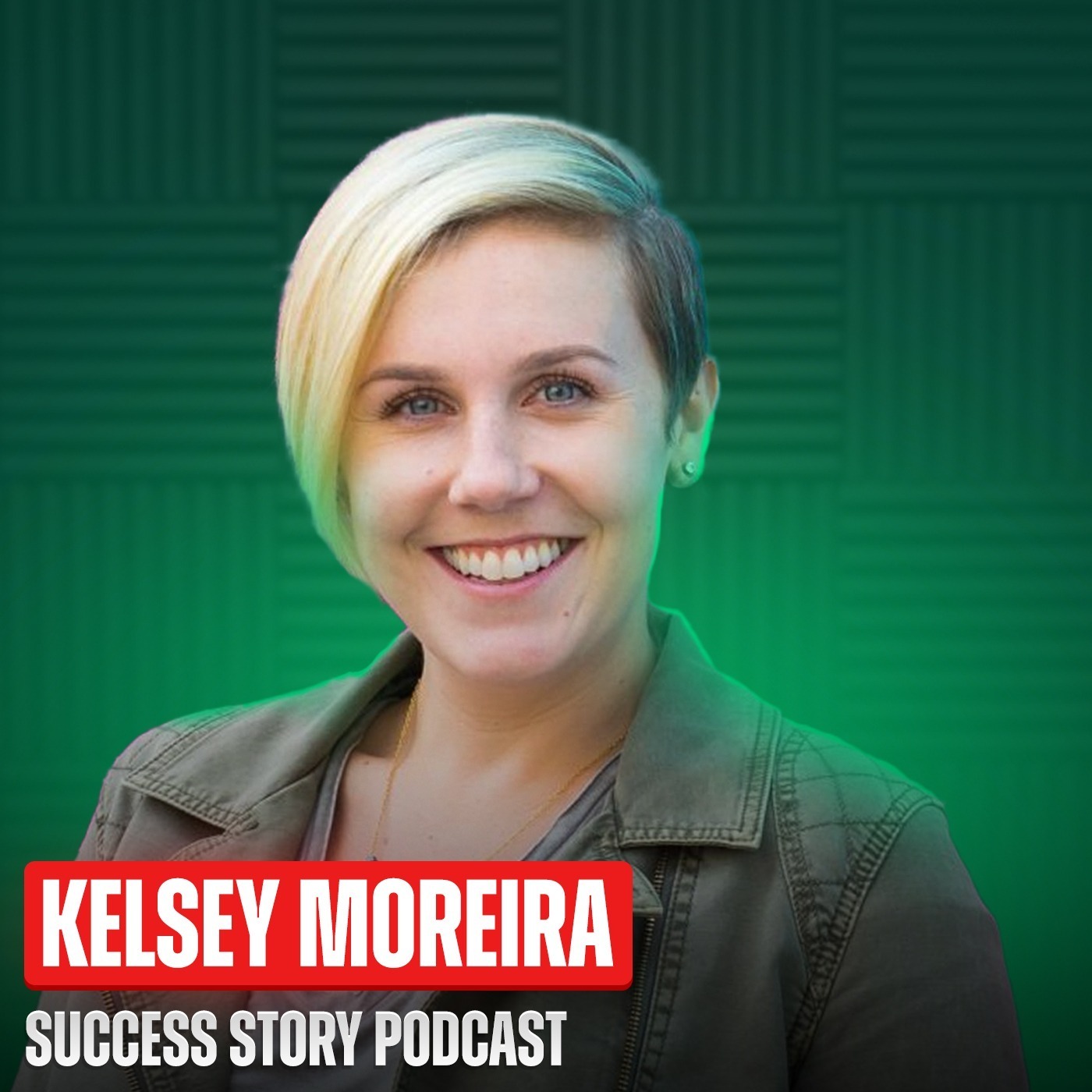
 Lessons - Quitting Chronic Alcohol Addiction | Kelsey Moreira - Founder & CEO of Doughp
➡️ Like The Podcast? Leave A Rating: https://ratethispodcast.com/successstory
In this "Lessons" episode, we explore the profound journey of overcoming chronic alcohol addiction and the inspiring leap from a corporate career to entrepreneurship. Learn from Kelsey Moreira, Founder & CEO of Doughp, as she shares her experiences with addiction, recovery, and building a mission-driven company.
Overcoming Addiction: Discover the courage required to confront alcohol addiction despite a seemingly perfect life. Kelsey shares raw and honest insights into her struggles, including hospitalizations and legal issues, and the pivotal moment that led to her sobriety.
Embracing Sobriety: Learn about the steps Kelsey took to maintain her sobriety, including finding support through Alcoholics Anonymous and the ongoing process of recovery. Understand the importance of recognizing personal limits and making life-changing decisions.
Promoting a Healthy Workplace: Understand the impact of Doughp’s alcohol-free policy at company events and its role in creating an inclusive and supportive atmosphere. Kelsey shares practical tips for other employers on implementing mental health and recovery-friendly policies.
➡️ Show Links
https://successstorypodcast.com
YouTube: https://youtu.be/Nfv9DwK50GY
Spotify: https://open.spotify.com/episode/0zFMi3tuGVhnyQeeGHdyoF?si=Q6imN7okSXSoC5nZ79UuVw
➡️ Watch the Podcast On Youtube
https://www.youtube.com/c/scottdclary
Advertising Inquiries: https://redcircle.com/brands
Privacy & Opt-Out: https://redcircle.com/privacy
What gave you even the courage to stop drinking when there was nothing negative going on in your life? Because that's a pressure situation, especially if it was a social thing. But then also, what gave you the courage to jump from Intel? How do you manifest this and bring this forward in your ideas and the decisions you make? Yeah, two big jumps in my life. You know, the choice to say like enough is enough. I got to get sober. And I think though everything is put together and perfect on the outside seemingly, right? You always know. You know, the individual knows how their relationship is with alcohol. And like I mentioned, those close to me who had gone through the ordeals, you know, right alongside and my poor parents, like through college and beyond constantly being like, okay, like let's see what the phone call is from Kelsey this weekend. You know, or if she's using someone else's phone because she lost hers. But you know, as she hospitalized again, I got hospitalized twice for over consumption of alcohol, you know, carried out of a party on a stretcher because I was blocked out. I'm a, you know, five foot to 120 pretty much was all through my college career as well. And like that, you just can't take the levels I was drinking at at that size. So those things happen in getting tickets for minor consumption drinking. I lied to a police officer. I told him information from a fake ID. So got false reporting to law enforcement. These little, you know, tickets and issues throughout the time. And then the way I would treat those close to me, you know, when I was drinking just weren't a reflection of who I wanted to be. The final hurrah of coming to the decision to get sober, sober. I'd gotten sober for four months when I was 21. This idea of like a reset. I was like, maybe if I just stopped drinking for a few months, I'll be okay. You know, and it's really, you know, this is the joy of alcoholism. You just are trying however you can to navigate a path that lets alcohol stay in your life. Because you just don't want to believe that you're going to have to be different. You're going to have to be the one that doesn't drink. And, you know, why is this happening to be? So after that failed attempt and then now I'm 24 at the time feeling like, you know, it's been about six months since the last episode, if you will, of acting out drinking. And then I'm going on a business trip to Barcelona. And from the moment I got off the plane, basically, you know, I got to the hotel and they gave me a half bottle of wine as like the welcome gift, you know, so I started drinking at like 10, 30 in the morning. And on it went and I came to at 3, 30 in the morning in a stranger's apartment. I had cheated on, you know, my boyfriend of four years and had to have that phone call the next morning to explain all these things that I was just horrified by and couldn't even had to pick the pieces together and even remember what had happened. And yeah, just feeling this absolute utter moment of clarity of like, I never want to feel this way again. I'd had so many mornings apologizing for stuff I barely remembered. And now here I am, you know, where I should be in my, I'm in this career. It's been already nine years at this time, I believe nine years within tell and feeling like I should be in this new phase of life. And this is happening, you know, still I'm still having all these issues. I just said enough's enough, you know, alcohol is just not worth it. And I found an English-speaking A meeting in Barcelona that morning and I'll be six years sober this September. So the recovery one is many chips away at the iceberg, you know, you're like this stiff thing that's just like, I don't want to accept there's a problem. I want to find another way you're just like holding on tight. And it's like enough little chips away of these nights, of these incidents, of letting down people I loved, of letting myself down that finally, you know, enough was enough. And I broke into saying I got to make a change. So that's the recovery jump. The intel jump is another story on, you know, having that decision to say, my happiness and joy was worth the pursuit of that risk, you know, was worth the jump to see what, what could happen. I honestly, as the idea started to grow with fur dope in my head, I started to think the bigger risk was like, what if I didn't do it? How sad and upset would I be if I saw someone else, you know, down the road? Trying this idea that I have and me not having done it and always wondering what if. And the corporate life though, it has its cushions, you know, there's all these nice cushy things around the organization, the structure and the support that you have, I always moved like a bit too fast, you know, I always felt like I was running like at a speed 10 on the treadmill and intel was like out of four, you know, it's just is a slower pace of things to get stuff done or people, many layers above you, making decisions that your program is cut, you know, the budget that was for this thing you've been working on, pouring your heart and soul into, it's not going to happen anymore. We're moving this way. And you're like, what like by child, you know, I just wanted, I thought what a cool chance to have the ownership over if it works or not. At least it's going to be on me and that was that was worth taking the leap. So February of 17, I got the idea. April 20th, 2017 was the first day of my sabbatical with intel. And that was the launch for dope. That was my first day selling dope cookie dough and made a hundred pounds of dough at a commercial kitchen in Oakland, carted it over to San Francisco and went to Dolores Park, set up this cart I had had built for like 500 bucks and we sold out in three hours. And I was like, oh shit, people really like cookie dough. This is going to be a thing. Let's go, you know. And so you, you, when you take a sabbatical from intel, is that cutting your paycheck, day one, 10 weeks paid. Yeah. So 10 weeks paid and usually people travel, right? I actually had a like backpacking trip through Southeast Asia that I was going to go on of which my dad was super freaked out about. But then when I told him that I was going to start this cookie dough company and potentially quit my job, he was like, what about the backpacking? You know, maybe we should just do that. I'm sure, you know, those thoughts crossed his mind. He was a little, a little nervous about this, this concept I had, but the 10 weeks was a gift, you know, to be able to say with a safety blanket of sorts, you know, that I could go back, you know, if it really didn't work. But at the end of the 10 weeks, I was like, I couldn't even come in to turn in my laptop because I had two events in San Francisco that day. I was like, I'm going to have to come down to Santa Clara on Monday. You know, this, this thing is, is really happening and I'm going to pursue it. So my manager at the time, he was super supportive and, and all that. So I definitely felt like they got to watch me spread my wings and, you know, it's been fun. I came back to speak it until earlier this year and, and share my journey, which was really cool. Full circle. How do you find this has impacted the culture at dope? Like, I'm just, so if I think I'm young, and I'm going to go work at a startup, because if I'm not mistaken, I'm doing some research and you tried to create a culture that doesn't include drinking or other drugs or other things, right? That's what, that's one of the tenants. But if I'm young, I want to join a startup. Well, I don't, I don't really get why I can't have drinks at a company party. It doesn't make sense to me. So what's the, what's the end result? Is it has it attracted talent? Has it pushed talent away? Has it attracted potentially the right people that you want to work with? I'm curious what the, the, the actual implication is for a company that champions this. Yeah. I mean, I think at the core of any authentic mission driven company, you want to have employees that are super bought in on what the mission is, right? You want to have employees that are like living and breathing it to some regard, or at least are super passionate in understanding the value of what you're trying to do. So for me, the idea that what we do would push anyone away is certainly like they probably shouldn't work here, because it's a big part of the impact we're trying to have elsewhere. It's a good, it's a good takeaway, yeah. So I feel like, you know, for us in, in my eyes and, and through our journey with dope, even from being a brick and mortar storefront, you know, having to interview more regularly right to get hourly staff working in the stores, to now being a remote company with a, you know, social media side, we've got customer support, and then obviously like the director rules on operations and, and marketing, it has helped immensely not only to attract the best talent, but to retain them, you know, to make them feel like they are able to be their full selves at work, they're able to talk about what's really going on. We have a mental health Monday Slack channel where we all share one high and one low from the last week, and like, I keep that real, like I really share with my staff when something's not going right, and I'm feeling out of balance, or I'm feeling super anxious, or something else is happening, and it's not a place of, oh, feel sorry for me, and it's not a place of, oh, I'm weak, and I'm not able to run the company now. It's like, I'm in touch with what's going on, and here's what, you know, what I'm doing about it, and it's okay, those, I think those moments when I've been able to share something going on with my life, have really opened the door for them to share. So we have a number of employees that are in recovery, which is awesome. And again, I think there are some companies in this old school mentality that say they would be an at-risk employee, you know, some, you know, with sober dates in 2020, even, and it's, it's like, and in 2021, and I'm here for it, you know, I want to be supportive, I want to be that employer that can be there, even if people are looking to get into recovery for the first time, or relapse and need to get back on the right track, pushing them away is a disservice to humanity, you know, and someone struggling in your company at that moment is when they need you the most to say, and to see through the issue and see that there's someone, a human struggling with something, and that you have an opportunity to help. So, for employers out there, like we did share a policy on our mental health policy, like a template version of the mental health policies on our blog. So that's something great to look at. There's also recovery-friendly workplace initiatives in, I think, the 13 states now. So really cool to see these structured ways of showing how real the problem is, how pervasive it is, what cost it's really having to employers to ignore it, you know, loss of productivity, et cetera, turnover rates, all of this, and things actionable things you can really do to change those, change those ways inside your company. It's like you said, it has to be a culture change, the decision to not have alcohol at client events, or, you know, when we did a client event in San Francisco, and it was like, we had a mocktail bar, we had a bunch of fun mocktails, all with cool dope names and stuff, and then had kombucha there, and like the whole thing. So there's fun ways to bring that around, and it's very important, even for companies who do allow alcohol to be present, you know, at events, really try to not make it the focus, you know, really think about how isolated that is, you're someone who's struggling, to feel like they need to drink, or they need to be a part of this drinking activity, to get the inside scoop, you know, that is a really scary place for someone in early recovery.