


 YouTube
 Apple Podcasts
 Spotify
 Overcast
 Castro
 PocketCasts
 Amazon Music
 Deezer
 TuneIn
 Podcast Addict
 RadioPublic
 iHeartRadio
 RSS Feed
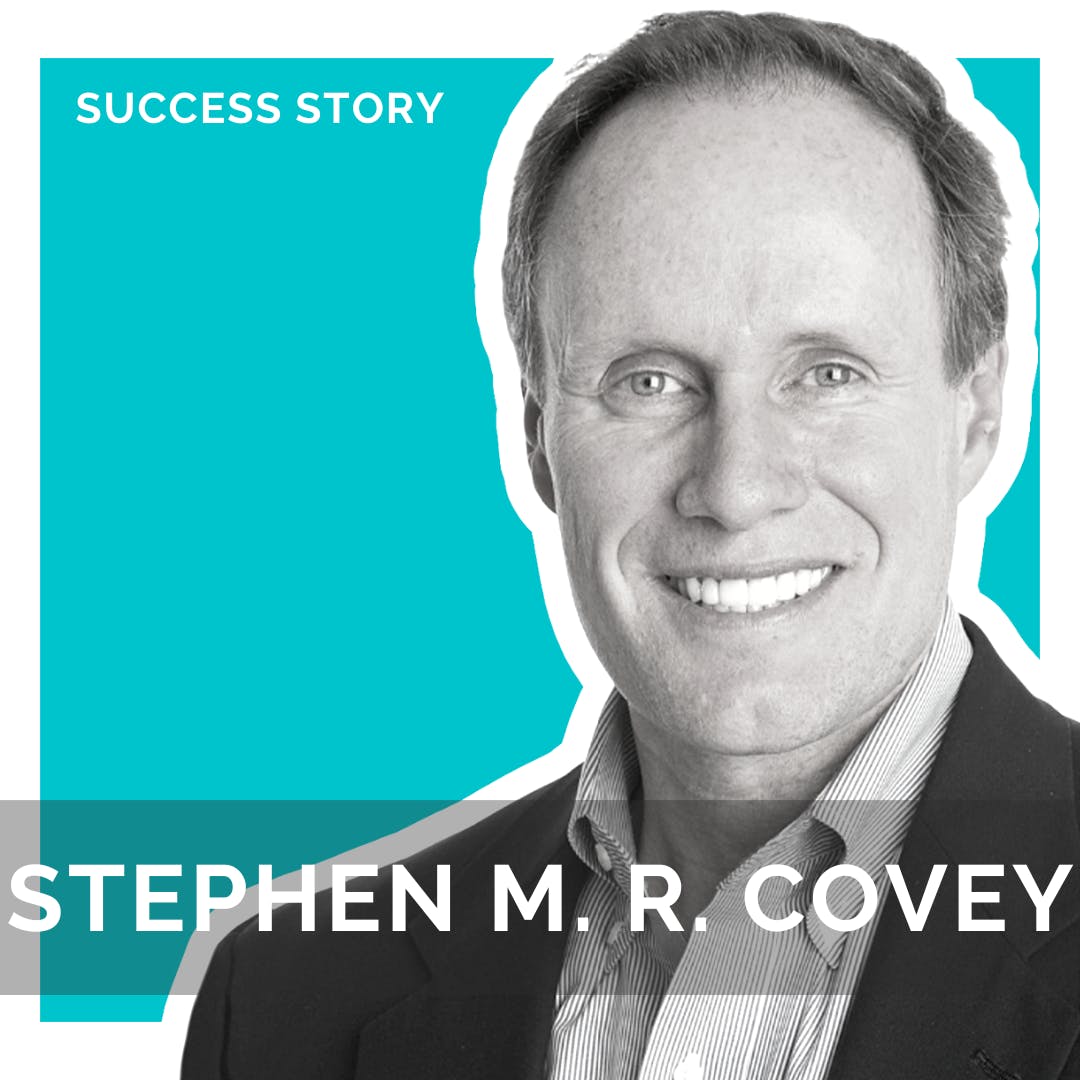
 Stephen M. R. Covey - Bestselling Author & Keynote Speaker | How to Trust and Inspire
➡️ Like The Podcast? Leave A Rating: https://ratethispodcast.com/successstory
➡️ About The Guest
Stephen M. R. Covey is a New York Times and #1 Wall Street Journal bestselling author of The SPEED of Trust—The One Thing That Changes Everything. He is the former CEO of Covey Leadership Center, which, under his stewardship, became the largest leadership development company in the world. Stephen led the strategy that propelled his father’s book, Dr. Stephen R. Covey’s The 7 Habits of Highly Effective People, to become one of the two most influential business books of the 20th Century, according to CEO Magazine.
As President and CEO of Covey Leadership Center, Stephen nearly doubled revenues while increasing profits by 12 times. During that period, the company expanded worldwide into over 40 countries, significantly increasing the brand's and enterprise's value. The company was valued at $2.4 million when Stephen was named CEO, and, within three years, he had grown shareholder value to $160 million in a merger he orchestrated with Franklin Quest to form FranklinCovey.
Stephen co-founded CoveyLink, a consulting practice, which focuses on enabling leaders and organizations to increase and leverage trust to achieve superior performance.
Stephen recently merged CoveyLink with FranklinCovey, forming the Global Speed of Trust Practice, where Stephen serves as Global Practice Leader.
➡️ Show Links
https://www.instagram.com/stephenmrcovey/
https://twitter.com/StephenMRCovey/
https://www.linkedin.com/in/stephen-m-r-covey-6400191a5/
➡️ Podcast Sponsors
HUBSPOT - https://hubspot.com/
➡️ Talking Points
00:00 - Intro
03:50 - Stephen M. R. Covey's origin story
09:23 - “7 Habits of Highly Effective People”, how has this book remained influential to date?
13:54 - Carving his own path in the FranklinCovey Association
20:45 - Where does leadership lie today?
26:30 - How to inspire your employees
33:22 - Maintaining your company and managing through leadership
36:37 - What does a perfect “trust culture organization” look like?
40:28 - How to hire and manage the right team
47:25 - How does Stephen define modeling?
53:17 - Where can people connect with Stephen M. R. Covey?
58:25 - Biggest challenge Stephen has overcome in his personal life
59:30 - What keeps Stephen up at night?
1:00:38 - Stephen M. R. Covey’s mentor
1:01:49 - A book or podcast recommended by Stephen M. R. Covey
1:03:18 - What would Stephen tell his 20-year-old self?
1:04:18 - What does success mean to Stephen M. R. Covey?
Advertising Inquiries: https://redcircle.com/brands
Privacy & Opt-Out: https://redcircle.com/privacy
Welcome to success story, the most useful podcast in the world. I'm your host, Scott DeClaire. The success story podcast is part of the blue wire podcast network as well as the HubSpot podcast network. Now, the HubSpot podcast network has other incredible podcasts like the salesman podcast hosted by Will Barron. Now, if you work in sales or you want to learn how to sell or peak at the latest in sales news, check out the salesman podcast where host Will Barron helped sales professionals learn how to find buyers and win big business in effective and ethical ways. Now, if some of these topics resonate with you, you're going to love the salesman podcast, the psychology of the perfect cold call, successful cold email trends for 2022, the four-step process to influencing buying decisions or the digital sales room, the future of B2B sales. If these topics hit home, you're going to love the salesman podcast. Listen to the salesman podcast wherever you get your podcasts. Today, my guest is Steven M. R. Covey. He is a New York Times and number one Wall Street Journal best-selling author of The Speed of Trust, the one thing that changes everything. As well as, he is the author of the brand new book Trust and Inspire, how truly great leaders unleashed greatness in others. He is the former CEO of Covey Leadership Center which under his stewardship became the largest leadership development company in the world. Steven personally led the strategy that propelled his father's book, Dr. Steven R. Covey, the seven habits of highly effective people to become one of the most influential business books of the 20th century, according to CEO Magazine, as well as, according to the fact that millions of copies have been sold globally in multiple languages. Now, what do we speak about today? Well, since he has taken on the mantle, he's become CEO of the Franklin Covey organization, and he's grown the organization to the extent and the influence that it has today, he is focused on additional leadership qualities that help create successful organizations, leadership qualities that he has pulled out from his own experience, as well as some of the incredible companies that Franklin Covey has worked with, many Fortune 500, many Fortune 100, Fortune 1000, as all the way to start up, he's worked with a ton. And we spoke about the main things that impact organizations. We spoke about trust and inspiration and how, as a leader of a person or a team or an organization, you have to focus on unlocking trust and inspiration in your team. So we spoke about how to build a culture of trust and inspiration, what a high trust culture looks like. We spoke about how to hire the right people. So we're great at hiring for competency, but how do we hire for all the other things that allow that person to be successful and to contribute to a culture, a high trust culture, a high inspiration culture. We spoke about how the traditional command and control model of leadership is no longer a viable leadership strategy, even though 90% of organizations still use this type of leadership strategy. We spoke about the importance of modeling, high EQ, high self-awareness within an organization. And then because he's worked with some of the most exceptional businesses in the world, he brought out some case studies and examples of businesses that are building high trust, high inspiration, and highly effective and profitable businesses. Let's jump right into it. This is Steven, MR Kavi. He is the CEO of the Kavi leadership organization as well as a multiple best-selling author. As to what I wanted to do, where I wanted to go. One was to work on Wall Street. I'd done that in the prior summer and very exciting. I had a summer job in between years of business school, got offered to go full-time, and that was really enticing because Wall Street was so exciting, big deals, and stuff like that. So that was one opportunity. Another was with the company I'd been with prior, Trauma Crow Company, which was in real estate development. Great national real estate developer building, big office buildings, and doing it all around the country, very exciting work, building these buildings. And I'd done that before business school really liked it a lot, and it had done well. And so that was enticing. So kind of these two mainstream exciting opportunities, one on Wall Street, one real estate development. And then another was to join with my father and a little teeny company at the time called Steven R. Kavi and Associates. He became the Kavi leadership center. But didn't have very many people. It was kind of small and just starting up. And so I debated, and to any outsider looking at this, it's kind of like, I don't understand, what's your decision point? I'd clearly roll out this last one. That's just a little, that's what's your dad, a little small company. But you got this big Wall Street opportunity, this big real estate one. And I mean, we're going back and forth, back and forth. And finally, I'd kind of narrow it down to between the going back to Trauma Crow Company, the real estate development, or doing this with the Kavi leadership center. And which was maybe, I think, 15, 20 people at the time. And I remember it came down to thinking about this. And I was a little reluctant to join up with my father kind of wanting to go out of my own, do my own thing, prove my own worth type of thing. But at the same time, I was intrigued because my father had yet to launch a new book that I knew was coming out called The Seven Habits of Highly Effective People. And I thought, this is going to be big. I'd seen it connect with people. I knew it was going to work. And I thought this could have a real impact on a lot of people. And that was yet to happen. And I thought I could be a part of this and could help guide it. But I still was debating. You know, this other is more mainstream, more exciting in terms of prestige and the like. And then my father asked me a question. He said, okay, Steven, you go wherever you want to go. But here's my question for you. Do you want to build buildings or do you want to build people? And that was an exciting framing to me because I liked building buildings. I thought what we were doing was really exciting. But the idea of building people was really what was deep in my heart and soul. It was developing people, developing people, developing leaders. And I said, you know what? I think I want to develop people and develop leaders, which for me represented kind of my why. Now there's nothing wrong with developing buildings and building buildings because that's also can be a very valuable thing. It just wasn't my highest sense of contribution and purpose. And meaning so I said, you know what? I do. I want to build people. So I went down that path and and a long story made short is six months after joining, we launched the seven habits of high-effective people book. And that really kind of just took off. And the business took off and the Covey Leadership Center really got established not only in the United States but all around the world. And today is as Franklin Covey operates in 150 countries around the world leadership development among the largest in the world at what we do. And so I was kind of an exciting moment in time in which I kind of got a sense of what really was my why and my purpose. And I was not as clear about it than as I am now. But the idea of building people who is really what intrigued me and tapped into a sense of a purpose and meaning and contribution. So I went on that path. And then along the way found a lot of other things that I wanted to say including my message on trust. And now this idea of trust and inspire. And really the whole idea of trying to bring out the best in others. So that's kind of a roundabout way of getting to where I ended up on the path that I am. I'm on, you know, focusing on leadership development. And you know with his new book Trust and Inspire how truly great leaders unleash greatness in others. That was this. That was the initial starting point deciding to build people. Amazing. And I think it's interesting that you chose that path and I'm happy that you did because now you look where the organization has come to and what it's achieved. Now I'm going to ask a quick question about the history that we're going to go into the future. So first seven habits of highly effective people. Why has that book and those lessons remained so influential? How has that sort of transcended all the different change, the disruption, the change in how we work, the change in how we hire and train and on board and even like the personal change in what we hold there. Because this book was this book was when was this book released? 1989. 89. So now we're 2022. And it is still it's still it's on my shelf. It was the first book that was given to me by one of my CEOs when I joined a company. So why do you think it stayed so influential and remain so influential? I think there's several reasons. I'll just highlight three of them. First I think it's because it's focused on principles that are timeless, that endure as opposed to just practices or techniques that you know my ebb and flow and go in and out with different times. Now these are enduring principles of effectiveness that worked in 1989. They work in 2022 and we're working 21-22 I believe because they're fundamental principles of effectiveness, integrity and fairness and trust and enduring principles service, contribution, these types of things. So that's the first reason. A second is because seven habits is really about moving from the inside out as opposed to kind of saying well the problem is out there it's everybody else. It's saying what can I do? Let's look in the mirror. I'll work from the inside out and take responsibility and own it and that is empowering to everybody no matter where we stand there's we can do things in our circle of influence and have that grow and expand and so that's it's so self-empowering to people of you know of how they can engage in these principles and take responsibility for themselves for their lives and and that gives you a sense of clarity and power in a world of change and disruption and people want and seek that to have a sense of here's what I can do within my circle of influence and enlarge that and I think that is self-empowering and finally I think that I liked how Jim Collins put it the author of Good to Great he wrote a forward for my dad's book that is being used today and in it he said he talked about how how the internet really was created in the late 60s but didn't really gain popularity or usage until you know the mid 90s and and because it was so complex and so cumbersome and it wasn't until there was a user interface a browser that happened with Netscape and others in the in the 90s that made the internet accessible usable because it needed a user interface and then he said that these principles of effectiveness have been out there for you know for centuries but what my father did in the seven habits was create the equivalent of a of a human effectiveness user interface a browser that brought them together together made them accessible practical tangible actionable that we could get our arms around of these universal principles that were existing for a long time he didn't create the principles he just created a user interface of human effectiveness the made this accessible and that's what the seven habits he has and I think it's a good analogy for a why it's so useful and so practical the idea that you know private victories proceed public victories and and you know be proactive begin with the end of mind put first things first just a really practical way of applying and implementing these universal principles that have been out there and so that's the idea behind the seven habits and I think it's really one of the main reasons why it's so useful and valuable to people even today and I think it will be 30 years from now and 100 years from now as well so we obviously know that this book has become almost like a like a Bible for people that are going to business and going to leadership and trying to upskill and level up themselves so your dad did some really incredible work now you come into the organization you're trying to carve your own path I'm sure that's a little bit daunting to say the least because you know the the name you know the the book that's been put out this been purchased millions and millions of times translated into different languages so now you're trying to carve your own path in the Frank and Covey Association and organization so these habits are effective for people and in leadership positions or not in leadership positions even the one could argue that every position should be some sort of leadership position whether or not you're managing the team or managing your peers but when you look to teach and inspire and give over new insight to the next generation of leaders how did you carve your path how did you figure out what more you could add on what hasn't been taught yet or what could be added on to or taught even better because that's what you've been doing over the past I don't I don't want to put a number on it so I don't want to aid you but you've been doing it for a considerable amount of time so where did you choose to go what did you choose to develop and learn and explore and this is obviously what you're taking to the world now yeah yeah well let me tell you how it happens I see that I've had two major career acts and the first act was when I joined I focused on helping build the Covey leadership center build my father's work and Scott almost by choice and by design I felt like I'm going to focus on the business side of this and I'm going to try to help build this company into a sustainable business and enduring business and go from you know Steven or Covey the man into Covey leadership center the firm the company and become bigger than just my dad so that so that it could outlive my dad and and could do all kinds of things and influence people all around the world and we had to create a business model and I felt like with my MBA and my business orientation and mindset that I could be a real contributor to doing that so I became our CEO and we had to figure out a business model you know we had a good value proposition that so we were growing but we hadn't figured out a good business model yet to make sure it was profitable growth and we was sustainable and we had to kind of work through that and I feel like that that's where I can make a contribution and also candidly Scott I was a little bit it was daunting having my father's name and you know Steven M. R. Covey he's Steven R. Covey just just one different middle initial and and I felt like no matter what I do it's not going to measure up to what he could do so I felt safer to say I'll go down the business path but in fairness to me I also felt I had unique gifts and competencies that could contribute well to the business side of this and that the company really needed the business side so I went down that path and and that was the first half of my career act one if you will and we did really well and we turned this into a business they became a global business and we became very profitable and we began to impact people and organizations all around the world then we did a merger with Franklin Quest this is the former Covey leadership center merging with Franklin Quest to form Franklin Covey and it was coming out of that merger as we you know like any merger we had our ups and downs and struggles and that because we had been arts competitors now coming together and we had to figure out how to do it we did took a little bit of time but we figured it out and and I realized in this process the importance of trust how trust changed everything when we first merged we didn't trust each other we're kind of two separate companies with different you know different vantage points viewpoints coming in because we'd been competitors we didn't have trust and I saw how everything slowed down took longer cost more got politicized and then we became aware of this that we're not achieving our potential because we don't trust each other fully we began to work on this we began to be haver way into greater trust we built it intentionally on purpose we worked at it we built high trust suddenly we could do everything better faster more creativity more innovation more engagement more commitment everything went up and I saw firsthand the high the high return of high trust as I had seen the high cost of low trust prior in the first part of the merger and I came out of this so inspired around the idea that trust matters it changes everything trust is learnable movable because we just moved from low trust to high trust and that that this was a real area of contribution that I could create and I suddenly felt like I found what I want to say and I think all the business background that I'd done from my first act gave me credibility to go into the second act of saying the highest leverage thing a leader can do is to build a high-trust team in high-trust culture because of how that changes everything and I learned how to do it and we've learned how to do it and we can help others do the same and that became what my really is I feel like my life's work what I'm doing now the importance of building high-trust teams high-trust cultures as a true differentiator and competitive advantage for any organization and for any leader and so I came out with my book The Speed of Trust the one thing that changes everything and now this new book Trust and Inspire how truly great leaders unleash greatness in others through building high-trust team and high-trust cultures and by inspiring people and so I found my voice in the very act of kind of leading the business and and then once I found that I didn't worry or care about comparison with my father because I was proud of my father I was delighted to be part of his legacy I felt a sense of stewardship and responsibility and and once I found my voice around trust I felt like I'm going to just do this and not worry about about anything you know being a poor man's version of my father because that didn't matter to me I felt like I found something of value to say that could make a difference in the lives of leaders and organizations and so I've gone down that path and it's been this is act two and it's been exciting and and I feel like I've made a real difference in the contribution at least I hope that I have Scott and I think I know I was going to say I think that what you're trying to solve for are the most difficult things to solve for in leadership and if we look at one of the points that you make you spoken about on past past podcasts in your book as well we're migrating from this traditional command and control model which actually it's unfortunate but when you're in a command and control model you don't actually need a ton of trust because people are just you say do this and they say yes and you say do that they say yes so there may be internally they don't trust your decisions but ultimately they're still going to do what you're telling them to do which is not again this is not a sustainable business model we see it more and more so if we look at the future well first I'd actually just like to get your opinion on where leadership actually lies right now to date in 2022 what are the observations that you see about businesses do you still see businesses trying to succeed with a traditional command and control model or do you see that being a business strategy and a leadership strategy that is going away very quickly both it's still in spite of all our progress we're still trapped a bit in the old command and control model we've become better at it though more sophisticated more advanced I call it enlightened command and control so it's a lot better version of it but still we're deeply scripted in our mindset in our paradigm that we too often still treat people like things just a more sophisticated advance enlightened version of it so I call enlightened command and control and the data shows it's still about 9 out of 10 organizations are still in some version of enlightened command and control or some version of command and control but to your point and you reference this they're recognizing that it's not working anymore and it's certainly not going to work with this new generation of workers of you know Gen Z and it's not working very well with millennials and and and and that this new world of work requires a new way to lead and the old model the old command and control isn't going to work that like you said that that's operating on trust but on on fear and on on on position and you know what people have choices and options today and people want a sense of meaning and purpose and contribution one they want to matter people want to be trusted they want to be inspired and the old model even the enlightened version of it to command and control doesn't inspire you don't build high-trust cultures that inspire people through command and control you can't collaborate and innovate through command and control so we need a new way to lead in the new world and I call trust and inspire and so I think that is the future leadership I think we are moving from command and control to trust and inspire and we're in that process of moving and I think we're further along in our in what we're saying and then what we're doing we're saying we need to move to the equivalent of trust and inspire but our practices and our systems and our structures are still too much caught in the old model of of command and control but we're recognizing for the first time this does not working very well and it hasn't for some time and we need to shift so we need to we need to become equally clear not only where we're moving from command and control but where we're moving toward I'm calling it trust and inspire you model you trust you inspire that is the new way to lead in our new world it's what Sachin Adela has done at Microsoft you know he came in and instilled a growth mindset he modeled he trusted he inspired and and and they call it modeling coaching caring and they moved they really revitalized the organization at a time when you know they still were big but they were becoming less relevant less innovative less impactful and revitalized the organization through his leadership style you know what Cheryl Bachelors did at Popeyes it's completely revitalized the organization through leadership style unleashing the greatness the potential inside of people through the style of leadership they saw the greatness inside of people and unleashed it and that's the kind of leadership that's needed today and that's where we're going it's where we need to go but you know what we're still in that process of getting there and we need examples men models and mentors of leaders that can help us do this and we need to become those kind of leaders to help us get there I just want to take a second and make the sponsor of today's episode HubSpot now pies taking candy from babies both things that are theoretically easy but anyone who's made a pie from scratch or attempted to pry a lollipop from a screaming toddler knows these things are in fact very difficult but you know what is easy integrating automating and scaling your business with HubSpot now the HubSpot CRM platform seamlessly transfers customer data into usable insights like what's the average time it takes us to respond to a customer service request or how can we get better at it the HubSpot service hub brings all your data and support channels in one place so your team can spend less time hunting for information and more time delighting customers plus seamless connectivity with marketing and sales hubs means every person on your team has a crystal clear picture of your customer easy as HubSpot learn how HubSpot can make it easier for your business to grow at HubSpot.com it's interesting because I think that you actually unlock something that's very important you don't just have a high trust culture because a high trust culture is great that means that you trust people to do the thing that's going to move the business in the right direction but if those people aren't inspired you can trust them all day long and then they're probably not going to be doing the thing that's going to actually get the business to the next level if they don't feel inspired they don't feel some purpose for what their work is they're never going to be giving the 110 percent that you would need from that person and that you would try and get them in a command and control so if people just think I'm going to trust I'm going to trust it everybody does the right thing but you have people that are completely disenchanted with the actual thought of showing up every single day and doing the thing that they're going to do the the trust model falls flat so it can't just be trust alone because trust alone people are going to be like well he trusts she trusts me to do whatever I want to do I'm going to apply for another job in my free time because I I don't like my work I'm going to start a side hustle that's going to take up most of my day because I don't really care about what I'm doing in my nine to five so you have to have the inspiration but that's such a difficult thing to wrap your mind around like how do I because you always say that oh you know you want all your employees to feel like their owners I mean you can give out some equity you can maybe give them some options but like it's very difficult to inspire somebody at the same level as the founder CEO people that own the business so how do you do this how do you actually do this yeah well I love how you framed it Scott because you're exactly right that the high-trust culture is half of it the high-trust culture that inspires that inspiration is the other half and you need both halves in our world today to differentiate to make a difference to to be the kind of organization in place where people feel like they can where they're trusted and the work they do matters and makes a difference and they want to make a difference and so how do you inspire well first of all let me say this that I think you've identified um you know to use the the Wayne Gretzky metaphor where he was asked what makes you so great at hockey and he says I skate to where the puck is going to be not to where it's been but to where it's going to be I think in leadership the puck so to speak where where things are going is towards inspiration inspiration and and I think inspiration is actually the new engagement the next frontier of engagement we've been focused on engagement for the last 20 years and it's a good thing I'm not going to downplay engagement it's vital to engage people so that they have that discretionary effort that they're giving that's a good thing we need to continue to move towards engagement but there's another frontier another level that's inspiration even beyond engagement and there's actually a study from Bain & Company that shows that inspired employees are yes 125 percent more productive than merely satisfied employees now you might expect that you know satisfied is not enough but they're even 56 percent more productive than engaged employees so another frontier level that we can reach when people feel inspired and inspiration is to inspire comes from the Latin term inspirari it means to breathe life into so you breathe life into relationships into teams and organizations into culture you light the fire that's within people it's internal it's intrinsic it's inside of them see motivation is external is extrinsic so you motivate people with care and stick that's that can come out of command and control and it's not a bad thing per se it's just that you're trying to move people through carrots through sticks to try to move people to do things inspiration is internal is intrinsic it's inside of people you're trying to light the fire within and let that fire burn and you know doesn't need constant in new incentives new stimuli thrown at it it can live on and if you can ignite that fire that's inside of people that can burn on for years and and that's a higher level that we're trying to achieve to tap into the desire for purpose for meaning for contribution I think that's where things are going towards inspiration to be inspired had that fire lit within I'll give you an example of this I was I went in worked with the Pepperdine University beautiful university in southern California and here's their I worked with Jim Gash their president and their cabinet and their team listen to the the school of business there the Graziato School of Business they establish a purpose that people really feel a sense of connection to that inspires them and they and they and they phrase it this way that that our purpose is not to develop leaders who are best in the world our purpose is to develop leaders who are best for the world you know best for the world leaders now to be best for the world you gotta also be pretty good in the world too you know so it's not saying it's not either or it's an ant but the overarching purpose is contribution to make a difference to matter best for the world leaders and imagine what that does to inspire the the professors the faculty the staff the janitor anyone working there feels like I'm part of developing best for the world leaders and in tapping to that sense of purpose a meaning and contribution that's what we want to do so that you know tapping into that that sense of purpose matters but I think it's even possible to inspire people when we do it through caring it as a leader that you care you connect with people through caring in a sense of belonging as well as connecting people to purpose meaning and contribution so it can be grand in the sense of there's purpose meaning and contribution but it also can be micro in the sense of there's just my my immediate supervisor my colleague my peer they care about me I feel the sense of caring and that inspires me I feel a sense of belonging and that inspires me and every one of us as leaders can do that everyone can inspire it's a learnable skill through a sense of caring and purpose as well as connecting people excuse me a sense of caring and belonging as well as connecting people to purpose and a meaning that's the idea it's learnable it's not just for the charismatic everyone can inspire so learnable skill yeah I was going to say it's you know like sometimes some of the points that you're bringing up it's not just for a leader who is a charismatic evangelical first class on stage public speaker when you're talk the things that you're talking about if I if we unpack them a set further there's sort of two things that I pulled out from that so you have an organization that has clear purpose mission culture and they actually focus focus on making sure that the the mission statement on the website is more than just the mission statement on the website is something that the whole company believes in buys into maybe even adds into but then you also have at a leadership level an individual level you have people that are just being very high EQ empathetic individuals caring for each other so it's something that permeates all the way throughout the entire organization and that's what I guess you're saying when somebody's living and breathing that every single day that's what actually gets them to go the whatever the 125 percent or whatever that number was yeah is that correct okay absolutely that's it's it's that simple and that difficult yes but I love you know your point is this is not just for the charismatic I think too often we've equated inspiration with charisma thinking you got to be this charismatic soul to inspire people but think about it Scott I bet you're like me I and I've been our listeners and viewers feel the same I know people some people who are very charismatic but who aren't necessarily inspiring because it's all about them and you know they might be charismatic but I don't know if that inspires me I know other people who no one would necessarily describe as charismatic but who are extremely inspiring because of who they are how they care how they connect how what they do matters so let's separate charisma and inspiration and everyone can inspire and you named it you inspire when you connect with people through caring through a sense belonging and then you inspire when you connect people to purpose to meaning and to contribution like Pepperdine University is doing and others are doing and we can learn to do that as leaders in both fronts and if all you do is a leader if all you do is focus on caring for others caring for people caring for those that you serve empathy compassion showing that that actually will inspire them when they sense that you care for them and and I like how Maya Angelo put it the great poet so like Civil Rights Advocate champion she said people I've learned that people will forget what you say they'll even forget what you do but they'll never forget how you made them feel and when you have a sense of caring that people feel in a sense of belonging that inspires like like almost nothing else and that will move the need on and we can learn to do that now we've okay so now we've sort of understood and we've clarified how organizations can better inspire but take it back to something that you have been highly focused on it even in your first book I want to just unpack trust a little bit more so what does the perfect trust culture organization look like you see it manifest in the behaviors you know people they talk straight in a way that also demonstrates respect so it's kind of it's kind of a rare balance a unique balance straight talk with respect because you can be too much straight talk where it's offensive you know too much respect where no one wants to kind of tell the truth because they don't want to offend so you know you've got to be high in straight talk and high in demonstrating respect you see transparency everywhere if people make a mistake they own it they write the wrong people people are loyal to each other meaning they speak about people as if they were present so they have a concernary issue they go to the person instead of going behind their back you see people take your responsibility and owning results you see people confronting the reality and take things head on versus kind of scourging it or evading that kicking the can down the road people are always clarifying expectations and then holding themselves accountable to those expectations they hold themselves accountable first so they can hold others accountable second you see people listening first and then demonstrating respect for what they hear you see people keeping the commitments that they make and then you see people also extending the trust not only being trustworthy but being trusting now I just went through a series of behaviors 13 of them that you see manifest in high trust teams high trust cultures and low trust teams low trust cultures is kind of the contrast the opposite of or the counterfeit where people rather than talking straight they're spinning everything and rather than demonstrate respect to everyone they show respect to some but not to others rather than being transparent they operate with hidden agendas so yeah they're partly open but they have another agenda behind it and and they often sweet talk people to their face but then that nothing behind their back and and they often get trapped in activity traps of producing the activity but not necessarily the result maybe they confront issues but then they're only giving lips nervous to it because they're still kicking the can down the road or maybe they're pointing the finger and blaming people instead of practicing accountability only at taking responsibility maybe they listen but not with the intent to understand they listen instead with the intent to reply and they often over-promise and then under-deliver and then the trust that they extend maybe isn't a deep trust and and so it's it feels shallow and and circumstantial and so you know variety different counterfeit things that get in the way of a of a high-trust culture and so I think you really look at the behavior that gets manifested and I find you know I just take practicing accountability owning it and leaders owning it versus finger pointing and you know playing the blame game and I can go into culture and if I see I can almost tell by that behavior alone how much blame game is going on how much finger pointing and tell you a lot about the level of trust inside of that team inside of that culture so you look at the behavior that's you know what the fly on the wall would see not just what they say but what they do and and one point on that even before we started we spoke about how important it is to be able to hire the right people well the culture that you're discussing is filled with the right people and now you going in as a leadership consultant you probably go into existing cultures where maybe you have a mishmash of the people that exude and and and do have the right traits the high trust traits the people that are really good people that naturally do these things you have a lot of people that maybe also don't so this is going to be a two-part question so the first part and then I'll go into the second the first part is how do you hire when you're hiring these people how do you figure out that this is the person that has all of these traits and then I'm going to ask if you already have a team what are the things that somebody could do to maybe move in the right direction and try and be a slightly better person but say you're a founder your early stage CEO you're hiring a team from the ground up I don't know how to find these people I don't know what questions to ask in an interview how do you figure out so that you can find these high trust people that will actually add on to the culture and build this incredible high trust environment yeah well you're what you want to do is you're trying to hire for both a combination of competence which we're pretty good at but also a character which we're not quite as good at doing and so that you can you know they you want to make sure we hire people of both competence and character we become very good at hiring for competence they're going to the skills needed in the like but we need to become equally good at hiring for character so that has kind of two halves the integrity half the intent half so on the integrity half you know we're looking for people that demonstrate integrity even when it's difficult so you might ask questions like can you describe a situation where maybe you were in an environment or a circumstance where you're trying to get a result in an outcome but it required to get that result or outcome to achieve what you needed to do you're required you to maybe either violate or go to the very extreme of the you know values that you believed in that you stood for where you felt really kind of maybe close to becoming compromised or maybe actually becoming compromised if you ever had that type of opportunity and maybe maybe no one has but maybe someone has where they where they ultimately decided that they were going to be true to the value even if it didn't it meant that it didn't deliver their result and and so that you can kind of see when there's a test of integrity do you still do the right thing or do you kind of go along with the flow and you know everyone else is doing it so you know like Warren Buffett said the five more the five most dangerous words in business everybody else is doing it but you might be violating principles or values or you know what your standards or ethics of some sort just because everyone else doesn't mean you should so you're trying to assess some measure of that another on the on the on the intent side is is is maybe describe um a situation where where um you're trying to see how they work together with others you know plays well with others and and works well so that you can see is there focus of me I mean mine or is it of we the team and mutual benefit and um and bringing people together teams together and you know it's we not I and it's mutual benefit not self-serving and and you know how you would ask it would depend upon your context or situation but you're trying to describe you know do behavioral interviewing or describe a situation where you tried to come up with an outcome that was better for everyone not just for yourself and and or another way of asking this is to try to get into areas of vulnerability of you know and in transparency of of um you know can you describe situations where where um you felt inadequate or short of what needed to happen where you didn't have the answers and how you handled it and if people respond with a well I've never felt inadequate never felt short change and I always had the competence you know they might be putting on a sense of I've got to show strength as a leader when in fact perhaps the greatest show of strength is that you are vulnerable and that you didn't have the answers in a situation and you said to the team I don't have the answers so let's try to create these together and here's how we'll do this and this is why I need you and why I trust you because you're better at this than I am at no having knowledge in this area and I'm not threatened by that I see that as a strength and you know you're looking for demonstrations of this this um this transparency this openness is vulnerability it's interesting Scott I was with that I'm a head hunter um a senior level executive you know search you know leader who recruits CTOs and CIOs into organizations at the highest level and he says look it's very easy for me to find people with the competence especially in technology I can find people with competence I really my challenge is find people with character that that show leadership attributes of transparency and vulnerability because if someone tries to put on an air that there there's no flaw there's no shortcoming they're perfect people won't follow that kind of leader because they're not real because I look for a leader who's vulnerable who's authentic who's real yeah who has shortcomings and weaknesses that they need to build a team around to bring strength to them because that's a leader who others will follow and the person that comes in and acts perfect I usually will eliminate early on and recognize that no one's going to follow them I look for a leader who's authentic and real vulnerable transparent now look that doesn't mean they don't have strengths and competencies and and that you know you can go too far with vulnerability too Brene Brown herself the who talks about vulnerability all the time says vulnerability without boundaries isn't vulnerability so that doesn't mean there aren't some boundaries it's just the means that you're real you're authentic because when you're when you're appropriately vulnerable people see you as real they tend to trust you they respond back with equal vulnerability and then together you can create things that you couldn't do otherwise so you declare your intent you declare yourself here's who I am here's how I like to work here's what works so that you know that's kind of saying I'm trying to hire people with both competence but also with character and that combination are people I can build trust with and that's that's that's one of on that side and that's a big area what was your area the question it was it was it was just related to the actually the third stewardship of trust and inspiration because we spoke about trust spoke about inspiring but I didn't speak about modeling yet and I think modeling is an interesting point because modeling is I'm in the organization I want to do better I'm a leader I don't know how to go about it I've sort of operated and maybe a traditional command control model my entire career what is the step that I can do yes my main point on modeling is that leaders go first so that so you want to be the first to demonstrate the behavior that you'd like to see so rather than waiting on everybody else if we're operating in a culture of spin you'd be the first to talk straight if we're operating in a culture of everyone's a respecter of persons based upon hierarchy and position you'd be the first to demonstrate respect to the least of the people to those that don't have a position or power but they're a human being you show respect to that person if everyone's operating with hidden agendas you're the first to open your agenda to be transparent to declare your intent to declare yourself you know make a mistake you're the first to apologize or make restitution even if others are covering up or hiding it you know if everyone's bad nothing ever behind the back you're the first to say I'm gonna go to the person and talk to them the point is someone needs to go first leaders go first it isn't mean you're perfect it just means that you're doing your best to lead out and to model the behavior you'd like to see in others and it's interesting it starts with humility because um you know we need to have both humility and courage as leaders humility that there are principles out there that govern encouraged to do the right thing even when there's a cost or a consequence and and just and to serve others not just self-serving courage but you know service oriented courage to do the right thing because of the right thing to do but it starts with this humility and there's data from LRN a consultancy firm that shows that leaders who are humble are 18 times more likely to inspire their people than leaders who are not the thing about that a lot of leaders are trying to you know show that they're competent and capable and they exude arrogance and hubress instead of humility but does that inspire people no not at all what inspires is someone that saying look I'm humble I'm got to work on this and that and and I am working on this but I'm getting better and and help me do this they still have competence they still you know they're not self-denigrating of I'm not capable so they recognize their principles out there and they need a team that all of us is better than just one of us and and um and they lead that way that inspires people you model the behavior you go first or the first to do it I think it's important to be the first to extend that trust and and and you know so that you are trusting and even inspiring because the very active extending trust also inspires people so those three stewardship modeling trusting and inspiring they're all connected they build on each other and when you model by extending trust to others a very active of trusting others will inspire them and being trusted inspires them so it becomes a virtuous upward spiral where modeling trusting and inspiring are connected but all of us can get better at modeling and and I used to have when I'll tell you about when I was working on this trust and inspire book Scott initially the focus was heavily on trust trusting and inspiring because those are you know that's in the name trust and inspire but the name is just trust and inspire because it was in juxtaposition to command and control it always had the modeling piece in it but at first I was kind of just saying let's just stipulate that that of course you got a model but over time I became clear we can't just stipulate it we have to become intentional about it we have to become deliberate about it modeling needs to go first and someone like Ken Shenalt former CEO of American Express he was such a model at what he taught at American Express about integrity he modeled it himself that people believed it and they and they were inspired by it and they followed it because he himself was that model and and leaders like that you know that's we want to follow them and and so you can't just stipulate modeling you need to become deliberate and intentional about modeling and we need to model humility and courage we need to also model authenticity and vulnerability like I mentioned earlier how we want to hire people who are authentic and vulnerable and we need to even model empathy and performance you know you got to you got to perform any leadership model that didn't have performance in it is missing something but the the idea of empathy being paired with performance is really an interesting idea because it's saying look you want to help others perform then understand understand them understand their context their situation so you can help them succeed and empathy proceeds performance in so many situations and you get better results when you start with that so that's the idea modeling comes first and you know as leaders we go first so many to go first leaders go first I love that okay let's let's let's do some closing thoughts on on on the book I want to get the socials the website where do people go because then I want to do a couple rapid fire to close it out so anything that we didn't go into that you wanted to bring up but also where should people go to find out more about Frank and Covey the social handles all of that okay beautiful so I would just say this that you kind of framed it up front Scott that we're moving from command and control to trust and inspire it's a journey it's a process and I'm making the point that for all our progress we still haven't shifted the paradigm the mindset we still too much manage people and things similarly and trust and inspire is saying you manage things you lead people so we need to be good at management I not hear the bash management when you good management when you good leadership but we need to be good good at managing things and good at leading people too often we begin to manage people as if they were things because we're so good at management and and if you start to manage people like things you'll end up with no people and a lot of things because people will go elsewhere they won't want to be a part of it so manage things lead people and and I also want to say this that trust and inspire is not the opposite of command and control it's a third alternative to it so look at this way the opposite of command and control is what we might call abdicate and abandon see there's no leadership there at all I'm kind of just saying hello it's all hands off it's a lot of a fair to the extreme so if command and control is kind of excessively hands on abdicate and abandon is kind of all hands off completely without good leadership now trust and inspire is hand in hand it's it's really a third alternative it's still strong and it's kind of easy to kind of look at this and say well don't be in tough environments have to be command and control and say no you can be trust and inspire that's still strong you can be authoritative without being authoritarian you can be very strong without being forceful you can be compelling without and persuasive without being compulsory you can be you know in charge and have control without being controlling so trust and inspire is really a third alternative it still has high expectations high accountability you know low expectations and low accountability doesn't inspire anyone so we still kind of are strong it's just it's just saying there's a better way to lead in this new world of work that's a third alternative that's hand in hand that's it's working with people not just doing things to them or even for them it but with them and it inspires them so it builds a high-trust culture that inspires that enables us to collaborate and innovate stay relevant in a changing world that's what we need and we need to get there we're on the journey and I just and I try to lay out kind of the paradigm that you start with the belief that there's greatness inside of people so my job as a leader is to unleash their greatness and and so forth a number of fundamental beliefs and then those three stewardship you model you trust you inspire so the point is we need this kind of leadership and we can become these kind of leaders I think the biggest barrier to becoming a trust and inspire leader is that we think we already are one and it's because we say hey I'm not commanding control therefore I must be trusting inspire but there's probably a ways to go still for all of us myself included have how we can become better at modeling at trusting and inspiring and then we can become increasingly a model and that model can become a mentor and we can be the Sachsen Adele on the Cheryl Batch Elder that become become the model that can help others do the same as we unleash the greatness inside of our people and our teams everywhere so it's a journey this book trusting inspires about how to proceed on that journey I think most people want to be on the journey I think they are on the journey this is about getting there and getting better at this and so if you're interested you can go you can buy this book anywhere you can go to the socials trustinginspire.com there's stuff on the book and materials you can follow me on Twitter and on LinkedIn and on Instagram is at Stephen M.R. Covey so Stephen M.R. Covey and love you to do that to engage with me and and really to join me and and you Scott and many others to to be on this this journey of bringing about a renaissance of trust in our world we need more trust in our world today and we need more inspiration and we need trust in inspire leaders that can do it so join me and others in bringing about this kind of better world for all of us I love that great okay let's do a couple rapid fire to close this out and you can be as rapid or as not rapid as you'd like but so the biggest challenge that you've overcoming your own personal life my biggest challenge was when did we did the merger and I suddenly found myself not trusted by half the company and I prided myself on trust this is where the trust book came from when I felt misunderstood and half the company didn't trust me and I felt unfairly maligned and I had to kind of own that take responsibility take it head on and learn how to create trust intentionally on purpose that turned that crucible that biggest challenge I've had turned into my strength ultimately in that it gave me the insight and the courage they earned as I emerged on the other side to say I want to write about trust and I've been on both sides of the equation and it's not fun being on the low trust side I should like it being on the high trust side I had to earn that insight what keeps you up at night now what keeps me up at night is figuring out how I can best really impact my my and leverage people with this message and idea so that I'm not just speaking to the choir sort of speak but reaching people that maybe wouldn't listen to my message at first glance for whatever reason that I feel like my cynics my critics what if I could find a way of showing how this could be relevant to them too and so that I expand my circle of influence and not just speaking to my same audience and and so I'm trying to be relevant to people that I haven't been relevant to in the past with showing how this is a better way to lead in a new world and I think that's why I like to really highlight this is not soft this is strong it's too easy to label this as soft and I think this is actually a greater form of strength in leadership today if you had to pick one person who's been an incredible mentor obviously there's been many but pick one person who's been a great mentor to you what did that person teach you it was my father he taught me trusting inspire leadership by who he was he modeled he trusted me inspired me brought out the best of me he saw potential greatness in me that I didn't see it myself he helped me come to see it in myself and what I learned from him is that real leadership is seen and communicating people's worth in potential so clearly that they come to see it in themselves as the greatest measure of being a leader is that I can see the potential in others I can communicate the potential I can help them come to see it in themselves my father helped me do that I saw him do it with others and I think that's the essence of what this trust inspire book is about is helping leaders do the same for their people and that is I'm seeing the greatness communicating the greatness developing the greatness and unleashing the greatness inside of people and that is real leadership I learned it first from my father what would be a favorite source to learn from a book a podcast something that obviously isn't your book that you've found influence your life well I mean it's not my book but my father's book is a fabulous one you knew I was going to know that seven happens if I had affected people but there have been many many other influencers in my life you know from Jim Collins and Good to Great and and love his work and and and many many others Doug Conant and love his work on the leadership blueprint I wrote the forward for his book it's brilliant he's brilliant many other leaders I mentioned Cheryl Batchelder her book is Earth service you know servant leadership that whole approach of philosophy trust inspire really is a way of operationalizing the servant leadership mindset and idea so many people like that that are out there I also will say this I my again I'm giving a little bit biased towards people I'm connected to but I love my my son Steven H. Covey he has a podcast called paradigm shifting books and it's on the top 40 books for any personal professional development to help shift your life the paradigm in your life the thing is wonderful if you could tell your 20 year old self one thing what would it be be patient and and keep the the faith in the vision of of of contribution and and and I'll tell you what you know I I felt like I had a lot to do but I felt I kind of had to go through act one before I could go to act two and and that I think my act two my my my thought leadership work now is better because I went through act one which I paid the price and earned the credibility of doing it as a practitioner and I wanted to kind of skip but I had to kind of earn that and pay the price so have the vision but then be patient pay the price work hard a little bit of Angela Duckworth the grit perseverance and passion and get through that and then you'll be in a better place of of being able to make meaningful contribution and then last question what does success mean to you success to me means that I'm I built relationships of trust with all stakeholders it's not just it there's trust there in that and that trust includes that I've got character and I've got competence so I'm delivering results but I'm doing it the right way and I care about the people I'm helping them grow so yes you got it you know I that there's there's trust in the relationships and and but it's not just with some it's trying to do it with others because you know you might build trust with some people but then lose it with others and if you have success and have financial success but you lose the people that are close to you and the relationship with those that are around you that you care about and with family and others that came at a price that maybe wasn't worth it and and so I think it's it's relationships of trust and I also will give one more addition to this my I'll use my father's framework for it he talked about primary greatness and secondary greatness and you know secondary greatness is achievement and and and success by traditional standards of impact on this man that's a good thing nothing wrong with it but primary greatness is is about character about who you are it's about those relationships of trust and that that is really even deeper nothing wrong with secondary greatness achievement but we want to make sure we always lead out with the primary greatness with our character who we are and with our relationships and and building that so that that always is the forefront that it's about purpose it's about meaning it's about contribution life is about contribution not accumulation and contribution is primary greatness accumulation could be secondary greatness and I don't want to downplay that secondary greatness can be good you want to make you know you want to do well in your work and your profession but make sure it's always about because you want to make a difference you want a matter you want to contribute I think if we keep that primary greatness in mind contribution and character that will help us in the other things that also are important to us you know to contribute to to do well and to achieve that's a good let's keep it to the lands of contributing contribution