


 YouTube
 Apple Podcasts
 Spotify
 Overcast
 Castro
 PocketCasts
 Amazon Music
 Deezer
 TuneIn
 Podcast Addict
 RadioPublic
 iHeartRadio
 RSS Feed
 Lauren LoGrasso, Nationally Syndicated Podcaster, Actor, Singer | Unleashing Your Inner Creative
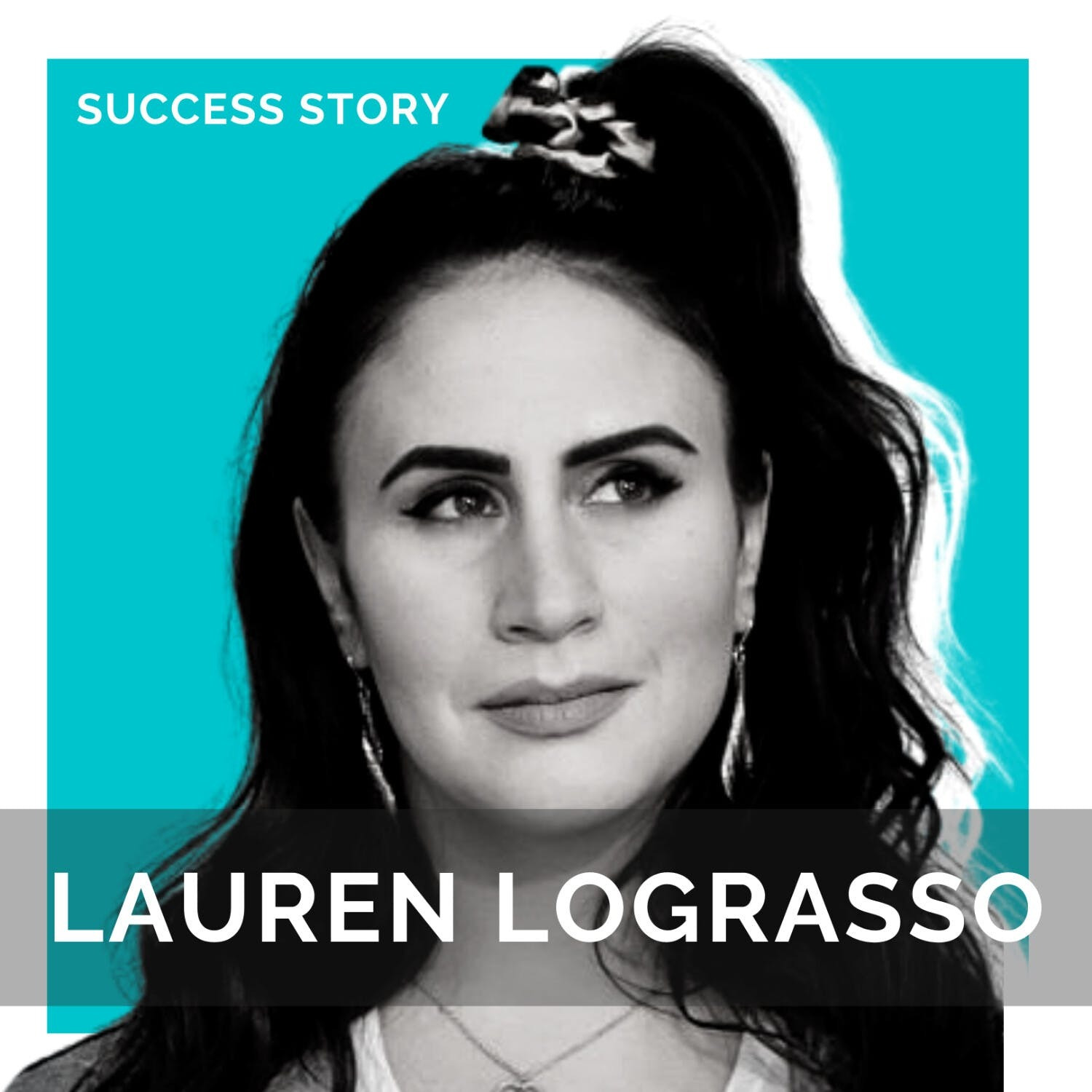
Lauren LoGrasso is a captivating Los Angeles-Based Singer/Songwriter, with Detroit Roots who sings in the genre of soul pop. Some career highlights include working with Grammy-Award Winning producer, Jeff Bova, having her music placed in the award-winning film, Cats Outta The Bag, playing iconic venues such as House of Blues Sunset, The Viper Room, Hardrock Cafe and getting featured on top shows on both SiriusXM and Terrestrial radio. Her 3rd release titled "Like a Bomb" is out now followed by an EP in the summer of 2020!
She is also well versed in podcasts, currently producing; The Goop Podcast, Yoga Girl: Conversations from the Heart, She Rates Dogs: The Podcast, her own podcast Unleash Your Inner Creative as well as other new projects cued up for 2020-21.
Previous work in media includes her time at SiriusXM producing Conversations with Maria Menounos, Arianna Huffington's Thrive Radio, Seth Rudetsky's Seth Speaks, Sam Roberts' show, AfterBuzz TV, Brené Brown’s Unlocking Us, Girlboss Radio, Lauren Conrad: Asking for a friend, Meaningful conversations with Maria Shriver and Self Service Podcast.
Show Links
https://www.instagram.com/laurenlograsso
https://www.laurenlograsso.com/
https://twitter.com/LaurenLoGrasso
Our Sponsors:
* Check out Factor: http://factor75.com
* Check out Factor: http://factor75.com
* Check out Justin Wine and use my code SUCCESS15 for a great deal: https://www.justinwine.com/
Advertising Inquiries: https://redcircle.com/brands
Privacy & Opt-Out: https://redcircle.com/privacy
Welcome to the success story podcast, I'm your host, Scott Clary. On this podcast, I have candid interviews with execs, celebrities, politicians, and other notable figures, all who have achieved success through both wins and losses, to learn more about their life, their ideas, and their insights. I sit down with leaders and mentors and unpack their story to help pass those lessons onto others through both experiences and tactical strategy for business professionals, entrepreneurs, and everyone in between, without further ado, another episode of the success story podcast. All right. Thanks again for joining me today. I am sitting down with Lauren Legresso, who is an executive producer, podcaster, singer, writer. So she spends her days as an executive producer for some of the best podcasts at Cadence 13, including the group podcast, Lauren Conrads, asking for a friend and a variety of other female lead podcasts. She also hosts her own podcast, unleash your inner creative, and she dedicates whatever spare time she has left to music career. So singer, songwriter, three singles out right now, rise, wrote to glory, and like a bomb. So podcast, producer, turned, podcaster, turned singer, songwriter. You never actually left any of the hobbies, just kept adding on, but thanks for joining me. I appreciate it. I want to sort of understand, you know, your story. How did you, how did you turn into what you are right now? Hmm. Very good question. Well, thank you for having me on. We had a great chat before this started, so I can't wait to get into the meat of it. But as I was telling you, I was born and raised in Detroit. I went to school at Michigan State. I got a BFA in acting, a BA in communication. I needed three more credits to complete those two degrees to get the two pieces of paper. I applied for an internship on the Ellen show and one for an internship on series exam on the Broadway station. I ended up getting the one on the Ellen show like three days before the Broadway station came to me and that one was paid. So I'm like, well, that seems like a pretty good deal because I can move there. I can have a little cash, settle it. So I ended up going there about a month into it. I was seeking improv classes and acting classes because at this time, my main goal was to become an actor. So I ended up deciding to stay the last week of my internship at the Ellen show, which was four months long internship. I got my first ever acting gig. I joined SAG after I'm like, oh my gosh, it's happening. I'm going to be a big star. I'm going to be on the WB lot. There will be a trailer. Everything is coming up roses. Went home for Christmas break, came back. It was Cricutville, USA. I had an agent that left town without telling me. It was very bizarre. I would go on all these auditions. I wasn't sure if I was auditioning for something or maybe they were plotting to murder me or I was on a reality TV show. Anyway, acting was not going the way I wanted it to. I still loved it, but it was almost like an abusive relationship where I felt like if acting was going well, I was a good person. If it was going poorly, I was a bad person. It was during this time. I'd always sang, always done musical theater, but it was during this time that I first picked up guitar and randomly enough, as I would start to fall asleep at night, that stage between a wake and a sleep where you kicked your leg and you wake up. I started writing songs, and so I took these songs, put them together with the guitar. I found a bandmate, and we started playing all around L.A. Within a year of writing my first song, I played House of Blues, Hard Rock Cafe, The Viper Room, all these big venues. At the same time as I was driving to these gigs, I'd be listening to Serious XM Radio, and there was a show that was hosted by a guy who was from Detroit. At that time, I was super depressed, like, downtrodden, and so I would listen to his show, and he'd talk about all these, like, local Detroit things, and I pretend like I was at home in Michigan. It was during that time that I realized the transformative power of audio to make somebody feel less alone. I started saying, I want to work at Serious XM someday. I want to work at Serious XM someday. Trek forward like a year or two, I end up getting a job hosting at Afterbuzz TV. I meet Kevin Undergaro, I'm Maria Menunos, who introduced me to this woman at Serious XM. I tell her how much I love radio. I find out she created all the radio shows I was obsessed with, so she was like my radio Jesus, and I pitched her a list of, like, 100 ideas. She ended up creating a position for me at Serious XM, so I was on air with Maria, and I associate producer show, eventually moved up to producer, and then all the while it's still working on my music, working on my EP, and that's kind of how everything began. How do you, so you're doing all these things at once, how do you maintain these things so that they don't drop off, because I find a lot of people have passions and hobbies, but you just kept it going. And is that intrinsically motivated, is that just a weird personality course that sort of drove you to eventually be successful at everything, or was it like a purposeful, I have to keep the grind up on the song, I have to, I want to do my own podcast show while, you know, starting your career, how did you do that? I think it's a yes and thing, because I always have been this way. I mean, in high school, I was doing all these different things. I was on student council. I was in choir. I was in the plays. I was, like, you know, heading up all these different departments and NHS and like the Italian club and all these things. And so, and that continued in the college when I got two degrees in four years and was like, I would do my radio show at night right after, like, I would pull like 16 hour days in college. I was a psycho. And so I think it was driven, driven, not a psycho. Yeah. I mean, it's weird. Like, I think, I always bring it back on my, on my podcast to like the inner child, like, look back to who you were as a little kid and you'll get the answers. Like, I was on swim team in fifth grade and I got the work course award. And I didn't really even understand what that was, but I think it's just because like, I'd come to practice and just swim and swim and swim and like, I would get so warm swimming in the water that I would have to keep a water bottle at the end of the lane. But I would never stop because it was just like, I was very competitive with myself. I've never been competitive with others just with myself. And I think the other thing is, so yes, it's a natural thing in me, long story short. And the other thing is when you have big dreams, you just have to keep going no matter how tired you are, no matter how much else you have on your plate. If you want it all and you want it all concurrently, especially, you have to make the time for it. I sometimes do wonder, like, would it have been better if I had section things off? Like, if I just focused on broadcasting, if I just focused on music, but at the same time, a lot of these industries are use based. So I felt the pressure to do them all at once because that's when you get the best results, I think. And I think that, you know, what I'm seeing with your particular career is you have momentum and you use that to drive everything else. Right. I've looked in some other interviews and you speak about all the things you're doing. And it just seems like all these different things that you're queuing up for yourself are sort of driving your entire brand forward for. I want to speak about the songwriting and understand some of the motivators for that. But first, I want to understand a little bit more about your podcast. Yeah. So what is your podcast about? So I started on leisure in a creative because I came to realize that a lot of the world suffering comes from repressed creativity. Number one, and that all the times I've been depressed have been when I've really been like reducing myself and making myself smaller and not acknowledging like the fullness of who I was. The other thing, which I'm sure you've talked about on this show and in your trajectory as an entrepreneur, is that it's one of the few things AI can't replicate. So not only is it super necessary for happiness and soul fulfillment, it's also a really tangible life skill that we need to have moving forward. I think I heard a statistic that in 50 years, 80% of all jobs will require creativity. So it's not just this like fluffy little thing. It's something that we really need. And so the goal of the show is to help people make creativity the filter for their life, to find their relationship with fear so that it's not in the driver's seat. It's not making decisions for them and set more fully into the essence of who they are and claim their right to have a dream and take up space plus just to give them really tangible tools to like get creatively unstuck and insight into the creative process. And is that like you mentioned a lot of the times in your life you felt that I don't want to put words, but like the the sadder times is because you felt like your creativity has been inhibited by something. So how did you overcome that? Well, I think just getting back in touch with the joy of it. I think the times when I really noticed that was when I was like focusing on my job jobs instead of my creative exploits. And I think I was letting like perceived failure or like where I thought I should be expectations of where I thought I should be, inhibit me from fully embodying the creative process and going toward it. And so I just tried to reignite my joy, go back to like the little girl, like I literally just two days ago posted a video of me singing Mary had a little lamb when I was two, like think about that little girl, she knew what she wanted. And I think the times when I actually followed the joy rather than trying to be so hell-bent and like control the outcome is when I've actually felt most expressed and weirdly when I've had the most success. And you mentioned that creativity is going to be something and I agree with you, it's going to be something that's going to, something that AI can't replicate and it's going to be so important for careers and jobs going forward. Do you have examples of how creativity can manifest itself in a career outside of for example a marketer? If somebody doesn't see the same vision as you. So you're saying outside of a marketer? So I, you know, I guess what I want to, I want to sort of double down because I actually agree with you, like how can creativity help somebody who doesn't see themselves as being in a creative role? So problem solving, problem solving is incredibly creative. No matter what you do, whether it's a job or your regular life, if you can't like remove yourself, see from above and find a new solution, keep your mind in possibility, you're not going to be a very apt problem solver. So I think that's one really great example. And that's going to happen whether you're a parent, whether you're in the workforce, whether you're just a human in the world trying to coexist with other humans. We have to have that skill set. So that's one really tangible example of making creativity the filter for your life. I think it's everywhere. To me, creativity is just being able to see things that people did not see before or going about a path that is not necessarily well laid out. And that can manifest in literally any area. And it makes you an invaluable employee, friend, family member, no matter what you're doing or who you are, opening your mind to your most creative self is going to make you happier and more valuable. 100% agreed. And I guess my follow up to that is it's very obvious like you can use creativity in a variety of different aspects of your life. Now you mentioned that you tap into like your younger self or your youth and you bring that out in some of your creative process that you've probably used for your podcast, for the songs that you write and we can sort of speak about that. But is there, if somebody has a hard time pulling out creativity, are there little hacks that you sort of uncover in your podcast that people can take away and sort of start applying creativity to the things they do in their life right away? Yeah, definitely. I mean, I think, so I also combine a lot of spirituality with the podcast, meditating has helped me tremendously, especially because a lot of people who tend toward creativity or, you know, just anyone who's alive right now, honestly, experiences a lot of anxiety. And so setting up your day so that the first few, at least your first few minutes of your day, you're not like going straight to your phone, gives you a really found good foundation to build upon. There's also something called the morning pages that is spoken about in the book, The Artist Way. This is a great tool to become a more creative thinker and also just to clear your mind of all the garbage that gets you confused and kind of spinning throughout the day. So what you do is when you wake up, get out of journal and just write whatever is in your head for three pages, three full pages of your journal. And it could literally be, I'm so tired, I don't want to do this. I'm so tired, I don't want to do this over and over and over again. I think the first few times I did it, it was that. And then as I went on, it's weird, like I even would write poetry sometimes, but the goal is just to get whatever is at the top layer of your mind out so that it's not basically controlling you and spinning you for the rest of the day. And whenever I've engaged with that practice, they're called the morning pages of the morning pages throughout my life, I have been so creative. I actually think I wrote two or three of the songs that are on this upcoming EP that I'm doing while I was engaging with the morning pages. So especially if you're like working on a creative project or you're trying to discover what your creative self is, I highly recommend that as a practice to get yourself going. Actually, you're the second person that's recommended that book. I'm going to have to check it out now. Check it out. It's a great time to do it because it's a course. When you when you decided to start your own podcast, you have so many passions seeing songwriting is one of them. Now you're podcasting and you're still an executive producer. How did you how did you decide or how would you recommend somebody to decide what their side hustle is or their side passion and how would they go about exploring that? I think you have to look at what keeps tugging at you. What keeps tugging at you when you you know, another thing is we live in a culture of constant comparison, right? And sometimes that leads to envy or jealousy. Now instead of sitting there and being like, how did they get it? I want to be like that. How come they get to do that? That's like the negative aspect of it. Instead of that, when you see someone who's doing something that makes you feel envious or jealous, use it as information. Oh, why do I feel that way? Is it because they're doing something I'd like to do? How can I take steps to do that in my life? I would notice like I would see people who are podcasting and be jealous or feel sad that I wasn't doing that. So clearly it was something and I was seeing it literally every day. I mean, I had a bird's eye view because I was producing these podcasts. So I'm like, I have all the tools that I need to make my own dreams come true. What's standing in my way? The only thing standing in my way is fear and me. So if I can just say, OK, what would be worse? Not doing this or doing it and potentially it's not well received or it is well received. And I have this amazing, incredible thing. But no matter what, it's going to be better than regret. So anyway, I would say look back to the little self. Look at what other people are doing that makes you feel a pull and use it as information and then kind of break down how you can make that come true and start taking baby steps. So once I had the idea for my podcast that I wanted to do it, it took a full 10 months for it to come to fruition. It's not going to happen overnight, even if you have all the information you need, you have to have a good product. So yeah, be patient with yourself and then start taking small steps to get there. And I know I was actually reading the article you did for Business Insider on how to monetize and how to build the audience and what. I thought it was interesting because that's obviously something that I was interested in. That's what a lot of people have trouble with. It's like that longevity, right? Right. Right. And 10 months isn't even a long time. But it's not a long time. But then it's like once you put it out, it's also awaiting. I mean, some people have overnight successes and God bless them. That's great. But that comes with a sunset of challenges too. But when you're slowly building something, having the stomach to keep going when you're not getting the instant success you desire, that's a skill in and of itself. How do you double down on your passion and your joy for something and your goal when it's not presenting itself to you right away in the world we live in? So I think that those are really, really important skills to build too is to focus on the actual objective versus where it's at in this moment. And it's for some reason it's fast-fringing you joy or you're putting in way more effort than you're getting back. That's when you have to look at something too. You know, most of the podcasts out there are quit within the first year. I think 85% of podcasts are no longer on within a year of starting. So a lot of it is just sticking with it. Yeah, and I think that I think that most, you know, I see lessons learned from people that started businesses like 20 years ago that we're just doing very small time business. And they just stuck with it for 10 years and 20 years. And now those are the people that are like the people that have the beautiful, you know, many mansions and they don't have any particularly special skill. They just sort of stuck with the trade and they built it a name for themselves and now they're driving the nice cars. But that's like 20 years later. But I feel like I don't know if it's just the social media environment that we're raised in now or that the con, again, it's like constant comparison. It seems like if it's not working in the week one, it's not ever going to work, which has never been the case for anybody, right? And overnight success is how many hours of work invested. And I think that you're sort of, you're like a living proof of that because I know that you built out your own podcasts and then how long, how long, okay, actually it's a good transition point. How long have you been actually working on music? Because you mentioned at the beginning, songs and whatnot and now you have some singles out. Right. So I've been writing music since 2000, officially since 2013. So how long is that seven years? Seven years. Seven years. Yeah. So when you consider, I used to think like, oh, why am I not all the way to the top yet with my music career? And I'm like, okay, slow down, Sally, that's what I call myself when I'm being a little bit of a jerk. Slow down, Sally, you know, you've been like acting for this many years and like it took you that long to even like get your start and you've been writing music for a year. You don't even have training in it and you're expecting to be this big star. Like I had to go take classes. I had to cut my teeth in the live scene. I had to meet a producer. I had to work the songs out. I had to figure out who I was as an artist. Sometimes delay of projects is God's protection. I just actually am putting out a podcast tomorrow where I show the full trajectory of this most recent single like a bomb. God, I'm telling you, when I first sang it, the bones of the song were good, but I sucked. Like I was not good enough to bring this song through yet. And so if something's taking longer than you want it to, either it's just not the right timing or you have to reconfigure the idea. It doesn't mean that you are wrong. It just means that you need to think a little bit more about this and what you really want to put out there and make sure you're ready. Not only for putting something out that is an impeccable product, but for the response you get back because it's also a lot. People don't think about the fact that like when you're putting something creative out in the world, it's like pushing out a piece of your soul and being like, here it is. Don't stop on it. Please. People stop on it. Yeah. And some people are going to, and you have to be okay with that because you're proud enough of what you put out and of yourself that whatever response you get back won't break you. And if I had done that when I was like 23, 24, I would have been broken. So I think that we have to recognize when we're being protected by the extra time something take and describe to me the feeling of getting that first single out. It was everything at once. It was so excited, so proud, so scared, so overwhelmed with the response of support I got from my friends and community. There was some really hard moments too. I did a whole podcast episode reading rejections I got from music blogs. And I mean, some of them are really funny and some of them are really hurtful. I did get some music blog response where they liked the song and they posted about it and published articles. But it was a lot of different things at once. Overall though, proud, grateful, love the song. Happy it's out there. Who was your biggest supporter when you were launching the song? Was it you? Was it your family? Like, what drove you? I definitely, my inner gut, like I mean, I said to my dad, I remember when I first moved to Hollywood, he's like, well, what are you going to do if this doesn't work out? I'm like, well, I'm just going to keep going. And I don't care if it takes till I'm 80, I'm just going to keep doing it. So get used to it, dad. And he's like, okay, you know, and he has been supportive, but he's a financial planner. So this whole having a creative child thing, it's very difficult. Yeah, it's hard. It's like speaking two different languages. We're constantly having to translate for each other. So I'd say me, but really the person who when I was at my lowest moments and didn't know if I could keep going and called home crying because Hollywood was chewing me up and spitting me out was my mom. She said to me, I remember when I was first out there, maybe like a year or two into my journey, Lauren, I believe in you and it would break my heart if you gave up on yourself. You have to keep going. I know you can do this. Keep going. Never, ever, ever give up. So I would say yes, it's myself, like I am very resilient and pick myself back up, but there have been a few times when I'm not sure if I could have had it not been for my mom. And I guess my other question, because you write all your own stuff too. Like you mentioned, your songs came from journaling. That's a very poor way to say it, but writing, writing in the morning. So why do you feel that it's important to write your own songs when you're doing so much? You could just hire somebody to write a song and you could sing it and sort of like, you know, scale that portion of your career a little bit easier. I tried singing other people's songs and it didn't work for me. And I never thought I could be a songwriter. I didn't know until I was 23 that I was a songwriter. So when I got the opportunity to do something that I had always revered so deeply, like in high school, I would take lyrics. I would listen to Billy Joel songs or Oni DeFranco or Fiona Apple and transcribe their lyrics and be like, oh my gosh, somebody understands me. I am seen. I am heard. What an honor it is for that, like, to be able to do that for somebody else to make them feel like they're not alone in this world. And so when I got that opportunity, you bet your bottom dollar, I wasn't going to pass that up because, you know, it's expressing a piece of yourself, but doing it in the hopes that somebody else will see their own reflection in it and that it just makes them, it's like a warm blanket going over you. And so once I discovered that piece of myself, I was just going to keep going with it because it felt more soulful filling than anything I'd ever done in my life. That's a good answer. It's a damn good answer. What are you, so in terms of podcasting, career, songwriting, singing, what are you curious about now going forward or is it just doubling down on what you've already accomplished? I'm curious how all the mediums are going to change. So for podcasting, obviously it's booming right now, but I feel like with anything big, there's always a moment of explosion and then things have to reconfigure. I feel like that's coming. So my curiosity lies in like, how can I combine the mediums that I love and how can I kind of like realign podcasting to make it like a new kind of section of the medium? Like there's lots of different ways you can do it. There's the interview shows, there's monologuing, there's NPR style shows, there's narrative shows, but I don't think that there's really been a good way that music has been incorporated with them yet. So my big goal, like as an individual, is to figure out how that can happen and then also just like revitalize, like create a new kind of like section of podcast if that makes sense. And with music, I want to like make that a bigger part of my overall career. Like I don't want it to be like this thing I do at night. Like I want it to be something that flows through everything I do, probably part of why I want to incorporate it into the podcasting space, but more than anything, I just like want to fit everything I'm doing under one umbrella. So I don't have to be like running all over town, like being like a little bit of this here and a little bit of that here and a little bit, it's like having different friend groups. It's so much easier if everyone could just hang out with everyone. So I want all my careers to be friends with each other. So no, I feel it because I think that anybody who has some sort of side hustle, like I don't know your specific circumstance and maybe you want to work with cadence 13 for forever. But there's always that inflection point where the side hustle is like, okay, while I'm making, I'm making maybe, I don't know what you're threshold for amount of money to be made, but say you make 50,000, 100,000, maybe much more than that. And you're like, okay, side hustle turns into my entire job, right? Yeah. So that's a, and you're not, you're not there yet, right? You're still doing everything at the same time. Still doing everything at the same time. Yeah. So she says it's aspirated. No, I really am. I'm trying to figure out how to, because I do believe in burnout. Like I don't think that this is just like a myth. I used to say, sleep is for the week, but I don't believe that anymore. I think that was like a jerky thing to say because I was tired and jealous of other people who are sleeping. So I am trying to find a way to not burn out. So yeah, goal would be, like I said, to get everything like kind of under one roof. I don't know what that will mean. I don't know how exactly my path will lay out, you know, life is so weird right now. I'm not trying to make any big decisions. Yeah, that's true too. It was an odd time. I am super grateful for the shows that I work on. I'm producing Brunei Brown's podcast, which has been like the biggest blessing during this time. She's just an incredible human being, but the content I'm working on is enriching my life so much. So that has always been like the greatest thing about, you know, working with Kate in 13 is they procure such incredible content. And so I've had the opportunity to learn from and work with and kind of like tune the voices of all these incredible people. So we'll see, we'll see what happens. Follow follow for more. Yeah. Lauren Lagrasso. Yeah. Um, I, I've just one more question. Then I have some like life insight, rapid fire from what you've learned over your career. So I guess the last question I really have to be quite honest is, is there something about podcasting or songwriting, singing that I don't know enough about to ask you that you think that, you know, you'd want to sort of speak about lessons for people that are trying to get into it or something. I think that the biggest thing is stop trying to figure out like what everybody else is doing right and figure out what you do right, like what's authentic to you? What can you do or say that nobody else in this world can say or do? And it's not because like it has to be like this incredible original idea, but it's because the way you say it and the way you feel it is unique to your own perspective. And I coach people in podcasting and if I were to coach somebody in music, I always ask them what their greatest pain and their greatest passion is. And the idea is usually on either end of that or somewhere in between. So ask yourself these things and then right from that place, it's incredibly vulnerable, it's incredibly, you know, it's, it's open. You're just open and but that is what ultimately resonates with people, whether it's music, podcasting, a business, it's taking your pain and turning it into purpose and so or taking your purpose and turning it into purpose. I think the other thing is to in regard to anything and I guess maybe this is veering into life information, but I think too often we look at our purpose as I am a singer, I am a entrepreneur, I am a whatever insert job here. I don't think it should be that specific and job based. I think that everybody should have a life piece of statement that guides every single decision, their career, their love, their family, their where they go to the grocery store. So it's much easier to achieve that purpose and also it gives you a stricter set of guidelines to live within every single day. So for instance, mine is to help people who feel unseen, unheard and unfulfilled, feel that through my work. And whether that's like me smiling at somebody as I walk down the street or me writing a song that supports the underdog and claiming their right to have a dream, it's all fitting into that purpose. And so if you're feeling a little lost right now, write out one sentence that you feel could encapsulate everything you want to do on this earth. And then you keep refining it like every day it's going to change because we get a little bit different and grow a little bit every day. But I think that that has been a huge game changer and how I view myself and my success as a person versus when I was like, if I'm not an actor, I will die. So I highly recommend that you're out your life piece of statement. I just wrote that down that's that is that is a I've heard a phrase different ways like you have to have like a personal brand or like your own mission statement, but a thesis statement. And I like that. It's just it's definitive, but not all at the same time, right? It has that it has that guideline and those guardrails ups, it steers you where you want to go. But you can do what you want to do in a multitude of different ways, if you want to teach people, if you want to help people, if you these are all very esoterical high level statements, but whatever they may be, you can do it in a variety of ways. And I love that very very insightful. Thank you. Oh, thank you. Thanks for receiving it. A few just like life insight questions that I want to pull out of you. These are these can be rapid fired. You don't have to go into too, too much detail, but it's your choice, whatever, whatever you feel comfortable with. Who are the three people that have been most influential in your life? Can my parents count as one 100% yeah, my parents, my grandparents and Billy Joel. Good. Good. I love it. What's a common myth about singing and songwriting that you'd like to debunk? The first thing that came to my head is that it's easy. I think a lot of people think like, oh, I could sing. I've been taking voice lessons since I was 14 and singing actually requires a tremendous amount of skill and support. I actually don't feel like I fully learned how to sing until I was like 27, 28 and have this incredible teacher that taught me how to use the pelvic floor, which I never would have thought was involved with actually singing. Yeah, it's like you do the opposite of a kegel, then you lift your soft palate and then the the singing comes through and that totally changed my voice. So yeah, I would say the biggest thing that comes to mind is that singing is much more complex and much more of an art than people give it credit for. Good. I've never heard of that before. So that's I just learned something new now too. Engage that pelvic floor Scott. You're going to love it. What's what was the best day of your life and what was the worst day of your life and why? The first one that comes to mind is when I played the hard rock cafe in Detroit. It was just it was what you know, sometimes you have moments when you just know you're on a purpose and it was one of those moments when I just knew I was doing exactly what I was supposed to do. And we also raised over a thousand dollars for a charity here in Detroit that helps women who are experiencing homelessness and their children to get back on their feet. So that felt really good. The worst day of my life. I had somebody tell me who who was a mentor to me somebody tell me to stop pursuing music. It was at that time the worst day of my life. But I realized it turned into the best day of my life because that person wasn't for me and I was able to kind of get out of that. Friendship and start moving toward people who are truly in my circle. Good. A lesson you would tell your younger self. Believe in yourself and don't let your high school choir teacher shake your confidence. Listen, look, look where you're at now. So it's a good lesson. And then lastly, what does success mean to you? Happiness. Happiness. And I think, you know, pre pandemic, I really focused all on career, but what I've realized in the past couple of weeks is that. None of that really matters if you haven't built out the other areas of your life that bring meaning. So if you have focused all on your career, but then left, you know, your family relationships to the side haven't really pursued your intimate relationship. If you want kids, haven't really thought about that. I mean, I haven't really traveled. There's so many things that I'm excited to do. I think that's a great way to make the world's heel. And I now realize that is just as much a part of my success as having these things in the business arena are. So I think having true balance and peace within yourself brings happiness, which is success. I like that. That's a good answer. I like that answer a lot. And lastly, where do people go to find out more? Like, where is your social, your website? I'm Lauren Lagrasso everywhere, Instagram, Twitter, Facebook, TikTok. And I'm Lauren Lagrasso.com. And you can find Unleash, your inner creative, wherever good podcasts are found. My three singles wrote to Glory rise and like a bomb are on all music streaming platforms. And I think that's about it. That's all for today. Thanks again for joining me on another episode of the success story podcast. You can download or stream this podcast wherever podcasts are available, including iTunes, Spotify, Google, Stitcher, I Heart Radio, and many others. You can also watch this podcast on YouTube. If you haven't already, please subscribe and share this podcast with your friends, family, co-workers, and peers. Please leave us a rating on iTunes. It takes about 30 seconds as it allows other people to find our podcast and lets our amazing guests reach even more people with their message. And remember, any rating is fine as long as it contains five stars. I'm Scott Clary from the success story podcast, signing off.