


 YouTube
 Apple Podcasts
 Spotify
 Overcast
 Castro
 PocketCasts
 Amazon Music
 Deezer
 TuneIn
 Podcast Addict
 RadioPublic
 iHeartRadio
 RSS Feed
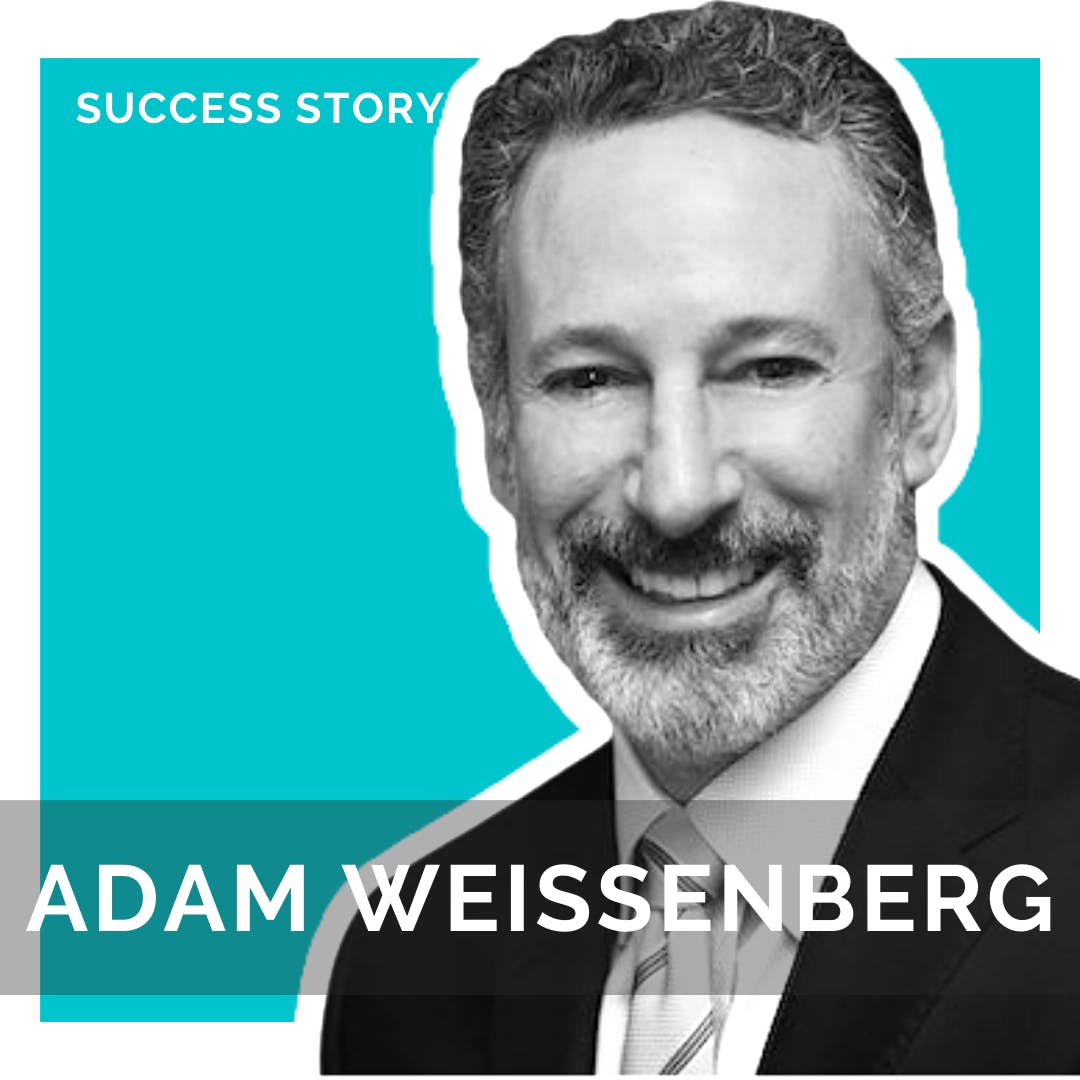
 Adam Weissenberg - Vice Chair, Deloitte | How Deloitte Disrupted Itself To Survive Covid
➡️ Like The Podcast? Leave A Rating: https://ratethispodcast.com/successstory
➡️ About The Guest
Adam Weissenberg is Vice-Chair and Chief Global Officer for Deloitte’s US Audit & assurance practice, as well as the Asia Pacific Leader for the US Global Office. In addition, Adam serves on Deloitte’s US Board of Directors. As a Board member, Adam is responsible for governance and oversight of the U.S. firm. In his global roles, Adam helps drive the US strategy around global issues while ensuring leadership alignment around the Firm’s most important accounts.
Adam has strong relationships with executives across Deloitte’s global network to enhance seamless delivery. In addition to these roles, Adam serves as the Lead Client Service Partner for a Fortune 200 client, as well as an Advisory Partner for multiple Fortune 500 clients.
Based in New York, Adam has been quoted in national publications including, The Wall Street Journal, The New York Times, USA Today, Forbes, Condé Nast, and Travel & Leisure. He has also been a guest on CNBC, Fox Business News, and Bloomberg.
➡️ Show Links
https://www.linkedin.com/in/adam-weissenberg-100ab814/
https://twitter.com/aweissenberg/
➡️ Podcast Sponsors
HUBSPOT - https://hubspot.com/
FACTOR - https://go.factor75.com/plans (Code: SUCCESS120)
GRIN - https://grin.co/
➡️ Talking Points
00:00 - Intro
03:07 - Adam Weissenberg's origin story.
08:05 - How to effectively work with clients?
13:03 - How can organizations grow through pandemics?
17:12 - How to consistently find the best talent?
22:03 - Working at a 50bn organization, pre-Covid vs. post-Covid.
28:44 - How to leverage your team & navigate the pandemic.
33:04 - Life lessons from Adam Weissenberg.
39:40 - Where do people connect with Adam Weissenberg?
42:10 - What was the biggest challenge of Adam Weissenberg’s career?
43:18 - Getting the right mindset.
44:31 - Who is the mentor of Adam Weissenberg?
46:27 - A book or a podcast recommended by Adam Weissenberg.
47:45 - What would Adam Weissenberg tell his 20-Year-Old-Self?
48:35 - What does success mean to Adam Weissenberg?
Advertising Inquiries: https://redcircle.com/brands
Privacy & Opt-Out: https://redcircle.com/privacy
Welcome to success story the most useful podcast in the world. I'm your host Scott D. Clary. The success story podcast is part of the blue wire podcast network as well as the HubSpot podcast network. Now the HubSpot podcast network has incredible show like the hustle daily. It's hosted by Zachary Crockett, Jacob Cohen, Rob Litterst and Juliet Bennett Ryla. Now the hustle daily brings you a healthy dose of a reverent offbeat and informative takes on business, tech and news and it happens daily. So if you want to stay up to date on the latest and greatest and some of these topics are interesting to you, then you're going to love the hustle daily topics like Amazon's grocery strategy, the rise of the ugly shoe economy is AI the secret to love and America's sleep deficit problem. So if these are topics you want to get into and you love hearing up to date content whenever you wake up in the morning, go listen to the hustle daily. Wherever you listen to your podcast. Today my guest is Adam Weissenberg. He is the vice chair and chief global officer for Deloitte's US audit and assurance practice. He has spent the majority of his career with Deloitte. He is also the age of pacific leader for the US global office. In addition, he serves on Deloitte's board of directors as a board member. Adam is responsible for governance and oversight of the US firm in his global roles. Adam helps drive the US strategy around global issues. While ensuring leadership alignment from the firm's most important accounts. Adam has strong relationships with executives across Deloitte's global network to enhance seamless delivery. In addition to these roles, he serves as the lead client service partner for a Fortune 200 client as well as an advisory partner on multiple Fortune 500 clients. Based in New York, Adam has been quoted in national publications including the Wall Street Journal, the New York Times, USA Today Forbes, Condé Nast and Travel and Leisure and he has been a guest on CNBC Fox Business News and Bloomberg. So we got an inside look with Adam throughout his we spoke about his career obviously we spoke about his origin story but then we went into his growth with Deloitte. We got an inside look at the inner workings of Deloitte, how Deloitte functions, how Deloitte grows, how Deloitte stays nimble and stays disruptive even when there's such a large organization, how they navigated COVID, how they hire the best talent, how they figure out new initiatives, new business initiative to take on some things they've done differently throughout COVID. We're learning from one of the largest management consultant financial consultant organizations in the world and how to build a business properly and then how to navigate some of the most numerous times in recent history that can definitely impact your business in a very negative way. So how does the best do it? That's what I hope you don't cover with Adam and Deloitte. Hopefully you enjoy this is Adam Weissenberg, vice chair and chief global officer for Deloitte's US offices. All right, thanks so so I, you know, I typically start with my dad was a professor and so when I was when I was 10, we went overseas when he was on sabbatical and so I got to go Europe and I got to go to Israel for six months and you know at that point was really really my first time traveling anywhere, you know, especially outside the U.S. And so I'm whatever reason I came really infatuated with with hotels and staying in different places and so, you know, fast forward through through high school and looking for what I want to do in college, my dad who was a Cornell grad for his PhDs like, hey, there's this great hotel school. I'm like, that sounded interesting so literally applied to one college early early decision got into Cornell had didn't really have a plan B so that was that was a good thing. And you know went went there for a hotel management and so you know I always thought I would be running hotels, you know hotel general manager that was that was kind of my dream. So graduated and time I graduated, which is 85 was was not a great time for the industry so I so I interviewed with pretty much every brand out there and was not having a lot of luck because I weren't a lot of hiring going on and thank God, you know, probably one of the big things I learned in life really honest is having a network. One of my friends and my fraternity had worked for Marriott the summer before and when I went into my interview with Marriott, the guy interviewing said, hey, your friends with this guy, you know, his name was Phil and I'm like, yeah, and he's like, okay, you have a job. I mean, literally, that was it. So, you know, the power of network, I learned a really strong age so early age. So, so started working in the hotel business, you know, hated it. So, so my lifelong dream quickly can crashing down to reality. I was a frontess manager did not like it was like, I do not want to do this. It was a left there went went into the, you know, food service business was a food service director for a few years. And, you know, like that, but didn't didn't really see kind of a long term future there. So, you know, same time I was, you know, my dad once again, just me some of his colleagues, one was an accounting guy and I was like, hey, that, that sounds interesting, different. You know, can never go wrong getting a kind of degree in the CPA. So, I ended up going to business school. I went to Columbia, got an MBA CPA kind of a unique path at Columbia. There's about 1600 students at Columbia. I would say of the MBA program, there are quite five of us on the CPA path. So, it was just pretty small. But, but I graduated, you know, and was able to get a job with Deloitte. I'm doing, you know, accounting work, starting on the auditing side, I got my CPA had my MBA. And, you know, that that was, you know, 29 years ago, which is crazy. I thought I'd spend two or three years at Deloitte and go out and work in industry like everyone else does. I liked it. And I've been lucky. I was able to kind of take my passion for industry and merge that with my accounting background and help grow our, you know, we call it THS practice travel travel host time services. And so I was, you know, at the beginning of that, as we didn't really have much of a practice and, you know, got to spend a lot of time externally getting known and doing things and speaking with the media and going to conferences and then internally. Working with some of our top clients focused on that industry and getting to know it, you know, not just auditing, I also did work with consulting and so forth. And, you know, that that was kind of big part of my career. I ran that practice for, you know, 15, 16 years. And then, you know, eventually got asked to take on an audit leadership role about six years ago and worked with our current CEO was on the CEO of the audit practice and helping to really focus on growth in audit. You know, we had, we had always will be focused on quality, but we also went to get back in the marketplace. And so I helped to drive that. And then after that, on the last two years, I got some new roles when, when the CEO of the Office began to see the firm. And now I run Asia Pacific, you know, for the whole US firm. So, you know, pre-COVID was probably Asia once a month, having been there, as you can imagine in a year and a half. And I don't know what's going to happen anytime soon. We can talk more about that. And then also I was elected to the board of directors of Deloitte about a year and a half ago, you know, every every year we elect. It's internal board. We elect some of our partners onto the board. We have 18 board members. And so I've got a chance to do that. But, you know, went to my first meeting was alive. And then COVID hit and so have been doing virtual for about a year. And now, now we're back to to live again, hopefully. So it's it's been it's been interesting run. But yeah, that's that's kind of my story. So, you know, industry guy all along and then last few years had a chance to be a leader. You know, at the same time, I would say I always serving clients, you know, still that we call an LCSP, the lead client service partner on one of our big accounts, you know, which which I love doing. So that's kind of me in a nutshell. So, so walk me through is that you've been with Deloitte for a long time. So walk me through even like transformation up. That's like putting it lightly. Even with the light for most of you almost your entire career. So walk me through like the transformation that Deloitte's gone through because I'm sure there's been many iterations of what Deloitte is the vision, how they serve their clients, what types of clients they serve and how it's evolved. But even how it's like probably fast forward in the past two years as well. So curious about that. Yeah, it's it's amazing. I mean, so, you know, I start with the firm in 92 and that was right after the merger. You know, Deloitte haskins and cells and two shross, you know, there was the big eight, which then, you know, went down to the to the big six and eventually became the big four. And so, you know, there was a lot going on there to do two very different cultures came together. We were primarily an audit firm with tax, very small consulting practice. And that's what all the big four were and, you know, putting us together got us, you know, into the into the larger size, but we were those were two relatively small firms compared to some of the competitors out there. I don't know the numbers, but I want to guess I'll make it up our revenue, probably a billion maybe if that in those days. And, you know, we're going to be close to, you know, mid 20s and billion in revenue this year, US. And I think this is, you know, this is all and we disclose all this and we do a report every year and then probably, you know, well over 100,000 employees. I would imagine back in 92, no one could have envisioned how large would come. And so what's interesting is our consulting practice has has become very significant, you know, we we consult, you know, government commercial across all the industries, you know, technology, human capital cyber. I mean, you know, you name it, we do consulting and that has become a very large part of our practice. You know, I didn't tax will always be a significant base and very important to us is what we do with the, you know, the capital markets in the public. But our traditional competitors will be the other big four. And now that's really shifted because now when we're doing, you know, big consulting, we're competing with a lot of the, you know, IBM's the Accentures of the world's McKinsey's. And it's really shifted, you know, in terms of who we look at and who we think about. And it's also changed our workforce, you know, we hire a lot of people into our consulting practice it. And, you know, that that's a very different skill set and, you know, traditionally being in a lot of your tax professional where you get to have either CPA or law degree or something like that. So it's a much different skill. I'm more MBAs. And at the same time, the other big transformation attempt forces, we, we built a delivery center in India, you know, for US employees and you know, that's probably about 30, 40,000 people now. And that that's critical. That's been, you know, really, really important to us. We, you know, they're, they're excellent, excellent people who do an amazing job and are able to help leverage the US and deliver. And it's really important to us, you know, that's really important to us. And it's really important to us, to us, to us, to us, to us, to us, to us, to us, to us, to us, to us, to us, to us, to us, to us, to us. It's just unbelievable to me. You know, we have probably close to 3,000 partners. And so you look at these things and back in 92 when I joined in a million years, I can never imagine how big we weren't. How many, how many different areas we've been involved in, but it's, it's great. And you know, the good news is we're still growing significantly. And I think we're looking to kind of on this path of growth. I just want to take a second and thank the sponsor of today's episode HubSpot. Now the new year might have you thinking ahead to what you want out of your career. So when you think about your success story, what do you actually picture? Is it retiring early with a beautiful view of the skyline? Is it leaving a legacy with your name on it? Or maybe it's helping influence and change some of the world's most pressing issues? Whatever it is, writing your success story starts by working smart. Because when you work smart, your success story writes itself. A HubSpot CRM platform helps your marketing campaigns work harder and smarter. With intuitive visual workflows and bot builders, you can create scalable automated campaigns across email, social media, web and chat. So your customers hear your messages loud and clear. Are you tired of your content not adapting to mobile, making it difficult for your customers to absorb your message? A HubSpot CRM platform optimizes your content for multiple devices so that you can reach your customers wherever they are, which is just smart. Learn more about how you can transform your customer experience with a HubSpot CRM at HubSpot.com. Do you feel like there was something that Deloitte did to grow gracefully because that's not an easy transition as well? So I'm curious as to why? Because I think that through all the digital transformation that your clients have gone through, the fact that you are... I think it's mostly professional services business that is really the core competency of Deloitte. You have to not only understand your clients' digital transformation, but you have to find the right talent internally that can manage those types of clients. So how did you manage that landscape to move from major focus on tax audit to more of competing with the IBMs and McKinsey's? Because that's really impressive, that's very impressive, and I'm sure it wasn't easy. Now, one of the things that happened, which made us maybe stand out from our competitors and the other big four was... When Sarbanes actually came out in 2001-2002 and put a lot of pressure on the services you could deliver to audit clients, prior to that historically, the independence rules were fairly limited in terms of services you could deliver if you had an audit client. When Sarbanes actually came out, that really changed those rules and made it much more difficult to deliver a lot of maybe the big technology implementation projects and some of those other things that we used to do in the past. So the rest of our competitors at that point were consulting practices and once again ours was relatively small, spun them all off in various transactions. We didn't, so we kept our consulting practice. We had a base to start with, and I think once we made that decision, then we were all in. And we really believe still that having one firm that can deliver so many different services is a benefit to our clients. We look at this and say, hey, we can be your auditors, we can be your tax, we can do your consulting, you can come to us and we can deliver all these professional services that you need to help you be successful over so many different areas. So clients change, you know, one day you may be an audit client of ours, one day you may be a tax client of ours, one day you may be a consulting client of ours, you know, one day the CFO from one client that's an audit client may go over to become the CFO of a consulting client of ours. We're able to really get our brand known as we can do everything under that umbrella is important to us and it's been a key part of our strategy. And so I really think that that was what was so much different compared to our competitors and why we're in the position we are today. And then I would say, you know, it's time has gone on, you know, we really see the value in, you know, clearly, you know, being able to kind of have that traditional core, but also the consultatial services are significantly growing, you know, to your point digital cyber. You know talent workforce, there's so many different different things that we can consult on and and, you know, hire people and we have a model in place and we have, you know, great partners and all deliver these and so I think that's our reputation and, you know, building off the brand that we had fraud in tax many years ago has been really helpful. So, you know, I know it's a bit of a long way to answer, but you know that that's what differentiated us and if you look at our competitors like, you know, such a great company, but they can't do odd in tax right so, you know, they're purely, you know, more on the technology side and, you know, other services they can do and so, you know, each of those somewhat different and then if you look at the big four, you know, each of them has regrown some of their consulting practice, but I don't think they have the same scale we do these days. No, so and okay, so let's let's go off that point so if you if you do everything and that's that's the brand you have and that makes sense to me and that's what's allowed you to really build trust these clients over the years and there's still your clients because you can provide so many different services and of course your cross selling across, you know, the multi things that the light does, but you have to find talent that can help them in all these different areas so okay, so then the question is if you are going to help them with cyber and digital transformation and consulting in that area. How do you find that talent because I think that's probably going to be the most difficult thing because somebody who is, you know, fresh young really interested in anything, you know, cyber security digital transformation engineers all of that stuff that could help these clients those people i'm assuming skew towards like the startups NF NSF right I feel like that's like the sexy place to work and the lights like you know they've been around for forever so how do you how do you keep it fresh how do you get these people in so. So that you can actually serve those clients so it's it's a it's a really great question Scott so so i'm. I think you know five years ago you would have you know we would have said we're focused on growth and that that that's the main thing that's number one and of course we still are and we want to continue to grow our practice and there's a lot of reasons for wanting to do that you know it gives a scale and the ability to track more talent so forth. But I think since COVID in particular it's changed so many things that we have a real shift now to focusing you know number one priority is talent and I know that's somewhat obvious I mean we don't we don't we don't we don't sell like cars you know we don't we don't have factories all we have our people and so so of course that's always been core to us and really important and you know we're very proud of our record of you know being recognized as a great place to work and across somebody different you know. Areas but but now we really said hey wait a second you know we really if we want to continue to grow the levels we have we're going to have to really change the way we think about our workforce and and to your point how do we attract you but I think I think it's always had a great brand right and so you know you're you're an accountant you know graduating you're like i want to work for big for if you're a tax professional work for big for. If you're a consultant you know graduating from an MBA at top school you know we recruit you probably sound a word for joy but that shifted now to your point I think I think this is younger college graduates are looking into landscape and and they kind of learned this last year well you know maybe I can work anywhere but not have to move you know we're beyond the road all the time or all the things that are you know someone been the norms of the consulting business and even to some extent the audit tax business. And so I think that's changed a lot of perceptions and saying hey you know there's a lot of different things I can do and you know I can live in Denver and work on a you know a bank in New York now. We're in the past I might not have been as feasible to do. I also think to your point you know some of these technology companies have become sexier and you know people want to go work for them and I want to you know be a start up and maybe Deloitte has perceived is to your point you know a little bit you know older and slower so we've got to change that image so we're in business. We've got to change that image so we're investing a lot of time in going to campuses and you know talking about what we do and helping to promote you know our vision of what we think the future is and flexibility and you know looking at what kind of rewards programs we have in place and you know how many days you're in the office versus on the road, dumps radicals you name it you know we are we are taking a heart everything because we have to work that's what we're competing with and plus the fact we're growing so large now you know in the old days you know we wouldn't hire that many people we're hiring you know probably you know 30,000 people this year some number like that you know and so when you think about that you know we have to have a whole recruitment process in place we have to have you know people can go out and interview all these people and so it's it's it's a big shift. And if you talk to any of our leaders I think all of us would say right now number one is talent and figuring out how do we attract them how do we retain them how do we make them happy you know I think becoming a partner to do it is still still a wonderful wonderful. You know career path and you know but I'm not sure that's as visible to some of our younger people right like why would I want to do this and stick around for 15 16 years you know to become a partner you know when there's so many other cool things I can do between now and then so we've got we've got to also really focus on our top people and explain to them why you want to have this career path become a partner and what are the what are the advantage of that what kind of lifestyle is I mean what kind of return on equity is that you know we're all private so you don't you don't necessarily get stock but you own capital. So there's a lot of different you know messages we're trying to get out there today but it's it is the number one focus and that that's what we're talking about in the board room and all our businesses these days. And and how has and like what does the future of Deloitte look like after COVID because obviously you made some shifts like internally like you're you're working from home now you haven't gone like you know you'll you'll go to you'll go to a pack again soon but you haven't gone there in a minute so it hasn't been difficult to to move like the type of business that Deloitte is which is like a very human to human business like you're talking to people you're talking to the CEOs of companies executive companies or you're talking to very senior up. And I think that like you said consultants are on the road they're meeting people they're sitting down for you know lunch and dinner and whatnot and building those relationships. That's like that's so important because you're trusting the company is trusting you with the core pieces of their business has it been difficult to do that over zoom virtually. That means shockingly now I mean it we we have been blown away by how we were able to transition in March of 20 from you know our traditional model which was you have to be on the you're consulting on the you're on the road every week you know if you're not or you're your client doing your audit if you're tax professional you're out talking to the tax. You are at your client you are on site you are traveling and and you know literally overnight we went virtual and it was pretty close to seamless it was it was unbelievable and I think you know you've seen that when you look at the broader you know US I think you know kind of professional services you know other other you know technology so forth we were you know industries were able to to make that shift you know the ones where you had to have face to face. Contact are the ones I got hurt the most so you know hotels restaurants retail you know where people actually had to be there to do so except you know we did see retail shifted to be online also but so so I so I do think you know we made that shift and so I so I think for the first year or so it it worked you know let's say till to March of 21 you know people work from home and you know people were you know people's clients were at home and so they you know did zoom and thank God for the technology. That was out there that made us able to do you know enter you know kind of interactive stuff like this over our computers and so so it worked what we're seeing now though is you know clearly there's some fatigue. That's happened you know so so one is you know you have younger people who didn't meet anybody right and so how do we acclimate them into Deloitte and how do we get them to meet people and how do we get them to experience our culture to your point you know there is some you know I at least I want some business during COVID you know through zoom and it's amazing to me you know I didn't meet anybody live we did this way we set meetings and you know I gave a pitch and we won. That that always gonna last so long right because it one of these days one of my competitors is gonna go like hey I'm gonna go over there and sit down with this person live while you're trying to do it by zoom and and and I do think you know that that will put you just so people will have to get out and and also just create our networks you know you have to go to advance you have to see if you we can't do that when there's you know 300 people on a zoom web can. So so that will happen but what we're also hearing is nobody wants to go back to me in the office five days a week right our people don't want that they they want you know they want to get together kind of you know have some say over is it two days in the office is it three days in the office you know is it Mondays in the office is it Friday's you know having some team events so they want that interaction. But clearly not back to where where we were I mean I have a daughter who's you know graduate college year ago you know she's writing the mother she doesn't Manhattan and you know at first she was in the office five days and and you know then she got to go and and you know have kind of this virtual you know hybrid model and she loves that you know she can be in Manhattan and do some things still get her work done and then she can go to the office some days you know and I I do think that's something we're going to have to learn to to to live with and to change and our clients the same way you know our clients are not going to be sitting in their offices five days a week either. So it's it's it's a big shift and you know it was good though it kind of. Disproved I think a lot of things that we thought were were you know absolute rules that you have to go to clients you have to travel all the time you know you have to be there live. And you don't now for me with Asia Pacific I guess I was somewhat lucky is I got to spend a year going there live so I met a lot of people in Asia I think it's really important that you have that face to face contact and relationships. So I've been able to you know keep those alive somewhat this past year through zoom but you know it is reaching the point where that's getting stale there's new leaders in place and so forth and I got to get over there I got to take a plane and fly. You know what you got probably not have right out of the spring at this point with what's going on but but it's it's going to you know that face to face contact will still be needed you know but but I don't think the same level it used to be I think it'll it'll be a hybrid model going forward. I just want to take a second and thank the sponsor of today's episode factor now it's a new year I'm busy I always always always I'm running out of time. So when it comes to meals I don't want to wait in line at a grocery store I don't want to even have to drive if I don't have to and I definitely don't want to spend a ton of time cooking in the kitchen. But now I don't have to meal plan or prep thanks to factor factor makes it easy for me to eat clean 24 seven they deliver fresh never frozen prepared meals that are so delicious you won't believe they're actually good for you. Factor saves time by delivering chef crafted meals directly to my door eliminating the hassle of grocery shopping meal prep but most importantly eliminating the hassle of cleaning and I have 27 meal options every single week so I can guarantee you're not going to be bored. They also offer tons of great nutritional additions they have vegan and veggie meals they have cold pressed juices smoothies energy bites plant based bars extra protein veggie sides and what really whatever you want to keep you fueled and focused all through the day. If you want to try out factor they set up a special code just for success story podcast listeners so head over to go dot factor 75 dot com slash plans that is go dot factor 75 dot com slash plans use the code success 120 that's going to give you $120 off your first five weeks of meals. Remember that is code success 120 at go dot factor 75 dot com slash plans for 120 dollars. I was okay so I want to also bring it some some learnings from like your specific industry and what you've seen in THS over the past two years so because I think they were probably hit the hardest like like what you what you do for a living was probably hit the hardest out of any industry. So walk me just tell me you know the story of of what happened to like travel and hospitality and also maybe if we can learn some lessons from how they navigated pandemic. Those are probably going to be the best lessons for anybody else in terms of redundancies contingencies continuity of business just because if they can figure it out and what whatever they did whatever you saw them do any other business probably take those lessons to some extent and just be better in whatever industry there and because I think that's probably the toughest that's the toughest sector for sure. It was the toughest sector I mean you know one of like I said probably retail got pretty hard hit at the same time you know and to my point other industries you know thrived you know health care technology you know federal services so you know it was crisis mode you know unfortunately I I don't think you know in in the wildest black swan you know scenarios. So scenarios no nobody in the industry perceive that literally overnight everyone would stop traveling right I mean literally people would be in lockdown the whole country you know worldwide so there there was no scenario planning for that right and it happened so quickly so you know I think the industry did what it did in terms of having to you know really you know look at what other costs and how do we how do we immediately you know save in terms of our labor costs in terms of you know rent other things. You know that they that they're so you know that they had and so I think the industry you know do what they had to at that point I mean most stuff was climbing listen there's still some hotels closed restaurants closed real lines aren't back to where they were I'm not saying it's a magic bullet either I just there's no magic bill so so you know I think since then no you know the interesting thing is you know the industry's actually been coming back very strong on the leisure front you know it's as you know I've taken some trips you probably taking some trips so you know people are starting to travel again for vacation. And for fun and so I think the industry is is doing what they can to adjust to that and think about okay it's not the business travelers spending a ton of money to stay at a you know more expensive hotels and fancy dinners it's more the leisure travelers so let's let's think about you know what things they want differently and you know how do how do we do that at the same time you know the message of safety is is become really important and making your guests feel that you're safe you know from COVID you know from COVID you don't want to you don't want to stay at hotel or a restaurant or be on a cruise ship or whatever it is I mean airplane and catch COVID and so you know a lot a lot of message around safety and doing their best to demonstrate to the you know to their guests that they they will be safe. But I think the challenge right now is you know things to start you know come back and you know I think there was a job report today actually came out really positive in terms of other people came back to work and it's been it's been a challenge to find people because you know everyone everyone I think a lot of people reevaluated what they were doing in these industries you know after with COVID and now are saying hey if I can do something else that pays more I don't want to go back to being a you know dishwasher or a waiter or a front desk clerk or a housekeeper and so I think there's been a little bit of labor shortage so that that's causing some challenges maybe on the rebound as much as you would. And then I think there's still you know the challenge of it's you know if you're a convention hotel and downtown Manhattan. Nobody's nobody yet is going to do big conventions I mean that's just not happening and so you know the business traveler hasn't come back so it's like what do you do to track more leisure traveler and to to make things more attractive and listen to airlines are you know planes are filling up again so I think they're you know slowly bringing back capacity and you know that's important you know the same issues they're facing some labor challenges also and getting their workforce back and up and running and so but I you know I wish I had some huge lessons to be learned from that. Got it but it was it was it was it was a crisis mode it was like but I really don't like though it says like like they're still so they're pivoting from their core competency doubling down on the things that are available to them so you're seeing them pivot from business travel they're doubling down on personal like leisure travel and that's that's sort of how they that's how they've survived and then I guess I'm assuming they're also trying to attract. Yeah we're you know listen we're I think what's been interesting to see is there you know there hasn't been a slew of bankruptcies there hasn't been a no you know a lot of foreclosures I think across the spectrum you know the landers and the owners have been willing to work with the operators and everyone to kind of say hey this is going to be temporary we'll get through this you know let's focus on cash let's you know trying to get as much as we can to pay our bills and we're going to get as much as we can to pay our bills. You know open the doors and you know take care of our customers and our guests and and not doing anything drastic like you know start for closing on a ton of hotels or restaurants or this is that because you know that that that that would have been bad and so that that has not happened so I think there's been you know a willingness to probably extend things a little bit more to say hey the recovery is happening and I think that's the good news because as the leisure travel happens you know at least the owners and operators will say hey we are getting some cash through the door we can at least maybe cover maybe our anything except our mortgage at this point but you know operations is positive let's let's look at the you know look at that and you know hope that another six months here for now we'll start to see some more business travel come back which which it will you think the same level I don't need to give me the same level any time soon you know the the challenges you know as I said you know look at a company like ours you know we're we're not going to we're not going to ramp up to the same level we were pre-COVID because we have a new model now we have a hybrid model where we don't have to have you know and you know pre-COVID we're you know we're probably a top five traveler you know space on the nature of our business that's going to be much slower to come back because you know we're not we're not going to force people to go on planes to fly to clients who really don't want to see them when they can do some of this on the hybrid way and and operate virtually but but it all come back more than it is I mean you know we got to get people together we have to have face-to-face interaction our clients we have to go places where we can help grow our business and you know so it'll come back so you know do we see maybe you know by the end of next year back to 50% of pre-COVID yeah I think that could happen okay so so you know you're you're you're in trench in this industry that's why like you're you're seeing it it'll make it better better than most yes you like everybody else no no but I think you know I respect it like you're just you're just trying to figure out as you as you go like what's what's going to happen but I just you know I'm just curious because you this is like you know you're living and breathing this every single day so I'm sure you you have some conversations with people and you're seeing some life come back into their businesses and whatnot so that's just a good thing yeah and I just it's just interesting because I think that they I think that even though it isn't a comeback like you mentioned like the future is hybrid the future is hybrid yeah I mean the other thing I would add you know when you think about the industry and you're looking at a little broader awesome I mean look if people are starting to go to sports again stadiums are filling up people want to go to concerts you know broadways opening up you know you have all these other things once again these are all leads your activity type things but yeah those those are all impacting the industry again and you know knock wood if if we don't have another you know big outbreak of COVID and you know with everyone getting vaccinated and so forth at the chance that are less and less then I think that's all heading in the right direction and so that's good thing but you know are people going to be back in their offices 100% of the time you know I just you know I don't see that happening you know you look at Midtown Manhattan it's it's I was there last week you know there's there's way more people walking around there's restaurants you know now we're opening the borders internationally again you'll have more people coming but the office buildings aren't going to be at 100% like they were I mean you know I I was in our building I mean I maybe saw five people on the floor which used to be packed because people are working hybrid and they like that so that is a change very interesting okay I want to I want to ask some rapid-fire career questions I always do this to like to close it out but just you know before before I pivot was there anything else that's like top of mind that you've learned through COVID any other any other things that were just like really applicable for Deloitte or for you know your own digital transformation for employees for THS we didn't go into I know we went into a lot of different things but I just didn't want to I can't remember if I forgot something to to bring up because I know we we want to go into a few different things and speak about some of the realities that you sort of faced over the past couple years so yeah so we've touched on a lot you know one one clearly you know kind of myth buster around we have to be on the road all the time yeah not true anymore and that we can we can our people can be very flexible where they live and who they serve big myth you know myth buster from the old days you have to sit in the office where you're serving clients so so that that's one you know two is we probably haven't talked a lot about you know just the digital transformation you know the use of technology going forward I mean obviously it's always important but what covid showed it's really really important you know the fact we're able to continue seamlessly to serve our clients that's only because of you know changes in digital and and that's only going to continue to become more and more powerful into our business in terms of what we do and how we interact with our clients how things get done um and so you know we're investing a lot in that space and in becoming you know it's such a cliche but it's true you know yeah I'm thinking about the future and what what technology will look like and what kind of technology we need internally and how we help our clients with that I think the third is you know the focus on the workforce you know that that always important once again that's all we have but really super super important now as we see our turnover start to go up you know coming out of covid you know how how do we change you know how do we become more flexible how do we attract as you said you know engineers different type of people with different backgrounds to do the things that we're going to need to do in the future because you know as I'm sure everyone says that you know the change pace of technology is always way faster than we ever think it will be and so you know really thinking about okay what are we going to look like in five years what kind of people do we need that that that is a big change for us so so I think those are probably the big learnings that came out of of covid frost and kind of where we see ourselves going you know I mean well hey we're doing really well we're very happy you know in terms of our past year you know we love that you know we've still been able to serve our clients and you know they've been happy and feel that you know we're we're delivering out what we need to and so you know it's a great business model and you know hopefully we can continue it forward good very good um okay so also if people want to connect with you in any way um where should they go is there LinkedIn Twitter like yeah I'm telling LinkedIn's probably the best way you know you can find me I check that fairly frequently you know frequently if you want to reach out to me just shoot me a note through LinkedIn now I just want to take a second and thank the sponsor of today's episode grin now grin is the number one creator management platform helping e-commerce brands connect with their audience through the power of creator partnerships now influencer marketing it's easy to get lost in the spreadsheets and busy work coming through a messy web of communications looking for content wondering about campaigns are they delivering where the data points have you shipped the creative yet have you shipped the product yet uh have they build have they invoiced all of the headache that comes with managing creators and influencers that's where grin comes in so grin is an all in one software that allows you to treat your creators like your brand revolves around them even though you're actually saving yourself a ton of headache grin helps you find and recruit the perfect ambassadors for your brand stream lines of communication process collects all the creator content in one spot tracks ROI in real time so you can create smarter campaigns that drive sales with grin one person can do the work of an entire team you can find them recruit influencers communicate with them ship product aggregate creator content measure ROI all in one spot you are maximizing every dollar you invest in influencer marketing and you are eliminating all of the headache all of the busy work brands like liquid IV first aid beauty movement they all run influencer marketing campaigns at scale and work with thousands of creators at the same time they're all using grin so you need to treat your creator like your brand revolves around them because in the creator economy it does experts believe that influencer marketing will become a 15 billion dollar industry by 2022 so this isn't going away anytime soon you have to figure out how to use influencers and creators at scale find out how grin can help you grow your brand watch the demo at grin dot co that's g-r-i-n dot c-o influencer marketing is easier with grin find out why at grin dot co that's g-r-i-n dot c-o okay well i'll link i'll link that in the show notes as well okay so let's do some career some career questions just to bring up some insights to have an incredible career obviously biggest challenge that you've had in your own personal professional life what was that had you overcome it biggest challenge for me has probably been being a career changer so you know i was always going to be a hotel operator and yeah that was my lifelong dream as i told you i spent five years in industry and then i kind of hit this wall saying i don't like what i'm doing and i don't see myself doing this forever and so i really had to recreate myself and so going back and getting in my MBA and and what i left out when i came to i started the bottom i mean nobody gave me any credit you know i was you know five years old and everybody else starting and you know they just are like yeah you got to start at the bottom and prove yourself so that that was probably for me the biggest change you know completely changing careers becoming a CPA going to work professional services firm from always wanting to be in the hotel business but you know once again 29 years later it turned out pretty well did okay i did turn out pretty damn about 29 years later you don't always have that foresight um how did you how did you force yourself push yourself getting the right mindset to restart i just i you know i i spoke to a lot of people and um you know i i was like okay i i am not going to get where i need to go you just continue to work in in the industry at that point and so for me you know getting an MBA was critical and i said okay i'll i'll go back to school i'll learn something new um i'll get some more skills but that'll also open doors for me to to change careers and so you know i i'm a big believer and you know that that's one of the the key reasons to get an MBA if you're changing careers um because it opened all the doors for me i never would have gotten into the door of deloitte didn't have the skills you know i i had to be able to sit to take you know a CPA and so you know i i said to myself okay i'm going to try this and spoke to enough people saying having a CPA would never hurt me you know there's nothing nothing bad going to come to that worst is i you know wasted two years in business school um and got my way you know into a different career but you know on the upside was it opened the whole new avenue for me and so um that that was kind of how i made this decision at that time i mean target video is 26 that was thinking that far to the future but it works yeah yeah i did that's good that's good man yeah um if you had to choose one person there's probably been many but if you had to choose one person who's been super impactful on your life could be a mentor could be apparent could be a spouse whatever it could be professional um who was that person what did they teach you so so um it's a retired partner in deloitte um and i say it is ron rickless um he's he's been probably retired for about five six years now and he he's uh he's been a critical mentor of mine throughout my career um and so when i was a young manager you know three four years into the firm i i got a chance to work with him and it's kind of funny because he had this reputation that was not very good which i you know turned out wasn't true at all and so he kind of took me under his wing and and and i just learned so many things about from him um you know things like you know what ron ron has a great attitude about about work like critical you know to serve your clients well on the other hand it's it's just a job right so you know don't don't get you know too caught up in um you know worrying so much about stuff don't take things personally you know and and those are like lessons you learn like i'd have a client yell at me and he'd be like you know why are you getting so upset it's like you know our bills are getting paid it's like you know this isn't life or death it's like you know let him yell at you if he wants to and so just putting things in a perspective and then you know throughout my career he's provided opportunities for me and you know giving me advice you know about my personal life and actually the house i'm in now i'm in where i was trying looking to buy it i learned a lot of money and he's like he's like you only look once you know buy the house enjoy it and so um things like that you know he's he's he's just a wonderful person who who everyone likes a lot and who i still talk to on a regular basis but you know for me and in my career he just was made such a big difference in giving me good advice getting me on to write clients introducing me to people and he you know without my I wouldn't be ready i could give you five other names but he's he's very good um a book or a podcast that you'd recommend people go check out um you know i read i read like everything across i'm trying to think i'm looking at my my shelf here what i've read recently um uh you know i i'm like like a science fiction person so uh doesn't have to be a business book yeah you know you're gonna laugh at this but i don't know if you saw a dune is out again yeah yeah i'm rereading dune actually it's awesome i read it years ago Frank Herbert and i loved it and some reread and it's it's it's kind of really cool and there's been a lot written about it because if if you you know rereading through it it's talking about you know a world where you know there's no water and stuff so this is very real in terms of what's going on the real world today and yeah and kind of all the political stuff so um yeah i watched the movie and i was like hey this movie's awesome and so i took the book out again i'm like i guess i gotta reread these stuff because i love them when i was a little kid and i i love them again i yeah but i i i'll read a lot of historical fiction i'll i'll read a lot of light of everything but that that's what i'm that's what i'm reading at the moment i love it and honestly like stuff that just like either like these dresses or make you more creative or whatever it doesn't have to be business stuff it's yeah yeah i've i haven't seen the movie yet so i got got to go it was really good good good um if you could tell your 20-year-old self one thing what would it be um you know i would probably say um don't worry so much about the short term right you know i think i would tell my 20-year-old self that you get so caught up and we'll watch this job and you know what am i doing tomorrow and so forth i would tell myself think more long term and think about the future um you know take don't worry so much what happens on a day-to-day basis and and have a plan for what you want to do but also be realistic you know by change multiple times i i in a million years when i was 20 couldn't have told you this is where i'd be today this is probably wasn't even on my radar so you know don't be afraid to take rest don't be afraid to try new things and and don't don't get so caught up in the short term i love that uh and lastly uh what is success mean to you you know success to me i i've always been a big believer in you got to have balance right um so you know you you can work a hundred hours a week if you want to right and and you know maybe that'll give you success if you didn't want to find it and you know money or whatever um you know seniority, fame, all those things but i i look back at my life and i kind of think i've always had balance like you know i went to my kids plays i coached my kids soccer teams i spent time with my family um and balanced that with with being successful at work um and and achieving things and so the the other piece that ties into that in terms of balances you got you got to be able to rely on people and and learn early on you know how to delegate um i'm i'm a huge believer in if someone else can do it and that's not what i'm supposed to do then they should do that you know the firm pays me to be a partner and a senior leader doesn't pay me to do you know other stuff that others can do and so i've always you know pushed my teams to to do what they need to do so i delegate to them doesn't mean i give up you know in terms of coaching them or guiding them or taking responsibility for what they do um but but learn early on how to delegate and to get others to help you and that's that's the key to success and then you can have that balance because if you try and do anything yourself you won't and so you know having people you can rely on you can delegate to you keep an eye on this is critical and that that has been you know i could you tell me in terms of mentor you know the people i've mentored over the years you know who who achieved success i'm even you know more proud of um because that that's critical and and you know if you can't look back and have you know say hey who are people i felt be successful then you probably need to take a step back um and and relook at what you're doing business that's how you achieve all the things you want that's how you can have the balance ultimately to do fun things um and not work all the time