


 YouTube
 Apple Podcasts
 Spotify
 Overcast
 Castro
 PocketCasts
 Amazon Music
 Deezer
 TuneIn
 Podcast Addict
 RadioPublic
 iHeartRadio
 RSS Feed
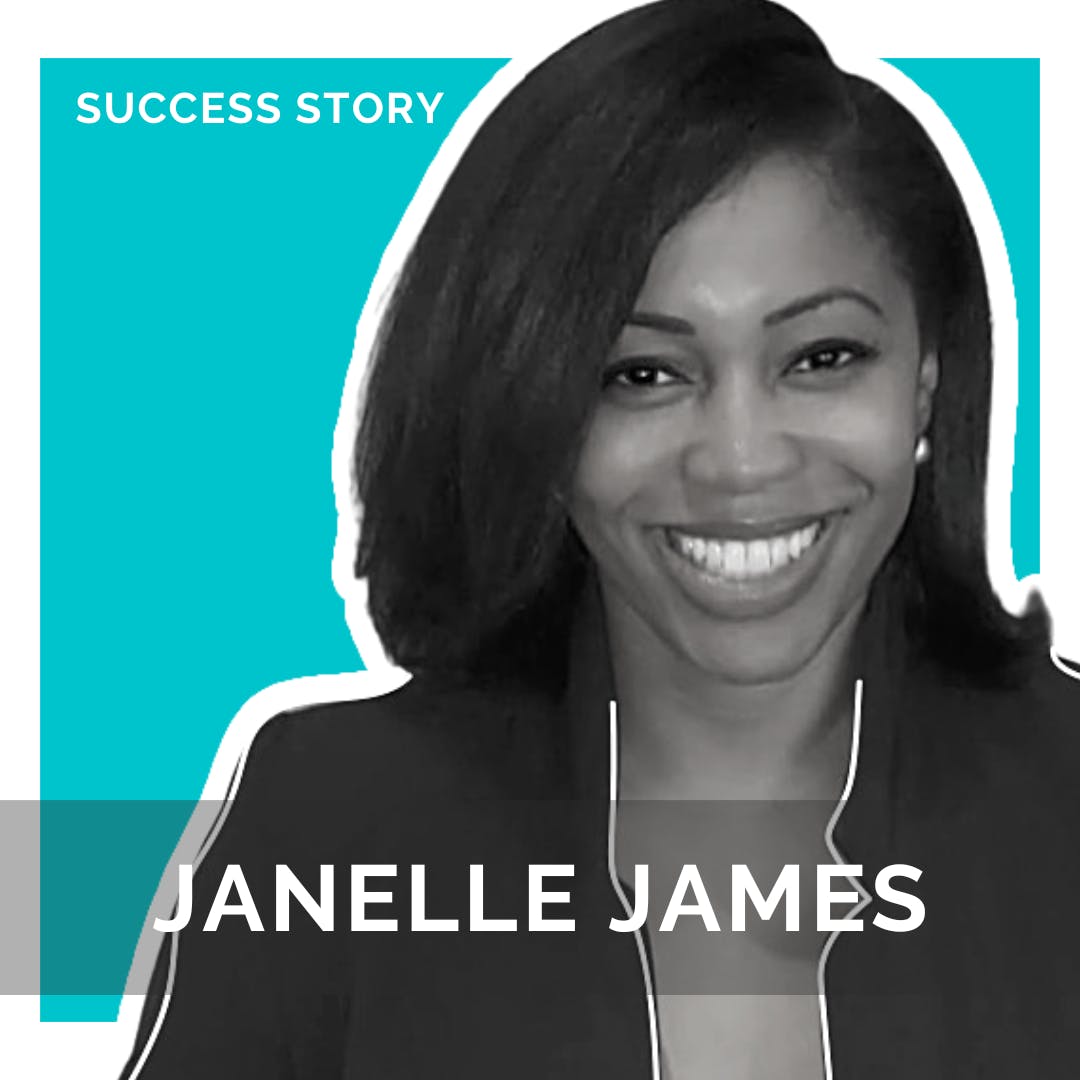
 Janelle James - Senior Vice President at Ipsos | Diversity, Equity & Inclusion
➡️ Like The Podcast? Leave A Rating: https://ratethispodcast.com/successstory
➡️ About The Guest
Janelle James is an experienced global marketing strategist, consumer expert, and diversity & inclusion specialist with a passion for changing the world. Her career spans 20+ years including multiple marketing disciplines and has enabled her work to touch over a billion people. Her global work experience includes recognizable agencies such as Leo Burnett, Edelman, and Kantar, and supporting brands such as McDonald's, P&G, Samsung, American Express, eBay, Disney, and Shell.
She is currently an SVP at Ipsos where she designs, conducts, and analyzes a wide range of studies for Fortune 500 companies and consults client partners on everything from consumer and market knowledge to inclusion to marketing plan development. Prior she was a Director of Research at Kantar, EVP at Edelman, and SVP at DDB.
➡️ Show Links
https://www.instagram.com/janelle.a.james/
https://twitter.com/janellejames/
https://www.linkedin.com/in/janelleajames/
➡️ Podcast Sponsors
HUBSPOT - https://hubspot.com/
➡️ Talking Points
00:00 - Intro
02:22 - Janelle James’ origin story
12:43 - What is the one thing that has completely shifted in marketing over the last few years?
17:03 - Changing your logo to a rainbow flag?
21:50 - How do we uncover undercover bias?
33:48 - Does work from home have an impact on the ability of the company to have a more diverse workforce?
38:55 - How do you hire properly?
51:30 - Companies that are actually doing good for equity and inclusion.
55:33 - Is there anything else on which Janelle James is working currently?
56:27 - One of the biggest challenges faced by Janelle James in her career
59:08 - What is one of the biggest misconceptions Janelle James had seen in marketing and advertising?
1:04:20 - What would Janelle tell her younger self?
1:05:39 - Who has been a mentor to Janelle?
1:09:00 - A book or podcast recommended by Janelle James
1:10:30 - What does success mean to Janelle James?
Advertising Inquiries: https://redcircle.com/brands
Privacy & Opt-Out: https://redcircle.com/privacy
Welcome to success story, the most useful podcast in the world. I'm your host, Scott D. Clary. The success story podcast is part of the Blue Wire podcast network as well as the HubSpot podcast network. HubSpot podcast network has other great podcasts like marketing made simple hosted by Dr. J.J. Peterson. Now marketing made simple brings you practical tips to make your marketing easy and more importantly make it work. If you like any of these topics, you definitely want to go check out the show how to write and deliver a captivating speech, how to market yourself into a new job, how design can help and also hurt your revenue, creating a social media ad strategy that actually works. If these topics resonate with you, go check out marketing made simple wherever you get your podcast. Today my guest is Janelle James. She is an experienced global marketing strategist, consumer expert and diversity and inclusion specialist with a passion for changing the world. Her career spans over 20 years includes multiple marketing disciplines and has enabled her work to touch over a billion people. Her global work experience includes recognizable agencies such as Leo Burnett, Edelman and Cantar and supporting brands such as McDonald's, Proctor and Gamble, Samsung, American Express, eBay, Disney and Shell. She is currently a research director at Cantar where she designs, conducts and analyzes a wide range of studies for Fortune 500 companies and consults client partners on everything from consumer and market knowledge to inclusion to marketing plan development. Prior she was the executive vice president at Edelman and she was a senior vice president at DDB. So we spoke about a variety of different topics. We spoke about how businesses are adapting to growing diversity, equity and inclusion concerns. We spoke about how to tailor your marketing to different demographics, different audiences properly. We spoke about what businesses can do to be more impactful in the DE and I space that transcend and go a little bit further than just creating a rainbow logo. We spoke about how do you uncover biases and organizations and then lastly we spoke about some of the biggest misconceptions that she's seen in marketing and advertising. My career, my origins, well thank you so much for having me here. It is such a pleasure. I am from Brooklyn, New York. I was born to two guy needs immigrants. So my parents are from Guyana South America which is a very diverse culture. They have six different ethnic groups. So I grew up eating a lot of everything from Indian food to Chinese food and I grew up in Brooklyn which is a melting pot, very West Indian neighborhood and I think growing up there it always made me I think proud of my culture but interested in other cultures because it was sort of a working class pan West Indian environment. Being the child of immigrants, my parents always emphasize doing well in school and using education as an opportunity. So around the fifth grade I got into this program called PrEP for PrEP which opened my family's eyes to different educational opportunities and so because of that program from middle school through the end of high school I went to a private all-girl school on the Upper East Side of Manhattan called Chapin. Excellent school but that very much changed I think my trajectory and you know to give you perspective on Chapin the girls that go there are amazing. I can think of Nixon's daughters Jackie Kennedy of NASA's SD Lawter. Wow that's an impressive alumni. Yeah very impressive alumni and also a really great I think caring organization I loved I loved going to school there for the six years that I was there and I went to Harvard after that but I you know since I started at Chapin I've been in an amazing place where I was always navigating different organizations academic institutions with people that didn't really look like me and so that was great because I got to learn a lot about other cultures. When I was in high school I also did a summer abroad in France so I lived with a family in Sennazer which was incredibly amazing immersive experience and so I bring all this up before even getting to my career journey just to say that I've been influenced by so many different cultures and I've spent my life around so many different types of people and it sort of naturally comes together in the work that I do. I think as a marketer when I started my career at Leo Burnett I loved it because it just made sense in a lot of ways you are helping a brand understand how to connect its products to people and it's most basic form and that's something that I found really exciting. Whatever I've done we've always leveraged consumer insight, consumer research and so I've done I guess a number of rotations so to speak in different marketing disciplines so I started in advertising working for McDonald's while I was at Leo Burnett and doing local McDonald's advertising so that's everything from sports sponsorships to lobster rolls and new local products like the lobster roll in New England and after two years of that I got an opportunity to work still with Leo Burnett but for McDonald's Italy so I moved to Italy, worked on that for two years which was amazing another immersive experience learning how culture economics politics can shape a brand even with universal messaging and a lot of similar products. Stayed on at Leo Burnett in Italy but then switched clients and started working on a number of PNG brands in the feminine care space for Europe, Middle East and Africa and a new product launch in North American Western Europe so all of my experiences increased in scale and I was just doing a lot more learning about different audiences, learning how to connect them to different types of products and different types of services. We decided to go to business school that was a fantastic and phenomenal experience worked in banking for the summer which just gave me a lot more perspective on business finance and helped to build my own financial acumen. After that I returned to Leo Burnett in a business development role for the company. I was a VP of marketing innovation helping them strategically build business in certain sectors as well as did I lose you? No no you're good you're good. Okay okay so I'll keep talking. A business development role which was fantastic just in terms of you know working now on a global level at the company is supposed to attach to a specific country but just gave me more perspective on the industry and my career after that really becomes a rotation of sorts. I was very interested in not only connecting with different types of consumers but learning about different types of marketing services businesses and so I decided to move to a more creative advertising agency and that's how I landed at DDB working on a number of Mars brands. After that I decided to rotate again and went into PR with Edelman working on the Shell business across 40 markets and then after that I decided to rotate into research. Researchers always been a part of what I do in terms of connecting with consumers and understanding their lives motivations behaviors and it just in many ways felt like a very natural fit. Absolutely loved my job and the work that I did and did not think you know six and a half years in that I would still be in research. I always thought I would have returned to advertising after these various rotations but it's been an interesting home of sorts because it's allowed me to work across a number of different categories a number of different marketing challenges and a number of different types of consumers so I feel like this in it of itself has been a very interesting immersion into just consumers in general of all types and it's provided me with a number of opportunities to not only connect to these businesses and clients in a more intimate way and learn about different consumers but also a lot of the issues that we talk about in society today and how brands want to address them and make it part of their communications and so a lot of things that are relevant to everyday people I get to do research on and understand how that affects people's lives and so there are so many things that we could talk about you know how COVID is impacting. There's a good role that your experience is very... Racial and social justice. No I was going to say your experience is very impressive that's like and I appreciate you keep compounding and compounding and adding on so the work that you do the work that you do right now at least so just walk me through walk me through just to explain to everybody the research that you're doing how does it actually impact the consumer. So I do generally three different types of research so I'm a qualitative market researcher so I do qualitative in Qualcomm studies which means at its heart of it I literally speak to people in groups or one-on-one to understand more about their lives and more about their preferences and choices when it comes to different products and to help brands I will do roughly three different types of research I'll help them evaluate campaigns or creative in various different forms to make sure that it resonates and is relevant and is motivating to that particular consumer so creative assessment is one type of market research that I do another type is product development lots of companies will create products and in various stages sometimes it's just an idea other times it's an actual product and I speak to consumers to understand what could be better about that product what could be improved what kind of products they should make instead if it doesn't work at all and that also helps to inform communications and then the third sort of group or set of research that I do is more foundational so a brand might decide that they want to connect with a new audience that they've never connected with before and I'll do work to help illuminate that consumer for them so for example you know I not in the two distant past I had a brand that was very interested a media company very interested in illuminating the lives of black women in America because they realized that was a very important segment that often set trends with the rest of the content that they create like they just notice that whenever they create contact that works for black women it works for everyone so they're like let's learn more about this target so that we can create better content overall and so that's an example of sort of a more foundational ethnographic type of research that I might do I just want to take a second and thank the sponsor of today's episode HubSpot now security is one of the major issues big tech is currently facing from AI scrapes the data leaks starting your business solidly can be just as difficult as growing it securely HubSpot is on a mission to help your business grow better with the CRM platform that grows with you start your venture with HubSpot's e to use secure website builder that scales with your business as you grow ensure your team of two is just as secure as your team of two hundred with secure sign on content and asset petitioning and scalable team permissions whatever comes next make sure your business is ready for it learn how your business can grow better at HubSpot.com so there's obviously a few a few key events over the past years that have obviously been probably pretty relevant to your work so what so you know like people that are listening to this show they all have a mind for marketing but I don't think they have the access to insights that you would have so what are some pick a topic it could be COVID it could be social justice it could just be general consumer behavior what's something that you've noticed that is just completely shifted over the past two years and and what are we what are businesses doing to deal with this well you know diversity and inclusion is such a huge topic I think not only marketing but just for businesses overall and I think that's something that is top of mind and comes comes up in a lot of the conversations that I have not only with my client partners but also sometimes just naturally in the course of conversation with in the course of conversation with consumers you know as we're conducting research so for example you know I working on a study to help make clinical trials more inclusive so it's not just consumer brands that you might think about that are prioritizing inclusivity it's all kinds of brands that are prioritizing that not only from a consumer perspective but also from an employee perspective and so that's I think a pretty hot topic as well incidentally I actually wrote my first opinion piece you wrote not that on this okay so what was the what was the what was the opinion let's let's dive into the opinion yeah we can definitely dive into the opinion I mean what's fascinating is you know June teeth is a holiday so that was last Saturday a lot of companies are celebrating it or finding ways to celebrate it and you know the US just took a vote to make it a federal holiday and I'll be honest it's existed for you know a very long time and I was at Afro American Studies and Sociology major in college so that was the first time I'd heard about June teen and admittedly I had not heard very much about it living in the northeast and other places since college until last summer and so obviously I knew about it but it became part of you know our vernacular our vocabulary is a country just last year and I very much think that in the wake of George Floyd's murder and the resulting social justice movements you know people were looking for a way to commemorate celebrate honor and it was just timely that you know George Floyd was murdered at the end of May and Juneteenth was one two three weeks later and so a lot of companies were looking for ways to build awareness around social justice racial justice and brands began to talk about Juneteenth in a way last year that's never happened before and for me just as I you know was bracing myself for Juneteenth coming up this year I was just kind of cringing a little bit I think a lot of professionals in this space a lot of people color feel the same way because you know it's not just about doing something to show solidarity in terms of racial justice or social justice but authentically doing so I get the opportunity you know I mentioned I do work in terms of creative development and product development and over the years probably a little bit more in the last couple of years brands are always looking to better connect with you know black Americans with black people in general and I do test quite a bit of work or evaluate quite a bit of work with consumers that are targeted to this specific audience and one of the things we consistently hear all the time is that it should feel authentic it shouldn't just feel like you're doing something that's marketing that's marketing that's marketing that's marketing but I know I appreciate where you're going with this and I actually have I have opinions about this as well and it just seems like every okay so I'll draw I'll draw a very like I'll draw from a very visual example every every company logo has now changed to a rainbow flag right yeah exactly is that doing something maybe for some companies that they're doing a lot more than that but I mean what's the actual tangible thing that you're doing versus changing a logo or I don't know I don't know what companies actually do besides letting people go home for the day on Friday for Juneteenth I don't know if there's other actions taken but anyway I'm just I'm curious what your thoughts are you know if there is a different companies I think you know the pride example that you brought up is a great one you know I think at a basic level showing solidarity in the month of June for pride helps people understand that there are safe spaces that they can have these conversations but I think the challenge that we have oftentimes is doing these efforts on a content calendar you know literally like it's June let's make sure we do everything for pride month it's February you know let's make sure we do everything for black history month it's March let's do everything we can for women it's women's history month and the reality is you know I'm a black woman every day you know and I think the same is true for everyone you know wherever you are whatever whatever your identity is I think it's important for people to feel like they have that they're important so so so if you see a company that's a lot almost all companies now are are actively showing support and and obviously they should but after the month is done as an individual that's part of that group how do you feel do you feel like things have changed or do you feel like your company was just fitting into a content calendar I think it depends on the person you know for some people that might be enough for others it might not I think it also depends on the brand what I would just caution a brand to do is whatever you're doing make sure you're always doing it because that's how it feels more authentic and that's the type of feedback that I get from consumers oftentimes when we're testing work focused on a particular segment you know they want to know not only that the company is honoring them at this particular time or with this particular product but that this company authentically wants them to be a part of their business that cares about them authentically and so things feel more authentic feel more genuine when they happen all the time not just when they happen you know 100% for a week or a month for a holiday or a day right exactly exactly yeah so the the opinion piece was was it basically touched on that but it really highlighted you know one opportunity to feel more authentic and more genuine in terms of how you celebrate Juneteenth or pledge solidarity with any community that is marginalized is to look inward at your employees because they're a very important influencer group for all of your consumers but also a very important stakeholder in terms of delivering the products and services that you have and so ensuring that there's a certain degree of congruence between you know what you say publicly and your operations internally that can really be an interesting link because there've been a few instances where companies have pledge solidarity or pledge to give millions or pledge to support you know black owned businesses but then internally their their companies their employees excuse me are struggling with many of the things that they're you know they're feeling isolated they're not feeling like you know they're being treated equitably or they're not feeling included and so you know it was just the opinion piece was really just a reminder to take that step and also include your employees and sort of look inward at how you can authentically deliver on these these problems one thing that I think is an interesting topic and you know we can we can try and unpack as many different examples or high-level examples as we possibly can in a short podcast but we're not we're not going to focus on people that are not making efforts let's focus on people that are making efforts because those are the people that really do care we hope so undercover like undercover bias so undercover bias meaning you may be biased in things you do and you don't know you don't know it right you don't know if you're you're speaking with this a little bit before and and you know trying the example of when you try and hire the way that you portray your company is it attracting is it attracting everybody versus just a group of people that perhaps are already in your company right or with your marketing so how do we uncover undercover bias yeah how do we because I think that this is something that's interesting and obviously this is a step further than just then just signaling that you care about a cause this is actually looking deep inside yeah and and I spoke about like you know I've had conversations about how do I actually funny enough now I speak about bringing women into tech into sales but I feel like my actually my whole sales team is actually all women so you know maybe maybe that part's been been checked off but I mean like it's it's something that I'm sure in in many industries it's it's not the case where you have a lot of like maybe in tech at least bro culture or that that kind of thing that you that you have in these types of organizations and it just sort of just doubles down when you put out another job requisition now this yeah yeah it's it's a great question I think you can actually analyze any process that you have for bias and I'll give you I'll give you a story so last summer you know in the wake of all of this happening I had a colleague who was in the midst of preparing a presentation for a big tech line actually and she said to me you know we want to talk to them we want to help them be more inclusive in in how they do research they want to be diverse and inclusive in how they do research and she's like can you tell me where bias lives in the research process and before I could answer she said it's in recruiting right and I was like not only isn't in recruiting it's everywhere and she's like what do you mean I was like will you name a part of the research process and there's going to be bias in it when I said that it was like it was like a Friday afternoon and like I want to say the presentation was like Monday or Tuesday and she was like can you just write this down can you just make a slide and just help me understand this and so literally that weekend I made a slide right and I literally put like seven different process elements and then two or three questions for each element that you could ask to understand where bias lives in that process so I'm going to I'm going to share that with you and it's something that we circulated quite a bit in the organization and and use with this with this kind and a few others but I started with team composition right so and thinking about bias just in a very almost scientific way you know because bias is human right and so interrupting bias the the sort of premise behind it is interrupting bias is critical for unlocking best-in-class research capability and templates routine ways of working undue speed all of these inadvertently invite bias into the process right because you're going to try to be the most efficient as you can with the way you do work and it and it really creates preference for traditional approaches um if you're doing any of these things so looking at the first element of how we just conduct research looking at the team composition even on the client side is the team agency or client working on the initiative homogenous and not only homogenous from an ethnicity or racial perspective but from an education perspective from just a background perspective right what skills attributes um will be most valuable throughout the life cycle of the project and do we have that present in this team right then we go on to the brief or just proposal so the brief is what the client will issue to the research company and the proposal is how the research company answers that brief so how are we describing the target in this opportunity you know bias could live in there are we leveraging or should we leverage insights or perspectives from any past projects a lot of the times you know one of the things I'm doing right now I mentioned with clinical trial research with clinical trial research oftentimes inclusion or exclusion criteria is just copy pasted from study to study right that happens that happens in a lot of studies right not not just clinical trial but just all over right companies will build on their learning by using learning from another study is that something we should even do with this study is that a question that we're actively asking and choosing this time around are the research methods we're choosing for this study best suited to illuminate the target right will the research methods inadvertently inhibit target audiences so for example you know if you're trying to I have I have an alcohol client and she lives in New York City and she was telling me you know I was just walking down the street in Harlem and she's like I literally saw people on the corner drinking very high in brands not her brands but very high in brands she was like they were drinking Moette they were drinking yeah you know Hennessy and playing games she was like they were in their homes like just a game night but it was like outside and she was like what she was like what an amazing thing but this is COVID I don't know maybe that was their their way of being socially distant and she was so fascinated by this and what she said to me she was like you know when we do our next study I want to make sure we're doing some grassroots recruiting that we can get that we can she's like do your databases do they will they get those people like that we're just hanging out on the street because she just wants to know when people are drinking wherever you know in traditional and non-traditional ways and sometimes the methods that you choose to do research might not incorporate the full range of people right you know oftentimes right now we're thinking a lot about different levels of ability right if you're doing research via zoom in this way and you want to tap into you know people who are disabled depending on your disability you might not be able to you know do research via zoom or any and so you have to think about are the research methods conducive to reaching the target that you want and that's something that you have to critically think through in terms of recruiting which was the original question that I received are we sampling for inclusion you know are the databases that we're using truly representative are we finding our audiences where they naturally exist oftentimes when people want to do research you know with African-Americans or with black people for instance it was always very interesting they're like okay we want to do research in Chicago we want to do research in Atlanta we want to do research in New York maybe Baltimore and it's like black people live in Houston where you live so one of the great things about you know online research is that you can tap into national audiences very easily and include people in your research that not you know black people don't only live in black neighborhoods are you getting a full picture of the black community for instance and this is any community is that is this is this a standard like what you're saying though like like the second you start to say well if I want to if I want to get some data points from a black community I'm only going to go to what I think a black community is and I don't look at those variables is that a standard is that something that you see repeating again and again and again it so it really depends so I think it depends who you have on both sides of the equation right so for here's an example sometimes a client might say they already have the study in mind because they have really smart capable researchers on their side right but they just don't conduct the research themselves so they might design the study and say I'm just looking to do research in these five cities right other times with this particular target other times they might be looking for a recommendation um and so if they're looking for a recommendation depending on who they partner with you know they might say you know one of the things that I love saying if if a client is looking for research in a particular city I will make recommendations so I actually love doing research in Houston because Houston is actually one of the most diverse cities I think people sort of forget about it sometimes it's the fourth largest city in the country it's huge right I mean Texas is huge I think three of the largest cities I don't yeah I don't think people I don't think people think about it as as a as a diverse metro polyton hub you know like a melting pot but it it Houston very much is and so there's a lot of everyone in Houston when they say it's the most diverse it's not that they just have a lot of black people they have a lot of everyone they have a lot of white people they have a lot of Hispanic people they have a lot of black people you know um and so it's a it's a great city to do research and because people tend to be a lot more diverse in their thinking a lot more cosmopolitan um any number of things and so how you have that conversation about where you recruit um depends on how willing the client is to consider other locations and you know locations that they consider for research are a function of where they do business as well as who they want to learn about and so you always want to make sure that you have people on your teams if you work for a research agency that can help a client make a decision and make recommendations to help them get the best understanding of the target that they want and so it really depends who's on both sides um you know our diverse audiences a monolith that's another big question that we ask so for instance if i'm doing research all the black people shouldn't look the same they're not a monolith just just like all Hispanic people are not the same just like all white people are not the same and so sometimes when you're recruiting people might think oh just because that person's black we have a representative sample but no for instance all black people don't live in black neighborhoods all black people don't have certain types of jobs you know at least 10 percent of black people are immigrants yeah um and that's just that that that would be first generation i wouldn't consider immigrant even though my parents are immigrant yeah yeah well it depends how you it depends how you define first generation because technically i'm the child of immigrants so i would be first generation but if someone moves themselves they would be first generation as well you know what i mean so there's but then you can have a Jamaican family that move to the u.s. in the thirties or the forties and they still very much identify as Jamaican and parentage but they're not considered you know immigrants at that point and so just making sure your diverse audiences are not monolithic is huge um uh so so that's another big one in terms of recruiting um and asking the question yeah no i was gonna say just on that point because i just i'm just sort of thinking about how we have all been now sort of able to work from home or most companies have been allowing people to work from home have you seen that have an impact on the ability of a company to have a more diverse workforce because realistically that should enable it that should enable because now you can recruit from anywhere yeah i think definitely that's one of the things that i think i'm seeing sort of anecdotally it's one of the things that i'm reading about um it definitely i think lowers a number of different barriers but the the only barrier is not necessarily you know location or geography um you know we were talking about access before and networks you know and a lot of where you're able to work and the jobs that you know about are a function of who's in your network um i didn't mean to interrupt your your train it's like i think that that point about um continue continue with with the the different things that you're looking for in research but then i i think that what we were talking about before this call i think that would be good to to bring up as well the the access and the network piece yeah of course um so recruiting is is one part of the process um how you develop the questionnaire you know when we're doing research it's not like you're you're winging the conversation you literally create questions and you can you know um be dynamic in terms of how you have the conversation but um we literally create a guide that we align with our client partners and so in terms of creating that guide you want to make sure that the questions in the guide are checked for implied bias or traditional assumptions i mean even something really simple as gender in this day and age how you ask a gender question how you ask an ethnicity question it literally literally needs to be open ended check all that check all that apply because you could be insulting people in a way and they don't feel comfortable and they could literally shut down on you um are we using gender neutral or anti-racist language in terms of how we ask questions um do all the questions provide an out for unexpected feedback um you know i'll have see surveys and things that just sort of come across my desk or come up in social media and just as a researcher i i look more closely at them just to see how people ask questions and oftentimes there'll be multiple choice and there won't be a none or there won't be another but sure yeah well that that they should always that right that right away would would hurt the integrity of the data because now that that person that falls to either of those none or other camps yeah you're forcing someone to choose and a choice that's not applicable to them is not there and if you're truly taking a position where you want to learn something new almost every topic you should provide an out for them like one of the things i've sort of trained myself to do in terms of asking questions it's always you know whatever i'm curious about like you know um what's your favorite tv show i've trained myself to say what if any tv shows do you like because maybe they don't like tv at all and just by asking your forcing to then they might be thinking okay well i have to give them my favorite tv show but i really hate so your dad is useless it's it's garbage yeah yeah yeah exactly so you know making sure that your questions provide an out is huge in terms of how you're developing the guide in terms of how you conduct the field work um you know is the moderator flexible and able to relate to a number of audiences i think that's a really important one when you're conducting potentially live research um is the moderator employing techniques that encourage sharing diverse stories um you know oftentimes people will say focus groups are awful because they have a lot of groupthink um and i always say you know focus groups are awful if you have an awful moderator you have to know how to ask people questions you know in a way that they feel comfortable sharing a dissenting opinion you know one of the things that i'll do oftentimes is um if someone makes a very strong opinion i'll say great does anyone disagree with him because when you ask that question then people feel comfortable disagreeing like it's okay to disagree you know and there are lots of other techniques that you can do but these are things that you should be thinking about when you're conducting field work um and looking to make sure that you're avoiding or interrupting bias where it could exist in the analysis you know um are we under or overemphasizing um parts of the data artificially um to achieve the desired diversity right so oftentimes someone will look at a sample and this is for quantum research they'll look at a sample and say okay well you know we we will overweight this criteria because that's what we really want to learn about but if you're overweighting something that's already wrong you just have more wrong data there's so many like as you're discussing this i'm just thinking back to like like hiring and recruiting process now and how all these lessons everything you're now this is this is this is the the million dollar question um when you're trying to find somebody that's going to be successful in a role where you do have to eliminate certain not not people in terms but like if they don't on the skill set they can't be in that role so how do you bring over these lessons and learnings from from your research and and your market research and and background and then you bring these into an environment where you don't where you get the right questions so you can get people who are qualified for a role but you aren't removing anybody based on making them feel uncomfortable or well i think a couple of things so one just in terms of holding this conversation out i think you can audit any process that you have you can audit any um thing that you're doing to really understand where bias exists this is not just how we do research right you can take a look at the steps in anything that you do marketing recruiting um to understand and just asking critical questions about where it can live in terms of you know if i'm working on an engagement or there's an opportunity well here's a actually here's a really great example i think you can oftentimes it's how you're able to think about learn you know a particular skill set or a particular genre of information and so if diversity and inclusion is important in your work or in your role and you don't necessarily have that experience then you bring in consultants you bring in you know i'll give you a great example i will do research for a CPG brand and a skincare brand very successful skincare brand and they were looking years ago to launch a new product um for black women and just in a lot of the research they conducted they realized that this was an opportunity and they also realized that they sort of under indexed with black women and black women used a lot of skincare products and so after i did the research i made a number of recommendations that they absolutely loved and they said to me they were like hey do you know any consultants that we could like partner with to bring this to market um because we didn't know that and i was like me i can do it you know i had to figure out what my company but what and they literally brought me in as a quote unquote voice of the consumer consultant now what i ended up doing in in large part was a lot of the things that i did in my past life you know writing briefs to for the media company for the for the advertising agency i would help talk them through you know creative and what could be potential issues you know as a voice of the consumer i was bringing a lot of this perspective throughout the creative development process i was literally an extension to the brand team for about nine months and i it went all the way like i went to the commercial shoot which was what i would have done in advertising helping them with casting how to think about this and it ended up launching very successfully being one of their most successful launches literally in their hundred year history and what was fascinating about that i mean their agency lineup never changed right um their insights team never changed and they had a good amount of diversity but what they realized was they didn't have the skill set needed for this project and so i think companies can do a number of things you can bring in assistance when you need it um particularly in the short term as you figure out how to ramp up for the long term um so i think there are ways to and now in this day and age i'm sure it's so much easier to pull in freelance or consulting talent than it would have been in the past um but again you know i think working through your networks to figure out who might be best suited um to bring in that perspective whether it's a short or or on a long-term basis and i think if you know i think the other thing that's really interesting about diversity and inclusion is you know helping people realize that this is not just an initiative for HR this is not just an initiative that lives in one part of the organization it's really a root to innovation um or can be thought about like change management initiative and from that perspective everyone should own it and so whether you feel like you're part you have some sort of diverse identity um or the initiatives are targeting you it still should feel like your responsibility to help make the organization more diverse or inclusive or equitable yeah and from that perspective everyone can participate because at bare minimum even if you're not one if even if you're not part of one of these marginalized groups you know how to navigate your organization and that culture and you can be a bridge so one point so let's so let's so that's that's going to segue into another story that you're telling me before so i told you we should we should have just done these stories at the beginning because they're all really good story anyway so one one point one point on this so let's not diminish how important this is for diversity but everything that we just discovered and spoke about for the past you know 30 minutes these are all just best practices in terms of any taking any product to market it's there's no different like if you already know how to if you understand the concept of taking a product and getting the data points and the research and the consumer insights apply that apply that with the same tenacity that you would when you want to make money to the other parts of your organization and that's that's really what it is I think the challenge is it's easier for people to understand or spot discrepancies when they're part of that group because they know automatically something's wrong right and so the challenge is how do you spot discrepancies if you're not okay so tell me the story about you said you were working with an organization guy comes up to you I think and he says like hey I'm not part of any of these groups how can I help because I'm sure like let's just be let's be honest I'm pretty sure that has gone through the head of many people in many companies over the past two years right so yeah well to set it up yeah so doing work for a media company and you know so many brands today they want to learn more about the evolving demographics in the country you know when you look at Gen Z for instance and that's what I find so interesting about Gen Z so the oldest person in Gen Z right now is maybe 24 right Gen Z is the most diverse generation that we have it's almost 50 percent people of color in some parts of the country like California it's 60 percent people of color right and so one of the things that we have to keep in mind like if we're creating products that literally appeal to the future they need to feel diverse and be inclusive right not only for the 50 or 60 percent of the people of color but also for the 40 to 50 percent people who are not of color because they're accustomed to being with people of color right it's just a higher expectation and so because of this as we are helping our client partners you know understand changing demographics and how to think about consumers how to think about Gen Z how to think about all these things we often conduct these like workshops to help them action the learning and potentially understand any barriers that might exist in their organization to reaching this type of you know inclusion diversity etc and so doing you know a series of workshops with about anything like 10 to 15 people and you have to think a lot of these people are in these workshops with their boss we're trying to understand you know where in their processes where you know they could be more inclusive more diverse and talking about many different things so in some ways a very uncomfortable conversation and one of the things I didn't expect was a few people actually reached out to me after the session to talk and one gentleman that reached out to me you know he said well I'll say when I do these workshops I always like to tell people that I come from a place of abundance right this isn't a zero sum game it's not about loss at all it's how do we improve the processes that we have so that it can feel more inclusive for everyone so that's always the premise sort of like positivity and so you know reached out to me afterwards and he's like I'd love to talk because I'm still struggling with some of this and I didn't necessarily feel comfortable saying everything around my boss and so we ended up having this conversation and he said to me you know I know my company isn't very good at like diversity and inclusion and I he's like I don't know how to think about this he's like I'm literally a white guy from the Midwest he's like I felt very comfortable talking to you so he's like I just feel like I need ideas like I want to be on the bandwagon but like how do I do this and so I said to him I was like first and foremost um you know as I mentioned before this is about abundance so I think it's always about making the processes that you have in place better but I think the key thing to understand is it's not only about bringing more diverse people in that's surely a part of it but you need a champion on the inside to really bring this to life and you need people who understand how to navigate the culture and so that's definitely something that you can do the other thing I would say is recognize what diversity you bring to the table as well because just because you're a white man that's it mean that you don't bring a unique perspective to the table because diversity is not just about racial diversity right you know you're working in California how many people on your team are from the Midwest I'm sure you bring a perspective and upbringing yeah but also frame a frame of mind too I think he said yeah no no it's true but I was gonna say like a frame of mind like the fact that the guy's asking you this question is indicative enough that there's there's there's somebody that wants to do something or change something in a good way so that's that's a major yeah of course and and is scared because you know oftentimes I think when a lot of firms make these decisions and you know every firm every brand is on a different journey but sometimes people don't understand what the actual goals are we want to be more diverse what what does that mean and all types of employees are asking questions internally not just not just the black people or the Hispanic people or the LGBTQ plus people right everyone wants to know what this means and what we're actually working towards and I think having clear you know clearly articulated goals on that front is is really important very good very good so you know it's so funny when when we first started this conversation you're like well we can talk about a whole bunch of things and then like you know diversity is like a portion of like what I do and then you go into like this you like the most clinical like educational like I feel like you know I just got like a full behind the curtain view of how we should actually look at diversity it was very very good thank you really like you no you're welcome I mean one of the things I love about diversity and inclusion just as sort of like a topic area it's the thing that I love about qualitative research it's interdisciplinary it can apply to everything and so you can end up having you know I and I didn't really think about it at the time but when I was in college you know I was a double major and after American studies for instance they had professors from almost every different department they had history professors they had English professors they had sociology professors you name it because it was literally interdisciplinary and so as I think about diversity inclusion I literally think about it that way you can get experts from anywhere because it can apply to every category every business topic everything do you have do you have and and I didn't prep you for this so you know I'm sorry if if you if you don't off top your head but do you have examples of companies that are doing more than just putting up a rainbow logo or letting their employees off on you know on Friday companies that are actually doing it well and you have stories about how they're doing it well or how they're doing it right it's a good question I think every company is on a different journey depending on their category so doing it well I don't think it's just yeah you're sorry see I'm not I'm not a researcher so I'm I'm too you're very like okay what is what how do we quantify well like let's be careful let's let's let's define well first I'm sorry well it's not even about defining well first I think the company has to define it for themselves as well right because everyone's on a different journey in terms of where they started and where they're ending up but also I think what's important for their consumer base what's important for their investors what's important for their employees and so well I would say is how well they're meeting the needs of all of those audiences like one of the things that I found so fascinating you know as I was doing a little bit of research for my opinion piece was that there was an instance where I think it was you know I can't remember the company right now but the shareholders actually sued the company as well they they had a number of employees go to the media to talk about discriminatory practices and after that happened a number of shareholders got together and also sued the company for breaching their fiduciary responsibility because they felt like the discrimination that existed didn't really protect the brand and I found that so fascinating because I just never thought of it it was very it was a natural leap for me to think about you know disgruntled employees because they were marginalized but it literally did not it did not occur to me that shareholders would get together and sue the company it's that's a powerful statement because you'd think that but that but realistically that's what will make a company change its practice right without shareholders like yes okay there is there is a lot an enormous amount of pressure if there is something that's brought into the media spotlight and whatnot of course you know cancel culture is a thing and that's something the company's worried about but I mean if it's coming from the opposite end that's that's enough pressure and it up because then there goes your executive board like there's you know CEOs fired and if the shareholders that's very interesting I've never seen an example of that ever very interesting yeah the the tap for me honestly if a company is doing it well is if it's authentic you know if it's authentic if it's genuine and if it doesn't feel like a one-off yeah yeah yeah I think that's what we have to be careful the company that are falling into that trap yeah very good well that was that was a master class in in research and and now I'm serious you you undersold yourself you definitely undersold yourself well okay so I think that you know we can do like a we can do like a whole other episode on just some of your ideas on advertising and marketing and maybe we'll do that in the future yeah you should do that in the future so because this was we I try and cap these out about an hour because I don't think people listen for much longer than that so so what we'll do I like to pull out some some like career insights you haven't you've had an incredible career so just some life lessons so almost like rapid fire before pivot into that is there anything else that you're working on now in in your research or or where you want to progress in your career that you want to bring out I don't think so I mean I'm at an interesting point I think you're doing good working your journey where I'm feeling a lot of connectivity with with everything yeah and so well you know I talk I literally talk to people for a living and so it just keeps you so grounded just in terms of what's going on like anything that's important in the media becomes naturally important in my work because it's understanding how people are experiencing these things so yeah no oh no good so that's so like listen that's that's a so that's a good place to be in that's a that's a very good place to be in okay let's go through some life lesson that you've uncovered over your career you've had a lot of different roles yeah what was one of the biggest challenges that you've had moving between companies or or doing different things over the course of your career and how did you overcome that you know it actually goes back to something that we touched on before I always think learning and navigating a new culture is a challenge and so at some companies it's a little bit easier than others the other thing that I think is fascinating is company cultures can change as well and that is probably a little bit more difficult than joining one that's difficult to navigate in the beginning so for instance you know one of the things that I find fascinating about marketing services is just the amount of M&A activity that happens and so for instance when I was working at Leo Burnett probably about a year or two in they were purchased by publicists we went from being a totally private company to being a public company and there are lots of implications I mean you know at the beginning of my career is a 20-year-old I'm like the Christmas party isn't as big as it was but you know there are lots of changes and I think that's been one of the interesting things I think along my entire career journey is just always thinking about how ownership structure potentially changes a company and I love working in marketing services because you get the opportunity to partner with lots of different clients lots of different work and lots of different categories and have literally different jobs oftentimes without changing companies but ownership structure can change the culture of a company sometimes overnight and that something that I think we're always learning and trying to figure out how to navigate so you know cultures even organizational culture so yeah no I just want to say that's a smart one and I don't think anybody's ever brought that up because they've all sort of focused on personal problems but that that's a good lesson for people that are younger in their career to to understand you know the I think the saying is right like people don't leave the job they leave the boss right so take that out of macro level and anyone and things anyways all right what is one of the biggest misconceptions that you've seen in marketing and advertising that you'd like to debunk that I would like to debunk yes the biggest misconceptions I actually don't know a mark I literally can't even think of a marketing misconception right now one of the things that's one of the things that's really funny that's coming to mind and hopefully this fits the bill is oftentimes now you know you'll see in social media when there's an example of advertising gone wrong people will be like how did this happen yeah well I think there's been a few of this right there's been a we're like was this a black was there a black person at this company did they even share this with a person of color like how could how could this be um I mean it's never as I understand it a lot of those instances it's not always the same reason um well it's an interesting track and no no but it's it so I'm just thinking about I'm thinking about Burger King on Twitter saying that all women should stay in the kitchen as a as a Twitter thread which turned was horrible and then there was the the one a few years ago who was the one of the one of the uh was it one of the gender one of the gender daughters like handed a Pepsi to a and like solved world do whatever but like I'm you do you have an idea I have no idea how some of that stuff gets approved but if you have any idea I'm sure people would want to know because um I think sorry I'm so tickled by this um I think it happens a couple of different ways um but oftentimes I think I'll give you an even better example in recent weeks I literally have friends right reaching out to me saying oh my god my company is about to do something crazy for XYZ all the day help and I think what and I'll definitely give my friends advice right on how they should handle something oftentimes a company might not be leveraging the right resources to vet whatever they're doing there could be and I'm speaking about this in a very general way because it's not always the same thing that happens right um but I think it all boils down to not having the voice of the consumer in the room and actively speaking up and um that voice of the consumer can take a lot of different forms um there wasn't any there wasn't the right type of research even there wasn't representative research there might have been no research but oftentimes I think what it comes down to is not having um fully gotten perspective from the target audience the other thing that I would say social media moves very quickly um and oftentimes more quickly than anyone um than many of these companies can can move I think it was I think it was a great answer and it was actually not a misconception it wasn't a consumer misconception about what marketing is and isn't it was more of a brand misconception and you've had big names that have swung and missed so I think that's smart that's very good no it's good that's very good sure yeah yeah you know I want to go back to your your other question actually where you asked me um about um yeah yeah yeah how do you know a company is like who's doing it well and so you know what I said before was you know are they doing it authentically is it not a one-off but I think do they have a way to consistently include the voice of the consumer into their operations into what they're doing I think after reflecting a little bit that's also something else that I think is really important because if you have a constant stream of that perspective that is that is helpful um you know and using that to inform decisions as well it's good advice that is very good advice um okay if you could tell your younger self one thing what would it be yeah if I could tell my younger self well I could tell your younger self one thing like your younger self one piece of advice one piece of advice probably trust your gut um I really enjoyed I think my career journey but at every step of the way I'm always I always end up doing something that I never yeah thought about and planned I mean when I was in college you could have never told me two years later I would be living in Italy that just seemed so far-fetched but what I'll say is that in the course of my career I literally come upon these opportunities and and have the the chance to embrace them and sometimes they're scary sometimes I might be a little bit too naive or ignorant at the time um but just really trusting myself in the decisions um that I make because they they usually turn out really well um but I think instinctively we all have you know these barometers um and you know when something's not going well and you know when something is going well and just trust that I like that um pick one person who's been incredible incredibly influential in your life and who is that but also what did they teach you oh my gosh this is going to sound so cliche but everybody first of all everybody's cliche for this answer this question rather so it's fine it's my mom she's literally been there through everything I mean and just so supportive um as I mentioned to you my parents they immigrated from Ghana and so it's always you know in her mind that you know they came to this country for a better life and all the decisions they've made the opportunities that they've exposed us to have been a result of that but also you know she's been this incredible support like even even today I mean I I mean we don't have enough time to talk about all the things that my mom's done like for instance I asked her a question like why was it important for you to go to college and literally her answer was that so that when my daughters were in college that I could help them and provide perspective on you know what might be difficult that it wasn't a thoughtful answer that's a very thoughtful answer I can tell you right now if my kids ask me that maybe a lot of them but like I did not have that foresight in college yeah well also the thing is she did it a little bit later because when you know in Guyana my mom I want to say with like not yet a bachelor's degree was like a bank manager she was like a very senior person right and grants she was in her 20s when she came to the US and so when she I believe had an associate degree so then by the time she decided to get her bachelor's degree she might I remember going to her graduation I was like in first grade first grade at my mom's college graduation and that was the only day we got to I got to miss school half day I literally never missed a day of school um and uh and it was to go to her graduation and so she was old enough where she was very thoughtful about what she wanted her children to achieve and how she could actively play a role in that um and at some point her ambitions shifted from yes I'm an accountant I'm you know a controller at this million dollar firm um but I'm actively thinking about how to inform help you know I joke around with people because you know take your daughter to work day as a thing I'm like I think my mother invented that because she was always taking us to take us to work um before we take your daughter to work day even existed you know it's like coming for a few hours to help us file you know help the accounting department or you know it was a fragrance company so there's a lab so we could like help in the lab I mean that was crazy um or talk to her boss like she was always you know if I had a day off from school she would literally ask her boss if she could bring us to work to to work and we would work I love that that's good very good um recommend a book or podcast for people to go check out I mean is there even a question success story get out of here that's not allowed that's not allowed take something else or a podcast I listen to so many different podcasts right now um and a lot of them are driven like by topic because there's just so much out there right now so I think it's really hard to make you got to pick one you got to pick one I know I know I know like you look at like behind me there's like there's one you got to pick one that I religiously listen to literally there's only one um and so you know I went to Harvard Business School there are two professors that I had that I absolutely loved um one of them was my here to say he's a he's a finance professor and young me moon she's a marketing professor and they have a podcast along with another professor and it's called hbs after hours and they talk about a range of different business topics and they're pretty funny they're really funny actually and uh that's that's a podcast that's a podcast good I'll check it I haven't heard about that one I'll have to listen to it thank you um that's a good recommendation that's a good recommendation what else what else did I not ask yet last question last question what does success mean to you success is happiness but it's also providing for my family I have a three and a half year old daughter so now I'm like always actively thinking about that um it's happiness and happiness for me it's it's providing for my family it's um being comfortable it's um achieving your dreams um as corny as it sounds um but yeah that's good that's good yeah and then most importantly how do people find you connect with you social whatever whatever you want to drop LinkedIn um Janelle James I'll tell you a really funny story actually so my there's a there's a comedian uh there's a comedian there's a comedian yes my Twitter handle is at Janelle James and then you know sometimes famous people would follow me I'd be like huh why did Tate digs follow me and then I started getting a slew of people like great show last night at Janelle James you really rock and I was like what's going on here so um yes there's also a comedian named Janelle James who's all for you got the handle actually kind of friends now you got the it's that's so fun yeah so I would get her DMs or like messages on Twitter she apparently we have similar email addresses so she apparently has gotten a slew of emails of mine so it's kind of a funny thing but yeah I'm on Twitter I'm on LinkedIn