


 YouTube
 Apple Podcasts
 Spotify
 Overcast
 Castro
 PocketCasts
 Amazon Music
 Deezer
 TuneIn
 Podcast Addict
 RadioPublic
 iHeartRadio
 RSS Feed
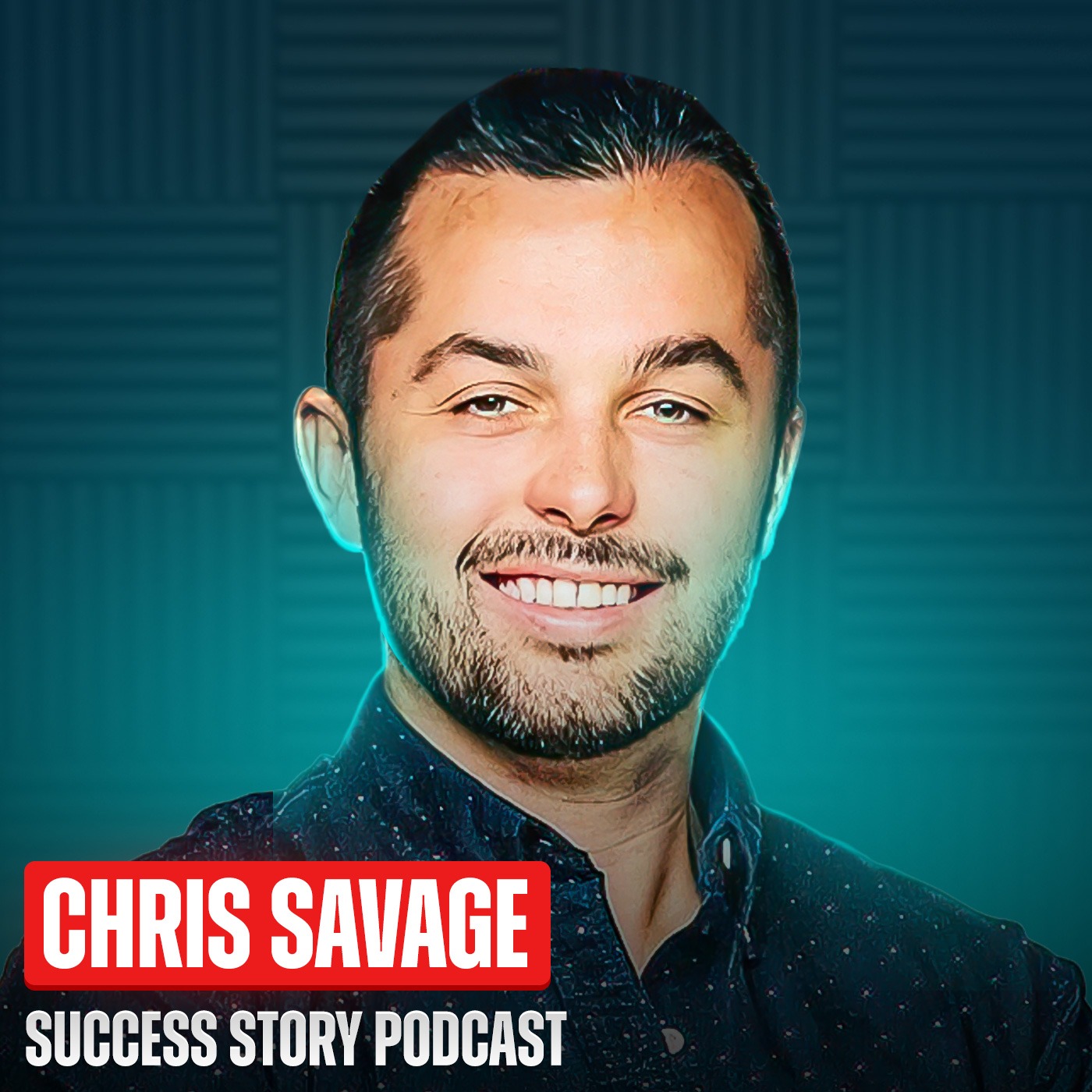
 Chris Savage - CEO and Co-Founder of Wistia | Taking on YouTube
➡️ Like The Podcast? Leave A Rating: https://ratethispodcast.com/successstory
➡️ Join 321,000 people who read my free weekly newsletter: https://newsletter.scottdclary.com
➡️ About The Guest
Chris Savage, the CEO and co-founder of Wistia, a leading video platform, embarked on the entrepreneurial journey with Brendan Schwartz in 2006, establishing the company in Schwartz's living room after graduating from Brown University with a degree in Art-Semiotics. Wistia has evolved into a multimillion-dollar business with over 80 employees and 350,000 customers. In a pivotal decision in 2018, Savage and Schwartz turned down a substantial acquisition offer, choosing instead to take on $17.3M in debt, demonstrating their commitment to independently building and growing Wistia. Chris is a vocal advocate for the Boston startup scene and is particularly enthusiastic about unconventional paths in the tech industry, entrepreneurship, marketing, video, and company building.
Before founding Wistia, Chris Savage gained recognition for co-producing an Emmy Award-winning feature-length documentary and was honored as a Top Young Entrepreneur by BusinessWeek in 2009. Beyond his professional pursuits, Chris and his wife have embarked on another significant venture – starting a family. Their daughter, Zoë, assumes a managerial role, and their latest addition, Olympia, seemingly grasps the importance of company values, having been born just hours after an all-hands meeting, showcasing a remarkable alignment of personal and professional milestones.
➡️ Show Links
https://www.instagram.com/csavage/
https://www.linkedin.com/in/cjsavage/
➡️ Podcast Sponsors
Collective - https://collective.com/success
Hubspot - https://hubspot.com/
Kajabi - https://kajabi.com/success (Code: success)
ButcherBox - https://butcherbox.com/success (Code: success)
Justin Wine - https://justinwine.com/ (Code: success)
Green Light - https://greenlight.com/success
Indeed - https://indeed.com/clary
The Sales Evangelist Podcast - https://thesalesevangelist.com/
NetSuite — https://netsuite.com/scottclary/
Factor — https://factormeals.com/successpod50 (Code: successpod50)
HelloFresh — https://hellofresh.com/50successpod (Code: 50succespod)
ZBiotics — https://zbiotics.com/success (Code: success)
➡️ Talking Points
00:00 - Introduction
01:19 - Chris Savage’s Origin Story
09:04 - Trailblazing in Video Hosting
09:58 - Entrepreneurial Lessons Learned
16:25 - Breaking Out of Your Shell
21:24 - What Makes a Good Podcast?
24:15 - Wistia's Future: To Sell or Not to Sell
28:45 - Video's Business Model Evolution
36:42 - Surviving Beyond Investment
39:07 - Strategic Prioritization Insights
43:02 - Sponsor: The Sales Evangelist Podcast
43:46 - Delegating Ownership Wisely
47:20 - Entrepreneurial Time Commitments
53:03 - The Mental Side of Entrepreneurship
55:08 - Embracing Fear for Growth
57:20 - Demystifying Company Culture
1:04:00 - Passionate Perspectives on Marketing
1:10:12 - Connect with Chris Online
1:11:55 - Advice to the 20-Year-Old Self
1:15:11 - Defining Success
Advertising Inquiries: https://redcircle.com/brands
Privacy & Opt-Out: https://redcircle.com/privacy
Welcome to success story. I'm your host, Scott Clary. The success story podcast is part of the HubSpot podcast network. They have incredible podcasts, but they also have incredible tools for entrepreneurs. One of my favorite tools that I've used and yes I've used HubSpot, even though they're a sponsor way before they even sponsored the show is a HubSpot sales hub. Because if you are an entrepreneur, your sales software shouldn't be the bane of your existence. When you step inside to your CRM, you should feel equipped to do your best work. Like you're sitting in the pilot seat with easy to use and powerful controls and that is the magic of HubSpot sales hub. They've redesigned their sales hub to help you win quarter after quarter year after year. They have intuitive prospecting tools. They have AI power tools that reduce your workload, managing all your leads, doesn't feel like endless manual labor. It makes closing deals easy. So you want to get your day-to-day tasks under one platform that makes navigating contacts, calls, emails, social marketing, sales, analytics. Very easy. Close more deals and get on track for your best Q1 yet. Learn about HubSpotSalesHub at HubSpot.com slash sales. Chris, thank you for joining me. I'm excited to dive in. One thing that I thought was very interesting when I was going into your story was that you were planning on selling Wistia very early on and you chose not to. And that's something that I commend you for having the foresight to think about actually building something to sell. But walk me through that sort of period of your life and Wistia and what happened. You're talking about the very beginning. Very beginning. Well, I mean, you know, when we started, yes, the plan was my co-founder, Brennan, I made a spreadsheet, said, there's so much money we have, we get took a guess at living expenses and servers and stuff like that. How long will we survive? We think six to eight months. So like, what's our plan? What will build this thing? I'm sure in six months will know if it works or not. And then what will you do is like, well, we'll sell it that that's the plan. And we really thought that like I think I was 22 and we started my perception of time at that moment, you know, six months felt like a lot of time. And obviously we didn't sell it. Obviously, it was harder than I thought. Obviously it took way longer. And I've been doing this 17 years. And speaking of that perception of time, it now feels like a blink. It feels so fast. And so that's been one of the most surprising, interesting things. And it's very much not what I expect it right. Like I thought we'd sell it me rich instead. I'm still doing it. And I love what I do. I love how I spend my time. And when I think about the future, I think how can I keep doing this? How can I keep? Even though it's really hard, like I enjoy it so much. So how can I just keep doing it? So when you, you know, when you start to hit that six month, one six month timeframe, obviously not ready to sell yet. But when you start, you started to build it out like, how do you know if this idea is going to be something that you want to roll with? Like I mean, you have maybe some idea of product market fit at six months or not. No, not at all. I mean, we know it's not working. I mean, the first six months for us was like, I mean, we started with a very complicated idea, which I think a lot of people do. Because it seems like to find your edge in the market or your what makes you different. Often people come up with complicated ideas. So we had a complicated idea. It was a filmmaking competition website where large brands would try to get filmmakers to make ads for them. And we would put them together in a marketplace. And how would they vote while we had a voting system? Then you have these creators. What if they're not actively doing competitions? Maybe we should have a job board. Okay, what kind of job board should we have? And so we've made this huge list of things. Look, this will be this creative hub where creative hang out and yada yada yada. That's eventually what convinced us was like, this is a good idea. And then you start, who would think that's a good idea? Well, I'll give you. So the reason that the reason we thought it was a good idea is because we'd seen a couple companies. Do these competitions. I had a background in film. I had actually participated in a couple of them. So there was a movie. Oh, God, what was it called? It was a horror movie about these like worms and slither. It was called slither. And they were released so much footage. And they said whoever makes the best trailer. The best 30 second, we're going to pay you 50 grand. And we're going to use this this. Okay. And I remember as someone who had gone to school for filmmaking. And I had been very fortunate. I've worked on a documentary film that won an Emmy when I was like 21. And so, you know, you'd think that would be like the best thing possible for your career. And it turns out there's lots of documentaries and distribution, but I realized when I was working on this competition for this ad, I was like, you know, if I end up making an ad that's seen nationally. That's probably going to be better for my career. And 50 grand to me would be life changing at that moment. But that'd be super cheap for slither for like this giant. That 50 grand be the cheapest type of ad they could make. So that's we started thinking like that. I'm like, oh, could we come up with? Could there be lots of user generated ads? That's kind of why we thought it was clever and smart. There's going to be this arbitrage and in creativity and stuff. But we made it very complicated to kind of have it be unique and different. And then when the rubber hit the road, we're like, this is going to be impossible. And we tried all these different things. And it's like very quickly. Well, we gave up on that idea, like probably six weeks in. We decided this is this is too much. Your time horizons are wild because six weeks is very quick to six months is quick. Six weeks is quick. But then you start to build. So when when does the version of with you that we like know now? When does that start to manifest? But that's what's interesting is like, I mean, it was actually kind of quick. So in hindsight, six months in. We're trying all these different things. We've given up on the competition website. We ended up making a portfolio website for filmmakers trying to get that going. We got hundreds of users on that thing. But we think we're going to have to make money with advertising. So that seems like it's going to be a failure. We're going to help video hosting into that. And we as we go to basically meeting people in person at events. People, we were talking to a lot of folks were like, wow, you guys do video. Can you help me with video? Like startups and marketers and different folks. And so when we were really running out of money, which was like eight months, we started talking to these people more seriously. And we got our first paying customer, which was on the same thing that was yesterday one year in. And that first paying customer, they basically said, we need a way to share videos around the world. We're doing it with DVDs. It's inefficient. It's slow. I mean, this gives you the timeline of when we started 2006. So we're like, we could beat that. We could do it basically instantaneous. We can give you a secure way to share these DVDs. Then people can like comment and collaborate around them. And the first thing that we built for them took us two weeks to build. And we built on top of the video hosting we had done. And that first customer paid us $400 a month. Our total expenses at that time for Brendan and I. We were living in this 10 person house in Cambridge with a bunch of roommates. We were sharing food. We were never going out all the kind of stuff. We were the only people in that house who were eating every meal from the shared food pile, you know, like everyone else was like that job. And so $400 a month was a quarter of our expenses. And so then the next month we got another customer and the next month we got another customer and within like four or five months, we're. You know, profitable, not paying ourselves to salary, but the business was good. You weren't losing money. You weren't losing money basically. And it was very quick. This realization of oh, we're helping businesses. They they have trouble using video. So we can do things that seem really simple to us. But to them, the value we can drive is very significant. And that just continued to continue to continue to the point where by the end of the second year, we were talking to massive companies. HBO, Nestle, Cirque du Soleil. We couldn't believe it. Honestly, like I remember doing demos sitting on the bed. On my bed is like 10 person house. I couldn't believe I was doing a demo for HBO like that, you know. And the fact that they were so interested made us think that there was more opportunity and that caused us to figure out what angel funding was and that was when we really started to push harder. Were you just thinking about all the other services that do similar things? Were you first to market or were other competitors starting to pop up some other names that people might know in the video hosting, sharing space. There were other names at the same time. The one that maybe people know is Breitkopf, which is public. Vimeo existed then, but they did, but they were not this. They were, they were just like a, I think at first it was just a website of like fun videos and then it was just like artistic videos or portfolio for a long time. So we were one of the only ones at the beginning. There was actually a bunch of venture funded competitors that have started and died. They were too early in the market. But yeah, I mean, obviously YouTube existed. We started six months after we saw YouTube. Okay. Okay. That puts a good time stamp on it. I've listened to a couple podcasts and you have a couple funny stories from when you were starting out. I think one of my favorites is when you're using stock photos to make your team seem bigger than it actually was. And you know, this, this is like a common trope with entrepreneurs. They always feel like they have to, they have to feel like they have to make themselves bigger than they are. I was speaking to Jan Bednar, who's the founder CEO of ShipMonk. And when he started out, he was doing, he was basically doing all the logistics from his house, but then he had a customer who wanted to get ShipMonk, which at the time was nothing to do fulfillment. So he like rented out a warehouse and then bought a whole bunch of shit on Amazon and put all the Amazon boxes into this warehouse. And that was like his warehouse where he does like 3PL from. So I love this. So talk to me about like some of the most ridiculous things as an early stage entrepreneur outside of eating shared food, which is already. Sounds like a lot of fun. All the stuff that you had to go through the lessons, some of the most brutal lessons that you learned, including this stock photo story, which I think is actually just hilarious. But some of those, some of those things are always fun people to hear because I don't really realize the shit that entrepreneurs go through and the stuff they do. Well, I mean, when you say that, I'll say that story first, and I'll throw some others up in there. But yeah, we thought that we had to appear big because we had these big customers who were signing up for us. Now one key thing I didn't even in hindsight, very obvious, but the moment was not there. We had no website. We had nothing. And they were still paying us is signing up and we weren't realizing that they were getting to know two, two guys who were like 23 years old, and they were signing up. And we thought they were signing up despite that. And what I didn't understand is they're spying up because of that. Right. There's a lot of people who are looking for the newest thing always and they're looking for an edge. They're looking for the startup. They're looking for the new way to do things. And we just got confused, I think, and we're naive and thought, no, we're a B2B business. Now we need to look and appear B2B. So we got all these stock photos, put all these stock photos on the site to make it appear like we're a bigger company. If you went to the team page, it said management. And it was like, at this point, just for people on the team, each person was a very long bio, all the words, blah, blah. It was real stuff, but it was. They were only for people in the company, you know, the application was like, we're the management was everyone. It was everyone. And any, I also didn't understand is anyone look at this would figure that out. It's like, you're obvious. It kind of all happened by accident where we'd hired two more people on the team, someone from four to six. And we thought we should shoot some photos of the team and put on the website, because we felt bad for these two new people to join the company. They had nothing that it could show their parents, you know, to like prove they had real jobs. And so we took a photo in front of a whiteboard. And we thought in front of a whiteboard meant business because we were so excited to have a whiteboard. You know what I mean? I'm dying. It's amazing. Yeah. And so real whiteboard, we're in front of it. It's not even clean. It looks horrible. We're not even confident enough for having enough understanding to even really smile. So the photos are all like stayed in there like looking like we think. Very serious business like business like, yes, a serious, you know, like, whatever, that's just like personifying what business could be. And then we took two goofy photos. And the plan was not to use them. The plan was just the one serious one. That's one going to site. My co-founder Brendan is putting this on the website is changing out this management page to an out team page. And he has three photos who is one serious and too fun. And he decides, because it's someone's birthday on the team, that he's just going to, and it's fun for him to do this. That he's going to put a little easter egg. And if you type dance on this page, it's going to randomly switch between the photos of each person. So it looks like we're dancing, right? And he builds this thing and he does this. And there was this artist of the time called Girl Talk, who would remix all this. I know Girl Talk. Yeah. I think we're like the same age. I love you. Awesome. Awesome DJ. And Girl Talk was remixing all this existing music. So felt like, hey, maybe we can use the Girl Talk album. I think maybe the Girl Talk album at that time is like totally free or something. Yeah. So if you type dance, it would randomly switch to play Girl Talk and he'd add these lasers on the screen. And we just thought this is so fun and delightful. He's like, happy birthday Jeff. Like, what I did. And then what ended up happening is that that page won viral. And we didn't think that was going to happen. But it went onto the front page of like hacker news and it went on the front page of Reddit. Both these things were new. And we got a ton of traffic. And then the crazy thing that happened was two weeks later, we had a two week trial at the time, two weeks later, a bunch of new paying customers. And it was the most, I'll never forget that moment of weight. We just were clear about who we actually are. We don't look professional at all. This is like a choke. And yet we just got more paying customers than we ever had with any of the marketing we'd ever done, which was basically like, look how great this video hosting us. And it was like this lesson of showing people the real people behind the scenes, doing something fun and interesting, doing something that today I would just describe as good brand. Doing, having this really great brand moment caused people to care enough that they figured out what Wistia was. They saw it could be useful to them. And they set up and became paying customers. And if you go back and you trace when Wistia started doing like wild brand things and wild content and putting a face onto the brand and all it all started with that with that moment, which is, which is crazy to me because it was such an unexpected thing. And you've carried that through for the past 17 years, just like the thesis for how you market. Whenever we have made a mistake on our marketing, it has been when we didn't care at all. And so interesting, you know, maybe just a thought on this because we're not going to solve every business is marketing problems today. But I find that people still fall into the trap of being scared shitless of of being themselves online and they they write the most boring LinkedIn posts or they put out the most boring corporate updates. And it's not just corporation. It's not like big companies do like the small companies try and act big kind of like exactly replicating what you were doing when you first started out. What's your advice? What's your what's your one thing that you could say to a founder to really like drive this home? Like how do they get out of their shell? And like be a human online because I'm bought into this word, you know, kindred spirits and we believe this, I believe exactly what you're saying, but a lot of people don't. And I was speaking inbound about this too, like five years later after I started posting about being yourself and being authentic on LinkedIn. And now everybody speaks with being authentic, but nobody does it. Yeah. So why not? What do we do? I think it is fear of failure is so crippling. And I think people look at it the wrong way. And what I mean by that is you don't want to put a ton of work into something or put yourself out there and then no one sees, you know, it's no one sees it. It didn't work. What if being myself doesn't work. That's pretty scary idea. Yeah, that is. And I think what I've learned in this is because, you know, there's many different moments that you need to be comfortable being uncomfortable. Is if you are yourself and it doesn't work, no one saw it. And so there was no downside. The worst thing you can do is spend a huge amount of time on something and no one saw it. But if you're actually being yourself is not that hard to be yourself. And so it's how do you can you get comfortable enough that you can put a lot of things up to the world and know that most stuff isn't going to work. And that's normal. But if you do that and you are paying enough attention, you will learn the things that are working and that resonate. And like actually as human beings, like you and I can only get to know each other so much in this podcast. There's a lot more to each of us right that we could ever put into an hour long podcast. And I think that that's what people miss is that there's so many parts of your life that are going to be interesting and compelling when you bring it in with your business. And that's just how it's always been like we're just we're just wired to connect with other human beings. That's what we want. And so it's really about getting to that place of comfort of saying, Hey, if I put this out there, no one sees it, that means nothing bad happened. Yeah. Not like it failed. It means nothing bad happened. Like having something go viral for the wrong reasons. It doesn't usually happen. And even then, if it did go out for the wrong reasons, I think you can almost always get out there and try to, you know, give your full taken story to try to like turn it around from like a negative into a positive. But that's there's it's it's really actually just like, can you see it through? Can you get enough learning? You know, but that seems to be what stops people. It's just this fear of like, well, if I release it, no one's going to see it. And also people think that their opinions are way more controversial than they actually are like the wrong reason for going viral is when you tweeted something explicitly racist like 10 years ago. And that's why you're going to get canceled. But having an opinion on anything business related, no one's going to cancel you like like really people have better things to do in their day than to go find somebody that has a hot take on AI or like post a picture of the walking dog. Like that's not going to get you canceled. So I think it's just always. And I think that I think that you're exactly right. And I think that there's, I mean, we were talking even before recording today of why having a conversation just getting going. You're like, we got a record because we both knew and this happens all the time. It's like when you have a conversation with your friends. And you're talking through some idea and you're willing to let ideas rip and you're pushing back to that. That's normal. And then you get into a podcast like, well, what can I actually say? Can I be myself. Yeah. And what you start to notice is that the podcasters as an example who really build a real audience and follow, they're, they're closer to being themselves than a lot of other folks. Right. And they're willing to put ideas out there. And we're smart. And like you and I could disagree on a bunch of stuff. And that's fine. But like being comfortable being in the public disagreeing is is a different thing. And I understand what we'll need to get comfortable doing it. That's why I think it's like a lot of it is, you know, not how do you do one or something, but how do you do a hundred? Yeah. I think about that a lot is like, all right, if you assume it takes a hundred attempts of something before you start to figure it out, what are you going to do? I love that. Yeah. And that's by the way, it's not just my idea. I've seen that around, but I really do feel that it is true. And so you have to look at things that way. And once you look at it that way, that first is second, the 10th, the 20th is not not so scary. Well, you're your podcast host so you get this. So you probably get people asking you like what makes a good podcast. And my perception of what has made a good podcast has changed dramatically. So day zero, it was bring the biggest guest. Then I realized that the biggest guest is on 200 other shows. And maybe 20 whatever. And you can hear that story again and again and again and again. So what do people come for? They come for you. They actually come for you because they become fans of how you think and how you speak and how you converse and how you interact and how you structure the show. They come for you. They don't come for the guest. The guests they can see other places. That's right. And I think it's also a people thing. I'll get one guest and it'll just change everything. It's like, no, it doesn't. I can guarantee you it doesn't. The most famous people in the world actually nobody gives a shit. Once in a while, unless it's like unless it's like, you know, pick a pick an a list, pick a whatever Obama, Kardashian, Musk, Zuck, like whatever. Maybe some people will come. But outside of big names, talking about things that they haven't spoken about before, it's not going to move the needle to the point where it's oh, you know, no name one day and then overnight. Yeah, household name except for that one girl that did the Drake interview. She, she blew up. I can't remember what her name is, but that was it. Yeah. Yeah. Yeah. That was incredible. That was incredible. Yeah. Yeah. But I agree with you. And I think it's what we want. I think is like, you know, if you're listening to a business podcast, I think what you want is like you want to be somewhat entertained. So that you can actually continue to listen. If it's boring, if it's boring you to death, but there might be great insights. It's still hard to listen to you want to be someone entertained. And you want the opportunity that you're spending your time that you might get an insight. And you might get something that gets you to think differently. And personally, I think getting something every time that is like if you can do one insight in an episode that really causes someone to think differently, if that could happen every time, you're an amazing shape. And if you were entertaining enough by actually being yourself, because like we will sit there all the time and just have conversations with each other, right. And like, if you're in a really great conversation, that can be the most fun thing ever. And so it's like, how can you create that for somebody, which I think is just bringing people in and trying to be yourself and almost like, I don't know if you've had this experience. It's like turning off the filter before you speak a little bit. And the more you can just turn it off and trust that you are yourself, the better it seems to go. I believe that fully. I mean, when you start this, you think that you have to be a Wikipedia page for the person. And then you're like, fuck it. Let's just go or two smart people will figure it out as we go. I do have a question for you. I do have an actual business question. Perfect. When are you going to sell Wistia? Why are you still? Why are you still building it 17 years later? That's a good question. I would say I don't know. I think the way I look at it is I feel I feel really lucky to have found a market that I love working in and a series of products I love working on. And people I love working with. And if you asked me what the dream job would be for me, it wouldn't necessarily be to be CEO, I don't think, but it would be to work with really smart people to work through really hard problems and to be able to actually see if it's working or not. And so for me, I think I just feel so thankful that I get to do this. That it's selling is not something that is like on my mind. I think the thing I've said before about like, would we ever consider it? I think sure it would have to be something that I thought that we would be able to accomplish what we're trying to accomplish like much faster or much better or in a different way. It would have to be something that really like I looked at it and like I would think to myself for the team and for the customers, we're going to make something even far better than we've been able to. But I have no idea like if that will when that would happen or if that would happen or who that would be with. And so instead, I've just really focused on what we've always been focused on, which is like if you enjoy the process, you don't know when breakthroughs are going to happen. Hard problems are hard. And so it's and it turns out I actually enjoy trying to solve them if I'm working with a great team. Did you ever take on money? Is that public or? Yeah, we raised angel money in 2010. We raised a total of 1.4 million. Okay. And then we actually raised a debt round to buy out our angels in 2017. So we raised 17.3 million debt. Did this buy out, which we've since paid off that. I was going to say because if you have investors, I'm surprised that they aren't pushing you to sell, but that makes a lot of sense then. I think it's, you know, that was one of the think pieces of thinking for us was. It's very hard. The time is the hardest part. Like, when is the market going to be ready for things something? Yeah. Are you there when something's happening to so you can actually absorb the luck that can occur? And like when people don't agree on timeline, that's often when things don't work. I have some friends who are running businesses in not in not in tech. And it's interesting to get to know a bunch of the these folks who like. I have a friend who who took over like a marine outfitting company that his dad had built and then he brought it online and he grew it dramatically and they built his own brand and that grid dramatically. And now he's doing something that from the outside to be like, how could you decide to like make your own paint and make your own epoxy and like do it. It's like, it seems like such a crazy idea to in terms of a business to start. And he loves what he's doing is having a huge impact. And like it's because he's been at the problem for a long time and he's been able to be patient on certain things. And I think like patients and perseverance is often like what we miss when we miss the opportunity to do those things when our timelines are too short. Right. And so I, you know, you want to get big in the gym. You got to lift every day. How long will it take? Might take a long ass time. But at one point, you're, you're pretty big. And you guess what? It's be hard not to be big. Like I think it's like, well, then you maintain, then you then you can maintain it. That's, that's kind of how I look at it. Yeah, but it's a, that's what it's a good question because I actually do try to ask myself that question with some regularity. Like, should we consider this as a something that should be just because I've learned also that it's really important to have religious beliefs in your business about things that you are always going to do and things you're never going to do because it provides like a focus to everybody. The ability to make decisions more quickly, but every once in a while you have to question those beliefs and ask yourself if they're still true or not. And so, you know, selling your businesses like the same topic for me as that. Well, because there is something to be said for finding out when you're at the, at the top of the market in terms of being able to sell. And I have no idea. And I'm curious about where you think we are in terms of video and where the market's going to go. I'm assuming up into the right always. But in all sense, it's like what that happened to the right version of video looks like. But the reason why I think it's interesting is because a good friend, his name is Joseph Martin. He's been on this podcast and he literally lives down the street for me. He was the founder CEO of Boxy Charm, which was like a makeup subscription box. And he built it during the heyday of like beauty influencers and he grew it to, I think he sold it. I think it was almost like a, I can't remember the exact revenue. I won't name the, I won't put the number on the revenue, but he sold it for 500 million. And I don't know what the, the multiple on revenue was, but it was obviously a very good exit. And that was at the top of the market. And then some of his competitors since then have gone bankrupt that were before him. And slightly larger than him at some points, but didn't sell. And he exited awesome exit right time, right place. It was, I think just at the beginning of COVID. And then the beauty subscription industry obviously did not maintain at the same growth rate as, as what it was before his exit. So it was like perfect timing. It was like a lot of luck because it could have gone up, could have gone down at any point. But that was when he chose to sell. So I think it's interesting to just understand in terms of your industry, where, where is video and where is the need for services like yours and where are the competitors that are trying sort of to encroach on your space and sort of take market share from you. And I'm just curious because I think for the layman, we see these, we see video as something that's been around for a while, but it's still not. It's still not as mature market as I think it could be in terms of technologies and new technology players coming in because it's very, that's very complicated. So where do you think video is in terms of like as a business model. Do you think more people are coming in? Do you think it's still a high burden to entry? Maybe some ideas on that. Yeah, yeah, that's great question. So I think there's, I think about this a few different ways. Like there's what's happening with video on the B to C side and like in your personal life and then what's happening at work. And what I've always seen is like things that happen on, you know, in your personal life, they make their way to work in terms of behaviors and where people spend time and how to market and all these different things. But the question is when, when did they make it? So an example there is like, you know, I'm sure you're on tiktok or Instagram and you're scrolling through YouTube shorts and you're going through the vertical videos. It's basically like channel surfing back in the day, right? It's back. Except now it's in your, instead of the remote in your hand, it's your phone. It's like, you know, more don't mean it's that's training everybody, right? To like look for that very, very short term short form content and more comfort making videos. Like there's a lot more people making videos today than there were three years ago. There's a way more people making videos today than there were 10 years ago. How does that show up work? It's, it shows up really differently. It shows up in like quick recordings that people make. It shows up in expectations of like, hey, I hired you and we never talked about video, but you're my new product marketer. I need you to make a video for me. That is only just beginning in B2B. Like, and I think one of the reasons is like, actually tied into what we're talking about earlier. It's like risk. It's brand risk. It's fear of getting on camera. It ties into fear of public speaking where you have no trouble speaking with your friends and hanging out and doing silly stuff. And then someone puts you on a stage and you like clam up. That kind of gets triggered when you get it to work. And so I think that's always been a governor on the growth, like it's slowed growth down and slowed down adoption of video at work. And I kind of look at it from this longer term view of when we started, I would talk to companies and they want to make a video to launch something they would plan to spend 20, 30 grand. And then the price came down as we got that DSLR and the price came down as we got iPhones. And now I think the price is coming down even again because we realized our computers are cameras. And that's a big, that's what 2020 did, right? So I still look at it. It's like we're actually still near the very beginning of this. Interesting. And the way you can tell is there's a lot of startups that are trying to work on the creation of business videos. There's a lot of them. And AI, I think is the other X factor here, which is like AI is enabling people to make videos today in a way that they couldn't two years ago. I mean, even in Wistia, we this year, we used to have transcription and Wistia, you could pay for it. It was like very accurate transcription, but it was out of reach for a lot of people to get this perfectly accurate transcription. Well, the AI transcription got good enough that we could actually offer to all customers like every video you get it. And then once we did that, we're like, oh, we can make it so you can edit your videos by editing the transcripts. You go and you delete words and moments and paragraphs and it does the editing for you on the like non-linear editor, right? That is enabling. We've seen that our data way more people to edit videos than could before because it's much less intimidating to edit text than it is to edit by editing on the timeline. Oh, that's very interesting. Oh, that's very interesting. I understand. I understand. So they're actually they don't even they don't even go into like a premier pro. And they're not cutting and deleting. They're literally just taking out words. And they're not even worrying about what the video looks like, but if they delete the word, then they know that pieces take it out. Yeah. And that is something that AI has enabled like we can do that because AI has made transcription cheap enough and because it's accurate enough and it's good enough that we can actually build that interface reliably. And we can offer it included for every customer. So that's like a super exciting thing that's only just beginning. And there's a whole slew of things coming there that I think are going to help as well. And I kind of look at it as like for the most part, the people who have been making videos at work are often video professionals. But they're also like educating and teaching the other people on their teams to do this. And it's kind of like if you only had some people who could write copy. But if anyone can write copy and then the copy editor can come in and be like, oh, we can make it better here, here, you save me a ton of time because I'm finishing something versus coming up with it, starting it, building it all the way through. That's a very, very different thing. So I look at that. And I think we're at a very different place. I think the quality of the cameras that we all have around us is really showing up to give people more confidence that they can make video at work. And yeah, it's like this came, became kind of obvious in COVID, because everyone's staying at home. And you know, you go look a product on the number of video startups that are doing video for business things unbelievably huge compared to pre cover. And so to me, this is kind of the next shift. And so it's how do we adapt? How do we help? And then the other thing I'd say is like, that's been a consistent as as the space has changed a lot. And what I mean by that is like literally even the codex that are used to encode the videos. And where people's websites are and when you need to push to different platforms versus taking embed and all that stuff, it's constantly shifting and changing. It's turned out we're in a space is pretty complicated. And so by staying very, very focused on that, staying focused on the reliability and the technical part of it, we can provide that back end service that people can just trust. And so that's another thing that I've seen that's been I think hard for a lot of the new entrance and some of the even bigger players because if you can't keep investing in that core, you're going to miss out, you know, because ultimately your services will be unreliable. So even even in like 2023, almost 2024, oh shit, there goes the evergreen, but whatever, even even now, it still is very difficult to build out like a video solution, like there's the technology and the skill sets and the investment, it's significant. I guess that's really like I was going to ask 17 years later, you're still thriving as a company, even though there's all these different incumbents that are sort of coming after you and trying to eat away at your customer base. That you think that's the secret, you think outside of just in reinvesting because you're a larger company, what are some of the other things that you think you would say keep you alive about 17 years later so that the new oddest thing can't come take you out. I think the first thing is like I'll say another way we've made mistakes has been the things that have hurt us have been when we lost focus. And so and often what I mean by that is like focus on the customer, what does the customer actually need? You know, it's a lot of like, this is going to sound funny, it's a huge amount of incremental improvements and it's this constant incremental improvements on enough fronts and I actually look for the signal like our customers still requesting enough for us. And you could tell when something's going to work when they're requesting a ton of stuff. And so like to stay on the editor example, we have the editor, we launched it eight less than 18 months ago, 15 months ago. There's like more people using this thing every month, you know, tons of videos being made with this thing, but there's more requests every month for way more than what people want to do with it. And I look at that and I'm like, all right, this is working, this is working really well. The way we'll screw this up is actually one of the reasons it's working right now is it's so simple. If we make this thing too complicated, then people will feel like it's jumping into premiere and it'll feel too intimidating and we won't grow. So what we have to figure out how to do is how do we solve these incremental requests that people have, how do we build these incremental features and things. And we do it in a way where the product stays really simple for someone who's not the producer. So what oh, sorry. That's just that. That's just really hard. I know it's hard. I know it's very so my question and maybe continue your thought, but also keep this in mind because it's important for you've already building these feedback loops in. So that's a very important point for somebody who's building a company, you build the feedback loops and the get the feedback from your customers. Great check, very, very important, not enough people are even doing that, especially at an early stage. But once you do that, what's the framework, what's like in your mind, in your head, how to figure out what to prioritize, how do you figure out what to work on. So the way that we've done this that's worked extremely well and it did not like when we before we did this, it didn't work well. And you can, I just posted about the sunlight in the other day because I was looking at our public product updates. And it was something like in in 2022, we had 12 product updates that we like published the world. And in 23, we had 74. So like more than a 500% increase same size team. How did that happen? And what has really worked for us is saying, OK, we need to give ownership of the customer problem to a product team. That product team needs to have a product manager who's in charge of like roadmap, but that means working across their team directly, working with sales and marketing, working with support and success. Figure out what to build and they're in charge of what to build. You have a tech lead who's like the lead engineer and you have a product designer who is the lead designer. And then you also have other engineers in the team and more engineers up to a point is how you're going to go faster that group. We used to try to approve all the road maps as leadership. So people would come, we'd have these big meetings. I'd gear up for the meetings. I'd be like, I'm going to ask the hardest questions. I'm going to make sure that our prioritization is perfect on what we're going to build. And that's a natural thing that I think we did because we always felt under resourced. And so when you feel under resourced, everything you do, you want to be really good. So we were doing that and it seemed like it was working. But what was happening was the pace was going too slow and we weren't actually close enough to customer problems. And what ended up getting prioritized, the top would often be the most well researched, most backed up idea that you could have for like something to build. And there might be things that were like number five in the list, number seven on the list, number nine that actually might be much more impactful. But maybe you have less research, less customer conversations, but the team instinctually thinks is the right thing because they're on the customer problem all the time. And those were not being prioritized. So we flipped it and we said, all right. You teams own these customer problems completely. I want you to focus on shipping customer value every two weeks. It's up to you to figure out what those things are. You understand our strategy, you understand who the customer is go. And it was like flipping a switch. And we went from this like very like thoughtful system that was pretty slow to an incredibly fast system. And in this fast system, we get customer feedback so much more quickly that that you know three months in the teams launch something six times. They might have improved one feature three times within that period. And you have something three months later that's way better than what you could have had in the old system. And that just has happened on all fronts. And so it's been this realization of give people the customer problem completely and trust them to do the prioritization. We give a lot of feedback and leadership will try to set the goals the right way. But ultimately it's up to the teams to figure out how to hit them. And that has. Yeah, that has completely changed how we build. And I think the experience that our customers are having. I just want to take a quick second and tell you about one more podcast. You have to check out if you're a fan of success story. It's sales evangelist hosted by Donald Kelly brought to you by the HubSpot podcast network. Each week, Donald interviews the world best sales experts, successful sellers, sales leaders and entrepreneurs who share their strategies to succeed in sales right now. He brings on Jeffrey Gittemer, Jill Conrath, Bob Burr, Guy Kawasaki. They share actionable insights and stories that will encourage challenge and motivate you to hustle your way to more revenue for your business. If you're somebody who's looking to take off in your sales career. If you are an entrepreneur who's looking to sell more, I think all of us are go listen to sales evangelist wherever you get your podcasts. Well, you know, I think something that you've tweeted about it. You've done videos on it is about giving that ownership to other people in your organization. And this is just like one very specific example, but this is obviously a very. It's a very impactful thing and it's very top of mind for you because I'm assuming like most entrepreneurs day one, you were doing everything and you had massive issues letting go of shit and yeah, and then you were working too hard and burning out. You're like, I got to do something better. This doesn't work. When you when you start to give ownership and you delegate and you start to build a business and not just a job and then people start to do their thing and they're they're killing it. That's great. That's the way you should build. But let's pause for a second and just think that what are the things that you have to be aware of. So when you give somebody a leash, they don't screw it up. What are the one things that what are the things that you still have to be cogniz enough even if you delegate 80 90% of your day. What are the mission critical things that you focus on that maybe it's something that you do still have to check. You probably have some of those things. I'm a big believer that delegation doesn't mean that you are not involved. So you want to delegate the problems so people can own them completely. That's also how people will step up and grow. You know, if you are early stages happens automatically, you know, if everyone's when people talk about everyone wearing lots of hats, what they mean is there are a lot so many problems you need to solve that people start doing things outside of the domain that they have specific responsibility for. And they're stepping up and they're growing and they're figuring out things right. As you get bigger, you have to be more clear about how to do that. You have to be more concrete and say you own this problem. This is what I expect, you know, the goal setting part of this is important. So what are the OKRs or setting what are the expectations of our setting. And then if you've actually delegated and people are owning these things and you're not in the meetings and you're not sitting there through all the day today, that can give you the time to actually dig into this specifics. So for me, that looks like I use the products all the time. And I'm giving tons of feedback all the time, because I actually use products. And I'll be like the first person to use a new thing and they're like, what how's Savage doing this? They're like, well, I've delegated to create the space to actually do that. And then sometimes you sit and you work with a team through a very hard problem. It's just not necessarily all the time every problem. And I think that's a. That's how you're going to know if it's working to is if you sit and work with the team and it's not. And you realize like, I've delegated to the wrong person of the wrong perspective. It becomes obvious real fast. And I'm a big believer too. They like the leaders that you have in your organization. If they are also people managers, like obviously can have leaders in any role, but if they are a people manager, you need those people managers to be great at management, you know, coaching people, giving feedback, you know, working through hard problems, planning, blah, blah, blah. You also need them to be great at the IC work, at the individual contributor work. You need them to be able to get down on the ground and understand what's going on in lead by example. And when you have those two things, it makes for everybody in the org, it makes them much easier to delegate pretty completely. And then actually be able to sit next to someone they're writing code or they're, you know, writing a blog post or they're designing something and give actual feedback. And if there's respect there in that moment, it's not so scary to delegate. So now you've opted, like, I love this. You've optimized a lot of the organization again through 17 years of learning. And I'm super curious now. Like how much, how much time do you actually have to put it as an entrepreneur because you set up these systems, you've hired the right people. Like what is your, what is your day in the life of because 17 years of building something that your founder co founder CEO of stress ads up if you're not careful. Yeah, so, so what is my, so my, my day to day is I also learned at one point that's like, you have to put your oxygen mask on yourself first, right? You know this whole thing around the plane, they tell you to put your oxygen mask on you and then your kid. And when, when I first had kids, I was like, this isn't right. So it's like I should take care of my kid first. The problem is obviously, let's say I put on the kid. I don't put on myself. I pass out plane lands. Yeah, we have to have the plane kid screwed by putting on myself. And then they're passing on to put on them and they wake back up and the plane lands and get them off the plane. And that's why that, that advice exists. That's why that rule exists. And I think the same thing is for business like if you show up and you're constantly stressed and you can't be even killed and you can't work through hard problems. If you snap at people, if you're a dick like all these things, you're going to build a wrong environment. So you need to be able to manage this stuff. And so I look at like managing my own personal stress is actually like a very important thing to do as a leader for the business. And for me, that looks like I wake up. I spend time with my family, I have coffee, you know, take the kids to school. I work out every day. I meditate not every day, but I meditate with some frequency. I try to sleep really well. And when I have those things in place, like if I'm sleeping well and I'm working out, I usually can manage a lot more stress. And I'm sure you've heard this, but there's a lot of evidence that literally being able to stress its physical, the difference between stress, its physical and emotional is very small. And so there's this great book, The Art of Learning by this guy, Josh Watkins, who was like a chess grandmaster and he talks about learning and part of it, he talks about it's like managing stress. And you know, these chess grandmasters will sit down for these long matches and lose like six pounds in a day in a tournament. And why they're just sitting there focused and their heart rates elevated and they're stressing their body trying to come up with like what are what's the right move to make. And it turns out that actually exercising and stressing their body in advance, like lifting and going for runs, swimming, whatever. It actually helps them manage more stress than the match. And the two are linked and so you have to look at it that way. And I think when you do it makes it easier and then the rest of my, so I do that every day and then I try to have 40 to 50% of my time be free. Okay, not in meetings. Some weeks it's a lot better, you know, in planning season, it's worse. And I try to have that time to be free and in that free time, it's playing with the product is playing with competitive products. It's trying, it's trying to read, trying to understand where things are going. It's talking to people in the team. It's like using. And then those connections and those opportunities, the understanding from like a bottoms up way. So that I'm not only relying on dashboards and data because we, we end up losing sight of what individual human beings are doing and needing and feeling when we do that. And so getting on the ground is like the easiest way for me to have that understanding. So smart and you, and you create this room to, to have this relax state where you can think creatively. And you can, and you can, you can really just dive into your product in a way that isn't from this is this, this stressed mindset, right? Like when you're, when you're non-stop all the time, if you are jumping in and out of meetings and you really don't create this space, then you try and do it off the side of your desk. And you'll spend 30 minutes here diving into product or you'll spend 30 minutes here going through whatever problem is coming up. And you're not giving it the attention to deserves, but I feel that entrepreneurs and founders CEOs, like they have to give themselves time away from the day to day to think of like the higher level problems. And I think that that's what you do exceptionally well by sort of forcing yourself to not be in meetings all the time so that you actually do have the bandwidth to do some of this creative, higher level thinking. And you have the buffer like if something big does come up, you have the space. So it's like, oh, we have this like huge opportunity. How are we going to handle? Like you can just jump right into it. I don't have to cancel these meetings. I don't have to throw everything off course to do that. And I think that's another aspect. And I get that like, that's not how this starts. Yeah. And I think a lot about that because like, that's not a start. So you feel like you're constantly working. But before you have traction, you are bored. And you're saying they're like, what should I do today? I don't know. And a lot of great ideas come out of that. And I think about that a lot of like we see these startup super tiny no traction, something wildly creative that they come up with and they do it. Then why didn't they do it later? Why weren't they doing really wildly creative stuff later? I think oftentimes it's like they've lost, they've literally lost the time to do it. So you architect that time to do it. And it's a balance. I mean, you can screw it up in both directions. I think you can have not enough time and not be close enough. You can have too much. And so a lot of it's like really trying to be in tune with how you feel. Do I feel good? Do I feel present? Do I understand what's going on? We're getting heavy here. I know. But it's I think it's important because I mean, listen, you can you I could have I could have spoken to you about a thousand different marketing tactics that you deploy that you could probably could have Googled and found on some blogs somewhere as well. But the point is like what is it actually this is why this podcast actually is morphed. So day one, it was very it was very tactical. I realized that you know, all the people that have achieved like the quote-unquote success, they went from they they have the pure tactics, but they create they create this this almost like this mental framework at which they look at business and life and problem solving that allows them to operate at this level for a significant period of time and not burn out and still be creative, still be thoughtful, still be empathetic to their employees to their customer to the other people in their in their life, their peers or spouse or children. So I think that actually the the the mental component of entrepreneurship is arguably more important than just being a strong operator. Because you can learn the operational stuff or you can hire it out or you can, you know, mess around with Facebook ads to the point where eventually the campaign will. The fact that LTV will be correct and you'll you'll figure out how to increase the LTV of the customer and you'll turn on subscriptions and you'll you'll get to all these points eventually, but you can't think creatively about problem solving if you are always in the weeds on the business every single day. I think that's 100% right. I think your mindset matters more than people realize, and I think, you know, as you're talking to me, think about like, let's say you knew if you gave something 10 years, you'd be successful, but you don't know when. You don't know when in the 10 years is going to happen. What do you? How do you set up your life? Well, you definitely don't set it up the way I thought I I should have when we started, which is like you're going to do this for six months. And then you're going to give up like that's that's not the answer. And what happens sometimes is people they set it up for 10 years. And then it does happen at six months. And that's incredible. Right. But it this like mindset and attitude really, really matter a lot. Go ahead. No, no, go ahead. I was going to say one other thing that you tweeted and it's another mindset thing. But if you thought you said this was an important, an important thing to do as an entrepreneur, if you find yourself stressed about something you lean into it or scared of something you lean into it. So if you are scared of public speaking, you book a speech, if you're scared of I don't know meeting with a client for whatever reason you have social anxiety, you you push yourself to go to the meeting, not saying this is you, but this is just a general view that you have. Why is that so important for entrepreneurs? That's where you're going to actually learn and realize that a lot of us is just a skill. It's just a skill that you anyone can learn. And it's it's how you get through the beginning of learning the skill that is the hard part usually. It's like when you're giving and you're trying and you're not getting a response. Once you start to get a response slide easier, you give a talk, you're afraid of talking to talk of people really clap and someone comes up to you like, that was really helpful. You're going to be like, wow, OK, that's cool. And I think it's just like it's like that for everything is how do you get the positive feedback to get you to continue. Um, and usually like the fears are just that they're fears like they are, you know, if you are trying to live in the moment, the fear is worrying about something in the future, the questions, can you control it or not. And if you can control it, why don't you fear it for less, why don't you, like I look at it as like you get through the fear and stress faster. So it's like that's a very helpful thing. Like sometimes it's very OK, let's just deal with it right now. Let's compress as much of the pain as possible. When I look back on it, if I compress that pain for a week, I'm going to feel a hell of a lot better than if I let that linger for six months. OK, last, last, actually, you know what, when I was prepping for this, there's so many things that you've spoken on that I was actually very, I was having a hard time figuring out like which, which I mean you to go down. Yeah, because there's a couple of different talking points that you've said over all, you know, the videos that you've put out, you're on a ton of podcasts to and obviously will drop some socials. But I thought they were all really, really fun ways to look at different business problems. One thing that you have spoken about, which I find is a boring as hell topic, but I think it's actually important because you put a spin on it. This is actually not so boring is company culture because it's an overused word. I don't think anybody actually knows what it means. And nobody really embodies it properly. So talk to me just very, very quickly, like make company culture not boring for me. And maybe very meaningful for people that are listening. OK, company culture is not perks to be clear. I think that's what people thought it was. It was like free lunch. Oh, great company culture. It's a massage with office. That's not what culture is. Culture is is how you solve problems. So the way that I look at it is your strategy. You know, your approach to market. Are you the luxury thing? Are you the cheapest one? Are you the middle of the road? But like you like an innovator? Like what, what's your strategy? What are you trying to do? You know, pick any market at all. Like, and let's just for some reason, I don't know why it's going to mind, but like electric bicycles. OK, let's just pick a market electric bicycles. So let's say you want to be the luxury electric bicycle creator. What does that mean? Probably means you can charge a lot of money for this thing. That's going to be your plan. Probably, I bet the top of the market, a lot of people have very different needs and wants in the bicycle. So it's like, I might want to have a thing that can have my two kids sitting in the back. You might want a thing that has two kids sitting in the front. I might want to range. It's like a hundred miles, but the normal range is 30. OK, so what do you do? Well, you make it really custom. You make it so that the company will build it for me. And they're going to take care of every one of my every one of my needs will be met. Then you're someone who works at that company making these electric bicycles. By the way, I've never used this analogy before. So I hope it works. I'll see where it goes. You're at that company. You're building bicycles. Your job is going to be like, talk to the consumer a lot. Make sure that you're solving the problem, send them lots of updates on how this bike is looking. Is this the right color? Is this the right fit? Whatever. And probably the person who's paying for this, they don't really care if they're spending five grand on either 10. They just want the perfect thing, right. So you're rewarded by you're having a culture that is very responsive to the customer, changing up the things for them, building custom. You know, things that attach the bike, whatever. So we'll pay a lot. You need a culture that's going to do the custom thing, go the extra mile, whatever. Now let's say you have a bike company electric bike company and you're going to be the cheapest bike. So instead of someone spending $5,000 this bike, they're going to spend 300 and they're going to compare it to a normal road bike. All right, what do you need to do? You're going to, for you to make a lot of money, you need to make the exact same bike and you need to sell it a million times. You need to make it as cheap as possible as regimented as possible. You're going to need a factory with hyper specific machines that build all the different parts of this bike. So a customer calls up and they're like, I want to add this custom thing. I want it to range to be instead of 50 miles. I want to be 100 miles. I want this thing. This dongle that fits on the back of it or whatever. If the person gets the phone and they act like the person in the luxury bicycle thing and they're like, oh, yes, of course we'll customize this for you, whatever. You would fire that person. They're doing the wrong job culturally. They're how they're solving it is incorrect. You need them instead to not pick up the phone. You need them to fill out this form. It'll go to a thing like we'll look at it and our team will analyze and understand based on the requests of what's coming in what we should build. They never should talk to the person. They never should do something custom. The examples go on and on and on and on, but culturally what should be rewarded in each of these different strategies is very, very different. If you try to make the cheapest bicycle with a luxury culture, you're screwed. Same thing. The other way, if you try to have the luxury culture and you're going to make it the cheapest possible, the most formulaic, you're going to miss out. So your culture has to match your strategy. And so I think of that. That's how I think of culture. I love this and I absolutely love this because nobody thinks about it like that. Nobody thinks about it like that. It's just it's a decision making framework. And so when you have values, you want to give people the best decisions they can make in the strategy that you're operating. Now, that's how I think about it. I and I think like what I look for internally is people should never say, quote, this is the wistie away to do something. Because that means that someone who's been here longer has, quote, knows the way and you don't know the way. So if they say this is the wistie away, then obviously there's some magical way. Instead, you want the decisions to be driven by values. So you can just look at the values and everyone has them to have the same way of making decisions. The last thing I want to say on this is that I think is like really interesting. This has happened to us. And I think people need to think about it. I was like, if your strategy changes, you need to change your values. And that is something that people miss is they we have these values. These are so sick. And like maybe they did align to your strategy implicitly in the early days. Maybe they did maybe help to get to where you are. But if you're going up market or going down market, you're doing something that's now really transactional and back end. You're switching and you're going to be just like the innovative player in the space or whatever. You have to address this. And that's also why when I think about values and decision making and culture. I look at it as like there are certain things that you can change about a person. There's things that you can't. And so you can't teach someone to be smart. They're just smarter. And so you need to hire for characteristics that people have. You hire for attitude. You hire for the things people coming with that you don't expect to change. And then you give them the culture that should be different in different companies based on strategy. That's that's a great way to look at culture because every company that I've worked with for around has culture. But I don't think it really it acts as this esoteric thing that should inform the ethics of the individual. But I don't think it really impacts their decision making process outside of be ethical be a good person. And that's the ones I hate. It's like we're saying be be ethical here. Oh, really? So are you hired unethical people? Yeah, it's like that should be the saddest part that should already. Should we should hire someone who has integrity from the beginning? Yeah, that should be part of what you're screening for. And then you have a bunch of people with high integrity. Guess what? You're never going to have to have a value of quote be ethical. No, it's just that you're going to be able to make values that are actually helping you be different, which is more important. I love that. Okay, then obviously you're very opinionated and you have a lot of good ideas. So I'm going to ask the same question for one more business unit. And then we'll close it out after this. But what are what are your pick pick a thought pick a pick a passionate view on marketing. And I think that just lean into some rant about what you've seen work, what doesn't work. Because I'm not going to ask you one kind of marketing because I'm going to just let you I'm just going to go with it because you obviously have an opinion about something in marketing. And it's too broad a topic to to narrow down. I just like this. I know you're going to rant in there. So what is it right now? No, go for it. So give some give some wisdom. I would say that what is marketing marketing is figuring out how to get people's attention how to get them to care. The stakes that a lot of folks make is they do short term things short term hacks, expecting like a pop when like the tried and true things that you need to do, which is like consistently be in front of somebody. And give them a consistent differentiated message stand for something communicate your value prop at different times based on where someone is in their relationship to you all these things. That's the hard part. That takes a long time. And but it's also a thing that adds up. I think that's a we see a lot of people get too distracted by just trying to get the short term gains they never get the long term gains. And so I'm not saying never try short term stuff, of course, try some, but like make sure you have the backbone of the long term valuable things that you're doing. Again, I would say any mistakes we've made on this have always been when we didn't do enough of the core stuff, not when we didn't do enough of the wild new stuff. I think people underestimate, especially online how far the same thing can go. So the internet is we're so connected to each other. It's like unbelievable. There's so many people on planet earth. I think most markets are bigger than people realize. And they give up too quick. And so, you know, I'll try to say this without blowing up someone's spot, but I know somebody really cool business went from zero to one million in a year. And I was talking to them and they're like, yeah, I think we can go one to three and then maybe we can go three to 10, which obviously is fantastic. But then we're going to be stuck. I can't see a path past that. And I'm sitting there talking to them and I'm like, the market that they're in is one of the most obvious biggest markets. And we're like, of course, you can go past it. Of course, you can go way past it. And probably the same thing you're doing now, it's going to work then. It's not going to just magically stop working unless you really truly have some weird black cat growth hack that's about to expire. It's just a fear of and, you know, limiting beliefs that's like stopping them from like dreaming big enough. And so I just think about that a lot. Like there's this advice of like, if you get a hundred people to care, that's a really good signal that maybe you can get a thousand. If you get a thousand, that's a pretty good signal to get 10,000. If you can get 10,000, probably get a million. And I think that's. We just are not used to dreaming in those ways. And so we fail as marketers when we stop to do the core thing. We stop to do the basics. So that's my kind of like go to. And then the thing I would say about this moment is AI is coming fast and furious. And where you are entering a world, even pre AI that felt like infinite content, it's going to be infinite content and infinite ads and infinite competition. And so I think you have to ask yourself in that world what's going to be differentiated. And for me, what becomes differentiated in that world human beings. Humans are about to become differentiated and trust with the human is about to become even more differentiated that has been. And so I think having a human that you trust, who you believe in their recommendations in what they stand by. And when they point you in one direction or another, like you think like, yeah, this is good advice. Like I will do this. I think that's going to be more important. So I think what people need to do today is think about. How do you make sure that as a part of your marketing and your brand, you have human beings that are very front and center as a part of that. And I think this is true across every industry. I think B2C has figured this out in a huge way. Talk about the make up influencers and stuff. This is barely happening in B2B. We're going full circle by the way. We're going full circle now. Yeah, that's right. Yeah. We're going right back to the beginning. And I think that's. I mean, to your point, like how long can these things go and what's going to happen? And it's like, yeah, I think it's. I think that that is humans are about to become a lot more important. And so you look at your business, think about that and think about that in your marketing. And the time to invest in this. Is now because this is the time when most people aren't. Yeah. And like the point about AI, I mean, it's going to create videos. It's going to write for you. It's going to create tons of content. The human, the human is important, but also injecting these human experiences. So again, back to the point about what differentiates the podcast. It's like, okay, well, I like Scott or I like Chris or like X podcast host. Because I'll speak about the shit that I've gone through in my life that AI will not be able to. Correct. Speak about right about whatever it is. It's my learned experiences and it shapes how I solve problems and how I communicate and how I think. And how I do literally everything. So it's like bringing that learned experience to the forefront is going to be a huge differentiator because now the aggregation of data and turning that into content. That's that's just a robot that can do that. That's exactly right. Yeah. Okay. What should people be excited about from you? Where do you want to send them? What do you want them to look out for? Socials website. What are you working on next? What what's Wistia working on next? Yeah, so I would say I'm most active on LinkedIn these days, but also on Twitter. So find me on there. If you like this podcast, check out my podcast talking too loud with Chris Savage, where I get into a lot of topics around entrepreneurship and marketing and stuff. And it's called talking too loud because you may have noticed in this episode when I get excited, I cannot control the volume of my voice. It's like a real thing. And then there's just tons of stuff coming from Wistia. I would say if you are thinking about making videos at work, hosting them, understanding how they perform webinars, we are just like shipping like crazy these days. I'm really proud of the stuff we're building. So you know, give it a look. You can check out. There's a product updates part of the blog where you can see like everything that's been coming out or just go and play with the product. That would be the thing I would say. And yeah, give it a run and let me know what you actually think. Like if you get in there and you're confused, you have requests, like, please like send them to me directly. I'll make sure they get to the right folks and that's what we're trying to do is just make this thing better and better. I love it. Okay, two quick questions to to oh, by the way, what's your what's your act? Just a people know on Twitter? Yeah, it's at sea savage. Okay, cool. And LinkedIn doesn't make it as easy, but it is. I can send it to you. Yeah, I'll put it in the show notes. I just if people are listening, I want to know where to send them. And CJ Savage on like them. Okay, cool. Okay, two quick questions to to wrap up. First question. Great career. Looking back. What would be one lesson that you would tell your 20 year old self? One. I think looking back. I would tell my 20 year old self. God, there's so many things I would say. Let me try to give you a better succinct answer here. You said kind of stump me. This is funny. It can be it can be it can be it can be more personal. It could be more about the best. I think. Okay, I think I think looking back at my what I would tell my 20 year old self is like I would try to encourage myself to just be even more comfortable with who I was. I think I had a lot of perceptions about what it is to be an entrepreneur or what it is to be a boss or what it is to be a leader that kind of confused me. And made it harder to get to the truth of like what was really working. And when I think about who I am today, I feel like in some ways I'm like. That's sort of who I was as a kid. And like really curious and like really want to have fun with my friends and like spend a bunch of time with family. And just like bright eyed and like optimistic and also willing to be wrong and like competitive and stuff. And I've got to in my 20s, I got to a little confused about what it what is an entrepreneur? What are you supposed to do versus what do I want to do? I love that. And it's almost like you had to loot with that sounding too cliche. Yeah, to lose yourself to find yourself. I think so, which is probably normal. And like you could argue I'm having like a midlife crisis, maybe, but I just I think it's like we're so concerned about the perception of others. When really it's the perception of ourselves. Is what matters? And it's it goes back to the mindset and the attitude and just enjoying the ride. Like I think that this stuff. Yeah, I look back a lot of the hardest moments or the moments that I am like that look back the most fondly on. Yeah, I think it's really bizarre. It's like it's it's earth cliche, I guess, but it's it's really true. It's like man, we went through this really hard thing and the people through that. They all believe they all work together. We came out strong and they said, wow, that was actually where we learned that less. That's crazy because in the moment it was terrible. And I love that I think that's a very good lesson because I think there's a lot of people that are just starting to build their thing that are probably thinking that they have to be more than they are and thinking they have to use stock photos on their website and all the shit that is just it's just because the world's scary. So you want to show up and you want to perform. But then sometimes you don't realize what actually matters is not what you think matters. And then last thing, you know, you've had some incredible incredible success you built an incredible company. At this point in your life, what does success mean to you? I mean, success is working with people success at work is working with people that I love working with working on hard problems with like being part of like a really great team. And in life, it's like spending time with my kids and my wife and my family and friends. And I think it's just like that is what brings me the most joy. And you know, it turns out I think that's also if you can consistently do those things like that's what builds a happy life and a successful life. And that also is what allows you to work on the problems you have to work on to build a successful company. I love it. Chris, thank you. I appreciate you joining. I appreciate. I appreciate your your very candid opinions and insights about entrepreneurship. I appreciate like the company you've built, how much you've built this culture of empathy and care for your customers, for your employees. I think you're doing it right. I think you're doing it right. I think you're in a good spot. And I think that more entrepreneurs should look up to people like you as a framework for what entrepreneurship should look like. So, you know, that's often and I appreciate the podcast. Thank you. This is fun. Really great. Great conversation. And yeah, I mean, I try to share this stuff and be as candid as I am because I wish that there was more nuance into the story stories, right? I think it's so easy to be confused when you're just starting with what this is supposed to be because we mostly pay attention to the outliers. And that's pretty hard to just analyze the outliers. But I, but I think, yeah. So anyway, I appreciate the space of the conversation. This is really fun. And yeah, thanks for having me. I'm here. That's great.