


 YouTube
 Apple Podcasts
 Spotify
 Overcast
 Castro
 PocketCasts
 Amazon Music
 Deezer
 TuneIn
 Podcast Addict
 RadioPublic
 iHeartRadio
 RSS Feed
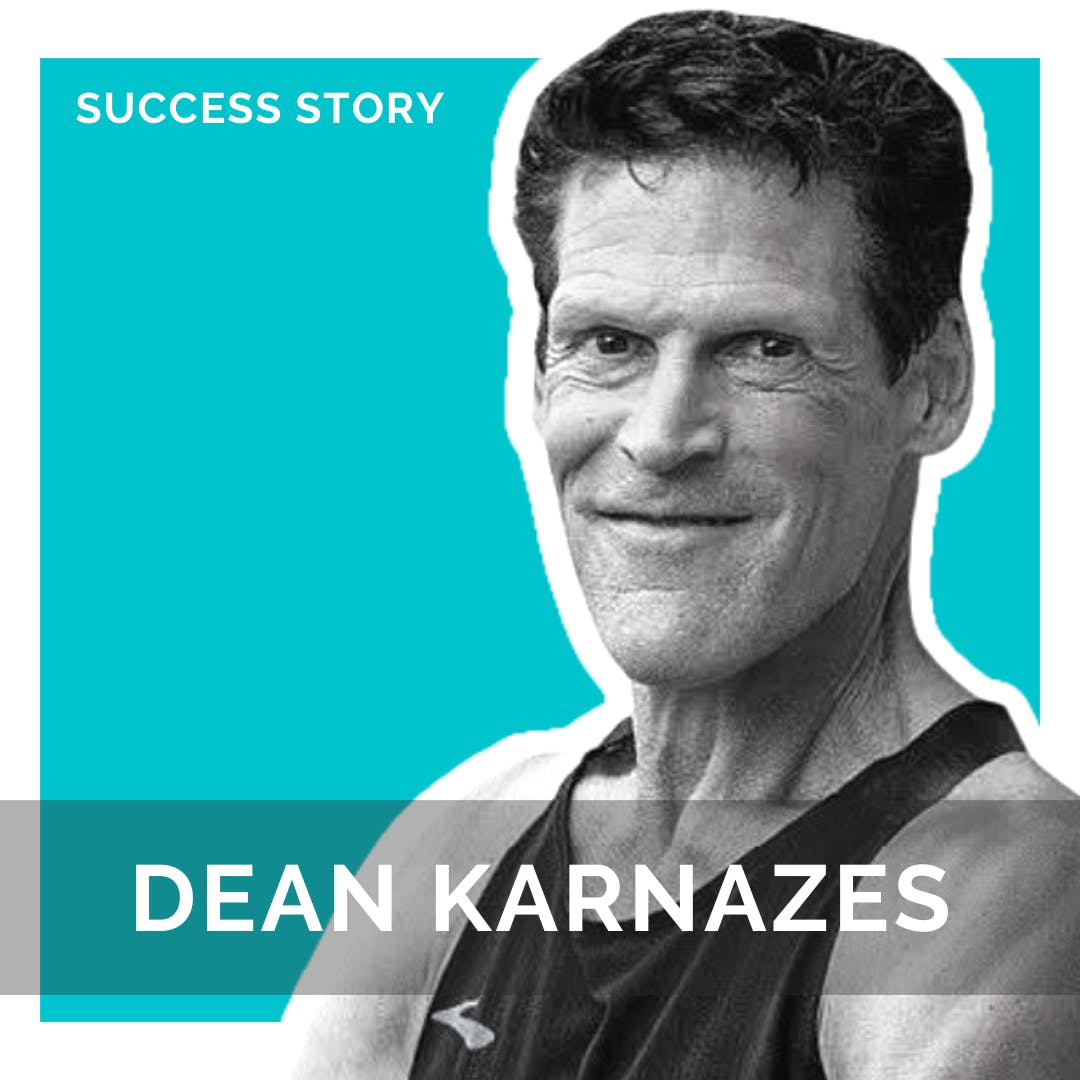
 Dean Karnazes - Athlete, Runner & Author | Completing The Longest Non-Stop Marathon In History
➡️ Like The Podcast? Leave A Rating: https://ratethispodcast.com/successstory
➡️ About The Guest
Dean Karnazes, also known as the “Ultra Marathon Man” and the “Perfect Human” popularized ultramarathons with his book Ultramarathon Man: Confessions of an All-Night Runner.
Karnazes once ran 50 marathons, in 50 states, in 50 consecutive days, and has run 350 continuous miles. Karnazes is the recipient of the President’s Council on Sports, Fitness and Nutrition Lifetime Achievement Award and one of TIME magazine’s 100 Most Influential People in the World.
A New York Times bestselling author, his latest book is called A Runner’s High. Karnazes is also an entrepreneur and investor and serves on the board of several start-ups, including NIX Biosensors, OutFit, and Speedland.
➡️ Show Links
https://www.instagram.com/ultramarathon/
https://twitter.com/DeanKarnazes/
➡️ Podcast Sponsors
TRENDS - https://trends.co/mfm/
HUBSPOT - https://hubspot.sjv.io/successstorypod
➡️ Talking Points
00:00 - Intro
01:50 - Dean Karnazes’ origin story
03:25 - Dean’s thoughts on drive and mindset
05:15 - Envisioning “running” as a business
07:53 - Deciding what to do next after accomplishing a milestone
11:52 - What keeps Dean going after all his success?
14:26 - Setting yourself up to have a mindset to face challenges
17:15 - The main takeaway from Dean’s latest book
18:41 - Advice for someone who wants to be a runner
20:40 - Benefits of running in different aspects of your life
22:23 - Having your clearest thoughts when you’re running
24:00 - Do you need to be a competitive person to take up running?
25:42 - When you hit a wall, how do you keep going?
27:50 - Keeping your mind clear
29:13 - Where can people connect with Dean Karnazes?
29:55 - The biggest challenge Dean Karnazes has ever faced in his life
30:36 - The most impactful person in Dean’s life?
31:06 - Dean’s book or podcast recommendation
31:31 - What would Dean Karnazes tell his 20-year-old self?
31:45 - What does success mean to Dean Karnazes?
Advertising Inquiries: https://redcircle.com/brands
Privacy & Opt-Out: https://redcircle.com/privacy
Welcome to success story the most useful podcasts in the world. I'm your host Scotty Clary. The success story podcast is brought to you by the HubSpot podcast network, the audio destination for business professionals. The HubSpot podcast network has other amazing podcasts like NoStraight Path hosted by Ashley Menzies by Batunde. And by shedding light on the stories behind the shiny resumes, social media highlights and job titles, NoStraight Path aims to humanize success from the millennial perspective featuring guests from all walks of life, NoStraight Path aims to inspire conversations around the nuance perspectives of success. Now, some of these topics at home you're going to love this show. Success is all about maximizing happiness. An interview with Esther Akbaji about finding your voice. Success is communal with Yvorn Doc Aswad. Now, if these topics are interesting to you, make sure to check out NoStraight Path wherever you listen to your podcast. Today, my guest is Dean Carnazis, also known as the Ultramarathon man or quote unquote the perfect human. He popularized Ultramarathons with his book Ultramarathon Man Confessions of an All Night Runner. He once ran 50 marathons in 50 states in 50 consecutive days and he has run 350 continuous miles. He is a recipient of the President's Council on Sports Fitness and Nutrition Lifetime Achievement Award and one of Time magazine's 100 most influential people in the world. He's a New York Times bestselling author and his latest book is called a Runners High. He's also an entrepreneur and investor and serves on the board of several startups including Nick's biosensors outfit and speedland. Now, we spoke about personal health and well-being, pushing through barriers and walls, mental state, performance as well as how to achieve optimal human performance and flow state. I used to love to run home from school when I was a young boy like in kindergarten. Literally, when I was five and six years old, I remember sitting in class just being so restless and when the bell would ring, I would just dash out of there and sprint home. Those are my earliest childhood recollections. I ran competitively when I was in high school in the cross country team and then I stopped running all together. I somehow graduated from high school. I went to college and then I went to graduate school and then I decided I needed a business degree so I got an MBA and I had a very comfortable corporate job in San Francisco and on the night of my 30th birthday, I was in a bar, doing a lot of folks doing their 30th birthday and a midnight, I told my buddies I was leaving and they said, but where are you going? Let's have another round of tequila. It's only midnight. It's your 30th birthday and I said, no, I'm going to run 30 miles right now instead to celebrate my 30th birthday and they looked at me and they said, but you're not a runner, you're drunk. And I said, I am, but I'm still going to do it and I'll never forget. I walked out of the bar and I didn't even own running gear, but I had on these comfortable like silk boxer shorts, these silk underwear. So I peeled off my pants and just threw them down the alleyway and stumbled off into the night heading south knowing that a city called Half Moon Bay was 30 miles away and I said, you know, just run to Half Moon Bay and that night forever changed the course of my life. I somehow I made straight through the night and decided that the next day I was going to quit my job and become a runner. How do you even, oh my god, that's such a, you know, that's the kind of story that gives somebody chills and I know that if people have, you know, you've written a couple books now and you told your story. So some people have heard the story before, but if you haven't, that's incredibly inspiring. Now, when you did this, obviously, you probably sobered up halfway through and thought, what the hell am I doing? And then you kept going for the other, the other, I don't know, 10, 15 miles over long took you to sober up as you're running through the night. But what, what do you think, what do you think is that driver? What do you think, you know, is your mindset that allows you to just do this stuff? Because that's not normal. You know, it's not normal. No one, no one ever would say that's a normal thing for somebody to do. You know, being in business was not normal to me. It just wasn't, it wasn't me. You know, even though I went and got a business degree and, you know, it's making a lot of money, I had, you know, great stock options, all of that stuff, I just wasn't happy. And I wasn't fulfilled. And, you know, I just thought at 30 years old, you know, you're going to stick to this job, you know, and end up being really out of shape, you know, turning 50 and being really out of shape, you know, maybe being wealthy and driving a red sports car, but being completely unfulfilled with your life, or you're going to do what you really love. What I really love is adventure. And, you know, running is part of that. I mean, running, I think, is the means for adventure. If you look at the way I approach running, it's not necessarily traditional. Like, when you think of a runner, you think of someone who goes to races, running around a track, I'm just not that guy. I mean, I'm the guy who goes and runs 100 miles through the mountains, you know, through the wilderness, and runs across the Sahara Desert, you know, runs of marathon to the South Pole. So to me, it was all about adventure and doing what I really loved. Dude, that's awesome. And, you know, the next day, when you quit that job, what's the first version of Dean is like running as a profession, because now you're right. And I want you to walk through some of the stuff that you've done in your running career. But where do you even start? Where do you, you know, because I guess the mind of a runner when they're young, you know, they do track and then maybe they want to go and I'm not a runner. So I'm actually curious, like is the natural progression like to the Olympics, like would that be like the epitome of what a runner wants to do? And then after that, it's sponsorship and endorsement deals. Like, you're 30, you're probably well past the age of many people that have been paid to do this in some form. So how do you even envision what running is as a business for you? That's a good question. I mean, a lot of people say that there's so many lessons from, you know, sports and athletics that translate to business, but also say there were lessons from business for me that translated it running career. So I thought, you know, to your point, you don't race is on the track. You're 30 years old, so you're never going to be that competitive, you know, with younger folks in, you know, shorter distant races. And the race you love to do, there's no prize money. You get a bell buckle if you finish, if you're lucky enough to finish because not everyone does finish. So, you know, how do you pay the bills, right? How do you keep the lights on? So I thought, okay, well, you need to work with sponsors. So I started working with some sponsors. I started giving some keynote talks, you know, to corporate corporations. So build up a little practice there. I've written five books now. So, you know, through book sales and royalties and all of that, there's some flow. And also, I was starting to get a lot of products, like, sent to me. Like, you wouldn't believe the things that you're up in my doorstep. And, you know, a lot of this stuff is just garbage, honestly, but some of it's pretty interesting. So when I come across something interesting, I contact the company and say, hey, you know, one, are you looking for any potential, you know, investment, angel investment and two, you know, would you be willing to put me on your board? And I get funny. And in that way, I've, you know, I've got probably happened to, well, probably close to a dozen companies right now that I'm working with, where I'm actually an investor. So, you know, and some of them had liquidity events. Others are, you know, looking really promising. So that's another way of kind of piecing together. Very smart. So this is, so normally, it's like, I try and take, I try and take like the, the lessons, you know, like when you talk about business, like, you know, like football coaches come up a lot because they talk about various, like, business concepts and coaching and how to build the team and stuff. So you've actually gone the opposite end. You took some of your business lessons, applied it to your own career. That's incredible. Now, I actually, but I, I want to focus on, I still want to focus on some of the incredible stuff that you've done. So you start this career as a runner. You've done some absolutely like mind-boggling. I didn't even know they existed things over your career. How do you, how do you decide what to, like, when you run across the Sahara that, when you run to, you know, when you're doing these 50 marathons and 58, like all these different things that you've done, like all these milestones that you've achieved. And I have, like, I have, I have a list of them here. But how do you even choose what to do next? How do you decide this is the next incredible human feat that I don't even know? Are these things that people have done before? Or are these things that you're just doing that just seem like insane things that nobody's ever attempted before that you just want to tackle head on? Where's your head at when you choose these? Yeah, I mean, I just, I just look for the most outrageous kind of adventure possible and say, can it be done? You know, I, there's a, I heard a guy speaking at the Boston Marathon, for instance, and he was talking about being a member of the 50 state club. And he said, you know, there's marathons in all of the 50 states. And I'm, you know, if you run a marathon in each one, you get to be a member of this club. And I asked him how long it took him to do it. And he said it took about eight and a half years. And I thought, I don't know if I'll be alive in eight. So it'd be impossible. Like a lot of people say, I can't even get out of bed the next morning after running one marathon. You know, how can you possibly run 50 marathon in the 50 days, let alone in all of the 50 states. So all the travel involved. And I thought, it's just an amazing adventure. And you know, the only way to find out if it's possible is to try it. So that's how, you know, that one came about. I'm, you know, when I ran, I went to ran 350 miles continuously. And I just thought, you know, without sleep, without sleep. It was pretty nice, but not sleep. Yeah, I should qualify that. I actually, I'm the third night I woke up in the middle of the road. And I kind of meandered back over the shoulder, and it happened again, sleep running. So people say, did you sleep? And I'm like, I didn't stop and sleep, but I kind of slept while I was running. But I just want to see. That's incredible, man. And, and, and do you think that when you take these things on, you think that it's more like a mindset or a physical training or a combination of both that really allows you to achieve some of the, some of the stuff? Yeah, there's a, there's a race that I do. It's called the, the Western states 100. And I think there's a saying with it. Is it up pretty well? I mean, you know, you run the first 50 miles with your legs and the next 50 miles with your mind. I just want to take a second and thank the sponsor of today's episode, Trends. Now, looking to start a business, but you're not sure where to start, Trends can help. The Trends community tells you the next big thing months before everyone else. Sign up the trends and get analyst vetted business ideas and market trend reports delivered straight to your inbox weekly. Plus, you'll get instant access to online training events and an active community of over 16,000 business owners, investors, and entrepreneurs. Back by HubSpot and the hustle, Trends provides you with the tools to help build and grow your business. What are you waiting for? Get a seven-day trial of Trends for only one dollar at Trends.co slash MFM. So, after the success, you've achieved milestone after milestone after milestone. So, what gets you at a bed in the morning now? What gets you excited? Because now you're doing things that like you've already done the craziest shit that you could possibly ever do, you know, run to the south pole, you run across desert, you know, sleep run. So, what gets you excited now? More crazy shit. I mean, you know, I just got, I was saying before the interview, I'd got back from a month-long trip to Australia. So, I ran with a group of four people 1,000 miles across Australia, leaving on Friday in a couple days to go to Greece for five weeks to do some filming and some more racing to run 10 marathons and 10 days at one location. And, you know, those are the short-term plans. You know, the long-term plan is to run from the lowest point on earth to the highest point on earth. So, to run from the Dead Sea to the top amount Everest. And that is hopefully going to happen in 2023. If you've had a lot of stuff pushed off, I'm assuming because of COVID, I guess. But even like, you know, even when I saw you on Instagram, this is actually a good point. This is like, again, it's about that mindset. Like, it's about like, it doesn't matter what happens to your pushing through because on your Instagram, when we were first thinking about this podcast, you're doing, like, the most crazy hotel workouts I've ever seen. I can't even remember what they were now. I was like, my god, that guy's dedicated. Like, I'm somebody who also likes working out when I'm on vacation and I use hotel gyms and whatnot. But I don't think I've ever gotten to the point where you were like makeshifting a gym inside your hotel room. So, it's only a set for that. It was two weeks in that hotel room and, you know, there's a couple of commitments I made going into it. One is that I went sit down from the moment getting out of bed. I would not sit down until I went back to sleep. So, all day long, I was on my feet, which is, you know, in a 350 square foot hotel room, you know, I probably covered every square molecule of space in there. I remember one day I woke up. I was looking for new challenges like every day and one day I said, okay, today I'm going to do 500 burpees. So, I did 10 sets of 50 burpees. So, I did 500 burpees in one day, but you're right. I mean, it was, that was a mental game, like, I think none other I played because, you know, occupying your time in that small of an area for two weeks required some creativity. So, you mentioned something and this is sort of a common theme like this, like even like when you're in something like a hotel quarantine or you're just trying to run from the lowest point in the world to the highest point in the world, it's mindset, what tips you have for getting your mind right to actually accomplish this stuff? Like, how do you actually set yourself up so that you are in the right mental state to go after these challenges? You know, one I think is to have a goal because, you know, if you don't have a goal, you're, you know, you're, you're, what, you know, you're not moving in the right direction, you're moving in any random direction. So, once you have formed a vision of a goal, then you can fill in the blanks. Like, how do you, how do you get there? You know, how do you achieve what you want to set out to do? And, you know, to me, it all starts with having that goal and, you know, the, the back end work is, is largely about problem solving because inevitably when you try to do some of these adventures that I've done, it's, you know, how do you, how do you run 50 marathons and 50 states and 50 days? There's a shitload of logistics. So, you know, how do you, how do you do logistics? So, I worked with an agency that coordinates the Olympic torch run across the US and I had them do all the logistics because they're, you know, experts at logistics and planning. You know, how do you fund this whole thing? Well, I partnered with a company called the North Face and, you know, we built the deck and we pitched it to other outside sponsors like Toyota sponsored it and nature's path and timex watches. So, it's all about problem solving but it starts with having this kind of, you know, this, this term gets thrown around a bit of a beehag, a big hairy audacious goal and then, you know, working backwards from there, kind of reverse engineering into it. And you do that with everything. So, that's such a, it's such a powerful, it's such a powerful process because you do that with something as physically grueling as this but this could be, this could be, you know, applied to quite literally anything you want to achieve in your life. Do you, do you apply that same mindset when you're going on like another business venture? I'm assuming if you can absolutely kill, you know, an incredible athletic endeavor, like launching a book now or writing another book seems like way less scary because you already, you know the mindset that it's going to take to achieve that thing. Yeah, it's 1% inspiration, 99% perspiration. So, when you, yeah, it's a lot of grunt, I mean, anyone who's written a book in a test of this, it's, it's not glamorous work, you know, it's a lot of word crafting, it's a lot of staring at a blank page, trying to come up with a, you know, a sentence structure that works. So, it's a lot of just blocking and tackling that makes it good. And what did you, and let's unpack like the most recent, like the most recent book that you actually put out like a runner's highlight, this is why, this is how we, this is how we synced up and this is, you know, I know that you want to talk about this a little bit. So, what's the, what's the goal, like what's the takeaway that you wanted to deliver in this book? Because now you've put out five books. So, what's the, the main theme for this one? Yeah, well, I wanted to live up to the title. So, you know, I wanted someone to get a runner's high from reading a book and seeing if that was possible. So, I wanted the book to be propulsive. From the very first sentence, I wanted the reader to be hooked and just be turning the pages and be engaged and being my shoes. So, I really wanted to put the reader in my shoes and give it in lively and and and get someone kind of motivated and inspired. You know, there's a lot of training books on running out there. There's a lot of prescriptive books. And to me, you know, the, the, the, the real magic is in writing a book that motivates someone to get out there. And because we all know, hey, you know, we, we should be following this training program or, you know, this is the protocol we should be, you know, dedicating ourselves to, but getting yourself out the door is a different story. So, I wanted to write a book that got people out of the door that really inspired them and just gave them the energy like, yeah, I want to go running right now. And, and how do they, how, so say they have the motivation and they know it's right. So, let's, let's learn from the arguably best person in the world to ask, say you want to take up running, what are some of the things that you should actually do? What are some of the steps that if I wanted to turn this into a hobby of mine? Cause obviously an incredibly important thing to do to be healthy. And I am, let's use your example, say I'm 30, say I'm 40, say I haven't done anything in the past 10 years is I feel like I'm speaking for my own, now I'm just asking you myself, if I went for a 30 mile run, I'd, I'd have my ass handed to me like, I get my ass kicked. So, what are the first steps you take? Yeah, I always advise people to start from the ground up. So, invest in a good pair of shoes. You know, running footwear technology has advanced so much in the past three years. It's, it's amazing how much difference a good shoe could make. So, visit a local running specialty store and have them fit you in, you know, a good pair of running shoes. And then I say, uh, don't run for distance for time. Try to run for five continuous minutes. And I know to any, you know, trained runner, they're gonna say, well, that's crazy. That's not even the beginning of a warm up. But for someone who's just starting out to run five minutes, continuous light is, is tough. And, you know, the, the goal is to not run for three minutes really, really fast, then walk for two minutes, but to run continuously for five minutes. And once you can achieve that, I say, try to run for 10 minutes and then try to run for 15 continuous minutes. And for 15 continuous minutes, then you can start tracking distance. You know, a smart phone to do that, or, you know, any, any of the, you know, the, the timepieces these days, an iY, or a garment fit bit, they do a really good job of monitoring your distance and your pay. And when you, when you run, um, let's talk about even some of the benefits, because you mentioned, like a runner's high in that, like, I guess at the serotonin release, when you're running, and that comes with a lot of, uh, you know, activity. So what are some of the benefits, potentially, for your, uh, personal health and well-being, I think there's some obvious ones there. But in other aspects of your life as well, there must be some benefits to taking on a hobby, like running. I'd love to hear your opinion on that. You know, creativity. Uh, you know, there's emotions, stirs, emotion. So I do a lot of my writing while I'm running. So I just dictated into my phone, to my voice recorder. And when you're running, you have some of your clearest thoughts. It's, you know, it's a one time where I'm just not bombarded with continued noise, you know, be it advertisements or Twitter feeds. You know, when I go run, I think for myself. So I do a lot of writing while I'm running. Uh, you know, the other thing is that your sleep quality improves. Your, um, I think your interpersonal relationships improve as well. Running is very humbleizing. Yeah. You know, you, uh, it, it definitely puts you in your place. So it keeps you humble. It keeps you grounded. And, uh, and everything else you just, you know, said about physiologically, the, the changes in a runner are all very positive. So, you know, there really, to me, there are no downsides to running. You know, people say, well, what about my back and what about my joints? But many, many studies were documented that running is actually good for these things. People are in better physical condition because of running, not worse physical condition. And one other, so when you run, okay, so we're just to, to sort of summarize, you're making sure you have the right equipment, you're starting so that you can maintain some sort of continuous pace. And then the, the, the benefits, psychologically, physiologically are there for sure. And I'm just curious about that point when you said you have your clear thoughts when you're running. Do you know if there's, because I've actually experienced this before myself when I've, when I've worked out or whatnot. And I'm just curious, is there a science behind why that is? Why you think clearer? Why you think better perhaps when you're, when you're doing physical activity? There's a lot of theories around it. And I think the most recent theory that, uh, you know, is coming to Vogue is that it's something called endocannabinoids. Really? Yeah, it's what they have they sound. So they've taken runners and they've given them a, a drug that, that basically blocks endorphins because they thought a runner's high was from endorphins. So these runners would go running and they take a drug that blocked endorphins and they're high. And they found that we have, I don't know what it's that we produce that are just like cannabis, you know, like CBD. And they're in higher, much higher levels in a runner than a lay person. So I think that has something, probably has something to do with it chemically. Interesting. So I could be for numbing the pain. Yeah, you speak these things to numb pain. Yeah. When you, when you run, do you feel like you have to be a competitive person to take up running? I think that, you know, anyone who picks up my books, especially this most recent one, a runner's high, uh, you know, I talk a lot about me. Just for nothing, I'm going to enjoy running. So I certainly like to compete and I certainly do a lot of competition. Like to run just for the, just for the sake of running itself, just for play. If you can run, if you running as play, you know, as adult play, if you will, it takes on a whole new dimension. Yeah, I think that that's an interesting, an interesting perspective for people that were at one point in their lives, competitive, athletic, and they want to understand what to do to maintain, like their longevity, you know, their health. And I think that competing against yourself in some regard is, is therapeutic. It's very important to do. But I just, I think that that's something that people should take away because I know that you speak about your ability to just be happy with your own self-competition. And I think that that's something that, I think that's something that can actually just, like you mentioned before in your, or in your other aspects of your life, like that can help you compete with yourself and push yourself to be better in almost everything. Like I've only experienced it. I've never been a professional runner, but I've only experienced it through the lens of like, like weightlifting or or sports, but you, if you compete against yourself and you push yourself and you be better, like apply that mindset to other parts of your life. Yeah, so that, I think that's a lesson that, some thing that I think would be applicable in running for sure. And then I'm going to try and dovetail that into life is when you hit a wall, how do you keep going? Because everybody hits that when they're running for sure, when they just feel like they can't push past, but when you push past, that's when I guess you, that's the point you're trying to get to, right, pushing past that wall. Yeah, it's funny. I've really done a lot of kind of introspection on where my head goes when I feel like I can't keep going. So, you know, that might be miles 75 during a hundred mile race, where, you know, you've run three quarters of the race, but you still have 25 miles to go. And, you know, you might sit down and think, I can't even, I can't even stand up right now. I'm going to run another 25 miles. And what I found is that in those circumstances, what I don't do is think about the finish anymore. I don't think about anything except the current present moment of time. They're here and now. I don't reflect on the past. I just say, be the best you can be in this instant. So, get up, just stand up. Start by standing up. Okay, I'm up. Okay, start, start moving forward. Just put one foot in front of the next. And all I focus on is take your next step to the best of your ability. Okay, take your next step to the best of your ability. I don't think I've still got 25 miles to go. I don't think, you know, in five miles there's another eight station. I don't reflect on the past. All I think about is take your next step to the best of your ability. And it takes some discipline to put yourself in the here and now. I mean, our minds are so active, aren't they? Even now is we're at this conversation. You know, there are probably a thousand things going on in the background of your head. And as the listeners and viewers, you're thinking about a lot of things, but I don't think about anything except taking my next step to the best of my ability. And just executing in that moment. And I've gotten through some really tough periods both in running and in life by just being present in the here and now. So when you are hitting that wall, you're clear. And how do you? How do you clear your mind of everything else? How do you do? Like, is it just practice? I'm curious because I'm you're right. Every time everything we're doing in life, business, sports, we have like a billion things going on in our life that we can't remove so easily. So how do you do that? It really takes discipline. It takes just when your mind starts to wander, consciously pulling your mind back to the here and now. And you know, sometimes I can do this and get into a state of, you know, quote unquote, flow. It's almost like a zen-like state where I don't have to think about coming back to the here and now. I just am there. And I can be there for three or four hours and not even have to try. Other times, my mind just starts flittering off. And I've got to say, come back to the here and now. Come back to the present. And that's why to me, you know, especially when running, it's, it's just the next footstep. If I can just say just focus on the next footstep, just the next footstep, that seems to get me back into the present moment of time. I know what I need to do. And that's covered another 25 miles. So there's no need thinking about it more and more. All there needs to be that needs to happen is I need to execute and to execute. That means relentless forward progress. Just take that next step. Amazing. Okay, man. I want to to finish these off. I want to ask a couple like rapid fire just from your career, just to to make sure that people know where to go. So if people want to go connect with you, if they want to go check out the new book, website, social, where should they go? Just Google. Someone told me if you Google Dean, I'm the first person that comes up. So I am. And yeah, you know, I've got a website. I'm on social media. For real? Okay, cool. All right. So if anybody just to make sure if anyone's listening, so Dean and then cart, so KAR and a ZES and you'll you'll find all of this stuff. All right. Let's go into a couple rapid fire. So out of your entire career, biggest challenge you've had in your career. What was it? How did you overcome it? So I heard something in my career, how did you overcome it? But I didn't hear what it was. Oh, the biggest challenge, the biggest challenge you had in your career. The toughest ultra marathon on your ever run. And I would say raising a teenage daughter. Good. Very good. And you're still overcoming it every single day. So I don't think that's you haven't finished yet. Okay. One person, you have to pick one person. There's been many, but pick one person who's been impactful in your life. Who was it? And what did they teach you? You know, I would say it was my dad. And you know, what he taught me is that it doesn't matter how many times you get knocked down. What matters most is how many times you get back up. So he was just a very resilient guy and he gave me that gift of endurance. Amazing. That's a good lesson. A book or a podcast or something that you've read or checked out that you would suggest somebody else go read or listen to. Well, I'm 100% Greek. So if you haven't read Homer, you owe it to yourself. I mean, that's a good one. That's the first time anyone's recommended that on this show. So that's good. Very good. If you could tell your 20-year-old self one thing, what would it be? Don't take yourself so seriously. You know, have fun. Life is a journey and enjoy the ride. Good. And then last question, what does success mean to you? Success means being the person that you are. And anything less than that is a sin. So being true to yourself. You know, again, I'm 100% Greek. You know, the Oracle of Delphi said no thyself and be thyself. And if you can do both those things, you're successful.