


 YouTube
 Apple Podcasts
 Spotify
 Overcast
 Castro
 PocketCasts
 Amazon Music
 Deezer
 TuneIn
 Podcast Addict
 RadioPublic
 iHeartRadio
 RSS Feed
 Charlie Whyman, Host of Curiosity Key Podcast | How to Be Intentionally Curious In Your Marketing
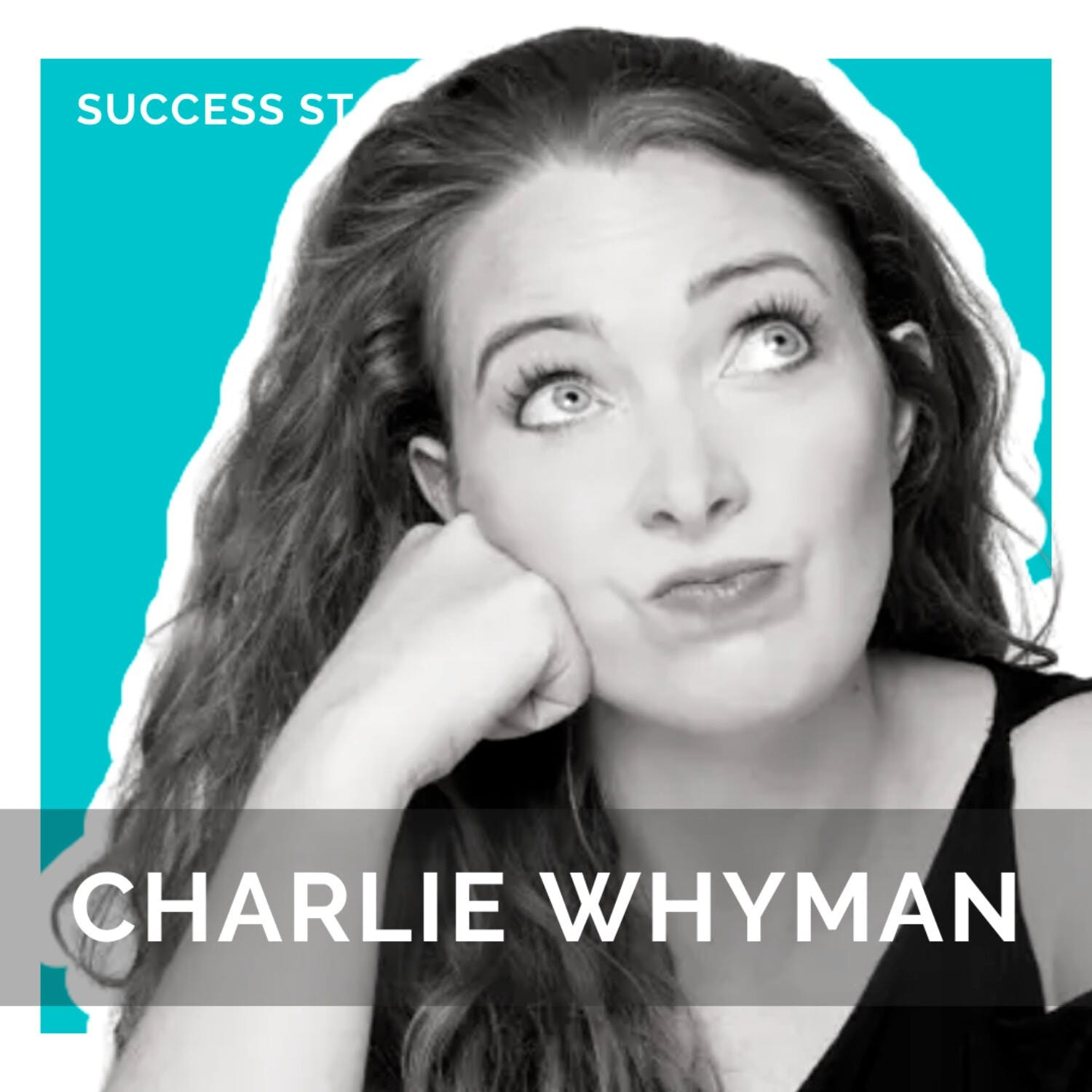
➡️ Like The Show? Leave A Rating: https://ratethispodcast.com/successstory
➡️ About The Guest
Charlie Whyman is a Business Development Strategist, B2B LinkedIn Consultant and Trainer, Speaker and host of The Curiosity Key Podcast.
Charlie has experience working across more than 10 different industries and sectors in various commercial leadership roles -- as well as having experience as a Rowing and Olympic Weightlifting Coach.
In her teachings, trainings and podcast, she speaks about curiosity, and how it applies to entrepreneurship, sales, marketing & leadership.
➡️ Talking Points
00:00 - Intro
02:04 - $12.5m sales pipeline.
07:23 - Everything needs marketing.
11:41 - A born entrepreneur.
13:46 - What is intentional curiosity?
15:39 - Most businesses don’t have a marketing plan.
20:50 - The OTTER framework.
26:14 - How to optimize every customer touchpoint.
29:42 - Sales vs. marketing.
31:06 - Biggest marketing misconception.
42:41 - Advice for entrepreneurs.
➡️ Show Links
https://twitter.com/charlie_whyman
➡️ Sponsor
HubSpot Podcast Network - https://bit.ly/3j0GTFO
Canva - https://canva.me/successstory (45 Days Free Pro)
JustWorks - https://justworks.com
Quantum Metric - https://quantummetric.com/podoffer (Code:Success)
Postie - https://postie.com/successstory (Free Demo)
Flatfile - https://bit.ly/3iZGDXt
Our Sponsors:
* Check out Factor: http://factor75.com
* Check out Factor: http://factor75.com
* Check out Justin Wine and use my code SUCCESS15 for a great deal: https://www.justinwine.com/
Advertising Inquiries: https://redcircle.com/brands
Privacy & Opt-Out: https://redcircle.com/privacy
Welcome to Success Story, the most useful podcast in the world. I'm your host, Scott D. Clary. The Success Story podcast is part of the HubSpot podcast network. HubSpot podcast network is the audio destination for business professionals who seek the best education and inspiration on how to start and how to grow a business. HubSpot podcast network hosts act as on-demand mentors, two entrepreneurs, startups and scale-ups through practical tips and inspirational stories. Listen, learn and grow with the HubSpot podcast network at HubSpot.com slash podcast network. Today, my guest is Charlie Wyman. Charlie Wyman is a business development strategist, B2B, LinkedIn consultant, trainer, speaker and host of the Curiosity Key podcast. Charlie has experience working across more than 10 different industries and sectors in various commercial leadership roles, as well as bringing in incredible experience as a rowing and Olympic weightlifting coach. In her teachings trainings and podcasts, she speaks about curiosity and how it applies to entrepreneurship, sales, marketing and leadership. We went deep on B2B marketing, B2B sales. This is some of the stuff we spoke about. Why do most businesses not have a marketing plan? Even if they think they have a marketing plan, what is the biggest problem that she sees businesses facing? Is it important or not to take consideration into the suggestions of your sales team and how to build that into your marketing strategy? What is customer centric marketing and how do you accomplish it? How do entrepreneurs get their whole team to buy in on a particular sales or marketing strategy? What is intentional curiosity and why you should care about it, as well as how companies should start being more curious in terms of their marketing strategy? She breaks down a whole bunch of step-by-step processes and tactics that you can use tomorrow in your business. This is Charlie Wyman, business development strategist, B2B LinkedIn Consultant Trainer, and the host of the Curiosity Key Podcast. Yeah, absolutely. Thank you for having me on the show. It's a real honor. See, curiosity has just been my mantra throughout my entire life. I was considered that naughty kid at school because a lot of my teachers kept saying, you need to stop asking questions, because I was always really curious to know why are we learning this? What is this going to enable us to do? I think it's just always come across. I always call myself an opportunist, so I can see opportunities in different areas, and if I've ever been curious about them, I've always asked the question, can I get stuck in, do that, or how would that work if I explored that a bit further? I wasn't very curious between the age of about 15 and 18. There was a few things that happened in my earlier years, and I just got stuck in a rut, and I was funneled into doing an engineering degree because I was very good at maths and physics, I love science, and I think evidence-based, and I also like taking things apart and building them back together. So I found myself doing this engineering degree, and it just wasn't fitting together. I did not see myself being my chartered engineer, so I left the degree, and I moved to Saddenia in Italy, and my plan was to essentially help my father renovate a house and then move on and try and figure out the meaning of life, or whatever, as you do when you're like 19 trying. The house came with 160 olive trees, so I was really curious. I was like, how do you make olive oil then? What's the difference between this tree which is for olive oil and this tree which is for eating olives? I started asking all these questions and getting stuck into the science behind producing olive oil, and I started my first business, which was to make olive oil from the trees, import it into the UK with other Saddenian produce, and that was really my first real experience in the marketing world, even though I refused to believe it was marketing because I used to think all marketing was evil back then. So that was a lot of fun. The oil won two awards, it was a really brilliant adventure, but I was always kind of wanting something more, something a bit different, so I got a job I worked in sports, then I worked for healthcare, and then somebody that was working in the space that I was at saw something in me and invited me to come and work with her husband's company as a marketing assistant, and I don't know anybody that's listening to this that knows that if you are the only person in that company responsible for marketing, you're not just responsible for marketing. You are responsible for everything else that nobody wants to do, but I was really fortunate, and I've always worked with people that have let me pursue my curiosity to ask questions, to understand how things can be made better, and I was able to do that, so I got to demo products down the world's deepest gold mine, I was able to host conferences in platinum mines, I got to launch minimum viable products by creating curiosity, because back then we weren't able to talk about the products that we were developing, because if our competitors that had much bigger sales marketing budgets than we did, caught wind of what we were doing, they could come up with a competitive product to market, and then just market as out of the industry. So we had, at that point, it's kind of one of my favourite pieces of experience, my favourite success story, because we had this product, we couldn't tell anybody what it was or what it did, but we needed to generate enough curiosity so that we could launch at this event, and we could generate a really solid sales pipeline for it. So that was a really interesting challenge, and LinkedIn was a massive driver for us in creating that curiosity and that campaign, and that resulted in a £12.5 million sales pipeline at that one event, plus an email list, and lots of other exciting opportunities too. So that was kind of the springboard. Yeah. Just to tear it out. What was the product? Can you speak about it now? So it was a laser scanning system that you could mount on a vehicle, you could use it as a backpack, and you could also mount it on a drone, a UAV or a helicopter. So it basically saved a significant amount of cost for a lot of the surveying companies that wanted to start adopting laser scanning technology. So it was very disruptive, it was very cost sensitive, and it was very exciting to work on as well. So that was a very, very successful, and what was, so let's talk about that, that was sort of your first implementation of any sort of marketing strategy in your entire career, really, was for this very highly technical secret project. Yeah. So I think that was the first moment where I felt like I wasn't just winging it and making it up as I went along. I think I'd done lots of things in the past, and there were lots of things that were working, but I think at that point, I never realised that what I was doing was marketing. I didn't have a label for any of the stuff. I had a real aversion to learning as well. So I didn't read any marketing books, I didn't follow any of the marketing gurus, and I was just doing stuff because I listened to what the customers were asking. So every time I heard a question, pop up at a trade Euro conference, I responded with a piece of content. Every time somebody wanted to dive into more detail about a particular product, or every time somebody rang up with a customer service query, we responded with content. So we kind of developed accidental personal brands, not just for myself, but for the other experts working within the company. And none of us really thought of that as marketing. We just thought that was the thing that we were doing because we were being helpful and we were trying to be as useful as possible to our clients. And one thing that happened shortly after we launched this destructive product was that we had the opportunity to sell laser scanning technology to the UK police force. And at that point, this was just a distributor relationship. So we were just reselling a piece of technology. And the market was told they had to buy this technology, but they didn't want it. So this opened up lots of questions because we went in in the same way that our competitors did by trying to market to that audience in the same way that we'd done to the surveying companies. And I remember taking a step back and talking to one of my colleagues thinking, this is just not going to work. Our competitors have a much bigger sales marketing budget than us. They've got so much more cloud. They sell products and services that are already entrenched into these police forces. So they have the upper hand. How are we going to do this? Because there was three and a half million pounds up for grabs. And you know, we were a relatively small company. So we started talking to the police and understanding why didn't they want this technology? What was their resistance towards adopting it? And the more we started talking to them, the more we started to understand how they behaved, what their goals were, and how aligned and misaligned it was with the goals of the overall police force. And this for me is the most exciting thing about B2B marketing is that it's not just about understanding the goals, the pain points, the challenges of the business that you're trying to reach. It's about understanding the individual goals, pain points, challenges and values of the people that are not just going to be using the products and services, but also going to be making those decisions too. And finding a strategy that's going to meet the needs of each different person and bring it all together. And curiosity for me is, is that key? Because the more intentional you can be with your curiosity. So pre-plan your questions, understand what do you want to get out of it? What's that positive end result? And how can you ask questions that lead you to that end result? And we won 93% of that contract. So it works. Yes. So you practice what you preach like that. That was incredible. And now you see, I think you see a shift in a lot of business to business B2B marketing that is more focused on curiosity, but also still there's a lot of people that curiosity. And like you said, not just selling to the company, but selling to the people within the company that actually are going to be using the product or service or whatever. But I think that that's, I've only seen a shift towards more conscious marketing efforts and sales efforts recently. This is, I think you were probably a little bit ahead of your time in being so empathetic towards towards a customer. So keep going on on this because this is very interesting. It's going to lead up to obviously what you teach people now. I'm assuming. But yeah, well, I think it kind of comes from like, so I grew up with both of my parents had local businesses. So my dad had a car garage and service department petrol station and my mum had a small children's workshop. I'm very good at learning from other people's mistakes because I always want to know why that mistake happened. And I think this is something as well that comes from my engineering background is that we don't see mistakes as failure. In fact, we want to fail. That's the goal. We want to fail fast so that we can constantly learn and we can constantly keep moving forwards. And that's the only way that we're going to move forwards. And with my mum's business, it got broken into loads of times. And it, you know, it didn't last a very long time. It definitely wasn't a success story. But there was definitely learnings that we could take from it. And in my dad's business as well, there was a lot of learning that I gained from that because I don't know if you have it over on your side of the pond, but over in the UK, we have a stereotype for a salesperson, which is generally like that. Very much, very much. But they used car salesmen and, you know, one of my dad's employees, we used to call him Trevor Tussuits. And he was that stereotype. You know, he didn't care what the customer needed. He just cared about selling the car and meeting his budget. Whereas my dad was a complete opposite. He hated sales. And all he did was just want to make the customers happy and give them something that they wanted. They made them achieve their goals and that made them want to come back because they felt safe. They felt trusted. And they felt like somebody understood them. And that was his approach. And I think I've always had that. And I just think the more you can understand how your customers behave and the more you strive to better sell and better serve, that's going to come out in your marketing. And as long as you have that purpose to make a difference to somebody else to be useful, again, you can start being more intentional with your curiosity because you're trying to understand how to make the lives of your customers better. That's intentional curiosity. So describe it to me, but that's like what you just said, focusing on always making the lives of your customers better. That's intentional curiosity. For me, yes, in a nutshell, because I think my, I believe that it's through business that we're going to make a positive impact in the world. And I think that if you have a business is your responsibility to think of more than just yourself and think of more than just making profit. And it's that sort of, you know, looking at what is the purpose of your company, what difference are you trying to make in the lives of your customers, the lives of the, the people that work for you with you, what difference are you trying to make in the world, or even in your industry. And I think it's that, like, it's that sports analogy. When I was rowing, it was always like, right, okay, how can you make that boat go faster to coin the term? Like, how can you, if you don't win a race, you look at the next race and you just think, right, okay, how can I apply what I did there, build on that so that I can win the next race, or at least be better than I was yesterday. And it's the same in business. It's like, right, okay, cool, well, I'm doing this marketing or I'm selling this product. And I'm working with these customers. How can you improve on that all the time? And for me, the biggest difference is all in those marginal gains. It's all in that, you know, the little tweaks that you can make, the little things that you can do, the little experiences, and the little moments that you can create is going to make people want to keep coming back to you and tell other people about as well. I was looking on, as I was doing some research, I saw on, I think it was either your website or your podcast. There was a point. Most businesses don't have a marketing plan. So we're talking about, we're talking about customer-centric marketing. We're talking about being curious and intentionally curious. Let's take it a step back. What do you mean by that statement that nobody, that most businesses don't have a marketing plan? So just in my experience, most businesses don't have a marketing plan. And also, I think when I started my business, I originally set out to help people with events and trade shows. I didn't want to do it for them, but because I had a lot of experience doing events and trade shows, I saw so many opportunities to help people and businesses be more effective, more purpose-driven, and get more from their activity. Because it was very much seen as like, I've got to do this. I've got to go to this other event. I hate it. I don't like speaking to customers. I don't know if they're interested or not. We can't measure the ROI from this event and all of the above. So I did a piece of research and the conclusion was that people didn't want to pay to learn how to do events and trade shows better. They just wanted to pay somebody to take it off the hands and do it. So I was like, okay, what do I do then? And that's where I got to the LinkedIn training because everybody kept asking me about the successes that I had had and my team had had on LinkedIn. And then that just kind of snowballed and it just happened, but what I found was that everybody wanted to know how to leverage LinkedIn to get more leads, more sales, more referrals, but they still didn't have a marketing plan. And I found that a lot of the training that I was doing focused on, right, okay, let's have a look at your marketing strategy. And then let's use LinkedIn as a tool to help you achieve your marketing objectives. And for me, marketing isn't just lead generation. It's sales, it's customer service, it's referrals, it's the whole mix. So I think that if you look at your overall business objectives, so beyond just what do you need to do in order to survive, but also what do you need to do so that you can thrive and grow? And then think, okay, well, what marketing do I need to do to help me achieve those objectives? And I love that. Oh, sorry, go ahead. I didn't mean to interrupt. No, no, no, gone. I was just going to say, so I'm just so now I'm for the listeners, I'm sort of laying out this framework. So like, first of all, we have to understand what marketing is and what marketing isn't. And of course, when, you know, when we're talking about this, we're talking about people that don't have huge teams, don't have resources, they may not understand, you know, that marketing is much more than just going out to LinkedIn and getting some new leads. Like, it's a holistic view of how you approach your customer. So now we have, we have that definition. That's a great definition to start from. We lead with curiosity. So that's, you know, you're intentionally curious. Now walk me through customer-centric marketing because that would be the, I guess, customer-centric marketing across everything you do, every interaction, every, every engagement you have with a customer, that's sort of the end goal, correct? Yeah, I think that's fair. Yeah, absolutely. And I think if you pull it back to the, what is the purpose of marketing? The purpose of marketing is to drive revenue in the business. How are you going to drive revenue is to find new customers to sell to, to sell more to existing customers or to develop new products and services so that you can, you know, tag the first two points. So when you look at the purpose of marketing, look at those different areas, you can be intentional with the curiosity to say, right, okay, so we've got this existing customer base. This is always the easiest place to start. How can we sell more to them? What can we do to make their job easier? What can we do to make their business go smooth? What can we do to solve more of their pain points and challenges? And leverage the relationships that we've got already. Then it's like, okay, so these are the people that we're targeting. How can we attract more people into the business? How can we make the lives of more people or more businesses better? And it's start asking those questions and kind of like reverse engineering process. And then when it comes to sort of developing new products and technology, it's okay. So what are our customers asking us for that we do not have right now? Or what are our customers talking about that we need to look towards the future to help them with their business and their future as well? So it's not being curious just because you just want to sit there daydreaming all day thinking what's the next big thing, but it's thinking about right, what problem are we trying to solve? How many different ways can I think of doing that? And then which is really going to help us achieve those specific objectives that you set within your own business? And what do you see? So this is this is this is great framework now. So what do you see or what do you advise when when companies are doing this? How how do they sort of action on on those steps? Some sort of like high level tactical takeaways for reaching out onto LinkedIn or to reaching into an existing customer base, maybe conducting customer interviews. I don't know. What what are some things that you sort of you're I guess your framework without you know laying it all out because obviously you don't want to to speak with you and to to pick your brain and to reach out to you, but what do you what do you recommend just to get started? So so my framework is sort of behind me which is otter and yeah not just a cute aquatic animal version. So it's hilarious because I use a lot of mounting climbing analogies and metaphors and you don't see otters at mountains but they're very very very curious curious creatures. So yeah the first thing is to start with the objective. So like you know if you look at your long-term vision of the company, let's say for example you want to launch new products in service because you're you want to launch a new product because you're a service-based company and your future vision is to sell the business for a certain amount and in order to do that you need to have the physical product but you're two maybe three years away from doing that. You then have a look at right aka so T in otter tools what tools assets and resources do you need in order to achieve those objectives and it's if you want to launch a new product and you don't currently have an email list you want to make sure that when you're at the point of launching that product you have an established audience in order to do that. So it's that kind of you're building about full-site into it but also if your objective is okay I just want to go from one to two million pounds in revenue you then have a look at what tools assets and resources you already have and then you can start asking questions around right aka what can I leverage further what can I squeeze more out of how can I optimise that and make that better. So in the context of you know like a lot of people think tactically when it comes to marketing so you know you've got another marketing expert or agency saying you need to do webinars webinars and the next big thing webinars are going to help you achieve your objectives rarely do they ever say that or put numbers against it but it's like okay so you're going to run a webinar so you're going to need a landing page you're going to have to get people to that landing page you need to get people to actually join the webinar when it starts you want to get people to stay to the end there are lots of different such points or breadcrumbs as I like to call them along the way so if you've run webinars in the past more often than not you can have a look at those different breadcrumbs and you can say right aka well we've only got 50% of people that view this landing page actually opt in so how can we increase that um okay so we've only got 30% of people that opt in actually showing up to our webinar how can we increase that I just want to take a second and thank the sponsor of today's episode HubSpot. HubSpot is the CRM platform that is easy to implement and it's even easier to get your team to a doc and ask anybody that's implemented new technology in a company the biggest issue is not finding it or buying it it's getting your team and your company to actually use it and adopt it and when it's a piece like a CRM one of the most critical pieces of your business infrastructure and your tech stack if people don't adopt it and use it that means you're getting incomplete data you're getting missing data you're getting garbage data it could impact quite literally everybody in your company as well as it could negatively impact your customers and your revenue so how does HubSpot solve for this with their CRM platform there's two components that they focus on that allow for organizational wide adoption this is the contact timeline as well as the mobile app so the contact timeline gives a historical context for all of the data that is associated with a certain contact in the CRM that means that anybody across the organization can see all the actions and all the interactions that have taken place against that particular contact you can also use that timeline to make calls to these contacts and roll them in sequences put them into marketing or sales campaigns schedule a meeting open tickets the historical timeline makes it easy to take action as well as to track the action that's been taken against all of your contacts and it's not a pain to enter the information which means that it doesn't take somebody a long time to put in great data which can again positively impact your whole company the second piece is the access from anywhere meaning if I have a phone and I'm on the road the world's opening up a little bit more now people are traveling again I can use the HubSpot app to access my CRM anywhere on the go on the fly it doesn't matter so I have complete access to the CRM I have access to my spreadsheets my calendars my notebooks all of my contacts I can send messages across my team with the HubSpot keyboard I can access my contacts call them through the HubSpot app I can take quick notes I can take contact information I can all log it into my HubSpot app so that I can pull it up later on my desktop when I'm back at home it's simple it's intuitive it's meant to make it easy frictionless so that your team sees the value in properly using the CRM to the fullest of its capabilities and gives them the tools and the tech to allow them to do it without spending too much time and causing them more headache the best thing about HubSpot is that it can be set up for any size of business and it will scale with you if you're just starting out you can take advantage of certain features and then as you scale your business you'll notice that HubSpot will support almost anything you need as you grow so if you do want to learn how to scale your business without scaling complexity go to HubSpot.com and it's just looking at each of those touch points and thinking right okay what can we optimize what can we leverage what can we make better so I always say that everybody every business is already sitting on a mountain of value and every business is already doing amazing marketing whether they realize it or not and the missing piece is to bring it together into what I call a curious marketing system which basically just looks right okay how are we generating curiosity in our in our markets and a lot of marketers call this awareness I think in today's day and age it's not enough to just make people aware of you because so noisy online and in trade shows you need to make them curious you need to make them want to find out more but that's not enough you then need to make them curious and turn that curiosity into action so how are you going to take curious people and turn them into a lead and that's like you know development of lead magnets making sure that you've got book a call making sure that you are leaving those breadcrumbs so that your audience knows what step to take next and then after that we all know not all leads turn in cells so you need to sort of branch them out so right okay so what happens to the high quality leads that you need to have a sales conversation with or you need to do a demonstration what are those breadcrumbs that you need to leave so that you can turn those leads into sales and then on the other branch it's okay so these leads that are curious but not yet ready to buy how can we nurture that curiosity build that excitement and give them reasons to then take that next step and go down the sales route and then the sales route is like okay so from a marketing point of view how can you make their experience super special how can you take advantage of each touch point each opportunity so that their experience is incredible they want to tell others about it they want to keep coming back for more and they want to turn into referral partners and think this is well I love again the engineer in me having a system and a process each different step of this system you know because if you assume your best clients are going to give you a testimonial or become a referral partner using what I call hope marketing which is really difficult to track and it's just a bit you know hope is not a good marketing strategy whereas if you say okay so I'm going to put a checklist in place so that every client that goes through my system I ask them if they know anybody that would benefit from our services or that would benefit from using our products you ask them for those links in recommendations you ask them for the case studies you build it into the process so you're not wasting any any energy in doing the things that you should be doing anyway and you've got that free energy to be curious and to kind of like heighten your spidey senses to pick up on the things that they're saying I love that thank you for breaking that down I appreciate it and do you think like do you see a shift in in businesses being forced to market this way do you see that more businesses are being curious or do you still see just from your perspective many people still default to the de facto Tony two suits use car salesmen outbound sales you know kind of kind of strategy I think I think both are always going to be around I think the old-fashioned way of doing sales is never going to go away but I think companies that adopt that old-fashioned approach to sales are going to get left behind and are going to struggle to keep up what's what's the I'll go ahead sorry no go no it's just it's just more that I think I host a marketing club we call it the curious marketing club and we were having a discussion about innovation earlier today and we were we were talking about tips and strategies about how you can stay on top of the game and always be looking forward and not getting left behind and a lot of that is just to be curious to be asking you know if you work within a team to be asking the team what do you think what's your experience how can we add more value here to be going to your customer base asking them you know what's your biggest challenge you know where do you see yourself in a few years time how can we help you get there and you know and supporting them on that journey what's the what's the recurring biggest issue that businesses face or that you see businesses have when they come and contact you is there one thing though yeah they don't know where their customers are or they don't know how to um how to start a conversation with them interesting and what would you say the biggest biggest misconception about marketing is that's still widely believed that you just do marketing and then it will work and deliver you lots of leads so you spend the money and then it will just magically work and I think the biggest misconception is that it's it it's a one-time thing or you just do it when you need to do it and this I'm talking more from a small business point of view so like the SME market where you're having to be resourceful rather than how can you embed this in the culture of the company and empower all of the customer facing employees at the bare minimum to really know what is the mission of the company what's the vision who are they targeting and how to engage them in a curious conversation so that they either want to find out more about how you can help them or tell other people about you it's an interesting I you've brought up evangelism a lot um you you've you've spoken about it quite a bit and I and I love I love speaking about evangelism I think it's uh something that nobody really many people don't take advantage of of getting their employees to evangelize the company for them because they don't know how to unlock that in their employees so of course employees don't on the company you can't expect employees to care as much about the owner but still what you're talking about is at least showing them the vision showing them the finish line that they understand where everybody's heading so do you have do you have tips because I think half of this is yes you spoke about we have to be innovative in the sales and marketing strategy that we you know that we use but also how do we how do we get everybody to buy in so what are some tips you may have for an entrepreneur that feels like there's a disconnect because I'm pretty sure I'm I'm sure there's more disconnect between entrepreneurs and founders and their and their team then there are companies that don't know how to market properly I'm sure that at least some companies get marketing but I'm almost positive virtually no founders that I've worked with really get their team day one unless they've worked with somebody to figure it out or they've been a serial entrepreneur yeah I think you you've said it in your podcast in the past which is that you know the key to success is when the CEO the MD gets marketing and I think when they get marketing they they will put the effort into making sure it is embedded in the culture and so practical tips because I love this side of things practical tips is just make sure that your your team is aligned with the vision of the mission so you know have weekly huddles where you're reinforcing that message you're letting your entire team know where you're at now where you're going and what you need to do in order to get there and and this way you're inspiring your team and I've seen this firsthand to come to you with ideas and opportunities and and and this is how I grew my career by just seeing an opportunity and thinking we could totally get that deal but let's figure out a way of doing it you know rather than just thinking that's not my job title you know and it's just about thinking outside of the box and collectively working towards that vision and the second thing as well is to make sure that the entire team knows how to talk about the company and the products in a very simple way so that when they're out at nightclub in an extreme environment if somebody asks them what do you do for a job they don't need to go into war and peace but they can succinctly and quickly articulate what the company does so that the other person if they're in a position to will say oh tell me more I'm interested or if it comes up in conversation they're like oh yeah I met this person once really interesting they did this I could connect you yeah that's great yeah I like that I like that analogy a lot that's very important because I think that's also you know that's lost on a lot of employees they they they have a they have an idea of what their job does or they have an idea of at a very technical level but how do you just like what's that what's that you know organization wide elevator pitch that everybody gets buys into and not like not like you know when we talk about this I want to be very clear this is not like a a top-down forcing a vision on a team approach that's not it's not gonna work it's just never gonna work you're never gonna you're never gonna force someone to buy into something they may they may bullshit you they may look at you because they don't want to lose their job and say yeah I totally get it like that makes sense to me but if if it's not something that they get that they align with that they really understand or they buy into then it's not it's not a company vision it's your as a founder vision and that's useless in my opinion because you're not gonna do on every sales call you're not gonna be the one posted on social media you're not gonna be the one writing a copy on your website so just something you know make sure that it's it's actually something that is created from of course you have a strong you have a strong understanding of what your business does but also I love that open door policy that you know that two-way communication transparency feedback a lot of people say they do it they don't do it properly so if you have if you have your sales reps your marketing individual's customer success whatever it may be you know they're the ones who are on the ground talking to customers and they come back with real real takeaways from the conversations they have it's probably best to you know put the ego aside and and try and figure out how to include those feedbacks and those learnings into into your core company because that's what everybody else is feeling that's what everybody else believes and that's I think how you get yeah absolutely and I've seen it I've seen it work and I've seen it fail and I think it's that like people don't consider the power of internal marketing but also it's that like I think a lot of companies feel so much pressure to pitch and sell you know it's that ageal thing you know if you go into a networking room you ask everybody who's here to sell everybody puts their hand up you ask everybody who's here to buy and nobody puts their hand up you know if you go in trying to sell the thing that you're talking about if the person that you're speaking to whether it's somebody in a networking environment it's somebody on LinkedIn it's somebody at a trade show or if it's somebody in the coffee shop whilst you're waiting to pick up your coffee if they have no interest or need for what is it you're selling they're just going to filter out what it is that you're saying so you're wasting your breath by explaining what it is that you do however if you can flip it on its head and you can come up with an elevator pitch or a pitch that isn't a pitch but instead it sparks the curiosity of somebody else they are far more likely to either ask you to tell them more about that because whether they want it or not they're interested therefore they're going to remember it more and then also if somebody else at another point in their their life or their time asks them do you know anybody that does X, Y and Z they'd be like yes I do you know so you can empower your employees to be able to do that but you can also employ your customers to do that as well so you you know you're creating a like a community or a fan base of advocates and people that can do your marketing for you but you have to know what you want them to say it has to be simple and it has to be repeatable yeah I love that all right so we've gone into curiosity we've gone into marketing we've gone in depth I appreciate I appreciate all the you know you really you really did break down some really good points thank you so I like to do a little bit of rapid-fire to pull out some life lessons out of your career but before we go into that is there anything any other final thoughts that we didn't happen to curiosity marketing stuff that you're working on now that you want it to bring up go for it so in terms of what I'm working on now I am in the process of a rebrand because I wanted to really embed curiosity into my overall business so my new business is curious be to be marketing and is that like I'm you know I spend three and a half years really focusing on helping people leverage links in as at all but it is just a tool so now I really want to help people with a step-by-step marketing plan that is simple so like really stripping out all of the the complexity that a lot of the marketing gurus out there that add into it because it really doesn't need to be complex and then just help them build momentum so that they can either do or delegate to confidently and effectively and I just think that since I started asking for help from external people outside of the company that's when it started making a bigger difference for me because you can be more curious and explore more and how to make things better than if you were just doing it internally so that's what I I work a lot with companies to do and and then also just a wrap up with the otter really so just so everybody's got a really useful tool and if you email me after this episode I've got a program I thought if you email me after this episode I do actually have a workbook that you can that you can use I'm happy to give it away for free because I think if you want to avoid wasting money wasting time wasting energy getting frustrated and experiencing all their marketing injuries that we all have all the time use otter because it will help you avoid those injuries so O is objective because there is no point in doing anything unless you know where you're going and what you want to achieve from it T is tools so look at what you already have before start looking at the next new shiny object the other T is training so identify the gaps in your knowledge skills you've experienced and also your confidence you know and identify what you need to get help with and seek help and the E is expectations really important because you want to make sure that you are aligning your own expectations of yourself so do you have enough time energy and money to do the things that you need to do to achieve your objectives and if you're working with other people do they know what your objectives of them are and expectations and do you know what their expectations of you are really important especially if you're working with an agency you know especially and then the R is to constantly be reviewing and reflecting on what it is that you're doing so you can know what to stop doing start doing continue doing and optimize I like 12 week marketing sprints I just think it's a long enough to get stuff done but short enough to not go down have rabbit hole and end up wasting too much time and energy and but then also it's don't fall into the trap of just being always being busy or too busy being busy make sure that you are scheduling time to review and reflect and look at your overall marketing system identify the gaps identify the areas that you can optimize and look for those quick wins just be curious as to how you can make things better all the time so yeah that's the awesome thank you very much and yeah send me send me links because that will all go and show notes and people can check it out get the workbook or whatnot so I appreciate all right some some life lessons to pull out of you what was the biggest challenge that you had in your career and how did you overcome it and the biggest challenge was I was being set up to take over the company that I worked for a few years ago so I was doing direct development programs leadership programs and I was on track to do that and then the two founders it was a husband and wife company and they started working with an external management consultant and just sort of pushed me aside and I didn't really know what to do with that or how to react and it brought up quite a few feelings of like it was just a very uncertain time communication was really bad the company isn't around anymore as a result of that and I got some therapy I just decided you know what I don't feel like I have enough emotional maturity to deal with this situation I didn't understand what was going on and I turned from the company's biggest star into this biggest rebel which wasn't serving anybody and so yeah I yeah I got some therapy and that that was really helpful it made me understand that actually it wasn't my fault I just wasn't having my needs met and the communication was lacking and it just it just helped me figure out how to to move forward and do different things so then I just I got another job with another company and started moving on with my life so I appreciate that and I appreciate that mostly because if you are younger in your career and you are working in situations like that like usually usually in large organizations you're a little bit more protected but in smaller companies you know founder owned private companies has been a wife family business it's sometimes it's hard to know what you're being asked to do or if the direction that they're steering your career down is is appropriate is the or is even legal like sometimes you know when they've asked you to maybe take on extra duties or or do this or that or whatever so that's a good good learning for you obviously but just sort of a flag for people that are younger in their career as well that not everything is not everything in the world is it's always perfect and not everybody does the right thing all the time right so and it's not always your faults yeah most importantly it's not always your fault yeah yeah if you could tell your younger self one thing what would it be be more confident with your curiosity what do you mean by confident with your curiosity what do you mean by that so I to be honest I didn't really struggle with confidence massively but I think if I'd had that conversation with me I think I would have done things with a little bit more I'm trying to look for the word and I can't think of the word but I think it's that if you're curious about how to make something better don't wait for the right time to bring it up or don't wait for somebody else to give you that opportunity boldly step forward and say I can see a potential solution to this let me go ahead and try you know some of the most incredible experiences that I've had in my life have come from doing exactly that but I just think that if I was more confident I think I would have made my own life a little bit easier rather than put myself under so much pressure to be perfect or to be the best at it and to not fail as is everybody who's like a people pleaser right everybody who pleases everybody else which is you know I think it takes like you know I think it takes a few a few bad experiences to to get over the fact that you have to you know you obviously want to help everybody you want to do good work but you do have to be a little bit selfish and trust your own instinct sometimes and especially when it comes to like taking bold moves in your group in your business whatever I think that's very important I get it now I understand why you say confidence and curiosity so like just trust trust yourself I guess okay if you had to choose one person or multiple people in your life that that have had a major impact on your life who are they and then also how do they impact your life what did they teach you so the the primary person is my popper so my grandfather he was in his eighties when I was young and he used to bribe me and my brother up hills and mountains with barley sugars and minham bugs and he he was such a wonderful person and he was very curious he always wanted to know stuff and and he never let anything get in his way so he was wouldn't surfing and skiing in his 90s and when he started to lose his memory we told him his car had failed its MOT because we knew that he wouldn't buy a new car and he'd be okay with that and it was a much nicer way than just saying popper you losing your marbles we don't trust you to drive and and he was helping my cousin renovate her house and he it was three and a half miles away and he had he decided that he didn't have a car so he got on his bicycle and strapped a six foot door around his waist and on his back and cycle three and a half miles through the village with this this door on his back and he was 92 at the time and he was just one of those people that you know nothing was ever an obstacle age was never a thing he was just like if you need to do something crack on and get on with it and and he was he was under 103 when he passed away it was just amazing wonderful person that's an incredible that's an incredible person you can just you know obviously I don't know I don't know him but that sounds like an incredible man for sure very very good that's something that's somebody I think we could learn from okay your favorite source to go to learn to grow could be a podcast an audible a book what would you recommend people they'll check out um it's a nice I think keep it keep keep yourself on your toes and don't get stuck into just using one particular medium I think if you can say right I'm going to go to the podcast for this I'm going to go to read it for this I'm going to go listen to another year book for this or I'm just going to go back old school and read a normal book and I just think keep it fresh keep yourself on your toes and yeah don't get stuck in any one particular way because you never know what you're going to learn and I think as well is that sometimes don't be afraid to read something or consume something that is so far out of your area of expertise or your industry or your zone because it is amazing what you can learn when you pull together experiences from different spaces you know that's been a huge part of my success so far is that because I have such a diverse experience I can pull different things from different industries and connect the dots it makes life more interesting and I think you learn more that way do you have um one thing that I wanted to get was do you have a recommendation for a book or a podcast that just so like obviously there's probably many but do you have any anyone in particular that just that you've liked recently the people should go listen to it so my favorite podcast at the moment at the frame moment is the high performance podcast it's um sort of psychology driven high performance so they get sports sports personalities they get entrepreneurs and all sorts of people that have a high performance lifestyle and I remember I listened to it when they were talking with Johnny Wilkinson so it's sort of British rugby um star and I I contacted the host and I was like I'm I'm a really big interest I'm a really big fan of the Formula One and the Grand Prix I was like are you ever going to get anybody from from Formula One on that and then recently they've interviewed Christian Horner who is the team principal of Red Bull and Total Wolf from Mercedes so I'm like loving that at the moment and it's just I don't know I think it's that like if you have that high performance mentality and you listen to what drives other people it can just help keep you motivated and inspire you and make you think about different things as well so that's my current favorite yeah and uh what does success mean to you being better today than I was yesterday simple I like that okay most importantly uh where do people go to connect with you social website all best places LinkedIn as far as the majority of my time so just LinkedIn Charlie Wyman so Charlie with an i.e. Wyman WHYMAM and I have my own podcast which is the Curiosity Key and my new website which should be live by the time this podcast comes out is curious be to be marketing.com