


 YouTube
 Apple Podcasts
 Spotify
 Overcast
 Castro
 PocketCasts
 Amazon Music
 Deezer
 TuneIn
 Podcast Addict
 RadioPublic
 iHeartRadio
 RSS Feed
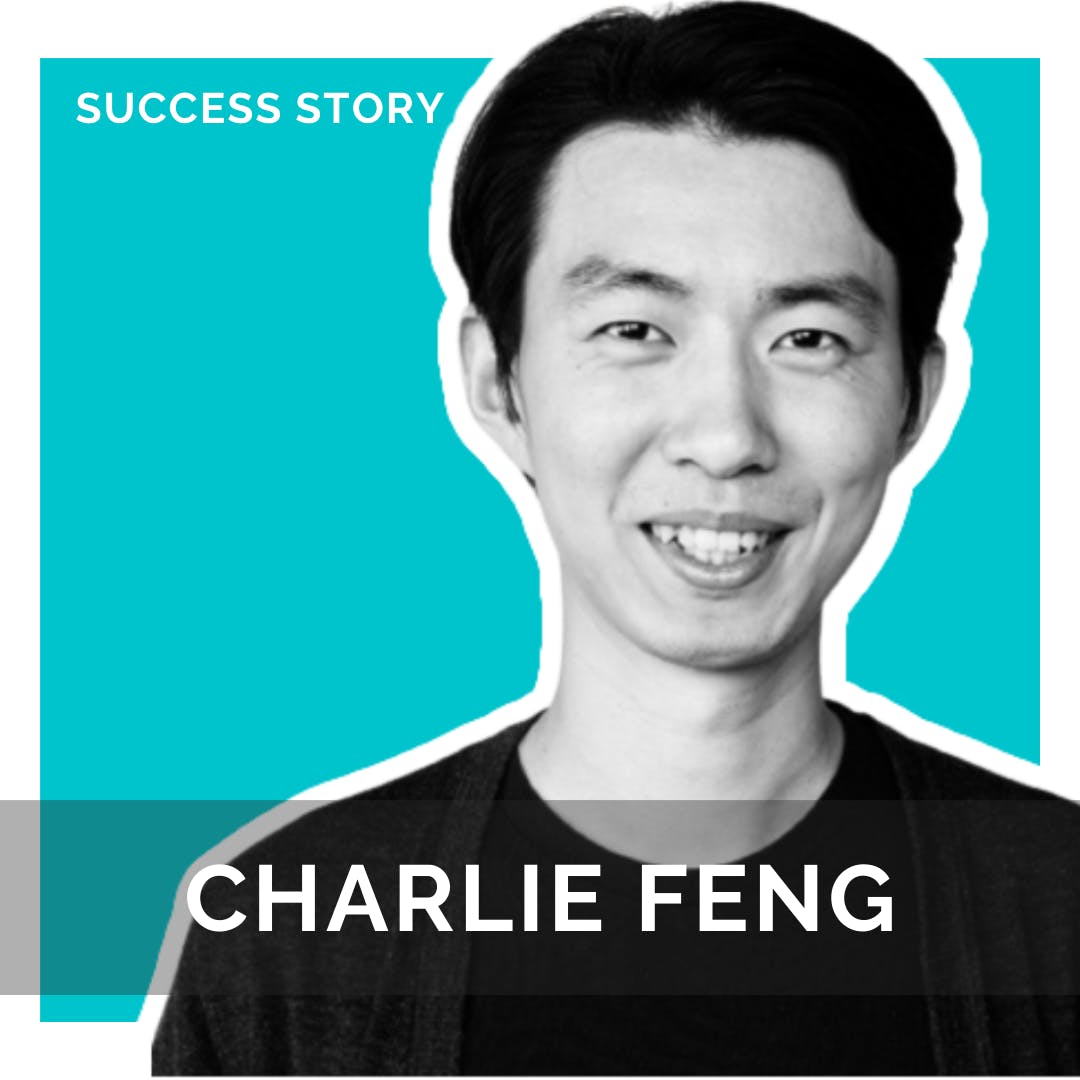
 Charlie Feng, Co-Founder of Clearco | Growing Your Business From 0-1
➡️ Like The Podcast? Leave A Rating: https://ratethispodcast.com/successstory
➡️ About The Guest
Charlie Feng is the co-founder of Clearco. The work he does behind the scenes has helped his fintech company scale from three founders to almost 1,000 employees, and raise over $300M at a $2B+ valuation.
Clearco is one of the top startups in Canada, a fintech company that uses AI to democratize access to capital. Charlie’s job is to build up teams and products, make them shine, and then move on to the next. He did this with nearly every team in the company, and he has had 7 titles in 5 years: he was Clearco’s first Head of Product, Head of Marketing, Head of Growth, of Finance, of Strategy, of Business Operations, and of New Ventures.
His strategy has been earning dividends: the company’s headcount has more than doubled since the start of the year and is still growing. Clearco was just named #2 on LinkedIn’s Top Startups Canada, which looks at the ability to attract top talent--it’s the company’s third year in a row in the top three. Earlier this year, Clearco raised $215 million from SoftBank Vision Fund II, just weeks after a $100 million Series C round that quintupled its valuation to $2 billion.
➡️ Show Links
https://twitter.com/charliecfeng/
https://www.linkedin.com/in/charliecf/
➡️ Podcast Sponsors
HUBSPOT - https://hubspot.com/
INDEED - https://indeed.com/successstory
LADDER - https://ladderlife.com/successstory
➡️ Talking Points
00:00 - Intro
03:41 - Charlie Feng's origin story.
05:30 - The mindset required to grow your own business.
08:08 - What is the traditional process to raise money for a startup?
12:28 - Risks you have to take on when fund-raising.
15:46 - What was the vision or mission of Clearco?
18:06 - How Clearco redefines term sheets.
20:30 - Going from 0 to 1.
21:13 - Startup growth strategies.
23:08 - Finding product-market fit.
27:36 - How do you know when you’ve found a proper product-market fit?
31:32 - What is the difference between product-market fit and founder-market fit?
33:57 - How to find the right team?
36:32 - When is the right time to hire a team?
38:26 - Lessons learned early in Charlie Feng's career.
44:45 - What are some things Charlie Feng encountered in his business?
48:17 - Lessons for people who want to start their own business.
50:00 - Where do people connect with Charlie Feng?
50:25 - What was the biggest challenge of Charlie Feng's career?
51:57 - Who is the mentor of Charlie Feng?
52:57 - A podcast or a book recommended by Charlie Feng.
53:42 - What would Charlie Feng tell his 20-year-old self?
54:40 - What does success mean to Charlie Feng?
Advertising Inquiries: https://redcircle.com/brands
Privacy & Opt-Out: https://redcircle.com/privacy
Welcome to success story the most useful podcast in the world. I'm your host Scott D. Clary. The success story podcast is part of the blue wire podcast network as well as the HubSpot podcast network. Now the HubSpot podcast network has incredible shows like the hustle daily. It's hosted by Zachary Crockett, Jacob Cohen, Rob Litterst and Juliet Bennett Ryla. Now the hustle daily brings you a healthy dose of a reverent off speed and informative takes on business, tech and news and it happens daily. So if you want to stay up to date on the latest and greatest and some of these topics are interesting to you, then you're going to love the hustle daily topics like Amazon's grocery strategy, the rise of the ugly shoe economy is AI the secret to love and America's sleep deficit problem. So if these are topics you want to get into and you love hearing up to date content whenever you wake up in the morning, go listen to the hustle daily wherever you listen to your podcast. Today, my guess is Charlie Feng. Charlie is the co founder of clear co. He has worked behind the scenes as the company has scaled from three founders to almost 1000 employees and he's raised over $300 million at a $2 billion evaluation. Clear Co is one of the top startups in Canada. It's a fintech company that uses AI to democratize access to capital. Charlie's job is to build up teams and products, make them shine, then move on to the next while he was working as an operator and active in clear code. Now he's taking a step back and he works in angel VC, PE investing board seats advisory. So when he was still working in clear code, he was clear codes first head of product, head of marketing, head of growth, finance strategy, biz ops, new ventures, that work meant putting the ego aside, focusing on supporting new hires constantly training his own replacement and spending his time ensuring that the quickly growing company ran smoothly. He's the jack of all trades whose job is to share the glory, bow out and step into the next vital role. The strategy has paid off. The companies had count has more than doubled since the start of this year. It's still growing. Clear Co was named number two on LinkedIn's top startups, Canada, which looks at the ability to attract top talent. It's a company's third year in a row in the top three earlier this year. Clear Co raised $215 million from soft bank vision fund to just weeks after $100 million CBC round. That quintupled its valuation to $2 billion. So we spoke about clear code. We spoke with the vision for clear code, democratizing access to capital. We spoke with the vision, $1 billion invested in how they did it. We spoke about their model for investing in companies, the 20 minute term sheets, the data driven decisions, how clear code helps companies grow and why they chose to have no equity or seat at the table for companies. And then we focused on what he's doing now, which is clear code is really focused on the one to 10 for a company for a startup. He's focused on the zero to one. So he's focused on building companies from the ground up. So we spoke about founder market fit. We spoke about product market fit, how to find both of these these things and what they actually mean. We spoke about hiring and scaling. We spoke about feedback loops from customers. Then we also spoke about growth channels and mediums that work the best and how to decide as a founder when to double down on one medium to actually scale and grow your business and potentially went to abandon something that isn't working out so well. So let's jump right into it. This is Charlie Fang. He is the co founder of clear code. Oh, interesting. Okay. Well, thanks for having me here. So my story goes very perhaps unconventional or at the very least when I was a kid had no idea I want to do anything related to entrepreneurship. I didn't know if that was a career path or something you could do, like make your career out of doing your own business. I'm the first generation immigrants, parents, workers and government in Ottawa and Canada here for over 20 years and very much growing up. I was thought it was kind of like going kind of the steady route that path that path is almost paid for me. And it wasn't until kind of college where I recognized that there is an alternative path where you could there's a lot of interesting problems out there in the world and you kind of just work on what you want to work on. And keep focusing on it, build a career out of it. That's kind of what I stumbled from my early days as a professional gamer to finance realizing that wasn't the thing and then going into startups focus most of my time now. So you were you were at one point professional gamer. Was that the first, did you get paid to game? Was that like the first version of entrepreneurship for you like not working for not working for company working for yourself? Funny enough, I'd say the first version of entrepreneurship was actually just myself teaching myself how to code and trying to play video games when my parents wouldn't let me play video games. So I would code up these kind of, you know, bots that would play games while my school and leave the computer on I turn the monitor off so my parents wouldn't find out. And, you know, got a lot of in-game items and start selling that. So that was actually my first, I guess, I didn't know that was like a thing. I was just doing that because I wanted to play the game, but I'd say that's probably my first taste of it. Okay, so you're selling video game items. You said you went to finance for a bit. I guess that was more like a traditional you worked for somebody before, because I'm just trying to get a timeframe of because obviously the most, I want to say the most notable thing. But something that as you created has tons of excess and is well known is clear code. So after you did the video games, you moved into finance. I always like to understand the mindset of what drove you to build something from the ground up and the problem you were solving and why you decided to build clear bank clear code. What was the process behind that because you didn't come from clear code focuses on e-commerce and helping e-commerce scale and that was sort of the initial iteration of clear code. But you didn't come from e-commerce. So I'm trying to understand how you identified this is a potential solution for e-commerce entrepreneurs. Where was your head at? Yeah, that's right. And I think the interesting part about the clear co-founding team is that we were all none of us kind of came from the traditional guest banking FinTech space. And I kind of offered us both a fresh perspective and kind of a we our naivety was almost like an advantage to a certain extent. So for myself personally, I had a bit of a working corporate finance, a bit in kind of credit and bond rating for a little bit realized that not the corporate life wasn't quite for me. But start a couple of startups after that. And before I started clear code and all the all the founders we were kind of. We had we were repeat founders where we had someone more successful than others in terms of our previous companies, but we all kind of been through or had experienced the startup journey in different shapes and forms. And one thing we kind of all came to realize is that nobody really starts a company to raise money. Nobody starts a business. You start an idea because you want to solve a problem where you have something that you're like, oh, I'm very excited about building something new. But no one starts it because they want to fundraise where they want to go on the road and meet investors yet every CEO or every founder find themselves spending quarter to half of the year fundraising and trying to get the funds to run their business. And I think it's that kind of commonality that we found in all our journeys that made us want to build clear code something that could help us help the next generation entrepreneurs not necessarily dilute themselves not necessarily have an alternative source of getting getting funding if needed. That makes sense. And that is probably the biggest pain like when it comes to keeping your business going. But the model you took is very different. And I think the model you took is very novel. And I think clear code has a pretty good name and a lot of people know it, but for people that don't explain what a traditional for people that have never raised money before explain what the traditional processes for a founder who's looking to go get money and explain why clear code is different and maybe why you chose to do it differently. Yeah, so I'll talk a bit about kind of the landscape maybe before clear code now this new generation of alternative capital that you know we're pretty excited that this new kind of class of assets. The last class has kind of more risen up over the last couple years, but traditionally as a business owner, you have two choices could either go to the bank and get debt. So you put, you know, it's usually personally guaranteed unfortunately you put some kind of collateral on the line, whether you have a factory or no property put that on the line and you get debt. So essentially you get liquidity of fixed assets. And then the other way is you get access to capital by raising equity, which is what you see on tech crunch and kind of all the traditional raising capital people call it. And that is by trading away a portion of your company. So let's say you give away 20% of your company to venture capitalist and they give you X amount of money to hopefully build your business. Right. And they're hoping that you'll make it big. So are you. One thing we realize is that two interesting factors. One is for a lot of the new generation of businesses, these kind of online digital businesses, they are almost by definition asset light. They can e-commerce or they don't have a factory. They don't have these physical assets or an oven or something to kind of collateralize against. So going to the bank is oftentimes not an option or kind of what we see as kind of an advantage being asset light is actually seen as a disadvantage in the face of kind of getting money from the bank. And for a lot of these businesses that are e-commerce, for example, these digital businesses, they are already generating revenue. These are businesses we're talking about that are not. So a lot of the businesses that we're funding are these revenue generating online businesses. They they already kind of done done the R&D where they already have the product there. And they kind of know that for every dollar they put into Facebook or every dollar they put into marketing advertising, they get two dollars out on the other side. Right. So then to give away equity every time you're running a Facebook ad is not the best trade. So that's kind of what we started to figure out like is there a different way to fund these businesses that's been more efficient. And I think our belief is always that around the idea of what is the most efficient way to capitalize or fund your business. So if you are an R&D heavy business, we're doing AI and new technology from a you probably should raise equity. We even partner up with a lot of VCs and we think equity is great. It's it's truly risk capital. It's for things that are in that zero to one phase. But once you're kind of going from that one to 10 years scaling, sometimes that doesn't make as much sense. And that's why we built critical. I just want to take a second and thank the sponsor of today's episode HubSpot. Now the new year might have you thinking ahead to what you want out of your career. So when you think about your success story, what do you actually picture? Is it retiring early with a beautiful view of the skyline? Is it leaving a legacy with your name on it? Or maybe it's helping influence and change some of the world's most pressing issues. Whatever it is, writing your success story starts by working smart because when you work smart, your success story writes itself. A HubSpot CRM platform helps your marketing campaigns work harder and smarter with intuitive visual workflows and bot builders you can create scalable automated campaigns across email, social media, web and chat. So your customers hear your messages loud and clear. Are you tired of your content not adapting to mobile, making it difficult for your customers to absorb your message? A HubSpot CRM platform optimizes your content for multiple devices so that you can reach your customers wherever they are, which is just smart. Learn more about how you can transform your customer experience with a HubSpot CRM at HubSpot.com. And I'm curious because the traditional model, even from like the one to 10 phase, when somebody invests in a business, they have a little bit of equity sometimes they have a seat at the table, but your model, you don't have anything at all. Like you have you like there's a payback and there's a percentage so you do make you like it's a benefit to financial benefit to clear code when the company does well. And it's obviously a benefit to the company as well, but you can't influence decisions. You can't have a seat at the board. You can't do all these things that traditionally somebody putting money into a company would want to have. And I'm curious if that was risky or unnerving or obviously not because clear code has worked, but I mean as founders, you're going against the model where you have less influence over the decisions of the company. Yeah, I think you're absolutely right Scott at the at the early days was definitely unnerving or when you kind of first proposed it were like it was very much against the grain of sand and a lot of people told us that this is kind of not the way things are done. It's a little bit crazy and I think kind of going back to because the fact that none of us came from this background or credits. Kind of that naivety almost kind of gave us a bit of an advantage and I find that happened a lot of times in entrepreneurship where coming kind of from a fresh perspective allows you to solve the problem or tackle the problem from a different angle. And for us, it was very much, you know, traditional idea of if the founder is the one you need to secure against the founder something as you usually personally guarantee it or you do some some form where you're again it goes back to. It might not be the businesses because the business might not have a physical asset, but it goes to the personally guarantee of the founders that physical assets right there's some kind of goes back to that traditional way of underwriting. And for us, because we got very good data from the businesses themselves these were all digital and online businesses as a result we plug into strike to Shopify Amazon Google and we get a pretty good sense of kind of the economics or how the business works. And based on that it kind of made us a lot more comfortable it was similar to really a financial statements, but instead of kind of seeing the yearly report we see per transaction on the day on the minute and I think that helped us a lot at least push through for the first part. I guess as we develop the algorithm and as we thought better we realized that the default rate for the quality of the capital we're giving out was actually quite high and we're actually a lot better than industry standards so it worked up over time. Yeah, no, I'm just thinking that seems like the seems like at the beginning, but like any any any entrepreneurial venture is like risky right it is risky it's just I love that I love that that that statement like the naivety going into this is probably what allowed you to be successful because anybody who came from a VC or PE world would just like. I feel like they grow too many gray hairs that get too stressed out like they wouldn't do it because it's not what people are used to when you first started a clear bank now clear co. You wanted to invest one billion dollars what does that mean and how did you achieve that was at the vision or the mission of the company. Yeah, that was kind of the that was kind of the big milestone goal that our mission is really around empowering founders and we thought that capital at least to start was the best way to empower founders and I think we always have this philosophy and part of the reason why we don't take. Take board seats or we don't kind of take control in any ways because we believe that the founders kind of know how to solve the problem the best like they're the they're the ones that are closest to the metal they're closest to the problem that in the customers that they're solving for and kind of like who are we to tell them how to run their business you know and I think when it comes to. The reason you want to sit on the board or the reason you want to advise or help a founder or empower founders there's two ways to do it one is it comes in the form of kind of support so whether that be so a lot of kind of VC if you think what the board board on your seat a lot of the help comes into forms one is. The help from a referral they tell you they give you connections help you hire people and those are things that clear folks now starting to build out a lot of we have a lot of these partnerships with other right vendors connecting people with the right. How to spend their capital that's one of the problems we always get the question of and I think the other form which an board actually has is also control right you have the ability to fire the founder the ability to fire the CEO if need be. And we think that's probably not necessary for a lot of what we're doing and for a lot of the companies that we're helping out they they need the help of introductions the right network right people but. But us kind of you don't want to sit on hundreds of board seats and be it doesn't really help us if we you know in any way fire the founder for example is that who's going to run the company right so because we decide to go kind of the war quantity routes. Seeing if we can find a lot of these businesses algorithmically it doesn't make any sense for us to sit on boards for example. And another another thing that clear code has sort of championed and innovated on are the terms that they give they actually give the founder so speak to me about a 20 a 20 minute term sheet and what that actually means because if anybody's raised money and they don't know clear code that probably doesn't make any sense of them yeah that's not normal so what's a 20 minute term sheet and how is that part of the algorithm that's what allows you to do this correct. That's right and now it's probably a lot faster but we're essentially through the algorithm able to but after we take all the data in 20 minutes kind of provide people a term sheet or the terms of how much capital we were able to give them what terms and what. What costs and the way the terms work it's pretty it's pretty simple so for example if we give a business a hundred thousand dollars we would a fee that clear code makes is a flat fee so it would charge a hundred thousand dollars plus let's say six percent like a six six thousand dollar fee so clear code whatever only ever makes six thousand dollars. Now how that's six thousand dollars or hundred and six thousand dollars used to be paid is as a percentage of revenue so as clear code right kind of we're hoping that these businesses grow quickly and we get paid back faster than we expected right then it's kind of a win-win. In the down case where the business is going through a rough patch we have a lot of that actually at the start of 2020 when COVID first hits and a lot of these business were in trouble. It actually kind of worked out right not I mean essentially sorry didn't work out for anyone in the sense that we're all. True I understand right but it was actually a point in time where it was very beneficial because as the business revenues are down we're not asking for more money. We're not asking for a fixed money we're we're proportionally we also get less money back right. So it very much aligns the incentive of the business as well as clear code and we found that to be very helpful even when it comes to kind of how we're thinking about building new products or how we're thinking about. Helping the founders because these centers are so well aligned a lot of times it's like whatever helps the founder grow their business helps clear code at the end of the day. So that is that is a great sort of summary of clear code and this is something that you have to be very proud of but I want to really speak about what you're passionate about now which clear code was more on the on the one to 10 side. So after they figured out a process clear code helping them scale so I want to figure out one of the most complex and complicated and misunderstood things in startup language going from zero to one and that's what you're focused on right now with with new companies crack. That's right that's right and I think even at clear code a lot of my job was taking something whether that's a team or a new product zero one and then hiring someone smarter than me to replace myself and yeah dead you know we clear code's gone to a place where we're well past the one stage and yes yeah. So let's let's talk about that let's talk about some strategies for going from zero to one so first of all when you say you're you're working from zero to one provide some context are you talking about going in as a as a consultant to or as like a mentor or an advisor to a founder. Because zero to one is very early on so is that pre-revenue is that pre-product market fit when do you get involved and what does an entrepreneur look like when you start working with them. Oh so yeah so I do some advise a angel vest a kind of mentoring when it comes to helping companies and the area is that when it comes to from the rising perspective it's that usually they are before product market fits they're kind of the early stages. Sometimes they have a little bit of revenue but maybe one or two customers and trying to figure out how do I get my first 10 customers. And I think zero to one looks different for every business it looks different even depending on what the problem we're trying to solve it's really that early stage you're trying to figure out what is the right solution for a given problem before you start to scale it. So if you run into scaling problems it's a different set of problems from one to 10. So for clear call for example or any any business in the early days there's two types of things that you know I spent a lot of time doing one is finding product market fit for a new market or a new product. That zero one involves a lot of experimentation and then there's the other type of zero one ability a team so saying you know we don't have a marketing team or we don't have a growth team we don't have a business team and how do we do it. Well there's no right or wrong answer per se but you can't just kick it off get a going and eventually hire a team and hire yourself out of the job. So when you when you work with companies they could be pre product market fit so what are some of the the experiments that you run or what is the how do you what's the definition of product market fit how do you know when you found product market fit that's probably a better way of saying it and then how do you once you know when you found product market fit how do you work backwards and an experiment so that you can actually get there. And I know that there's a million different industries so it's like we only have we only have a podcast worth of time to do this but a high level stuff that could be applicable to anybody. That's right that's right I think there's a few lessons I've learned and mistakes a lot of mistakes I've made over the years I think the elusive product if it's like like maybe what you're leading to Scott it's like there's a lot of different definitions out there and. It's I think a couple of things I've learned over the years one thing I'll clarify a little bit or my belief around product market fit is that it's not a static it's not a static fit it's not something that you find product market fit and you just you know you're done the job the job's done I see it very much as a kind of a like you know dance is the right kind of analogy for it but the sense that the market is constantly moving and your product needs to fit with the market fit. So there's been a lot of cases where companies would have product market fit for a period of time but then they lose it right over the years as the market changes and what the needs of their customer changes so I think that's one thing to remember for product market fit is that it's not something you kind of done and forget but rather it's something that you need to keep kind of working with the customers on and for the most part I believe that a. There's those common sayings that you know there's part market fit you kind of feel it we have it usually people mean that because the. For you to acquire a customer or for the economics to kind of run the business or get a new customer is so efficient or so low because you built something that people want that it just feels like all the customers are coming in and I feel that usually a pretty decent definition depending on what kind of business you're in. So if you're in a kind of a more SMB or B2B business once you kind of get your first 10 customers that are non that are not your friends and family you kind of know that you're onto something you might not have full product market fit you're onto something for consumer that number might be more like a hundred or a thousand depending on what kind of consumers you're targeting and that's how I look at it. I just want to take a second and thank the sponsor of today's episode indeed now in 2022 make a commitment this is the year that you're going to build your business you're going to turn your passion into profit but to do that we all know you need the right team and that is by far the most difficult part of building and scaling a business I've hired times of people I personally use indeed and indeed is the easiest way to build a team with the right skills ultimately that's what you need to make your business goals of reality now if you're hiring you need. You need indeed because indeed is the partner where you can attract the right candidates interview them and hire them all in one place and indeed is the only job site that guarantees that you're going to find the quality of candidates that you need and these candidates have to meet your must have requirements or else you don't pay. Instead of spending hundreds of hours on multiple job sites you need one powerful hiring partner that can help you do it all and indeed partners with you every step of the hiring process. Find great talent through time saving tools like indeed instant match assessments and virtual interviews for example if you've never used instant match the second you post a job or a requisition and you sponsor that post you get a short list of quality candidates whose resumes match the particular requirements for that job indeed is one of the easiest most simple to use and user friendly experiences when it comes to hiring which is already stressful enough. You get a special offer for success story podcast listeners so right now you can start hiring you get a $75 sponsored job credit this is going to upgrade your job boost at indeed dot com slash success story the offers valid through March 31st remember go to indeed. Say you even and you say you even close a thousand consumers or even you know twenty ten thousand consumers do you feel like you. Is there a certain channel like for example like say I spend a million dollars on that is obviously ridiculous. Say you spend a hundred thousand dollars on ads and I close twenty thousand dollars thirty thousand dollars in revenue that's obviously not a great row as so do you feel like that would be. When do you think that I would have achieved some sort of product market fit even though I feel like I'm just buying and and my cat is super high and I do have customers I do have people that are buying my product but I haven't quite figured out how to make my business profitable yet. So when's the point where you keep that machine going is it a year two years or or do you hope to achieve some sort of profitability sooner than that I guess I guess what I'm trying to say is like. You can buy customers for any product in the world but it doesn't always mean you have product market fit that's right I think of economics or you economics of a business to be quite important to product market fit. So let's use that analogy right like spending a million dollars or crazy amount of money to get thirty thousand dollars worth of revenue. You probably haven't found something you're just paying people you're paying people a dollar to earn you know three cents on the dollar and that's probably not going to be sustainable. The only case where that might be sustainable is that if you have some kind of crazy long retention where that that customer is coming back repeatedly for a long period of time then you'll need to prove out that they'll if you're only making thirty thousand that's a number of years before you ever make back your billion dollars right so. One of the lessons I did learn kind of building both clear color my previous business is at an early stage LTV treat the repeatability of business of customers more like almost like the middle of gravies the right one but yeah like treat that as a bonus don't rely too much on the revenue or the repeat revenue past a year two years is really stretching it mostly because. You don't the business would be so different two years from now and for you to rely on the revenue on your three or even your two of a customer will. There's definitely exceptions to the rule but it's going to make you as an entrepreneur running the business much harder so a lot of times I focus on kind of that year one profitability and it doesn't mean that you have to run a profitable business as a whole it just means that. The math for every customer that you're buying should be profitable or should not be you know shouldn't pay one unless you have a hypothesis around there there's get steps exceptions to this rule so for example if you're in a marketplace business where. A lot of businesses like Uber or the kind of the heavy marketplace business was famous for doing this for a while where they were acquiring customers at a loss because they said that what a hypothesis was that once they hit a critical mass then every kind of the flip switched right one of the also the funny enough the lessons we learned from the Uber and kind of the realm of delivery businesses is that a lot of them a lot of the one bankrupt and two you know for Uber it took many many years and now you make sure. Today there's their profitable on a new economic basis but it's you need to raise a lot of money to run business like that so it's it's stressful so obviously that is not the majority of people out there trying to build companies okay that's good that's good that's good insight though and then okay so we're talking about product market fit one thing that I see you speak about often is founder market fit so what's the difference between product market fit founder market fit and who cares about founder market fit is an investor advisor angel or is it someone is it is it the team. Like what does that founder market fit yeah I think both so as as an investor I look a lot more for founder market out there so there's something people talk about about you know first time founders you look a lot about you think a lot about product second time founders you think a lot about distribution how to get the product out to your customers. One thing I'd add to that is like almost like third time founders you think a lot about the people who's actually involved in the business because it's the people that's based on their skill set they will have access to different distribution channels as well as they'll have different ways of thinking about building a product. It's kind of like that now geos you know to a hammer everything's a nail right and depending on my skill set as a founder the way I would solve a problem is very different from you or someone else solving a problem. And that's something that kind of very much made me realize about businesses is that kind of like show me the team and I'll show you the product that they'll build almost and it's essentially a reflection of who the team was. And the to me the founder market fit just means that do you have the right team or do you have the right founders or founding team in place to tackle this right market or this right problem set. And I think a lot of this is half skill set but also half interest based right like for example like I'd say my skill set is perhaps not as heavy or not as good in the either the pure consumer space like the I'm probably not going to build the next TikTok or Facebook because I don't use Instagram I don't really use TikTok that much so it's just not something my not even out of skill set just that of like interest it's not there for me. And I think this is different for every founder and every team and I think this is why it's also just as important for me as an investor but it's also important for myself when I'm operating or from a team perspective because then it's kind of like the question of what are you really your strengths essentially and what are you really doubling down on and I think it's very important to understand that. And when you speak about finding that right team so let's tie that into one of the first things you said which was I want to make myself redundant I want to basically hire myself out of a job so how does somebody do that how does somebody find people what is your strategy for when you're starting company and this is obviously something you probably teach over to founders but what's your strategy when you're starting a company how do you make yourself redundant. Yeah I think about the redundancy programs past the zero one stage I think the zero one stage I pretty well this is kind of why I look for a lot for a founder market fit because I think the it's going to be the founders where it's going to be the founding team that's going to be critical from getting them from pretty much nothing I just need to do something that's actually working product market fit makes money. And then in terms of kind of redundancy I think the I think there's two ways to hire one is hiring people who kind of compliment you and then there's the hiring people who are kind of like similar to you right I think it's I think they're not two separate concepts but the same concept is what I mean by that is I think when it comes to hiring it's important that to hire people who compliment your skill set but are actually the same as you were similar to you. From a kind of world view perspective and this is where I kind of like the question of diversity kind of comes kicks in a little bit of kind of want diverse skill set or diverse perspectives but you actually don't want to like you don't want people who are having conflicting like missions for conflicting goals as you because we're also you're always be arguing on the fundamental so that's what I look for in the founding team as well is as well as well as co founders that I look for my sit for myself. My sit for myself my next business is very much they're aligned very much with me in terms of the mission the way we kind of see the world what we want to accomplish if it's something kind of data on a fundamental level basis would we agree. And then above that you actually do want the diversity of thought right diversity of opinions of how would you tackle this problem hopefully their perspective is not the same as me we're all side have a bunch of Charlie clones and that's not very helpful so that's what I think a lot about when it comes to hiring. And I very much try to hire people who are kind of more experienced with people that I would want to almost work for people I would work want to work for it with the circumstances are different and they are the perfect people to set you replace right. And at what point do you feel like the founding team should start to hire those experts to scale at what point do you feel like the business has progressed enough. So that you can hire a team of people that can that can take it and scale it because are you ever concerned about. Are you ever concerned about that sort of that second tranche of of hires after the founding team not and this is very normal not having the same convictions or passions for the business that the founding team has. Yeah it's it's tough you know I've seen it done well I've seen it done poorly I actually believe that from a kind of I don't want you to see it as kind of like tranche one or tranche two of hiring I think about it very much as who can you influence when you're making those hires and I think you know Google was very famous for I believe their page in a survey they they were they were interviewing people up to like the 200 people or something like that they're very much. Very hands-on with the curating essentially who kind of joins Google in the early days and I think the importance of that is you're again exactly you said Scott like looking for that kind of conviction and looking for those people who share the same kind of desire for that conviction for the mission you're trying to go after and over time that's going to bite right over time or people have it's harder to keep that and. And as a result I think it's even makes it even more important that your first 10 hires because those are probably people that you'll be spending the most time with and you'll have to have some point rely on that those 10 people hire the next 100 people right so I think a lot about how do you build good culture for the first 10 20 people and almost cross your fingers and hope things go well. Are there any other are there any other lessons or learnings things that you've succeeded at or or failed that and the learn from from that zero to one phase so we sort of spoken about found a market fit product market fit first hires what about scaling from zero to to one what is what is that process look like what's the testing process the experimenting process channels that you should try when you should give up on channels if you shouldn't at all like what's that. All mindset of scaling that's tough to yeah i'll first talk about talk a little bit of our experimentation because I think I spent a lot of time doing that before so talk about a story where a mistake I made quite early on that i've taken with every other business I built which is kind of not charging your customers early enough and kind of going back to the idea of you know you measure. You measure a person's kind of intentions by the actions they make rather than the words they say and I think that's very true when it comes to you know this this marvelous product that you've built and the question is well. Does anyone ever want it right and I think for my first company first product I remember kind of doing a lot of customer development interviews talk to a hundred people I got a lot of people and wait lists like a lot of people who said no I like that I think which ability is great. All these kind of strong positive words of encouragement and then what it hit me is that you know I didn't ask them for their credit card I didn't ask them for to pay for anything and then when I did when we finally spent months to build a product it turns out that a lot of the positive words were. they were capy added with kind of other reasons why they couldn't pay or why they were still missing this one feature or why I was still missing this something and kind of made me realize that the the in the early days when you really care about is learnings you're trying to maximize the quality of learnings and I kind of the quality of learnings quality of feedback and charging because of you know when I was kind of starting my first company it was. I always thought that you know that I want to I don't want to charge people money because they're my early supporters they're oftentimes friends or people I know and as a result I I don't want to you know take money from them right and it's not so much about charging people for the sake of making a dollar making money but it's really about how you maximize your learnings and. Charging people is one way to increase what they increase the learnings right and it's really about how do I maximize the efficiency of my feedback I have a certain period of time companies don't die because of companies usually die because founders give up companies die because you run out of time time is your most valuable assets when you're building a business and that's your one phase and the the important thing is how do I maximize the efficiency of every. You know day or month I spend doing that and sometimes for example you're working the more enterprise section of businesses like if you're working on the six figure potential six figure deal in the future you might not want to charge the first customer your inaugural first customer now six figures but even charging them a zero dollar invoice is actually quite good because what it does is that for that large enterprise if you're charting if you're making an enterprise of over a hundred or a few. 100 people sign and do a zero dollar invoice it actually makes their legal team to review the invoice it makes the finance team you know they have to do all the procedures right and it makes them actually have to commit even though they're not paying any more materially it's a much higher commitment than just kind of a pilot with literally no space attached and I think what you're trying to do is again maximize your learning so this could be done via charging people asking them for the credit card and you'll see you know people's real reasons. And excuses come out or you could you know you do another way for consumer apps is you really measure how they use that so you don't care so much about the number of signups be care about the daily usage or time they spend on the app and things like that so you're smart yeah very much asking people for the credit card really I just want to take a second and thank the sponsor of today's episode ladder now over the past two years and a bit I'm sure we've all realized that how precious and fragile life can be in the last thing that you want to be worried about when something horrible happens is how you're going to afford it and that's why I am a firm believer in life insurance so that if something does happen you're not passing those costs onto your kids or your family now if you're asking yourself how do I find affordable long term coverage how do I find affordable monthly that can protect my family from anything that happens well the answer that question would be ladder because if you wait longer life insurance does cost more money so when you set term coverage when you're young you can get incredible coverage for a relatively low price and ladder is 100% digital so no doctors no needles no paperwork when you apply for $3 million or less you can just do it online need a few minutes phone and a laptop to apply ladder smart algorithms work in a real time so you'll find out if you're instantly approved if you refer to talk to somebody they also do have a team of licensed agents they don't work on commission so they'll help you they won't upsell you there's no hidden fees you can cancel at any time you can get a full refund if you change your mind in the first 30 days and ladder policies are issued by insurers with long proven histories of paying claims they're all rated A and A plus by AM best so finally ladder is offering an option for people that want to protect their family that want to start getting behind life insurance at a younger age so if you want to see if you're instantly approved you can go to ladder life dot com slash success story you'll see if you're instantly approved that is ladder L A D D E R life dot com slash success story that's ladder life dot com slash success story yeah no I like that I like that idea a lot I love the idea of even like with a pilot you're forcing you're forcing the company to go through like you know AP and legal and whatnot just to get to push them to take action even if it's even if it's not financial it's very smart idea okay so though that but you also mentioned that that was that was one learning but then you you said you would just speak on scaling and growing so that's maximizing your learning but scaling from zero to one what are some things that you've encountered or done right or done wrong to to move the needle on that because that's experimenting is one but that that's not testing different channels that's just sort of maximizing learning with the customer which is incredible really important not to diminish that so how do you so what are your suggestions for channels to try marketing or sales strategy at an early stage yeah I think I think the you know I've tried a lot of different channels over the years and most of them fail and a few of them succeed and I think that's one of the things people should remember is that the 80 20 rule applies very well when it comes to marketing or distribution is that probably 80% of your customers will come from like 20% by 20% usually it's like for startups like it's one channel it could be Facebook could be Google could be a CEO depending on what matter what it is it's usually probably one to two maybe two channels for a startup is where most of your customers will come from and I think one of the things both for channel experimentation or just experimentation in general that I've stressed a lot to founders that work with for my team is to kind of draw a line to the sand and what I mean by that is to write down your hypothesis or write down when you will kill that experiment right and it doesn't mean that once you cross that line you have to kill your experiment you could choose not to you have a new set of information at that point in time but I think as humans we have a lot of revisionists or like a very good revisionist story that's right we were very good at rationalizing and looking back and painting a new story once the time comes and maybe just mind that very short but I've always find myself when I don't kind of think through what are the kill criteria as I call them for a certain experiment or certain channel that two months later I'll find myself finding myself excuses to keep that channel or keep going just one more just spend another week of money on it and every time I've done that it hasn't done me well it's so yeah as a result one of the things I focused a lot about especially when it comes to kind of experimenting the distribution side is very much what are my kill criteria what am I expecting so let's say I launch a new Facebook campaign or add for our new audience what am I expecting for a role as and how long do I expect to see that and that sets a date of my calendar in which case I'll revisit and I could choose to push through and say hey you know even though it didn't work out as I expected I want to try this experiment again for another right but it kind of creates that forcing function for you to revisit and if you don't especially when it comes to ads or distribution yeah Facebook will keep you very quickly easily very very easily I want to I want to ask a couple rapid fire questions to pull out from your career but is there any other last learnings or insights that you wanted to go into for that zero to one environment for a startup that we didn't cover I think we covered a good deal about it the kill criteria something I think a lot about and I think lastly is when it when it comes to zero one it's important to stay close to the metal as I call it so like if you're the founder or if you're the person that's going to responsible for it and I think this gets harder as you are a it's by harder I mean more so it's it's kind of against the grain it was you're managing a larger team or you know in the early days when you're building your company you're naturally talking to the customers every day and then as the company gets bigger you have a manager that does that right you have a manager that manages someone that does that and you soon realize yourself that while you're making all the decisions you're not the one that's actually speaking to the customers and you have this kind of broken telephone or the feedback group of work. What the customers really want and oftentimes as a founder what got you to where you are is because you have pretty good instincts right or that's your instincts for round one but you kind of went from the zero to one worked out and I think founders usually have pretty good instincts was you know most people actually have pretty good instincts in their domain trust that instinct try to figure out where try to get closer to the customer or closer to the ground where you get that raw that gets information that to you it'll help make you you make zero one decisions a lot better. Great before I pivot into some of these rapid fire if people want to connect with you what's the best social channels that LinkedIn Twitter where do you want people to go? Yeah probably Twitter related I am not that much on social media but Twitter and LinkedIn is perhaps the best place in the five years. That's Charlie. Yeah. Charlie's you think okay perfect. Now that'll be in the show notes too okay so a couple rapid fire questions to close us out biggest challenge that you overcome in your life what was it how did you overcome it? Cool. I say the biggest challenge that kind of comes to mind is building my first startup where I had nothing no network no idea what to do even and a lot of great information even like awesome podcasts like yours I didn't exist so I didn't really know what I was supposed to do. And I think what what kept me hopeful or what kept me what was what you know what made what helped us make this through is a combination of just having a lot of conversations with customers a lot of times customers kind of know what they want. Like there's the same of kind of like you know you ask the fourth saying of like you ask your customers what they want to tell you a faster horse but a lot of times depending on what field you are the customers actually just tell you what they want to get built. And you know you might not build them exactly what they tell you but they will give you a lot of information and find those champions and customers and keep talking to them. And the other one is finding good co-op out so I think that's something that's very underestimated you'll have ups and downs startups is definitely a roller coaster of a journey and very much hopefully when you're down your co-founded to kind of pick you up and vice versa so I think that's also one of the most critical decisions that you're making. If you had to choose one person there's obviously been many but one person has had a major impact on your life who was that person and what do they teach you. A lot of folks so much impact I think one of the most recent ones that's really stuck with me or the pandemic is a co-worker and a friend famous Kent and one of the quotes that he left with me was kind of everyone is the hero of their own store. And it just kind of goes back to making you realize that everyone's kind of fighting a battle that you don't know about and everyone is from their perspective and from you know from my perspective I'm the hero of my story right and from everyone's perspective they're a hero of their own story and it's easy to forget that especially the chaos of especially how much that the world has changed the last two years and that that code has stuck with me with humbling and making you realize kind of look from the other people's minds a little bit here and there. Your favorite source to learn and grow a podcast book something that you've picked up recently or not that you'd suggest somebody else go check out. So there's a lot of podcasts there's a lot of books I like recently been reading some radalio. Naval has some great content but I think one thing that I've actually done more of over the last few months that I want to do more of in 2022 is rereading. There's always that book that you know you really enjoyed reading or you thought was a great book and you recommend to others all the time. But what I found is that once you reread it you realize that there's like things that you didn't pick up the first time really yet and that's okay I'd recommend do more. If you could tell your 20 year old self one thing what would it be. Value as cheesy as the sounds value friendship and value those I think all good things in life comes from compounding typical one buffer thing of my compound is the eighth wonder when it comes to money financial compounding is the greatest asset but I also think that also flows to other things like relationships I think the best relationships are those ones that. Yes as great of anyone's networker you can you can make a friend in over you know a cocktail or in one evening but the best friendships the ones who will have your back during the rainy days are going to be those old friends of yours and I think I wish I invest more time in those relationships. And so I think all good things in relation all good things in life come from compounding including relationships and I would recommend my 20 year old self do more of that. And last question what is successful to you. It's a great question I've been thinking a lot about that I think success to me is really about happiness and I think probably is for many people what makes myself most happy. And I think what that means for me is really just working on cool projects we're working on cool things with people you like and because that's actually one of the reasons I really like start up so much is because you choose your team you can choose who you want to work with and that's again that's who you surround yourself with will oftentimes define your happiness one of many so that's that's one of these things.