


 YouTube
 Apple Podcasts
 Spotify
 Overcast
 Castro
 PocketCasts
 Amazon Music
 Deezer
 TuneIn
 Podcast Addict
 RadioPublic
 iHeartRadio
 RSS Feed
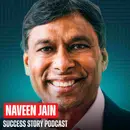
 Naveen Jain - Billionaire Founder of Viome, Moon Express & Author of Counterintuitive | He Quit Microsoft With No Plan and Built a $40B Internet Company
➡️ Join 321,000 people who read my free weekly newsletter: https://newsletter.scottdclary.com
➡️ Like The Podcast? Leave A Rating: https://ratethispodcast.com/successstory
Naveen Jain is an entrepreneur and technology executive best known as the founder of InfoSpace, which he built from six employees into one of the largest internet companies in the American Northwest during the dot-com era, reaching a peak market capitalization of $31 billion. In 2003, he left InfoSpace to launch Intelius, one of the first companies to offer public records information to consumers, growing it to over $150 million in annual revenue and 500 employees before its sale in 2015. He co-founded Moon Express in 2010, where he serves as executive chairman and which became the first private company approved by the U.S. government to land on the lunar surface, and founded Viome in 2016, where he is CEO applying AI and RNA sequencing to precision health.
➡️ Show Links
https://www.instagram.com/naveenjainceo/
https://www.linkedin.com/in/naveenjainintelius
➡️ Podcast Sponsors
Hubspot - https://hubspot.com/
Huel - https://huel.com/scott (Code: scott)
Odoo – https://www.odoo.com
NetSuite - https://netsuite.com/scottclary/
Indeed - https://indeed.com/clary
Framer - https://framer.com/design (Code: SuccessStory)
LinkedIn Ads - https://linkedin.com/scottclary
Priori - https://priori.life/
Mars Men - https://mengotomars.com/
Upwork - https://upwork.com/
Xero - https://www.xero.com
Dell - dell.com/dell-pro
AutoPilot - https://www.joinautopilot.com/landing
Cohesity - https://www.cohesity.com/datacloud
Amp - https://amp.ai (Code: successstory)
Whatnot - https://www.whatnot.com/
Monarch - https://www.monarch.com/ (Code: success)
Hostinger - https://www.hostinger.com/success (Code: success)
Cash App - https://cash.app/ (Code: cashapp10)
MyFitnessPal - https://podcasts.myfitnesspal.com (Code: SCOTT)
Plaud – https://plaud.ai/success (Code: success)
➡️ Talking Points
00:00 – Intro
04:49 – From Poverty to Purpose
07:58 – The Mindset That Changed Everything
10:15 – How Naveen Raised Entrepreneurial Kids
18:56 – The Secret Behind His Children's Success
25:37 – Sponsor Break
27:24 – What Made His Companies Win
42:57 – Chasing Moonshots Without Going Broke
47:27 – Get a Job or Raise Capital?
53:32 – When to Leave Your Job for Entrepreneurship
56:12 – Sponsor Break
58:59 – Is Your Moonshot Too Small?
1:01:01 – Never Stop Learning
1:04:48 – Advice to His 27-Year-Old Self
1:05:35 – Where True Greatness Comes From
1:08:32 – Life Never Stops Teaching
1:11:00 – The Lesson He'd Leave His Children
Help explain to an entrepreneur who's listening to this, I want to go after my moonshot. How do I pay rent next month? Do you know what your moonshot is? Because if you don't even know where you are headed, then how do you know you're headed in the right direction? Look at every single company that did the COVID testing. They made a lot of money and they plummet right back. People who do the things for a short term, they just know future there. My guest today is Naveen Jain, a serial entrepreneur who's built and sold multiple billion dollar companies and is now on a mission to solve some of humanity's biggest problems from curing chronic disease to mining the moon. Everything that you do is an experiment. Instead of labeling the experiment success or failure, you simply say this experiment has outcome A or outcome B. When outcome A happens, I do C. When outcome B happens, I do D. God, I don't know if I should say that or not. If you find yourself hitting a small ball and putting it in a hole, and if that is your purpose in life, you have outlived your utility to the fellow humans. My fitness pal is a success story partner. Now I want to talk about something I do every single day that I almost never bring up on the show, how I actually keep my health from falling apart while I'm running everything else in my life. When I first started my own health and wellness journey, my fitness pal was like the first app I ever downloaded to help me figure out my nutrition, my calories, my macros, all of it. When you are moving at 100 miles a minute, your workouts get sloppy, your eating gets random. Don't even talk to me about when you're on the road. I mean, there's days where I look up at 4 p.m. and I realize all I've had is a coffee and whatever was sitting on the counter. And for years, I told myself, like many of you, that this was just the price of being ambitious. You're grinding, you're building, you don't have time to think about lunch. And that's a story that I kept telling myself, but it's not true. It's just being disorganized about the one thing that you can't actually replace, which is your food, which leads to your health. Food is the foundation for your energy, for your sleep, for your recovery, for your performance, for your life. Basically, food is the one input. You can have the best morning routine on earth. You can meditate, you can journal, you can cold plunge, you can do whatever you want. If your nutrition is off, everything else suffers. I see it everywhere. It doesn't matter if you're optimizing for the perfect body, or you're optimizing to win the championship, or you're optimizing your brain to be at 150% and always be cognitively dialed in. Whatever it is you're trying to optimize for, it starts with food. If your nutrition is off, everything else suffers. Over the last week, Not only am I working with MyFitnessPal, but I've been back in the MyFitnessPal app on the premium plan. This is the app that started off my own health and wellness journey years, years, years ago. And the first step that I took towards getting my own health back was downloading MyFitnessPal. Years and years and years ago, I scan a barcode. It pulls everything up. It remembers my regular meals. It's done. There's no friction. And that matters because the second something is annoying or there's a lot of friction, I stopped doing it. And that's just the truth with me. This one stuck because it doesn't feel like work. Now, the moment I started logging what I was really eating, not what I thought I was eating, and there's a big difference there. I was way under on protein and I was eating most of my food after 8 p.m. And I was telling myself that my nutrition was fine because I wasn't eating junk. But not eating junk and actually eating right are two very different things. And with premium, I can see all of this, right? I can see trends over the weeks. I can see the macro breakdowns by gram, by meal. I can see where my energy dips in the day. It lines up with what I ate. And I can set custom goals for different days, which is useful because my training days and my rest days obviously don't look the same. Turns out that I wasn't feeding myself properly. And it's embarrassing to say, but it's true. It's not about obsessing over a number. It's not about punishing yourself for eating a burger. It's about awareness. You cannot fix what you refuse to look at. The MyFitnessPal app just makes you look. I just want you to start with one week. Just log what you actually eat for seven days and look at it. And I promise it'll tell you something you didn't know. And whatever it's telling you is going to help you function better today, tomorrow, and most importantly, it's going to help you live a much longer and healthier life. So go to podcasts.myfitnesspal.com. That is podcasts.myfitnesspal.com. And use code Scott. That is S-C-O-T-T, Scott in all uppercase letters. And you're going to get 15% off MyFitnessPal premium. Again, this is so you can start living a healthier life. happier, longer life, go to podcasts.myfitnesspal.com, code Scott. Links in the show notes too. Check it out. You won't regret it. Naveen, $5 in your pocket when you landed in the US. Walk me through that first week. Well, you know, it's really interesting. I landed up in beautiful summer days in New Jersey. And as you are, you know, it's not a place you normally would want to find yourself in the United States. That's where you were. A large computer company there. And we were, you know, found a place in a very, very rural area where they, I don't think they have ever seen a brown guy. And it's a very small town. And I found this farmhouse. And in the summer, it looked really beautiful. This stream of water going in your backyard. I'm thinking, wow, this is beautiful. And six of us were sharing that farmhouse. until six months later, I saw the white stuff fall from the sky. I've never seen the white stuff far from the sky. I'm thinking, what a great country. The stuff here, the white stuff falls in the thing. Until in the morning, and you can't get out. And now there is no insulation, and this, the gap of six inches in the door. So cold air is blowing, and I'm thinking, oh my God. I have no warm clothes and no snow boots. And I have one leather boot that got holes in it walking on the snow. And I'm thinking, this is just not the place I want to be. So I decided that I wanted to go back to our beautiful country where there is a warm weather in India. And I thought this was it. This was it for me. Yeah. And we really, you know, it's really interesting that you were here getting paid $500 a month. I mean, really they gave you minimum subsidy of living. Six of us are living in one small farmhouse. All six of us bought a $400 Chevrolet Impala. old car that's to drive together. And then I decided that by winter that this is not the place I would be able to survive. So I, at that point, sent an email to the manager who happened to live in Detroit and said, look, I'm going to go back to India. If you ever happen to be in India, please look me up. Happy to host you there. And he replied back and saying, you know, you're a smart guy. People like you really belong in Silicon Valley. And you should really go to California and Silicon Valley. That's where smart people are. And that's where you should go. And I'm going to make a couple of calls, get you a couple of interviews set up. And next thing you know, I was working for one of the hottest companies in the Silicon Valley. The point is, here I am that has no background in computer programming, and I'm working as a computer programmer just because I'm a brown guy. And they just assume you got to be a good programmer because you're a brown guy. And I thought, God, if they believe that I can do it, I probably can. And I learned everything. That's so funny. You know, coming here, six of you, you had really no money at all. Obviously, fast forward to today, you know, repeated successes over your life and your career. And even we were chatting before, you've not only created an incredible life for yourself through business and through entrepreneurship and innovation and going for your own moonshot. But also you pass some of these mental models and mindsets onto your children who are also incredible. So like a complete 180 from where you started in the US, what would be, I know there's so many lessons that you have learned over your life, but let's just start it off with an interesting one. What would be in that moment, the most important idea that allowed you to move from, you know, objectively poverty and no money to success? Just pick one broad mental model. Ultimately, the only thing you would believe would be, Perseverance, you know you have to believe in yourself. You have to believe that you want something so badly that you're willing to move mountains. So I would say that believing in yourself And believing it's and having the curiosity, the intellectual curiosity to be able to learn anything you want to learn. And I would say that's probably the thing that I would say is having the intellectual curiosity and having a perseverance and desire to succeed in life. You know, obviously God has been very, very kind to us. And enough to me that my proudest moment is not in terms of what I have personally achieved, but really watching our children do even more audacious things. And as I think any parent who would tell you that they're, own joy and happiness really depends on their least happy child, right? I mean, that's just really how it is. Watching your children just thrive. I would say my biggest joy comes from the fact when I see them do things that I just warms my heart that say, wow, they're taking on some amazing challenge and they're going to go out and solve that. You know, you mentioned something, which I actually thought was a beautiful line. The way that you said, when I walk into a room, it used to, especially, well, I mean, so you have three children, Ankur, Priyanka, and Neil, all building incredible companies. And you said when you used to walk into a room with them, they'd say, oh, you know, you're Naveen's son or daughter. And now it's the opposite. Now they say, oh, you're so-and-so's father. So that reframe. I mean, it's really amazing. Yeah. Yeah. It is completely changed. I really, it is, I walk into the, you know, Fortune 50 CEO and say, oh, your uncle's dead. Oh, your priyanka's dead, right? And it is just so heartwarming to hear that rather than saying, is uncle your son? Tell me something. You did the opposite of every parenting book ever. You brought them into business meetings. You brought them into your life. No one knows how to parent the first time. They're all just trying to figure it out. So what was the thing or what was the idea that you, the thesis that you tested is probably the best way to put it when raising your kids? Oh my God. I think that's actually the whole podcast on that we could do, because it's counter-intuitive parenting. In fact, my book, I've written a book called Counter-Intuitive, and it is of unconventional principles for success in life, business, and parenting. And this whole thing is the whole chapter and parenting slash leadership, right? And about counter-intuitive ways of doing. And I'm gonna give you a couple of things that are really, really interesting. So for example, every parent reads the stories to their children, right? So they will go out and read the stories. We actually used to have a completely different way of doing it. I would go and say, all right, tell me a story about, and I'll come up with the three things that are completely unrelated. So tell me a story about a tree itself. and a coke and a monkey, right? And now you have to find a coherent way of connecting these dots. And that allows the brains to see how everything in the world can be connected in some abstract way. Now they will say, all right, now dad, tell me a story about these things. And then my job is to now connect them together. What we're doing is creating this neural connection in their mind that everything is, even though it looks completely disconnected, can actually have a story that connects them together, right? So that was one thing. The second thing was really creating this idea of As a parent, it's not our job to take our children to the water and make them drink. Our job is simply to make them thirsty. And how you make them thirsty is creating this intellectual curiosity. Because once you create the intellectual curiosity, they will find the water and they will drink it, right? So you don't have to worry about anything in their life. And the way you do that is to make them think how to challenge, for example, If your son or daughter comes to you and say, dad, look up, what a beautiful blue sky. And you look up, most parents will look up and say, oh, it's indeed really beautiful. Look, you wanna encourage your children, right? Now, what if you said, you know that sky doesn't really exist, right? Because sky is nothing but a fragment of our imagination. It's a blue light that scatters. And what we are seeing is a barrier called sky, but there is nothing there. When you go from here to Mars, you don't say, mom, I just passed the sky. There is no sky. As a matter of fact, there is no color blue. There is no color that exists out in the nature. It is the electromagnetic waves, the photons that are hitting your eyes and your mind, visual cortex is making up that color. And it's not that you're teaching them science, What you're teaching them is very basic thing that even the things they're 100% certain about, the things they can see with their naked eye, what if those are not true? What if there is a different way of looking at that? What if that is wrong? And once you created that, they are willing to challenge everything. They're willing to say, what if there is a different explanation for what I'm seeing? And that type of creating that intellectual curiosity is completely different and unique. So when they see a problem, they don't say, oh, that problem exists. They say, wait a sec, why does even problem me? Is this really even a problem? I love this. And that mindset completely changes. You know, another thing is that, like, you know, most of us who grow up, you know, grow up from a, humble background, you know, we want and our children are growing up in an affluent family. Our first reaction is I want to teach them value of money. I'm going to make sure they learn how that money is earned. You make them do the menial thing. Go to the grocery store and earn the minimum wage. Go pump the gas so you know how to earn money, right? And that is to me the most sadistic and narcissistic thing to do. I suffered and God, I'm going to make you suffer now. Rather than saying, hey, I came from nothing and I worked hard and came up to be here. I don't want you to go back to where I came from and you are maybe smarter than me, instead of here you come up to be here. No, no, no, no. I want to give you a platform to start from here and now show me if you can go from here to the moon. Right? And basically, so our thought was every summer, They don't have to do a menial job, but they have to go find the things that they wanted to learn, but they didn't get a chance to learn during their school. Right. Dad, I got, I want to really learn about how brain works. Great. Let me set you up on internship at the Paul Allen Brain Institute and you're going to go learn anything you want. So my job is to use my content, but give them the lesson. the things that they want to learn. And every kid, every summer has to find something. My God, I wish I could learn this, right? Great. Here it is an opportunity to go learn that, right? So I can go on and on every single thing that we do. I'm going to give you one more example because I think it's just so relevant. And I think people are going to, after this, stop listening to this podcast anyway because they're going to hate me. Once someone becomes successful, so let's assume you're starting a company, you become successful, you have a great exit, and your kids are young, what's the first thing comes to your mind? I wanna spend my time with my children. Now imagine what you have just done. What you are doing is for your own selfish thing at the cost of destroying your children, and here's why. Now look at what happens watching from the children's perspective. My dad made some money. When I go to school, my daddy's at home sitting on the sofa watching CNBC. I come back from school, but my dad said, work hard. Hard work is what it takes. Go to your room, work hard. And I'm thinking my daddy's still at home watching CNBC. And I'm thinking, God, I want to grow up just like my dad, sit at home, watch CNBC. Right? Point is, this dad, my first company was widely successful. Right? It was one of the top 100 market cap companies in the country. Guess what? I started the second company, the third company, and now fourth company, and now I'm going out to go mine the moon for helium three. My kids are saying, God damn it, that is not possible. No one has done it. And you start to show them how it can be done. Dad turned 60. They're gonna wanna slow down. I'm gonna go solve healthcare. Dad, right into sunset, you have plenty success. Why do you want to get bloodied and have complete failure? Well, looks like to me, I haven't taught you anything. So I'm going to go out and show you how we can actually change healthcare. And now the kids are thinking, God, my dad is not even that smart. Let me show them how it is actually done. And let me show them how we can have billions of people live better life by doing the different things. I love this. Right. I think they learned very different things. So parenting is even though it looks like there is no guidebook for the children, there is no user's manual for the children. But the parenting is very counterintuitive. Everything that we think we are doing it for them, we actually are doing it for ourselves at the cost of them. I want to just frame where your children have ended up. So Ankur, he's the founder of Built. They've raised at a $12 billion valuation. They've raised $1.5 billion. Priyanka, this is Evie with Women's Health. And then Neil, he's reinventing mortgages. So very, very impressive. So this playbook, just so people are like, well, where did your kids actually end up? This is where your kids actually ended up. So all three of them, by the way, one went to Wharton, two went to Stanford. My daughter is a Stanford STEM fellow, Stanford Mayfield fellow. The youngest one, Neil, is a Stanford, he went to become a Schwarzman scholar. So he was a Steve Schwarzman scholar, went to China, did his masters, right? Every one of the kids, not only went to Ivy League, every one of them is running a unicorn company. All three unicorns, right? And it's because, not because the financially successful, what they have actually done is take on a challenge that improves billions of people's lives. So this is a formula for success, which I'm going to give it to you now. Every time you start a company, every time you start any project, ask yourself three questions. Why this? Why now? Why me? Why this is looking backward. God forbid you are actually successful in solving the problem you're trying to solve. God forbid you became the number one podcaster in the world. Whatever that is you're doing, you became the best at it. Would it help a billion people live a better life? And the reason for that is it's not because you're philanthropic. It is a philanthropic thing to do, but it's also a capitalist thing to do. If you can build any product, any service that helps a billion people live a better life, you can create a $100 billion company. But you never want to wake up in the morning and say, what should I do to create a $100 billion company? Making money is a byproduct of doing things that improve people's life. So don't focus on making money. Money gets made when you're solving the problem. In other words, making money is like having an orgasm. If you focus on it, you're never going to get it. So that is the problem is most young entrepreneurs, they focus on making money and they fail. But they don't focus on solving the problem. They make lots of money. And that's number one. Number two is why now. Timing is the number one predictor of your success, right? So how do you get the timing right? You look at what had changed in the last couple of years. And then you say, what is expected to change in the next three to five years? What will change in the next three to five years that will allow me to scale and solve this problem in three to five years. And this problem could not have been solved five years ago. That means, are you using yesterday's technology to solve tomorrow's problem? Or you're actually using tomorrow's technology and intercepting it so you can scale massively. So what are the things that are on a exponential curve? So you're hitting the knee of the curve, so you are able to scale massively. So what is coming down in the price performance? And you say, how this would work. Would people still be consuming the content in a long form? Or would people be completely changing the way people consume content? Is people going to be consuming this long form content in the next three to five years? Because people are sick and tired of getting sound bites now in the chat box. And they really want to understand the underlying things, what are going on, and maybe the long form content. So you have to think about where the world is headed and intercepted that way, right? Yeah. In this formula, you never focus on how you're going to do something. You focus on what is it that needs to be done, not how you're going to do that. The minute you focus on how, you limit yourself to what you know. When you focus on how, you don't say, I don't know how to do it. I just want to know what needs to be done. So for example, you say, I wanna live on Venus. You don't say that's not gonna happen. You say, all right, what problems need to be solved to live on Venus? You have to leave Earth orbit, number one. You have to be able to go from Earth orbit to Venus orbit, number two. You have to be able to land on Venus, number three. And you have to be able to create a habitat on Venus, number four. So there are four problems. And then you can say, all right, this problem is now solved. It's called rocket. This problem is partially solved. This problem we know how to solve. And this problem that we really need to understand is, can we create the habitat and find a way to live on Venus? And now it really is interesting is, that comes down to the question number three, why me? And why me is the questions you, what questions are you asking that are different from what everyone else in the industry is asking? Because the questions you ask are the problems you solve. Right? So for example, You say, hey, I want to live on Venus or today there are 8 billion people. And what if there were 20 billion people on planet Earth? How will we solve world hunger? And people say, oh, to feed 20 billion people, you have to grow more food. You have to reduce the wastage during transportation of the food. But no one will ask the question, hey, why do we eat food? Because when you ask the question, why we eat food, you realize because we need energy and we need nutrition. Now, today we get energy from eating plants or eating meat. Now imagine how does the plants get energy? It is doing a photosynthesis. They're taking the carbon dioxide, they're taking the radiation, converting them to energy and redoing that. What if we could do the photosynthesis ourselves? Wouldn't that be amazing to say, honey, do you want to go out and get some radiation? Instead of go out and get some pizza, right? Point is simply changing the questions, why do we eat food? Now you have a solution to the problem in many different solutions that never would have been obvious to you if you were simply talking about growing more food, right? So this framework can apply to almost anything. And I can tell you about how I applied this framework to in fact, the company that I started called Viome to solve the healthcare problem. But point is, it doesn't matter. I apply this principles to everything we do. You wanna date someone? Why this? Why now? Why me? Amp is a success story partner. Now, most people don't fall off their fitness routine because they're lazy. They fall off because life gets in the way. The gym is a 30 minute drive. Equipment takes over your living room. Some days you've got 20 minutes, not two hours. Amp fixes that. It is the smart home gym that actually looks good in your space. It's sleek. It's premium, barely takes up any room. Here's how it works. There's one smart dial that controls all the resistance. You twist it and the weight adjusts instantly. And that's your entire setup. You pick five minutes or 60 and the app walks you through it step by step, like having a trainer right there with you. There's over 500 movements, there's strength, there's HIIT, there's Pilates, there's yoga, there's mobility, and it keeps things fresh. So you actually stick with it. And that's the real win, right? It removes the friction. There's no more commute, no waiting for equipment, no excuses. You just show up in your own home and you go. If you want fitness to feel simpler, check it out. Go to amp.ai, use code success story. That's amp.ai, code success story. NetSuite Next is a success story partner. So they say that every day your business is late to using AI, you fall two days behind, and the competition is only moving faster. So how do you keep up? Well, fortunately, there is NetSuite Next. Now, you probably already know NetSuite. NetSuite is the AI-powered business management suite. It's trusted by over 43,000 customers. It securely connects all of your data, financials, inventory, commerce, HR, CRM, into one single source of truth. But NetSuite Next is the next huge leap in how businesses get done because AI is built into everything you do. So NetSuite Next automatically shows you all these custom insights for your business throughout your day. You'll have AI agents work alongside you to solve problems and handle routine work. And anytime you have a question about anything in your business, you just ask like you're having a conversation with a colleague and NetSuite Next will give you an answer. NetSuite is customized for a wide range of industries, so it supports the way that your business truly works. Whether your company earns millions or hundreds of millions, it's time for NetSuite Next, where your business meets AI. If I needed a solution like this, it's what I'd use. For the first time ever, you can try NetSuite Next for free. If your revenues are at least in these seven figures, go to netsuite.ai.com. It's built for every industry. It's ready for every boardroom. NetSuite.ai slash Scott Clary. My fitness pal is a success story partner. Now, here's something I've noticed after interviewing hundreds of founders on the show. The ones performing at the highest level, the ones that are consistently winning. They aren't just optimizing their business and their calendar and their team. They're paying attention to what they eat. And the ones who aren't, they're usually the first ones to burn out. And this pattern is consistent enough that it actually got me thinking about my own nutrition, not whether I was eating well, but whether I actually knew what the big picture looked like, what's going into my body and how is it fueling me. That's why I started using the MyFitnessPal app. I wanted to see what I was actually eating, not what I assumed I was eating throughout the day, but the real numbers, what my protein looked like, how my macros, macronutrients were broken down, where my calories were actually going throughout the day. and the app gives you all of that. Now what kept me using it is that there's zero friction. I can scan a barcode on something I eat and it pulls everything up. I can also voice log what I ate. It also remembers my regular meal. So most days I'm logging everything I ate in under a minute. It's very, very easy. Food is a foundation for your energy, your sleep, your recovery. It's not one of many inputs. It is the one input that matters. So go to podcast.myfitnesspal.com and use code SCOTT, all uppercase, for 15% off My Fitness Pal Premium. That's podcasts.myfitnesspal.com, code SCOTT. Cash App is a success story partner. And honestly, this one's easy for me because I've been into Bitcoin for years and Cash App is the place you can go to buy Bitcoin. The number one question I get from people more than anything else when it comes to Bitcoin is how do I even start? They're curious. They've built it up in their head is this whole complicated thing. What is it? Where do I buy it? How do I hold on to it? And it really doesn't have to be that complicated. using. If you've been curious about Bitcoin, but you haven't made the jump yet, Cash App makes it so easy. You can set up automatic purchases with zero fees, or you can buy larger amounts also with zero fees. You can start small, you can go bigger. It is designed to be simple either way. And for a limited time, new customers can get $10 added to their balance. Just use code CashApp10 when you sign up. And don't forget this part. Send at least $5 to a friend in the first two weeks. Terms apply. Cash app is a financial services platform, not a bank. Banking services provided by Cash Apps Bank Partners. Bitcoin services provided by Block Inc. Brand. For additional information, see the Bitcoin disclosures at cash.app slash legal slash podcast. So then the why me principle, that's the last piece. So how do you quantify it? So... Is it your aptitude, your experience? Like what's the thing, the merit, like what's the thing that allows you? Because I actually believe that nobody is special and everybody can actually, with enough energy and time and attention and perseverance, go after the objective if they so choose. But there is a why me part of this. So I think why me is not, you want to understand the how, what problem you want to solve and what is your unique perspective of that problem. Not you know how to solve it. And let me just actually apply that to why because I really think that will ground it because sometimes theories don't work as well until you actually bring it down into a specific example. So 10 years ago, Here I was now running a company called Moon Express, mining the moon for helium-3 for fusion reactors. We became the first company ever to get permission to leave Earth orbit. And someday we should talk about how do you get that permission anyway. Second thing is, the law was murky. It says the moon and all other planets are the property of humanity, and no country can own anything. Now I'm thinking, so we're going to go there, we're going to bring back this stuff, and people are going to say, it's a property of humanity, it's not yours, and you can't own it? And I'm thinking, that doesn't make it good business. So we had to get the law changed and President Obama signed into the law in 2015. That is called Space Resource Act of 2015. That means anything that we bring back, we get to own it. Right now. And we became one of the six companies to get $2.6 billion NASA contract. Now I'm feeling on top of the moon. And then my dad was diagnosed with stage four pancreatic cancer. I didn't even know he was sick, let alone had a stage four cancer. took a deep breath and I'm thinking, wait a sec, why am I wasting my life on trying to colonize the moon when people who I love are suffering right on planet earth? So I switch myself and say, okay, I'm going to understand what is it, not only him, what caused him to develop this cancer, but forget the cancer. The reason I don't believe, so I mean, by the way, you know, by the time we discovered the cancer, he was told he was gonna live about three months and that's all we got out of it, right? And it was a complete absolute shock to my system. And then I realized it wasn't the cancer, it would have been something else. Because as he was getting older, I just assumed, of course he has diabetes, he's getting older, he's taking in metformin. Of course he's got high cholesterol, he's taking the statin. Of course he's got high blood pressure, he's taking his medicine. So I just assumed that as people get older, all of the disease come in and you just take these medicines, right? And then I started to think about it from the first principle. There's nothing in the human body that says, you turn 40, you do this, you turn 50, now you're gonna have this disease, you turn 45, you're gonna have this disease. There's nothing should be changing in the human body for you to do that. And if you are developing these disease, there is something fundamentally has gone wrong and it's changing in the human biology. So here is my simple principle of why this. My thinking was, what if? And every grade by the idea starts with what if? So ask someone what if? What if we can actually understand what changes in the human biology? Okay. at the onset and during the progression of any of the diseases, whether it's diabetes or Alzheimer or cancer, whether it is a depression or anxiety or any heart disease, what is it that's changing, that causing the body to develop these diseases? Fortunately for you and I as humans, none of these chronic diseases happen overnight. It's not like I say, hey, I was hanging out with Scott last night drinking beer. I think I might have caught diabetes, right? You don't catch diabetes. These things happen over eight, 10 years of your life, right? That means if it's happening over time, you can see the changes that are happening at a molecular level. So my first thing was, God, what if we can actually figure this out? We'll be able to diagnose the disease early. prevent them from happening, and God forbid outright reverse them. And now I see if we can actually solve this problem, would it help a billion people live a better life? Answer is all eight billion of us. Check mark why this? Why now? We say, look, to solve this problem, the three things must happen. You have to be able to digitize the human body. You have to be able to process massive amount of data, and you have to be able to use AI to be able to make sense of all of this data. Now, to digitize the human body, the cost of sequencing is plummeting. When I started 10 years ago, you could take $1,000 to actually get that gene sequencing done. And I'm thinking, you know, it's very high. You can't help a billion people if it costs $1,000. But guess what? It used to be millions of dollars to hundreds of thousands to tens of thousands. And now it is thousands. In the next three to five years, it will come down to $100. Today we sit here. It costs us $4.73. Wow. Right now, first time when we start to take massive amount of data and we start to process, we realize we're not gonna have access to supercomputer, but we can use cloud computing. We fired up the cloud computing cost us $47. And I'm thinking, wow, that's a lot of money. We realized that the cost of computing is, computers are getting faster. Cost of processing is coming down. Cost of storage is coming down. This thing should come down to $10 in next three to five years. Today, we sit here at 90 cents. That's wild, yeah. We all realized that AI was going to be more and more powerful. So if we can start today here, we're going to get there in three to five years. So we started the company. So timing was good. Now, the most important part was, why me? So we looked at the thing and said, look, everyone in the industry who's looking at this problem wants to know about your DNA, your genes. Every company was doing DNA testing. And my first question as a non-scientist and a non-doctor was, oh my God, I love this gene DNA thing. but does your DNA change when I become diabetic? The answer is no. So does it change when I'm obesity or depression or anxiety or Alzheimer or Parkinson's? Answer is no. In fact, your DNA doesn't even change after you die. You can look at DNA of dinosaurs. So DNA can't even tell you you're dead or alive. How will it ever tell you, are you becoming healthier or sicker? So I'm thinking that's just a completely wrong thing to look for. So my first question was, what changes then if it's not the DNA? And people say, oh, of course, it's not your gene, but your gene expression or your RNA is always changing. So I say, why not just measure that RNA thing? Now, I have no idea how to measure RNA, but my thinking was, if that is what is changing, why not just measure it? And people start laughing and say, this guy is crazy because he doesn't know it can't be done. And I'm thinking, that's not the question I asked. Is this the problem we need to solve? Ask the right questions. And the answer, right? Right. The answer was yes, and that was one, good. Now, is that all? He said, no, there's another problem. What is the second problem? Well, 99% of all the genes that are expressed in our human body don't come from mom and dad. They come from these 100 trillion microbes that live in our gut, in our mouth, and all over us. They produce somewhere between 2 million to 20 million genes compared to 22,000 protein-coding genes in the human DNA. So think about it. So we think we are humans, but we are really a microbial ecosystem. 100 trillion of them producing 99% of all the genes and a sprinkle of your mom and dad DNA in there, right? Now, interesting thing was my first reaction was, hey, why do I care? And then I went to Dr. Google because in those days there was no check GPT. And I start typing Parkinson's and microbiome. It says it starts in the gut 10 years before you get the Parkinson's. I'm thinking, whatever. Alzheimer and microbiome, obesity and microbiome, depression and microbiome, diabetes and microbiome. Every single thing seems to be connected to this thing called microbiome. And now I am just like, what the hell is this microbiome thing happening in your body? And my first thing is when you don't know something, you start to make up things in your mind. Maybe they are like tiny, tiny humans, right? And is these tiny humans, that means it's not about what these people names are. What matters is what they are actually doing. It's just like a human being, you take a person, put them in a good environment, good behavior, and you put them in the bad environment, the bad behavior. That is probably what's happening. And then I'm looking at every single microbiome company in the country. Everyone is doing the same thing, DNA of microbiome. And they tell you, you have a cremencia, you have bacteroidetes, you have these, you have this organism, you have this organism. And I'm thinking, wait a sec, that is a wrong problem to solve. Because the same organism can be good for one person and same organism can actually cause you disease. And that's literally we learned finally in 10 years later. So my thinking was we're gonna focus on what these organisms are expressing and producing, how it is interacting with the human body so we can understand what is going to cause a disease. So now we have very clear idea. We're gonna look at the gene expression of the human body. We're gonna look at the gene expression of these microbiome and we're gonna understand the interaction between the two. And I say, is this the problem? People say, if you can solve this problem, you can get there. Great, it's easy now. Now all I have to do is find out how to do this. Now I'm thinking, these are a bunch of smart people out there. We're gonna figure this out really easily. So I went to NASA because I knew they're sending the rovers to the Mars. No luck. Went to Stanford, MIT, Duke, everywhere. Went to Lawrence Berkeley, Lawrence Livermore. And now I've spent six months and I find myself at Los Alamos National Lab, which is famous for developing atomic bomb. what do you think they could be possibly working on next? The biological stuff, right? Yeah, of course. Now imagine the problem they were trying to solve. If there was ever a biological terror in our great country, how would we protect our citizens? They need to solve the same problem. So now they have to understand if there was biological bomb, what is it producing inside the human body? What it is doing to the human body so they can create antidote for it. So they are now working on this thing. So I'm here and I found a scientist who is saying he knows how to solve the problem I'm trying to solve. And my first reaction was bullshit. Bullshit. And then I told him, I asked him how it works. And he told me what it does. I went back to Lawrence Berkeley, told the guys how to solve the problem. He said, that will work if you can do that. And I went back, got the perpetual exclusive license with the technology, hired that scientist to start Viome, brought in the head of IBM Watson Research to do my AI, and we started Viome. And this is what happened. 10 years later, brother, we have now done 2 million tests. Wow. Wow. analyze over 400 quadrillion biological data points. I analyze every gene expression in your body. So I ask you for a spit of your saliva. I'm looking at all the oral microbial activity, your gum lining, touch of your stool, gut microbial activity, all the gut lining, finger prick blood, four drops of your finger prick blood. I'm analyzing your mitochondria, all of your immune system, every human gene expression and analyzing 100 million biomarkers. based on the 100 million biomarkers, IC Scott, this is what's happening inside your brain, your cognitive health, your heart health, your gut health, your oral health, your immune system health, and by the way, your biological age. And if you want to be nerdy with me, I'll give you your uric acid production to your LPS production to your putrescent production, everything you want to know. I can now tell you based on what is being expressed, Scott, don't eat spinach or almonds right now because your oxalates are not being degraded. It's going to turn into a kidney stone. Or don't eat avocado right now because your uric acid production is too high. It's going to turn into a gout. And here's a science paper for it. Don't eat broccoli or cabbage right now because your sulfide production is high. This is the score that tells us that. Here's a science paper for this. So I can tell you which foods to eat, why you should eat them and the science paper for it, what foods not to eat, why and a science paper for it. And then I go further and say, you need 22 milligram of LW every day. Take 19 milligram of lycopene every day. Take 89 milligram of amylase every day. So every vitamin, mineral, herbs, digestive enzyme, amino acid, food extract. And I custom formulate for you every month for each person every month. No pre-made capsule, no pre-made formula. We have a compounding pharmacy makes it just for you. So this is what it looks like. So these are my supplements. It says manufactured on. Every month they get made for me. These are my personalized probiotics and prebiotics. These are my auto lozenges made for me every month. And these are my personalized toothpaste here somewhere. Oh, there they are. These are for morning and evening, my personalized toothpaste. Now, all this stuff, people say, how do we know it works? So we did double-blinded placebo-controlled studies. And we proved in 90 days, if you take a personalized nutrition, if you have pre-diabetes, your A1C came down by 0.42%. People who had IBS, 15% of population suffer from IBS, the constipation. 67% of the people became healthy in 90 days compared to 11% on placebo. 57% of the people who had depression or anxiety became healthy compared to 28% on placebo. All from food and nutrition as a medicine. All based on the gut microbiome. All based on the gut. And oral microbiome and your immune system and mitochondria and everything. Absolutely. This is your moonshot. This is your moonshot. This is, well, this... But brother, what I was trying to tell you that here, you and I, I had no idea, I'm not a scientist, I'm not a doctor. Point is, when people tell you, you can't do something because you don't know anything about it, is where is your biggest advantage is, your biggest asset is you don't know anything about it. So you are no longer bound by what you believe is possible. I love this. I was listening. I know the story of Viome. We actually, me and my fiance, we both use it and it's a great service. I'm going to attest to it. And I don't even think, you know, that we use it. So that's fine. But I wanted to say, first of all, You are such an inspiration because you do go after things that you don't know and you do them successfully. And I think that's a very limiting belief for a lot of people. Like they feel like they have to be in an industry for 30 years to build a business or to be an entrepreneur. And I think that, you know, the most dangerous line in business is, well, that's the way it's always been done. Like think about those people that told you. That you couldn't do it. You couldn't measure RNA. That was the first thing they said. Imagine if you listened to them. And that's the reason why they didn't do it. That's the reason why they didn't build the next billion dollar moonshot that you're building right now. It's because of their limiting beliefs, because of their too much experience. And I think experts are really good at incrementalism. Experts are good at telling you why it can't be done. Oh, I have done that before. It does not work. Right. So point is, if you are a non-expert, you are able to challenge the foundation of everything that experts have taken it for granted. And that's where the disruption happens. It is very rare, very rare. The people from the industry are the ones that go into the next paradigm. It's always the new companies that come along in the new paradigm. It's never the current companies. The current companies rarely succeed when people move from one paradigm to the different paradigm. Well, it's dangerous because when you first start content, a business, whatever, your natural inclination is to copy what already exists. It just feels safe, right? It just feels so safe. But guess what happens? Then you are incrementalist. You may be slightly better than someone else, but you're never going to be 10 times better than someone else. One of the things that I was listening to you talk to Peter Diamandis about, and I know that you guys work together and you're very close. You've worked with XPRIZE before as well, but he was challenging you on when an entrepreneur goes after a moonshot on the importance of revenue. And you have this story of turning down hundreds of millions in COVID testing revenue. I just want you to tell that story, but also help explain to an entrepreneur who's listening to this. I want to go after my moonshot, but like, how do I pay rent next month? Like, how do you balance those two ideas? Yeah. And I think, honestly, there are two things here. Generally, people who are starving make a terrible entrepreneur because they end up doing things that are suboptimal for the business. So you're building, you have a moonshot, you have clearly you want to build a software that, or whatever you're doing, that will help a billion people live better. And then you come along and say, my God, the consulting gig that's happening, I can make $10,000 in the consulting gig. And suddenly now you're doing consulting gig. And now 90% of your time on a consulting gig, trying to make money on a short term. And this moonshot come in. In the meantime, you're not spending time. Okay. someone else comes along who is not doing the same, who is basically focused on the moonshot, and now they're going out and creating and winning the market that you were ahead of it is because you were so focused on doing these other things, right? Look at every single company that went on, did the COVID testing. They made a lot of money and they plummeted right back. The COVID testing got over and the whole business disappeared. Time and time again, you see these things. People who do the things for a short term, they just know future there. So the best thing you can do is stay focused on what is it that you want to do to help a billion people and keep your line, a straight line of how you're going to get there. And that's the reason I ask every person, Even if you, do you know what your moonshot is? Because if you don't even know where you are headed, then how do you know you're headed in the right direction? It's okay to say, look, this is my North Star, and I'm going to jig-jag and get there. But you have to know what your North Star is. You can't simply start to jig-jag and hoping that you'll reach your next North Star because you always have to jig back in to go, no, you're North Star is. Otherwise, you jig and you're out. Yeah, no, exactly. But when you think about finding your purpose, So let's talk about that. So yes, you have to find your purpose. If you're broke, find a way to make money so it doesn't jeopardize your entrepreneur. Or raise money. Or raise money too. Actually, what do you suggest? I'll ask you, what do you suggest for an entrepreneur? Work a job and build a business after hours on the weekend or just raise money and go all in? So I tell you what. Having a job and trying to build something on the side is like putting a one foot on one boat and the other foot on the other boat. And I've never seen when people have two feet on different boat and guaranteed they will fall in the water, right? They just, so you have to make a decision and choose a boat and go, right? So in a sense, you have to make a decision to say, okay, I'm going to quit my job. I did that by the way. I had a very cushy job at Microsoft. I saw this whole dot-com industry starting. And there were only four or five companies on the internet at that time. Yahoo, Lycos, most of the names I'm going to mention, you don't even know, Magellan, Infoseek, Excite. And by the way, there was no Google, and Amazon had just started it in Seattle. Right. And I'm thinking, oh my God, there's something magical happening here. I'm going to quit. I had a savings. I put almost three quarter of my savings in the company to start the company. And I realized that, hey, I'm going to keep just enough savings with me that if this company fails, I would have a three to four, five months to find a job. Right. But I'm going to put everything I have in this company. And that company. came near death. Almost every successful company, by the way, goes through a near-death experience. So every company that you think today is successful, I can tell you the near-death story. I mean, Oracle was this close to being bankrupt. They had fraud, the stock was plummeted. Amazon stock went down to five bucks. I mean, nobody wanted Amazon, right? I mean, Apple was literally bailed by Microsoft because company was going bankrupt. And Microsoft saved them because they didn't want the monopoly label, right? So they gave them $150 million to save Apple, and now the Apple became the $5 trillion company, right? Point is every company, Facebook, every one of them company, so including Infospace went through a near death experience. But that near death experience is what gives you the clarity of what is it that you want to do in your life. And that company went on to became the top 100 market cap companies in the country. And so my point was, you have to believe in something. And I have three, I had, my wife was pregnant at the third kid when I started the company. And she said, my God, how can you be such an irresponsible father to go do this? And I told them, because that is what I wanna do with my life. I want to go take on this challenge and solve this, right? And that is sometimes that's what it takes. It's just all in. And you have to take a lot of, I mean, we put our own savings on the line. Or you raise money. And while, you know, having the now six companies was really easy. I wanted to start a company. People were willing to give whatever money I wanted. So it was really easy. And if I'm going to start a company, it's $10 million, go do it. But still, when you think about, okay, one more idea. about pursuing your moonshot. You said that passion is for losers. And I don't want people to confuse the two because it's very easy for somebody listening to your story to say, well, his dad passed away. There's a passion there for solving the thing that killed his father. But not really. It wasn't that. It wasn't that. It was a simple, remember, go back to why this, why now, why me? So it wasn't about that, my losing my dad. That was a catalyst. But the problem I wanted to solve was why do people get sick? Forget the cancer he died from. It wasn't about pancreatic cancer he died from. And by the way, the good thing is, In the next 30 days, we are first time in the human history. We're launching a test for stage one pancreatic cancer. Wow. Isn't that a wild full circle? Pancreatic cancer is always discovered in stage three and four. So we finally want to launch a test for discovering the pancreatic cancer in stage one. We already have a test for stage one oral cancer, stage one throat cancer. We are validating our test for colon polyps right now. Six years before you develop a colon cancer. Wow. So imagine that, right? So these are the kind of things I would have never believed was possible. It is simply knowing that there is a problem that we need to solve. And if we can solve this problem, it can help a billion people live a better life. So it wasn't just simply finding your passion. So when I say passion is for losers, Passion is for hobbies. And what I mean to say that is, you have to believe so much. When I say obsession, not obsession for things or obsession for a person, obsession to solve a problem. You have to believe in a problem so much that you're willing to die for it. So here is how you know the two ways of looking at it. What are you willing to die for? And then you live for it, right? And then the second thing is, what is it that makes you jump out of the bed every morning? And the corollary of that is when you wake up in the morning and if you're not jumping out of the bed, then whatever you're doing, you should quit because that is not your calling. Because when you find your true calling, there's no way you'll be lying in the bed. You will be jumping out because you're so focused on solving that problem. And by the way, it's really interesting that having done now this thing six or seven times, I tell my wife every time, there's going to be a day when you will see me lying in the bed and your job is to kick me out of the bed and say, all right, you're done with this company, now go start something else. That's so funny. That's the barometer for what you should pursue. It's what gets you out of bed, what gives you energy in the morning. What if you don't know what that is? What if you have all the opportunity? This is a privileged space for somebody to be in, but say they have all the opportunity, they have money saved, they feel like they're not fulfilled with their work. This is a very real situation for many people that listen to this podcast. They're making good money in their job. And they're like, I want more, but I don't know what it is. And I don't want to die just saying that I was a high paid employee. Okay, so again, ask yourself, if you had everything that you want in your life, you had billions of dollars, you had loving family, you have successful children, What would you do? And if you do that today, you'll get everything that you want, right? So to me, finding something that you dedicate your life to, ask yourself, what do you want to, what problem do you want to solve and dedicate 10, 15, 20 years of your life to solving that problem? In other words, most people, you ask them, what will you die for? And then people will tell you, my children. And I say, what do you live for? Not your children. I mean, you're willing to die for something that you don't live for. Right? Incredible. So either you find something, you say, I'm willing to give my last drop of blood to solve this problem, then go solve it. I don't think many people have clarity on what that problem is. And I'll help you think through. So the way you do that is whatever it is you are doing, ask yourself if that is successful, what the world will look like. And then you say, now, if this is what the world looks like, what problem would you solve? And when that problem is solved, what would the world look like? And if that is, you go three steps forward, and then what you describe is your moonshot. Moonshot may be, I want to make sure I bring... joy and happiness to my fellow humans. It may be I want to educate and bring the latest knowledge to my fellow humans. It may be that I want to find a way to inspire my fellow humans to go out and do the things that they are absolutely born to do. Right. And that and but then you always have to have your KPIs in every business. How do you know what your KPIs are? And then you have to measure them every three months, every quarter, every six months, every year. Am I actually achieving the goal or not? If not, then what do I need to change to achieve the KPI that I have for myself? Or you say, look, that is no longer something I want to do. Odoo is a success story partner. And yes, it is Odoo. And they made sure that I pronounced that right. A few years ago for the podcast, I was paying a video editor in one city, a designer in another city, a VA overseas. And every Friday, I was logging into three different platforms just to pay people. Different fees, different invoice formats. I had a Google sheet that I was updating at midnight some nights to track who got paid and who didn't. That was the whole system. It was more chaos, but that's what I had at the time. Odoo would have saved me from all of that. accounting, invoicing, project management, inventory, HR. There are over 45 apps all in one platform. And the wild part is that the same platform that handles your books can also build your website. It can run your e-commerce. It can handle your e-signatures. It can do all of it. And it all just lives in one place. Now, how they work, when you sign up, the first app is free for life. You have unlimited users, hostings included, and then one subscription unlocks everything else. So if you're running your business across six tabs in a Google sheet right now, which I know some of you are, do yourself a favor and go check it out. That's odoo.com, links in the show notes below, odoo.com. Huel is a success story partner. Now. I'll be honest with you, I am terrible at eating well when my schedule gets packed. I'll look up, it's 2 in the afternoon, I haven't even had a real meal, and then I'm just useless for the rest of the day because I'm hitting a wall. So I started keeping Huel around. It's been an absolute game changer. They just launched into Target stores nationwide, which is huge. You can walk right into your local Target right now, grab the Black Edition ready to drink and the Daily Greens ready to drink. The Black Edition, this is a full meal, 35 grams of protein, 27 essential vitamins and minerals, no artificial sweeteners, gluten-free, and it's under five bucks. I grab one of these in between recordings, done, I'm good for two hours. And the Daily Greens is more of a health thing. 42 vitamins, minerals, and superfoods in one bottle. It's developed by a registered nutritionist, 25 calories, four grams of fiber, and one gram of sugar. I'll have one first thing in the morning. It's the easiest win of my day. Now, 15% off for new customers. Use my code Scott at Huel.com slash Scott and do the post checkout survey. It helps to show. Go to Huel.com slash Scott, code Scott. HubSpot is a success story partner. Now, customers are using traditional search less and less to find the businesses they want to buy from. Now, when a buyer or a customer asks AI for a solution like yours, does your business come up? They're looking for a product. They're looking for a service and they're going into some AI chat tool and they're going to be able to find and they're saying, hey, help me find the best one. If your company isn't showing up, you're missing out. And most companies have no idea if their business is showing up or even how to show up. And by the time they figure it out, they've already lost a deal to somebody that figured out AI. This is what AEO is. answer engine optimization. HubSpot AEO helps you show up in those moments with the right answers that your buyers and your customers are looking for. It could be before the first click, before the first form fill. That's the moment HubSpot AEO is built for. So check out HubSpot.com to learn more about AEO. HubSpot is the agent to customer platform for growing businesses. Hostinger is a success story partner. And look, with entrepreneurs, I see this constantly. Someone's got a great idea, a real idea, and they just never start. And it's almost never the idea that stops them. It's the setup, right? You sit down, ready to finally build the thing. And then you're nine tabs deep trying to figure out which website builder, which domain, what to do about email. And then three hours later, there's nothing live and you've lost a spark. Hostinger takes all of that off your plate. It's the affordable all-in-one place to actually get your idea online. You tell it what you want, or you just show it a screenshot, and the AI builds a real first version of your site in a couple minutes. Your domain, the site, your business email, all in one account, so you're not duct taping five different tools together and hoping it works, and it's priced low enough, then money isn't the excuse anymore. So if you've got something sitting in your notes app right now, trust me, it's way easier to start than you think. Go to hostinger.com slash success and use code success for 20% off. That's hostinger.com slash success code success. Can a moonshot... So when you're going after a moonshot and you have this really large, grand vision, what if somebody says, I don't need it to be a billion people. I just need something that I want to pass on to my kids and let me live a comfortable life. Like, what do you say to that person? And my point is great. In that case, you have to say, look, I am doing it for very specific purpose and this is my moonshot to be able to own a store that gives me a comfortable life. And by the way, I want my kids to grow up to run this store in the future. And if that's what you want and that's what you think is the best for your children and your family, then that's what your moonshot is, right? Because And only way to know is, is this what's going to bring you joy and happiness inside? If you are constantly, when you're running that store and you're feeling that void inside you, that it's killing you because you want to do something else and that's not what you'd find joy in. So you're doing the bakery and you think, God damn it, I wish I could have a franchise of this. Oh, God, I really want to go out and really be a player. I mean, my point is, then you are doing the wrong thing. You have to wake up in the morning wanting to do whatever it is you're doing. And if you don't, that's the trick. If that's not happening, then you're not actually working towards your goal, a moonshot. I love this idea. This idea is so important to me. I've said this idea in a different way. It's if you wake up in the morning and you just assume for a moment that the old version of you died and you had no obligations and you had nothing to do, what would you choose to do in the morning? And I don't think people ever really pause for the majority of their life and ask themselves that question. I really don't. I want to, listen, I want to unpack some wisdom that you would tell your children and your younger self because I've heard some quotes on different podcasts and I just want to go through them. I think they're beautiful quotes. The first one that you've said many times is, the day you stop learning is the day you start dying. Explain. Wow. So first of all, Scott, that is to me, The only way is for your brain, I mean, think about your neural network. If you're not feeding it any new information, then you actually starting to see that neural network cannot grow. And you to some extent are now going into the decline because no new information is coming, right? So the point is, Most people, once they retire, you can start to see their health starts to come down. Their desire to do things come down is because they no longer find any purpose. God, I don't know if I should say that or not. If you find yourself hitting a small ball and putting it in a hole, and that is your purpose in life, you have outlived your utility to the fellow humans, right? So if you're playing golf for eight hours in your life, and that means you've become a parasite on humanity. And at that point, I think you are no longer have a right to be able to say that I'm contributing back to the society. I love your view on retirement. I genuinely love your view on retirement. You said this many times. And I said that quote in context of a lesson to your children because when you first started this podcast, you were saying how to be an example to your children, you keep taking on new projects and new tasks and you keep doing new things and you never retire. And you say this is the type of person that you want your children to see. So they don't think that, like, listen, Naveen, I know you don't have to work anymore. Like, it's not like you have to worry about, like, you know... next month's mortgage. So you could retire anytime you choose not to. And I think it's half for you. But I also think it's half to show your children what you think a good life is. I mean, think about it. I'm 67 now, right? And at this point, one could argue that, hey, I don't need to prove anything. I don't need to do anything. Yet, I still believe I have received so much from the society. This is why my way of paying back to the society. If I can help solve this problem, it will help 8 billion of our fellow humans that will live a better life because of something I did. And even, here's the best part, even if I fail, I would have pushed the ball far enough that someone like in a relay race will come along and pick up that baton and take it across the finish line. That's a win to me. It doesn't have to be me getting that celebration being at the end line. It is a long journey. You keep pushing the button forward far enough that someone can pick it up and run with it. Because that's why I did it. I picked it up from someone else who did it. And that's what the journey is all about. Is not to constantly look for the person who is going to go to the finish line. But are you actually moving in the right direction that someone can take it? Even if you fail, you actually still succeed in terms of solving the problem. So you always think beyond yourself. Whenever you take anything on, you think, I'm going to do this. I'm going to apply my moonshot principle. But then even if I fail, even if I've moved the bar, so now somebody can take it, move the baton, somebody can take it and take it to the next stage. If you could walk into a room with your 27-year-old self the night before you launched Infospace, so going way back, what would be the one thing that you would tell that version of Naveen? I would tell you what, just be... don't change one single thing. And here is why. If you love who you are today, and if you fall in love with yourself, the world will fall in love with you, right? That means if you love who you are today, if you change anything in the past, you would be a completely different person. And if you, so that means you do not want to change one single thing. If you are where you are and you love yourself. If you don't love yourself, the world won't love you. And then you should change anything in the world of the past. I love this. This is one of your other quotes. Greatness comes when you find happiness inside you. And as long as you're looking for that happiness in the outside world, you'll always be chasing the mirage. or more than anything else, a lot of the people say, my spouse makes me happy. You know, my children make me happy. And the problem with that approach is, now you're given the remote control of your happiness to someone else. That means they decide, is Scott happy, Scott unhappy. They decide when you're happy or unhappy. But guess what? If you can find the joy and happiness inside you, it doesn't matter. You can share that happiness with your spouse, with your children. And even if you're sitting in a dark room, you're still happy. And if you are unhappy inside you, you could be in a paradise and still be unhappier. So the point is the happiness is really an inside job. And you want to share that happiness with everyone who comes in your life. But don't think you're gonna draw the happiness from someone else, because then you are energy sink on them. It's such an important idea because whether or not it's people who think that their happiness is to your point contingent on their spouse, their friends, their parents, their business, Ironically, when you understand that happiness is an inside job, all the other things now improve. The business improves, the relationship with the parents improve, the spouse. So the chance of actually, you know, them being happier or the business being healthier, there's a much higher chance when you just take a positive energy to it. It's very, very. So I think that, listen, out of all the things that you've taught, a lot of it comes down to being happy with yourself, being content with yourself, going after things that are going to impact humanity that are even beyond yourself. And that's sort of the key to a successful life. That's the key to happiness, fulfillment. And that's like, I mean, this podcast is called Success Story. Um, you know, I used to ask people like, what does success mean to you? And I asked it ironically, because the answer was never about money or about accomplishment or achievement. It was always about freedom or fulfillment. It was some version of that. I mean, honestly, the success is never measured by how much money you have in the bank. It's always measured by how many lives you improve. And the second part of it really is your self-worth never comes from what you own. Your self-worth comes from what you create. And I told our children the same thing. It doesn't matter how rich you are because you inherited wealth. You're still a parasite on society if you haven't created anything. If you haven't contributed anything, you're still a parasite. A definition of a parasite is simple. You take, but you don't give back. That's a parasite. Commensal is something that you actually... It's true. It's a definition. It's an offensive definition, but it's a real definition. Yeah. One other idea that you have, it's similar to the first quote, but life never stops teaching. It is us who stop learning. These are such beautiful, simple lines, but it's so clear when you hear them, what it takes to live a good life, to constantly be improving, upskilling. You're 67 now. Tell me what you're still learning right now. Every single day, I ask myself the same question. Am I intellectually better today than I was yesterday? Am I emotionally better today than I was yesterday? Am I spiritually better today than I was yesterday? That means, what am I learning today that gives me a chance to say, oh, I learned something new? Because I think as you were saying, The day you stop learning, the day you start declining. So you have to constantly learn. So I spend a minimum of four hours, five hours a day just simply learning new things. I read the new science paper. I learn about every single thing that may not have anything to do my industry. I learn about it in every industry because everything. The thing you learn something about a different industry, suddenly you realize, oh my God, that breakthrough actually can be applied to what you're doing, right? Every single knowledge you collect is a dot. And then that dot, someday will fit into your picture of how do you connect this to this? And this is why constant learning is, and never just being content. Never just being content with the knowledge that you have or where you're at in life, because I'm a big believer and I think you are too. I don't believe in coasting. I don't believe in, what's the word I'm thinking of? Like just being... Stagnant. I think stagnant is a fallacy. I think stagnant actually is decline. I mean, whether or not it's in your own life. The world is moving and if you're stagnant, you're basically falling behind. Exactly. Look at, I mean, if you keep $100 in a checking account from 1960, it's not worth $100 anymore. The same, so it doesn't matter whether or not it's stagnant in your life, stagnant in your income, stagnant in whatever. Stagnant is declining. And the only way to continuously improve, advance is to learn, is to whatever, is to grow in some capacity. To be better intellectually, emotionally, spiritually. Exactly. If you could, after all the things that you've built, learned over the course of your life, leave your kids with. So it could be an idea. You can't leave money, company, share. It has to be a very powerful idea. What would it be and why? First of all, I think let's start. Our responsibility is not just to leave the better world for our children. Our duty also is to leave the better children for the world because that's how you continue to improve on that. And the only way I think we started that podcast with that If you can give them one thing, is intellectual curiosity, allowing them to challenge every single thing that they see in the world. You see, what if it can be done differently? What if it is wrong? What if there is a better way? And the intellectual curiosity is the only thing and the number one thing I would tell them to never, ever let go of that. I wanted to mention this at the beginning, but I'm glad you brought it full circle. And I just want to get your last opinion on this. I think that more often than not, The worldview and the lens that most people have is imprinted on them from their parents. I think that what a good life looks like, who they should marry, where they should live, how much money they should make, a lot of that is... Consciously or subconsciously imprinted on them as children. And I think what happens as they grow up is they adhere to that worldview. And then one day they wake up and they realize that the life they're living is not even their own. And I think that's whatever you want to call it, midlife crisis or whatever. Depression, anxiety. And I think that what you're talking about and how you're asking people to parent, it's setting kids up in a way that it lets them question any belief system so that they can actually find out what is important for them and not just subscribe to someone else's version of success or happiness or whatever. I mean, the fact is, I broke the chain from my parents. Because for me, my father worked for the same government job from the time he was 19 years old until the time he retired. And that is not the life I wanted. So to me, his way of success was finding a government job where you can have a salary for the rest of your life, knowing that at least you will be able to have a family that you can feed. And... He would have never thought that in entrepreneurship is ever something that he would ever want me to be because he's so far out of his comfort zone of what that really meant. But to me, it was, you know, to me I was ready to break that mold. And our children actually showed me that there is a better way and even a, you know, of doing it. So there you have it. I learned from them every day. In fact, I can give you some really interesting story about my daughter. When she was starting Evie, six months after she started Evie, I asked her, so how is your company doing? And she said, Dad, you know nothing about being an entrepreneur, do you? It's like, wow, that's just like... And I said, why do you say that? He said, Dad. Being an entrepreneur is all about experimentation. It's about finding what is it that I am working on. I'm experimenting. There is no company right now, right? I love this. And that was such an interesting way of thinking about it, that everything that you do, is not a success or a failure. It's an experiment. And if instead of labeling the experiment success or failure, you simply say, this experiment has outcome A or outcome B. When outcome A happens, I do C. When outcome B happens, I do D. Rather than saying that's a success, that's a failure, right? It doesn't matter. It's the outcome A or B and you keep moving forward because every experiment gives you the next experiment to do. And then you continue experimenting and finally say, I have a product. I have a company. That's such a healthier way to look at entrepreneurship. Because what happens to most entrepreneurs, you'll understand this for sure, their identity gets wrapped up in a failed experiment. And then they're depressed and then they stop the business and they throw the towel and they say, I'm not cut out for this. And the only time you fail is when you give up. Everything else is simply an experiment. So your daughter is wise too then. She's smart. She's very smart. I love it. Okay, Naveen, I appreciate you for coming on. Where can people find more about Viome? Where can people connect with you? Any links that you want to send, we'll put them in the show notes as well. Sure. I mean, I think Viome.com, you can go at Viome. You can find me on almost any social media. I respond to all of them. You can find me on Instagram, LinkedIn, or X. You can always reach out to me. And I'm always happy to be helpful to you. If I can do anything for you, just know I'm here. Before I leave, I just want to say thank you, Scott, for what you do. Because someone who dedicates so much of your time to bringing education to millions of people who listen to your podcast. And you do it selflessly. You do it not because you make money from it. You do it because you believe the people's life is going to be better because of you. So my hat off to you. I appreciate it. And thank you for what you do. And God, everyone, please send a message to Scott. Let him know how much you love him. I appreciate you so much, Lameen. You're amazing.