


 YouTube
 Apple Podcasts
 Spotify
 Overcast
 Castro
 PocketCasts
 Amazon Music
 Deezer
 TuneIn
 Podcast Addict
 RadioPublic
 iHeartRadio
 RSS Feed
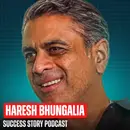
 Haresh Bhungalia - Serial Entrepreneur (3 Exits) | He Made $0 For 4 Years. Then Built $450M in Companies.
➡️ Join 321,000 people who read my free weekly newsletter: https://newsletter.scottdclary.com ➡️ Like The Podcast? Leave A Rating: https://ratethispodcast.com/successstory Haresh Bhungalia is a serial entrepreneur who has built, scaled, and exited companies generating over $450 million in enterprise value. He founded his first company at 25, grew it to 650 employees, and sold it to a private equity-backed platform. He then took over as CEO of Casepoint and turned it into the dominant enterprise eDiscovery platform trusted by the U.S. Department of Defense, Fortune 500 companies, and the SEC — scaling it to 500+ employees before successfully exiting to Thoma Bravo, one of the world’s largest software private equity firms. ➡️ Show Links https://www.instagram.com/haresh.bhungalia/ https://www.linkedin.com/in/hareshbhungalia ➡️ Podcast Sponsors Hubspot - https://hubspot.com/ Huel - https://huel.com/scott (Code: scott) Odoo – https://www.odoo.com NetSuite - https://netsuite.com/scottclary/ Indeed - https://indeed.com/clary Framer - https://framer.com/design (Code: SuccessStory) LinkedIn Ads - https://linkedin.com/scottclary Priori - https://priori.life/ Mars Men - https://mengotomars.com/ Upwork - https://upwork.com/ Xero - https://www.xero.com Dell - dell.com/dell-pro AutoPilot - https://www.joinautopilot.com/landing Cohesity - https://www.cohesity.com/datacloud Amp - https://amp.ai (Code: successstory) Whatnot - https://www.whatnot.com/ Monarch - https://www.monarch.com/ (Code: success) Hostinger - https://www.hostinger.com/success (Code: success) Cash App - https://cash.app/ (Code: cashapp10) MyFitnessPal - https://podcasts.myfitnesspal.com (Code: SCOTT) Plaud – https://plaud.ai/success (Code: SUCCESS for up to 17% off now for the Plaud device, limited discounts exclusively for Prime Day) ➡️ Talking Points 00:00 – Intro 04:44 – Haresh Bhungalia’s Origin Story 12:47 – The Biggest Lesson His Dad Taught Him 14:15 – Why Your Roots Matter 15:22 – The Myth of the Self-Made Entrepreneur 16:38 – Are Entrepreneurs Born or Made? 22:56 – What Adults Can Learn from a 16-Year-Old 30:30 – How to Pivot Without Failing 34:12 – Sponsor Break 38:59 – When to Bet on Your Team 46:33 – Should You Follow Your Passion? 49:17 – Why Intent Beats Talent 1:02:07 – How to Build a Team That Loves You 1:07:30 – CEO vs Founder: The Real Difference 1:13:39 – Knowledge Is Useless Without Action 1:15:40 – Employees First. Customers Second. 1:16:59 – Life After a Billion-Dollar Exit 1:21:46 – The Biggest Lie About Exiting 1:23:16 – Sponsor Break 1:27:06 – Why Founders Must Tie Their Identity to the Mission 1:31:52 – Building Your Second Act 1:35:55 – Letting Go to Level Up 1:44:06 – What AI Can Never Replace in Leadership 1:50:39 – Advice for Life After an Exit 1:57:09 – The Lesson He’ll Pass On to His Kids
➡️ Join 321,000 people who read my free weekly newsletter: https://newsletter.scottdclary.com
➡️ Like The Podcast? Leave A Rating: https://ratethispodcast.com/successstory
Haresh Bhungalia is a serial entrepreneur who has built, scaled, and exited companies generating over $450 million in enterprise value. He founded his first company at 25, grew it to 650 employees, and sold it to a private equity-backed platform. He then took over as CEO of Casepoint and turned it into the dominant enterprise eDiscovery platform trusted by the U.S. Department of Defense, Fortune 500 companies, and the SEC — scaling it to 500+ employees before successfully exiting to Thoma Bravo, one of the world’s largest software private equity firms.
➡️ Show Links
https://www.instagram.com/haresh.bhungalia/
https://www.linkedin.com/in/hareshbhungalia
➡️ Podcast Sponsors
Hubspot - https://hubspot.com/
Huel - https://huel.com/scott (Code: scott)
Odoo – https://www.odoo.com
NetSuite - https://netsuite.com/scottclary/
Indeed - https://indeed.com/clary
Framer - https://framer.com/design (Code: SuccessStory)
LinkedIn Ads - https://linkedin.com/scottclary
Priori - https://priori.life/
Mars Men - https://mengotomars.com/
Upwork - https://upwork.com/
Xero - https://www.xero.com
Dell - dell.com/dell-pro
AutoPilot - https://www.joinautopilot.com/landing
Cohesity - https://www.cohesity.com/datacloud
Amp - https://amp.ai (Code: successstory)
Whatnot - https://www.whatnot.com/
Monarch - https://www.monarch.com/ (Code: success)
Hostinger - https://www.hostinger.com/success (Code: success)
Cash App - https://cash.app/ (Code: cashapp10)
MyFitnessPal - https://podcasts.myfitnesspal.com (Code: SCOTT)
Plaud – https://plaud.ai/success (Code: SUCCESS for up to 17% off now for the Plaud device, limited discounts exclusively for Prime Day)
➡️ Talking Points
00:00 – Intro
04:44 – Haresh Bhungalia’s Origin Story
12:47 – The Biggest Lesson His Dad Taught Him
14:15 – Why Your Roots Matter
15:22 – The Myth of the Self-Made Entrepreneur
16:38 – Are Entrepreneurs Born or Made?
22:56 – What Adults Can Learn from a 16-Year-Old
30:30 – How to Pivot Without Failing
34:12 – Sponsor Break
38:59 – When to Bet on Your Team
46:33 – Should You Follow Your Passion?
49:17 – Why Intent Beats Talent
1:02:07 – How to Build a Team That Loves You
1:07:30 – CEO vs Founder: The Real Difference
1:13:39 – Knowledge Is Useless Without Action
1:15:40 – Employees First. Customers Second.
1:16:59 – Life After a Billion-Dollar Exit
1:21:46 – The Biggest Lie About Exiting
1:23:16 – Sponsor Break
1:27:06 – Why Founders Must Tie Their Identity to the Mission
1:31:52 – Building Your Second Act
1:35:55 – Letting Go to Level Up
1:44:06 – What AI Can Never Replace in Leadership
1:50:39 – Advice for Life After an Exit
1:57:09 – The Lesson He’ll Pass On to His Kids
When you first started, four years in, you made zero dollars. Yeah, zero kick on the US. You had 150 grand in personal debt. Quitting was just not an option. Yeah, so... Haresh came to the US at four, watched his immigrant father build a 300-person company only to get forced out and grew up hustling because of it. Paper routes, mattress arbitrage at 16, three companies built and sold, a school and hospital funded back in his father's village. Society, success for entrepreneurs and founders has been defined by an exit. That's where you get the badge of honor. That's where you get the accolades. That's what gets celebrated. And so founders and entrepreneurs are always running towards that event. A lot of them. That event. The thing that people don't talk about is what happens after the event. Founders are like, I'm not going to pay $300,000 or $400,000 or whatever. It doesn't matter for a chief entrepreneurs. And I'm like, Why not? Because they think that just doing more, doing more, doing more, that's the only way to build a business. That's activity. Busy and productive are two different things. Yeah. My fitness pal is a success story partner. Now I want to talk about something I do every single day that I almost never bring up on the show, how I actually keep my health from falling apart while I'm running everything else in my life. When I first started my own health and wellness journey, my fitness pal was like the first app I ever downloaded. to help me figure out my nutrition, my calories, my macros, all of it. When you are moving at 100 miles a minute, your workouts get sloppy. Your eating gets random. Don't even talk to me about when you're on the road. I mean, there's days where I look up at 4 p.m. and I realize all I've had is a coffee. and whatever was sitting on the counter. And for years, I told myself, like many of you, that this was just the price of being ambitious. You're grinding, you're building, you don't have time to think about lunch. And that's a story that I kept telling myself, but it's not true. It's just being disorganized about the one thing that you can't actually replace, which is your food, which leads to your health. Food is the foundation for your energy, for your sleep, for your recovery, for your performance, for your life. Basically, food is the one input. You can have the best morning routine on Earth. You can meditate, you can journal, you can cold plunge, you can do whatever you want. If your nutrition is off, everything else. suffers. I see it everywhere. It doesn't matter if you're optimizing for the perfect body, or you're optimizing to win the championship, or you're optimizing your brain to be at 150% and always be cognitively dialed in. Whatever it is you're trying to optimize for, it starts with food. If your nutrition is off, everything else suffers. Over the last week, not only am I working with MyFitnessPal, but I've been back in the MyFitnessPal app on the premium plan today. This is the app that started off my own health and wellness journey years, years, years ago. And the first step that I took towards getting my own health back was downloading MyFitnessPal years and years and years ago. I scan a barcode. It pulls everything up. It remembers my regular meals. It's done. There's no friction. And that matters because the second something is annoying or there's a lot of friction, I stopped doing it. And that's just the truth with me. This one stuck because it doesn't feel like working. Now, the moment I started logging what I was really eating, not what I thought I was eating, and there's a big difference there. I was way under on protein, and I was eating most of my food after 8 p.m., and I was telling myself that my nutrition was fine because I wasn't eating junk, but not eating junk and actually eating right are two very different things. And with premium, I can see all of this, right? I can see trends over the weeks. I can see the macro breakdowns by gram, by meal. I can see where my energy dips in the day. It lines up with what I ate. And I can set custom goals for different days, which is useful because my training days and my rest days obviously don't look the same. Turns out that I wasn't feeding myself properly. And it's embarrassing to say, but it's true. It's not about obsessing over a number. It's not about punishing yourself for eating a burger. It's about awareness. You cannot fix what you refuse to look at. The MyFitnessPal app just makes you look. I just want you to start with one week. Just log what you actually eat for seven days and look at it. And I promise it'll tell you something you didn't know. And whatever it's telling you is going to help you function better today, tomorrow. And most importantly, it's going to help you live a much longer and healthier life. So go to podcasts.myfitnesspal.com. That is podcasts.myfitnesspal.com and use code Scott. That is S-C-O-T-T, Scott in all uppercase letters. And you're gonna get 15% off MyFitnessPal premium. Again, this is so you can start living a healthier, happier, longer life. Go to podcasts.myfitnesspal.com, code Scott. Links in the show notes too. Check it out. You won't regret it. Well, first of all, Haresh, I'm excited that you're here. I want to go into your origin story. I don't always start with origin stories, but I think you have a unique one. Your father, he immigrated from a farming village in India. Walk me through what his life looked like when you were a kid in Detroit. Just coming from India, I'm assuming came with not much. What was growing up like in Detroit? Yeah, no, great question, Scott. Before we start, thank you very much for having me. Of course. This is my first live video podcast. I'm super excited to be here. And so, yeah, appreciate the opportunity. You know, when you look at growing up in Detroit in the 80s, my dad was a blue-collar guy. He immigrated to this country, yes. He didn't have a college education. And he really wanted to work hard to create a better life for me and my siblings. And I'd say that my parents focus was really that, you know, it was a generational sacrifice that they made to educate us so that we can live a better life. And through that, they also gave us values. You know, they taught us what's right and what's wrong, what's important, what's not important. And they carry that with me. And when I look at how I operate the companies that I'm a part of, I look at it from the lens of the employee because I saw my dad be an employee. And that's really helped me kind of be empathetic to not just, you know, the senior leadership or the business aspects of what we do, but also the people aspect there. And so there's a lot more there, obviously. But yeah, I was growing up in Detroit, blue collar, you know, automotive's big. You were born in the US? I was actually born in India. You were born in India and you moved over. How old were you? I was four when I came. Do you remember? I remember coming here, yeah. I remember coming here with my mom and my younger sister. I remember what my mom was wearing when we got off the plane. Yeah, certain aspects I do. And then I remember some of the early days for sure. So when your dad first got here, he was working in automotive. He also was an entrepreneur. So he still built a business. What was the thing that made him, I'm just curious about, how he operated and if some of that passed on to you, which I think it did actually. So when was his moment where he said, I'm no longer working for somebody, I'm gonna try and build my own thing. So his journey was a little bit different than when you look at a traditional entrepreneur today or a founder today. He actually was asked to join an existing team as a working partner. And so he didn't have to make an investment in terms of a monetary contribution to the business, but his contribution was labor. And so, you know, the individuals that he ended up partnering with knew that my dad was a dedicated man, that he would, you know, be good at what he does and would be a positive contributor to the entire organization. And that's how we entered his journey of entrepreneurship. But Obviously, there is certainly a risk associated with that. Right. And you go from a salaried position to now you don't know how it's going to play out. But, you know, when you don't have a lot to lose, it's easier to take some risks. I love the immigrant success story because when you come over here with nothing, I was, you know, I was just I just posted something yesterday about Yan Koum, the founder of WhatsApp. And how he came over here from Ukraine with his mom at 16, they had nothing. And this is such a fun story, but it started off not so fun. Him and his mom were going to social services offices, getting food stamps in Mountain View, California. Applied for a job at Facebook, was rejected, learned how to code himself. He built WhatsApp. WhatsApp was acquired by Facebook for $19 billion dollars. And the part about that story that I thought was so incredible was that he signed the paperwork when he was basically selling WhatsApp. He signed the paperwork with the paper on the glass door of the social services office where he used to get food stamps with his mom. He went there and that's where he signed the paper. He could have signed it obviously anywhere. And I think that this rock bottom, I don't know if it's rock bottom, but life is definitely not easy. Immigrant success story is a beautiful one because you really don't have a choice. You have to figure it out. And there's a certain kind of, that creates a certain kind of person that will like figure out, work hard, do anything to like get the job done, take care of their family. And I know like just after doing a little bit of research about your dad, he was working 80 hours a week for a decade. So he was the epitome of this figure it out kind of guy. Yeah. That's exactly right. I mean, look, I think that the immigrant story is definitely one that this country is built off. And if you look at that, that's how we've been able to achieve what we have as a country and community. And I think that as we look ahead, I think there is also now an expansion of that immigrant story into mainstream America society, which is maybe another topic for another day, because I do like the immigrant story. But I want to focus on the American story. And that might be a different topic for a different day. I think it's one of the same, but yes, fair. So he was working 80 hours a week for a decade. He built this manufacturing business to over 300 employees in the 80s and 90s. What did that look like inside your house when he was putting in that much effort? Yeah, so he worked 7 to 7 every day, 7 days a week. And that's what it was. And we knew that, and he was very disciplined, and he would be out the door in time to clock in at 7, and he'd be home at 7 pretty much on the dot. And then we would really corral as a family in the evenings. We ate dinner together most nights. We spent some quality family time after dinner, just sitting around the living room and having conversations and just talking about topics. And I think that that... support really and that love really helped give me the confidence that I needed to be able to go do some of the things that I was able to go do. Because it really, it becomes core to you. Just that whole importance of family. Maybe we didn't take fancy vacations, right? Maybe we didn't go travel the world. But he gave us the time that we needed to be able to enjoy those moments. And so I hold that very near and dear. So the craziest part about this story is that he'd asked his partners for a vacation at some point after working 80 hours a week for over 10 years. And then they forced him out. What did he tell you about that moment when you were a kid? Yeah, you know, it definitely was hard, you know, because just to feel a little bit helpless at that moment in time. But as I look back at it, you know, I look at it as more conviction. I respect him for that because he was like, this is what I believe in. This is what I want to do. This is what's important to me at this point in my life. And I am now choosing this or allowing this to happen. And so, you know, in the moment it was difficult because you almost feel like your world's falling apart, because all of a sudden you wake up one day and you're like, well, what are we gonna do now? It wasn't like we had a safety net or anything along those lines. But in the end, it actually worked out to be a very positive thing. You know, my dad was able to get a little bit of a buyout that came out of that. That was probably more money than he would have gotten working blue collar jobs throughout his career, which then allowed him to have the financial means to be able to put me and my sisters to college debt free, which I think was a big catalyst of launching us into the world because we weren't burdened by debt of education. And so, you know, again, in the moment, it was difficult. But hindsight, it actually turned out to be a great reflection point. The other thing that also happened when all of that was going on, and I was a junior in high school when all of it came together. It really motivated me to lock in, as these kids talk about today. And so I locked in after that. I never was the academic superstar, but I was definitely the hustling was there. Let's put it that way. What did your dad teach you about life? Because he sounds like an incredible man. And actually, I'll ask this question. It'll be a two-part question. So what did he teach you? But I'm more curious about when you realized what he taught you. And so I think it's my dad and it's my mom. They were a team. They both worked very, very symbiotically to really give us core values. I think the thing that they taught us was the difference between right and wrong. They taught us the difference between what core values you should hold and how you should live your life. They also taught us courage. They taught us that working hard is one part of it, but being a good human being is important. I think it was that type of environment that I grew up in. I grew up in an environment that was very loving. You know, it wasn't conflict-ridden, which also caused different issues for me later on in life because I didn't know how to manage conflict. But, you know, I grew up in a loving environment, and my parents really, truly made a generational sacrifice. You know, they sacrificed themselves fully for us. I don't think I remember my parents at that time. They do now because they're much older and they had their economy. But they didn't take trips. They had a big night. You know, and, you know, and so that they still had a relationship that worked. Your upbringing was so important that you bring your kids to your father's village in India. You've also built a school there. You built a hospital there. Why does being tied to that place and staying tied to that place matter so much to you? Yeah, I think it's about remembering your roots, right? I think that as we go through life, it's easy for us to forget where we came from. And I think it's acknowledgement that you are a culmination of the efforts that generations previous to you have made, right? If my grandfather had not sent my dad's brother to the U.S. to get educated and had my dad's brother then not, you know, call the rest of the family to be here, I wouldn't be here. And so it's about appreciating the lineage that brings us to where we are today. But this is not just a I did this. This is a we did this. And so one of the things that my wife and I have done, because we have had financial success, is we lean in and support the family when we can. And that's very, very important. I know this because that's how that's how we met. I met most of your family. And like, it's such a beautiful, like close knit, like family and friends, of course, but it's like a beautiful, close knit, just group of people. And I think that's something you touched on. It actually really sticks with me that like there is no such thing as self made. But I've always thought about that idea from the perspective of there's always customers or there's always employees or there's always shareholders or investors. But I love the angle you took. There's no such thing as self-made because of the family that raised us and brought us here. And that's equally as important. And you know what, you're probably right. Most people do forget that when they get a little bit of success or they figure out life and they forget where they came from. That's interesting. Yeah. And opportunities also present themselves based off of the time which in you were born actually. Like, there's also that aspect to it, which is that... And that takes you to a whole different kind of, you know, conversation around spirituality and a whole lot of things. But, yes, it is about the opportunities that are presented to you because of where you are at that moment and the people that love you. So you were... always entrepreneurial? Was that the case? You were like from a kid, like I know you were doing paper at a 12, you're a busboy at 15, you're doing mattress arbitrage at 16. You have to tell me a little bit about sort of where you came from and where this sort of entrepreneurial bug came from. But I'll ask a question first. Do you believe that all people are born entrepreneurs or are they sort of crafted into entrepreneurs through trial and error and figuring shit out? You know, that's a question that comes up in discussion with, you know, folks that we hang out with. You know, it's like we made from a different DNA than everyone else. Because a lot of the people that I've met who are your friends and family are very entrepreneurial. Yeah, I think, you know, when you look at entrepreneurship and you look at being entrepreneurial, it really comes down to a number of things. But risk is one of the biggest. Like how willing are you to take the risk and how can you stomach the risk and how can you handle that? Because there is something of the being comfortable with the unknown. You know, I think that if you were to talk to some of my friends and family, which I think you said you've met, right? One of the common phrases that I say is we'll figure it out. I don't have the answers, but we'll figure it out. It'll be OK. And so when you look at it from that lens, I was always enterprising, right, looking for opportunity. Let's let's start with just that notion. Right. And it's part of one of those things where luck doesn't find you, you'll find luck. You know, sitting behind, you know, sitting in my bedroom doing nothing is not gonna help me get lucky. You gotta get out there, you gotta bump around the world. So yeah, I mean, I did the paperwork when I was 12, and I did that for a number of years. And it was one of, So many interesting stories with that. That was back in the day when you delivered physical paper. You come home from school, you put on a little backpack, you go around the neighborhood. We still live in the townhouse community, and there was an apartment building or apartment complex next door. And that was my route. So I'd go, I'd drop the paper off. It was a Detroit News, I think it was, or something. Then you had to wake up on Saturday and Sunday to drop off a Saturday and Sunday paper. But then you had to go collect. That was one of those days where there was no auto-paying thing. So you went and you actually went door to door, you knocked and you asked for, hey, I need your subscription money. And some people would pay and some people would be there and you have to put like the collections notices on their doors. And then you would get tips and all of those things. And I learned, you know, just basic finance at that point in time. So, yeah, it was a lot of fun. What was the mattress arbitrage business? And you know, it's so funny because arbitrage seems to be a way that a lot of people get into entrepreneurship. I keep thinking about Gary Vee doing his garage sale arbitrage. So where did you get into mattress arbitrage? Because again, like you said that entrepreneurs inherently have a healthier relationship with risk. But even backing up. Like when I know your story now, it really seems like a job was not even ever on your radar. Have you thought about why? I think it was basically I wanted a time. You wanted freedom. Freedom. That's so interesting. I didn't want to, yeah. Like if you think about, well, I'm sure we'll get into this, right? I mean, I started my first business two years out of college. Two or three years, I call it. Yeah. So pretty early on. But yeah, the mattress arbitrage thing, that's a very funny story. And so we used to live in Detroit. We had a lot of friends and family that lived in Chicago. They would come and visit us. And for some reason, there was this phone factory up in a lot of suburbs or something. And whenever people came into town, they'd drive up to the phone factory and they'd buy twin size and full size mattresses. They're full mattresses, like legit full mattresses. They'd roll them up and they'd put them in their trunk. And this is back in the 80s and early 90s when the cars were big, massive, you know, those Chevy Impalas and that type of. So they'd roll up these bags and they'd take them to Chicago. And they'd take like two at a time or whatever they could sit in the corner or whatever it was, you know. And this became a thing. And I was like, hold on a second. What if I just take the mattresses there? Like how would that work? So I went to the guy, Middle Eastern guy, because this is Detroit, you know, and so I talked to him and I'm like, look, if I buy 100 of these, can you cut me a deal? And I was 16 at the time, mind you. And so, and I was like, he's like, well, what do you need? So I need N-Twin and I want N-Full, whatever it was, that he configured, whatever. And I was like, wait, if I rent a U-Haul, how many can I stick in the U-Haul? What does that look like? And so I negotiated a price for a hundred, something like that. And let's say that I negotiated, like let's say he was selling for 20, I negotiated 15. And I was like, I'll sell them for 25, some number, whatever it was. And then now I'm 16, right? So I can't technically rent a U-Haul. So what I did, I think my parents threw out one for me. So my mom and I go, we went to this U-Haul, and then I was like, I'm gonna drive up there by myself. I called, I get one of my buddies. Like, just come with me, we're just, we're gonna take a road trip to Chicago. And so we took a road trip to Chicago, and I was like, what the hell, like doing manual labor here. And so, so we load up this U-Haul, he and I drive out to Chicago. and uh there's a farming complex where where all these you know south asians for the day and so we go there we open up the shutter we sell all the mattresses only a couple thousand bucks whatever it is and then we're gonna leave home and then my buddy's like how are we gonna get home i was like we'll figure it out i called my dad and i'm like hey i'm in chicago i gotta get home are any of your buddies coming from chicago to detroit He calls me back five minutes later. He's like, yeah, this guy's coming. He'll pick you up, whatever. So my buddy and I hopped in one of my dad's friends' cars in the backseat. So we're back home. This is like the first business. Yeah. So how long did you do this for? I think we did. two or three turns, something like that. Yeah, like maybe three turns. And when you were 16. You used to turn it was two grand, I think. I listened to a couple of your podcasts before you came on. You haven't done many, which is actually why I'm actually very happy that you're doing this one. But you said that at this time, you didn't know the word for gross margin, but you knew how to run a business. So my question is, what does a 16-year-old know about business that sometimes adults forget and overcomplicate? I think you got to dumb it down. It's basics, right? And I think it's like, okay, revenue coming in, cost of goods sold, gross margin, profit. Like it's simple math. And that's how I'm built and that's how my journey is. There's other math out there, obviously, in the world of sophistication that we live in today. We see it in Silicon Valley and other parts of the world, for sure. But I would just keep it easy. I've had my own shop now, or operated a company, for almost 25 years. Never had a down year in revenue. Every year revenue has gone up and to the right. Never had a year where we lost money. We've always made money. Across all your business? All my businesses, ever. Why is that not the, I know it's a very loaded, complicated, open-ended question, but like I'm gonna ask why is that not the norm? Like what do people overcomplicate? I think it depends on, well, first you have to start You have to start in a business. So it starts with your strategy, right? So it starts with what is it you want to build? What is it you're trying to go after? Right? And then you figure out, okay, how do I start small and grow into what I really want to grow into over time? Right? So for example, I've made an investment in the company today. There's a really robust technology platform that can help modernize legacy applications. Fantastic business. It's going to do very, very well. And it automates the modernization of legacy tech that sits in enterprises and public sector entities. And so, but along the way, you know, we're also taking, you know, some service revenue because a gross margin from the service revenue helps feed the development of the software side of the business essentially. And so we could easily be like, hey, we're not going to take the service right. And you know, it's available for us to take. We could give it to a partner or something along those lines, which over time we will do for sure. But for the time being to get us out of the gate, if you're making a couple million dollars of gross margin, you could use that and invest it in the business to accelerate growth without getting stressed out, diluting your cat people, for example. There's a whole host of advantages to come out of that. People overcomplicate business. There are. Yeah. I mean, in my view, they do. So you said you started your first business three years, two years out of college. What was that first business? Yeah, so out of college, I worked for a company called Arthur Anderson, implementing cortical ERP systems, because that was on the cusp of Y2K when modernization was happening, and enterprises were moving to standard software, essentially. That's a consulting firm? That's a consulting firm, yes. Yeah, they're no longer, but yes. And so in that, I actually met an individual who was an independent consultant who was making $200 an hour implementing the software. And I was like, how do I do that? I don't make tour books now. And so he and I became really, really good friends. Uh, and he was one of my early mentors. Um, I still keep, he's, he's no longer unfortunately, but I still keep connected with his wife and kids. And he kind of walked me through some of that stuff. And so he, in the process, while we were implementing Oracle, this Oracle system for this telecom company in Chicago, he actually built a business. And I saw him build. And he built it from zero to $5 million in revenue within 12 to 18 months. And he and I would have lunch every week and he would walk me through how he was doing things. And he was a traveling consultant coming in from Los Angeles. And so I saw him and then I was like, I can do that. So then I went out, I became an in-prem consultant and I was making $175 an hour at the age of 24, 25, something like that. So I just got married and you know- That's good money for- 30 grand a month. Yeah. Right, I did that for six, nine months. And I said, I'm bored. This is not fulfilling. I'm this one man shop out there, I'm traveling and I'm implementing more. This is not exciting. I wanna build something. And I walked away from that. And we started out our initial thesis was building the staffing business. There was a labor shortage at the time. You talk about arbitrage, another arbitrage play, right? There's a labor shortage. And the way that we looked at it or the strategy for us was you had a number of players that were called middlemen between the actual need and the actual individual performing the core capabilities. And so our strategy was, you know, we're going to go directly to where the need is. So directly contract with the companies, whether it be routing with Chicago Transit Authority or Chicago schools. So we contract directly with the entity. And we're gonna subcontract directly to the individual. We're gonna cut all the people out in the middle. And what we're gonna do is we're gonna give some of the benefit to the customer or the client, and we're gonna keep some for ourselves, and we're gonna pay the individual more than they would get if they were to go work through another provider. And that's how we started. And we say we, it was who? It was me and my cousin, Barish Kelet. He was involved from like the get-go? From the beginning, yeah. And how did that company go? So that company, eventually it evolved quite a bit. We got introduced to the federal government. We did some work for the National Guard Bureau. We were commuting back and forth in Chicago and D.C. quite a bit, which is also a lot of interesting stories to doing that. And then eventually that became a federal civilian business, actually. The unfortunate events of 9-11 happened around that time. There was a mass migration of government contractors into the defense sector, which had opened up a window in the federal civilian market. We saw that opportunity. We capitalized on it. And we built out our federal civilian capabilities. And then we became not just a staffing company, but we were providing actual outcomes where we're operating core mission systems for the federal government. So that's a significant pivot. Yeah, it is a significant pivot. And so we were so our first prime contract with that business, we were supporting federal student aid with accreditation for every higher education institution in the country to enroll students who are on federal aid. And so that so we're mission, mission support at that one. And so we ran that and so we continued on that strategy. I moved to D.C. with my wife and my kids. And then when the Affordable Care Act was coming online and they were talking about health and health IT systems, We saw an opportunity there as well to build out health IT capabilities. And so we pivoted into health IT, where we built out an entire team of individuals, industry experts, to support agencies like the Center for Medicaid and Medicare Services, the Food Drug Administration, CDC, HHS, NIH, you call it, where we went out and we recruited senior executives from large companies to come and work with us. How do you pivot so successfully? Obviously, you're very good at spotting what's on the horizon. That's a skill set. Is that something that intuitively, naturally comes to you? Or is that something that you've learned over time? Because you just mentioned two major pivots. And I point that out because your company was already doing well when you chose to, you tell me, move in a different direction completely or just add on? So some of it was we deprecated some of the legacy stuff that we were doing. So the staffing business was deprecated. And then we kept the federal civilian business going because that was already an operating business. Again, going back to keep it simple. Yeah. So that's generally gross margin. Don't mess with it. Right. Yeah. The health IT was an add on on top of that. So it was a new initiative that we invested in. because we saw an opportunity to build that capability. So then the follow up is, how do you see these opportunities? Like, how do you see what's coming? And then how do you make the decision what to kill and then what to go into? So I use the example of going where the puck is going, not where the puck is. I'm Canadian, so I know that. A lot of people like I said, going where the puck is, doesn't make any sense. You have to think about where is it going? Yeah. And that's where I think leaders in my role That's where you should be spending your time, is really assessing where the opportunities are. And if you build out a core team of individuals that can operate your businesses day to day and continue doing and executing on where it is that you're going already, then you don't have to worry about those things. So that's also a skill, I may say. We build out these management teams that are high-functioning, smart. You empower them. You give them autonomy. You tell them what the goals and objectives are and just let them do their function, which then allows you the opportunity to step away to say, okay, as we continue to look at where the opportunities are or where things are moving, you can then spend your time on that. Too many founders get stuck in the operations? Yeah, too many. And they get caught up in the weeds. They can't, they can't... There's multiple levels of founders, multiple maturity level founders. But founders are like, I'm not going to pay $300,000 or $400,000 or whatever the number, it doesn't matter, for a chief operating office. And I'm like, why not? It's about, so I've always looked at it as you have to work yourself out of a job. So even though I've done every function inside of an organization, from invoicing accounts payable, collections, customer service, status reports, proposals, and then you name it, there is not a function that I have not done inside of the companies that I've been a part of today, except for developing software. I'm not a software developer, so I don't do that. Which now I think you actually could. Yeah, if I wanted to put my head in, I guess that's okay. But what I mean by that is so that I understand the building blocks of what's there. I understand what it takes to do that function. So I know how to manage that person. I can relate to what they're going through. I can put the appropriate KPIs in place. I can put the right framework in place to be able to manage it and have the visibility that I'm looking for within what's going on in the business. And then I can operate from a place of more stability and steady hand rather than worrying about something breaking. You just have to get to the, you have to get the business to the point where you can afford the best people. Yes. That's really the, that's right. Then you have to have the guts to spend. Amp is a success story partner. Now, most people don't fall off their fitness routine because they're lazy. They fall off because life gets in the way. The gym is a 30-minute drive. Equipment takes over your living room. Some days you've got 20 minutes, not two hours. Amp fixes that. It is the smart home gym that actually looks good in your space. It's sleek. It's premium. Barely takes up any room. Here's how it works. There's one smart dial. that controls all the resistance. You twist it and the weight adjusts instantly. And that's your entire setup. You pick a workout five minutes or 60 and the app walks you through it step by step, like having a trainer right there with you. There's over 500 movements, there's strength, there's hit, there's Pilates, there's yoga, there's mobility, and it keeps things fresh. So you actually stick with it. And that's the real win, right? It removes the friction. There's no more commute, no waiting for equipment, no excuses, you just show up in your own home and you go. If you want fitness to feel simpler, check it out. go to amp.ai, use code success story. That's amp.ai, code success story. NetSuite Next is a success story partner. So they say that every day your business is late to using AI, you fall two days behind and the competition is only moving faster. So how do you keep up? Well, fortunately there is NetSuite Next. Now you probably already know NetSuite. NetSuite is the AI powered business management suite. It's trusted by over 43,000 customers. It securely connects all of your data, financials, inventory, commerce, HR, CRM, into one single source of truth. But NetSuite Next is the next huge leap in how businesses get done because AI is built into everything you do. So NetSuite Next automatically shows you all these custom insights for your business throughout your day. You'll have AI agents work alongside you to solve problems and handle routine work. And anytime you have a question about anything in your business, you just ask like you're having a conversation with a colleague and NetSuite Next will give you an answer. NetSuite is customized for a wide range of industries, so it supports the way that your business truly works. Whether your company earns millions or hundreds of millions, it's time for NetSuite Next, where your business meets AI. If I needed a solution like this, it's what I'd use. For the first time ever, you can try NetSuite Next for free. If your revenues are at least in these seven figures, go to netsuite.ai slash scottclary. It's built for every industry. It's ready for every boardroom. netsuite.ai slash scottclary. MyFitnessPal is a success story partner. Now, here's something I've noticed after interviewing hundreds of founders on the show. The ones performing at the highest level, the ones that are consistently winning. They aren't just optimizing their business and their calendar and their team. They're paying attention to what they eat. And the ones who aren't, they're usually the first ones to burn out. And this pattern is consistent enough that it actually got me thinking about my own nutrition, not whether I was eating well, but whether I actually knew what the big picture looked like, what's going into my body and how is it fueling me. That's why I started using the MyFitnessPal app. I wanted to see what I was actually eating, not what I assumed I was eating throughout the day, but the real numbers, what my protein looked like, how my macros, macronutrients were broken down, where my calories were actually going throughout the day. And the app gives you all of that. Now what kept me using it is that there's zero friction. I can scan a barcode on something I eat and it pulls everything up. I can also voice log what I ate. It also remembers my regular meal. So most days I'm logging everything I ate in under a minute. It's very, very easy. Food is a foundation for your energy, your sleep, your recovery. It's not one of many inputs. It is the one input that matters. So go to podcast.myfitnesspal.com and use code SCOTT, all uppercase, for 15% off MyFitnessPal premium. That's podcasts.myfitnesspal.com, code SCOTT. Cash App is a success story partner. And honestly, this one's easy for me because I've been into Bitcoin for years and Cash App is the place you can go to buy Bitcoin. The number one question I get from people more than anything else when it comes to Bitcoin is how do I even start? They're built it up in their head is this whole complicated thing. What is it? Where do I buy it? How do I hold on to it? And it really doesn't have to be that confusing. If you've been curious about Bitcoin, but you haven't made the jump yet, Cash App makes it so easy. You can set up automatic purchases with zero fees, or you can buy larger amounts also with zero fees. You can start small, you can go bigger. It is designed to be simple either way. And for a limited time, new customers can get $10 added to their balance. Just use code CashApp10.com. When you sign up and don't forget this part, send at least $5 to a friend in the first two weeks. Terms apply. Cash app is a financial services platform, not a bank. Banking services provided by Cash Apps Bank Partners. Bitcoin services provided by Block Inc. Brand. For additional information, see the Bitcoin disclosures at cash.app slash legal slash podcast. Delegation and people. It's obviously the answer. Um... But I think that where people make a mistake is they either delegate to the wrong people because they don't want to spend the money on the salaries or they don't delegate at all. So, so at what point, like, like, do you have a, when you think for like a zero to one founder, because there's going to be more of those listening to this and people that have sold companies for, you know, X figures of, of, of, of dollars, but. For that zero to one founder who's struggling with, okay, I'm making a little bit of money now. When do I start investing in people? What's the answer that you give them? Yeah, so that's, I think you have to ask yourself, what is it you're building towards? If you're building a lifestyle business and whatever you're doing provides you the lifestyle that you're looking for, then keep doing it. Unless if you have a risk appetite or a desire to go do something more, which is you want to continue to grow the business, to continue to maintain your lifestyle, or I call it ATM is what I call it. You know, it's the ATM business. Or are you looking to create value? What is defined value? So value is where someone else would be willing to come in and buy your business from you. Where you can actually trade it. You're looking for the exit. You're looking for the exit. So when you started 2020, start with Paresh, are you thinking at some point I'm going to sell this? Or you are thinking that far out yet? Yeah. So at that point in time, I was 25 years old and I hadn't been around the sun as much as I have now. And so at that point, yes, exit was the plan. But I think now that I'm sitting here today, after three of these, I look at the world a little bit differently. I think that what's happened is that in society, success for entrepreneurs and founders has been defined by an exit. An exit defines that you have made it. That's where you get the badge of honor. That's where you get the accolades. That's what gets celebrated. That's what gets, I'm going to say glorified even, shall I say. And so founders and entrepreneurs are always running towards, well, not all, but they're running towards that event. A lot of them. That event. Yeah. The thing that people don't talk about is what happens after the event. Because there's a whole host of things that happen after the event. And people don't think about that. And so I think that, you know, yes, when I was 25 years old. Yes, that was because that was that was success. That was what was defined by society. The success of an entrepreneur founder was an exit. At the same time, I will share with you when we did have our exit. Those in my dad's age bracket and family and friends, Like, well, why'd you sell the business? Is there something wrong with the business? Was it like, was there something broken? Were you losing it? Why? That's so funny. Because to them, their programming was, you start a business for generational handoff. That's so interesting. So the definition of entrepreneurship has changed. It's changed. And now we're all fixated on this exit. I would even say that If you speak to a, yes, there's still a whole bunch of entrepreneurs that are fixated on exits, but now there's the age of the solopreneur where it goes back to lifestyle. So it's almost like it's interesting. It's very interesting. So if I'm not, I'm just thinking about this in real time. Grandparents were focused on building a business for the next generation. your generation, you're a little bit older than me. And I actually, I would say that I'm 35. I would say that my version of entrepreneurship was always sort of similar to yours. It's like build something for an exit. But now I see this new wave of younger entrepreneurs that are just building for themselves. So they're not building for generational anything. They're not building for an exit, they're building so that they can go live in Bali and make like $30,000 US a month selling courses on the internet or whatever the hell they wanna do. So the definition of entrepreneurship has changed dramatically. But I think that the bigger issue is that people subscribe to a definition of entrepreneurship that's not even theirs. And they don't have the critical thinking to decide, is this what I want? Not just, is this what Instagram says is cool? That's exactly it. Look, when you look at these solo individuals that are out there, I applaud them. because what they're doing is they are creating a lifestyle for themselves. I also believe that many of these individuals are creating inner happiness for themselves because they are now taking agency and having autonomy over their lives. And they're not being mandated or dictated by the construct or the construct of the organization, whatever that might be. And so I really do celebrate them. At the same time, What they're doing is contributing to society and community at large by performing a function that may be performed inside an organization otherwise. Yes. Interesting. Right? You're still doing the same things that need to get done to keep the cog moving. Yeah. But you're just doing it outside of the construct. Of a company. And you get paid more for your work. And it makes you feel good. I guess that's a net positive. Positive. Yeah, that's great. Yeah. Now you're living life with more enthusiasm. You're living life with more happiness. You're just hopefully just a better person because of it. Yeah. I've always thought entrepreneurship is like a net positive thing. And now that the barriers to entry are lower than ever before, like I always advocate for more people to like try and build their own thing or be entrepreneurial. And I still don't think it... I want to go back to your story in a second, but I don't think that entrepreneurship is for everyone or. I think that some people are in different seasons of life where entrepreneurship doesn't suit the season that they're in. However, I do believe that everybody should at least try it. Like full stop, just try it. Try and build some shit on the side. See if you can. For sure. Yes. So I'll give you two stories, right? Because I mean, as you can imagine, a number of people come to me with ideas. I have no doubt. And so one of the things that I'm very open about is that I'm going to be transparent. Like I'm going to, because I care about you. I want you to be successful. And there are folks that will come to me with an idea or problem statement that they feel they can solve better than what's in market. And I'm like, that's a dumb idea. You should not spend your time on that. Put it in a closet. Go find another one. But that's not a good one. At the same time, I've had people come to me. And this was a dear friend of ours in her 50s. And she wanted to create a doggy kennel because she just loved dogs. And I was like. You should do that. Because her intent was love of dogs. And in the end, intent wins. And what I mean by this, it's a lens within which you're bringing yourself to whatever you're doing and the energy that comes with it will drive you towards ultimate success. Now you have to still operate and be rooted in business principles and you still have to be operated in all of those frameworks that are there. But when you bring a love of something to what you're doing, magic happens. People always say follow your passion. But I've heard that that's not necessarily the best advice, to follow your passion. But you're saying that there's some merit to it. Yeah, so I think there's follow your passion, right? So it depends on the lens within which you look at it, right? So there's follow your passion. Like if my passion is to be an NBA player, for example, I don't have the skills that are going to be in there. Like I also have to reflect and look at myself in the mirror and look, what skills and capabilities do I have to be able to deliver and make my passion a reality? Otherwise, you're just going to set yourself up for failure, right? And so I think there is something to be said about following your passion. I call it intent, which is a little bit the intention within which you're showing up. And so, yes, there is some merit to it, but you also have to look at your own individual purpose capabilities like that is that that is awesome. Like for example, that that that that doggy kennel idea. I mean, those businesses exist. Do you like, do you think that's like a smart business to go into is my point. If you have intent to do it. Agree. Right. But think about the number of restaurants that open up in India today. A lot. A lot. And then think about the ones that are successful. The ones that are successful are the ones where people are doing it with full emotion and they're doing it from heart and they're doing it with a mindset rather than just going and just making food and selling it. Because they can get through the shitty part. And you can see and feel their love and emotion come out. You know what they do. You go to a taco truck. If that person is happy making tacos for you, they taste better. Yeah, that's true. Right. Or if you go to a high end restaurant, which is plenty of them here in Miami, where we're sitting today. Right. I mean, you can go into the ones where they're like, OK, you're not trying hard enough and you're trying too hard. But the ones that get it perfect, where they get the customer experience perfect, where you walk in and you feel like you've been transformed into another space because they paid attention to exactly the fit and finish or the energy in the room or what materials they use or whatever. Someone thought about that. We need to slap something together, because I was going to put a shutter and open up a restaurant. Yeah. So our friend was bringing that mindset to this doggy cattle thing. And obviously you do your homework and that's not going to be stupid. That's part of it. You marry the intent plus the work. Yeah, yeah, yeah. You got to find the location, you got to do all that type of stuff. And you know that by the way that you operate and the way that you service the customer and the way that you do all of those things, you're going to be successful. Would current day Horesh have bet on first year 2020 Horesh? You know, I think so. I mean, I am a little full of myself. You know? I mean, why not? Because I know that when you first started, four years in, you made zero dollars. Yeah, zero take home, yes. Zero take home. You had 150 grand in personal debt at 12% interest. So you had intent. You had intent because people without intent, they don't last that long. They give up. Like even for this show, building a podcast has probably been the hardest thing I've ever done. It's a lot of work to build a media company. Because you have to find a way to capture people's attention. And for the first about two and a half, three years, there was no money at all. So you had intent. You had passion. You knew that you were going to figure this out regardless. So you said you're four. was when things started to turn around. Walk me through what's going on in your mind on a random Tuesday morning, year three. Like, are you thinking I'm gonna shut this thing down? Am I doing the right thing? Or you were always so confident in your vision that quitting was just not an option. Yeah, so I think there was multiple layers to that. So I'm gonna start with the back step and then move this way, if that's right. So my back step always was that this doesn't work out. I'm going to move in with my parents. My parents are moving to Dallas at that point in time. I'm going to move in with my parents and my wife and I live there and I'll go get a job being a consultant and I'll pay off my debts and we'll see where life takes us. So I always had that security blanket, if you call it, and I felt that I could always go back to that life. Now, my wife is amazing. She's great. And we can talk about her as we get through this. She signed up for that. Her father's also an entrepreneur, so she knew what she was getting into when we got together. So I would not be what I am without her support, full stop. And so, you know, so that was the best. So I had a backstop. That gave me courage, right? That gave me the ability to take a little bit more risk or be patient than I would have normally. The other thing is that we were not blinded by where the business was. We didn't keep a pulse on the business and always knew that the business was pointed in a direction where we were going to be successful. So I go back to my comment earlier, even though I was not pulling a salary, the business was still profitable. Right? The business was still paying its bills and we were continuing to make progress and we were continuing to plow forward. And so we always kept an eye on where the business is and how it's performing. And so had there been a scenario where we thought that the business was not going to perform or not going to be successful, we weren't drinking so much of our Kool-Aid that we would have been blinded by that. So what was your metric that you look at? Because I ask that because I think that's very wise. You made a conscious decision not to take out money. And I'll ask why as well. But that's the separating the signal through the noise. That's the figuring out like, okay, how do we make sure the business is actually moving in the right direction so we can forecast out? Like even when I started this show, I mentioned I didn't really make any money off of this thing for the first two and a half-ish years. But you see the downloads go up? Yeah. You see the retention. So people are listening a little bit longer. They're sharing more episodes. Like you see the signals. So what are the signals for the average entrepreneur? Like what are you looking at saying, like, I can tell it's going to be successful in five, 10 years? So for me, I've spent my life in the enterprise. So that's that's where I spend my life. And so public sector, federal government, state, local, large enterprise, large corporations. And so we always knew and had a sense of our customers. We knew where they were. We knew what they were consuming. We knew what our monthly buildings were going to be. There was some visibility into what the revenue numbers were going to be, had a view into what the expenses are, had a view into what the pipeline is, what the opportunities are. I mean, I was, you know, the number one salesman for the company for the first year. Actually, probably ever. I mean, I think I know that's I'm a customer facing CEO. And so I've always been sales oriented. But so I had a pulse like I knew. I knew where all the pieces were. One more point. I actually think that that's probably one of the most important things that allowed you to be successful, being that customer facing CEO. Because I think that if you try and shy away from that, I think it's really hard to have a finger on the pulse of what your business is doing. Because it's not just like looking at numbers on a spreadsheet. It's like conversations with people. Yeah, that's right. Because then what you're doing is you're getting, if you're not the customer facing, where you don't have a pulse on exactly what's going on, then you're getting stuff filtered. So now you have to be able to work through that data. Because you're getting it on spreadsheets for sure, but then you're also getting it in conversations. And so, yes, the customer-facing part of the industry. Walk me through. That business grew. You were in March of 2012. You had 650 employees, about an $80 million run rate. That's when you exited. What made you, I'll pretend to be your dad for a second. What made you want to sell this business? Is something wrong? No, I'm kidding. Yeah, no, you know, I think that, like I said, at that point in my life where I was, you know, the exit was, you know, the flag of success, let's call it that. Yeah. But there was more to it than that though. You know, for us, it really was making sure that the business ends up in the place where it's intended to be. It's able to continue the good work and the momentum that exists today. That the individuals that helped us build the business to where it is there would be in a better place and be given more opportunities. And there would be otherwise more than what we could do. And frankly, at that point, I was 37 years old. And the business had grown to $80, $85 million in top of the revenue. And I just wasn't the right leader for it. I wasn't the one that's going to be able to take it to this next level. And we needed to hand it off to somebody. And we ran an auction. So we had a lesson for an auction. We had multiple offers. We did not get the highest offer. At that point in time, I'm 37, Scott. I left $8 million a day. Because I was like, this company is going to, if we do this transaction- 8 million in your pocket. Or 8 million total, but you know, all the equity. We did five times. Yeah, yeah. Yeah, four million. I said, if they buy this business, they're gonna put it through sugar. The private equity? Those are strategic. Ah, okay. So I was like, they're gonna put it through sugar. So we ended up lining up with a platform that was already existing. And we became a bolt-on to that platform. and then the business continued to thrive. And that business then got acquired by another business. And I still get some of the stuff that we did, work product that we created, still exists in the ethos of the government. Really? I still get, sometimes I get, yeah, they get used to it. Listen, if people have gone through an exit or they have friends, they'll understand why what you said is so important because so many businesses that were acquired and are acquired are just destroyed, absolutely destroyed for a variety of different reasons. In fact, not in my own businesses, but I've been through like several exits in my career. And sometimes I go and look back and see like what happened to that. It's like bankrupt or like. One of the biggest influences in my life was a founder. I had joined his company when I was very young, but he was sort of my first exposure to entrepreneurship because he built this business to earn $11 million from scratch. And he sold his private equity for a really, really good multiple. And I, you know, a couple of months ago, I look up this business, see where it is. And there's like the Wikipedia page is bankrupt and it's gone to auction for like pennies on the dollar and all the creditors trying to get their money back. And, um, yeah, I just know it happens quite often. Yeah, it does. And it's not always malicious. Like it's sometimes they just, the private equity firm doesn't know what to do or doesn't have the, you know, you mentioned you're the number one salesperson. Well, this guy that I'm talking about, he was a number one salesperson. I think that when that business was acquired, he had actually hired a COO, but he was personally responsible for like five or $6 million in revenue out of the 11. he was just selling it himself to his customers. He's accrued over like 20 years. And he was such a linchpin in the business. And I think that the private equity firm probably didn't understand how important that he was. And they thought they could find somebody to replace him. But I mean, they couldn't because it's not successful. So this happens quite often. It happens. And I think that's the part that modern day founders don't get a chance to think through. Right? Because the flag of success is exit. Yes. Yeah. And there's nothing, well, I don't want to say nothing, we don't talk about the stuff that happens after. On both ends. On both ends. For you and for the company. For you as an individual. Yeah, for everybody. And I think that, you know, I talk to other series, even just a lot of founders, like, you know, that are in our circle that have all had, you know, exits, right? And you have conversations with them and everyone's struggling with the exit. And it's one of those things where you have financial outcome. That's okay. But you see what happens to the business, depending on where it ends up. You are emotionally attached to the business. Like if you're a founder, and you're not attached to the business, there's something wrong with you. What I mean by that is your early employees, your early customers, people that bet on you, the people that believed in you, right? And so you become vested in this thing. And over the course of time, this is a part that I think is debatable and something that I'm working through now is it becomes an extension of your identity. And then the day that you exit, that switch goes like this, Mr. Enough. And that part of your life ceases to exist. Whereas whether that's how you define your purpose or not, it does become your purpose because that's just how that works. I think it's unavoidable. You can't escape it. So then now you wake up and that purpose is gone. And a part of your identity is gone. Then what happens? Now layer on top of it, on top of it, right? If you end up selling to the wrong person and then they take this thing that you care about so deeply that you spend hours and days and sacrifices with your family and your friends and other parts of your life and even yourself because you may choose to do the business over hobbies, right? And then you see it not be what it can be That's very painful. When you went through this exit, you purposely chose somebody who you knew was gonna at least maintain it as much as possible. How do you vet that? How do you figure that out? Yeah, so I think a part of that is, so I'll go back to something that I learned from my parents. You have to have conviction. You have to be able to walk away. You have to be able to have the conversations. You need to be able to get to a place where you don't get so enamored by what's going on that you're not able to look at it critically. Like you have to be able to play the scenario out of what happens and be able to have those conversations. Even then, you're not always going to get it right. And even then, a founder-led culture is a founder-led culture. A founder-led culture is not going to be replicated in an operator-led culture. That does not happen. You can get as close as possible. I've met operators that have been previous founders that can get you there. You have to have those conversations. And somewhere it does come down to intuition. I just want to I mean, you know, it's one thing coming from you, but when we first met, it was it was at an event where I met a lot of people that you'd worked with in the past. And the one thing that stuck out with me was how many people, first of all, loved you who were employees who really didn't have to say nice things about you. And like, they're not your employees anymore. These are employees from like 10, 15 years ago and I don't think all of them still work with you, but some of them just followed you into all your other companies. But I've never, I mean, I know a lot of founders and it's not fair to say none of them, but very few of them have employees that, first of all, like love their boss. I put that in air quotes so much, but like follow their boss from company to company. So it's like one thing for you to say it, but like I've experienced it just through all these secondhand conversations, which is just incredible. So I think that, you know, I don't know if you understand how rare it is, like how you operate, but I just want to say like hats off because I don't see this often and I have a lot of founder friends. Yeah. And I appreciate that. You know, and I think a part of how that all came together is I live one life. I don't have a professional life and a personal life. It's all blended. It's all, that's just how it is. That's just how it's always been. And I learned that from watching my parents do what they did and other things. And so for me, you know, those that work with me, and my friends, we all come together. And so, you know, and I think a huge part of that has been Alpa, my wife's participation, in building that connective tissue in terms of that emotional connection with my professional life, because she embraced them as a part of my personal life. All of those individuals have been to my home, every single one of them. Every single one of them, we know their spouse, we know their kids, our kids know their kids. We've had pool parties at our house with everybody. And to a point where I've had individuals come up to me in previous life and previous companies, they go, I'm never leaving you. Not because of you, but because I don't want to disappoint your wife. It's like, I mean, she, I mean, like, like, like, like, like, like, she, she also got very vested. Like, like, she, she knows my team at a personal level. And so, um, yeah. Has that ever made any decisions in the business heart? Yeah. At the end of the day, you still have to make business decisions. And there are some that do become difficult because of the emotional connection. But generally speaking, nothing that's been so difficult that I haven't been able to work through. And then so, not good at all. That's good. Yeah. Because that's the fear, right? The fear is when you get too close to the people that you work with, well, then how do you give them bad news if they're not performing? And you've never, you've never really had to do, because you had like big, these are not like five people companies. These are big companies with many people. And you have never had to, or how do you navigate that? I guess, because there's always been some situations where people have not performed the way that you'd wanted them to, or for whatever reason. Yeah, yeah. So that does happen. Of course it does happen, where you have differing opinions on how you're gonna get to the destination and what all that looks like. And, you know, you work together, you collaborate, you close the gap, you communicate directly, you know, and you try to see if you can figure it out. And there are situations where I haven't been able to figure it out. where I had to let individuals go because there wasn't an alignment in terms of how they view the world and how I view the world. Or one of the things is that I do always continually focus on going where the puck is now where the puck is going, now where the puck is, right? So if you can't make that turn, if you can't make the pivot, then at that point in time, unfortunately the relationship does have to, the professional part of the relationship. You sold 2020, you took no time off, you became the CEO of CasePoint. Was that smart? You know, hindsight, I wish I would've taken a little bit of time off just to plug in and recharge. I've done that with the last exit, with the CasePoint exit, which has been great to give me clarity, to be able to really know how I wanna show up as I look at the next phase. So probably should've taken some time off. but I was 37 and I was addicted to the dopamine of operating. But even then, you know, the early days I was at legal, was, you know, it was half, it was called at legal at the time. It was 50% of my time. I really was just going to the office, I'd park myself there. I just had, I wasn't, I was just in study mode for the first couple of years. And then, you know, Repul and Vishal were the founders of that business. And so we were early investors, meaningful part of the cap table, all of that. And so, you know, they really brought me in to see if we couldn't take their business to the next level. And I spent the first couple of years just, you know, soaking it all in. What was the difference for you sort of being the investor, you know, CEO that was dropped in versus building from scratch? So there's a transition that has to happen, right? Because you don't know the business, you don't know the ad market, you don't know the customers, you don't know the employees, you didn't recruit the employees, right? The team was already there, there was already a team in place. And so how do you build that connectivity to the customers and the employees? It's a transition. How do you do that? Yeah, I think a part of it, not a part of it, I mean, it's about leaning in. I mean, I like, so, you know, I'll give you a story and then I'll bring it back to the illegal case point, you ready? So, at 2020, there was a day I woke up one day and I was like, shoot, I don't know everybody in the company anymore. Like, I don't know who they are. Yeah. So I go to my, we didn't call the chief of staff at that time, but Amy Benner. And I said, Amy, you know, I want to be with every single person on the car. She said, Linda, what? I was like, yeah, I want to be with every single person on the car. She said, you know, we have 350 boys. I said, okay, it's okay. So I bumped around. We had offices in Baltimore and DC, Atlanta and I don't know. And I met with every single person for 15 minutes. And I got through it in a month or so. I don't know how to look at it. And so, but when individuals walked away from that conversation, they felt more connected to the company and what they were doing than they did before they talked to me. And at first, people were nervous. Like, are we all getting fired? Like, what's going on here? That's like, why is he willing to meet you? And the question really was, I just wanted to know you. Who are you? Where'd you grow up? Who's your family? And it was just that. And then at the end of the conversation, it was, here's my phone number. If there's anything that I can do to make your job easier, you call me anytime and I promise you'll look at it. That was it. And so it's about leaning in and meeting people where they are. And so coming in, I believe very, very strongly, very strongly that the number one priority for me and all of the things that I will do professionally will be to focus on the employee experience. Because if you get the employee experience right, the customer experience will automatically follow. And if the customer experience follows shareholder value is created. Full stop. And so when you look at the employee experience, there's a party part of it, which you've seen some of that and some of the things that we've done together. But there's also the vision setting. There's the transparency. There's giving them what they need to be able to do their job. There's making sure that there isn't any toxicity in the organization. There's making sure that you're correcting. It's about providing the individual everything that they need to be successful in the role that they've been hired to do. and letting them do their thing. And you've always made that your job. And so I was like, there are times when the CFO and the CEO have, cause like CFO's looking at the numbers, okay. And I go to my CFO, there's a couple of things, right? So when I'm like, look, number one, we provide the best possible healthcare that we can, because that's how we appreciate individuals for what they do. I said, if my wife can't be on a health insurance plan, no one else is on it. You have to run it by my wife. If she says, yes, this is works, then we go with it, right? On the same time, we would see like, oh, we have to get in first lap tops or whatever you have to give folks to people, right? Now, let me understand this. You're gonna hire $150,000 a year person and you're gonna give them a piece of crap laptop? That makes no sense. Give them all the infrastructure they need to be able to reduce the friction of doing their job. Of course. What do founders get wrong about scaling? Some founders aren't able to manage through the scale. There's multiple aspects of it. Of course, scales are broad. It's broad, right? So there's financial scale, there's people scale, there's customer scale. There's all of these types of things, right? And I think that sometimes founders aren't able to fit into the shoes that they need to fit into for the businesses at that moment in time. And so if they need you to, if the business needs you to perform and operate at a certain level, can you keep going back to what you're comfortable with? Mm-hmm. Right? Because like if you're comfortable with a function, like if I'm comfortable with, let's call it just spreadsheet time, make it up. And then I just keep going back to my comfort. And I don't grow into the things that are not comfortable. I think that becomes a little better. Is it a personality problem? I think it's about, I mean, call it a personality problem. I think that as an individual, it's important to always be curious. Being that the moment that you stop being curious and you stop learning, and even on the learning part, I see this too, where I see founders who will learn academically. They'll read a few books, they'll take some executive MBA courses, they'll, you know, now you have the internet at your hands, you can find any information, anything you want in the world, you'll listen to some books, you'll watch a tutorial, blah, blah, blah. But until you actually get in the real world and execute on that, and you talk to other people, and you get their opinion in a three-dimensional view, All of that academic learning is theoretical. You have to be able to go out and actually converse with customers and with industry and with experts. And it's like getting outside of, it's like getting, out from behind your desk. I think that we are in an era where people are very comfortable just learning and knowing and accumulating as much information as possible. And I think this applies to entrepreneurs. I think it applies to everything in people's life now. or very comfortable learning how to work out and what to eat watching YouTube videos about health and wellness, but how many people go to the gym for 10 years? And that's all. Because I think that learning gives you this dopamine hit that is you think that you've accomplished something because you spent an hour listening to a really smart podcast and you just gotta go and do this shit. Yeah, yeah, yeah. And you have to look at it practically, right? So what happens sometimes you may read about a concept And then you might be like, well, we should do that because that's what I read. But they're not able to, they don't look at it and say, okay, well, hold on. How does this apply to my environment? How does it apply to where I am today, right? So to give you an example, CasePoint is a enterprise software that is made from the enterprise, government, public sector, and large corporations. And there's just the friction associated with implementing. But then now, if I was to take that and say, look, I want to make it into a user led go to market strategy, that's not going to happen. Like, it doesn't fit my business. So I have to be able to take all of this information that I'm accumulating and knowledge that I'm acquiring and say, okay, how do I filter it down and apply it to what I have? And how do I then move from, how do I make decisions from there? Do you find that... I don't want to put words into your mouth, so tell me if I'm right or wrong, but it seems like the most useful business tool that sort of you deploy is action and speaking to people. Yeah, I think it's action, speaking to people. I think those are people. I think it just seems like it seems like so simple, but even just speaking to even being frontline, because I'm looking at like this like sort of thread between that sort of ties together all your success. You always spoke to your customers. You're always like the selling CEO, as you called yourself. You always spoke to all your employees. So you have like first person visibility on everything that's happening with the most important parts of your company, the people that build the product and the people that buy the product. Employees, customers, value. That's it. That's it. You work with a lot of founders, obviously. Do you find they shy away from this stuff? I think you have some founders that are naturally not extroverted or comfortable being in a customer facing or employee facing capacity. So, you know, they have to train themselves and get out of their comfort zone to be able to do some of this. There's no way to work around it. Yeah, you have to. Right. I mean, I mean, if you look at some of the most successful by the definition of success, CEOs are out there. They're public facing individuals. If you can't talk to your investors, if you can't talk to your employees, you can't talk to your customer, you can articulate a vision, you can't make sure that you connect the execution dots of the vision and understand how it all comes together. Yeah, I don't think that works. Fast forward through Case Point, and I know there was a third company. So now you have three successful exits. What happens on the other side of an exit? So the first time when you sold an exit in 2020, you jumped right into Case Point. After the Case Point exit, you took some time. So what happens to a founder on the other side? Yeah, I mean, I think we talked about it a bit, a minute ago, right? I mean, you know, if you are part of a business, you're operating, you're a founder, you're in it, you're connected to the employees, the customers, you're, you know, you're vested because an extension of your identity, you know, and then all of a sudden, you walk in the office one day, and you're, you're going into HR, and there, you know, IT guys there, and you're turning your laptop in, and you're a badge in, and you're signing COPA documents. Right? I mean, it's an emotional, it's a highly emotional thing. And I'll walk you through the story of kind of how all that came together and there's something important there around just the support that help was given me through this period. So... My last day at Case Point was January 31st, which actually also happened to be my son's birthday. And so we were going to New York for his birthday. So the night before, I wanted to get everyone together for one last kind of gathering because, you know, social gatherings is my thing kind of. So we went and everyone in the office and we had a, you know, pick the swag party. You know, it's like just coming and, you know, raid the swag is what it was called. So we put all the old swag that we had in the conference room and people came in and whatnot. And I had told Alpa, I was like, what time do you want me there? Because she knew there was an emotional day. And I was like, I want you there at three o'clock. And Alpa is habitually just always a few minutes there, which is fine. That's her style. She was there at 2.55. Because she knew how important this was to me. because it was the last day in the office before we were going to go in the next day. So we hung out that night. We said bye to everybody, whatnot. We went home the next morning. I had to go into my office that we built. like pain stick like you should see the like like you know we're talking about like restaurants and how you take the pain they've got the pain with the passion yeah it was like very bad like every little piece was curated and all those right so I walked back into my office and I was ready to go and I'm like what said no you're not going so we she drove me to the office We went upstairs. My chief people officer was waiting for me. My CIO was waiting for me. All people that are still hanging out with them conversed with right now. And, you know, they're like, you got to out-process you. It's weird. So you did not stay on? I did not stay on. Eight days. We closed on the 22nd, and my last day was the 30th. Is that normal? So that is normal if you build an organization based on systems. The company worked without me being there. That's a very weird feeling. It is very weird. And that's a whole different conversation around the company and how it was built to get to that point. Which is probably how you should build a company. Yeah, like I had no one-on-ones, like nothing. It just ran. It ran every month, revenue going up, profit going up. It just ran. Have you ever for a second wished that you held onto it? Yeah, for sure. Hey, think about it all the time. You can't live in the past. So there's this void after this. By the way, I didn't know that's how you exited. It's not like an unceremonious way to... Because you knew it was coming. But that's a lot of the founder stories that I know, they stay on for like six months, a year, sometimes more. Sometimes they like, sometimes part of the exit is tied to them staying on for X period of time and performance milestones. And they actually make huge upside. And sometimes they decide, well, you know what, I don't even want the upside. I'm out of it. So you were, you had built such a beautifully run company that they did not need you. Even 2020, we were on for 30 days only for face. I didn't do anything. I sat in my office for 30 days and hung out with people. You're good at building companies. So if you build the right people and you put the right processes in place, the right system in place, and you empower them, they're going back to the employee experience. Like if you get that part right, then it all kind of comes together. What's the lie that founders tell themselves about what exiting will feel like? I think the lie is that they'll tell them that they're gonna go live a certain life after the exit. And I don't know that everybody gets there. Explain. So you sort of feel like, okay, now I've got X dollars in the bank, and so I'm going to go travel, and I'm going to go do this, and I'm going to go do that, and whatnot and the other. And many of them go do that. But of the ones that I've talked to, all of them still have this void emptiness that they carry with them because of... they still miss and cherish what they had when they were operating. And so I do see that quite a bit. And I think that people think that this magical thing that happens, and it's magical for sure. There's multiple layers to it. What about for you? I think, you know, this last one, you know, having been through and experienced, you know, other exits, you know, I was somewhat ready for it, somewhat not ready for it. And the part that I wasn't ready for it was that how deep the loss would be. You know, uh, I actually have an executive coach I've been working with for a number of years. Uh, and so she helped me through that transition. Uh, I went through all of the phases of warning. Cause it's part of you. It's part of you. Odu is a success story partner and yes, it is Odu and they made sure that I pronounced that right. A few years ago for the podcast, I was paying a video editor in one city. a designer in another city, a VA overseas. And every Friday, I was logging into three different platforms just to pay people. Different fees, different invoice formats. I had a Google sheet that I was updating at midnight some nights to track who got paid and who didn't. That was the whole system. It was more chaos, but that's what I had at the time. Odoo would have saved me from all of that. accounting, invoicing, project management, inventory, HR. There are over 45 apps all in one platform. And the wild part is that the same platform that handles your books can also build your website. It can run your e-commerce. It can handle your e-signatures. It can do all of it. And it all just lives in one place. Now, how they work, when you sign up, the first app is free for life. You have unlimited users, hostings included, and then one subscription unlocks everything else. So if you're running your business across six tabs in a Google sheet right now, which I know some of you are, do yourself a favor and go check it out. That's odoo.com, links in the show notes below, odoo.com. Huel is a success story partner. Now, I'll be honest with you, I am terrible at eating well when my schedule gets packed. I'll look up. It's 2 in the afternoon. I haven't even had a real meal. And then I'm just useless for the rest of the day because I'm hitting a wall. So I started keeping Huel around. It's been an absolute game changer. They just launched into Target stores nationwide, which is huge. You can walk right into your local Target right now. Grab the Black Edition ready to drink and the Daily Greens ready to drink. The Black Edition, this is a full meal, 35 grams of protein, 27 essential vitamins and minerals, no artificial sweeteners, gluten-free, and it's under five bucks. I grab one of these in-between recordings, done, I'm good for two hours. And the Daily Greens is more of a health thing. 42 vitamins, minerals, and superfoods in one bottle. It's developed by a registered nutritionist, 25 calories, four grams of fiber, and one gram of sugar. I'll have one first thing in the morning. It's the easiest win of my day. Now, 15% off for new customers. Use my code Scott at Huel.com slash Scott and do the post checkout survey. It helps to show. Go to Huel.com slash Scott, code Scott. HubSpot is a success story partner. Now, customers are using traditional search less and less to find the businesses they want to buy from. Now, when a buyer or a customer asks AI for a solution like yours, does your business come up? They're looking for a product. They're looking for a service and they're going into some AI chat tool and they're saying, hey, help me find the best one. If your company isn't showing up, you're missing out. And most companies have no idea if their business is showing up or even how to show up. And by the time they figure it out, they've already lost a deal to somebody that figured out AI. This is what AEO is. Answer Engine Optimization. HubSpot AEO helps you show up in those moments with the right answers that your buyers and your customers are looking for. It could be before the first click. before the first form fill that's the moment hubspot aeo is built for so check out hubspot.com to learn more about aeo hubspot is the agentic customer platform for growing businesses hostinger is a success story partner and look with entrepreneurs i see this constantly Someone's got a great idea, a real idea, and they just never start. And it's almost never the idea that stops them. It's the setup, right? You sit down, ready to finally build the thing. And then you're nine tabs deep trying to figure out which website builder, which domain, what to do about email. And then three hours later, there's nothing live and you've lost a spark. Hostinger takes all of that off your plate. It's the affordable all-in-one place to actually get your idea online. You tell it what you want, or you just show it a screenshot, and the AI builds a real first version of your site in a couple minutes. Your domain, the site, your business email, all in one account, so you're not duct taping five different tools together and hoping it works, and it's priced low enough, then money isn't the excuse anymore. So if you've got something sitting in your notes app right now, trust me, it's way easier to start than you think. Go to hostinger.com slash success and use code success for 20% off. That's hostinger.com slash success code success. I think this is the thing that is a tough, it's tough to help somebody understand this idea, but for you to be successful... Part of your identity has to be wrapped into the company. I think that you have to have that. I don't think it's possible for you to get through all the shit that is required to build something from scratch. Or even just build something from not scratch, but even just take it to the next level without part of your identity being wrapped into it. But at the same time, you have to be aware of that so that when it's over, your identity isn't so wrapped into it that you get this depression. Correct. Yeah, yeah. There's this really, really sad story of, and it was like, obviously you had a great exit and everything worked out, but there's a friend of a friend who had a massive real estate company. And right around the time, I think it was about a year ago, when there was all the National Association of Real Estate lawsuits, and the whole industry was changing and how commissions were structured. I'm not even in real estate, but I kind of know this adjacent because a lot of my friends are. And he had a significant size company, like a couple hundred employees, and he laid everyone off on Friday and he killed himself on Monday. It was like he couldn't deal with it. His identity was so wrapped and he thought whatever was happening in the industry... For some reason in his reality, he thought that his company couldn't survive that and he couldn't deal with that. And this was not a small company. Like the guy probably never had to work again kind of money and he just couldn't deal with it. So that's an extreme case of identity being wrapped up into your company because you as a human, that's not your value to the world, but that's all he knew. Very much so. And I think that's where, you know, founders do need a support system that is tailored to them. Right. I mean, we all need support systems, but like that founder... It's a thing. Listen, being very candid, the person who's successful and sells a company, they don't get a lot of empathy from the world. No. If we're just going to be very real. There's no empathy there for when somebody says, I had an eight or nine plus figure exit. No. But the point is, first of all, the highlight reel is not always what the person takes home. That's the first lesson. And even if they are well off, I think that the founder who's going into this thing, they should have a support system and know what they're getting themselves into. Because I don't think they do. There's not like this. I mean, now it's a little bit more normalized to be a founder. a lot of people are just on this journey on their own. They don't have friends that are founders. They don't have family members that are founders. Like, doing this with your cousin is actually a smart move because you have like a friend, a family member you can sort of commiserate with to a degree. But I don't think enough founders realize how lonely this journey can be. Yeah, very much. Even if you have business partners, right? Like even at Casefone, there's three of us that are running the business and even then it becomes lonely. Yeah. Yeah. It's a thing. What's your best advice for founders to, to navigate all these things? The fact that your identity is wrapped into it, it's a little bit lonely. Like what, what do you recommend people like people you invest in? Yeah. The people that come to you for mentorship. You know, I think that there is something we said about taking the time to look at yourself in the mirror and really ask yourself some of the things that maybe you're afraid to ask. Right. That, that, that forces you to be vulnerable. It forces you to look inside and really, you know, think about what's important to you and where you're coming from and why you're doing some of the things that you're doing. So that was one of the reasons why, you know, as I've been kind of entering this phase of life, you know, I did get some help. Right. Got the executive coach who still works with me today. We've been working with him for five years. And one of the first things that we did was a 360 review. I was like, look, I want to know what the people that I care about think of me. So it was the people that I work with and some personal individuals as well. And we did a holistic 360 because I was like, I want to be able to get a reflection. And in that, I don't think that I honestly went as deep as I probably should have gone with some of the stuff that we're talking about today on identity purpose being wrapped up in the businesses that you're a part of. But I think it starts with just that mindset of just looking at yourself and asking yourself, the real question as well, what makes you really? We first got to know each other because we were chatting about sort of the second act in life and transition in life. So this is sort of what we're alluding to now. You're working with somebody, you've gone through these exits, you're in the second act of your life. First of all, I'm curious like what the second act looks like for you, but also maybe just go like a level deeper about how you've transitioned and Because you haven't jumped into something in the same capacity as what you did when you transitioned into Case Point. You know, I really took some time to connect with myself, connect with those that I care about. My wife, my kids, my parents, my siblings, friends, family, and really spend some time soul searching. Like what really truly makes me happy. Traveled a ton. I mean, we did eight Europe trips last year. And really now as I'm going into this next phase or this next season, they call it these days, I'm going into it with a whole new level of comfort and conviction of why I'm doing it. And I have a framework within which I'm operating. So it's one of those things where historically, you know, the things that I've done have been all encompassing, all consuming, right? Where I get consumed by what I do. And I think that, you know, my kids and my family are a little worried about that, honestly speaking, because they've seen it happen over and over again. When you just go all in on something. When you just go all in on something. And so one of my main priorities is defined balance. And so balance with the things that excite me professionally as well as things that are important to me personally is also, as well as balance, it's just myself. And going back to what I mentioned earlier, I mean, a lot of founders, you lose yourself and your own identity to a point where you don't even have any hobbies. I feel that, yeah. Right? Like, you don't have any hobbies. They're like, who are you? What's important to you? What do you do for fun? my sales calls. You know what I mean? I mean, that's true. Right? And it's like, well, hold on, that can't be it. And so as I look ahead, taking all of the things that I've had the opportunity and good fortune to learn and experience, it's really coming at it from this place of balance. And that's really what I'm focused on. The second act, what's the hardest part of that second act for you? As I look from where I am to where I'm going. I think, you know, as I was going through some of this and trying to figure out what it is that I really want to do. And coming off of where you met some of my friends and then my family, you know, I really asked myself, I said, why are you doing this? Like, why am I even, because I'm exploring a couple of things that I'm looking at right now. And I was like, do I really want to do it? They said, if I do this, am I being fair to those that are coming along with me on the journey? Am I going to be all in? Am I fully convicted? I spent two, three, four weeks having that just in my head and in my body and my soul. And I came out of it. I said, no, I really wanted to do that because I enjoy up. I it's fun for me. I like building organizations. I like solving problems. I like doing those things. And the project that I'm working on right now is something that has a hundred year plan. It's not a three to five year plan. It's about building something that will outlive all of us. And that's the lens that I'm looking at it in. And so this is not, I may do it for the next three or four or five years, but it's about building it to a point where it continues on. So the work you take on, not only has a more balanced version of you, But also it's, it's now it's like you're building something that gives back. I mean, everything you do gives back to a degree. You can make an objective argument that there's building a business for the purpose of short term business, short term, like, you know, five to 10 years, whatever short term. And then there's building a business that may is not, is not going to have the, the return in the next three to five years, but it could have returned for humanity. And this is where, listen, I got a specialized skillset. I know what I'm good at. That's where I put my energy. That's where you're at right now. What was the version of you that you had to let go of to become this version of Harash? You know, I think it was really the one that's able to look at things a bit more broadly. And I think that the space that I got... between the case point exit and now, allowed me to look at the world with aperture that's bigger than the lens within which I was looking at before. Where before I was just so fixated on my narrow view of the world that I wasn't able to take a step back and say, okay, there's a bigger world out there. And also allowing myself the freedom to experience these other emotions and things that maybe I would not have done otherwise and embracing them. So like I re-picked up golf recently and there was a time when I played golf years ago, but I would never be present during my golf game because my head was being around in so many different places. Now I go out and I play and it's like... I'm on the course. I'm right where I'm supposed to be at that moment in time. And then when I'm at my next thing, I will be there. And that was hard for you. It took some energy, right? Because you had to think about it. Yeah. Right. The other thing that I'm doing now to help get this balance is I used to have a habit of over calendaring myself. Or if you looked at my calories, like, whoa, all day, like 8 a.m., 8 p.m., whatever it was. Now I'm like, two meals a day, but they're effective. I go in super prepared and like, and you're done. So almost by understanding what's important, ironically, it's made you more effective as a business leader too. Oh, for sure. I am learning that by going slow, I can go faster. That's so funny because it just goes to show you, like you can, you can be successful many ways. You can be successful by burning out and over calendaring yourself and, you know, not spending any time. Well, I'm not, no, there's not, I'm not saying this about you, but I'm saying you can, maybe there was points where you, you know, didn't do the family thing because it was the work thing. financially, but then the question is always like, at what cost? And to be honest, I mean, you are more balanced than some entrepreneurs. Like, I mean, you still have up a loving wife, great marriage, great kids. I know many people that have sat in that chair that are financially successful. And they're like three wives later and their kids don't speak to them. And that's like the worst case scenario, right? Where they really, really let shit drop. So I don't I don't think you're anywhere even close to that, but. Yeah, I know. But I see that from founders too. And then like, oh, I'm successful. But like at what cost? One of the, I think one of the best lessons that I've ever learned because, you know, I don't have kids yet. And, you know, Gina and we're, you know, we want to have kids, but I'm always so stressed about like, how am I going to have time? How am I going to have time? And it's so funny because like, of course you'll have time. But in your head as a founder, it doesn't matter if you have like a, this is my company. This is my baby. I also, I don't even think you know this. I'm building another company on the side with two co-founders and I feel like I have no time and it's not 600 people, but it doesn't matter. As a founder, it doesn't matter what you're doing. You always feel like you have no time. And I'm always thinking, well, how am I going to have time for kids when I have all this shit going on? And one of my good friends, actually, I actually want you to meet his name's Leo Pereja and his wife, Ariana. They're both from D.C. They've built two companies together. They've sold two companies or three, two or three. Now he's the CEO of VXP, which is like a really large real estate company. So Leo Prey is a good friend of mine. And he's given me some of the best advice. And I don't mind calling him out on this because I think that he'll appreciate. But he's always said, hey, Scott, like if you have kids, you become a better entrepreneur because it forces you. to, it forces you to focus on the things that will move the business forward the most and not waste your time on everything else because you only have eight hours a day now. If you want to be like a present father, for example. So it's like, you do that, you like, Don't always assume that taking things on outside of work is going to make you a worse entrepreneur. It's actually going to make you a more effective one. And right now, if you feel like you can't have kids, it's because you're actually not as good as you think you are. You're actually wasting time on a whole bunch of shit that you shouldn't be wasting time on. But that lesson that you're talking about, how like slowing down to speed up and focusing on things that aren't work to be more effective at work, that hits with me because that's something that I'm dealing with right now. And I think a lot of entrepreneurs deal with because they think that just doing more, doing more, doing more, working from six in the morning till two in the morning. And then just that's it. That's the only way to build a business. And I think that it's not. I mean, that's activity. Yeah. Right. So, so, so when people, when I, when I say hi to people, I go meet people, I go, Hey, how are you? I go busy. Yeah. I go, are you productive? Yeah. Busy and productive are two different things. Yeah. And you know, look, I mean, when you're starting something from the ground up, when there's nothing at that point, 6 a.m. to 2 a.m. maybe is justified. because you're building from the ground, you're doing everything, you have no one to rely on, you don't have any money, you can't buy your time, you can't do anything. But as you get to some level of scale and revenue and whatnot, you as an individual have a choice because you can look at your life and your operations. And we live in a gig economy now where you get outsourced so many things. You make your back office someone else's front office. Right? So one of the things that I've been spending a lot of my time on is buying back my time. Where I'm like, I ask myself, can someone else do that? If the answer is yes, why am I doing it? And so when you do that, of course, there's different layers and levels of that for sure. But I think it's applicable at any layer in any level. In some way, shape, form, capacity, or another based off of where you are. And so you start to think about, okay, how much of my life can I make? So when we talk about scale, we talked about scale earlier. Scalable really is that it's repeatable, that there's a system and a process in place. Right? If you're going to scale what you're doing, you can't be the only one doing it. Right? You have to have other things, full-time employees, spot-time employees, whatever that might look like doesn't. Now you have AI to do a lot of this stuff, right? And so if you were to take some time out of your day, not you Scott, but then you do the university, right? So I'm gonna spend the next three days, instead of going on vacation, I'm gonna pretend like it's a vacation, and I'll spend three days on automating my life. Smart. Right? And just automating your life. That's very smart. I think that- And once you do that, you will then accelerate. And that's the going slow part. Are there parts of the founder's job that they can never automate? You know, I think the one that they cannot automate is the connection that they build with the people that are part of the organization. You can't automate that. You're a founder. You're a founder. Yeah. You bring founder energy. Yeah. Right? And you are empowered at a level that nobody else in the organization is about. I know a little bit about it. but sort of lean into this 100 year plus project that you're working on. Why is it important to you? What is it? And how do you sort of structure your life around that? No, it's really, so as I was, you know, taking some time off for a break, rediscovering my life, I actually got introduced to someone who is a rocket scientist. A true rocket scientist. A true rocket scientist. And he does work for NASA. And to a point where when Artemis 2 went up, he was called in to help kind of tweak something so it could actually launch. And so through that, he told me about some of the NASA programs and these Earth observation satellites that spit out this Earth observation data. And then I was like, well, what happens with that data after? available to the public. Well, there are companies that are applying use cases to solve for problems of humanity using an Earth observation data. Then there's another friend of ours who is in the climate and weather data sector. So I met up with him to understand that market a little bit more to see what that looks like. And what I've learned is that when you look at the climate, Earth observation and geospatial sector, broadly speaking, It's highly fragmented. You have a number of players that are out there that are solving for really important problems. But in order to get a full view of what's going on, you need to layer in all three data types to be able to get a real view of how a particular activity or a particular priority will impact a region, let's just call it that. And this happens at the intersection of academia, government, and private sector. So there's a triangulation between all three that comes together. And the use cases of some of the things that are being solved for using this data is just so important as we look ahead to how we're going to live for years and decades to go. What would an example? So I'll give you an example. Let's say that we're looking at... risk areas for people to live. So coastal areas are areas, there might be fire prone, earthquake prone, all that. So what you're seeing is you're seeing a migration of people to resource which areas. So imagine that people now start migrating to the Midwest because it has resources. But then now we need to be able to model out, well, if people, a million people migrate to the Midwest, What happens to the Midwest? How does that impact the Great Lakes? How does that impact farming? How does that impact development? What do I need to do in terms of things like emergency management? There's a whole host of things that come out of it that's being modeled out today. You're trying to solve for some of these things as we look ahead to the years ahead. You're talking about things like crop yield optimization in sub-Saharan Africa to figure out how do I look at what do I plant in this soil based off of the soil composition and the moisture and the atmospheric makeup that's going to be the best crop to plant in this area. It's those types of things. Like the future of humanity problems. Future of humanity problems. And this is what you're focused on now. So you met this rocket scientist and you're working together. So he was the one that helped me understand this space. And so now I've kind of gone out on my own. And obviously we're still connected and all of that. Yeah. because he's more focused on, you know, putting like rovers on the moon, you know, that type of stuff. And that's his mission. And he's, that's not me. I'm not going to go do that. I'm more focused on solving for problems on earth. You know what? So, okay. So this is, I think that what you're, you're talking about and, and, And this is like, this is not a company yet, or this is multiple companies, or how are you? Because I know just from our own conversations offline, like, I know you're probably going to invest in some of these companies, but these are the opportunities that you're looking for right now. And I'll just say one more thing, and then I want you to just go a little bit deeper on this. But the reason why I think this is a really interesting point is because I think that I think that, um, a lot of entrepreneurs that have had the, you know, the, the privilege of selling a company and they've had some success, um, I mean, like for many people that have had exits, money doesn't mean anything anymore. It's like really not a thing. I know some people want to keep playing that game, but some people don't really care about, okay, am I going to go through a second, third, fourth exit if they've already made more money than they know what to do with? But I think that a lot of people that are in that position, they're wondering like, what now? Because they're hyper ambitious people. But what you're doing, I think, is like the beautiful marrying of somebody who's ambitious, who needs to do something. I know you're not going to just chill until you're 100 years old. That is not you. But at the same time, you're taking your skill set and you're applying it to something that is, again, more long term and a little bit more altruistic than the average business. It's more purpose driven. Yeah. Right. You know, and it's more, you know, impact oriented, but it's not a volunteer organization. Right. It's not a 501c. Yes. Right. This is a for profit, sustainable opportunity, but where the vector of success is pointed towards betterment of humanity. Right? And it's, yeah, and so, you know, it's looking at it from that lens. And that's where I think where it makes sense for me to get involved, because I could easily, let's say, for example, go sit on the board of a nonprofit. Yeah. Go do that. But to me, that doesn't have as much of the dopamine hit that I need to be very honest. So this is more of, I'm gonna go build something where the KPIs of success are what they are from a business perspective and impact perspective. But there is a sustainable part of this as well, right? It has to be, it's a for-profit organization. What's your advice to somebody who's gone through the exit is trying to figure out what to do in the second stage of their life? You know, I think that you really have to step back and take a hard pause and then really think about what's really truly important to you. And some of it may also depend on the magnitude of the exit because size also plays into it, right? Because you do get to a few money at some point, whatever that looks like, which opens up a whole other different... you know, area of opportunities versus exit. Yeah. Um, and so I think that it all, I think there's that, that plays into it as well. Um, but there's really an opportunity for individuals to take a step back and say, Hey, look, what is it that, what is it that really makes them tick? Like what's, what's really exciting for you? Because when you start getting into F you money, like that's, I mean, it's a subjective measurement and changes for everyone, but, um, like true, true F you money, like say you're, I don't know, let's say it's over 50 million or something, whatever it is. Um, then you start to understand that additional money comes with more responsibility. And if you want to, and you have to choose if you want to play that game. I have, I have, I have one good friend and he sold his first company for the nine figures. And he's very committed to like having a billion dollar net worth. Like that's the goal. Like he's trying to play that game. I see that too. And, I have other friends that have had exits also, you know, that push their total net worth over nine figures. And they're like, I'm good. Like, I'm very much good. I do not need to keep playing. And that's all a personal choice. But again, like, even at that level, make sure that the choices that you're making are yours. Exactly. That's exactly it. So I see both as well. Right. So, uh, and the individual who's like got a hundred or 200 or whatever it is. And, but the guy next door is five and the building and whatever, the person is chasing that. I mean, or pursuing it, whatever it might be, you know, good on that. I wish them success. I wish them happiness. I hope, I hope that they're doing it for the right reasons. Right. That's not me. I'm not that guy. I would be just, I'm very happy and content where I am. Now along the way, is a byproduct accumulation? Maybe. But money is not the engine, it's the exhaust. I mean, the engine is something else. The engine for me has always been something else. Money has always been exhaust. Just like I said, we left $8 million on the table when we sold the first company. Money was all I cared about then. That's meaningful money. $4 million at age of 37, right? I mean, it's a lot of money. Yeah. What's your purpose now? What's your engine now? Yeah. So, you know, some of that is still a work in progress. I mean, you still don't think that you ever really quite figure that out, but I know where I'm pointed at the moment. Right. I mean, obviously the balancing that we just talked about is very important to me, make sure that I maintain that. I think that professionally and contribution to society and community and being a productive member of society and not just being, you know, a consumer of it. Yeah. You know, is really this this climate Earth observation and geospatial opportunity where, you know, what what we're seeing in the market is that there are a number of founder led businesses. that have been around for 20, 30, 40 years. They have been doing some of this good work. And now they're trying to figure out what the next phase is for them, what the next phase is for their business, where we can come in and give them an opportunity to uncap the full value of the good work that they've done by making it a part of a bigger platform. You can go and acquire these companies and we also give them an opportunity to participate on the equity in terms of a rollover so they get to still be a appreciated for what they did monetarily as well. And it gives them a place to put their business. Right? If you've been doing it for 20, 30, 40 years, I mean, you're at that point where like, well, what are you doing next? And so, our objective is to go and find these individuals and these companies that are that are solving for problems in this sphere that we talked about and integrating them under a singular brand and untapping the full full potential of what these companies can do both for the betterment of humanity society and for them and for me and my investors. You are going to turn into some version of XPRIZE and Peter Diamond. All I'm hearing you describe this, that's what it sounds like. But this is a beautiful mission. Yeah. It's a truly beautiful mission. Yeah. So super, super excited. We are actively working on this. I have a team of individuals that are working with me on this. And so Yeah, this is where I was spending the majority of my life. I mean, I know that you're not selling anything. You don't even have a big social media. So I was going to say, where do you want to send people to learn more? But I don't know. I don't even have a website. You don't even have a website yet. I've got a LinkedIn page in there. So is that, okay, so if people actually do want to follow along. They love your story, which they definitely do, and they're just interested in some of the work that you do. Where will they ever find your work? Yeah, I think LinkedIn is probably the best at the moment. I mean, at one point, maybe, Scott, you could hire an intern to be my social media. I would help you if you ever want to. Maybe that is like a business idea, but don't do it yourself because you don't have enough time or hours in a day. No. We'll give it to somebody. I love anonymous entrepreneurs. Yes. I truly, because you're actually focused on the important stuff. Yeah. So your LinkedIn is just your name. Okay. So I'll link your LinkedIn. There's no other websites. There's no Instagram. There's nothing. I mean, there's Instagram, it's like, you know, me going to football games with my kids or vacations or whatever the case may be. You're not putting out 40 pieces of content a day? No, I'm not doing that. I'm protecting my time. What are we talking about then? Exactly. Out of all the things that you've learned over your life, over your career, say you had to pick the most important one to pass that lesson on to your kids. You can only pick one lesson though, or you can pick two if you like, but what would that lesson be and why? My piece of advice to my kids would be, be true to yourself. Don't be something that you're not or something you don't want to be. you know, going back to the original part of the conversation we were having earlier today around how I got to here is a process through generations and what they've done. And I would hope that my kids would continue that trajectory of generational contribution to the next generation, really, by intentfully choosing what they do and doing it for the right reasons. Yeah, because they have a choice. A choice that maybe previous generations didn't have. And so I hope that they make the most of it and I hope that they become the best versions of themselves.