


 YouTube

 Apple Podcasts

 Spotify

 Overcast

 Castro

 PocketCasts

 Amazon Music

 Deezer

 TuneIn

 Podcast Addict

 RadioPublic

 iHeartRadio

 RSS Feed
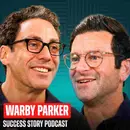
Neil Blumenthal & Dave Gilboa - Warby Parker Co-Founders & Co-CEOs | The Simple Idea That Turned Into a $3B Company
➡️ Join 321,000 people who read my free weekly newsletter: https://newsletter.scottdclary.com
➡️ Like The Podcast? Leave A Rating: https://ratethispodcast.com/successstory
Neil Blumenthal and Dave Gilboa are the co-founders and co-CEOs of Warby Parker, the eyewear company now worth about $2.9 billion on the public market. In 2025, Warby Parker grew revenue 13% to $871.9 million and turned its first full-year profit. It now has 364 stores and 2.74 million active customers. The idea started at Wharton. Dave lost his glasses on a backpacking trip and couldn't believe a new pair cost more than a phone. He and Neil teamed up with two classmates to sell quality glasses directly to customers for a fraction of the usual price.
➡️ Show Links
https://www.instagram.com/warbyparker/
➡️ Podcast Sponsors
Hubspot - https://hubspot.com/
Huel - https://huel.com/scott (Code: scott)
NetSuite - https://netsuite.com/scottclary/
LinkedIn Ads - https://linkedin.com/scottclary
Whatnot - https://www.whatnot.com/
Cash App - https://cash.app/ (Code: cashapp10)
Demand Decoded - https://www.blendb2b.com/demand-decoded-podcast
Scribe - https://scribe.com/success
LegalZoom - https://www.legalzoom.com/
Amazon Music - https://music.amazon.com/
Babbel - https://www.babbel.com/pod
ButcherBox - https://www.butcherbox.com/successstory
Dell - https://dell.com/dell-pro
Gusto - https://gusto.com/successstory
LMNT - https://drinklmnt.com/scott
MOD - https://mod.com/
Novo - https://www.novo.co (Code: SuccessStory)
Xero - https://referrals.xero.com/successstory
➡️ Talking Points
00:00 – Intro
01:39 – Why They Started Warby Parker
04:32 – How to Spot a Billion-Dollar Opportunity
11:42 – Building Trust in a New Category
21:35 – Sponsor Break
23:55 – Turn Customer Pain Into Growth
38:09 – How to Make Better Decisions
40:29 – The Myth of the Risk-Taking Founder
43:11 – Why Great Companies Disrupt Themselves
49:40 – Sponsor Break
52:49 – Making Eyewear Easier to Buy
56:11 – How to Obsess Over Customers
59:52 – Why AI Glasses Are Finally Here
1:08:20 – The Real Role of Luck
1:10:14 – How to Create Your Own Luck
0:00 We asked one of our professors if he wanted to invest and he didn't. Meanwhile, he regretted not investing at Warby Parker. Why did you start Warby Parker? I lost my only pair of glasses along the way, went to the Apple store, bought this new iPhone for $200, was this magical device, and realized my glasses were going to cost $700 and just didn't make sense to me. And the more we learned, kind of the more opportunity there seemed to do something different in the category. Today's guests are Neil Blumenthal and Dave Gilboa, co-founders and co-CEOs of Warby Parker, a leading eyewear brand. In this episode, we explore entrepreneurship, business innovation, leadership, and the journey of building a successful consumer brand. When you are doing something that really has never been done before, how do you build that trust?
0:41 details matter. So we would talk about the handcrafted acetate. We would create customer-friendly policies, free shipping and free returns. We stand behind our product. This is low risk. You don't like the glasses? Send them back to us. HubSpot is a success story partner. So if you're still jumping between emails, call notes, and spreadsheets, just to figure out where a deal stands, HubSpot's starter plan puts all of that in one place. It pulls info from your calls and emails, logs it, and summarizes it for you. When your call ends, it pulls the next steps from your notes and drafts suggested follow-ups. It keeps your records up to date so you can spend more time building demand and closing deals, and less time updating everything yourself.
1:25 Why did you start Warby Parker? So we really started the company to solve our own problems. We met the first week of business school along with other two co-founders, Jeff and Andy, and we shared a mutual frustration around how expensive glasses were. So before business school, I'd been backpacking for a few months, just staying in hostels, and I lost my only pair of glasses along the way. I was also traveling without a phone and so I was about to start business school.
2:08 I had to buy two things, a new phone and a new pair of glasses. Went to the Apple store, bought a new iPhone for $200 with this magical device and realized my glasses were going to cost $700 and just didn't make sense to me. Andy had been wondering why no one was selling glasses online at the time. This was back in 2008. And Jeff had an old pair of glasses that his prescription had changed a couple times and they were kind of falling apart, but he didn't want to pay a few hundred dollars for a new pair of glasses. And so we just kind of started commiserating about our own frustration with this product and that it was There wasn't a great solution out there.
2:51 And we were chatting with Neil and he'd spent five years running this amazing nonprofit that was producing glasses for people living on less than $4 a day. And he'd been to factories and knew exactly kind of what went into the production of glasses. And once we kind of all got together, realized that There was even less reason that glasses should cost several hundred dollars. And being in business school, we had plenty of time and kind of started diving into some of the dynamics of the category. And we saw this massive industry selling products that most people need. So the majority of Americans need corrective eyewear.
3:32 But there was this really significant concentration of power in the category. And so there were a small number of companies that created the illusion of choice for consumers. And so if you walk into a LensCrafters or a Sunglass Hut, you see 50 different brands of glasses, but most consumers don't realize that all those brands are owned by Scott Clary Scott Clary Scott Clary Scott Clary Scott Clary Scott Clary Scott Clary Scott Clary Scott Clary Scott Clary Scott Clary Scott Clary Scott Clary Scott Clary Scott Clary Scott Clary Scott Clary Scott Clary Scott Clary Scott Clary Scott Clary Scott Clary Scott Clary Scott Clary and as a result customers were suffering and these big companies had high margins, were offering poor customer service and we kind of felt it as consumers ourselves and the more we learned, kind of the more opportunity there seemed to do something different in the category.
4:33 Now you've done all the research and you see the huge opportunity. But when you're first starting out, how do you decide this is a problem worth, like truly worth solving? Like, you know, you're, you're in business school, so you know all the case studies of people that have tried things and it hasn't worked out. So when you're looking at a new opportunity, is it like TAM? Is it like there's a monopoly here? Is right for destruction? What are the different things that were the signals that were like, yes, this is what we want to spend our lives fixing? Well, it ends up being both art and science, right? The art part is your intuition. Do you actually feel this in your gut? And your gut is a good barometer, often. And the second is the science part. Is this a problem that is indeed widespread, to your point?
5:17 Scott Clary Scott Clary Scott Clary Scott Clary Scott Clary Scott Clary Scott Clary Scott Clary Scott Clary Scott Clary Scott Clary Scott Clary Scott Clary Scott Clary Scott Clary Scott Clary Scott Clary Scott Clary Scott Clary Scott Clary Scott Clary Scott Clary Scott Clary Scott Clary Scott Clary Scott Clary Scott Clary Scott Clary We've, as a reference, that's horrible, but horrible. Like, you know, it's on par with like airlines. And we had all experienced that. So again, you feel it in your, your, your stomach. That's like, yeah, this is a problem. And then you look at TAM, like is the market large enough that you can build a really big business that this would be worthy of your time?
6:03 And that's something that's sort of really important. For us, we started talking to friends and clearly they shared the same challenges. And then you'd also hear how frustrated they become when they learn about the category. So as Dave was just describing, you have one company, this company Essel or Luxottica, That's roughly a hundred billion dollar market cap business. They own Oakley, Ray-Ban, Oliver Peoples, Persol, Arnett. They license most of the major fashion brands like Chanel and Prada and Dolce & Gabbana.
6:44 They own a lot of large optical retailers like LensCrafters, Sunglass Hut, Pearl Vision, Target Optical. They own, crazy, they own iMed, the second largest vision insurance provider in the country that has well over 60 million lives covered. Close to 20% of the US population and they own most of the lenses that people are familiar with, Transitions, Verilux, the whole start to finish. You know, we're, we consider ourselves sort of brand builders and storytellers.
7:28 And sometimes when you see that concentration of power, it can be scary. But for us, it was like, oh, that makes sense why glasses are expensive. And that was more of an opportunity to us than a than a threat. Because we had studied a little bit about, you know, the theory of disruptive innovation. And one of the things is that when you do have a large incumbent, They it's tough for them to respond to sort of a new entrant especially one that's going to charge a fraction of the price because if they lower their prices right it hurts their margins and it's more painful for them right from a revenue and top line perspective than it is to sort of squash out you know the the new entrant and then from a brand building and storytelling perspective like this was.
8:20 the Goliath. So now we have this David versus Goliath story and it would make sense that we would be able to sort of provide great quality products for a fraction of the price because again the high prices were artificial because of the construct of the industry not because we were going to use you know lower quality manufacturing processes or lower quality materials. We were going to use the same materials some of the same factories but just charge a fraction of the price. a lot of entrepreneurs would look at this opportunity and be scared. Be like, oh my goodness, we're going up against this Goliath-type entity. How can we ever disrupt and change? Well, the answer is you have so much opportunity because they're so big, they can't move fast, they can't be as nimble, as agile as you can be.
9:08 And one of our co-founders, Jeff Rader, then went on to start Harry's, which has now become Mammoth Brands. But he saw a very similar dynamic in the shaving and the razor industry, where Gillette has a lot of market power. and he sort of actually went, raised capital, bought a factory in Germany and started making, you know, comparable quality razors but charging a lot less than Gillette. The other factor is kind of when there are new technology trends that have the opportunity to change industry dynamics and so You know, for us, that was the rise of e-commerce. And so, you know, even if you have these massive incumbents, sometimes there's kind of not a path to disrupt them.
9:54 And for us, this was 2008. The world looked very different back then. You know, Amazon wasn't, you know, Amazon was a major company, but it hadn't really kind of taken a dominant position across every part of e-commerce. But for the first time you had, you know, Zappos selling shoes online, Blue Nile selling engagement rings, you had diapers.com selling household goods. And there really wasn't anyone at scale selling glasses online, but it sparked the idea for us that, hey, previously, if we wanted to create our own brand of eyewear, we would have to sell them through existing retail channels and basically through LensCrafters, Pearl Vision, all of Luxottica's stores.
10:41 And so they would be able to maintain their status quo position. And if we'd wanted to create an eyewear retail previously, we would have to carry their brands, Ray-Ban, Persol, Chanel, Prada, to have products that people want. But now with the advent of the internet, it gave rise to this opportunity that we could create a direct-to-consumer brand where we could build the products that we would want to wear ourselves under our own brand and sell them direct to consumers, cutting out all the licensing fees, all the unnecessary markups. to retailers and anyone along the way, and then offer those lower prices directly to consumers. And we could launch a website and all of a sudden be able to offer these products to customers throughout the entire U.S. And so, even if we had kind of this idea and this frustration a few years earlier, it probably wouldn't have been possible for us to create an alternative where we could build a brand and control our own distribution.
11:42 When you are doing something that really has never been done before, how do you build that trust? Maybe I can share a quick anecdote. And actually it comes from when I was working in nonprofit and I moved down to El Salvador to work on the pilot program of this nonprofit VisionSpring. And our idea was to train low-income women in rural areas to start their own businesses, giving vision screenings and selling glasses in their communities where people are living on less than $4 a day. I mean, selling anything to somebody living on less than $4 a day is very challenging, let alone glasses, which nobody in their community had. So I spent time training women to do these vision screenings, got them the glasses, then would meet up with them on a weekly basis.
12:30 And they started coming to me, Neil, nobody in my village believes that I have been properly trained to give a vision screening. They say like, you didn't sort of travel to the capital and go to school to become a doctor. So you had this like credibility gap. So the first thing that I said was, well, Why don't you go to the neighboring village where nobody knows you? Because there is this concept of the strength of weak ties and often you might have more credibility with people that you don't know than people that have known you a long time, which is counterintuitive. But the other thing that I started to do was I sourced lab coats with the nonprofit's logo on it.
13:12 So, you know, visually, these local entrepreneurs sort of gave the impression that they had more sort of medical credibility. I created ID cards that they could wear in a lanyard around their neck. I printed out training certificates. Actually, we created posters for them to put outside their homes that would say, like, vision advisor in training. And even though it only took a few weeks to train, we would leave that up for six months. So that way that community would get comfortable with this entrepreneur, you know, providing vision screens and selling glasses. So, you know, that learning, I think, was helpful when we were trying to build credibility for Warby Parker, the brand, right?
13:59 We sell a fashion accessory, we sell a health product, and details matter. So we would talk about, you know, the handcrafted acetate, the five-barrel hinges, the Teflon-coated screws that we would use. So get into details that would connote quality of our product. We would create customer-friendly policies like free shipping and free returns to ensure that we were sending a message that we stand behind our product. But also we were removing any barrier to purchase, any reason why you wouldn't. This is low risk. You don't like the glasses?
14:40 Send them back to us. And those things are what enabled us to create this brand. I would say we also spent a lot of time thinking about launch. You only have one time to launch a fashion brand in particular. And fashion has, occupies just a different space in people's minds, but it also has its own sort of section of the media industry and you have the fashion press. And we knew folks in fashion and fashion press. My wife actually had a fashion jewelry company that was, she sold to, you know, over 400 retailers.
15:23 And one of the first things that we did was actually hire a PR firm to help us get into fashion magazines. And our goal was get into Vogue and get into GQ, the best women's fashion book, the best men's fashion book. And sure enough, we got Vogue and GQ interested and we're getting ready to launch. We're now in our second year getting our MBAs. We're building the website. We've designed our first collection. It's actually the frames have been shipped to us and we were storing them. It was actually wild. This delivery of like literally dozens and dozens, probably like, you know, several hundred large boxes and they got delivered to my apartment building.
16:12 And the doorman was like, what the, what is this? And Dave and I, Jeff and Andy literally spent hours loading all these boxes onto rolly carts, bringing them up the elevator, putting them in my apartment. Like you couldn't even walk through the apartment. It was just filled with, you know, our initial inventory. Neil's wife was thrilled by all this. And while we have this, we're traveling from Philly to New York to do all these meetings. We have our rolly suitcase of our first collection, and we're doing these desk side meetings with fashion writers and editors. And GQ is interested in doing a story. And they're like, okay, we're going to put it in the March issue because we're covering eyewear in that issue.
16:58 And we're like, great, we're going to probably launch the website around Thanksgiving. And our thought was, we'll do sort of a quiet, soft launch, predominantly with friends and family around Thanksgiving. As students, we figured people go home during Thanksgiving, they can tell all their friends and family about Warby Parker, and we could start to grow organically. And then come March, right, we'll have this big press launch. Needless to say, everything takes twice as long as twice as expensive as you initially think. So the website's not ready by Thanksgiving. In fact, the engineer that we hired, we had to fire because the work that he was doing was terrible.
17:41 So we had to start from scratch. January comes along, the fashion editor at GQ calls us and is like, hey, guys, I thought the website was going to be ready. You know, by Thanksgiving. It's January now. I'm like, oh, don't worry. We're working on it. We'll have it all set. She's like, okay. Then we get a call on February 1st. It's like, hey, guys, what's going on? You told me the website's going to be up. The March issue, you guys are in there. I'm like, don't worry. We promise we will have the website up by March 1st. She's like, guys, the March issue comes out in February.
18:24 You gotta get this website up. So literally on February 15th, as the March issue of GQ was hitting subscribers doorsteps, we made the website live. We didn't tell anybody because we weren't sure that it was actually going to work, so our friends Scott Clary Scott Clary Scott Clary Scott Clary Scott Clary Scott Clary Scott Clary Scott Clary Scott Clary Scott Clary Scott Clary Scott Clary Scott Clary Scott Clary Scott Clary Scott Clary Scott Clary Scott Clary Scott Clary Scott Clary Scott Clary Scott Clary Scott Clary Scott Clary Scott Clary Scott Clary Scott Clary Bottega Veneta, Tom Ford and Persol and then in small type on the bottom right hand corner it was like Tom Ford like $595, Bottega Veneta $495, Persol $495, Warby Parker $95 and it was like you know talk about credibility this is exactly who we wanted to be alongside and it was awesome to see that but then it drove a crazy amount of interest and attention.
19:32 Vogue article also ended up hitting that week, and the company took off like a rocket ship. We hit our first year sales targets in three weeks, sold out of our top 15 styles in four weeks and had a wait list of tens of thousands of customers, and it was just crazy town. That's wild. So you are just hanging on for dear life at this point, but at least some of the boxes. or a clear head of your apartment. Yeah, and I had my phone set up to get a notification anytime an order came in. And we had been working with our developer to try to get as many bugs out of the website as possible. And then, yeah, we flipped it live.
20:13 at like four in the morning and then we were all sitting in class a few hours later and I got the first notification and I got super excited and I messaged Neil, Jeff and Andy and then 10 minutes later got another notification and then another notification and then another notification. Scott Clary Scott Clary Scott Clary Scott Clary Scott Clary Scott Clary Scott Clary Scott Clary Scott Clary Scott Clary Scott Clary Scott Clary Scott Clary Scott Clary Scott Clary Scott Clary Scott Clary Scott Clary Scott Clary Scott Clary Scott Clary Scott Clary Scott Clary Scott Clary Scott Clary Scott Clary Scott Clary Scott Clary Scott Clary We were completely out of inventory and we discussed everything from do we take down the website?
20:54 Do we just keep taking orders and figure it out? We called our one developer who was in Canada who would often disappear for days at a time if it was snowing and there are good kind of powder days out there. He actually picked up our call and was able to spin up this waitlist functionality. All of a sudden I had instantly 20,000 people that were waiting for orders. And then we just grabbed anyone we knew, our siblings, our girlfriends, wives, cousins, anyone that had a free hour that was kind of helping us respond to customers, process orders, and it was just off to the races from day one.
21:35 HubSpot is a success story partner. Demand Decoded is brought to you by the HubSpot Podcast Network, the audio destination for business professionals. Dan and Phil from Blend host the show and they get into the practical stuff around building your pipeline. Things like why your LinkedIn ads aren't converting and what you can actually do about it. They also break down the difference between lead generation and demand generation with tips for B2B marketers. Listen to Demand Decoded wherever you get your podcasts. Fuel is a success story partner. When your day's packed, figuring out what to eat is one more thing you have to deal with. Black Edition Ready to Drink is a complete meal ready when you are with 35 grams of protein and 27 essential vitamins and minerals.
22:16 It's gluten free, has no artificial sweeteners and comes in at under $5 a meal. Then there's Daily Greens Ready to Drink. Developed by registered nutritionists and dieticians, it brings together 42 vitamins, minerals and superfoods, with 25 calories, 4 grams of fiber, and 1 gram of sugar. Huell makes healthy eating simple. Try Black Edition Ready to Drink and Daily Greens Ready to Drink with 15% off for new customers on a first order of $75 or more. Use code SCOTTCLARY at Huell.com slash Scott. That's Huell.com slash Scott, code SCOTTCLARY. Using the code and mentioning Success Story in the post checkout survey helps support the show. Glean is a Success Story partner.
22:58 Picture this. A customer changes their mind halfway through a deal and you're trying to figure out why. You find the original plan in a Google Doc from two months ago. Someone remembers talking about it in Slack. Now you're reading three different threads just to figure out what changed before your next call. That's where Glean comes in. It connects the docs, messages, people and decisions across the systems your team already uses. You can ask what changed and get the context you need. Glean respects the permissions you've already set so people only see what they're allowed to see. It also supports over 40 open and frontier AI models so you're not locked into one provider. I use this and you should too. You can find them at glean.com.scott.
23:42 Glean, the context platform for enterprise AI. Visit glean.com slash Scott to unlock an exclusive offer just for listeners of Success Story. That's G-L-E-A-N dot com slash Scott. Terms and conditions apply. I want to understand. So you've been so disruptive right from like right from the get go. You've disrupted the whole industry, but you also do other disruptive things and you continue to do disruptive things. Why did you start offering exams to people? What was the thought process behind that? And what did that teach you about your customers? Scott Claryer We launched, we had kind of this crazy demand. We were stocked out of inventory for months at a time and we were just doing everything we could to be able to serve customers, make them happy.
24:30 We felt kind of terrible that we were disappointing customers because we couldn't deliver on on the promise that we had that we were going to serve them much better than the rest of the category. And that gave us, I think it was an important lesson because we cared about every one of those customers. We were so grateful that they were taking a bet on us as an early brand. and that we were disappointing them, you know, felt horrible. And so as founders, we reached out to every person on the waiting list. We offered lots of people, you know, discounts or free glasses, even though we had no money as this tiny startup. We had a customer service line was set up, Scott Clary Even if they have an initial negative experience that you can turn those customers around and they become your biggest advocates because it's so unusual.
25:43 They're not used to kind of hearing from any business or any brand in any category and feel like the company behind that brand actually cares about them. And we always wanted to build a brand that treated customers well, but we really understood the power of that outreach and staying as close to customers as possible from those really early days. And, you know, to this day, we survey every one of our customers. We ask them for feedback. We are maniacal about net promoter scores and kind of understanding where we're exceeding customer expectations.
26:24 We slice it, you know, by store, by product. If they talk to someone on our team and just kind of understand where we're serving customers well and where there's friction and we're disappointing them. And what we found after we launched is that people loved everything about the products that we were offering. They loved the experience once we had inventory back in stock. And we were able to kind of exceed customer expectations on the products that we were selling, the glasses that people were buying. People loved them. People were telling other people about them. But what we kept hearing is that there was a lot of friction in the in their journey to get prescriptions, to then be able to buy glasses.
27:09 And so these are prescription products in the US. Everyone needs a valid prescription to be able to buy glasses. And that's not a service that we were offering. We tried to make things really easy. We got data on every optometrist in the US and uploaded that into a database and enabled you to enter your address and We recommended local optometrists that you could go to. If you called our customer service team, we would recommend someone that you could go to. But we found that customers had frustrating experiences doing that. And optometry kind of has some unique quirks.
27:51 It's the only part of human medicine where a doctor can prescribe something to their patient and then sell them what they're prescribing and make margin on it. Right, if you get a prescription for Adderall or Lipitor from a doctor, they're not selling you that drug. You're going to independent third-party pharmacy. But within the world of optometry, there's an eye doctor who writes you a prescription and then they kind of force you to exit through the gift shop. It's true. It's very weird actually. And there's a lot of pressure for you to buy glasses and contacts from that doctor. They don't want to just let you out with a prescription. Yeah, and so that across the industry, 75% of glasses are bought at the same time, at the same place that someone gets an eye exam.
28:37 And so, you know, we were directing our, you know, anyone that needed a prescription, you know, to all these optometrists or, you know, retail chains that offered eye exams. And what we're hearing from our customers is that they're having these incredibly awkward conversations where they were just asking for their prescription on a piece of paper, but the doctors often Dr. Justin Marchegiani And so that then, you know, that just felt off to us.
29:22 And, you know, it's kind of another symptom of this category that wasn't putting patients and customers first. And, you know, in parallel, we had been Scott Clary, Ph.D.: You know, experimenting with a bunch of physical retail locations. Scott Clary, Ph.D.: First, you know, the first one was actually in Neil's apartment in business school. So, you know, when we launched, we offered this home try on program where we recognize that one of the biggest challenges with selling glasses online is that people want to try on the glasses. Scott Clary, Ph.D.: What we found in our research early on is that even if we offered these really high quality products and offered free shipping and free returns, that there's still lots of people that were kind of skeptical about the idea of buying glasses online.
30:14 Scott Clary Scott Clary Scott Clary Scott Clary Scott Clary Scott Clary Scott Clary Scott Clary Scott Clary Scott Clary Scott Clary Scott Clary Scott Clary Scott Clary Scott Clary Scott Clary Scott Clary Scott Clary Scott Clary Scott Clary Scott Clary Scott Clary Scott Clary Scott Clary Scott Clary Scott Clary Scott Clary Scott Clary Scott Clary Scott Clary And so we came up with the first of its kind home try on program where customers could select any five frames from our website, we would send them for free, include a free return shipping label, and give people the opportunity to try on these glasses. If they find a pair they like, send us their prescription and then we'd go ahead and make them a custom pair. And we found that people love this offering.
30:56 They love the experience. When we launched the website, we immediately stocked out of all our home try-on inventory and had a wait list of tens of thousands of customers. And people started calling us and saying, I'm on this six-month wait list. Is there a store or an office that I can come in and try on the glasses? And we said, well, our store and office is Neil's apartment. Come on over. I think Philadelphia had the highest murder rate in the country at the time. And that's where we're based in grad school. And we just invited strangers, you know, just sent them at Neil's address. Again, his wife, Rachel, loved this. And we found that people loved that experience.
31:37 They loved getting to meet the people behind the brand. They loved being able to try on the entire collection. We found we learned so much from those early interactions. based on the frames that people were initially attracted to versus the ones they ended up buying, getting really nuanced feedback on the products and what people were looking for. And so then that gave us the confidence to continue to think about physical experiences. When we graduated from business school, we took our first office by Union Square here in New York. We were on the sixth floor of a commercial building, but we dedicated a portion of the office to what we called a customer showroom, basically a few tables with glasses set up and had some computers set up where people had to go through the full e-commerce checkout.
32:26 But all of a sudden we were doing millions of dollars a year in sales through that little showroom. We did some pop up shops, we bought an old yellow school bus that we gutted and had a few folks from our customer service team drive around the country. And wherever the bus stopped, that would be the pop up shop for the day and they tweet out the address and found that customers loved kind of those physical experiences. We found it also created this halo for our e-commerce sales as well and those maintained even after the bus went on to its next city. And so we had more and more proof points that even though our e-commerce business was thriving and growing really quickly and our investors were so excited about this e-commerce disruptor, that customers were telling us that in addition to buying glasses, from us online that if there was a kind of a physical environment for them to go into, many of them would kind of choose to prefer that way to engage with us.
33:27 And so we find we signed our first store lease in in Soho on Green Street next to Ralph Lauren across the street from the Apple Store. And again, we're just kind of blown away by the response we got from customers. And so then we started opening a couple more stores and having now a physical Footprint enabled us to offer eye exams, to hire doctors. And we started by offering, we had one doctor in our first store. And again, just listening to customers, they were just so grateful that all of a sudden they had the opportunity to kind of fill all their eye care needs with us. They could come get their prescription and buy glasses and they wouldn't have to go kind of outside the walls of Warby Parker for that.
34:10 And so it's really kind of the evolution of our business, how we serve customers, the products and services that we offer. Always start by just listening to customers and understanding where they have friction and thinking about what is the best way that we can address that friction and help solve their problems. So I think it starts probably culturally at Warby Parker and that is We care a lot about not having sacred cows and approaching things with a beginner's mindset. Again, we came to the optical industry as novices.
34:50 We weren't the experts sort of coming in here. So we're constantly looking at things really from a learning and student perspective. We started this business always. So when we look at something, it's always like, How can we do it better? And that includes stuff that we've done ourselves. So with the Home Try On program, you know, once we had over 300 stores, we're covering a lot of the US and Canada. You know, now we have close to 400 stores. So, you know, if people want to sort of see and touch the glasses in person, there's a lot of places to go now. Second, we've been Scott Clary Scott Clary Scott Clary Scott Clary Scott Clary Scott Clary Scott Clary Scott Clary Scott Clary Scott Clary Scott Clary Scott Clary Scott Clary Scott Clary Scott Clary What if we had a virtual try on that was just as good?
35:48 But in order to do that, that's a big technical problem, right? You need to, you know, put a three, a third party object on your face. So you need to, and it's got to be true to scale. So you need to know the pupillary distance, the actual absolute measurement between your pupils, you know, build algorithms on how the glasses would fit on your nose bridge on your ears. So, you know, for us to create a great virtual try on, right, we had to think through all of that. And then once we were able to do that, we were like, oh, could this be an even better experience than a home try on? So, you know, we're constantly taking that approach.
36:29 Let's take a look at our eye exams. And we hire the best doctors. Why do the best doctors want to come work for Warby Parker? Because the environment is fun to work in, right? The people at Warby Park are really nice. They have the absolute best optometry equipment, the best tools to sort of diagnose any eye disease and to do a refraction. And doctors always want to be working with the best equipment. Our stores are beautiful, often near where a lot of our doctors live. And if we want to continue to recruit and retain the best doctors, how do we continue to sort of up that experience?
37:16 Also, if we want to see a lot of patients and provide the best patient care, How do we provide the best clinical care? And that is getting our doctors solely focused on clinical care versus administrative tasks. So recently, we built our own electronic health records platform, which is kind of crazy for a fashion brand in a retailer to build that type of technology. But we found that our doctors were, you know, often spending a lot of time inserting notes into charts, were, you know, clicking between different tabs. And it just, you know, going between systems. And we figured we could build something ourselves that's better, that enables our doctors to focus on clinical care versus administrative tasks.
38:03 So, you know, our mantra to the team constantly is we should be getting better at everything that we do every single day. And I love that, the no sacred cows. Just because we've done it doesn't mean we have to keep doing it. Completely. Where do you get that data from? What makes you confident? Because I'll ask, who was the first person to say, hey, maybe we should kill home try-on? Was that a contentious conversation when it first came up? But then where do you look for the data to say, hey, this has been a core piece of our business for so long? It's going to work. We're looking at this data, we're talking to these customers, we know it's going to work.
38:45 How do you come to that conclusion? We often talk about how do you make a decision and if you ever feel like a decision is too big and you have to take this giant leap of faith like literally you're standing at the precipice on the top of a cliff like something's wrong take a step back and figure out how to take that decision and break it down into a bunch of smaller decisions so you can you know walk down that hill rather than jump off the cliff. So in a case like home try on, right, we start to look at customer data, sort of MPS by folks that do the home try on folks that don't. We start to look at financial data on customer acquisition costs and customer lifetime value of folks doing the home try on versus not on You know, could we redeploy some of that capital in a different way to acquire customers or make customers happy?
39:44 We start to look at, you know, our customers who are doing the home try-on, are they using our virtual try-on tool? And what's the satisfaction with that? So, you know, really sort of Delving in deep into every component of the customer journey, but also what the change might entail. And then we test and let the data show us, like, is this working or is this not? So in a case like the home trial, you know, you might do a whole an AB test on, you know, putting people sort of through our website without it and with it. But just again, how do we sort of break decisions into smaller ones?
40:28 Yeah, I like that a lot. So it's like, you know, I think that this is not a good place to get inspiration from, but if people are looking at social media too much, they sometimes feel like Taking a big bet or taking huge risks, it's like this is how you have to act to be an entrepreneur. You have to like, what is the same? Like you jump and build the plane on the way down. Right, right. So you're like, the data shows otherwise. Don't do that. Like, take it back. That's all. Most entrepreneurs in North America actually are in their 30s and 40s. They're not high school or college dropouts, even though we've created this fantasy of that's what an entrepreneur is.
41:12 Often you need to work a little bit to understand the world to come up with a good idea, but even more importantly, to come up with a solution to a business problem. The other thing is that we found that entrepreneurs tend to be more risk averse than you would think. So, you know, when we were at business school, we actually had backup plans. Like if Warby Parker didn't work, I had an offer to go work at McKinsey. And McKinsey was super nice. As Warby Parker was taking off, they were like, you know what? You can defer your decision to come. So again, I had a backup plan, even if post-graduation, if Warby Parker failed in the next year or two, I had a backup plan.
42:00 And what's funny is that we asked one of our professors a very Now well-known Professor Adam Grant, who's the nicest person on the planet, if he wanted to invest, and he didn't because he thought we were not all in because of this perception that entrepreneurs are these crazy risk takers. Meanwhile, he regretted not investing in Warby Parker and it inspired one of his books, which is called The Originals, in which he conducted this research, which is, yeah, entrepreneurs actually are very thoughtful and pretty risk averse and are very good at assessing risk and reducing it.
42:40 It just seems like it's high risk, but when you actually go into the the decision-making process. It actually really isn't at all. Yeah, so if you think about Warby Parker, we invested very little capital to start. I mean, it was a lot for us, but it wasn't going to bankrupt us. So we each committed to invest $25,000, and if we needed to, put an incremental $5,000. So that was a total of $120,000 to start. Very reasonable. And what we decided was in order to save cash, we were only going to invest in the things that we needed to in order to launch and get signal whether this was a good idea.
43:25 So every entrepreneur is making a decision every single day, should I invest more time and money into this idea? and for us what we needed to sort of launch and test this concept was product to sell so we use that money to source our first collection of frames we needed a place to sell it so we needed to build a website and third we need to let We need to acquire customers, so we need to let customers know that we existed and we invested at the time in PR. And those were the only three things that we spent money on to launch the company. We obviously didn't pay ourselves salary. We really didn't hire anybody. And that, you know, made it so that way we could do this without sort of bankrupting us if it didn't work out.
44:11 Yeah. And as we've kind of made decisions that I think from the outside seem really risky or a major kind of left turn in the way that we serve customers, whether that was initially opening stores when our e-commerce business was thriving, or shutting down our home try on program. To Neil's point, to us, those did not feel like risky decisions because we had so much data and we had done kind of so many pilots and had so much conviction by the time that the decision was made. We had extreme confidence that this was the right decision for customers. And with that, mindset that we always want to start by what's best for customers.
44:57 And experience can often be an anchor in terms of limiting the opportunity for creative thinking and outside-the-box thinking. And that's true for industry experts. So when we were pitching this concept initially about creating our own brand and selling glasses online, We talked to lots of people from the category and everyone told us here are the 10 reasons why this is never going to work because they had been, you know, their thinking was limited based on, you know, what they had seen work in the category. But as entrepreneurs, as leaders of a company, you can also kind of fall victim to that same mentality where something has worked historically for the company and that limits your thinking.
45:49 that the solution set needs to include that offering. When in reality, industries evolve, technology evolves, the way that you're able to serve customers evolves, and the best companies are not afraid to disrupt themselves and really change their model. For us, when we were looking at our home try-on data and what happened to the number of home try-ons when we opened a store in a certain city. And what happened when we opened our second and third and fourth and fifth store. And what happened when we made customers aware and really invested in creating awareness around our virtual try-on.
46:33 that we realized we were able to, you know, the home try on was really designed to solve a need for customers to make it easy for them to try on glasses. And now we could solve that need in other ways that were actually better for customers. And we found that, you know, most customers preferred if there's a store conveniently located for them to go into that store. And for those who wanted to shop from home, if they were aware that we had this amazing virtual try-on, that was instant and they wouldn't have to wait for a box to arrive. They wouldn't have to go to the post office to ship it back to us. And so just kind of looking at the data trends made it pretty clear that this was not going to be something we offered at some point.
47:19 And then the question was, you know, when is the right time? to turn that off. How do we message this in the right way to our loyal customers, many of whom who had done sometimes several or dozens of home try-ons and bought many glasses from us? How do we make sure that they're aware of these other offerings? And, you know, in parallel as Home Try On became a smaller and smaller part of our business, we realized it didn't make sense for us to buy as much Home Try On inventory. And it didn't make sense for us to carry all of our frames as Home Try On options. And so that, you know, the experience for customers was, you know, was kind of slowly degrading as well.
48:03 And we wanted to make sure that It never got to the point where it was going to be a disappointing experience. And so, remember, we spoke to the leadership team at Netflix, which is funny because when we launched, GQ calls the Netflix of eyewear, really focused on our home try-on being similar to when they ship DVDs back and forth. Yeah, I remember this. Yeah, yeah. And of course, they had a very successful transition moving from shipping DVDs to Offering only digital subscriptions and when they- They gave you advice? Yeah, when they shut down their DVD subscription business, that was still generating over $100 million a year in revenue.
48:44 That was still a really good business where they had loyal customers. But similarly, they realized that as that business was shrinking, that they couldn't offer every movie to those customers. They were buying less inventory. The experience was degrading. And so at some point, they just had to make the call that even for some of those loyal subscribers that they felt like the better offering for them was to transition everyone to digital streaming. And so, you know, for us, we did a lot of testing and a lot of messaging and over, you know, the course of, you know, really a couple of years, we had planned for the sunsetting of the home try on program and just making sure that, you know, we were able to continue to serve those customers as well as possible and just make them aware of these other better offerings.
49:39 Every company has that one process only one person knows. Someone new joins, asks that person, gets walked through it, none of it's written down. Then that person's out for a week and nobody knows what to do. Scribe is a Success Story Partner. It's a specialized intelligence platform that creates documentation for how your company works without anyone having to write it. You go through a process once, Scribe captures it, turns it into a step-by-step guide with screenshots and instructions. It automatically redacts names, emails, account numbers from every screenshot. Admins enforce that across the team and nothing gets published until a person reviews it. GuideMe gives people real-time guidance inside the actual tool they're using, shows them exactly where to click.
50:23 And for AI agents, Scribe gives them real context for how your company does things, not generic knowledge off the internet. This isn't about replacing anyone. It's about preserving what your best people know. Trusted by 94% of the Fortune 500. Learn more at scribe.how.success and mention success for your first month of Scribe Capture free on Select Plans. That's S-C-R-I-B-E.how.success. LegalZoom is a success story partner. You can get an answer to almost anything in seconds now, from the internet, from social media, from AI. But when it comes to legal decisions, a fast answer and the right answer are two very different things.
51:05 That's where LegalZoom comes in. Starting a business looks simple until you get it wrong and face penalties down the road. After 25 years and 5 million businesses, LegalZoom knows how to set you up right. Once you're running, they help you stay compliant, tracking deadlines and filing reports so you're not chasing it all down yourself. And once your business is protected, don't forget the people you're building it for. They'll help you set up a will or trust around what matters to you. There's a reason they're the number one online legal services company. When you need a legal hand, visit LegalZoom. Go to LegalZoom.com to get started. LegalZoom provides access to independent attorneys and its law firm, LZ Legal Services. LegalZoom is not a law firm and does not provide legal advice.
51:48 Zero is a success story partner. So if you run a business, you know how much time disappears into stuff that isn't actually your business. Invoicing clients, matching bank transactions to your records, tracking down expenses, it just piles up. Zero is accounting software for small businesses that makes these tasks much easier. If I were picking accounting software for my business, this is what I'd go with. You can connect your bank account and Xero's automatic bank reconciliation can match and reconcile transactions it's highly confident about and flag the rest for you to review. You can also manage your invoices and expenses and keep an eye on your cash flow all in one place, so you're not waiting until the end of the month to figure out what came in and what went out.
52:30 That's information you can actually use when you're making decisions about the business. As of the time of recording, get a special Xero offer. 90% off for six months using this link. TNCs apply. Go to referrals.xero.com success stories. What still frustrates both of you about the glass buying process when you think about how you're disrupting yourself now? It's still hard to find the right pair of glasses for yourself. And that's one of the challenges that every eyewear shopper sort of goes through. You walk into an optical shop, you're overwhelmed by choice.
53:11 A traditional optical shop might have anywhere from like 3,000 to 5,000 different options. And most consumers are not great at shopping for glasses because they do it pretty infrequently, maybe once every couple years. And it's often a guided experience because Right that optical shops wants to upsell you so the glasses are you know in a glass display or behind the counter out of reach and the more that they control it the more that they can guide you towards an expensive frame or you know push you into getting you know these expensive lenses with all these different coatings and and the like. So we're constantly thinking about how do we make it easier for people to find the perfect frame for themselves.
53:53 So we think about that, even in terms of like the shelves in our stores, you know, how, what is the optimal number of frames on a shelf? And we found it to be three or four, because if you have, you know, 10 to 12 or more, you get overwhelmed and you have you know paralysis by analysis you know is there a state of the world where without it being sort of intrusive or freaky that you walk into a store and we're able to immediately sort of bring you you know on the tray five pairs of glasses that look great for you and you know right now we do that in an analog way where we're our retail advisors are some of the best stylists in the country and they're able to often you walk in and size you up immediately and help you, especially after asking a few questions of what you're interested in.
54:50 But that's something that we're constantly thinking about. How do we create better and better curated, incredible experiences and have it be as hospitable as possible? And as we think about retail, we actually probably get more inspiration from hospitality than we do from other retailers, right? This world is chaotic. When you walk through that threshold into a Warby Parker store or You go to our website or our apps. It should be an oasis. Everything should be easy and smooth and calm, but also fun and delightful. And that's what we're trying to do every single day. So Dave and I visit Tom of our stores were obviously on our website and our apps constantly.
55:34 You know, usually visit 50 plus stores at a year. And when we walk in, we can immediately feel like, hey, is this one of our best teams? Is this are we delivering incredible and remarkable customer experiences every single day? Like for somebody listening, it can be overwhelming to think about all these different ways to obsess over your customer. Like, where do you start? Where do you start thinking about this is going to be the most meaningful impact I can have? Is it going to be the one thing I can do in my store that the customer is going to love the most? Is it going to be the one feature? Like, how do you think through these problems when you like somebody who's just starting out? What would be your advice to them? The first thing is to really understand how people make decisions for that particular product and service and then prioritize your energy the same way that customers prioritize their decision making.
56:25 So for glasses, it's first and foremost, how do these glasses look on my face? Second, how much they cost? Third, quality? Fourth, if at all, what do these glasses mean within the world? So we're spending the majority of our time around sort of design and style and help people find the best pair for their identity right second we're thinking about how do we deliver exceptional experiences and provide great. quality right at a good price. So we spend a lot of time thinking about gross margins, how to drive down costs without sacrificing quality, because that enables us to provide great prices.
57:11 Third, how are we constantly upping our game from a quality perspective? So all those different measures, like we spend a lot of time thinking about, you know, returns and remakes and how do we get that down. And also, Often it goes to how do we help someone select the right pair of glasses, the right lens, etc. in the beginning part. And then, you know, we have this home triumph, we have this buy a pair, give a pair program, where for every pair of glasses we sell, we distribute one to someone in need. So we do a lot of good in the world. If we could pat ourselves on the back for a second, we've distributed over 25 million pairs of glasses to people in need.
57:51 And this Scott Clary Scott Clary Scott Clary Scott Clary Scott Clary Scott Clary Scott Clary Scott Clary Scott Clary Scott Clary Scott Clary Scott Clary Scott Clary Scott Clary Scott Clary Scott Clary Scott Clary Scott Clary Scott Clary Scott Clary Scott Clary Scott Clary Scott Clary Scott Clary Scott Clary Scott Clary Scott Clary Similarly, if you're of working age and you get a pair of glasses, it increases your ability to earn. There's a billion people on the planet that don't have access to glasses, and we're trying to solve that.
58:32 Now, we're pretty far into this interview, and we haven't even mentioned it. The reason is that it's not the most important reason why people shop with Warby Parker. Yeah, I understand. We want everybody to know that, no doubt, but we're not going to lead with it because it's not the most important thing to our customers. Often, we'll talk about it after a customer buys their pair of glasses. We want them to know. But where it probably impacts our business the most is that it helps us attract and retain great talent because people want to work for a mission-driven company. They can get behind the company and you're not just doing a transaction and selling a widget.
59:15 Like now you have a purpose. Right. And it reinforces, right, our mission, which is vision for all. And we think about that literally and figuratively. Literally, how do we provide the tools to see whether that's selling glasses to David Plymouth, Scott Clary, Scott Clary, Scott Clary, Scott Clary, Scott Clary, Scott Clary, Scott Clary, Scott Clary, Scott Clary, Scott Clary, Scott Clary, Scott Clary, Scott Clary, Scott Clary, Scott Clary, Scott Clary, Scott Clary, Scott Clary, Scott Clary, Scott Clary, Scott Clary, Scott Clary, Scott Clary, Scott Clary, Scott Clary, Scott Clary, Scott Clary, Scott Clary, Scott Clary, Scott Clary, Scott Clary, Scott Clary, Scott Clary, Scott Clary, Scott Clary, Scott Clary, Scott Clary, Scott Clary, Scott Clary, Scott Clary, Scott Clary, Scott Clary, Scott Clary, Scott Clary, Scott Clary, Scott Clary, Scott Clary, Scott Clary, Scott Clary, Scott Clary, Scott Clary, Scott Clary, Scott Clary, Scott Clary, Scott Cl Let's talk about AI glasses because I know this is something that you're building out now and I know that obviously many other companies have a version of an AI glasses and I guess the question is why are you getting into the game now?
1:00:08 Why did you not get into the game before? What's happening with Google? What's happening with Samsung? And I guess the question really is like where do you see AI glasses, smart glasses going in the future? Yeah, so we're really excited to introduce Intelligent Eyewear later this fall. And the product is pretty remarkable. We can't wait for you to try a pair and be able to share them with the world. We've thought about how you can add technology to a pair of glasses for a very long time. We joke that glasses are the original wearable.
1:00:50 They've been around for 800 years and they offer both form and function. There's a really big lift asking someone to put something on their face. The reason that people are willing to wear glasses is because they provide so much utility. and any object that people wear, especially if it's something so visible that is worn on their face, just has to have an incredibly high bar on the utility and functionality that enables the wear to have. For many years, we were approached by technology companies and we kind of had ideas around how we could add additional technology to the glasses that we already offered.
1:01:36 And frankly, we just weren't interested. We didn't think that the combination of how they made people look, the frames tend to be really bulky, the functionality that they offered, whether it was just adding some speakers or The ability to take photos just didn't seem that interesting and the trade-off between the additional weight and size relative to the utility that it offered to customers just didn't feel like something that made sense to us.
1:02:17 And so we kind of passed on lots of opportunities over the years. Now, what's changed is that some of the hardware has evolved and gotten a lot smaller and more functional. Battery life has improved. But the main difference is just the innovation that has come to the world in form of AI and just the models that we're now using on a daily basis, whether that's Gemini, Chat, GPT, Claude, and just kind of the power that Scott Clary, Ph.D.: These large language models have started to generate. And so the use cases that are possible with wearables and in particular with glasses is night and day relative to what existed just a few years ago.
1:03:07 And so when Google approached us to kind of reengage in conversations. The first thing we had to do with it, we checked with our lawyers to see if we had an NDA in place with them and realized that we had an NDA going back to 2012 that was still valid. That's when they launched Google Glass. Oh my God. And we had conversations with them back then. And so I think they learned a lot of lessons around why that wasn't a successful product. And it was really kind of before its time in terms of what it was able to offer consumers, but it also just the aesthetics were not something that people were Willing to Wear and so they approached us with a very different type of partnership and we got really excited where we'd be able to design the frames, be able to use kind of the best of hardware coming from partnering with Samsung and all their innovation around things from batteries to cameras to chips and then be able to partner with Google on the operating system.
1:04:26 and their AI and working really closely with some of the smartest people in the world, the folks at DeepMind that are really innovating in terms of AI capabilities. And just the form factor for a pair of glasses just makes so much sense for how people can leverage AI in their everyday lives. You have a product that you're wearing, so it sees what you see, it hears what you hear, it understands what you're paying attention to, it understands your surroundings, and it has kind of so much information that's input around how you're going about your daily life, that it can provide an always-on assistant that understands everything about you, that can provide real-time intelligence no matter what the task is.
1:05:19 And so we've been wearing the prototypes over the last few months. Trevor Burrus These are just regular glasses, right? These are regular glasses, but the functionality is pretty mind blowing from the three year old daughter and I was installing a car seat, I was trying to install a car seat, I didn't have the manual, I was doing a bunch of things wrong. I couldn't figure out how to actually install it and I just asked my glasses, I said, Hey Google, help me install this car seat and it instantly identified the make and the model of the car seat, was observing what I was doing with both hands. Cameron Milton.
1:06:00 Yeah. Yeah. And I was giving me step-by-step instructions on how to install it. It told me there are two different ways to install it. I knew my wife was going to ask me, well, did you choose the absolute safest way? And I asked, you know, if I install it both ways, is that safer? It told me no. And Scott Clary, All of a sudden, kind of solved this problem and just gave me kind of information that otherwise probably would have taken me hours to look up and do my research. Now we feel like both the hardware and the software, the AI, is finally at a place where we can and we have designed glasses that look good on someone's face, that are comfortable for all day wear, that have battery life.
1:06:45 that will enable all day wear and can provide meaningful utility for that wearer. And so, you know, the potential, you know, had always kind of been there for smart glasses to kind of one day, you know, take off. And now we feel like, you know, the confluence of factors and innovation are at the time where, you know, this is where we should enter. And what we told our team is that it's extraordinarily lucky that that confluence of innovation is happening at a time when we have around 400 stores, we have hundreds of eye doctors on staff, we operate two of the largest optical labs in the world where we're producing just thousands and thousands of glasses per day.
1:07:39 And we have the capabilities that make us a really interesting partner to some of these innovators on the hardware and software side in terms of consumer electronics and bringing together the best of eyewear and the best of the customer experience we offer with the best of consumer electronics. innovation and the best of AI innovation, we believe, creates the winning formula. And so we feel, you know, we've worked really hard to put ourselves in a position to be the recipient of that good luck, but the timing is particularly lucky where we can be a great partner to these massive companies in Google and Samsung.
1:08:20 What's one thing you wish you knew when you were just starting out that you know now, but some advice that would have been really helpful? to a 20-year-old version of yourself. We got incredibly lucky with a lot of our first hires. And the first Warby team members were the ones that defined the culture of Warby Parker and defined what Warby Parker is today. And I'm not sure that we fully understood that when we were starting. the business and just how important hiring incredibly smart, dynamic, driven, proactive people are that share your values because that sets the tone for the company for the future.
1:09:11 I think we've come to appreciate how much luck plays into success and whether it was losing a pair of glasses at a time right before meeting co-founders at a time when e-commerce was starting to take off. or meeting someone from the New York Times and being able to get a great press article in the early days when we were launching or when AI innovation is taking off, having hundreds of stores and a scaled operation that could take advantage of those opportunities.
1:09:59 We've worked really hard to put ourselves in a position to take advantage of luck. And then I think the best entrepreneurs and the best businesses make sure that any lucky break that comes their way, they're really capitalizing on it and not letting it go to waste. We often call it deliberate serendipity. So the serendipity, obviously the luck part, but deliberate. How do you take advantage of it? But also, what has put you in that fortunate position? And I think as we reflect back, Warby Parker is successful because there were so many people that helped us along the way, whether they were classmates, professors, Friends, family members, family friends, and we look back on why were these people so eager to help us and willing to invest time and their relationships to support us.
1:10:58 and it was because we had earned their trust and we earned the trust years and years before ever starting the business because we earned that goodwill either being by kind and nice and helpful to folks in the past or when we were starting our careers, just working really hard. So our former bosses wanted to advocate for us. So I think often people talk about their entrepreneurial journey from the moment they come up with a business idea, but in reality, it starts way earlier based on the relationships that you build that end up, you know, being incredibly helpful as you build your business.
1:11:50 Where can people go connect with both of you? Which websites do you want to send people to? And then we'll put everything in the show notes as well. Generally on social media, Neil Blumenthal and Dave Gilboa. Find us on all the major platforms, DM us. Especially with AI now, we try to make sure that messages don't slip through the cracks.